Home » rate increases » Recent Articles:

Comcast Overcharged Philadelphia $875,576,662; Class Action Lawsuit Demands Refund

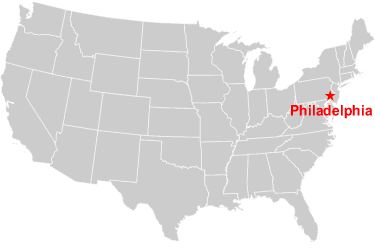
Residents in greater Philadelphia overpaid Comcast more than $875 million dollars, thanks to the cable company’s alleged anti-competitive practice of building regional cable clusters that scare would-be competitors away.

Those are the primary allegations in a 2003 class action case brought against the country’s largest cable operator — a lawsuit Comcast has appealed, so far unsuccessfully.  A three-judge panel of the 3rd Circuit on Tuesday delivered the latest blow to the cable company, denying Comcast’s efforts to get the case thrown out.

At issue is the cable industry’s practice of acquiring and trading cable systems with each another to create regional “clusters,” — large geographic areas all served by the same cable provider — and what that practice does to cable pricing.  All the rage in the late 1990s and early 2000s, cable clustering largely put an end to multiple cable systems serving individual cities.  In the 1980s and 90s, it was not uncommon to find up to four different cable systems serving different sections of a community.  Philadelphia was no different, served by more than a half-dozen cable operators in the greater metropolitan region and surrounding counties.

In the late 1990s, the Court noted Comcast launched a major shopping spree to consolidate the entire area around one cable provider: Comcast.  The lawsuit claims subscribers have paid the price ever since.

Comcast’s Cable Swaps and Acquisitions

  • April 1998: Comcast acquires 27,000 Marcus Cable customers in Harrington, Delaware, which is part of the Philadelphia Designated Market Area (DMA);
  • June 1999: Comcast acquires 79,000 Greater Philadelphia Cablevision customers in the city of Philadelphia;
  • January 2000: Comcast acquires 1.1 million Lenfest Communications customers in Berks, Bucks, Chester, Delaware, and Montgomery counties in Pennsylvania, and New Castle County in Delaware;
  • January 2000: Comcast acquires 212,000 Garden State Cablevision customers in Atlantic, Burlington, Camden, Cape May, Cumberland, Gloucester, Mercer, and Salem counties in New Jersey, which is part of the Philadelphia DMA;
  • December 2000: Comcast acquires 770,000 AT&T Cable customers in Eastern Pennsylvania (Berks and Bucks counties) and New Jersey, in return for trading 700,000 Comcast customers in Chicago with AT&T (Comcast would later win them back by acquiring AT&T Cable itself);
  • January 2001: Comcast acquires 464,000 subscribers in Philadelphia and nearby communities in New Jersey in a subscriber trade with Adelphia Communications Corp., wherein Comcast obtained cable systems and approximately 464,000 subscribers located primarily in the Philadelphia area and adjacent New Jersey areas.  In return, Comcast turns over its subscribers in Palm Beach, Florida and Los Angeles, California to Adelphia.
  • April 2001: Comcast wins another 595,000 subscribers in the region in a trade with AT&T Cable;
  • August 2006: Adelphia implodes and cable companies including Time Warner Cable and Comcast pick over what’s left.  Comcast manages to pick up another 41,000 former Adelphia customers that were originally headed to Time Warner in yet another subscriber swap;
  • August 2007: Comcast acquires Patriot Media and its 81,000 New Jersey customers located within the Philadelphia DMA.

When the acquisitions and transfers were complete, Comcast managed to build a major empire in southeastern Pennsylvania.  In 1998, the company had just a 23.9 percent market share in the Philadelphia DMA.  Comcast managed to control 77.8 percent of the market by 2002.  Despite competition from satellite television and one struggling cable competitor — RCN, Comcast still controlled nearly 70 percent of the market as late as 2007.

Who Pays for the Shopping Spree?  Comcast Customers, Say Plaintiffs

Six Comcast customers upset with the relentless rate increases that came with Comcast’s acquisitions joined forces and filed suit against Comcast in 2003.  The plaintiffs charged Comcast with anti-competitive business practices and violations of the Sherman Act for building a monopoly presence in the market that also helped keep competitors at bay.

One plaintiff’s expert was able to calculate what he called “a conservative estimate” of how much Comcast has effectively overcharged customers in Philadelphia by preventing effective competition: $875,576,662.

That figure was hotly disputed in Comcast’s court appeal, but last Tuesday the Court rejected Comcast’s arguments.  In fact, the Court found merit in the formula used to arrive at the amount of overcharging Comcast has allegedly engaged in — in Philadelphia alone.  Comcast’s argument that customers enjoy lower pricing through promotions and other special pricing arrangements fell apart when the Court learned at least 80 percent of Comcast subscribers pay regular “list prices” for service, and the expert who created the ‘wallet damage‘ formula had taken that special pricing into account.
The plaintiffs suggest that had Comcast not engaged in system clustering, one or more of the area’s cable systems might have decided to compete against the other cable systems.  In that scenario, customers might have been able to choose from Comcast, Lenfest Communications, Marcus Cable, and/or Patriot Cable for cable service, resulting in increased price competition.  While there have been instances of traditional cable operators overbuilding into each other’s territories, those instances have been rare — a point Comcast made in an effort to have the case tossed out.  Comcast’s case is that the majority of Americans are served by a single cable provider, but that’s not a problem because the industry faces increasing competition from satellite TV providers and, as of late, large phone companies.

But the Court found the reason for this lack of competition could be, as plaintiffs argue, the successful outcome of the alleged anti-competitive, cable system-clustering strategy.

As an example, a railway monopoly from 100 years ago could claim it isn’t economical for more than one railroad to serve a particular community, but that isn’t a problem because other forms of transportation exist to move goods and people.  That argument would be based on a market reality created by the railway industry, which routinely bought out the competition through withering price wars, cross-subsidized by higher prices in other monopoly markets. The end effect was a shrinking number of competitive markets, increasing profits (and prices), and a strong deterrent for would-be competitors to enter the business.

A similar case has been brought by the plaintiffs struggling with high cable bills.  In their eyes, cable customers paid for the Monopoly game board on which cable properties were traded or sold.  When the shopping spree was complete, higher rates were the result, indefinitely.

The Case of RCN — Programming Denied
Most traditional cable companies do not compete in areas already served by another cable company.  It’s a tradition some liken to a cartel, where companies carve up territories and enjoy the market benefits afforded by a lack of competition.  But this model is also considered standard operating procedure by Wall Street and other private investors, who fear all-0ut price wars cutting revenues and destroying value and profits.  But there are some companies whose entire mission is to challenge this economic model: the cable overbuilders.  The business plan of the cable overbuilder is to challenge the status quo and deliver service where cable TV already exists and do so profitably.

One such overbuilder is RCN Corporation, which delivers competitive cable service in Boston, Washington, D.C., New York City, Chicago, and parts of the Lehigh Valley.  RCN began operations in 1996 in Boston, just before the cable industry’s quest for clusters went into hyper-drive.  Their plans to compete have been challenged by the ever-increasing concentration in the cable-TV marketplace ever since, and the company has had a particularly tough time attracting subscribers in the Philadelphia area.  Much of RCN’s service area these days is limited to multi-dwelling units like high-rise condos and apartments, where wiring costs are lower.

One of the most effective ways to keep customers from switching to a competitor is to develop or maintain exclusive programming rights.  If a Comcast customer discovered his favorite sporting events could only be seen with a Comcast subscription, that could be a deal-breaker for signing up with RCN.  Before the 1992 Cable Act, the cable industry which owned and controlled a number of popular cable networks refused to sell those channels to would-be competitors (or charged unreasonable prices for access).

When this lawsuit was filed in 2003, RCN found itself locked out of Comcast’s SportsNet, just one of several regional sports networks that cable operators withheld from satellite and cable competitors.  That’s because the 1992 Cable Act included a loophole: it applied only to networks distributed on satellite.  Several regional sports channels were not on satellite, so they could, and were, legally withheld from competitors like RCN.  That loophole was finally closed by the FCC last summer.  But for more than a decade, RCN had to convince sports fans to sign up for a competing service that didn’t have one of the most popular sports channels on the lineup.

Satellite competitors DirecTV and DISH Network were in the same boat, and the legal case recognizes the impact: satellite TV competition in Philadelphia has a below-average percentage of the market, when compared to other cities.

Plaintiffs argued RCN never had fair access to programming, leaving them to compete with one hand tied behind their back.  Even worse, they allege Comcast compelled local contractors into non-compete contracts agreeing not to work for any Comcast competitor, and signing customers up to unusually long contract terms with hefty cancellation penalties in RCN service areas.

All of these accusations were deemed credible by the Court, much to the objection of Comcast, which argued RCN was in serious financial distress and would never be a strongly viable competitor in Philadelphia.  Last week’s Court decision found that ironic, accepting that RCN’s present condition could be, as plaintiffs allege, the result of the anti-competitive, unfair business practices Comcast is charged with.

The evidence on the record “demonstrates that Comcast’s alleged clustering conduct indeed could have reduced competition, raised barriers to market entry [by other competitors] … and resulted in higher cable prices to all of its subscribers in the Philadelphia Designated Market Area,” the court ruled.

Comcast: A Competitive Marketplace Begins And Ends Only at Home

One of the most-disputed elements in the case is determining how much, if any, damage was done to consumers in the greater Philadelphia area.  Much of the plaintiffs’ case rests on pricing anomalies found in the Philadelphia region, where customers are alleged to be paying significantly higher prices for cable service and not enjoying a significant amount of competition.  To build that case, lawyers measured cable rates and available competitors in the various counties in and around the city of Philadelphia.

This is also critical for determining the size of the “class” in the class action lawsuit.  The larger the class, the greater risk of significant damages if the court rules against the cable company (or if the case reaches a settlement.)  Plaintiffs claim their case should include all cable television customers who subscribe or subscribed at any time since December 1, 1999, to the present to video programming services (other than solely to basic cable services) from Comcast, or any of its subsidiaries or affiliates in Comcast‘s Philadelphia cluster.

They specifically defined the cluster as “areas covered by Comcast‘s cable franchises, or any of its subsidiaries or affiliates, located in the following counties: Berks, Bucks, Chester, Delaware, Montgomery and Philadelphia, Pennsylvania; Kent and New Castle, Delaware; and Atlantic, Burlington, Camden, Cape May, Cumberland, Gloucester, Mercer and Salem, New Jersey.”

Comcast counters the geographic market is exactly the size of one, single household.  They argue that subscribers can only choose among video providers serving that customer’s specific home, so what cable competition exists in other counties or communities isn’t relevant.

The side effect of such an argument would be the end of a class action case, since the class size would be reduced from a number in the millions to just one, requiring every impacted consumer to file their own case.

The three judge panel was wholly unimpressed with Comcast’s argument, throwing it out and allowing the case to proceed.

Mediacom Lost 20,000 Video Customers in the Second Quarter

Phillip Dampier August 17, 2011 Consumer News, Mediacom Comments Off on Mediacom Lost 20,000 Video Customers in the Second Quarter

Mediacom, America’s eighth largest cable company, lost 20,000 video subscribers in the second quarter of 2011, joining a growing parade of cable companies reporting increased cord-cutting by customers who either cannot afford, or don’t need increasingly-costly cable TV service.

The cable operator, which largely serves small cities and suburban areas, has suffered from notoriously poor consumer ratings for several years, and some customers have apparently had enough.  Mediacom, which went private earlier this year, provided fewer details about its performance in its first quarter as a private company, but the information it did provide showed attempts to make up the losses with rate increases on remaining customers and increased revenue from phone and broadband sales, and Mediacom’s advertising business.

Three months ending June 30, 2011 March 31, 2011 June 30, 2010
Basic subscribers 634,000 654,000 677,000
High-speed data subscribers 470,000 469,000 447,000
Phone subscribers 177,000 175,000 168,000
Digital customers 415,000 421,000 394,000
Average monthly revenue per subscriber $113.75 $109.17 $104.16

The company’s customers in its strongholds in the southeastern and midwestern United States have been impacted hard by declining property values and high unemployment.  Impacted consumers are paring back expenses, and while they are keeping phone and broadband service, cable TV is increasingly being dropped.

Earlier conference calls with Mediacom company officials note an increasing number of customers are only being rescued when the company discounts the cost of the service as a customer retention tool.  The company has been hard selling its “VIP Pak” — a triple play package of cable TV, phone, and Internet for $90 a month, but it comes with lots of fine print: mandating a 24-month contract, a required subscription to HBO, and gradually increased rates after the first year.  Mediacom’s bundled offers lock in customers with two year contracts, but don’t protect them from periodic rate increases, which are automatically applied as implemented.

Customers looking for standalone broadband or a “double-play” will also find high prices, two-year contracts and early termination fees in their future:

  • Cable TV & Broadband: $79.90 for the first year, $99.90 for the second, with a $240 early termination fee
  • Cable TV: $49.95 for the first year, $64.95 for the second, with a $240 early termination fee
  • Broadband Only (12/1Mbps): $49.95 for the first year, $54.95 for the second, with a $240 early termination fee

Digging Deeper Into Time Warner Cable’s Latest Quarterly Report: They Aren’t Hurting for Money

Phillip Dampier July 28, 2011 Audio, Competition, Data Caps, Editorial & Site News Comments Off on Digging Deeper Into Time Warner Cable’s Latest Quarterly Report: They Aren’t Hurting for Money

Despite the loss of more than 128,000 video subscribers, Time Warner Cable more than made up the difference with rate increases on equipment, programming, and broadband to score a 23 percent increase in earnings in the second quarter of 2011.  For the period of April-June, Time Warner earned a profit of $420 million, nearly $80 million more than the same quarter last year.

Cable Television

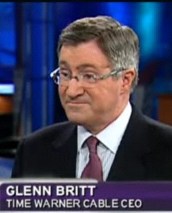
Time Warner CEO Glenn Britt continued to blame the loss of video subscribers on the housing crisis and economy, suggesting the cable operator’s prices have gotten too high for some customers to handle, and they’ve disconnected cable television service as a result.  Britt also continues to downplay the impact of online video allowing for consumer cord-cutting, suggesting instead that increased competition from phone companies and satellite providers are creating a problem online video isn’t.

As a result, Time Warner is refocusing its efforts on marketing packages to three segments it particularly wants to attract — the very well-to-do, the Latino community, and the income-challenged.

Time Warner officials noted that many of their customers have continued to pare back their packages to cushion against the company’s rate increases.  For the last few years, consumers have cut premium movie channels and extra tier add-ons.  Now customers are targeting Time Warner’s DVR service as a route to a lower cable bill.  Many are returning their DVR boxes to save money, or are not keeping the service as a promotion expires.  Time Warner often bundles DVR service into new customer promotions for no additional charge.

For these income-challenged consumers, Time Warner is promising to develop new packages of services at reduced prices.  That likely means the expansion of the company’s “budget tier” — a package of selected basic cable networks, excluding expensive sports programming, currently testing in two markets for around $50 a month.

But the company is also reporting success with its wealthier customers, many who are adopting Time Warner’s super premium Signature Home service, from which the company collects an average of $220 per month per customer.  Time Warner is also ramping up promotion of its cable services to Spanish-speaking audiences in the Latino community — customers it may have under-served in the past.

The company also reported declines in video-on-demand revenue, principally adult pornography pay-per-view content consumers are now watching on the Internet for free.

Broadband

Among the brightest stars for Time Warner Cable continues to be broadband service, which is increasingly important… and profitable for the nation’s second largest cable operator.  With “pricing strength,” Time Warner has successfully adopted a series of rate increases for Road Runner service, increasing revenues along the way.  The company also reports success with its DOCSIS 3 rollouts, now reaching 60 percent of its cable subscribers.  CEO Britt says the cable company expects to complete DOCSIS 3 upgrades nationwide by the end of 2012.  A noticeable percentage of customers are upgrading to premium-priced, faster speed tiers as a result.

Despite the investment in DOCSIS 3, Time Warner Cable continues to slash the amount of capital it is investing in its network.  So far this year, capital expenditures are down 7.4 percent to $1.36 billion.  Chief Operating Officer Rob Marcus predicts Time Warner will spend no more than $3 billion on its systems in 2011, despite plans to continue broadband upgrades and convert their cable systems to all-digital operations.  So far this year, Time Warner has earned over $2.2 billion from its broadband division alone, up 9 percent from last year.  The company attributes most of that growth to rate increases and customers upgrading their service.

Other facts:

  • Time Warner’s wireless mobile broadband has failed to spark much interest from consumers, perhaps because they realize it comes from Clearwire, a company Time Warner CEO Glenn Britt seemed unimpressed with in today’s conference call.  He made a point of telling investors the cable company is under no obligation to invest anything else in the venture;
  • Time Warner Cable is taking a new interest in Wi-Fi, deploying networks in New York and Los Angeles, in the hope the company can boost interest in a “quad-play” of cable, phone, Internet, and wireless broadband/Wi-Fi that consumers have taken a pass on thus far;
  • The company’s new super data center in Charlotte, N.C., will provide a national “head-end” for IPTV video, currently supplied from a facility in Denver.  This will principally benefit iPad users using the company’s app to stream online video.  The company hopes to eliminate regional and local distribution efforts as a cost-savings measure, consolidating national distribution through Colorado and North Carolina;
  • The company’s next version of TWCable TV — the aforementioned iPad app, is due out in a few weeks and will include text searching for individual shows.  Whether it corrects the ludicrous inability for the app to consistently stream video is another question;
  • Competition for new customers has been responsible for a number of disconnects.  One satellite provider is pitching Time Warner customers on a $30 a month video package that includes the NFL Sunday Ticket for free.  Verizon FiOS has increased its marketing of Time Warner customers, offering its own triple-play package for $99 a month.  AT&T U-verse has their own triple play packages as low as $89 a month, with a substantial mail-in rebate offer good for over $100.  But Britt warns the lack of change in the “average revenue per subscriber”-numbers from competitors probably means consumers are paying substantially more thanks to fine print-surcharges and fees;
  • Time Warner is still trying to sign agreements for its TV Everywhere project, particularly for HBO Go, but the terms are evidently still not acceptable to the cable company.

Our earlier coverage, seen below, covers Britt’s remarkable comments about usage-based pricing.  He was certainly off the usual industry playbook today, even going as far as telling investors what we knew all along: bandwidth costs bear almost no relationship to the prices charged for broadband service.  That’s one we’ll tuck away and remember.

Time Warner Cable CEO Glenn Britt highlights the results from the second quarter, covering cable-TV, broadband, and other products. July 28, 2011. (6 minutes)
You must remain on this page to hear the clip, or you can download the clip and listen later.

Rudy & Rupert: How Fox News Was Forced Onto Time Warner Cable and Your Cable Bill

Phillip Dampier July 25, 2011 Consumer News, Public Policy & Gov't Comments Off on Rudy & Rupert: How Fox News Was Forced Onto Time Warner Cable and Your Cable Bill

Murdoch

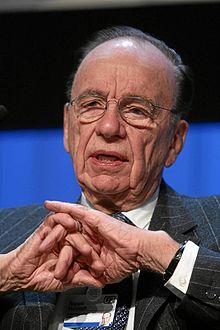
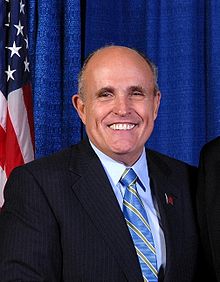
As Fox’s parent company News Corp. continues to reel in a wide-ranging criminal investigation involving phone hacking murder and terror victims in the United Kingdom, the scandal is now spreading into the United States with new revelations this week that CEO Rupert Murdoch, working with New York’s then-mayor Rudy Giuliani, used politically-motivated threats to force Time Warner Cable to add a newly-launched Fox News Channel to the cable dials of New Yorkers, raising their cable bills in the process.

The Daily Beast reports efforts by Murdoch to pay a substantial bounty to get the news/commentary channel on in Manhattan were not effective, so Murdoch turned to a political alliance with Giuliani, who received significant support from Murdoch’s NY Post in his earlier election bid, to force the issue with threats against the cable operator:

Let’s start in 1996, three years after Murdoch’s New York Post helped make Giuliani mayor with the narrowest win in modern city history. That year, Rupert and Ailes, who’d actually managed Rudy’s unsuccessful mayoral run in 1989, were launching Fox Cable News and they had one rather daunting problem: Time Warner controlled the prime NYC cable franchise, with 1.2 million viewers, including virtually all of Manhattan, where every advertiser who might buy a spot lived or worked. And Time Warner refused to give Fox a channel for its new venture. In those days, Time Warner only had space for 77 channels on the dial, and 30 applicants had lined up before Fox. Richard Aurelio, who ran the NYC cable system for Time Warner, recalls now that he assured Ailes that in a year or so, they would “get more capacity and put you on.” But, says Aurelio, now long retired at age 83, “Murdoch was furious.” A former deputy mayor under John Lindsay, Aurelio says he’d “never seen such a display of raw political power,” branding it “ferocious.”

Records revealed that after Murdoch and Giuliani talked directly about the matter on Oct. 1, their aides had 25 conversations and two meetings in the space of a few weeks. A deputy mayor instantly warned Time Warner about the possibility that their franchise, granted by the city every 15 years, might not be renewed and volunteered to fly anywhere in the country to meet with a Time Warner executive above Aurelio. When Time Warner wouldn’t budge, Giuliani came up with an extraordinary remedy. The city controlled five public-access channels, written into law as alternatives to commercial television, and the mayor decided to give one of them to Fox. In fact, presumably to make it look like this wasn’t something he would just do for Murdoch, he offered another to Mike Bloomberg’s then-fledgling TV network. The Bloomberg News channel actually had its debut one night before a federal judge could stop the deal, but soon the courts blocked this transparently extralegal adventure.

Giuliani

While Murdoch was initially willing to pay cable systems up to $11 per subscriber to launch Fox News on cable systems in the fall of 1996, most cable systems were effectively out of channel capacity at the time.  Fewer than ten million households had access to the new new network when it launched, despite the record launch bonus Murdoch was willing to pay.  Time Warner Cable had promised the network it would likely have channel space within two years as the company completed the rollout of its then-new “digital cable” service, which opened up hundreds of new slots for additional channels, but Murdoch was not willing to wait.

The Giuliani Administration owed a lot to Murdoch’s newspaper operations in the city, trumpeting his political campaigns.  One year before Fox News launched, Giuliani’s then-wife Donna Hanover was hired by WNYW-TV, Fox’s owned and operated local station in New York, despite the fact it was over a decade since her last job in television.  Fox tripled her salary just after Giuliani began threatening Time Warner Cable’s franchise to provide cable service in New York, unless and until the cable system made room for Fox News.

By 1997, Time Warner Cable added the network not only to its Manhattan cable system, but agreed to roll the channel out to most of its cable systems nationwide by 2001.

Murdoch’s early willingness to pay a bounty to get cable carriage has proved a worthwhile investment, considering Fox News has now become one of the most expensive networks in the cable package.  In December, Chase Carey, COO of News Corp., compared Fox News’ value with ESPN — America’s most expensive cable channel.  Carey has sought wide-ranging rate increases for Fox News in 2011, even after the network won earlier increases which made them by far the most expensive channel in the news and commentary category, running about a dollar per month per subscriber.  Those rate increases are passed down to every cable subscriber in the form of a higher monthly bill, whether one watches the channel or not.

In 2007, additional pressure was brought against cable operators to add Fox Business Channel, a perennially-low rated channel that was started to counter “the anti-business bias” of CNBC.  Despite now being available in nearly half of all American households, the spring Nielsen ratings show only about 57,000 people over the age of 2 watch the channel on any given day, even though every cable subscriber with the network on their lineup pays for it.

NAACP: ‘Having One Company (AT&T) Looking at the Whole Landscape Will Get Service to Those Who Need It’

Phillip "Not Paid by AT&T" Dampier

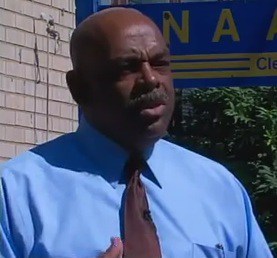
When asked if the merger of AT&T and T-Mobile will limit customer choice, NAACP’s local executive director Stanley Miller told a Cleveland, Ohio television station, “I don’t think that’s an issue in today’s environment; I think the companies are smarter today and they will make people understand and give them the beneficial services that they’ll need.”

The civil rights group had nothing to say about how much AT&T will charge for these “beneficial services.”

At least WEWS-TV in Cleveland is bothering to ask the question.  Most of America’s television news has either ignored the enormous merger on offer from AT&T and T-Mobile, or didn’t wade much further beyond AT&T’s press release about the “benefits” the merger will bring.  Unfortunately, the television station never bothered to alert viewers to the fact the civil rights group receives substantial financial support from AT&T.

Miller’s performance trying to tout his parent organization’s unqualified support for the merger sent a very clear message to anyone watching NewsChannel 5 — he doesn’t really understand what he is talking about.

On the issue of expanding wireless service into rural Ohio, Miller was left tongue-twisting his way into advocating a monopoly because they’ll be best equipped to get service to those who need it.  That’s a fascinating prospect — a monopoly spending money expanding service where it is unprofitable to provide.  That’s the reason companies like AT&T have ignored rural America, and will continue to do so — merger or not.

Miller (WEWS-TV)

In fact, AT&T’s claim that it needs the network of T-Mobile to stop the persistent problems of dropped calls and slow data service doesn’t make much sense either.  Verizon, AT&T’s closest competitor, doesn’t seem to be suffering those problems, perhaps because it has made investments in upgrades AT&T has avoided.

In California, consumer advocate Jon Fox was taking an equally skeptical look at AT&T’s claims on behalf of CalPIRG, the California Public Interest Research Group.  Fox noted AT&T’s promotion of the merger in his state came at invitation-only cheerleading sessions run by company officials:

Earlier this month, AT&T California President Ken McNeely explained to an invitation-only audience that the proposed merger with T-Mobile will create new jobs, help communities and improve wireless phone service. AT&T preferred not to take questions from the general public on how that vision fits with AT&T’s history of consolidation, layoffs and aggressive market behavior.

Nearly 30 years after regulators broke up AT&T’s unprecedented control over the U.S. wired phone market, consumers are asked to believe that this time things will be different. This notion defies both experience and common sense. Unless significant market regulation is put into place that encourages a competitive wireless arena to flourish, this proposed merger will be bad for consumers, innovation and economic growth.

Fox notes the wireless marketplace in the United States is hardly a paragon of competitiveness today.  If the merger were approved, 76 percent of Americans would receive wireless service from two providers — AT&T and Verizon.  Fox observed America’s next-most-hated conglomerate — the oil and gas industry — wishes it could have that sort of market power.  The top two oil companies in the U.S. have a combined market share of only 24 percent.  America, he notes, wouldn’t tolerate that kind of consolidation in the gasoline market, so why should we tolerate it in the mobile market?

The California Public Interest Research Group

Fox advocates more competition, not less.  He suggests the government force AT&T and Verizon to open their cellular networks to independent third party competitors at fair prices, and let everyone compete.  That could germinate competition that would end the chorus of rate increases from the largest players and allow for innovative pricing plans that don’t force customers into the nearly identical service plans AT&T and Verizon want to force you to accept.  T-Mobile already provides the most innovative pricing in the wireless marketplace, and AT&T is about to swallow that innovation whole.

What ultimately happens to a well-dwarfed Sprint remains an open question, but one many on Wall Street have already answered, suspecting America’s third largest carrier simply won’t be in a position to compete.  Fox thinks the situation is dire when two companies will have a virtual lock on wireless data services Americans increasingly depend on.

That’s not the view of the NAACP, of course.  But then the NAACP is hardly an independent observer, being the recipient of a considerable amount of money and executive talent from AT&T.  That counts for a whole lot more than the rank and file members of the organization, who will be paying the increased prices AT&T has in store for everyone.

[flv width=”360″ height=”290″]http://www.phillipdampier.com/video/WEWS Cleveland ATT T-Mobile Merger 7-14-11.mp4[/flv]

WEWS-TV in Cleveland investigates the ramifications of a merger between AT&T and T-Mobile.  More than 94% of all Ohioans filing comments with FCC oppose the merger, but groups like the NAACP support it.  NewsCenter 5 wanted to find out why.  (3 minutes)

Search This Site:

Contributions:

Recent Comments:

Your Account:

Stop the Cap!