Home » rate increases » Recent Articles:

Cablevision Struggles With Recession, Self-Inflicted TV Wounds, and Verizon’s FiOS

Cablevision executives reported dismal financial numbers for the third quarter of this year, as the cable company lost 19,000 cable television customers while profits plummeted some 65% at the Bethpage, N.Y.-based company.

Not even 17,000 new broadband customers could erase the damaging losses incurred by Cablevision cord-cutting, some of it as a result of the cable operator’s damaging retransmission consent disputes that deprived viewers of popular local broadcast outlets and cable channels.  The company lost so much subscriber goodwill, company executives admitted they pared back an anticipated rate increase just to protect themselves from further customer defections.
Programming disputes like this one with WABC-TV and their parent company Disney caused more than a few Cablevision customers to head for the competition.

Cablevision, like Time Warner Cable before it, won’t admit that cable cord-cutting is responsible for what one investment bank fears could be the start of an “ex-growth” era in cable television.  Instead, Cablevision executives continue to blame the poor economy for subscription losses, as well as aggressive pricing competition from their biggest rival — Verizon FiOS.  Adding pressure is the relentless demand for higher programming fees, which directly translates into relentless annual rate increases for cable television service.

“With regard to programming [costs, they are] an issue and it is an expensive part of our business.  It is the single biggest cost item we have,” said Gregg G. Seibert, Cablevision’s chief financial officer and executive vice-president. “And the fact that retransmission consent became necessary from the eyes of broadcasters, particularly after the 2008 recession, has been flowing through our business, and there was a large step up [in fees]. I think that the overall rate of programming [costs] going forward will moderate to some extent naturally.”

Seibert called the aggressive retransmission consent fee disputes between broadcasters and cable operators evidence of the collapse of the traditional “free TV” business model.  Because ad revenues are down, broadcasters are increasingly dependent on fees charged to cable operators for permission to include their stations on the cable dial.  That means cable subscribers are increasingly subsidizing the broadcast television business.

Seibert

Seibert’s revelation came too late to stop some of the nation’s most visible retransmission consent battles between Cablevision and network-owned New York-area television stations and cable networks.  When Cablevision blacked out a local station showing coverage of the World Series during the last dispute, fed up customers decided to take their cable business to Verizon or a satellite TV provider.

Cablevision has been trying to lick their wounds ever since, launching increasingly aggressive pricing promotions and “free gift” offers to keep existing customers while trying to win back old ones.

“We’ve recently introduced an offer that includes a new Apple iPod Touch primarily for win back situations,” said Thomas M. Rutledge, chief operating officer.  “Selling for the Triple Play package of video, data, and voice is now at 74% and roughly half of this selling is for our new Ultimate Triple Play, which includes a new higher-priced Boost Plus [broadband] service and a wireless router.”

Cablevision achieves triple-play signups by heavily discounting the package for new and returning customers.  It also hopes to succeed with a ‘more for less’ pricing strategy, delivering new features and services without necessarily charging extra for all of them.  With discounts, free gifts, and additional services, Cablevision is getting some of their old customers back.

Selling faster broadband is a key component in Cablevision's strategy to attract more broadband customers. Boost Plus delivers 50/8Mbps service for an additional $14.95 a month.

“As of September 30, our win back total is more than 45% of customers who once tried Verizon FiOS,” Rutledge claims.

Rutledge noted Cablevision’s participation in the industry’s TV Everywhere online video initiative has grown even stronger with the recent agreement to provide Cablevision cable-TV customers free access to Turner-owned cable network programming.

Seibert admits the more competitive business environment and high profile programming disputes in suburban New York City are impacting profits.

“We had a few significant items in the quarter affecting our results including higher programing costs and higher sales in marketing as we continue to aggressively promote our products and services while revenue growth was essentially flat,” Seibert said.

Those challenges are creating a sense of unease on Wall Street regarding the cable business’ core product: cable television and the increasingly aggressive pricing promotions necessary to keep customers from disconnecting service.

“There is growing concern among the investor community about [the] whole [cable] industry going to ex-growth,” said Jason Bazinet from Citigroup.

Rutledge

“Programming costs are rising faster than video revenues,” Sanford C. Bernstein, an analyst for Craig Moffett, told the Wall Street Journal. “Unless there’s growth somewhere else in the business model, you’ve got the worst of all worlds: a slow-or no-growing business with lower margins.”

Rutledge outlined Wi-Fi and broadband enhancements as part of Cablevision’s priorities for the upcoming quarter:

“We’ve been building out a Wi-Fi network and we’ve had continuous subscriber utilization increases on that network.  We now have more than one-half-million devices out there that can use Wi-Fi and watch our full cable television service in the home.

“And we’re deploying a new Boost product with higher speed broadband, which includes a more sophisticated wireless router as part of that package.

“We think Wi-Fi is a major strategic part of our business. We think that we can continue to take advantage of that. We think our video product today as a result of Wi-Fi is a superior product to our competitors – all of our competitors, and we think that our data service is enhanced by the Wi-Fi outside the home, and we continue to try to build value for our customers and take market share.”

The cable company is already aggressively marketing its Boost Plus service, which delivers 50/8Mbps broadband for an additional charge of $14.95 a month on top of the standard broadband rate.

Analyzing Time Warner Cable’s Latest Quarterly Results: Broadband, Broadband, Broadband

Phillip Dampier October 27, 2011 Broadband Speed, Competition, Consumer News, Data Caps, Online Video, Wireless Broadband Comments Off on Analyzing Time Warner Cable’s Latest Quarterly Results: Broadband, Broadband, Broadband

Time Warner Cable experienced another challenging quarter, continuing to lose cable TV customers who either drop or pare back their television service, often in favor of broadband.

The company reported losses of an additional 128,000 video subscribers during the third quarter, but is partly winning that revenue back with new broadband customers — 89,000 of them in the last three months.

“Broadband is a powerful service for which there appears to be unquestionable consumer thirst,” Time Warner Cable CEO Glenn Britt said on the investor call. “Over time, we will contribute more of our plant’s capacity to broadband.”

The company is also poised to expand its marketing to win new broadband customers away from their primary competition — telephone company DSL service.  Company officials remain confounded by customers who subscribe to Time Warner’s cable TV service and take broadband from “inferior” phone company-delivered DSL.  Time Warner will continue to target these customers with win-over promotions offering a year of Road Runner Standard Service at the $29.95 promotional price point.

For the company as a whole, this is the tenth consecutive quarter of year-over-year residential broadband revenue improvement, coming from a combination of higher-priced, faster speed tiers, price increases, and subscriber additions.  The company’s DOCSIS 3 upgrade has proven itself a winner for customers and the company, with 18 percent of Time Warner subscribers now choosing 30 or 50Mbps broadband services.

Wall Street expressed some concern about statements from CEO Glenn Britt that the company was going to expand capital spending on broadband to handle increasing demand, especially from online video.  That concern comes despite the fact the company’s “capital intensity” (spending) from January-September was the lowest in the history of the company.  The full year’s capital spending is on track to reach up to $3 billion, which is consistent with what the company spent last year.

Glenn Britt

So despite the plans to spend more on broadband, that spending is actually in line with previous years.

In response to an opening question from Deutsche Bank’s Doug Mitchelson, Britt delivered an extended explanation downplaying the company’s spending plans:

In a way, there’s nothing really new here. I think you’ve seen this trend for a while. Our broadband product is very strong.

As most people know, the usage of broadband is skyrocketing, as it has been for some time. And that means that we will need to spend more money on it. We have been already, both in capital and operating expenses.

The great thing about the Internet is lots of third parties dream up lots of new applications that require more speed and more bandwidth. And we anticipate that we’re going to have to devote more capacity to that over time. We will do that by gradually removing our analog signals from our — analog TV signals from our plan. We’ve been doing that over the last several years by migrating to digital using Switched Digital technology. And over the next several years, we’ll be going all digital in the TV space.

I don’t see this driving a dramatic change in our cap spending, I think, to the core of your questions. The spending has been going on for a while, and I think you’re seeing a change in mix. The video spending is going down over time. The business services is going to go up, although it didn’t this quarter. And you’re going to see the spending on broadband going up. But I don’t think the overall trajectory is mutually different.

This quarter, the company’s conference call seemed to embrace greater broadband usage, and pondering Internet Overcharging schemes like usage caps or usage-based billing never came up.  But Richard Greenfield from BTIG alluded to usage in his questions to Rob Marcus, president and chief operating officer at Time Warner Cable.

“I think we’re somewhere in the 7GB a month [range] of downstream bandwidth on a median basis,” Marcus said. “The average is much higher given the disproportionate usage by our high-end users.”

There were plenty of other facts to be gleaned from this morning’s conference call:

TV

  • Whole Home DVR service has been introduced nationwide.  In the coming year, Time Warner will begin deploying “home gateways,” which reduce equipment costs;
  • Time Warner is testing improved cloud-based set top boxes with home networking capabilities in parts of Syracuse, Los Angeles and Dallas.  These boxes will expand across the country in 2012.  They offer better search capability and deliver an improved user experience;
  • 60% of customers reject “triple-play” offers from Time Warner and choose either “single” or “double-play” service instead;
  • Much of Time Warner’s revenue growth is coming from rate increases on programming, services, and equipment;
  • TV Essentials, the smaller, less expensive video package, is now available in New York City and Northeast Ohio, as well as upstate New York. It will launch nationwide by year end.  Unsurprisingly, company officials admit the less-than-attractive channel lineup has resulted in the vast majority of customers calling about the offering taking the traditional video package instead;
  • Customers continue to drop ancillary services to cut their cable bill.  The increasingly expensive DVR box is a new target for cutting, and premium movie channels, adult pay-per-view, and mini-pay services all continue to suffer significant declines in business;
  • The Google-Motorola deal will likely have little impact on Time Warner’s set top boxes, which primarily come from Cisco and Samsung.

Broadband

  • By the end of the year, Time Warner plans to offer an Android-based TV Everywhere application similar to the existing iPad application, which will also continue to be upgraded to include on-demand offerings;
  • Time Warner will make their TV Everywhere service available on game consoles, smart TVs and PCs in the near future;
  • New York City customers will soon be able to select from a range of local broadcast stations on the company’s iPad app.  Other markets will start to see local channels added to this app in 2012;
  • Major parts of Time Warner’s capital investments this year are: building data centers in Charlotte and Denver, conversion to all-digital in Maine to make room for enhanced broadband, and the continued rollout of DOCSIS 3.0. The company is also continuing to spend significantly on wiring commercial buildings to sell services to business customers;
  • TV Essentials customers will soon be offered a “lite user” slower speed discount broadband plan to accompany their video package;
  • In Los Angeles, Wideband 50Mbps customers also get 2 gigabytes of 4G/3G mobile broadband for no additional monthly charge on the company-branded Clearwire service. For Turbo Plus and Wideband 30Mbps customers, they can get the same 4G/3G capability for an additional $10 a month. Standard and Turbo customers can get it for an extra $20.  The company’s mobile broadband add-on product has not enjoyed much success with paying customers, however.  Time Warner hopes the value-added bundling of mobile broadband will attract more interest.

Phone

  • Cord-cutting is now impacting Time Warner “digital phone” service, too.  Customers are increasingly reluctant to purchase phone service from any landline provider.  Now Time Warner’s regular pricing is starting to cost them business.  Executives revealed Time Warner’s “digital phone” service costs the company $9.06 to provide.  They charge consumers $30.  With that kind of profit margin, the company admits it will have to get more aggressive in pricing to attract new customers (and potentially keep existing ones);
  • Time Warner lost 8,000 residential voice line customers last quarter, cushioned by net additions of 13,000 business line customers;
  • The company continues to show little interest in selling cell phone products or services, either owned by themselves or others.  Mobile data remains an exception.

Time Warner Cable Messes Up Bills for 15,000 Ohio Customers: One Woman Fights Back

Phillip Dampier October 26, 2011 Consumer News, Video 1 Comment

In August, Time Warner Cable’s billing system went haywire for some 15,000 Ohio customers, some of whom found their promotional rates canceled, resulting in a doubling of their monthly bills.

One such Time Warner customer is Linda Sacash, who lives in Russell Township.  She had a three-year deal, in writing, with Time Warner that provided her family with a triple play package of Internet, telephone, and cable service for $89.95 a month.  But when her August bill arrived, Time Warner insisted she owed twice that amount — $179.

Sacash, among others, started calling Time Warner to complain about the inaccurate bills and was told the cable company unilaterally decided to expire promotional packages a year early.  Sacash wasn’t happy with that explanation, and noted a clause in her written agreement that limited rate increases to no more than 10 percent a year.  That didn’t matter much to Time Warner, who looked forward to receiving her new $179 payment by the due date on her bill.

Time Warner’s attitude changed, however, when WEWS-TV consumer troubleshooter Joe Pagonakis turned the camera on himself, and called the cable company looking for answers:

The company responded immediately, admitting some 15,000 bills were processed inaccurately during the summer.

Time Warner quickly corrected Sacash’s bill, and confirmed that her promotional offer will remain in place until November 2012, as stated in the Time Warner service invoice.

If considering a promotional offer, get it in writing and keep the paperwork for the length of the promotion, just in case your provider decides to renege on the deal. If signing up for a promotion over the phone, always get the name, extension/employee ID, and the exact details of the offer and keep those details in your files.  It’s often easier to get a company to stand up to their commitments when you have the name and extension number of the employee who sold it.

[flv width=”480″ height=”380″]http://www.phillipdampier.com/video/WEWS Cleveland Russell Township woman fights wins battle over inaccurate Time Warner digital cable bill 10-24-11.mp4[/flv]

WEWS-TV in Cleveland intervenes on behalf of a local woman who faced a doubling of her cable bill when Time Warner elected to end her promotion a year early.  (2 minutes)

Telephone Companies Bilking Consumers for Fatter Revenue Is as Simple as “ABC”

The primary backers of the ABC Plan

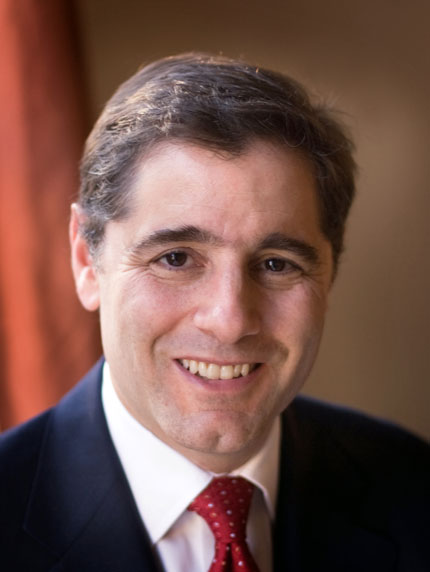
Today, Federal Communications Commission Chairman Julius Genachowski is scheduled to deliver a major announcement on reforming the Universal Service Fund (USF) — a federal program designed to subsidize the costs of delivering telecommunications services to rural America.

The reform, long overdue, would transition a significant percentage of USF fees every telephone customer pays towards broadband deployment — a noble endeavor.  For years, Americans have paid more than $5 billion annually to phone companies large and small to maintain rural landline service.  Small co-op phone companies depend on the income to deliver affordable service in places like rural Iowa, Kansas, and Alaska.  But large companies like AT&T and Verizon also collect a significant share (around $800 million annually) to reduce their costs of service in the rural communities they serve.

That’s particularly ironic for AT&T, which time and time again has sought the right to abandon universal rural landline service altogether.

Genachowski’s idea would divert USF funding towards broadband construction projects.  The argument goes that even low speed DSL requires a well-maintained landline network, so phone companies that want to deploy rural broadband will have to spend the money on necessary upgrades to provide just enough service to earn their USF subsidies.  The lower the speed, the lower the cost to upgrade networks and provide the service.  Some may choose wireless technology instead.  Since the telephone companies have fought long and hard to define “broadband” as anything approaching 3-4Mbps, that will likely be the kind of speed rural Americans will receive.

At first glance, USF reform seems like a good idea, but as with everything at the FCC these days, the devil is always in the details.

Dampier: Another day, another self-serving plan from the phone companies that will cost you more.

While headline skimmers are likely to walk away with the idea that the FCC is doing something good for rural broadband, in fact, the Commission may simply end up rubber stamping an industry-written and supported plan that will substantially raise phone bills and divert your money into projects and services the industry was planning to sell you anyway.

Stop the Cap! wrote about the ABC Plan a few weeks ago when we discovered almost all of the support for the phone-company-written proposal comes from the phone companies who back it, as well as various third party organizations that receive substantial financial support from those companies.  It’s a dollar-a-holler astroturf movement in the making, and if the ABC Plan is enacted, you will pay for it.

[Read Universal Service Reform Proposal from Big Telcos Would Rocket Phone Bills Higher and Astroturf and Industry-Backed, Dollar-a-Holler Friends Support Telco’s USF Reform Plan.]

Here is what you probably won’t hear at today’s event.

At the core of the ABC Plan is a proposal to slash the per-minute rates rural phone companies can charge big city phone companies like AT&T and Verizon to connect calls to rural areas.  You win a gold star if you correctly guessed this proposal originated with AT&T and Verizon, who together will save literally billions in call connection costs under their plan.

With a proposal like this, you would assume most rural phone companies are howling in protest.  It turns out some are, especially some of the smallest, family-run and co-op based providers.  But a bunch of phone companies that consider rural America their target area — Frontier, CenturyLink, FairPoint and Windstream, are all on board with AT&T and Verizon.  Why?

Because these phone companies have a way to cover that lost revenue — by jacking up your phone bill’s USF surcharge to as much as $11 a month per line to make up the difference.  In the first year of implementation, your rates could increase up to $4.50 per line (and that fee also extends to cell phones).  Critics have been widely publicizing the increased phone bills guaranteed under the ABC Plan.  In response, advocates for the industry are rushing out the results of a new study released yesterday from the Phoenix Center Chief Economist Dr. George S. Ford that claims the exact opposite.  Dr. Ford claims each customer could pay approximately $14 less per year in access charges if the industry’s ABC Plan is fully implemented.

Genachowski

Who is right?  State regulators suggest rate increases, not decreases, will result.  The “Phoenix Center,” unsurprisingly, has not disclosed who paid for the study, but there is a long record of a close working relationship between that research group and both AT&T and Verizon.

But it gets even worse.

This shell game allows your local phone company to raise rates and blame it on the government, despite the fact those companies will directly benefit from that revenue in many cases.  It’s a real win-win for AT&T and Verizon, who watch their costs plummet while also sticking you with a higher phone bill.

The USF program was designed to provide for the neediest rural phone companies, but under the new industry-written rules being considered by the FCC, just about everyone can get a piece, as long as “everyone” is defined as “the phone company.”  There is a reason this plan does not win the hearts and minds of the cable industry, independent Wireless ISPs, municipalities, or other competing upstarts.  As written, the USF reform plan guarantees virtually all of the financial support stays in the Bell family.  Under the arcane rules of participation, only telephone companies are a natural fit to receive USF money.

Genachowski will likely suggest this plan will provide for rural broadband in areas where it is unavailable today.  He just won’t say what kind of broadband rural America will get.  He can’t, because the industry wrote their own rules in their plan to keep accountability and oversight as far away as possible.

For example, let’s assume you are a frustrated customer of Frontier Communications in West Virginia who lives three blocks away from the nearest neighbor who pays $50 a month for 3Mbps DSL broadband.  You can’t buy the service at any price because Frontier doesn’t offer it.  You have called them a dozen times and they keep promising it’s on the way, but they cannot say when.  You may have even seen them running new cable in the neighborhood.

Frontier has made it clear they intend to wire a significantly greater percentage of the Mountain State than Verizon ever did when it ran things.  Let’s take them at their word for this example.

The telephone companies have helpfully written their own rules for the FCC to adopt.

Frontier’s decision to provide broadband service in West Virginia does not come out of the goodness of their heart.  At a time when landline customers are increasingly disconnecting service, Frontier’s long-term business plan is to keep customers connected by selling packages of phone, broadband, and satellite TV in rural markets.  Investment in DSL broadband deployment has been underway with or without the assistance of the Universal Service Fund because it makes financial sense.  Our customer in West Virginia might disconnect his landline and use a cell phone instead, costing Frontier any potential broadband, TV and telephone service revenue.

Under the ABC Plan, Frontier can be subsidized by ratepayers nationwide to deliver the service they were planning to provide anyway.  And what kind of service?  The same 3Mbps DSL the neighbors have.

If your county government, a cable operator, or wireless competitor decided they could deliver 10-20Mbps broadband for the same $50 a month, could they receive the USF subsidy to build a better network instead?  Under the phone company plan, the answer would be almost certainly no.

Simon Fitch, the consumer advocate of the Federal-State Joint Board on Universal Service, which advises the FCC on universal service matters, says the ABC Plan is a consumer disaster.

“Although a stated goal of the FCC’s reform effort is to refocus universal-service funding to support broadband, the industry’s ABC plan requires no real commitment to make broadband available to unserved and underserved communities,” Fitch writes. “Companies would receive funds to provide broadband with upload and download speeds that are already obsolete. States would be given no real enforcement power.”

Fitch is certain companies like AT&T and Verizon will receive enormous ratepayer-financed subsidies they don’t actually need to provide service.

Back to AT&T.

In several states, AT&T is seeking the right to terminate its universal service obligation altogether, which would allow the same company fiercely backing the ABC Plan to entirely walk away from its landline network.  Why?  Because AT&T sees its future profits in wireless.  Under the ABC Plan, AT&T could build rural cell towers with your money to provide “replacement service” over a wireless network with or without great coverage, and with a 2GB usage cap.

At the press conference, Genachowski could still declare victory because rural America would, in fact, get broadband.  Somehow, the parts about who is actually paying for it, the fact it comes with no speed, coverage, or quality guarantees, and starts with a 2GB usage cap on the wireless side will all be left out.

Fortunately, not everyone is as enamored with the ABC Plan as the groups cashing checks written by AT&T.

In addition to state regulators, Consumers Union, the AARP, Free Press, and the National Association of Consumer Advocates are all opposed to the plan, which delivers all of the benefits to giant phone companies while sticking you with the bill.

There is a better way.  State regulators and consumer groups have their own plans which accomplish the same noble goal of delivering subsidies to broadband providers of all kinds without increasing your telephone bill.  It’s up to the FCC to demonstrate it’s not simply a rubber stamp for the schemes being pushed by AT&T and Verizon.

Universal Service Reform Proposal from Big Telcos Would Rocket Phone Bills Higher

A new proposal from the nation’s six largest telephone companies would double or triple Universal Service Fund (USF) fees on many telephone lines, extending them to wireless, broadband-based phones, cable TV “digital phone” products, and potentially even Internet accounts, providing billions from consumers for the companies proposing the plan.

Universal Service Fund reform has been a hot topic this year in Washington, as regulators attempt to reform a long-standing program designed to help keep rural landline telephone service affordable, subsidized with small charges levied on customer phone bills that range between $1-3 dollars, depending on the size of your community.

The original goals of the USF have largely been achieved, and with costs dropping to provide telephone service, and ancillary services like broadband DSL opening the door to new revenue streams, some rural phone companies don’t need the same level of support they received in earlier years.  As a result, USF funds have progressively been disbursed to an increasing number of projects that have little to do with rural phone service.  Several funding scandals over the past decade have underlined the need for USF reform, and FCC Chairman Julius Genachowski has been a strong advocate for directing an increasing amount of USF resources towards rural broadband deployment projects.

But now some of America’s largest phone companies want to establish their own vision for a future USF — one that preserves existing funding for rural phone service –and– levies new fees on ratepayers to support broadband expansion.

The ABC Plan's chief sponsors are AT&T...

America’s Broadband Connectivity Plan (ABC), proposed jointly by AT&T, Verizon, CenturyLink, Windstream, Frontier Communications and FairPoint Communications, departs markedly from Genachowski’s vision for a revised USF that would not increase the overall size of the Fund or its cost to consumers.

That’s why some ratepayer consumer groups and utility regulators have taken a dim view on the phone companies’ plan.

Colleen Harrell, assistant general counsel to the Kansas Corporation Commission says customers would find USF fees doubling, if not tripling on their home phone bills under ABC.  That could mean charges of $6 or more per month per phone line.

While the plan substantially benefits the companies that propose it, critics say ABC will do little to enhance service for ordinary consumers.  In fact, some language in the proposal could open the door for landline companies to discontinue universal landline service, a long time goal of AT&T.

In fact, protection for incumbent phone companies seems to be the highest priority in most of the ABC’s framework:

  1. The proposal provides a right of first refusal to the incumbent phone company, meaning USF grant funds effectively start at the landline provider, and are theirs to accept or reject.  This has competitors howling, ranging from Wireless ISPs, mobile data providers, cable companies, and even fiber networks.  The ABC proposal ignores who can deliver the best broadband most efficiently at the lowest price, and is crafted instead to deliver the bulk of funding to the provider that has been around the longest: phone companies.
  2. Provisions in the ABC Plan provide a convenient exit door for landline providers saddled with providing service to some of America’s most rural communities.  An escape clause allows “satellite service” to be provided to these rural households as a suitable alternative to traditional wired service, sponsored by an annual $300 million Advanced Mobility/Satellite Fund.  This, despite the fact consumer ratings for satellite providers are dismal and existing providers warn their services are often unsuitable for voice calls because of incredibly high latency rates.
  3. Provisions in the ABC Plan adhere to a definition of acceptable broadband well within the range favored by telephone company DSL providers — 4Mbps.  Setting the bar much higher could force phone companies to invest in their networks to reduce the distance of copper wire between their offices and customer homes and businesses, allowing for faster speeds.  Instead, lowering the bar on broadband speeds assures today’s deteriorating rural landline network will make-do, leaving a rural/urban speed divide in the United States.
  4. To “resolve” the issue of the increased fees and surcharges that could result from the plan’s adoption, it includes a subjective cap of $30 a month on residential basic landline home phone service (without calling features).  But since most ratepayers pay substantially less for basic home phone service, the maximum rate cap provides plenty of room for future rate increases.  Also, nothing precludes phone companies from raising other charges, or creating new “junk fees” to raise rates further, ignoring the “cap.”

...and Verizon

Rural states seem unimpressed with the phone companies’ proposal.  The Kansas Corporation Commission (KCC) called various provisions of the plan “a train wreck.”  Kansas is one of several states that developed their own state-based Universal Service Fund to help the state’s many rural agricultural areas receive acceptable telecommunications services.  Kansans initially paid one of the highest USF rates in the country when their state plan was enacted in 1996.  But Kansas phone companies used that money to modernize their networks, especially in rural communities — some of which now receive fiber-based phone service, and the rates have fallen dramatically as upgrade projects have been completed.  Today, most Kansans pay just $1.45 in USF fees to rural phone companies, while AT&T customers in larger Kansas towns and cities pay an average of $2.04.

If the ABC Plan is enacted as-is, Kansans will see phone bills spike as new USF fees are levied.  That’s because the federally-based USF Fund reform program would require today’s 6.18% state USF rate double or triple to sustain various programs within its scope.

And forget about the $30 ‘smoke and mirrors’ “rate cap”, according to the KCC:

[…] The ceiling will not preclude carriers from increasing the basic rate beyond $25 or $30 through higher state USF surcharges or higher local rates.  Multiple states including Kansas  have partially or totally deregulated basic local phone service rates, and the only component of retail  local service pricing that the FCC regulates is the federal Subscriber Line Charge.  Thus, a carrier may face no constraint whatsoever in increasing basic local rates to the point that total local rates are well above the illusory ceiling.

The state of Wyoming was also unimpressed with a one-size-fits-all national approach advocated primarily by big city phone companies AT&T and Verizon, the chief sponsors of the ABC Plan.

The Wyoming Public Service Commission filed comments effectively calling the ABC Plan boneheaded, because it ignores the plight of particularly rural states like Wyoming, chiefly served by smaller phone and cable companies that face challenges in the sparsely populated, mountainous state.

First among the Wyoming PSC’s complaints is that the plan ignores business realities in rural states.  No matter how much USF funding becomes available or what compensation schemes are enacted, dominant state phone companies like CenturyLink are unlikely to “invest in broadband infrastructure unless it is economically opportune to do so.”

The PSC points to the most likely outcomes if the ABC Plan is enacted:

  • Phone companies not challenged by a broadband competitor will make due with their current copper wire wireline infrastructure the PSC says has been deteriorating for years.  The PSC fears broadband expansion funds will be used to improve that copper network in larger areas where cable competition exists, while the rest of the more-rural network gets ignored;
  • In areas like larger towns or suburbs where phone companies suspect a cable (or other) competitor might eventually expand or launch service, USF funding could be spent to bolster the phone company’s existing DSL service to deter would-be competitors from entering the market;
  • We'll pass, too.

    The Wyoming PSC believes phone companies will spend broadband funds only where it would improve the phone company’s competitive position with respect to cable competitors.  Providers are unlikely to expand into currently-ignored rural areas for two reasons: lack of ongoing return on investment and support costs and the ABC Plan’s willingness to abandon rural America to satellite providers.  “We are familiar to a degree with satellite service at it presently exists in Wyoming markets, and we are not particularly enamored of the satellite solution,” the PSC writes.  But if adopted, no rural phone company would invest in DSL service expansion in areas that could be designated to receive federally-supported satellite service instead.

Wireless competitors are not happy with the ABC Plan because it ignores Wireless ISPs and sets ground rules that make them unlikely to ever win financial support.  Many also believe the ABC Plan picks technology winners and losers — namely telephone company provided DSL service as the big winner, and everyone else a loser.

The Fiber to the Home Council also heaped criticism on the ABC Plan for the low bar it sets — low enough for any phone company to meet — on broadband speeds.  The FTTH Council notes the ABC Plan would leave rural America on a broadband dirt road while urban America enjoys high-speed-rail-like service.

Coming Next… Who Really Supports the Phone Companies’ ABC Plan.

Search This Site:

Contributions:

Recent Comments:

Your Account:

Stop the Cap!