Home » rate increases » Recent Articles:

AT&T, Colorado Lawmakers Target Landline Subsidy; Collateral Damage: CenturyLink, Public Broadband

Phillip Dampier April 3, 2012 AT&T, Broadband Speed, CenturyLink, Community Networks, Competition, Consumer News, Editorial & Site News, Public Policy & Gov't, Rural Broadband, Wireless Broadband Comments Off on AT&T, Colorado Lawmakers Target Landline Subsidy; Collateral Damage: CenturyLink, Public Broadband

AT&T’s ongoing efforts to win deregulation and an end to universal landline service have now reached Colorado, where state lawmakers are reacting favorably to an AT&T-sponsored bill that would strip away rural landline subsidies and deregulate basic phone rates, much to the consternation of incumbent provider CenturyLink.

The long-winded bill,  SB 157 – Concerning the Regulation of Telecommunications Service and, in Connection Therewith, Enacting the “Telecommunications Modernization Act of 2012,” is just the latest in a series of deregulation measures co-authored by AT&T that would let phone companies off the hook for guaranteeing affordable, universal landline service to every American.  Instead, AT&T is happy to sell rural consumers pricey mobile phone service.

Ironically, AT&T’s bill would deliver the worst blows to fellow landline provider CenturyLink, the largest phone company in the state. Consumers pay 2.9 percent of their phone bill toward a rural landline subsidy fund, or 87 cents for a $30 bill. It is no surprise CenturyLink is adamantly opposed to the measure, declaring the loss of rural phone service subsidies a guarantee of future rate hikes and discriminatory pricing, if not the end of basic telephone service in rural Colorado.  The company also receives more than 90 percent of the annual proceeds collected from Colorado ratepayers.

“The bill continues to legislate discrimination of one very large group of consumers. It allows a consumer living on one side of the street in rural Colorado to continue to receive High Cost Fund support while his neighbor on the other side of the street will not, simply because of the logo at the top of their telephone bills” said Jim Campbell, CenturyLink regional vice president for regulatory and legislative affairs. “We continue to be baffled that lawmakers voting in favor of this bill feel it is good public policy to write consumer discrimination into Colorado law.”

As with other AT&T-written deregulation bills, the “sufficient competition” test to prove consumers have plenty of choices for phone service is notoriously easy to meet.  SB 157 defines a market competitive when 90 percent of customers in a geographic area have a choice of at least five providers.  While that sounds like competition, in fact the bill defines just about anything resembling a phone company as “competition.”  That includes traditional landline service, mobile phones, satellite telephony, Voice Over IP providers like Skype, and cable company phone service.

Back for More....

A provider declaring service to any particular geographic area on a coverage map is sufficient evidence that competition exists, even if that provider does not deliver a consistently suitable signal, charges extraordinarily high prices, or only markets service in selected areas or in a package that includes other services.  In rural Colorado, wireless companies maintaining roaming agreements with other providers would count as multiple competitors, even though they rely on the same infrastructure to handle calls.  Poor reception? That’s your problem.

The bill also allows phone companies to charge whatever they like for traditional phone service, and only requires one day’s notice of pricing changes.  The bill would also strip away the right of regulators to demand justification for the inevitable rate increases and takes away their right to reject, modify or suspend rate hikes they deem unacceptably unfair.

That could force CenturyLink prices way up in rural Colorado, perhaps to a level that makes AT&T cell phone pricing not that bad after all.
CenturyLink: Victim of Friendly Fire from AT&T?

That suits AT&T’s Colorado president William Soards just fine, as AT&T is willing to sell rural Colorado lots of wireless phones.

“There’s plenty of competition out there that will be very excited to take their business, and AT&T will be one of them,” Soards told the Denver Post.

Colorado’s Rural Broadband Fund: The Fix Is In

One of the boldest provisions of SB 157 is the establishment of a rural broadband fund that delivers up to $25 million of ratepayer money to a select group of telecommunications companies to underwrite the costs of building  non-competitive broadband networks in the most distant, unwired corners of the state.  They wrote the rules, so it comes as no surprise they are, by definition, the intended recipients — often the very same companies that have refused to provide service in rural communities in the past.  Among those they’ve made certain are prohibited from accessing the broadband fund:

  • Broadcasters experimenting with sub-channel broadband data service;
  • Government agencies;
  • Local municipalities;
  • Public-private partnerships;
  • Any organization, including non-profits, controlled in whole or part by a public entity;
  • Electric utilities;
  • Electric co-ops;
  • Non-profit electric companies or associations;
  • Every other supplier of electrical energy.

Who can access the broadband fund?  Why, the backers of the bill of course, especially AT&T:

  • Wireless companies like AT&T;
  • Telephone companies;
  • Cable operators;
  • Wireless ISPs (meeting certain conditions).

Padgett: Let local communities solve their broadband challenges themselves.

The bill is written to require a minimum level of 4/1Mbps service, which may lock out many rural telephone companies unable to deliver those speeds over traditional DSL as well as congestion and distance-sensitive wireless ISPs.  Cable operators are unlikely to provide any service in the most rural areas qualified to receive broadband funding. CenturyLink’s ongoing opposition to the bill suggests they don’t see much broadband funding in their immediate future either. That leaves just one technology most suitable to receive ratepayer funding: heavily capped and expensive wireless 4G broadband from companies like AT&T.

That may leave rural (but potentially not rural enough) Ouray County up the broadband creek without a paddle.

CenturyLink has shown minimal interest in providing ubiquitous broadband across the area dubbed the “Switzerland of America” for its rugged mountainous topography.  With just 4,450 residents, Ouray County is not the phone company’s highest priority.  But the company serves just enough of the county that it might fail the “unserved area” test — a ludicrous notion for broadband-starved Colona, Eldredge, Dallas, Ridgway, Ouray, Thistledown and Camp Bird.

Long-term residents have been through something like this before.  Some remember having to fight for basic electric service as well.  The San Miguel Power Association, a non-profit, member-owned rural electric cooperative established back in 1938, finally brought electric service to the San Miguel Basin area after residents were denied service for years by Western Colorado Power.  The region ultimately had to fend for itself, and did so successfully.

That same electric co-op may just have the best broadband solution for Ouray County — fiber infrastructure already in place, but prohibited from being funded to completion by AT&T’s corporate welfare bill.

Many rural legislators understand the rural broadband problem and see community-owned co-ops as their best chance of getting broadband service in rural Colorado.  They want to amend the bill to strip out the anti-competitive, anti-public broadband language.

Ouray County Commissioner Lynn Padgett is convinced her county’s broadband problems will never be solved by the Colorado Legislature or AT&T.

“Fundamentally, I believe that we need to let those closest to the areas with the rural broadband challenges, and those most accountable, help their communities,” Padgett said.


Cox Cable Raises Rates 18% in Virginia – Local TV Fees Blamed for 2nd Hike in 10 Months

Phillip Dampier March 29, 2012 Consumer News, Cox, Video Comments Off on Cox Cable Raises Rates 18% in Virginia – Local TV Fees Blamed for 2nd Hike in 10 Months

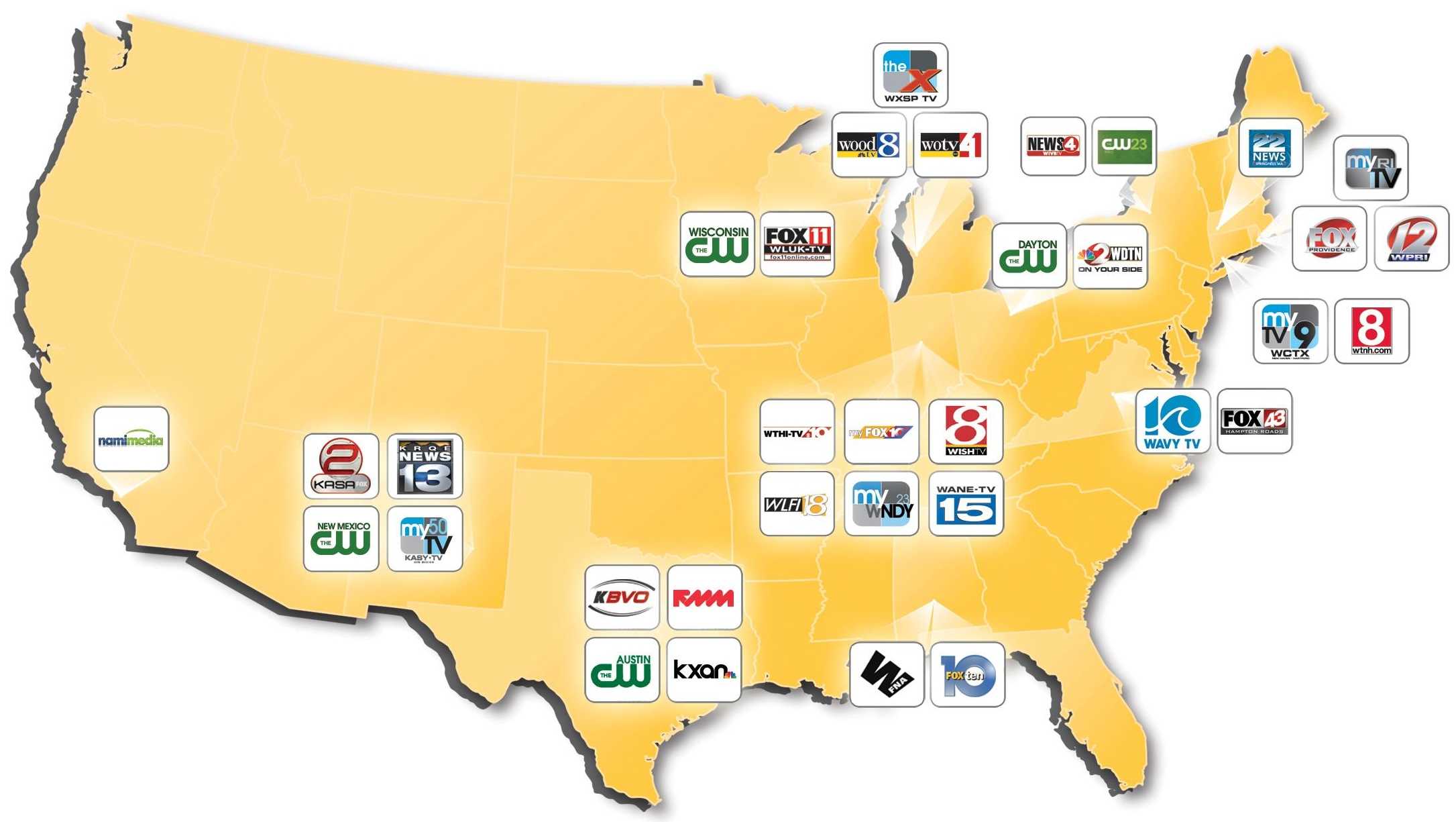
In late February, LIN Television, owner of Norfolk’s NBC affiliate WAVY and Hampton Roads’ Fox station WVBT was engaged in a high profile battle with Cox Cable over retransmission consent fees — the price the cable company pays to put over the air broadcast stations on the cable dial.  While neither side would say exactly how much money was involved, Cox Cable customers will foot the bill starting April 2nd, when the Virginia cable operator raises rates up to 18.3% for basic cable — the fourth rate hike since 2009 and the second in 10 months.

A breakdown:

  • TV Starter (broadcast basic + a handful of basic cable networks) up 18.3% — was $18, now $21.30
  • TV Essential (local stations + 40 popular basic cable networks) up 5.5% — was $59.99, now $63.29
  • Digital set top box rental up $1 to $6.99
  • Cox Internet Essential (3Mbps) up 16% — was $24.99, now $28.99

LIN Media owns local stations around the country.

Cox officials blamed the rate increases on the cost of programming, notably for local stations.

“Programming costs are rising much faster than the rate of inflation,” Felicia Blow, a Cox spokeswoman, wrote in an email to the Virginian Pilot. “While we absorb much of the increase incurred […] we must pass on a portion of the increases to our customers.”

Local broadcasters across the country are aggressively pursuing retransmission consent fees as the traditional advertising model for free, over the air television, has been challenged by the soft economy and poor ad sales.  Parent companies that own clusters of local stations also see the fees as a lucrative new revenue stream for themselves and their investors.

Over the past decade, Cox generally has raised its prices about once a year, notes the Virginian Pilot. The company began speeding up the timetable in 2010. With the latest change coming in April, Cox will have boosted rates for at least some parts of its service – particularly the cost of its most popular package – four times since November 2009.  Approximately 90 percent of 416,000 Hampton Roads-area Cox customers will be paying more for cable service this spring as a result.

[flv width=”360″ height=”290″]http://www.phillipdampier.com/video/WAVY Norfolk Attention COX Communications Subscribers 2-29-12.mp4[/flv]

WAVY in February reported on its parent company’s battle with Cox Cable in this self-serving story aired on its evening newscast.  (3 minutes)

Cablevision Capitulates on New Customer Promos; Verizon FiOS’ Price Slashing Really Hurt

Phillip Dampier February 28, 2012 Broadband Speed, Cablevision (see Altice USA), Competition, Consumer News Comments Off on Cablevision Capitulates on New Customer Promos; Verizon FiOS’ Price Slashing Really Hurt

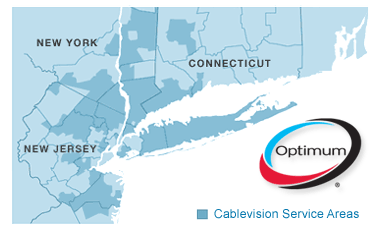
The cable company best known for serving suburban New York City.

Cablevision Industries has cried “uncle” in light of relentlessly aggressive competition from Verizon Communications, which offers its fiber to the home FiOS service in much of the cable operator’s service area.

Cablevision’s 4th quarter and year-end financial results, reported earlier today, are underwhelming investors.  Cablevision executives warned the company will have lower cash flow in 2012 due to increased investments in set-top boxes, network upgrades, and more importantly — no planned subscriber rate increases this year.

Some highlights:

Video – Losing Customers Like Everyone Else: Cablevision lost 14,000 video customers in the last quarter, many to Verizon FiOS and ongoing cord-cutting.  Analysts expected just 9,000 defections.  Cablevision will soon launch both HBO and Max Go online video for their customers nationwide.  Additional on-demand video options, online and off, are also anticipated.

Broadband – Cablevision finally admitted its own network was responsible for last year’s faltering broadband speeds that delivered poor marks in ongoing FCC speed tests.  The company originally denied the speed test results were accurate.  Today CEO James Dolan told investors the company invested in its broadband network to improve speeds and service.  Cablevision feels strongly it must compete effectively with Verizon to survive.  The company added 20,000 high-speed data customers and 31,000 phone subscribers in the quarter.  The company is doing well allowing customers easy access to broadband speed upgrades.

Wi-Fi – Cablevision sees strong value in its wireless broadband network as customers increasingly take their content mobile and need connectivity to the web.

Upgrades – CEO Jim Dolan said 2012 will be “a year of investment” in Cablevision upgrades and improvements.  The company is even accelerating projects originally envisioned for 2013.  Cablevision will continue to expand its “next day” installation offer across the eastern United States by the end of the first quarter.

Promotions – The escalating war of promotions between Verizon and Cablevision are likely to cease as Cablevision yanks their most aggressive new customer offers.  Earlier this year, Verizon was pitching a two year triple play offer that included an incredible $500 prepaid card rebate as part of the promotion.  “I don’t think you’ll see those [low introductory rates from Cablevision] again ever,” said Dolan.

“The main theme that people should take away from the call today is that we continue to be focused on moving the business in a direction where we both retain existing subscribers and have attractive, economically sensible offers for new subscribers,” said Cablevision chief financial officer Gregg Seibert.

Our Concerns About Time Warner Cable’s New Usage-Based Billing

Phillip "Keeping an Eye on Time Warner's Eye" Dampier

Today’s announcement by Time Warner Cable that it is reintroducing usage based billing, at least optionally for customers in southern Texas, is a concerning development that requires further examination and vigilance.  But before we delve into that, I’d like to thank the company for avoiding the kind of mandatory usage billing/cap system we’ve seen appearing at certain other providers.  We also welcome the company’s admission that they have earned enormous profits from unlimited consumption plans and consider that pricing part of the success story they’ve had selling Internet access.

Stop the Cap! has never opposed optional usage-based billing tiers for customers who feel their light usage justifies a service discount.  However, industry trends so far have made no provisions for truly unlimited usage plans that sit side by side tiered plans without quietly diluting the value of flat rate Internet with tricks and traps in the fine print.  We have serious concerns this “foot in the door” to Internet Overcharging could eventually become mandatory for all customers.  Perhaps Time Warner Cable will be different than all the rest.  We can only hope so.

Let’s break it down:

First, Time Warner Cable’s admission it blew it the first time it experimented with these pricing schemes is most welcome.  Being on the front lines of the battle against the company’s Internet Overcharging experiment in 2009 remains very-well-documented on this website.  We confronted arrogant local management that argued usage billing was “fair” and would barely affect any customer.  In fact, the original plan a later revision would have tripled flat rate Internet access to a ridiculous $150 a month.

The company’s 2009 “listening tour” was also a farce, with a number of e-mailed comments deleted unread (we know, because Time Warner’s comment system sent e-mail to customers telling them exactly that.)  Local media outlets, newspaper editorials, and customers made it quite clear: customers want their unlimited Internet access left alone.  They do not want to learn the mysteries of a gigabyte, they don’t want to watch a gauge to determine how much usage they have left, and they sure don’t want to pay any more for broadband service.

If Jeff Simmermon, Time Warner Cable’s director of digital communications, now represents the prevailing attitude about unlimited Internet access among Time Warner Cable’s executive management, that is a very welcome change indeed.  But we’re not completely convinced.  For nearly two years, Time Warner executives have talked favorably about usage-based billing as the “fairest way” to bill for Internet usage.  Besides Simmermon’s comments, we have seen nothing from CEO Glenn Britt or CFO Irene Esteves that indicates they have changed their original views on that.

Unfortunately, we’ve learned over the last three years today’s promises may not mean a lot a year from now.  We’ve watched too many companies introduce these pricing schemes and then gradually tighten the noose around their customers.  Once broadband usage is monetized, Wall Street looks to the practice of charging for usage as a revenue source, and they pressure companies to keep that money flowing.  What begins as an optional tiered plan can eventually become the only plan when flat rate broadband is “phased out.”

Canadians understand this is not unprecedented.  They’ve been down this broadband road before, and it is loaded with expensive potholes and broken promises to repair them.  Usage allowances have actually dropped at some Canadian providers.  The fixed maximum on overlimit fees has gradually been relaxed or removed altogether, exposing Canadian consumers to broadband bill shock.

Time Warner Cable customers are now paying upwards of $50 a month for broadband after consecutive annual rate increases.  That’s plenty, and usage should remain unlimited for that kind of money.

Still, Stop the Cap! has never been opposed to truly optional usage-based billing plans.  We’re just unconvinced companies will keep the wildly popular flat rate pricing if boatloads of additional revenue can be made dragging customers to tiered usage plans, particularly in the absence of aggressive competition.  Just ask AT&T.

Second, as we’ve seen on the wireless side, “unlimited Internet access” means one thing to consumers and all-too-often something very different to providers.  For example, companies have discovered they can claim to provide unlimited access but then de-prioritize flat rate traffic, or even worse, throttle speeds and give preferential treatment to usage-based billing traffic.  Time Warner Cable needs to commit that unlimited access means exactly that — no traffic prioritization, no speed throttles, and no sneaky fine print.

Third, we don’t expect Time Warner will get too many takers for their Broadband Essentials Internet program.  The discount, just $5 a month, is quite low for broadband service limited to 5GB per month.  Exceeding that limit is quite easy, and after just 5GB of “excess usage,” the discount is eaten away and the penalty rate of $1/GB kicks in.  That could ultimately risk up to $25 a month in extra charges.  I’m uncertain how many customers would want to risk exposing themselves to that for a modest discount.

While we are not issuing a Call to Action over these developments, we will be watching them very closely.  Time Warner Cable should make no mistake: if their usage billing plans begin to eat away at fairly priced unlimited access plans, we will once again picket the company and do whatever is necessary to bring political and consumer pressure to force them to rescind these kinds of pricing schemes yet again.

In Denial: Nielsen and Cable Industry Still Don’t Believe in Cord-Cutting

ABC’s Daisy Whitney (New Media Minute) went in search for evidence that Americans really are fed up with their cable TV bill and are cutting the cord.  She collided head-on with an industry still in denial that consumers are fed up with high cable bills and relying on their home broadband connection for video entertainment.

Nielsen reports there are 5.1 million homes in the U.S. that have broadband-only service from their provider, and presumably rely on over-the-air TV for live televised events.  That’s up a huge 23 percent over last year.  But some analysts dismiss that as growth that comes from homes that never had broadband in the first place, a conclusion that needs more evidence to back it up.

Providers admit most of their new customers are coming from other broadband providers, especially as Americans dump slow DSL in favor of faster cable or fiber-delivered service.  In most areas, those who want broadband service already have it.  The primary exception: rural residents just accessing newly-available broadband for the first time.

For 20 years, the cable industry has enjoyed a growth in video subscribers.  That is no longer the case.  While the numbers are not staggering, hundreds of thousands of big cable customers are dropping their cable TV subscriptions every quarter, and they don’t seem to be taking their business to the competition.  Granted, many cancellations are income-related, especially among video-only customers, but it is clear a ceiling has been reached on what Americans will tolerate from the cable company.

With programming rate increases continuing unabated, that bill is only going up.

[flv width=”640″ height=”380″]http://www.phillipdampier.com/video/ABC Quitting Cable TV Truth or Lie 2-22-12.m4v[/flv]

Daisy Whitney’s New Media Minute explores cord cutting.  (2 minutes)


Search This Site:

Contributions:

Recent Comments:

Your Account:

Stop the Cap!