
Home » rate increases » Recent Articles:

Cablevision Sues Union for Giving Out CEO’s Direct Phone Number to Customers

Phillip Dampier February 18, 2013 Cablevision (see Altice USA), Consumer News, Video Comments Off on Cablevision Sues Union for Giving Out CEO’s Direct Phone Number to Customers
Press "1" to talk to James Dolan, CEO of Cablevision.

Press “1” to talk to James Dolan, CEO of Cablevision.

Cablevision has filed a lawsuit against the Communications Workers of America District 1 and its Local 1109, which represents area workers, in Nassau County Supreme Court.

The cable operator is accusing the union of launching harassing robocalls which have given customers the chance to pester CEO and president James Dolan.

At least 20,000 robocalls were made to Cablevision subscribers in three days, from Jan. 31 – Feb. 2 which the cable company alleges were designed to cost the company money and its reputation.

If customers pressed “1” during the call, they were automatically forwarded to a Cablevision call center to complain about recent rate increases and recent job losses at the company. On Feb. 3, Cablevision alleges the robocall campaign was adjusted. Now if customers press “1” during the call, they are directly connected to the phone sitting on Dolan’s desk. In just two days, Cablevision alleges Dolan’s line received 1,193 calls.

The following day, the union was also accused of sharing Dolan’s direct number on social media websites.

“The union will no doubt claim that their telephone harassment scheme is designed to allow customers to communicate substantive messages to the CEO, but such an argument cannot sustain the slightest scrutiny,” reads the complaint. “The unions knows full well that no Fortune 500 CEO can possibly handle a concentrated barrage of one-on-one phone calls with subscribers and others, and that companies like Cablevision have designated and publicly known call centers established precisely to handle such calls in an orderly, responsive manner – including mechanisms for escalating certain such calls to the CEO, if necessary.”

The CWA and Cablevision have fought over an effort to unionize cable company workers in Brooklyn, N.Y.

A year ago, Cablevision workers in Brooklyn voted to form a union, but Cablevision/Optimum management has allegedly stonewalled the unionization effort.

On Jan. 30, about two dozen workers sought to speak with Cablevision management under the company’s “open door” policy, specifically about the lack of progress in completing a contract. Cablevision terminated the 22 employees on the spot, deeming them “permanently replaced.”

Cablevision’s suit requests court costs and an injunction ordering the union not to harass it, aid or abet harassment, or falsely and deceptively display any Cablevision phone number on robocalls.

[flv width=”640″ height=”380″]http://www.phillipdampier.com/video/CWA Fired Cablevision Workers 2-2013.flv[/flv]

 The Communications Workers of America produced this video highlighting what they consider the unfair termination of 22 workers after seeking an “open door” meeting with Cablevision management.  (2 minutes)

Time Warner Raising Rates in the Carolinas: $90.49 for Digital Cable, $167.89 Triple Play

Phillip Dampier February 14, 2013 Consumer News 2 Comments

timewarner twcTime Warner Cable customers in the Carolinas will soon pay $90.49 a month for digital cable television, including one set-top cable box. Customers who buy broadband, television, and phone service will see their monthly bill rise to $167.89.

The rate increases will not initially apply to customers on term contracts or promotional pricing until those terms expire. Others will begin to pay higher rates in March.

Almost 70 percent of Time Warner Cable’s eastern North Carolina subscribers have digital cable TV. The rate increase for television-only service amounts to an extra $5 a month or $60 a year. Triple play customers will also pay an extra $5 a month.

Time Warner’s last rate hike, not including the introduction of a $3.95/month cable modem rental fee last fall, was in late 2011.

Although Time Warner claimed increased programming costs were responsible for the bulk of the rate increases, the cable company keeps adding more channels. In 2012, Time Warner added NFL Network and NFL RedZone, both costly sports networks. In the last few months, Time Warner added an additional 30 channels to the cable lineup in the Carolinas, including a number of new HD channels and barely watched networks including Retirement Living Television and Magic Johnson’s Aspire TV.

A rate change notice mailed to customers in the Carolinas will include exact pricing changes applicable in different communities, but customers in Fayetteville and surrounding parts of the eastern Carolinas will see these changes starting in March:

  • carolinasBroadcast cable: From $16.19 to $17.99
  • Cable programming tier: From $53.30 to $54.50
  • Basic cable: From $69.49 to $72.49
  • Digital tier: From $10.68 to $9.01
  • Basic cable, when bundled with standard Internet and/or home phone unlimited nationwide: From $68.99 to $71.99
  • Digital cable includes basic cable, digital tier, digital equipment and Navigator interactive guide: From $85.49 to $90.49
  • Digital cable when bundled with standard Internet and/or home phone unlimited nationwide: $82.49 to $85.49
  • Basic cable, standard Internet and home phone unlimited nationwide: From $162.89 to $167.89
  • Cable card: From $2 to $2.50
  • Digital equipment primary outlet: From $6.82 to $8.99
  • Navigator interactive guide: Not applicable to $2.17

Customers affected should consider reviewing our tips on how to fight for a better deal from Time Warner.

A Look Inside Time Warner Cable’s Quarterly Results and Forthcoming Plans

Phillip Dampier February 12, 2013 Broadband Speed, Data Caps, Online Video 12 Comments

timewarner twcIt’s time to take a look inside Time Warner Cable’s latest quarterly financial report and pick out some interesting developments that will impact customers during the first quarter of 2013.

Time Warner Cable managed 9 percent revenue growth in 2012, primarily from its broadband service, its strongest product. The company added another 500,000 broadband customers over the last year, primarily poached from telephone company DSL service. This growth in subscribers continues despite rate increases and the introduction of a $3.95 monthly modem rental fee introduced last fall.

CEO Glenn Britt noted that Time Warner Cable customers use and love their broadband service.

“The average customer used roughly 40% more capacity last year,” Britt noted.

But Time Warner Cable has plenty of capacity to handle that traffic growth.

Britt plans to leave as CEO of Time Warner Cable by the end of this year.

Britt plans to leave as CEO of Time Warner Cable by the end of this year.

Irene Esteves, Time Warner’s chief financial officer noted Time Warner Cable continues to decrease its capital spending. Overall, Time Warner spent $3.1 billion on capital expenditures in 2012, or just 14.5% of its revenue. That represents a 40-basis point decrease from 2011. The bulk of that spending was on business services, primarily from the costs of wiring business office parks and buildings for cable. Less than 12% of Time Warner Cable’s spending targeted residential services.

“Overall, we expect capital intensity will continue to decline modestly, with full year capital spending around $3.2 billion in 2013,” Esteves told investors.

Time Warner’s new modem fee is earning the company a major boost in Average Revenue Per User (ARPU). The average Time Warner customer now spends $103.79 a month for service, an increase of 6.3%. Three-quarters of that increase is attributable to the modem fee alone.

Customers are clamoring for higher broadband speeds. At the end of 2012, Turbo, Extreme and Ultimate subscribers comprised over 23% of the company’s residential broadband customer base, up from 19% a year ago and 11% three years ago.

Britt, expected to retire by the end of this year, noted the company’s biggest challenge during his tenure continues to be programming costs. But the company is contributing to that problem itself, spending $110 million in 2012 on its new regional sports networks in southern California, which feature the Los Angeles Lakers and the Los Angeles Dodgers.

“Our programming costs per subscriber has grown 32% in the last four years,” Britt complained. “Over that same period, the Consumer Price Index has risen by 9%. So the math is pretty simple, programming costs have been rising at more than three times the rate of inflation. Our residential video ARPU increased 16% over that same period, so we’ve effectively raised pricing a little faster than inflation but only half as fast as programming costs have risen.”

The rising price of cable service has caused Time Warner to lose a larger number of customers, particularly when promotional pricing deals expire. The company has retrained its retention agents to avoid losing customers to the competition as new customer promotions expire. Time Warner noted some of its strongest competition is coming from AT&T U-verse promotional pricing for double-play offers in Texas and the midwest. In Kansas City, Time Warner continues to dismiss competition from Google Fiber as largely irrelevant, although the company has boosted its maximum broadband speeds to 100Mbps in that city.

Time Warner's TV Everywhere app.

Time Warner’s TV Everywhere app.

Other highlights:

♦ TWC completed its DOCSIS 3.0 broadband enhancement rollout in 2012 and began a process of reclaiming bandwidth previously dedicated to the delivery of analog video. These steps will allow the company to continue to devote more network resources to enhancing broadband service, including handling more traffic and selling faster service.

♦ Optional usage-based tiers are available from most Time Warner Cable regions. The offer of a $5 monthly discount for customers keeping their usage under 5GB each month has received almost no interest from subscribers. Sources inside Time Warner tell Stop the Cap! the company never expected much customer interest, but the offer allowed Time Warner to introduce the concept of usage-based pricing without alienating current customers.

♦ Time Warner Cable’s “TV Everywhere” platform continues to expand. Various TWC TV apps now offer as many as 300 streamed video channels on both smartphones and streaming set-top boxes. In December the company expanded its offering to include video on demand, and last week those on-demand programs became available on the desktop. Time Warner expects to grow its on-demand library and introduce local television channels to its streaming apps in 2013.

♦ Time Warner is trying to improve the standing of its residential telephone service with the introduction of a Global Penny plan, which offers international calling to over 40 countries for one cent per minute. This helps the company market its phone service to subscribers choosing its various ethnic and foreign language television packages.

One-hour service windows are now available in most Time Warner Cable areas. In New York City, a 30-minute window is available for the first appointment of the day. The company is also expanding its self-install packages, letting customers do simple equipment installations themselves. The equipment is delivered free of charge by package delivery services and can be returned by mail as well.

♦ Although Time Warner is earning more from its broadband customers, the introduction of a modem rental fee did cause a significant number of customers to disconnect service, presumably in favor of a competitor. But the extra money in the cable company’s pockets more than makes up for the loss.

♦ Time Warner Cable’s forthcoming “hosted navigation product” represents a major change for the company’s set-top boxes. The “gateway” device will include 1TB of storage, can record up to six shows at once, and will automatically transcode video for an IP platform, letting customers view recorded and live programming on set-top boxes or wireless devices like smartphones and tablets inside the home. Expect to see the new device arrive in the second half of this year in many Time Warner cities.


Telus Slashes Usage Allowances and Bumps Up Prices for Western Canadians

Phillip Dampier February 8, 2013 Canada, Competition, Data Caps, Telus 1 Comment
Another ISP Limbo Dance. How low can they go?

Another ISP Limbo Dance. How low can they go?

Telus, western Canada’s largest phone company, has announced it is slashing usage allowances as much as half and raising prices up to $8 a month on broadband packages, eight months after last summer’s $3 rate hike.

A sample:

  • Internet 6 was $37, now $45. Usage cap reduced to 100GB, was 150GB.
  • Internet 15 was $42, now $50. Usage cap reduced to 150GB, was 250GB.
  • Internet 25 was $52 now $60. Usage cap reduced to 250GB, was 500GB.
  • Internet 50 was $75 now $80.

A Telus spokesperson explained the reasons for the rate increases and allowance slashing:

It is only fair for customers to pay for the amount of bandwidth they use and be on a plan that realistically reflects their usage patterns; otherwise, moderate users end up subsidizing heavy users. Even with the change TELUS has some of the most generous usage caps in comparison to many other ISP’s. Most customers use only a fraction of the allotted threshold. Usage limits are put into place so that the small percentage of high usage customers to not impact the internet experience for other users on the network. We currently do not charge for over usage, but the thresholds allow us to ensure that customers are on an appropriate plan for them.

The rate increase is in response to rising costs in providing and maintaining the network. Since 2000, TELUS has invested more than $30 billion in infrastructure across Canada to provide our customers with some of the best communications technology anywhere in the world. These increases affect all clients, from TELUS employees to brand new sign-ups. All the pricing has been adjusted to the higher rate. In terms of price and quality TELUS Internet is very competitive versus our competitors. In most cases, TELUS services will still be less expensive than similar offerings from our competitors.

telus bullMost existing clients have already had the benefit of a promotion on sign-up. As with all promotions, including the current new client promotions, they run for a limited time and the discounts they offer expire. We do have loyalty programs in place for existing loyal clients and we do offer existing clients the new promotions in cases where they may not have received anything when they signed up.
Customers are outraged about the changes, particularly because Telus has been raising prices twice a year since 2011. The new rate plans are now comparable to Telus’ largest competitor, Shaw Cable.

Telus has not traditionally enforced usage cap violations on their network, nor have they imposed overlimit fees. But a customer service representative said “Telus can suspend allowance violators for 30 days for repeated violations.”

In North America, virtually every major ISP has watched bandwidth costs decline as connectivity continues to get cheaper. But that does not stop some providers from raising prices and slashing usage limits on a service most Canadians find they cannot live without.

Time Warner Raising Rates on CNY Customers; Newest Set-Tops Boxes Come With Service Fee

Phillip Dampier February 8, 2013 Competition, Consumer News, Verizon Comments Off on Time Warner Raising Rates on CNY Customers; Newest Set-Tops Boxes Come With Service Fee

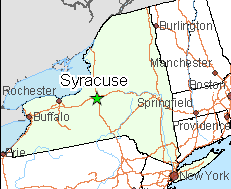
syracuseTime Warner Cable customers in central New York will face paying higher cable bills next month as the company boosts rates.

The cable operator is raising prices on a range of services and equipment. Most customers on double-play or triple-play packages of phone, Internet, and television service will see increases of around $3 a month. Cable TV-only customers will pay $5 more.

Time Warner has been testing its new Navigator cloud-based interactive cable guide on selected set top boxes in Syracuse (and Charlotte, N.C.) The newest software also comes with a significant monthly fee for the enhanced service — $2.79 a month, in addition to usual equipment rental fees. As Time Warner rolls the new set top equipment out to other cities, customers will pay around $11 a month for the boxes, up from $9.50.

A spokeswoman for Time Warner says two-thirds of its customers in central New York are enrolled in promotional packages and are exempted from rate increases until their current package expires.

Others are not waiting for the rate increase to take effect and are departing for Verizon FiOS, where available. Syracuse resident Bill Venson is one of them.

“[When I] dropped off Time Warner Cable’s equipment at their office, I wasn’t even asked why,” he comments to the Syracuse Post-Standard. “The clerk just gave me a receipt and didn’t even tell me to have a nice day. That speaks volumes.”

Unfortunately for many Syracuse residents, Verizon FiOS remains out of reach. Verizon canceled expansion of its FiOS fiber to the home project, leaving service only available in a handful of suburbs outside of the city.

Search This Site:

Contributions:

Recent Comments:

Your Account:

Stop the Cap!