Home » rate hike » Recent Articles:

Patrick Drahi Predicts 25% of U.S. Homes Will Dump Cable TV; Big Broadband Rate Hikes Predicted

Phillip Dampier September 21, 2015 Competition, Consumer News, Data Caps, Public Policy & Gov't Comments Off on Patrick Drahi Predicts 25% of U.S. Homes Will Dump Cable TV; Big Broadband Rate Hikes Predicted
Moffett

Moffett

Altice CEO Patrick Drahi believes up to one-quarter of all cable customers will drop their video packages in the next few years and stick solely with broadband service.

If Drahi’s prediction is true, telecom analyst Craig Moffett off MoffettNathanson predicts broadband pricing will skyrocket as the cable industry tries to replace its lost video revenue.

Cable operators may be able to leverage their monopoly/duopoly status to force higher broadband prices in markets where phone companies only deliver token competition with slow speed DSL.

Moffett believes broadband pricing strategies depend heavily on local competition. In markets like New York City that can choose between Cablevision and Verizon FiOS, dramatically raising the cost of Internet access will probably drive cable customers into the arms of Verizon. But in areas served by companies like Comcast and Time Warner Cable/Charter, Moffett predicts “more benign” competition from phone companies offering only DSL will give cable companies plenty of room to “grow the broadband business” by raising prices on consumers.

[flv]http://www.phillipdampier.com/video/CNBC Does Altice Have Cost-Cutting Plans for Cablevision 9-17-15.flv[/flv]

Craig Moffett, analyst at MoffettNathanson, examines the $17.7 billion purchase of Cablevision by Altice and some of the challenges Altice faces in running a U.S. cable company. He speaks on “Bloomberg Surveillance.” (3:23)

Verizon DSL: The Love is Gone – Rate Hikes, Availability Problems, Low Speeds

Sandra Hartman has been a Verizon DSL customer for more than 10 years. She doesn’t have much of a choice.

In her small town outside of Binghamton, N.Y., Verizon is her only option. Time Warner Cable doesn’t come close to providing service in this part of upstate New York and cell service is abominable, even with Verizon and AT&T.

“I live in an area just large enough to have given Verizon the justification to offer DSL, but 3Mbps service is about all we have ever been able to get, but it has been better than nothing,” Hartman tells Stop the Cap!

Hartman signed up for a package that included $19.99 DSL with her landline a decade ago, a price that went up $10 after the sign-up promotion ended but has remained stable for years.

“Then Verizon decided to raise the price without improving the service,” Hartman says.

In fact, the price hikes have been fast and furious lately, beginning last fall when Hartman received this notice Verizon was raising the price to $34.99 a month:

Verizon-logo

Dear Valued Verizon Customer,

We realize you have choices when it comes to choosing your Broadband provider, and would like to take this opportunity to say thank you for being a loyal customer and for choosing Verizon.

In order to continue to bring you quality service and product innovation, at times we need to raise our rates. Your monthly rate will increase by $5.00 and will be reflected on your bill within the next two months. This rate will remain in effect for one year. If you currently have any credits or discounts on your account, these will remain in effect until their original expiration date.

If you would like to review your account to see if you may qualify for additional savings or if you have any questions, please log on to verizon.com/myverizon or give us a call at 1.888.213.9932.

We value you as a customer and look forward to continuing to serve you.

Sincerely,
Your Verizon Team

“What choices?,” Hartman wondered. “We have no choice and after the rate increase, we’ve seen no improvement in the quality of the service or any evidence of Verizon’s ‘product innovation.’ It’s the same DSL service we’ve had for a decade — we’re just paying $60 more a year for the same thing.”

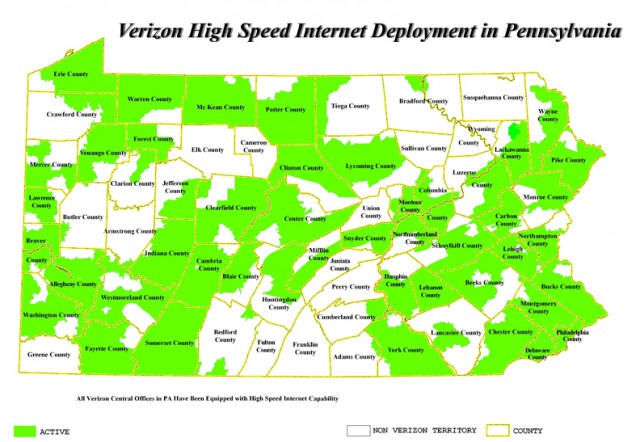
In Pennsylvania, Verizon is required by regulators to provide access to broadband to any customer that wants the service by the end of 2015. This map shows Verizon's service areas, 96% of which now have access to at least DSL service.

In the unusual case of Pennsylvania, Verizon is required by law to offer access to broadband to any customer that wants the service by the end of 2015. This map shows Verizon’s service areas in green, 96% of which now have access to at least DSL service. That same requirement is absent in most states.

To save money, Hartman downgraded her Verizon landline to the cheapest possible plan and switched to Voice over IP provider Ooma, which works over her DSL line. But Verizon is now back for more with another rate increase notice — this time looking for another $7 a month starting this fall, putting the price of 3Mbps DSL up to $41.99 before fees, surcharges, and taxes.

“I called Verizon and they told me rates are reviewed ‘for competitive reasons’ and reflect the cost of providing the service, which is apparently now up another $84 a year,” she said. “Verizon’s equipment, sitting in the elements on a phone pole or humming away in their phone office actually appreciates in value it seems. I wish my 10-year-old laptop was worth more today than the day I bought it, but my laptop wasn’t made by Verizon.”

Hartman complained to customer service the successive rate increases do not seem to be spent on any improvements. In fact, it seems Verizon is no longer accepting new DSL customers in her area.

“A real estate agent friend of mine told me selling homes in this town has gotten difficult because Verizon will simply not sell DSL to new customers here, claiming they have no capacity,” Hartman said. “If you can’t get DSL from Verizon, you don’t have broadband service, it’s as simple as that.”

DSL availability from Verizon is not just a problem for Hartman. Several central offices in upstate New York no longer accept new Verizon DSL customers, claiming the service is at capacity. Some customers in the Finger Lakes region keep DSL service year-round at their seasonal cottages, fearing if they suspend service for the winter they will not get it back next spring. Time Warner Cable offers service to many lakefront properties, but those who own cabins and homes away from the lakeshore usually cannot get cable service and depend on Verizon for service.

The Verizon DSL forum on DSL Reports has more examples of customers that discover their entire exchange is no longer qualified to get Verizon DSL. One such example is in Purcellville, Va., west of Washington, D.C., a quick drive to the Maryland and West Virginia borders.

“DSL suddenly has disappeared from my wire center entirely – regardless if your 10 feet from the CO or out of a remote terminal with a DSLAM,” wrote Zenit. “Even the industrial section of town which has its own fiber fed DSL equipped RT shows negative for service, and there are plenty of vacant units there.”

Similar stories were reported in communities like Pittsfield, Mass. and Netcong, N.J.

Customers have been able to push back against Verizon’s price increases, especially in competitive areas. Some customers are switched to lower cost bundled packages while others are given straight service credits that lower a customer’s bill. Customers need only ask Verizon for a better price and let them know you are shopping around for a better deal.

Newly Independent Cable One Plans Broadband Makeover With Speed Upgrades

cable oneNewly independent Cable One will reduce its emphasis on cable television and turn its time, attention, and capital towards improving broadband service for its 690,000 largely rural customers in 19 states.

Cable One was spun off from Graham Holdings on July 1 and is not likely to stay independent for long before it is acquired by another cable operator, most likely Patrick Drahi’s Altice, S.A. — which recently acquired Suddenlink. But in the meantime, Cable One is attempting to persuade investors it is remaking itself into a broadband company, de-emphasizing the traditional cable television package in favor of dedicating more bandwidth for faster broadband speeds.

“Our standard broadband offering for our residential customers since 2011 has been a download speed of 50Mbps, which is at the high-end of the range of standard residential offerings even today in our markets,” the company reported in a statement. “Our enhanced broadband offering for our residential customers is currently a download speed of 75Mbps, which we expect to raise to 100Mbps by the end of 2015.”

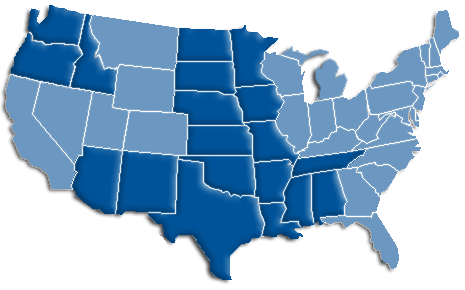
Cable One primarily serves small cities and towns in the central and northwestern United States.

Cable One primarily serves small cities and towns in the central and northwestern United States.

In several markets, 100Mbps speed is already available and regular pricing has been simplified to $1 per megabit of service: 50Mbps for $50, 75Mbps for $75, or 100Mbps for $100 a month.

To protect its broadband business model, which carries prices traditionally higher than larger operators, Cable One will stay focused on largely uncompetitive markets where it faces token DSL broadband competition from companies like Frontier Communications, CenturyLink, and Windstream. More than 75 percent of its customers are located in Mississippi, Idaho, Oklahoma, Texas and Arizona, many served by these three telephone companies.

Cable One signaled it will hold the line on cable programming costs as well. In April 2014, the company dropped 15 Viacom networks, including MTV, VH1, Comedy Central, Nickelodeon and others over contract renewal prices it claimed were too high. The cable TV package has continued without the Viacom networks for more than a year, resulting in the loss of more than 20% of its cable TV customers. More than 100,000 homes have dropped Cable One video service for another provider, but ironically that actually helped Cable One increase its cash flow by more than 11%, because it no longer has to pay programming fees on behalf of the lost customers.

On the bright side, Cable One executives discovered many of its former TV customers have stayed with Cable One for Internet service because the competition either does not offer broadband or generally provides DSL at speeds under 10Mbps. Company officials have emphasized this point to investors, suggesting broadband is a true money-maker and television can safely take second chair without sabotaging profits.

“We certainly have some sympathy for the notion that a broadband-only cable operator might be more profitable,” wrote analyst Craig Moffett in an investor note this month. “But there are some critical holes in the Cable One story. Does the company truly believe that all costs are variable such that cutting video will bring endless margin expansion? Are Cable One’s new shareholders really better off for having played hardball with Viacom?”

Moffett does not believe so because he is convinced Cable One’s independence will be short-lived.

“We all know the consensus opinion is that someone will buy Cable One,” Moffett wrote. “But the above questions still matter. Any potential acquirer would still place value on a video business, or pay less for the fact that Cable One has less of one.”

But as long as rural telephone companies barely compete for broadband customers, Cable One’s broadband performance will deliver them a de facto broadband monopoly in their largely rural service areas. That gives the cable company, or its next owner, plenty of room for rate hikes.

Wall Street Analyst Tells Congress Broadband Needs to Be More Than Just “Profitable” to Spur Investment

greedUnless a broadband provider can deliver the same kind of profitability earned by U.S. cable operators, don’t expect significant private investment in broadband expansion even if the company can easily turn a profit.

That was the argument brought to a House hearing on funding broadband infrastructure expansion by Craig Moffett, a Wall Street analyst at Moffett Nathanson.

“Infrastructure deployment requires the expectation of a healthy return on capital,” Moffett told the House Communications and Technology Subcommittee in a hearing this afternoon. “That should be taken as a given, but all too often, in my experience, the issue of return on capital is either ignored or misunderstood in policy forums. It is not a matter of whether a business is or isn’t profitable, it is instead a matter of whether it is sufficiently profitable to warrant the high levels of capital investment required for the deployment of infrastructure.”

Moffett pointed to the massive profits earned by cable operators Comcast, Time Warner Cable, Charter and Cablevision, all of which earned returns well in excess of their cost of capital, ranging from 13-33 percent. Moffett argued Wall Street has come to expect those kinds of returns, and investors will take a hard look at companies deploying new expensive networks against those that have largely paid back much of the capital costs incurred when their networks were built decades ago.

Moffett continued to criticize the broadband expansion being undertaken by large incumbent telephone companies that he claims does not earn attractive returns for their wireline businesses, even as they have introduced new services like faster broadband and television.

“For example, a decade after first undertaking their FiOS fiber-to-the-home buildout to 18 million homes, Verizon has not yet come close to earning a return in excess of their cost of capital,” said Moffett. “In 2014 their aggregate wired telecommunications business earned a paltry 1.2% return, against a cost of capital of roughly 5%. For the non-financial types in the room, that’s the equivalent of borrowing money at 5% interest in order to earn interest of 1%. That’s a good way to go bankrupt.”

analysisMoffett was also critical of AT&T’s planned expansion of gigabit fiber broadband.

“AT&T has committed to the FCC to make fiber available to a total of 11.7 million locations in their footprint in order to make their acquisition of DirecTV more palatable to policy-makers, but it is hard to be optimistic that they will do much better this time around,” Moffett argued.

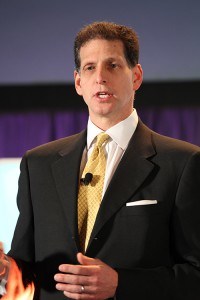
Moffett believes competition is bad for the profitable broadband business.
Moffett

Moffett

“The broader take-away here is that the returns to be had from overbuilding – that is, being the second or third broadband provider in a given market – are generally poor,” Moffett said. “Let that sink in for a moment. Stated simply, it means that market forces are unlikely to yield a competitive broadband market. Neither, by the way, does wireless appear to offer the promise of imminent competition for incumbent broadband providers. Wireless networks simply aren’t engineered for the kind of sustained throughput required for a wired-broadband-replacement service.”

As a result, investors prefer that the broadband marketplace remain a monopoly or duopoly to guarantee the kinds of healthy returns they have earned for years, especially from the cable stocks Moffett has always favored in reports to his clients. Additional competition drives prices down, reducing profits, which in turn discourages investors who have high expectations their money will make them a lot more money.

Moffett’s arguments are largely based on broadband being a for-profit private enterprise, not a public infrastructure effort. But it does explain why there is a willingness to compete in large cities where network construction costs are lower and rural communities remain relatively unserved. As with electrification 100 years ago, investor-owned utilities were willing to wire large communities while ignoring rural farms and communities. Only after electricity was deemed a necessary utility did alternative means of funding, including member-owned co-ops and community-owned utilities finish electrifying areas private capital ignored.

Moffett’s guide to better broadband is based entirely on profitability — delivering enough profits and other returns to attract investors that will look elsewhere if costs become too high. Community-owned broadband avoids this dilemma by advocating for break-even or modestly profitable networks that focus on service, not investor-attractive profits.

Several members of Congress commented Moffett’s vision of broadband was discouraging, even depressing, because it seemed to be locked in a for-profit, private sector model that had few answers to offer for communities left behind. Moffett even warned against oversight and regulation of incumbent cable and phone companies, claiming it would further drive away private investment.

But broadband customers, Moffett admitted, will still pay the price for investor expectations.
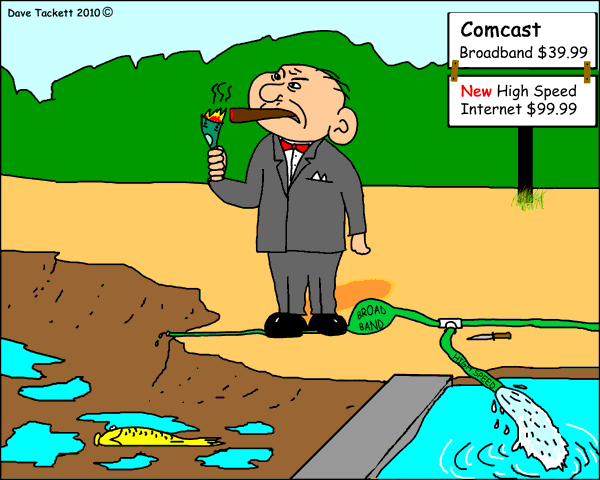
comcast cartoon“As everyone understands, the cable video business is facing unprecedented pressure,” Moffett testified. “Cord cutting has been talked about for years but is finally starting to show up in a meaningful way in the numbers. And soaring programming costs are eating away at video profit margins. From a cable operator’s perspective, the video business and the broadband business are opposite sides of the same coin. It is, after all, all one infrastructure. Pressure on the video profit pool will therefore naturally trigger a pricing response in broadband, where cable operators will have greater pricing leverage.”

Moffett said the kinds of rate hikes consumers used to pay for cable television now increasingly transferred to broadband customers is nothing nefarious. To keep investors happy, the kind of returns once earned from cable television will now have be delivered on the backs of broadband customers if Congress expects cable companies to continue upgrading and expanding their networks.

“All else being equal, that will mean that even new builds of broadband will become increasingly economically challenged and therefore will become less and less likely,” said Moffett. “Or they will simply have to sharply raise broadband prices.”

Moffett’s comments do come with some baggage, however. His clients pay for his advice and Moffett has been a long-time supporter of cable industry stocks. He has been a strong and natural advocate for a cable industry that faces only token opposition. He has browbeaten executives to start broadband usage caps and usage-based billing to further boost broadband profits, slammed telephone company competition in the cable business as financially reckless and unwarranted, and dismissed Google Fiber as a project designed to help Google’s public policy aims more than earn the search giant profits from the broadband business.

But Moffett has also been wrong in the past, particularly with respect to cord-cutting which he used to downplay as an urban legend and on the ease cable companies would be able to acquire and merge with each other.

Beyond all that, Moffett and his clients have a proverbial dog in the fight. After years of pumping cable stocks, suggestions that more competition for the cable industry is a good thing would simply be bad for business.


Sling TV CEO Fears Providers Will Jack Up Broadband Prices to Kill Online Video

DishLogo-RedIn the last three years, several Wall Street analysts have called on cable and telephone companies to raise the price of broadband service to make up for declining profits selling cable TV. As shareholders pressure executives to keep profits high and costs low, dramatic price changes may be coming for broadband and television service that will boost profits and likely eliminate one of their biggest potential competitors — Sling TV.

For more than 20 years, the most expensive part of the cable package has been television service. Cable One CEO Thomas Might acknowledged that in 2005, despite growing revenue from broadband, cable television still provided most the profits. That year, 64% of Cable One’s profits came from video. Three years from now, only 30% will come from selling cable TV.

While broadband prices remained generally stable from the late 1990’s into the early 2000’s, cable companies were still raising cable television prices once, sometimes twice annually to support very healthy profit margins on a service found in most American homes no matter its cost. Despite customer complaints about rate hikes, as long as they stayed connected, few providers cared to listen. With little competition, pricing power was tightly held in the industry’s hands. The only significant challenge to that power came from programmers demanding (and consistently winning) a bigger share of cable’s profit pie.

The retransmission consent wars had begun. Local broadcast stations, popular cable networks, and even the major networks all had hands out for increased subscriber fees.

Rogers

Rogers

In the past, cable companies simply passed those costs along, blaming “increased programming costs” in rate hike notifications without mentioning the amount was also designed to keep their healthy margins intact. Only the arrival of The Great Recession changed that. New housing numbers headed downwards as children delayed leaving to rent their own apartment or buy a house. Many income-challenged families decided their budgets no longer allowed for the luxury of cable television and TV service was dropped. Even companies that managed to hang on to subscribers recognized there was now a limit on the amount customers would tolerate and the pace of cable TV rate hikes has slowed.

For a company like Cable One, the impact of de facto profit-sharing on cable television service was easy to see. Ten years ago, only about $30 of a $70 video subscription was handed over to programmers. This year, a record $45.85 of each $81 cable TV subscription is paid to programmers. The $35.50 or so remaining does not count as profit. Cable One reported only $10.61 was left after indirect costs per customer were managed, and after paying for system upgrades and other expenses, it got to keep just $0.96 a month in profit.

To combat the attack on the traditional video subscription model, Cable One raised prices in lesser amounts and began playing hardball with programmers. It permanently dropped Viacom-owned cable networks to show programmers it meant business. Subscribers were livid. More than 103,000 of Cable One’s customers across the country canceled TV service, leaving the cable company with just over 421,000 video customers nationwide.

Some on Wall Street believe conducting a war to preserve video profits need not be fought.

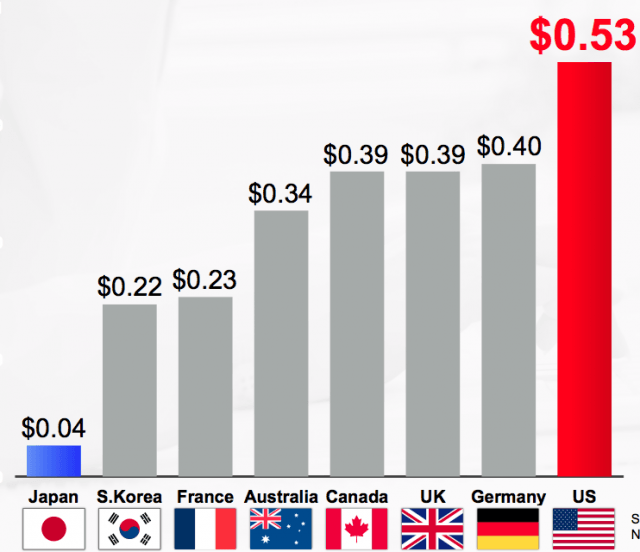
Prices already rising even before "re-pricing" broadband.

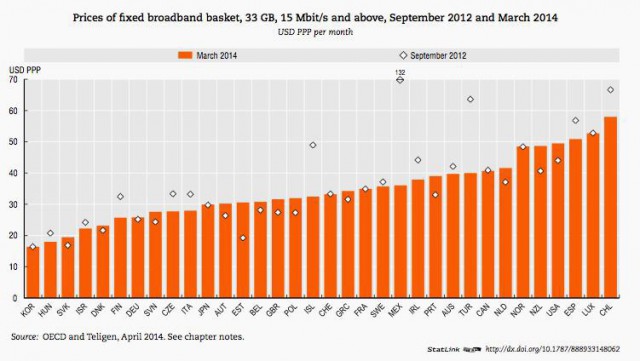
U.S. broadband providers already deliver some of the world’s most expensive Internet access.

Analysts told cable companies that the era of fat profits selling bloated TV packages is over, but the days of selling overpriced broadband service to customers that will not cancel regardless of the price are just beginning.

Cablevision CEO James Dolan admitted the real money was already in broadband, telling investors Cablevision’s broadband profit margins now exceed its video margins by at least seven to one.

The time to raise broadband prices even higher has apparently arrived.

new street research“Our work suggests that cable companies have room to take up broadband pricing significantly and we believe regulators should not oppose the re-pricing (it is good for competition & investment),” wrote New Street Research’s Jonathan Chaplin in a recent note to investors. The Wall Street firm sells its advice to telecom companies. “The companies will undoubtedly have to take pay-TV pricing down to help ‘fund’ the price increase for broadband, but this is a good thing for the business. Post re-pricing, [online video] competition would cease to be a threat and the companies would grow revenue and free cash flow at a far faster rate than they would otherwise.”
If you are already a triple play cable television, broadband, and phone customer, you may not notice much change if this comes to pass, at least not at first. To combat cord-cutting and other threats to video revenue, some advisers are calling on cable companies like Comcast, Time Warner Cable and Charter to re-price the components of their package. Under one scenario, the cost of cable television would be cut up to $30 a month while the price of Internet access would increase by $30 or more a month above current prices. Only customers who subscribe to one service or the other, but not both, would see a major change. A cable TV-only subscriber would happily welcome a $50 monthly bill. A broadband-only customer charged $80, 90, or even 100 for basic broadband service would not.

broadband pricesNeither would Sling CEO Roger Lynch, who has a package of 23 cable channels to sell broadband-only customers for $20 a month.

“They have their dominant — in many cases monopolies — in their market for broadband, especially high-speed broadband,” Sling CEO Roger Lynch told Business Insider in an interview, adding that some cable companies already make it cheaper for people to subscribe to TV and broadband from a cable company than just subscribe to broadband.

A typical Sling customers would be confronted with paying up to $100 a month just for broadband service before paying Sling its $20 a month. Coincidentally, that customer’s broadband provider is likely already selling cable TV and will target promotions at Sling’s customers offering ten times the number of channels for as little as a few dollars more a month on top of what they currently pay for Internet access.

Such a pricing change would damage, if not destroy, Sling TV’s business model. Lynch is convinced providers are seriously contemplating it to use “their dominant position to try to thwart over the top services.”

At least 75% of the country would be held captive by any cable re-pricing tactic, because those Americans have just one choice in providers capable of meeting the FCC’s minimum definition of broadband.

Even more worrying, FCC chairman Thomas Wheeler may be responsible for leading the industry to the re-pricing road map by repeatedly reassuring providers the FCC will have nothing to do with price regulation, which opens the door to broadband pricing abuses that cannot be easily countered by market forces.

Lynch has called on the FCC to “protect consumers” and “make sure there’s innovation and competition in video.”

Unfortunately, Wheeler may have something else to prove to his critics who argued Net Neutrality and Title II oversight of broadband would lead to rampant price regulation. Wheeler has hinted repeatedly he is waiting to prove what he says — an allusion to hoping for a formal rate complaint to arrive at the FCC just so he can shoot it down.

Search This Site:

Contributions:

Recent Comments:

Your Account:

Stop the Cap!