Home » Qwest » Recent Articles:

Facts v. Fiction: Telecom Propaganda Debunked in Broadband Reclassification Reform Effort

Phillip Dampier June 10, 2010 Editorial & Site News, Net Neutrality, Public Policy & Gov't Comments Off on Facts v. Fiction: Telecom Propaganda Debunked in Broadband Reclassification Reform Effort

A pro-consumer group has released a new report that refutes claims from the telecommunications industry that broadband reform represents an investment killer and takeover of the Internet by the Obama Administration.

Free Press this week challenging 10 of the wildest claims in its report, “The Truth About the Third Way: Separating Fact from Fiction in the FCC Reclassification Debate.” Aparna Sridhar, Free Press’ Policy Counsel used publicly available evidence to effectively debunk the multi-million dollar lobbying campaign to stop broadband reform.

Unfortunately, more than a handful in Congress have accepted those discredited claims as fact.  Free Press hopes truth will prevail over the enormous money-fueled opposition effort, especially as the FCC begins proceedings next week on its proposed “Third Way” approach to broadband oversight. The agency is expected to issue a Notice of Inquiry and to seek public comment on the issues of broadband reform and reclassification.

A sampling from the report, which we encourage you to read:

Fiction #3: Placing broadband services back under the Commission’s explicit authority will stifle investment in broadband networks.

Fact: The FCC’s proposed policy merely preserves the status quo prior to the recent uncertainty created by the federal appeals court ruling. As a result, it should have little to no effect on company investment decisions.

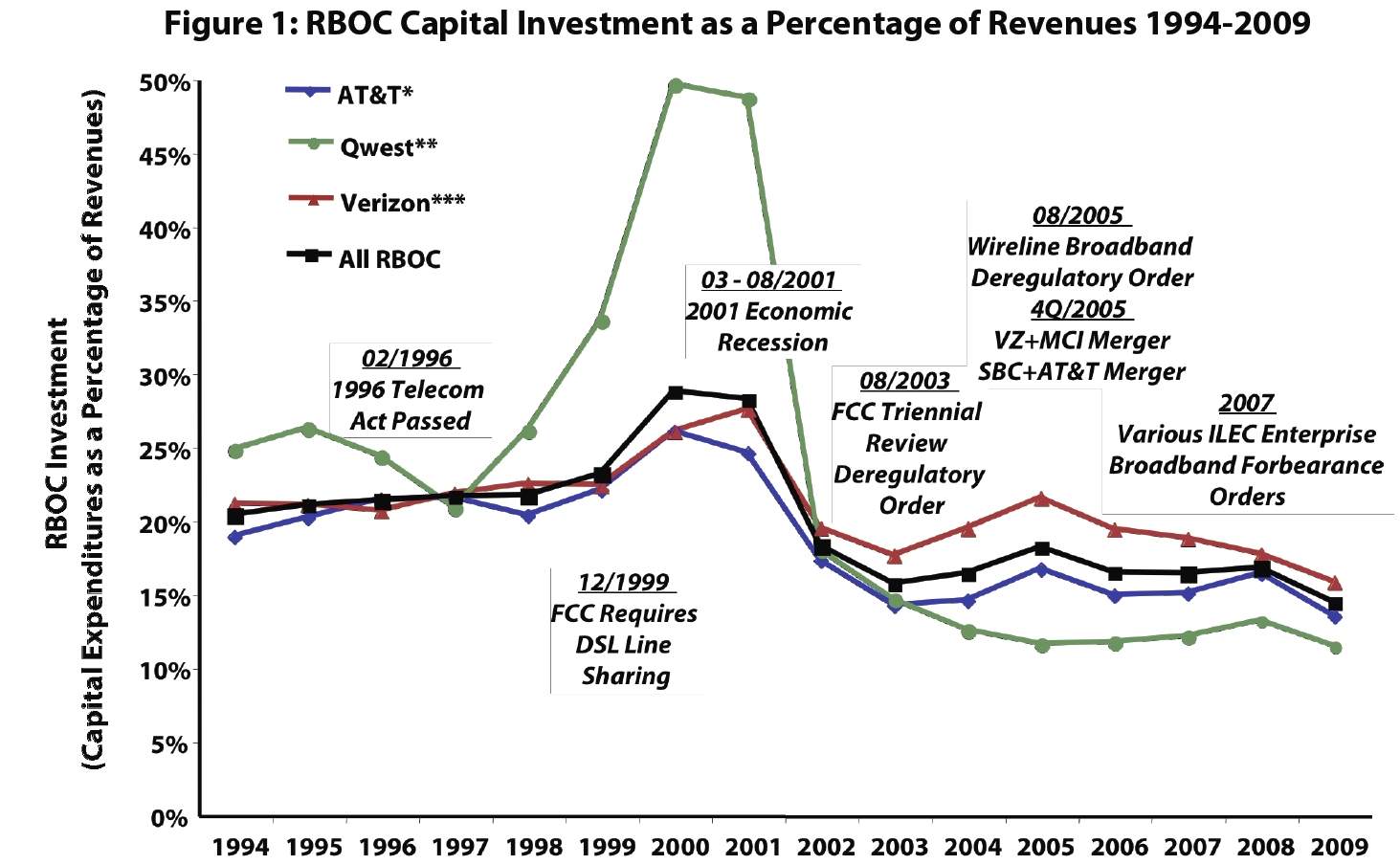
Many industry representatives and investment analysts have dismissed the notion that the FCC’s Third Way will deter investment. Furthermore, history contradicts the claim that applying some of the rules contained in Title II of the Communications Act to broadband service providers (as the Commission has proposed) will adversely affect investment in the networks. Telecommunications industry investments soared during the period when carriers were subject to the full panoply of rules contained in Title II. Investments only began decreasing once the FCC began dismantling many of the pro-competition rules stemming from this part of the Communications Act.

As we've said at Stop the Cap! for two years now, providers' investments in upgrading and expanding their networks are declining, even as demand (and prices) for those services are increasing.

Fiction #4: Placing broadband services back under the FCC’s explicit authority will lead to job losses in the telecom sector.

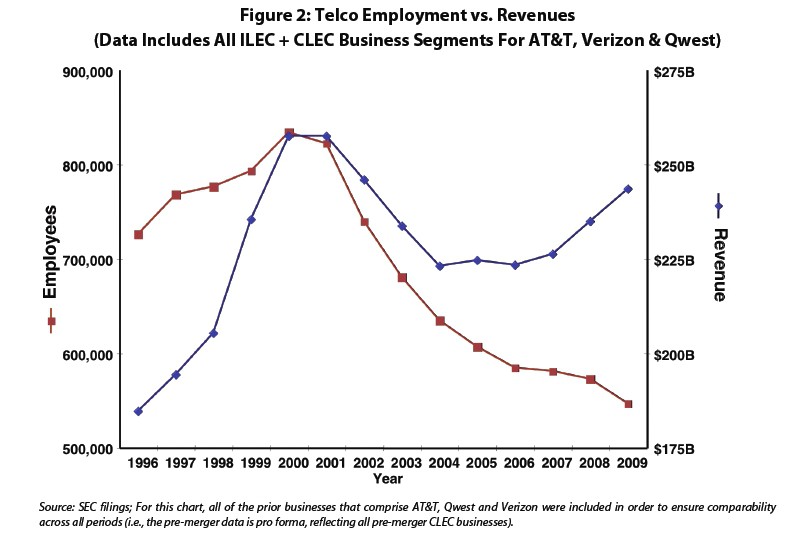
Fact: The telecommunications sector accelerated its job-shedding following industry consolidation and FCC deregulation, a trend that continues unabated even as company revenues reach historic highs.

The notion that the FCC’s move to re-establish its authority over broadband networks will harm employment is also nothing more than unsupported rhetoric. The simple reality is this sector accelerated its job-shedding following industry consolidation and FCC deregulation. And this trend continued even as overall revenues in the sector continued to expand. Unfortunately, the underlying market economics and company statements suggest this trend will continue regardless of how the FCC acts on the regulatory authority question.

So much for the argument that regulation will cause job losses. As this plainly illustrates, even as profits fatten at AT&T, Qwest and Verizon, employment numbers are on a steep decline in today's deregulated marketplace.

Fiction # 7: The FCC’s Third Way proposal is an unprecedented power-grab which departs from Congress’s intent to leave the Internet unregulated.

Fact: The FCC’s proposal will bring the Commission’s approach to broadband networks in harmony with longstanding principles in communications policy. The law always has recognized a distinction between communications infrastructure (like broadband networks) and the content that travels over that infrastructure (such as websites on the Internet). In fact, it was the Powell FCC’s decision to abandon oversight over broadband networks that represented a radical and irresponsible shift — by treating basic connectivity services just like content, the Powell FCC undermined the Commission ability to make pro-competitive, pro-consumer policies in the broadband space. This FCC’s proposal would return to the first principles of communications policy that fostered innovation, competition and investment in the first place.

Fiction #8: The FCC’s proposal would amount to a “government takeover of the Internet.”

Fact: The FCC’s proposal would draw a line between basic two-way communications — which have always been regulated by the FCC — and Internet applications and websites, which would remain unregulated by the FCC. None of the parties in the debate before the FCC have suggested that the FCC impose any kind of content regulation on the Internet. Nor has anyone suggested that the government take over the physical infrastructure that forms the Internet. Rather, the FCC is proposing to apply some basic, light-touch rules of the road to the owners of broadband networks.

These rules will attempt to encourage private investment, promote competition, and foster innovation, economic growth, and job creation. Further, restoring its regulatory framework back in harmony with the law will insure the FCC has basic consumer protection authority.

Analysis: Breaking Down the CenturyTel-Qwest Merger

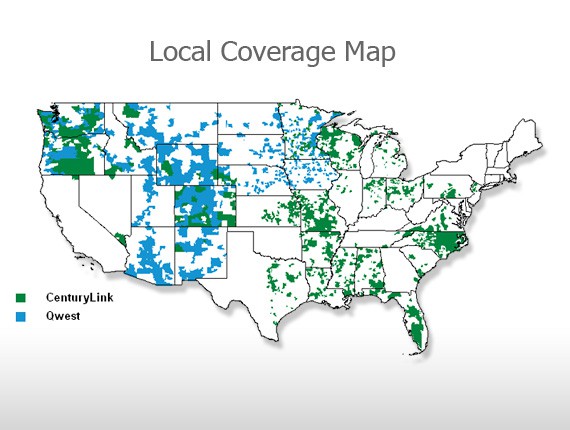
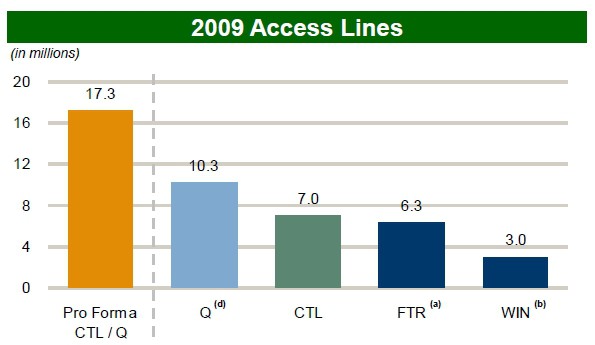
Today’s merger between CenturyTel (soon to be CenturyLink) and Qwest will combine 10 million Qwest customers and 7 million from CenturyTel into a single company serving 37 states in every region of the country except the northeast and much of California and Nevada.  CenturyLink gains access to Qwest’s highly valued portfolio of services sold to business customers and Qwest gets a partner that can help manage its $11.8 billion debt and help grow the last remaining Baby Bell, formerly known as US West, into a national player capable of withstanding ongoing erosion of landline service.

The deal will impact consumers and businesses, and will challenge regulatory authorities to consider the implications of ongoing consolidation in the traditional telephone service marketplace.  It brings implications for broadband service strategies for both companies, which we’ll explore in greater detail.

Breaking Up Was Too Hard to Do, So Let’s Put It Back Together

Ultimately, the genesis of this, and most of the other big telecom deals that we’ve witnessed over the past few years comes from the 1996 Communications Act, which deregulated large parts of the telecommunications industry and triggered a massive wave of consolidation that is still ongoing.  That legislation was the antithesis of the 1984 court ruling which ultimately led to the breakup of AT&T and the Bell System monopoly in 1984.  When President Clinton signed the 1996 bill into law, it allowed much of the Bell System to eventually recombine into two major entities:

  • AT&T ultimately pieced itself back together with the acquisitions of:

BellSouth — serving the southeastern United States

Ameritech — serving the upper Midwest

SBC/Southwestern Bell — serving Texas and several southern prairie states

Pacific Telesis — serving California and Nevada

  • Verizon became a regional powerhouse by combining:

NYNEX — serving New England and New York

Bell Atlantic — serving mid-Atlantic states

Qwest Tower - Denver

The remaining orphaned Baby Bell was US West, which comprised Mountain Bell serving the Rocky Mountain states, Northwestern Bell which covered the Dakotas, Minnesota, the prairie states not covered by SBC, and Pacific Northwest Bell which managed service for Oregon, Washington, and northern Idaho.  US West was subjected to a hostile takeover in 2000 by an upstart telecommunications company that was laying fiber optic cable in the late 1990s alongside the railways its owner, Philip Anschutz, also happened to own.  Qwest assumed control of US West that summer and rechristened it with its own name.  Owned by a Bell outsider, Qwest has always been the company that didn’t quite fit with the rest.

The company gained respect for its enormous fiber backbone that weaves across many American cities, including several in the northeast.  It is best known for its services to business customers.  On the residential side, the story is less impressive.  The company’s customer service record is spotty and the company has accumulated an enormous amount of legacy debt left over from earlier acquisitions.  Despite the company’s repeated efforts to find a partner, it took until today for it to finally find one.  There are several reasons for this:

  1. Qwest’s service area is notoriously rural and expensive to serve.  Outside of its corporate headquarters in Denver, the majority of its service area is either mountainous or rural.  Even today, Qwest serves only 10 million residential customers, almost matched by CenturyTel’s own seven million largely rural customers scattered across the country.
  2. Qwest’s history has been littered with financial scandals, starting with a series of deals with disgraced Enron from 1999-2001.  That was followed with charges of fraud and insider trading in 2005.
  3. Qwest does not own its own wireless division and its previous efforts to deliver television service to customers were largely unsuccessful.  That made Qwest’s ability to withstand erosion in its core business – landline phone service, more difficult.
  4. Qwest’s debt is downright frightening for would-be suitors.

Why Does CenturyTel Want to Buy Qwest?

CenturyTel claims such a transaction allows a combined company to become a larger player on the national scene.  By combining Qwest’s good reputation in the business telecommunications sector with combined efforts to deliver broadband products including high speed Internet, the company thinks the combination can’t be beat.  CenturyTel envisions packages of video entertainment, data hosting and managed services, as well as fiber to cell tower connectivity and other high bandwidth services to deliver replacement revenue lost from disconnected landlines.  It also believes it can realize cost savings from the merger and keep the company relevant on a stage dominated by Verizon, AT&T, and a few large cable companies.

But there are other reasons.  For the three super-sized independent phone companies that Americans are growing increasingly familiar with — Frontier Communications, Windstream Communications, and CenturyTel, their business models depend on their ability to constantly engage in deal-making and acquisitions.  All three companies have built their businesses on investors who see their stocks as “investment grade” financial instruments that dependably return a dividend back to shareholders.  As we’ve seen in countless quarterly financial results conference calls, all three companies are preoccupied answering questions from Wall Street about the all-important dividend.  TV personalities like Jim Cramer has specifically recommended these telecom stocks based, in part, on their dividend payout.  If that dividend dramatically shrunk or stopped, the share price for all three stocks would likely plummet.

One of the side effects of companies dependent on dividend payouts is their constant need to be on the lookout for additional merger and acquisition opportunities.  Here’s how it works.  Let’s say CenturyTel’s debt load and reduced revenue, caused by customer defections to cell phones or cable phone service, delivered a bad fiscal quarter for the company.  Cash flow was down, and company officials simply couldn’t keep the dividend payout at the same level as the previous quarter.  Since many people hold CenturyTel stock specifically because of the dividend, a downward turn in that payout could cause some to sell their shares, driving the stock price downwards.

CenturyTel is still digesting a previous merger with EMBARQ, which led it to rechristen the company CenturyLink

One way around this is to seek out a new merger or acquisition target.  By bringing two companies together, preferably one with a healthy cash flow, suddenly the big picture changes.  Your balance sheet now reflects the combined revenue from both companies, which incidentally makes the percentage of debt versus revenue look a lot healthier.  Cash flow immediately improves, especially if you can slash redundant costs.  Come next quarter, that dividend payout is right back up in healthy territory.

Sometimes companies become so preoccupied with their dividend and corresponding stock price, it can lead them to pay out more in dividends than a company earns in revenue.  While that’s great for investors, it is unsustainable in the long run.

Many critics of telecommunications companies employing this strategy claim it’s evidence that a company is biding time and unwilling to invest in innovation for the future.  Some also believe dividend payouts shortchange customers because they can eventually bleed a company’s ability to invest in service improvements, research and development, and capital investments to maintain their network and expand service.

As consolidation continues, the number of new buyout opportunities begins to shrink, and one shudders to think what happens when there is no one else to buy.  How long is this business model sustainable?

Both CenturyTel and Qwest also recognize the impact of ongoing disconnections from landline service, now averaging 10 percent of their customers a year.  Those departing customers are now relying on their cell phones or alternative calling services like cable company “digital phone” service or broadband-based calling from companies like Vonage or Skype.

The one service they hope can stem customer defections is broadband.  Unfortunately, telephone companies are increasingly losing ground against their cable modem competitors, who have an easier time increasing broadband speeds for customers now seeking online video and other high bandwidth applications.

Of course, one of the benefits of being a “rural phone company” is the fact cable competition is often unlikely.  In fact, some of the lowest erosion rates for landline service are in rural communities where the telephone company is the only game in town.  There is plenty of money still to be made offering high priced slow speed DSL service in communities with no cable competitor and spotty wireless broadband that is often slower and usage-limited.

All three of these big independent players are well aware of this, and maintaining a strong position in relatively slow speed DSL service also protects another revenue stream — Universal Service Fund revenue given to rural providers to equalize telephone rates.  CenturyTel recognizes the increasing likelihood much of that money will be diverted to stimulating broadband expansion, something the phone company is more than willing to do if it means preserving their subsidies.

The new combined Qwest-CenturyTel company hopes the merger can help both survive obsolescence.

For Qwest, a debt reduction may make it possible to spend more to deliver fiber-to-the-curb service, similar to AT&T U-verse.  That could increase broadband speeds and prompt them to reconsider their earlier decision to abandon IPTV in the western half of the country.

CenturyTel can continue to offer traditional DSL service with a more incremental upgrade approach in its more rural service areas, but tap into Qwest’s fiber network to reduce backhaul expenses and potentially pick up new business customers by offering Qwest-branded business services.  Company officials strongly hinted that, at least for now, CenturyTel’s existing customers will continue to find the video portion of their “triple play” package delivered by DirecTV satellite service, so no IPTV for them.

CenturyTel and Qwest's combined local service areas

What Does This Mean for Employees of Both Companies?

Mergers like this always generate great excitement over “cost savings” made possible by the merger.  Much of these savings typically come from employee expenses.  When you hear “cost savings,” think layoffs and pay cuts for all but top management.  Based on past precedent, Qwest employees can anticipate some serious job losses if this transaction closes, especially in the business office.  The combined company will be henceforth known as CenturyLink, with headquarters remaining in Monroe, Louisiana.  That is potentially bad news for Qwest’s employees in Denver.

The transaction is expected to generate annual operating cost savings (which CenturyTel calls “synergies”) of approximately $575 million, which are expected to be fully realized three to five years following closing.  The transaction also is expected to generate annual capital expenditure “synergies” of approximately $50 million within the first two years after close.  That means spending less on infrastructure improvements.

Billing and customer service are traditionally handled by CenturyTel when a company joins the CenturyTel family.  North Carolina customers can attest to that as EMBARQ, an earlier CenturyTel target, finally moves to CenturyTel’s billing system in the coming weeks.

For the sake of pushing the merger through state regulatory agencies, cutbacks in unionized technicians who handle service installations, repairs, and maintain the lines are not expected.  The Communications Workers of America issued a statement today that mildly acknowledged the merger announcement, saying the union “looked forward to serious negotiations with both companies” regarding employment security and assurances of aggressive high speed broadband rollout throughout both companies’ territories.

How the combined CenturyTel-Qwest company stacks up against other independent phone companies. (Q-Qwest, CTL-CenturyTel, FTR-Frontier, WIN-Windstream)

What Does This Mean for Qwest and CenturyTel Customers?

In the short term, nothing.  This merger will take at least a year to complete, assuming regulatory approval in every state where a review is required by state officials.  In 2011, should the merger be approved, Qwest customers can anticipate transition headaches as the Denver-based company winds down operations in favor of CenturyTel.  Billing and customer service will both be impacted.  Long term plans for major projects are likely to be stalled until the merger settles into place.  CenturyTel business customers will eventually see Qwest’s strong business products line become available in many CenturyTel service areas.  Eventually, some larger CenturyTel-served cities may find Qwest’s more advanced DSL service arriving on the scene delivering faster speeds.

Although CenturyTel has hinted it may review whether it’s now large enough to operate its own wireless mobile division, for the near term, expect the partnership to resell Verizon Wireless service to continue.

What is the View of Stop the Cap! on the CenturyTel-Qwest Merger?

Generally speaking, most of the industry consolidation that has been fueled by a deregulatory framework established by the Clinton Administration has not benefited consumers anywhere near the level promised by deregulation advocates.  The three largest independent phone company consolidators — Frontier, Windstream, and CenturyTel are spending more time and resources looking for new acquisitions and schemes to pay out dividends than they are working to enhance service in their respective service areas.  Smaller independent phone companies are deploying fiber to the home networks and answer to the communities where they work and live.  From companies like Frontier, we get Internet Overcharging schemes combined with slow DSL service, tricks and traps from “price protection agreements” that automatically renew, rate increases, and cost cutting.  Windstream plagues some of their customers with extended service outages, and CenturyTel’s promised broadband speeds often don’t deliver.

Unfortunately, bigger is not always better in telecommunications.  While the biggest players like Verizon seek to discard rural American customers, getting one of these three companies instead doesn’t always represent progress.  Our regulators are too often satisfied with basic answers to questions about broadband and service improvements that come with few details and deadlines.  It is just as important to ask what kind of broadband service a company will bring, at what speeds and price, and what usage limits, if any, will accompany the service.

Companies engaged in these mergers hope regulators don’t pin them down to specific service commitments and standards, which could harm the financial windfall these deals bring to a select few.  But they must be the first thing on the table, guaranteeing that customers also get the enjoy the “synergies” these deals are supposed to bring.

Breaking News: CenturyLink to Buy Qwest In All Stock Deal to Impact Customers in 40 States

Phillip Dampier April 22, 2010 CenturyLink, Competition, Consumer News, Rural Broadband Comments Off on Breaking News: CenturyLink to Buy Qwest In All Stock Deal to Impact Customers in 40 States

CenturyTel Inc. agreed Thursday to buy Qwest Communications International, Inc. in an all-stock deal that values the last legacy “Baby Bell” at nearly $10.6 billion, in one of the nation’s largest telecommunications deals.

The merger would dwarf Frontier Communications’ purchase of Verizon landline service and create the nation’s largest independent phone company with operations in 40 states.

Qwest has been off and on the sales block for years, considered the weakest player among the split-up remnants of the old Bell System.  Qwest has fallen well behind AT&T and Verizon in adopting next generation technology to keep landline service relevant in a changing marketplace.  CenturyTel’s business model, like that of Windstream and Frontier, depends on serving rural areas with basic broadband and phone services, without incurring the costs larger providers have in deploying fiber to the home or fiber to the curb networks needed to compete with cable television providers.

Critics contend the consolidation of independent phone companies has left them preoccupied with their stock value and dividend payouts, unwilling to make substantial investments many believe are essential to keep such companies relevant in the long term.  Cell phones continue to eat away at landline service, and the kind of slow speed DSL service available from most of these players cannot compete effectively against cable and fiber broadband service, except in rural communities where customers have just one choice.

We will have additional coverage on this important development shortly.

Qwest Seeks $350 Million Broadband Grant to Improve Speed in Rural Service Areas

Phillip Dampier March 25, 2010 Broadband Speed, Net Neutrality, Public Policy & Gov't, Rural Broadband, Video Comments Off on Qwest Seeks $350 Million Broadband Grant to Improve Speed in Rural Service Areas

Qwest Communications today announced it has filed an application for a $350 million stimulus grant to bring faster broadband to rural communities throughout its 14-state local service area.

Qwest proposes to create a $467 million dollar broadband deployment fund based, in part, on the grant to expand broadband service into areas that currently lack access.

Davis

Davis

“Much like the water and electric programs the government established to encourage rural development, federal grants are needed to enable the deployment of broadband to high-cost, unserved areas,” said Steve Davis, senior vice president of Qwest Public Policy and Government Relations.

Downstream speeds would range between 12-40Mbps, which indicates Qwest is looking at ADSL2+ or potentially even VDSL2 service for parts of its western and midwestern service areas.

The company claims the funds would allow Qwest to reach more than 500,000 homes, schools, and businesses — mostly located within 50 miles of a city or town.

Qwest, like most larger telecommunications companies, did not apply initially for broadband stimulus funding.  Most objected to requirements recipients adhere to Net Neutrality requirements.  Although those requirements remain, some companies believe the second round will be more favorable to projects that extend access from already-existing broadband service lines.  The so-called “middle mile projects” improve connectivity by helping to reduce the length of copper wiring broadband must travel across.  The greater the lengths, the slower one’s speed.  They can also improve speeds and capacity overall for every customer.

[flv width=”480″ height=”292″]http://www.phillipdampier.com/video/40M+Demo-Final.flv[/flv]

Qwest released this promotional video last year to show the benefits of VDSL2 service, which the company currently provides in major urban areas inside its service area. (2 minutes)

Mediacom Complaints Pile Up: “I Talk to Mediacom More Than I Talk to My Wife”

Phillip Dampier March 8, 2010 Competition, Mediacom, Public Policy & Gov't 9 Comments

Mediacom is the nation's eighth largest cable company, serving 1.3 million customers in 22 states

Customers across the country are growing increasingly annoyed with Mediacom, the nation’s eighth largest cable operator that scored rock bottom in this year’s Consumer Reports cable survey.

The complaints keep on piling up: unfulfilled service calls, uninformed customer service agents in the Philippines, poor quality service, and in one case, a supervisor more concerned about how a customer obtained her direct number than actually resolving the customer’s problems.

The fallout from irritated customers now extends beyond horror stories from some of the company’s 1.3 million customers in 22 states — it’s now costing the company rejection of extended franchise renewal agreements in some communities, and plenty of bad press.

Boone County, Illinois
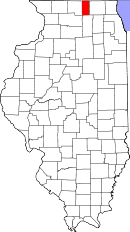
Boone County, Illinois

Last spring, Boone County began discussions about renewing a cable franchise Mediacom had with the county for some 20 years.  Public meetings to discuss the renewal brought throngs of customers annoyed with Mediacom’s poor performance.

The Rockford Register-Star took up the story:

Candlewick Lake resident Roger McGee Sr. has been experiencing difficulties with his cable company since he moved to the gated community two years ago.

McGee, a former Huntley resident, said he’s spent more time trying to get resolutions to his cable and Internet issues than he ever imagined was possible. “Every single step of the way the customer service was horrible and mismanaged,” he said Wednesday. “I talked to Mediacom more than I talked to my wife in those three months.”

Mediacom representatives characterized the complaints as mere aberrations and suggested isolated complaints could be resolved without impacting the company’s franchise renewal.  But additional public meetings held later that summer illustrated Mediacom had problems in the north-central Illinois region where it provided service.  The Register-Star reported:

George Chorvat has experienced countless issues with Mediacom Communications, and he’s looking for relief. The Poplar Grove resident isn’t alone.

Chorvat attended the county’s second cable hearing Tuesday at the Belvidere Township Building along with roughly 20 residents to speak out about service woes and to provide input on the county’s nonexclusive franchise renewal, which is in the negotiation phase.

“You took away half of our movie channels and said it was OK because we had On Demand, but we do not and we’re paying the same price,” Chorvat said.

His challenge of the offerings provided by Mediacom was one of several problems residents said they face.

Some residents detailed months of waiting for maintenance cable wires to be buried underground. Others told of weeks without phone service or waiting at home for technicians to arrive for scheduled appointments only to find the cable company had canceled them.

Late last month, Boone County granted the cable company a one-year extension of its cable franchise, citing customer complaints as the primary reason for the short-term extension.  In addition, the county will hold a series of public meetings at three, six, and nine month intervals over the coming year to check on customer service concerns and how Mediacom responds to them before considering a five year franchise extension.

The interim extension also keeps Mediacom from using telecom-friendly legislation to obtain a franchise from the Illinois state government, bypassing local officials.  Statewide franchising in Illinois was the brainchild of AT&T, which wants to expand U-verse without having to answer to local communities.  Mediacom has the ability to hop on board the same provisions to avoid local control if local governments refuse to extend a franchise agreement.

“We need to make sure we keep some county control here,” board member Karl Johnson told the newspaper in February. “No matter how big we think we are here, they’re a whole lot bigger when they come through downstate.”

Johnson heard several complaints from Mediacom customers about missed appointments, incomplete wire maintenance, and some who went weeks without Mediacom phone or broadband service.

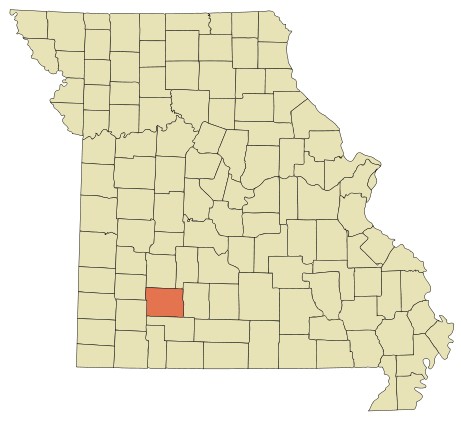
Springfield, Missouri
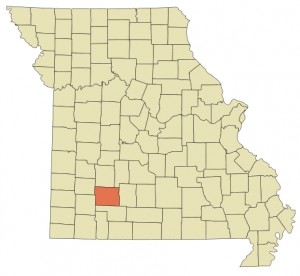
Springfield, Missouri

Cable customers who experience problems expect answers when calling customer service, but Springfield resident Nancy Walker found herself empty-handed after speaking with a Mediacom representative thousands of miles away — in the Philippines.

“I am really upset,” Walker told the Springfield News-Leader in February. “I want a local number I can call, not the Philippines.”

She finally resorted to calling the office number of a friend who once worked for Mediacom before that friend passed away.  A supervisor was more concerned about how she obtained that number than helping her, Walker said.

Mediacom disconnected its local call center about three years ago, and company officials admitted they route calls to call centers, including one in the Philippines.  Larry Peterson, regional vice president of Mediacom, said the company dropped the ball on Ms. Walker, finding the customer service she received “unacceptable.”  Peterson handed Walker his business card and promised any issues would be resolved.

For customers who do not have Peterson’s personal office number, many just have to take their chances.

Springfield’s Cable TV Advisory Commission, which actually holds almost no real power over Mediacom, thought the company could do better.

Commission member Rita Silic urged the cable company to find a way to route dissatisfied customer calls back to a local Mediacom representative.

Dave Iseman, editorial page editor of the News-Leader, opined Mediacom needs “a full-fledged apologetic jingle. And it better be a long one, considering the waiting time that can be necessary to phone in a complaint.”

Burlington, Iowa

The fact Mediacom rated near the bottom in Consumer Reports‘ latest ranking of telecommunications companies — 24th among 27 Internet providers, 15th among 16 television service providers and dead last among 23 telephone providers — didn’t escape the attention of Burlington-based newspaper The Hawk Eye.  The newspaper noticed local complaints were continuing to pour in about service quality and trouble reaching customer service.

Columnist Don Henry even wrote about his own personal experiences with Mediacom in December:

Mediacom last month took away the religious programming my wife enjoys: I guess she shouldn’t complain.

They also poked out one of C-SPAN’s eyes on Congress. The Nancy Pelosi House of Horrors remains fit for family viewing, but not the Senate Shell Game. No explanation of why and I watched both — but I’m not complaining.

We were satisfied with “expanded basic” — but Mediacom decided to improve our viewing experience by removing four channels and making us rent some new box gadget to see them, plus a few we didn’t need.

Lest you complain, you get one box free … until they automatically raise your bill a year later. Conservatives think God trumps Harry Reid, so our box went into Sandy’s exercise room. She’s not complaining.

Henry’s problems only got worse from there, including e-mail disruptions and other service outages.  He did what most customers do when their service is on the fritz — he called the cable company.  That turned out to be quite an adventure:

“For e-mail problems, press 1; otherwise, stay on the line.”

I pressed 1.

“For e-mail problems, press 1; otherwise, stay on the line.”
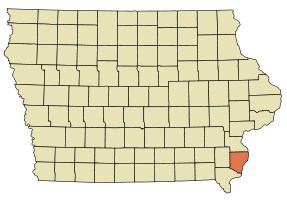
Burlington, Iowa

I pressed 1.

“For e-mail problems, press 1; otherwise, stay on the line.”

After maybe 10 replays, I disobeyed. I stayed on the line … and waited … and waited … until my patience wore thin enough to drive to the Mediacom office on Division Street. I talked to a rep who seemed blissfully unaware of any e-mail problems. It’s been over a day and I’m far from alone, I said.

“Well, nobody’s told us.”

Could you ask about it?

“I can’t do that.”

Could you at least adjust my bill for the lost service?

“I don’t know of that ever being done.”

You used to, when I could get someone by phone.

“Then you’ll have to call.”

Henry’s column struck a nerve among local residents, who flooded the newspaper with comments about their own horror stories, ranging from pesky squirrels chewing through fiber optic cables to tsunamis of spam after the company “improved” its e-mail service.

Phyllis Peters, communications director for Mediacom, admitted the company could improve its customer service, but decided to devote most of her attention to taking issue with… Consumer Reports‘ survey.  Peters wants customers to know Mediacom isn’t dead last in the country because the magazine didn’t ask customers about every cable provider in the United States.  She’s certain there are worse examples out there:

Peters said one reason the survey might rate Mediacom so poorly is because of the company’s ambition. Mediacom is the nation’s eighth largest cable company, and focuses on providing cable coverage to non-metropolitan areas. Expanding service over a large area means more fiberoptic cable and servers that must be monitored.

Peters said the top-ranking cable company Wow, which had top scores on almost every attribute in the ratings, serves a much smaller, consolidated area than Mediacom. Wow is the 12th largest cable provider in the country, and services parts of Illinois, Michigan, Ohio and Indiana. Consumer Reports was enthusiastic about the company, but acknowledged its small size.

“We would like to be higher in the rankings. We’ve put a lot of effort into customer service, and we did add a lot of calling staff,” Peters said. “Those things have moved forward in a significant way, and it takes a while for perception to change.”

It may not always be easy to get a Mediacom representative on the phone, but the company offers the fastest Internet service in Burlington, she said. The company offers a standard download speed of 12 megabytes per second, and that service can be upgraded to 20 megabytes per second for a higher price.

Competition for Burlington residents’ broadband needs come mostly from Qwest, which offers most customers 1.2 Mbps DSL service, although the company can provide up to 7 Mbps in selected neighborhoods.

Max Phillips, president of the western Iowa division of Qwest, told The Hawk Eye he doesn’t know if the company will be able to provide higher speeds to Burlington in the near future.

“We have a long-term plan to bring higher speeds, but our business is constrained by the government model,” he said, whatever that is supposed to mean.

Carthage, Illinois
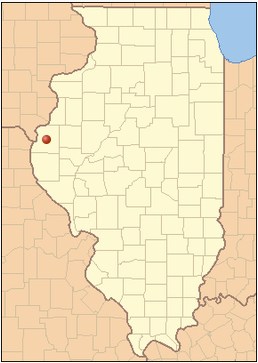
Carthage, Illinois

Mediacom has been out of luck securing a franchise renewal in Carthage because of ongoing customer complaints about the quality of service being provided to Hancock County residents.

Carthage has been without a Mediacom franchise agreement since the old one expired last June.

A proposed renewal was shot down by the city after a vote failed to approve it, citing reception complaints.  Mediacom has been asking the city for a franchise renewal ever since, but the city has resorted to four-month extensions, waiting to see what service improvements were forthcoming in the interim.

Mediacom installed new hardware in the community, which it felt would improve reception, and city officials were hopeful the noted drop in complaints reaching them was an indication of that.

But in February, complaints began arriving at the city’s doorstep once again.

Carthage Mayor Jim Nightingale said he heard two complaints right after the city council offered the latest extension.

Now he’s withdrawn the offer.

Mediacom can always appeal to the state of Illinois to seek a new franchise under statewide franchise laws, but discussions with city officials are continuing for now.

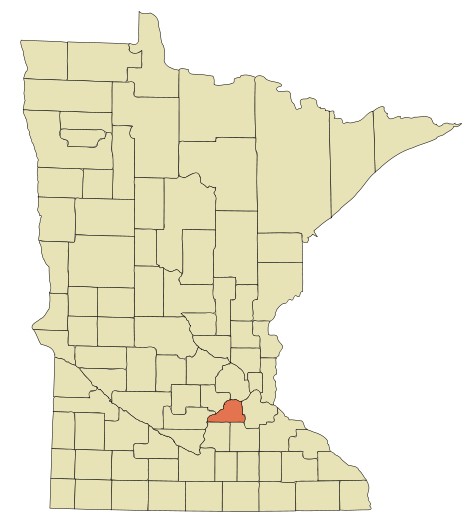
Prior Lake, Minnesota
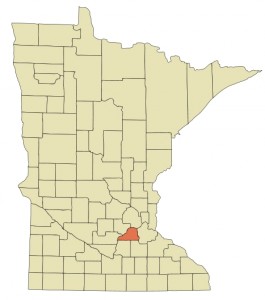
Prior Lake, Minnesota

Communities looking for competitive alternatives to Mediacom usually find phone companies who refuse to offer video service in Mediacom service areas, because the cable company typically chooses smaller communities where such “telco-TV” projects don’t meet the minimum Return On Investment requirements necessary to build them.  Some communities served by independent phone companies or are lucky enough to find a willing fiber-to-the-home provider are in better shape, unless the cable company files suit to stop such projects from moving forward.

The community of Prior Lake, twenty miles outside of Minneapolis, and its 16,000 residents are a case in point.

Last fall, Mediacom filed suit against Integra Telecom, a Portland, Oregon-based provider of competitive voice, broadband, and television service that won a franchise agreement to provide “telco-TV” in Prior Lake and nearby communities within its existing service area.

The suit claims city officials discriminated against Mediacom by not compelling Integra to meet the same terms and conditions Mediacom agreed to in a 1999 franchise agreement. Specifically, Mediacom wants Integra held to the same requirement it agreed to in defining its service area.  Because Integra is not planning on matching Mediacom’s service area house by house, Mediacom claims they are in violation of Minnesota law.

That suit is awaiting a hearing in the state Court of Appeals expected to begin this month.

The dispute between Mediacom and the city has led one state senator to write legislation clarifying the existing cable franchise laws in Minnesota.

Senator Scott Dibble (DFL-Minneapolis), has introduced Senate File 2535.  The bill would allow telephone companies to provide competitive service within their natural service areas, instead of being required to match incumbent cable operator coverage areas.  For example, a cable company might serve a broader area where multiple phone companies provide service.  Under current state law, competing phone companies could be required to wire every area where the incumbent cable company provides service, even inside other phone company’s service areas.  Senate File 2535 recognizes the current telephone company service area boundaries as acceptable enough to proceed with a video franchise agreement.
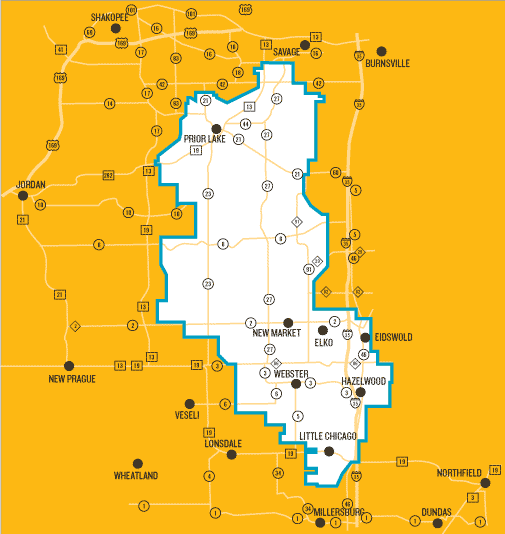
Integra's service area in the Minneapolis/St. Paul region, which is not identical to Mediacom's service area, is one point of contention between Mediacom and Prior Lake officials

Prior Lake City Manager Frank Boyles and Senator Claire Robling (R-Jordan), both testified in favor of the bill at a recent hearing held by the state Senate Committee on Energy, Utilities, Technology and Communications. The bill was approved unanimously and now moves to the State and Local Government Operations and Oversight Committee, of which Robling is a member.

The League of Minnesota Cities is also calling on its members and the public to support SF2535 which could speed competition across Minnesota.

Text of Senate Bill 2535:

A bill for an act relating to cable communications; clarifying requirements for the granting of additional cable franchises; amending Minnesota Statutes 2008, section 238.08, subdivision 1.

BE IT ENACTED BY THE LEGISLATURE OF THE STATE OF MINNESOTA:

Section 1. Minnesota Statutes 2008, section 238.08, subdivision 1, is amended to read:

Subdivision 1. Requirement; conditions.

(a) A municipality shall require a franchise or extension permit of any cable communications system providing service within the municipality.

(b) No municipality shall grant an additional franchise for cable service for an area included in an existing franchise on terms and conditions more favorable or less burdensome than those in the existing franchise pertaining to: (1) the area served; (2) public, educational, or governmental access requirements; or (3) franchise fees. The provisions of this paragraph shall not apply when the area in which the additional franchise is being sought is not actually being served by any existing cable communications system holding a franchise for the area. Nothing in this paragraph prevents a municipality from imposing additional terms and conditions on any additional franchises.

(c) An area for an additional cable franchise is not more favorable or less burdensome if the franchisee is a telephone company, as defined in section 237.01, subdivision 7, and the area of the franchise is no less than the area within the municipality in which the telephone company offers local exchange telephone service. This paragraph is in addition to and not a limit to the authority of a municipality to grant an additional franchise for cable service.


Search This Site:

Contributions:

Recent Comments:

Your Account:

Stop the Cap!