Home » Qwest » Recent Articles:

America’s Fastest-Rated ISPs Bring No Surprises: Fiber Wins, Telco DSL, U-verse Loses

Phillip Dampier October 1, 2012 Broadband Speed, Competition, Consumer News Comments Off on America’s Fastest-Rated ISPs Bring No Surprises: Fiber Wins, Telco DSL, U-verse Loses

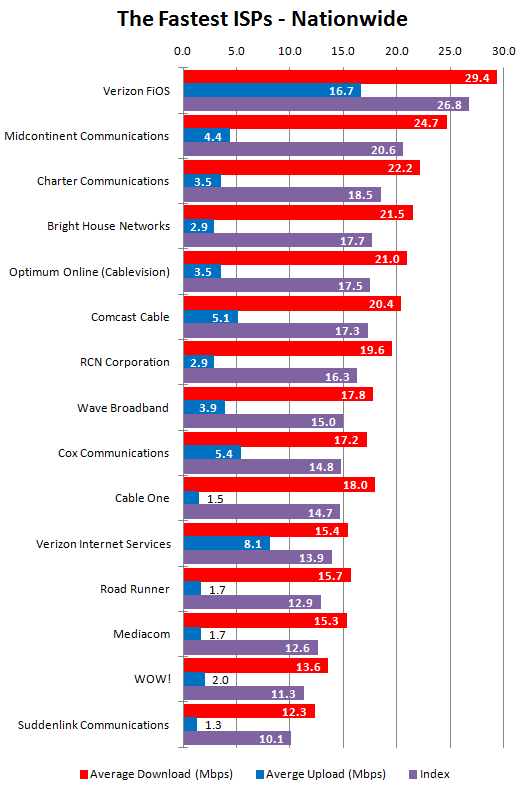
PC Magazine has declared fiber to the home service America’s fastest broadband technology, and among larger providers, Verizon’s FiOS once again took top honors for delivering the fastest and most consistent broadband speeds.

Over the past nine months, the magazine’s readers have been conducting regular speed tests using their personal broadband connections. The magazine found fiber optics remains the best current technology for delivering cutting-edge broadband service, with an average speed rating for FiOS reaching 29.4/16.7Mbps. Since PC Magazine readers were subscribed to various speed tiers while conducting the tests, the magazine’s ratings do not measure the fastest possible speeds on offer from different providers. Verizon’s most-popular service bundle includes 15/5Mbps service, heavily weighting Verizon’s speed rating which is capable of even faster speeds with their 50-300Mbps premium service tiers. But on average, consistently fast speeds kept them in the top spot.

Cable broadband technology was the second-best choice, depending on how cable operators implement it. Cable companies depend on a singl, shared broadband pipeline in each neighborhood. DOCSIS 3 upgrades allow a cable operator to vastly expand that pipeline by “bonding” several channels together to increase the maximum bandwidth. Cable operators that combine the latest technology with the smallest number of customers sharing a connection do the best.

Midcontinent Communications (better known by customers as Midco), achieved first place nationwide. The company, which serves customers in Minnesota, the Dakotas, and Wisconsin, took top honors with an average speed of 24.7/4.4Mbps — the best of any cable operator.

Ratings sometimes show the level of investment made by cable operators in their network. A sudden boost in average speeds is a sure sign a cable operator is rolling out network upgrades. A speed decline can expose a cable company trying to oversell an already constrained network. Charter Cable, which has routinely gotten poor ratings in Consumer Reports’ rankings, showed dramatic improvement in PC Magazine’s ratings, achieving third place with an average speed increase from 15Mbps to 18.5Mbps. But while the added speed is nice, the company’s usage caps are not. Conversely, WOW!, which achieved top scores in Consumer Reports’ ratings, scored towards the bottom of PC Magazine’s tests.

Comcast, which last year trumpeted its high rankings in controversial ads claiming to deliver the fastest broadband in the nation has now been overrun by both Midco and Charter. Comcast Xfinity is now in sixth place, hardly the fodder for any future ad campaign.

Cox Cable actually lost ground since last year, with average speed now down to 14.8Mbps. The bottom four: Time Warner Cable, Mediacom, WOW!, and Suddenlink — are all hampered by slow upload speeds and more anemic “take-rates” on higher speed broadband plans with the speeds on offer. With fewer premium speed customers, average speed ratings take a hit from the larger proportion of customers sticking with standard service.

Phone companies barely appeared in the magazine’s top ratings. AT&T’s U-verse could not even make the top-15. While 25Mbps was adequate when U-verse was first deployed, the broadband speed race has quickly overshadowed the company’s fiber to the neighborhood service, which still relies on home phone lines and antiquated copper infrastructure in the immediate neighborhood.

Phone companies still offering traditional ADSL on almost all-copper networks turned in even more dismal results — most too low to rate. Only Frontier’s adopted FiOS network kept them in the rankings in the overall broadband “slow zone” in the Pacific Northwest, along with CenturyLink’s acquired ADSL2+ and bonded DSL networks built by Qwest.

ISPs that perform poorly typically criticize the methodology of voluntary speed tests as the basis for speed and performance ranking. Most criticize the apparent lack of consistency, random sampling, the possibility rankings may be weighted in certain geographic areas, and may mix a disproportionate number of customers with standard or premium level speeds to unfairly boost or diminish average speed rankings. But overall, PC Magazine’s rankings show some technologies superior to others. If a customer has a choice, finding a fiber to the home provider is likely to provide an improvement over what the cable company offers, but the differences between phone company DSL and cable broadband are even starker.

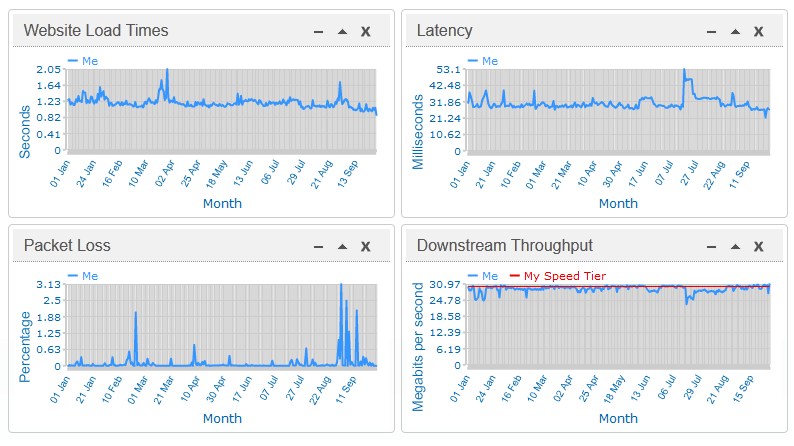
The FCC speed test program, conducted by SamKnows, takes more regular snapshots of broadband quality from volunteer panelists. Your editor’s home broadband connection from Time Warner Cable is profiled above, showing results from January-September 2012

Deregulation Savings? CenturyLink Wins Right to Raise Phone Rates in Arizona

Deregulation likely means higher phone bills for CenturyLink customers in Arizona.

CenturyLink has convinced Arizona state regulators local phone service is now competitive throughout the state, allowing the company to raise rates with less regulatory oversight. But some consumers are wondering how deregulation benefits them.

“Once again the phone company has sold us another bill of goods in Arizona,” says Tucson ex-CenturyLink customer Miguel Gonzalez. “First Qwest and now CenturyLink told us that deregulation would bring rates down for phone service, yet both companies fought for years to raise, not lower prices.”

Under the plan approved by the Arizona Corporation Commission, CenturyLink will be able to raise its residential rates up to 10 percent per year, so long as the rate increases do not exceed 25 percent over three years.

Arizona residential landline customers have paid roughly $13.18 for standard urban phone service since the 1990s, when Qwest was the local phone company. Now CenturyLink is free to raise those prices $1.30 a month in any of the next three years or up to $3.30 overall, even as customers continue to disconnect service across the state. Business customers face potentially higher rate hikes — 15 percent annually or 25 percent over three years.

Regulators expect the company to file for a rate increase before you finish reading this article.

Oddly, both CenturyLink and some members of the commission called the change a victory for consumers, despite the likely higher rates to follow. The plan won approval in the Republican-controlled body in a 4-1 vote.

“It should be a win-win for the consumer (and the company),” said Democrat commissioner Paul Newman, who represents southern Arizona and voted for the plan with reservations. “That’s yet to be seen, but I hope it will be.”

The Arizona Daily Star reports CenturyLink will not be able to charge different rates in competitive and less-competitive areas, which consumer advocates say will protect ratepayers in areas where wireless coverage is poor and cable companies do not compete.

CenturyLink said it needs “rate flexibility” to compete as people disconnect landlines and head for cell phones and cable company “digital phone” products. Although the company did not elaborate, it argues the right to raise rates will allow it to compete more effectively with dominant cable operators Cox and Comcast.

Prior to deregulation, CenturyLink was allowed a guaranteed rate of return based on the true cost of providing landline phone service. The company also guaranteed to provide phone service to any Arizona resident inside of its service territory who asked. Under the terms of the new agreement, CenturyLink will now enjoy more rate flexibility, but will continue serving as the phone company of last resort.

“I’m still scratching my head about how the pointy-heads in Phoenix believe that raising rates makes you more competitive with cable and cell phone companies and not less,” Gonzalez says. “I guess it’s the same kind of New Phone Math that CenturyLink uses to try and keep the customers that are slipping away from them faster than ever.”

Gonzalez says he pulled the plug on CenturyLink last August.

“They offer nothing compelling to me when I can get a better price and better service with more calling features from the cable company, and now they offer even less.”

Four Telcos-Four Stories: The Big Money is in Commercial Services — Today: CenturyLink

Four of the nation’s largest phone companies — two former Baby Bells, two independents — have very different ideas about solving the rural broadband problem in the country. Which company serves your area could make all the difference between having basic DSL service or nothing at all.

Some blame Wall Street for the problem, others criticize the leadership at companies that only see dollars, not solutions. Some attack the federal government for interfering in the natural order of the private market, and some even hold rural residents at fault for expecting too much while choosing to live out in the country.

This four-part series will examine the attitudes of the four largest phone companies you may be doing business with in your small town.

Today: CenturyLink — Our Commercial Customers Deliver 60% of Our Revenue; Our Attention Follows Accordingly

“Business customers now drive about 60% of our total operating revenues,” CenturyLink CEO Glenn F. Post III told investors in March. “Our focus on delivering advanced solutions and data hosting services to businesses are key factors in improving our top line revenue trend.”

With residential customers departing traditional landlines at an average rate of 5-10 percent a year, keeping customers has become an important priority for a number of phone companies, especially those who have plowed millions into mergers and acquisitions to build their businesses. For the past several years, CenturyLink has been acquiring small, regional independent phone companies, a former Baby Bell, and a competing landline provider Sprint used to think would be an important part of its business.

Century Telephone’s original customers were mostly cobbled together from acquisitions from other phone companies, including names like GTE, Central Telephone Company of Ohio (part of Centel), Pacific Telecom, Mebtel and GulfTel. But the biggest expansion of the company would come from acquisitions of Sprint-spinoff Embarq and former Baby Bell Qwest.

Today CenturyLink operates one of the nation’s largest independent phone companies, and serves markets large (primarily on the west coast) and small (rural communities primarily in the southeast, Missouri, Ohio, Indiana and Wisconsin).

CenturyLink’s revenues have often been uneven, mostly because of its acquisitions, landline losses, and the effects from competition in its larger markets. While CenturyLink’s acquisitions grew the company, they also saddled it with landline networks that have proved inadequate to meet the growing needs of customers. With a disconnect rate running between 6.4% this quarter and 7.6% in the same quarter a year ago, residential customers are leaving their voice lines behind in favor of cell phones and broadband customers are departing for faster speeds available from cable operators.

These “legacy services” lost the company $124 million in revenue — an 8.1% decrease over the past quarter. As customers depart, so do CenturyLink employees that used to handle the old landline network.

To make up the lost revenue, CenturyLink has gotten more aggressive in other areas of its business:

  • Increasing focus on business/commercial and governmental services, including managed hosting, cloud computing and other commercially-targeted broadband initiatives;
  • Deployment of fiber to cell towers as a growing revenue source;
  • Limited, but ongoing rural broadband expansion;
  • Development of Prism TV — a fiber to the neighborhood service targeting residential customers.

CenturyLink calls these their four key initiatives towards revenue stability, stable cash flow, and growth.

In the business services segment, CenturyLink sees enormous revenue potential selling businesses access to data centers, co-location services, and ethernet-speed broadband. Last year, CenturyLink acquired Savvis, an important enterprise-level service provider and owner of 50 data centers. Phone companies like CenturyLink are also in a race with large cable operators to be the first to offer cell phone companies access to “fiber-to-the-tower” service to support exploding data growth on 4G wireless networks.

Faster DSL, Fiber to the Neighborhood-Broadband Key to Keeping Residential Customers Happy
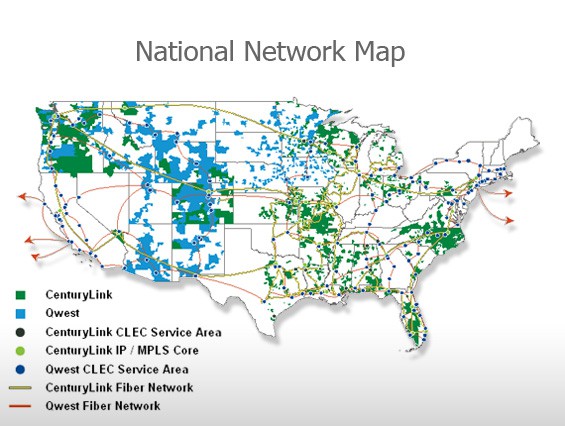
CenturyLink’s network map showing both its own service areas, and infrastructure obtained from the acquisition of Qwest.

For consumers, CenturyLink has been moderately aggressive in some areas boosting speeds of its DSL services. The company claims 70% of their DSL-capable landline network provides speeds of at least 6Mbps. At least 55% supports 10Mbps or higher; over 25% can manage 20Mbps or faster.

The company’s Prism TV service, a fiber to the neighborhood upgrade comparable to AT&T U-verse, is now available to nearly 6.3 million homes and apartments in eight cities. By year end, CenturyLink says it will increase that to 7.1 million homes.

Prism represents a significant portion of CenturyLink’s investment in its residential business. So far, the results have not proven a major threat to the competition. CenturyLink added 15,000 Prism subscribers in the first quarter, but the company only has 8% of the market. Cable and satellite providers continue to dominate. But the company says Prism is helping to keep the customers they already have.

CenturyLink says it now taking Prism TV west into former Qwest territory, starting in and around Colorado Springs, Col.

Customers will likely be offered 130 channels starting at $59.99 a month with a free set top box (new customers typically receive a $20 monthly discount for the first six months of service).

The phone company will compete with Comcast, which sells 80 channels for $56 a month (new customers get a $26/mo discount for the first six months).

With CenturyLink providing a better deal, at least for television service, Colorado City officials hope the competition will bring down rates, at least for new customers. That may be exactly what happens, predicts Mark Ewell, a senior account executive with Windstream Communications.

“We could see some pressure on Comcast’s rates. I would like to see Comcast adopt a price model that doesn’t go up after a promotional period,” Ewell told The Gazette.

“CenturyLink is likely to be more of a threat to the satellite providers like DirecTV and Dish because they have a much higher market share in Colorado Springs than they do in most other markets because so many customers left Adelphia [acquired in bankruptcy by Comcast] when it had its financial problems. Those customers have already shown a willingness to leave the cable television provider and try another service.”

[flv width=”640″ height=”380″]http://www.phillipdampier.com/video/CenturyLink Prism TV.flv[/flv]

CenturyLink shows off its new Prism TV offering in this company-produced video.  (2 minutes)

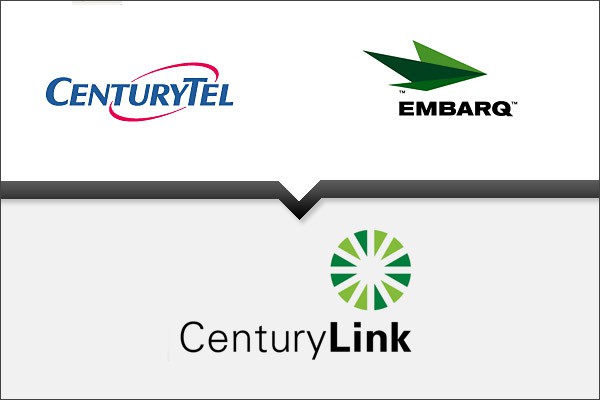
CenturyTel acquires Embarq and changes its name to CenturyLink to reduce the emphasis on its traditional landline business.

CenturyLink’s arrival in the triple-play business of phone, Internet, and television service could be the first serious competition Comcast has gotten outside of satellite providers. WideOpenWest had a franchise to provide service in 2000 but never did. Falcon Broadband won a franchise in 2006, but only provides service to around 1,500 customers in the Banning Lewis Ranch, Black Forest, and Falcon areas. Porchlight Communications received a franchise in 2007, installed service for 500 customers but ultimately never charged them. Porchlight’s IPTV service never worked properly with its chosen set top boxes. That fatal flaw put the company out of the cable business, and the company turned the porch light off for good, abandoning its franchise.

Rural Broadband: Unless the Government Delivers More Subsidies, Rural Customers Will Continue Waiting

In late July, CenturyLink announced it would accept $35 million from the Federal Communications Commission’s new Connect America Program (CAP) to deploy broadband to homes and businesses in rural, broadband-deprived parts of its service area.

CenturyLink has the capability to extend broadband to 100 percent of its customers, but not the willingness to invest the money to make that happen, critics contend. CenturyLink freely admits it applies a financial test when considering when and where to expand its DSL broadband service into its most rural service areas.

In short, the company must recoup its costs of deploying broadband within a certain time frame, and be confident that a certain percentage of customers are going to sign up for broadband service, before it will agree to make the investment. Virtually all of CenturyLink’s current service areas have already met or failed that test, which leaves an indefinite group of broadband “have’s” and “have-nots.”

To shake up the status quo, the FCC proposed to shift Universal Service Fund money, collected from all phone customers, away from landline service towards rural broadband deployment. This invites CenturyLink, and other phone companies, to run those financial tests again. With urban customers footing part of the bill, theoretically more homes should squeak past the return on investment test.

In fact, more homes will finally get CenturyLink broadband — around 45,000 in semi-rural and suburban areas where the costs to provide the service are not as great as in truly rural areas.  The FCC is offering to cover just short of $800 per household to cut the costs of deploying rural Internet access.

But CenturyLink complains the money is not nearly enough to solve the really-rural broadband problem.

“In very rural areas where we really have the greatest need for support, this amount, on a per-location basis, will not be enough to allow us to really do an economic build-out,” Post told investors this spring. “So we’re still in the process really of evaluating our opportunities….”

That will leave CenturyLink likely spending considerably more upgrading its urban landline network to support Prism TV instead of supplying rural broadband service.

[flv width=”640″ height=”380″]http://www.phillipdampier.com/video/CenturyLink History.flv[/flv]

Jeff Oberschelp, vice president and general manager of CenturyLink of Nevada discusses the past history of CenturyLink and where phone companies are going in the future in this company-friendly interview.  (6 minutes)

CenturyLink Seeks Right to Delay Repair of Your Landline Service (No Credits, Either)

CenturyLink wants to repeal a 1993 Idaho rule that requires phone companies to repair service outages within 24 hours or provide one month of service for customers at no charge.

The phone company is lobbying the state Public Utilities Commission to be exempted from the rule that its predecessor Qwest/US West lived under for nearly 20 years. (CenturyLink acquired Qwest.)

CenturyLink says consumers no longer need their phone lines repaired in such a short time, and the company says the rule in hurting their business.

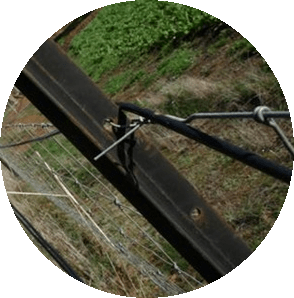
A "temporary" phone cable installed along the top of a wire fence.

“Today, a substantial majority of basic local service customers are not cut off from communication and are not out-of-service in the event their wireline telephone is not working,” the company argued.

Besides, CenturyLink claims, wireless providers are not subject to the same rule, giving them an unfair competitive advantage.

CenturyLink already has a repair exemption for customers who experience service outages due to a natural disaster, during the weekend, or one caused by the customer’s own actions. But now the company wants more, telling the commission most people will simply switch to cell phones while their landline remains out of service.

Despite the apparent contradiction that delivering reduced service is better for consumers, the PUC has been negotiating a compromise, offering to eliminate the service credit requirement and extend the window for repairs to 48 hours.

Before they do, they might want to review CenturyLink’s performance in Arizona, where the company has been caught installing repaired phone lines in pavement cracks and atop public roadways.

The PUC staff questioned claims made by both CenturyLink and Frontier Communications, another phone company that supports the repeal of the repair rules.

“CenturyLink argues that a large percentage of customers now have access to wireless and broadband voice services,” the staff report says. “For CenturyLink’s legacy Qwest customers located in urban areas, this may be true. It may not be true for customers in the very rual parts of CenturyLink’s service territory. When wireline service fails, few, if any, alternative communication services are available in some rural areas.”

The PUC staff also argued the impact on small business in Idaho could be significant. Small businesses still rely overwhelmingly on traditional landline services to conduct business and process credit card payments. Prolonged outages could create significant economic harm for affected customers.

The commission is taking comments on the proposed settlement of Case # CEN-T-12-01 through May 31.

CenturyLink Slowly Strangling Independent ISPs; Choices Dwindle in Upper Midwest

Back in the days of dial-up Internet access, consumers could choose from a dozen or more independent providers selling service from prices ranging from free (for a limited number of hours per month) to $20-25 a month for unlimited dial-in access.  As long as an ISP maintained a local access number, they could set up shop and sell service at competitive prices in virtually any community in the country.

For awhile it seemed that this competition would continue as the days of broadband DSL arrived.  Phone companies like Qwest opened their network to third party competitors who could lease access to company facilities and lines and market their own DSL service.  In states like Minnesota, Qwest customers could choose from several providers, including Qwest itself, and receive service at competitive pricing.  But in 2005, the Federal Communications Commission announced phone companies no longer had to share their phone network with other providers.

It was the beginning of the end for independent service providers in that state and others.  The Minneapolis Star-Tribune reports that out of 47 independent ISPs that existed in the Twin Cities area alone in 2005, only about a dozen remain today — and many of those can count customers in the hundreds.  In fact, business has dwindled so badly, many providers no longer actively market DSL services to consumers.

The 2005 FCC policy allows phone companies to cut off the independents as network upgrades are completed. What service can be sold by independents in Minnesota is speed restricted as well — only up to 7Mbps. Even at those increasingly uncompetitive speeds, CenturyLink makes sure customers are notified they can no longer buy DSL service from independent companies once their upgrades are finished.

Today, the march forward for incrementally faster DSL broadband speeds at CenturyLink (which acquired Qwest), continues to force more and more competitors out of the broadband business.  Many of the remaining customers are located in rural or suburban exchanges only now seeing network upgrades.  But some companies are not waiting for the last of their customers to depart.  Implex.net saw the writing on the wall and decided to exit the business, telling the newspaper they could not compete with CenturyLink, much less Comcast.

“It was a dying business because we could only sell old technology,” said Stuart DeVaan, CEO of Implex.net in Minneapolis.

US Internet of Minnetonka also realized selling DSL was not going to be a growth business under current FCC rules.

“If you are a traditional Internet service provider from the mid-’90s that relies on someone else’s network, you’re at a serious disadvantage,” said Travis Carter, technology vice president at US Internet.

CenturyLink denies the FCC policy limits competition, pointing to cable operators, Wi-Fi, and wireless mobile broadband as all viable alternative choices for consumers.

But Bill Kalseim, who lives in rural Stillwater, having received notification he is about to be cut off from his ISP — ipHouse — thinks otherwise.

“I had a choice of DSL providers before, and now I don’t.” Kalseim told the newspaper.

Search This Site:

Contributions:

Recent Comments:

Your Account:

Stop the Cap!