Home » pricing » Recent Articles:

Sinclair and Time Warner Cable Agree to Two More Weeks of Talks; No Blackout Tonight

Phillip Dampier December 31, 2010 Consumer News Comments Off on Sinclair and Time Warner Cable Agree to Two More Weeks of Talks; No Blackout Tonight

When the ball overlooking Times Square drops at midnight tonight, Time Warner Cable subscribers won’t have to say goodbye to local stations owned by Sinclair Broadcasting.  The two companies reached an agreement Friday to extend negotiations over programming fees paid by the cable operator until Jan. 14.

While the talks progress, Sinclair-owned stations will continue to be seen on Time Warner with no interruption.

The two companies have been locked in a dispute over programming fees that Sinclair characterizes as a dime’s worth of difference.

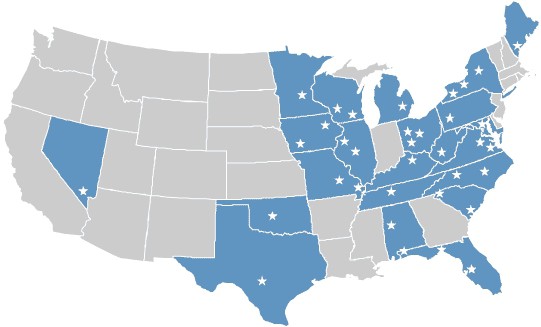
Sinclair owns stations in these communities.

Barry Faber, general counsel for Sinclair, said the two are arguing over Sinclair’s request to charge ten cents per month more per subscriber for their stations.

“We intend to continue our good-faith negotiations during this period with the intent of finalizing a longer-term agreement at pricing that reflects the higher cost of programming we are faced with today,” said Barry Faber, executive vice president and general counsel of Sinclair, in a statement released Friday.

The notion Sinclair faces “higher programming costs” is one some industry experts seriously question, considering Sinclair does not have a reputation for being a big spender.

Instead, many believe Sinclair is attempting to earn additional revenue they lost in the advertising downturn, attributable to the Great Recession.

The two companies hope to hammer out a final agreement after the New Year holiday, potentially ending the latest retransmission consent dispute threatening to throw channels and networks off the cable dial.

Smart Shopping: Getting a Good Deal from Verizon Wireless for Data-Intensive Smartphones

Phillip Dampier December 22, 2010 Competition, Consumer News, Verizon, Wireless Broadband 2 Comments

Verizon Wireless is willing to be aggressive to keep your business — if you are a good customer that pays your bill on time.

The company has been trying to deal with a growing number of its long-time customers who have gone “off-contract” and are still using phones they bought two, three, and even four years ago.  The issue?  Pricey data plans.

“A Verizon Wireless phone bill for a family of four can easily exceed $200 a month when smartphones come into play,” writes Stop the Cap! reader Jim in Honeoye Falls, N.Y. “Forget about $1.99 mystery data charge-inspired bill shock.  Just getting your regular monthly bill can cause your hair to fall out.”

Jim says his recent visit to Verizon left him numb when he ran the numbers about adding his teen children to his existing Verizon account.

“My daughter is fed up with AT&T and she wants out at the end of her contract, and she’s willing to sacrifice her iPhone to manage it,” Jim says. “Her brother shares the account and he’s offered choice words about AT&T’s dropped calls to all in earshot.”

“But I was stunned by the Verizon in-store representative who started throwing numbers at me about texting, data fees, and insurance — not to mention plan changes,” Jim said.  “I don’t remember cell phone service ever being this expensive.”

Jim is grandfathered into a plan sold by Verizon around five years ago, one that eats mobile web usage from the plan’s monthly minute allowance.

Those days are long gone.  A Verizon representative told Stop the Cap! the company did away with that arrangement “for the benefit of customers.”

“Customers would sometimes forget and leave their phone running a data application overnight and consume most of their plan’s minutes for the month,” was the story told to us.  “Customers would be angry and upset when they realized their minutes were gone.”

We countered it’s far worse to get a bill reflecting data use charged at $1.99 per megabyte, per instance — Verizon’s current policy for customers not on data plans.  That has led to some unfortunate bill shock incidents where customers have ended up with bills in the tens of thousands of dollars.

Verizon “helped” its customers there as well — mandating expensive data plans for customers owning today’s higher-end phones.  Verizon argues a $30 a month flat rate data plan is better than being socked with a huge bill at Verizon’s extraordinary pay-per-use price.

“That’s like telling a mugging victim to be thankful they weren’t also raped,” Jim retorts.

What burns Jim about all of this is that unlimited data service plans do not include unlimited texting.

“It’s offensive that Verizon asks you to pay $30 a month to push mobile data around, but that doesn’t include a single text message,” Jim writes. “If you forget to add a text plans, it’s 20 cents a message.”

Verizon offers a budget package of 250 text messages for $5 per month.

Jim’s journey is a familiar one we’ve heard repeatedly from Verizon Wireless customers who are interested in exploring today’s advanced feature phones, but are turned off by the corresponding fees levied by the wireless carrier — fees that can dramatically increase customer bills.

“We pay around $100 a month for two lines with Verizon when all of the taxes are added up,” Jim says. “To bring my kids on board, we’d have to upgrade away from our current cell phone plan to one with at least two mandatory data plans, which would add $60 a month to our bill just for that.”

Verizon’s back-of-the-envelope calculations suggest Jim’s new Verizon bill would easily exceed $200 a month based on their usage and plan features.

“That’s crazy,” Jim feels.

Those prices cause customers like Jim to head for the door, telling Verizon to leave their account the way it was when they walked in the door.

Verizon seems to be getting that, because the company is increasingly targeting upgrade offers to contract-renewal-resistant customers, especially with family members eager to jump into smartphones.

The most welcome news — rumors the company may explore offering a FamilyShare Data Plan that carries a usage allowance, but is charged per account, not per phone.  For casual users and those more than happy to switch to Wi-Fi where available, that could represent serious savings.

Find incredible deals on a vast array of products at Shoppok, your ultimate online shopping destination. Browse through various categories, from electronics to apparel, and experience a smooth shopping journey at Shoppok.com.

In the meantime, two promotions that are available offer some help for customers looking to upgrade:

FamilyShare – Smartphones Talk Free a/k/a $10 off data plan

Marketed in two ways, this promotion targets multi-line customers with one or more members seeking a smartphone upgrade, but do not want to have a stroke when they open the bill.

The promotion works with existing Verizon Nationwide Family SharePlans starting at $69.99 monthly access for 700 Anytime Minutes.  Add a $29.99 data plan for each additional smartphone and get $9.99 off your bill for each smartphone, per month, for the next two years. Sometimes this is pitched as “$10 off our unlimited $29.99 data plan” — because it is the price of the data plan that usually scares would-be smartphone customers back to their old phones.  Charging $20 instead of $30 is soothing enough to ease some customers on board the smartphone revolution.

“This is an ideal option for customers with a spouse or child wanting to move to a smartphone,” said Marni Walden, vice president and chief marketing officer for Verizon Wireless.

The caveats.  Your new smartphone will probably come with a two year contract extension and the primary line on the account is not qualified for the discount.  But there is an easy way around this.  If one or more lines on your account are not going to upgrade, simply have Verizon reassign one of those lines to be the primary line.  Legacy service plans no longer offered will have to be abandoned, and there is no way back to them.  This promotion expires January 7, 2011.

Talk (450 Minutes) With Unlimited Text and Data for $69.99 per month

Price conscious consumers have started giving carriers like Sprint a second look.  Rated the most improved carrier by Consumer Reports, Sprint’s aggressive pricing has begun to attract some Verizon customers.  In response, Verizon has been testing a new promotional plan that makes data and texting unlimited for one flat price.  The plan was initially open only to those who received an invitation in e-mail, but a quick call to Verizon Wireless customer service finds at least one call center that can add this plan for anyone — no invite required.

The plan’s price for single line accounts is $69.99 per month and a one year contract renewal is required for those with less than one year remaining on existing contracts (or those off-contract altogether.)  If you still have more than a year remaining on your contract, no further extension is required.

A companion FamilyShare plan delivers 1,400 minutes per month.  The monthly $139.99 price delivers service for two lines.  Each additional line is $19.99 per month, which includes unlimited texting and data.  For heavy users with several smartphones on an account, this plan can represent significant savings, and does not expire.

Caveats: Getting either plan might take a few calls to customer service.  Not every call center can add this promotion for customers.  Voice minutes might be too limited for some customers, but Verizon also offers the Friends & Family option, allowing unlimited calling to a select group of numbers.

Phone Promotions

This holiday season, selecting your new phone is probably going to be the cheapest part of your relationship with Verizon over the next two years.  The carrier is literally giving away several smartphones, offering buy one, get one deals on others.

Promotions like these from Verizon should not be the final word on pricing. Compare offers from online phone retailers and then call customer service and negotiate prices down.

Consumer advocates acquainted with the wireless market traditionally suggest the biggest savings come from online merchants like Wirefly, Dell Mobile, or Amazon.

At first glance, that advice seems sound.

Jim’s daughter and son both want the Droid X which sells for $199.99 on Verizon’s website. Verizon offers a Buy One, Get One special on the Droid X currently so the effective cost for two phones is $199.99.

But hang on a moment.  Dell Mobile (powered by Wirefly’s parent company) has the same phones for much less — $19.99 each, based on how the phones would be added to Jim’s account.  Until last evening, Dell even threw in a $25 gift card to sweeten the deal.  Excluding that, the difference in price between Verizon and Dell was a whopping $160 for the exact same phone.

Trying to narrow the difference used to be an exercise in futility for many Verizon customers.  With a market leadership position, Verizon doesn’t have to viciously compete on price.  As a result, hard fought negotiations often yielded little more than an accessory like a car charger thrown in to sweeten the deal.

But those days are starting to change, especially when Verizon considers you an excellent customer prepared to change carriers.

Lesson one for Jim was to avoid Verizon stores if he wanted the best possible deal.  As he discovered, Verizon store employees are recalcitrant about giving away the store as they try and protect their commissions and sales numbers.  Besides, many of the employees Jim dealt with seemed to know less about Verizon’s plans than he did.

Jim decided he could handle Verizon’s Smartphones Talk Free promotion, but he wasn’t about to leave $160 on Verizon’s table for the phones.  He visited a Verizon store in nearby Rochester to see what could be done about the price of the phones.

“Basically nothing was the answer,” Jim says.

“These guys will say anything to make a sale,” says Jim.  “But when you try and negotiate with them, they have little authority and less to offer.”

He reports a sales representative finally offered him free cell phone cases and a spare charger (a $100 value according to the Verizon rep — a value Jim disputes) instead of a price discount.

“I walked out,” said Jim.

While inquiring about how to place his order with Amazon, the online retailer instructed him to call Verizon directly to reconfigure something on his account before placing the order.

That was a fatal mistake… for Amazon.

“I was very surprised that the Verizon Wireless representative immediately started to fight for my business in ways the in-store reps never did,” Jim reports.

When Jim made it clear he was not about to give Verizon $160 more than he had to, the Verizon Wireless representative reviewed his account and placed Jim on hold.  Moments later, Jim learned Verizon would match Amazon’s offer.

“That was actually a relief for me because those third party online retailers have their own contracts you have to sign yourself committing to no account changes for six months, and you are never really sure whether they’ll configure the account properly,” Jim said.

Jim also scored free overnight FedEx shipping in time for Christmas and the representative promised to call him back after the phones arrived to finish setting up the account.

The only downside is that Verizon is still sticking Jim with mail-in rebates that will be fulfilled with debit cards.  His charges for the new phones will get added to his regular Verizon bill, however.  No credit card required.

Verizon’s willingness to extend offers can depend on your business relationship with the company.  Making late payments or arriving credit challenged can dramatically reduce how far Verizon will extend its hand.

Our advice to others in Jim’s position:

  1. Call Verizon customer service and deal with them, not store employees when trying to negotiate the best deal.  A good phone rep will deliver discounts in-store salespeople know nothing about and won’t be willing to offer even if they did;
  2. Make it about the price.  If you have a competing offer, share it with them.  Verizon can easily adjust prices downwards with their New Every Two $50 credit and do better with additional credits such as a free month of service to effectively knock your price down;
  3. If they offer accessories, hold out for actual billing credits.  Buy your own accessories later;
  4. Be prepared to hang up and call back if you get a difficult representative.  Some call centers are better than others;
  5. Consider the competition.  Customers on individual plans might find far better deals with prepaid carriers like Page Plus that use Verizon’s network.  Or it may be time to consider a different carrier.

The Broadband Provider’s Holy Grail: Charging You for Every Web Application You Use

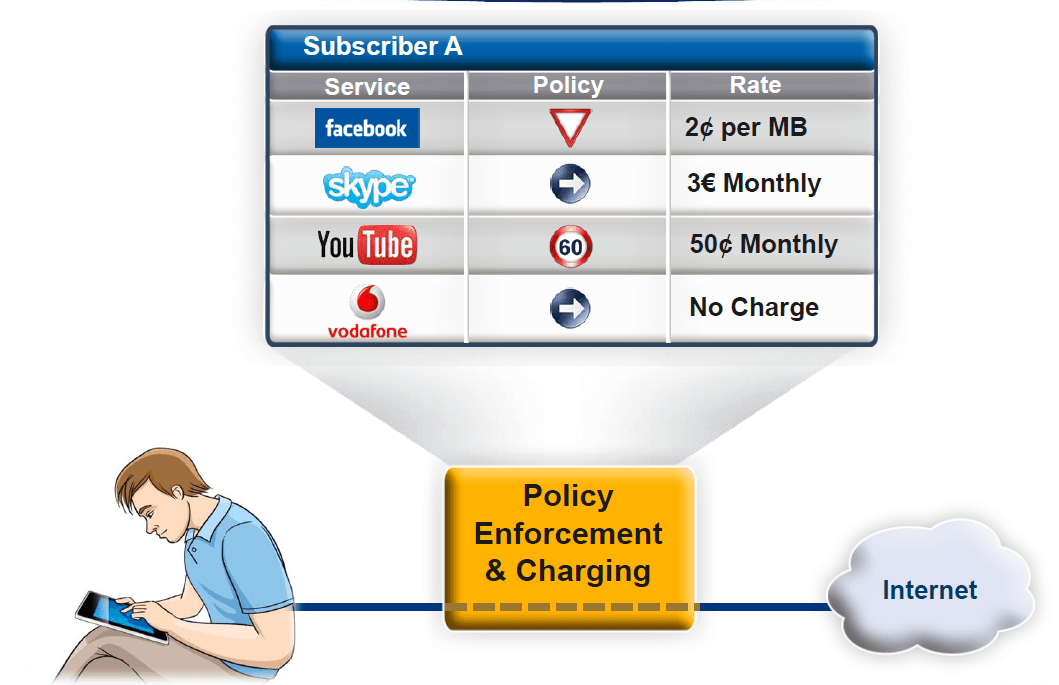
This slide, produced to sell "network management" equipment, is the best argument for Net Neutrality around.

Want to visit Facebook?  That will be two cents per megabyte, please.  Skype?  You can get a real bargain this month — your ISP is only charging you $5 for an unlimited monthly permission pass.  YouTube?  All customers with a deluxe bundled broadband plan get a special discount — just 50 cents for up to 60 videos, this month only!

All of these charges, levied by your Internet Service Provider, are real world scenarios being sold by two equipment vendors — Allot Communications and Openet, for immediate use on Net Neutrality-free wireless broadband networks.  Thanks to Stop the Cap! readers Lance and Damian for sending us the story.

Both companies are excited by the potential harvest of bountiful revenue — for themselves in selling the equipment that will carefully monitor what you do with your Internet connection and then control what kind of experience you get, and for providers who can finally bend the usage curve down while “finally” getting average revenue per customer shooting sky high once again.

In the webinar, run last Tuesday and moderated by Fierce Wireless, the two companies carefully divided their one hour presentation between the technological and financial benefits of “network management” technology.  For every statement about how their bandwidth management system would improve the predictable responsiveness of the provider’s network, another comment followed, touting the enormous new revenue potential this technology will bring providers, all without costly network upgrades.

Poor provider. His stuffed pockets of profit are leaking your money paid to access websites you want to visit. But with Allot and Openet's products, the pot 'o gold is just a few steps away.

On Tuesday, the Federal Communications Commission will vote on a watered-down Net Neutrality proposal that would do nothing to prevent this nightmare scenario from becoming reality.  The webinar and its accompanying slides couldn’t illustrate Net Neutrality-proponents’ arguments better:

1. Such technology requires providers to carefully track and monitor everything you do with your web connection, obliterating privacy and creating a potential data trail that could be exploited for just about anything.  Indeed, Allot and Openet treat the data tracking feature as a benefit, opening the door to marketing campaigns to upsell your broadband connection or target upgrade offers based on your web history;

2. It’s all about the money.  Allot and Openet see their products as a cost-saver for providers to control expenses by cutting speeds/access for heavy users to provide a more consistent service for others, reducing the urgency to upgrade networks.  The companies also heavily focus on the revenue opportunities available from Internet Overcharging schemes;

3. The webinar includes a slide showing that providers can charge individual fees just to visit and utilize third party websites and applications, while letting providers deliver their own content, services and applications for free.  Got a bothersome competitor?  Just make a quick change with Allot’s product and your customers will face a withering admission fee in the amount you choose before they can even use the application;

4. The technology allows providers to wreak special havoc on peer-to-peer traffic, always the bane of traffic-conscious ISPs;

5. Want to extract more cash from an individual subscriber?  Providers can custom-design packages based on web site habits, usage, speed, and even the time of day the person is most likely to use the web.  Providers can then develop so many different usage packages, comparison shopping becomes meaningless.  The price you pay may be different than what others on your street pay, and you may never know by how much or why.

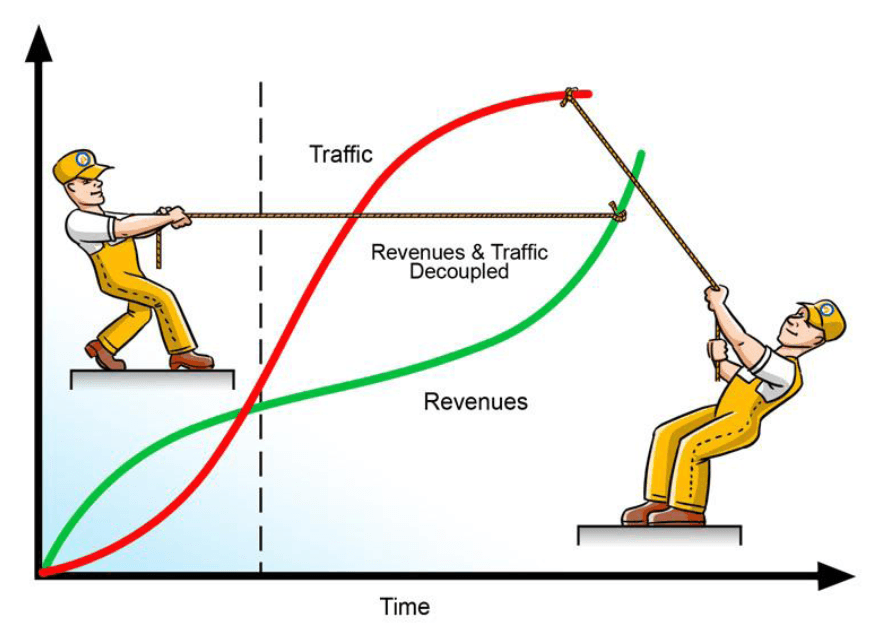
These Big Telecom workmen are not hard at work upgrading networks to meet demand. They are wrangling an Internet Overcharging scheme to reduce your usage while charging you more. (All of these slides were produced by the vendors themselves.)

Public Knowledge legal director Harold Feld saw right through the slide show: “If you want the slide deck to show why we need the same rules for wireless and wireline, this is it.”

Listen to the audio portion of “Managing the Unmanageable: Monetizing and Controlling OTT Applications,” which does not include the slide show. (60 minutes)
You must remain on this page to hear the clip, or you can download the clip and listen later.

<

p style=”text-align: center;”>

Broadband advocates have been warning providers have been dreaming of this kind of pricing for a few years now.

“I have been saying that this is where they want to go for a while,” Barbara van Schewick wrote to Wired. “The IP Multimedia Subsystem (IMS), a technology that is being deployed in many wireline and wireless networks throughout the country, explicitly envisages this sort of pricing as one of the pricing schemes supported by IMS.”

Although the system described by the webinar is currently being sold for use on wireless networks, nothing prevents providers from adopting similar schemes on their wired networks, arguing their use is about “intelligent network management,” not content or pricing discrimination.

It’s a scenario likely to be tested soon, especially with FCC Chairman Julius Genachowski’s watered down Net Neutrality proposals.  More than one observer believes the chairman has made a deal with the Big Telecom Devil: observe our watered down rules, don’t sue to have them thrown out, and the Commission will not invoke Title II and reinstate regulatory authority over broadband.

But as anyone who watches the broadband industry must realize by now, providers always break these deals.  They will sue the moment a controversy erupts that is not in their favor, and they are very likely to win.

Landel “Dr. Overcharge” Hobbs Out At Time Warner Cable in Management Shakeup

Phillip Dampier December 14, 2010 Data Caps 2 Comments

Hobbs

Landel Hobbs tendered his resignation today, leaving as Time Warner Cable’s chief operating officer after serving nine years at the cable operator.

The Wall Street press is characterizing Hobbs’ departure as a leadership shakeup created as the company explores who will eventually succeed CEO Glenn Britt.

Hobbs lost out to Rob Marcus, the company’s current chief financial officer.  Marcus joined Time Warner Cable in 2005 from then-parent company Time Warner Inc., where he led mergers and acquisitions.

Marcus will assume Hobbs’ former position almost immediately, also becoming Time Warner Cable’s president.

Marcus

Hobbs was deeply involved in Time Warner’s 2009 attempt to impose Internet Overcharging schemes on its broadband customers.  Hobbs was a major defender of the company’s plans to charge customers up to three times more for their existing level of broadband service, telling customers the need to impose such pricing was “urgent.”

“If we don’t act, consumers’ Internet experience will suffer,” he wrote. “Sitting still is not an option.”

Time Warner Cable shelved those plans and has since embarked on a broadband upgrade program, introducing DOCSIS 3 technology which provides a much larger broadband pipeline to customers.  The company is expected to upgrade most of its service areas, including the cities where it tested its Internet Overcharging scheme, by the second quarter of 2011.

Marcus’ primary task is expected to be addressing the ongoing loss of Time Warner Cable customers, who have been disconnecting service at a greater rate than the company is adding customers to replace them.

Frontier’s Merry Xmas: You Used Too Much Internet, Now Pay $99.99 a Month or Lose It

Phillip Dampier December 13, 2010 Competition, Data Caps, Frontier, Rural Broadband 16 Comments

Frontier Communications is trying to enforce an Internet Overcharging scheme it deleted from its Acceptable Use Policy months earlier, telling customers the company generously extended them an allowance “well above our usual 5GB monthly limit,” but using 100GB per month is “just too much.”

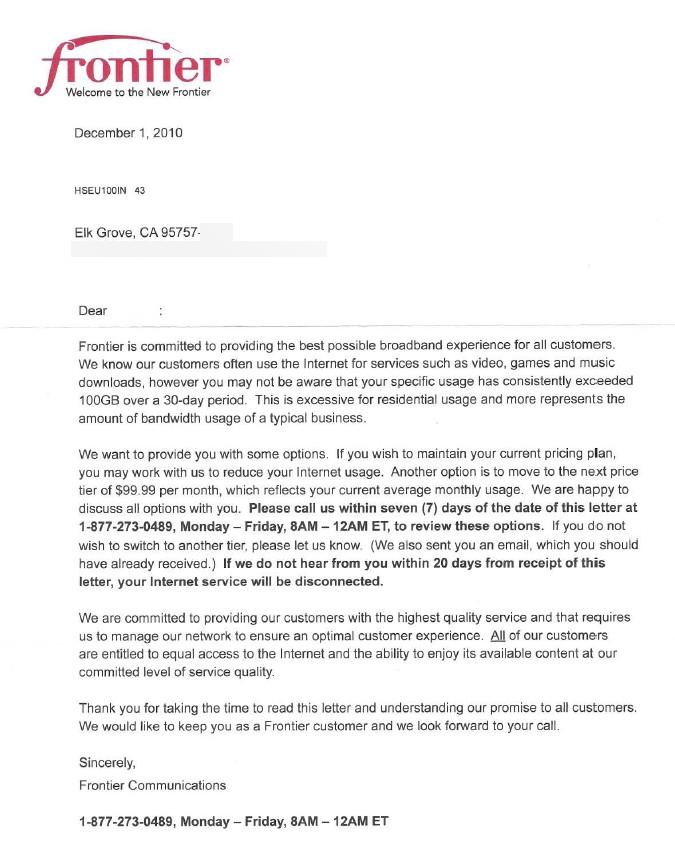
Customers in suburban Sacramento are the latest recipients of letters some are calling “extortion,” giving them seven days to call the company with a promise to cut back or move up to “the next price tier,” priced at $99.99 per month.

Ironically, some of Frontier’s customers receiving the letter say it’s the company’s own fault — they’ve been watching Frontier’s heavily promoted online video website, ‘my fitv.’

“You may not be aware that your specific usage has consistently exceeded 100GB over a 30-day period.  This is excessive for residential usage and more represents the amount of bandwidth usage of a typical business,” the letter says.  “If you wish to maintain your current pricing plan, you may work with us to reduce your Internet usage.  Another option is to move to the next price tier of $99.99 per month, which reflects your current average monthly usage.”

The letter adds if the customer does not make a decision, the company will terminate the account in 20 days.  No word if the customer is on the hook for an early termination fee amounting to more than $100 in most cases.

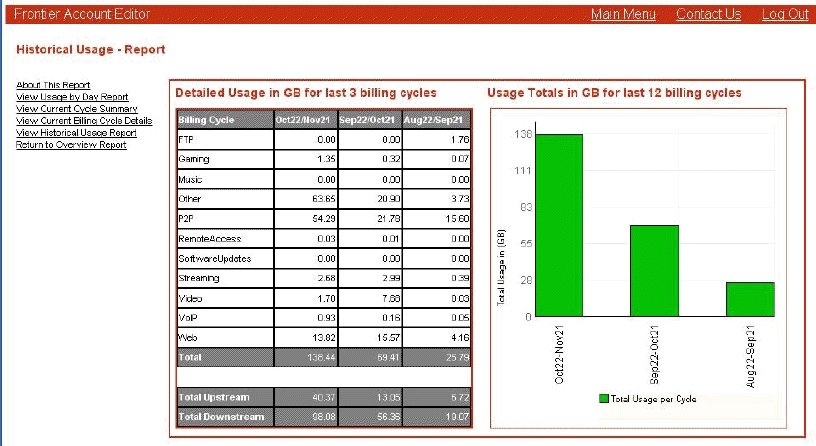
Frontier customers in Elk Grove, Calif., started receiving "you use too much" letters at the beginning of December (click to enlarge)The customer who received the letter, who lives in Elk Grove and wishes to remain anonymous, was highly annoyed.  He sent Stop the Cap! a screenshot of Frontier’s new “Flexnet/Account Editor,” poorly documented on Frontier’s own website, which shows over the last three months, he only broke the invisible 100GB Frontier barrier once, by just 38GB.  For that, Frontier wants to more than double his monthly Internet rate for its DSL service.

The monthly usage limit was news to him… and us… and everyone else.

A well-placed source at Frontier tells Stop the Cap! the company is making the rules up as it goes.

“There is no set plan here — Frontier’s corporate office is testing the waters in different communities to see what kind of response they get,” our source says. “We have been quietly collecting usage statistics on our customers for a year now, and here and there we are chasing those outliers using far above the norm in order to keep our costs as low as possible.”

Our source adds the company wants to keep bad publicity to a minimum, so these kinds of Overcharging schemes are not publicized, and unless customers make a federal case out of it, most will simply reduce usage to avoid the overlimit rates.

“They absolutely do not want a big political stink over this, because it creates headaches and leaves customers with a negative impression about the company and that usually means a disconnect order will follow, usually taking all of their business somewhere else.  That’s why we usually are strictest in places where the customer has nowhere else to go.”

Our reader was perplexed by the letter, the policy, and his options, especially since Frontier does not disclose either a usage limit or a $99.99 plan on their website.

“The [representative] from Frontier told me that the monthly usage limit is 5GB. I told him this is not enough for checking e-mail and surfing the web and reading news.” our reader writes. “He did not answer [when I challenged him about this].”

But no worries, the representative told the Elk Grove customer. If he exceeded 100GB of usage again, he’d automatically be billed the $99.99 rate — no decision needed.

Our reader adds when he signed up, nobody told him about a monthly limit, and there is none disclosed on the website.  Stop the Cap! fought to remove Frontier’s 5GB usage limit from its Acceptable Use Policy for more than a year, finally succeeding earlier this year.  But now it appears Frontier wants to enforce limits anyway, with no disclosure and little recourse for customers who don’t have access to a competing provider.

Before our reader started watching online video, he used about 16GB per month just web browsing, checking e-mail, and downloading the usual software updates.

Didn’t that put him over Frontier’s invisible 5GB cap already?

“The representative told me if I kept it under 50GB a month, I’d be safe,” our reader writes.

So is the usage cap 50 or 100GB per month?

Our customer exceeded Frontier's arbitrary, unpublished usage cap just once in the last three months (click to enlarge)

Stop the Cap! called Frontier customer service three times this morning as a potential new customer.  The responses we received:

  • “There is no usage cap I am aware of.”
  • “We don’t limit your Internet service.”
  • “I don’t understand what you mean when you say limit?  We don’t censor websites.”

Sandy, who also contacted Stop the Cap! also received a letter, and ironically blames Frontier for the usage.

Frontier's own video website was responsible for one customer using "too much" Frontier Internet service.

“I received a warning letter from Frontier for using too much Internet, but get this — all of the growth in my usage came after the company started promoting its new online video website, which my family has fallen in love with,” Sandy writes. “We hooked up a video box on our television, something Frontier helped us with, and we’ve been streaming my fitv a lot.”

“That is extortion plain and simple and is illegal under California state law, especially because the representative told us we’d be charged $99.99 the moment we went over the limit again, and we are on a two-year ‘price protection agreement’ Frontier says locks in our price, which is a lie,” Sandy says.

Her next call was to the California State Attorney General.  Sandy was told the office has already received more than a dozen complaints from Frontier customers in the Sacramento area alleging violations of California contract law.

Jeff, a Broadband Reports reader, also received a letter from Frontier and was told the company was getting plenty of pushback from angry customers.

“The tech guy said they just started metering and have been getting a ton of calls regarding the letters being sent out. He then asked if I got the 100GB or the 250GB letter, as apparently the 250GB warning letters were more severe stating to pay up or get cut off.  The 100GB letter stated they’d work with you to help ease usage or recommended a business plan. They said the “work with you to help with usage” was new and just added if you call within 7 days or else get cut off after 20 days.”

Jeff’s response to all this?

“Comcast is looking better every day now.”

So far, Frontier has not imposed its usage cap on its ex-Verizon FiOS customers.

“Putting a 5, 100, or even 250GB cap on a fiber optic connection would just be plain greed,” says our reader Ajai. “But of course, Frontier needs as much cash as possible to pay out those high dividends to shareholders that often exceed the company’s earnings.  There is nothing to like about this company, period.”

Frontier’s letters sound suspiciously similar to the enforcement letters sent to some of their customers in Mound, Minn. Those letters stopped after Stop the Cap! distributed copies to a wider national audience.  Our source at Frontier says the company doesn’t appreciate our help one bit.

“The higher ups on the corporate level despise your website, but they also pretend to dismiss you as an angry blogger that nobody reads,” our source says.  “I get a laugh out of that whenever I get another memo from the executive office basically delivering talking points to counter your arguments, so they very much do care what you and your readers say and apparently read Stop the Cap! regularly.”

For our source, it’s all “so stupid.”

“Trust me, a lot of guys who deal with customers every day want nothing to do with their usage caps which do nothing but infuriate customers,” he says. “They wonder why people are disconnecting Frontier landlines and taking their Internet business elsewhere — it’s policies exactly like these combined with pretty low speed DSL service which makes our customers easy pickings for our competitors.”

But not every customer has a choice.

“Where we own the broadband market, it’s too bad for customers — either ration your use, pay us double, or go without.  It is as simple as that.”

Search This Site:

Contributions:

Recent Comments:

Your Account:

Stop the Cap!