Home » pricing » Recent Articles:

Frontier Does Damage Control In Light of Reports It Wants to Exit TV Business

Phillip Dampier March 7, 2011 Competition, Consumer News, Frontier, Online Video, Public Policy & Gov't Comments Off on Frontier Does Damage Control In Light of Reports It Wants to Exit TV Business

Frontier attempts to dig themselves out.

The Oregonian has been covering the plight of Frontier customers in the Pacific Northwest who signed up for Verizon’s fiber to the home service — FiOS — and are now facing down the new owners who want to raise the price by $30 a month.

Frontier has done itself no favors in the media with an ongoing series of reports of service problems, rate increases, and now the latest signs it wants out of the television delivery business altogether.

In a letter dated March 4th, Steven Crosby — senior vice president of government and regulatory affairs, told the city administrator in Dundee, Ore., Frontier FiOS TV has been a flop.

Since Frontier Communications Northwest, Inc., acquired Verizon’s operations on July 1, 2010, it has built on Verizon’s prior actions and continued to offer a robust and aggressively priced video product to attract Dundee subscribers.  Despite these efforts, however, customer growth has been disappointing and stagnant and Frontier has not achieved a commercially reasonable level of subscriber penetration.

Frontier also admits it has been under-pricing its video service to stay competitive and attract new customers, but those days are over.  The company earlier announced its intention to raise rates by $30 a month for its standard cable TV service, making it more costly than its nearest competitor, Comcast.

Frontier recognizes the impact its enormous rate increase will have on its subscriber base, soberly noting it is likely to “further depress subscriber penetration.”

With this in mind, Frontier is exercising its right under the franchise agreement it has in Dundee to provide notice it intends to terminate its video service at a future date, after providing subscribers with 90 days advance notification.

Similar letters went to city administrators in Newberg, McMinnville, and Wilsonville.  City officials had no reservations about interpreting the meaning of the letters and plans to implement a $500 installation fee for future FiOS TV installations.

“Looking at it, you expect there will be no new customers,” Dan Danicic, Newberg’s city manager told The Oregonian. “Getting this opt-out notice is not a huge surprise to me, but we are disappointed.”

Frontier's rate increases are driving many consumers back to Comcast for their television service.

Sources tell Stop the Cap! there was considerable debate inside Frontier’s offices last week on how to implement directives from executives to shut down FiOS installations as quickly as possible.  Initial efforts to quietly raise the installation price — without giving subscribers’ advance notice — were on track until Frontier’s legal department quashed the plan.  Concerns were also raised inside the customer support units responsible for taking orders and handling customer billing inquiries over how to deal with the inevitable subscriber backlash when the first bills arrived in the mail.

“Frontier hates dealing with FiOS and they can’t wait to be rid of it — they claim that the product is at least 10 years away from really returning any investment from its original deployment,” a well-placed source told Stop the Cap! late last week.

Frontier FiOS is an anomaly for the rural phone company, which delivers the vast majority of its broadband customers DSL service over copper wire phone lines, usually at speeds approaching 3Mbps.  Frontier FiOS “came along with the deal,” one Indiana Frontier official told local media there in response to rate hikes there.

Still, media reports that the company plans to ditch its TV customers created a small panic inside Frontier by the weekend.

“Getting customers switched over to satellite TV service in an orderly manner was the original plan, but reports the company was abandoning the service altogether risks we’ll lose our customers to Comcast, and many will take their phone lines to the cable company, too,” a second source informed Stop the Cap! this morning.  “We were told ‘orderly transition’ over and over again, so reassuring customers is today’s top priority.”

Dundee, Oregon

Evidence of this campaign was not difficult to find over the weekend, as The Oregonian amended its original story claiming Frontier does not have immediate plans to exit the video business.

Crosby told the newspaper: “Our actual implementation decisions will be business driven. At this time, there is no change in our FiOS video offerings or in our FiOS video service delivery to our customers. And this filing does not affect our FiOS high speed service.”

Stephanie Schifano, identifying herself as an employee of Frontier Communications, attempted to spin the letters sent to several Oregon communities as a simple matter of business and not a foreshadowed abandonment of television service.

“Frontier is exercising our right under the franchise agreements to terminate the franchises. The right to terminate soon expires, and if Frontier didn’t give notice now we may have been required to provide this service, with these franchises, for another 12 years. This notice offers Frontier the flexibility to continue to analyze the FiOS Video/TV business and continue to service our customers,” Schifano wrote.

But both of our sources well-familiar with Frontier FiOS say the company’s actions speak louder than its words.

“When you increase the installation fee to $500 and raise your prices nearly $30 higher than Comcast, you would be crazy not to interpret the message Frontier is trying to send — go get your satellite dish from us and get off FiOS,” our second source told us.

Telecompetitor read into some of the company’s comments about utilizing the acquired fiber network in a new way, perhaps for over-the-top Internet video content.

“That’s wishful thinking,” our second source says.  “Frontier’s only online video efforts surround its rebranded Hulu service, relabeled myfitv.”

Frontier's online video platform serves up mostly repurposed Hulu content.

“The company has no plans I am aware of for a grand video strategy — FiOS covers far too small a service area and there is no way Frontier will spend more money to increase that fiber footprint,” our source adds. “Frontier wants to meet its general obligations made as part of its deal with state regulators when it bought Verizon FiOS with the landline deal, and little else.”

Frontier will continue to offer FiOS to broadband customers for the time being, regardless of what it does with its video package.

“If it’s already there and not costing a lot of money to maintain for broadband, why not?” our source says.

One direct sales contractor for competitor Comcast suspects that train may have already left the station.

Calling Frontier’s customer service operation “a circus,” the salesman says Comcast is benefiting from Frontier’s ball-dropping.

“Many Frontier customers are unhappy with the customer service side while stating they do enjoy their phone, Internet, and video services provided by the FiOS network, but lose the business on the practically non-existing customer service side.”

The contractor says he hears stories from Frontier customers all day who are fed up with the frustration of extended hold times, inaccurate or missing bills, online account access problems, excessive call transfers to deal with service issues and high fees.

For regulators, the aggravation is much the same.

After being promised by CEO Maggie Wilderotter that Frontier would be an aggressive competitor in a barely competitive marketplace, Frontier has raised rates by 46 percent, irritated their customers with customer service problems and outages, and now has served notice it intends to flee the TV business at an undetermined point in the future.


We Told You First: Frontier FiOS TV Installation Fee Heading to $500

Phillip Dampier March 4, 2011 Consumer News, Frontier 3 Comments

An endangered species?

[Update: 7pm ET — Shortly after we went to press with this story, The Oregonian published its version confirming our story — the install fee is up from $79 to $500.]

A Frontier customer service representative e-mailed Stop the Cap! yesterday informing us Frontier has plans to boost the installation fee for Frontier FiOS TV service to a whopping $500 per household.

“If that’s not a big enough shock, they were originally not even going to tell customers about it,” the source tell us. “They were trying to get this started on March 1st but the legal department has put a kibosh on the whole ‘not notifying the customer thing’.”

Now, the installation fee has been pushed back pending appropriate customer notification.

Stop the Cap! contacted Frontier yesterday and today looking for a statement regarding this, but we’ve received no response from representatives in the midwest and western regions despite multiple requests.

A Google search for Frontier FiOS instead turns up Frontier's paid advertising for free satellite TV.

Frontier’s FiOS service, adopted from the sale of Verizon landlines last year, has certainly seen a dramatic decline in visibility over the past several weeks.  Google users searching for “Frontier FIOS” will find paid advertising from Frontier directing them instead to a free satellite dish offer.

Frontier’s website buries all mentions of FiOS in fine print at the bottom of web pages promoting DirecTV instead.  In fact, we cannot find any Frontier FiOS website or an invitation to order the service directly from Frontier.

Slapping an enormous installation fee on customers would be one way to discourage customers from signing up for the service, which was rocked by a $30 monthly rate increase announcement earlier this year.  Frontier officials claim to remain undecided about how they intend to handle the fiber-to-the-home service as late as last week’s 4th quarter earnings conference call.

But should a $500 installation fee become reality, it’s clear the company doesn’t want customers beating down their doors to sign up.

Frontier officials have noted the number of customers served is too small for the company to earn volume discount pricing.


Shaw Begins Listening Tour on Usage-based Billing

Shaw Communications held the first in a series of nearly three dozen upcoming “town hall meetings” on the issue of usage-based billing, starting with a gathering in Vancouver last evening.

Readers of Broadband Reports are reflecting on Shaw’s management of the meeting, particularly the lack of adversarial tone they anticipated going in. Several in attendance report company executives strenuously avoided arguments with customers and steered well clear of pro-UBB propaganda, which makes considerable sense when gauging the audience, which was likely almost entirely opposed to Internet Overcharging.

“They said they made a lot of mistakes concerning UBB,” one Broadband Reports reader shared. “It was almost a mea culpa.”

Company officials also admitted their usage caps will expose an increasing number of customer to overlimit fees if they go unadjusted — they respect the fact everyone will be defined as a “heavy user” under today’s usage limits in a few years.

“It was probably a bit of PR damage-control, and in that regard they did a good job,” the reader shared.

Another reader in attendance suspect the company misjudged the resulting backlash over UBB.

“It really felt like Shaw got blindsided by the righteous anger over UBB, and they’re truly surprised at how poorly they’ve judged the zeitgeist of their customers,” a reader wrote.

The cozy business relationship of Canadian telecommunications companies, who have maintained comfortable, barely-competitive markets for years might also be an issue of concern, writes one reader.

“They seem to be scared of the idea the cozy business-as-usual approach they’ve been taking [could go] away with the possibility of foreign ownership rules being relaxed or various other game-changing rulings being made. They sure sounded like they’re interested in making concessions [for] customer satisfaction, if only to stave off increased competition from outside Canada.”

Our Take

Stop the Cap! views such public meetings with some suspicion, if only because we have attended a few like these in the past and seen them used as intelligence-gathering operations for a marketing department charged with implementing the pricing schemes on customers.

While Shaw still seems to be holding onto the notion it can bring back a more palatable UBB scheme at the end of its “listening tour,” you can be certain other Canadian Internet providers are engaged in research and focus group testing with a less engaged audience, trying to find “fairness scenarios” that work in the court of public opinion.

As Shaw opens its next meeting in Calgary (and beyond), the best response people can give in these meetings is a clear, unified, and absolute message:

NO UBB.

NOT NOW.

NOT EVER.

UPGRADE YOUR NETWORKS!

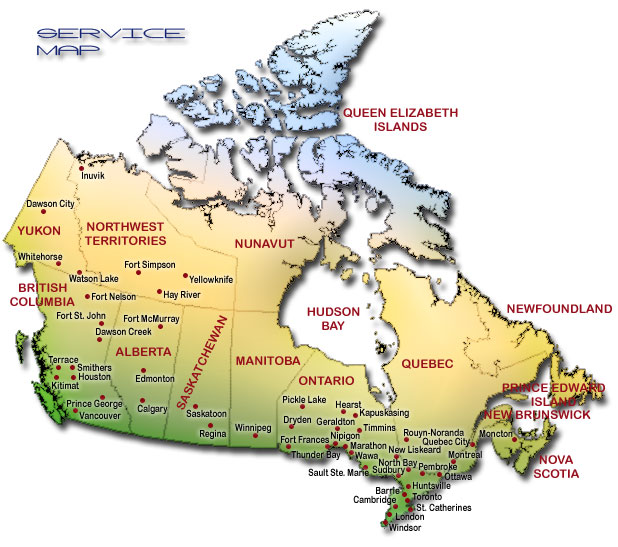
The region of Canada that faces the end of flat rate broadband (namely, everywhere)

As soon as you enter into discussions about what represents a “fair amount” of usage, you have lost the argument.  Debating the numbers is their game, not yours.  Is 100GB enough, 250GB? 500? 1000?

What about tomorrow?

What is “reasonable” mean anyway?

“Reasonable” should not be how much Internet you are able to consume at Shaw’s everyday high prices.

Instead, Shaw’s absolutely massive profits demand that upgrades be maintained to accommodate users of their product. Shaw has plenty on hand to manage growth with upgraded facilities from Vancouver to the prairies and still have plenty of money left over.  Their revenue from broadband is soaring.  The costs to deliver it are dropping.

When you go to these meetings, explain politely, persuasively, and persistently that you are not prepared to accept the return of any UBB system, period. That inconvenient truth may be difficult for them to accept, but tell them you have every confidence a company as innovative as Shaw can find a way to keep customers and shareholders happy, and you’ll work with them to that end if they deliver the flat rate broadband experience that your neighbors to the south get.

If the USA and other countries around the world can manage it, so can Canada.

Korea Will Bring 1Gpbs Broadband To Every Home for $27 a Month By 2013

Although the English needs a little work, Korean broadband delivers a reality most Americans can only imagine.

South Korea has launched a nationwide broadband upgrade to rid themselves of 100Mbps service for $38 a month, claiming those speeds and prices are no longer sufficient for Korea’s new digital economy.

By the end of 2012, South Korea intends to connect every home in the country to the Internet at one gigabit per second and slash the monthly price to just $27 a month.

That’s more than 200 times faster than speeds enjoyed by most Americans, who pay an average of $46 a month — nearly double Korea’s planned price. Even more galling for Canadians — those speeds and prices are for completely unlimited access.

Stop the Cap! reader John in Victoria, B.C., thinks South Korea’s broadband improvements call out just how ludicrous Canada’s Internet Overcharging schemes really are.

“If the Canadian Radio-TV and Telecommunications Commission ultimately allows $2 per gigabyte in overlimit fees, we would have to pay $5,184,000 per month for the same thing,” John says. “If this comparison doesn’t make people want to chuck the CRTC, what will?”

For the government of South Korea, which is spearheading the Internet expansion effort, broadband has become a national priority for the fast-growing Korean economy.

[flv width=”640″ height=”447″]http://www.phillipdampier.com/video/Hello CJ TV.flv[/flv]

Korea’s CJ HelloVision cable system delivers TV programming, broadband, and phone service at speeds and prices that make North American providers look ridiculous.  Bonus: That sure looks like Sarah Palin making a cameo appearance in this animated video.  (1 minute)

South Korea historically trailed Japan’s economic post-World War II revival for decades, but no more. The country, which used to be poorer than the Communist People’s Republic of Korea to the north, has grown to the world’s 13th largest economic power, and has designs on being a world leader in the transition to the digital/information economy. They are already ahead of North America, with an advanced broadband platform that can sustain concepts like cloud computing that are just getting off the ground in Canada and the USA.

The KCC is spearheading Korea's broadband advancements

Only the most rural parts of Korea still rely on copper phone wires delivering DSL service, now considered archaic. Most of the country is now wired for fiber optics, making a transition from 100Mbps-1Gbps relatively simple. With new laser technology, existing fiber cables can transmit faster speeds, and when fiber is laid in the country, extra strands are buried for future use. The costs of burying 10 or 100 or 1,000 strands come mostly from labor, not the wiring.

Private electronics companies are strong proponents of the infrastructure upgrades, and service providers are on board to deliver the service. That is in marked contrast with providers in the United States and Canada who consider expensive upgrades an unnecessary proposition.

“Providers in the USA and Canada defend their existing networks as ‘good enough for average residential use,’ something that would be laughed away here in Korea or in Japan,” Dr. Park Sung-Jin, a Korean broadband researcher who travels between Seoul and Los Angeles tells Stop the Cap! “Large providers like AT&T cannot afford to lose their propaganda arguments of broadband sufficiency because if they did, they would lose face and be forced to transform broadband in the USA at the expense of their enormous profits.”

“In Asia, we would never allow our providers to dictate the national broadband policies of the country, and our discussions are long past arguing over what speeds are correct,” Park says.  “Now we’re arguing about how to bring the cost down.”

Japan delivers 1Gbps broadband service for $70 a month, a price scoffed at by Choi Gwang-gi, the 28-year old Korean now in charge of the Korea’s expansive broadband plans.

“I can’t imagine anyone in Korea paying that much,” Choi told the New York Times. “No, no, that’s unthinkable.”

A pilot gigabit project initiated by the government is underway with 5,000 households in five South Korean cities. Each customer pays about 30,000 won a month, or less than $27.

“A lot of Koreans are early adopters,” Mr. Choi said, “and we thought we needed to be prepared for things like 3-D TV, Internet protocol TV, high-definition multimedia, gaming and videoconferencing, ultra-high-definition TV, cloud computing.”

[flv]http://www.phillipdampier.com/video/200Mbps Broadband.flv[/flv]

Hello Broadband delivers a silly advertisement for its soon to be obsolete 200Mbps broadband service.  (1 minute)

Meanwhile, according to Dr. Park, North American providers like Bell, Rogers, and Comcast are spending millions trying to convince lawmakers in both countries that such speeds are wholly unnecessary.

“The United States and Canada are the worst, with providers spending countless millions themselves and through their lackey trade associations and illicit ‘consumer groups’ working for them trying to convince lawmakers American broadband isn’t so bad after all, but it is,” Park says. “They routinely claim any country that is ahead of the U.S. or Canada is a ‘special case’ because of urban density or government subsidies, but that can’t explain away all of the disparity in speeds and accessibility, only money and monopoly profits can.”

Both Romania and Latvia now beat Canada and the USA in broadband speeds and pricing, and North America’s dominance in a digital economy could be at risk.

Closer to home Don Norman, co-founder of the Nielsen Norman Group in Fremont, Calif., told the Times Korea is on the right track.

“The gigabit Internet is essential for the future, absolutely essential, and all the technologists will tell you this,” said Norman. “We’re all going to be doing cloud computing, for example, and that won’t work if you’re not always connected. Games. Videoconferencing. Video on demand. All this will require huge bandwidth, huge speed.”

In Canada, such predictions have given companies like Bell an excuse to engage in a national Internet Overcharging scheme they claim will help pay for building these kinds of future networks. But other countries around the world now deliver speeds Canada only promises their citizens, without overcharging them to pay for it.

“Charging for broadband traffic would be like you or I charging for the wind — it has no real value except in the eyes of the people who stand to profit from it,” Park said.

Will people notice a difference between 100Mbps and 1Gbps? Koreans say they will, according to the New York Times.

One of the customers already connected to Mr. Choi’s pilot program is Moon Ki-soo, 42, an Internet consultant. He got a gigabit hookup about a year ago through CJ Hellovision, although because of the internal wiring of his apartment building his actual connection speed clocks in at 278 megabits a second.

But even that speed — about a quarter-gigabit — has him dazzled.

“It is so much more convenient to watch movies and drama shows now,” he told the newspaper.

[flv width=”368″ height=”228″]http://www.phillipdampier.com/video/Giga Internet.flv[/flv]

This Korean language promotional video for Giga Internet, the marketing brand for 1Gbps broadband, still dazzles the imagination for those who lack the ability to follow the words.  As you watch, consider how America’s typical DSL service provider leaves millions of Americans with a ‘covered wagon’ 3Mbps broadband solution.  (6 minutes)

[flv width=”480″ height=”340″]http://www.phillipdampier.com/video/SK Broadband.mp4[/flv]

A stylish ad for SK Broadband, declaring new high speeds will let users “See the Unseen.”  (1 minute)


Another Year, Another Anti-Community Broadband Bill in North Carolina

Here we go again.

You always know when a new year has arrived when another North Carolina legislator files a Big Telecom industry-written bill attacking community-owned broadband.

This year, the laughably-named “Act to Protect Jobs and Investment by Regulating Local Government Competition With Private Business” comes courtesy of Rep. Marilyn Avila (R-Wake County), a former manager of the conservative think tank John Locke Foundation.

H.129 is remarkable for its legislative micro-management, coming from someone who claims to oppose big government meddling.

Among its requirements:

  • Demands a public accounting for every community broadband network;
  • Limitations on service to strict city boundaries;
  • Prohibits contractual agreements with apartment and condo building owners that mandate municipal service for individual residents;
  • Bans advertising and “promotion” of community-owned broadband networks on Public, Education, and Government access channels;
  • Shall not price any component of its service below cost;
  • Requires payment of a special tax equal to the amount of local property taxes and/or fees normally exempted for local government enterprises;
  • Requires permission through an extended hearing process to win permission before delivering service to any area deemed “unserved”;
  • Demands a laundry list of pre-conditions before obtaining permission to shop for financing.

Avila

Avila doesn’t mind putting government all over the backs of community-owned networks if they happen to compete with her friends at AT&T, Time Warner, and CenturyLink.

Let’s review this exceptionally provider-friendly piece of protectionist legislation.

First, Avila’s demand for an open accounting of community broadband projects provides a treasure trove of business intelligence for any competitor.  They can demand to open the books and gain critical subscriber information — what residents pay for service, who gets the service, and how much it costs to provide.  That’s pure gold for targeted marketing campaigns to win back customers with special offers municipal providers are banned from offering.

We’re calling a foul ball because Avila’s “fair and level playing field” doesn’t have room for fair play.  Private providers get to keep the secrets community-owned network are forced to reveal.  That, by design, puts municipalities at a competitive disadvantage and could help drive them out of business.  Remember, these networks are financed by privately obtained bonds, not taxpayer dollars.  Shouldn’t any such provider have the right to keep its business strategies secret?

Second, if banning mandatory service for renters and condo owners is such a great idea, why does Avila only limit it to community-owned networks?  The record is clear — private providers are increasingly signing agreements with property owners mandating cable television fees for residents.  Apparently Avila’s concept of fairness doesn’t include the actual companies found guilty of raising the rent.

Third, Avila bends over backwards for her cable and phone friends by tying the hands of municipal providers who want their networks to be commercially successful.  Time Warner has no problem injecting endless promotions for its own services not just on a handful of channels, but on virtually every channel on the lineup, often during nearly every commercial break.  Can municipal networks ban advertising from AT&T and Time Warner?  Of course not.  And the definition of “promotion” specified in Avila’s ad ban is vague.  If a town government meeting talks up the success of a community-owned network, has Avila’s law been broken?  Apparently censorship by government mandate is a-OK as long as it doesn’t target her Big Telecom friends.

Avila’s ban on setting pricing below cost is another giveaway to Time Warner and AT&T, who routinely deliver retention and new customer promotions that could be temporarily priced below cost to secure or maintain a customer relationship for a limited period of time.  Of course, Avila doesn’t require either company to open their books to find out exactly what it costs companies to provide these special pricing packages.  No municipal provider seeks to price service at a rate that puts the project out of business.  Time Warner Cable has been accused of delivering below-cost retention pricing to departing customers in Wilson, where GreenLight has been poaching the cable company’s customers for more than a year.  Avila’s hand-tying provision allows some companies in the marketplace to keep pricing flexibility while the municipal provider is forced to price service according to a state-dictated formula.  John Locke would be turning over in his grave if he heard about this planned economy-pricing.

Rep. Avila can certainly no longer claim to be for low taxes, because her bill would effectively raise them for community-owned networks.  Again, since these projects are almost always funded from private bond markets, not public tax dollars, slapping complicated tax formulas on municipal providers while continuing to permit special tax break deals for private companies (such as “payment in lieu of taxes” or special tax breaks/grants for Time Warner in return for job creation) shouldn’t work for most small government conservatives.  Shouldn’t they support lower taxes for everyone?  Instead, Avila seeks to hamper community network business models by punitively sticking them with taxes she would otherwise oppose for commercial providers.

Avila’s support for smaller, less regulatory-minded government must also be called into question with this bill’s ridiculously complicated regulations for serving unserved areas of the state (which also grants a special window to private providers to protest, which they will certainly do in just about any area of the state even partially suitable for a future project).  Her bill even demands 60-day delays, custom-tailored to allow industry lobbyists to gin up opposition and demagogue projects.  Since a commission will be involved in the decision making process and has to take into account opposition from private providers, all of the benefits of Avila’s legislation flow to the cable and phone industry, none to community-owned networks or individual consumers that will ultimately benefit from better service at lower prices.

Avila's idea of a level-playing field.

Avila destroys her own “level playing field” argument in language within her own bill:

“The city or joint agency making the application to the Commission shall bear the burden of persuasion.”

In other words, Avila offers a “level playing field” with an 11-foot electrified barbed wire fence surrounding it.  Unfortunately, municipalities won’t be the only ones shocked by Avila’s cable and phone company protectionism.

Ordinary consumers in communities like Wilson, exempted from the relentless annual rate hikes from Time Warner because of the presence of a municipal competitor won’t get to keep the savings if Avila has anything to say about it.  She wants you to pay full price for your cable service, and pay higher prices year after year.

Her claim that the legislation will somehow “protect jobs and investment” is specious at best.  Time Warner has not exited Wilson or Salisbury — two cities with a community-owned competitor.  In fact, Time Warner is on record welcoming competition.  In reality, these companies simply don’t welcome new choices from those providers that will actually deliver savings and better service to customers.

This anti consumer legislation brought to you by Time Warner Cable...

The cable industry’s flagellation against projects like GreenLight and Fibrant flips between calling them financial boondoggles not worth bothering about to unfair competition that will harm private investment.  AT&T’s protests, in particular, ring the most hollow.  This is the same company that wants deregulation to make it easier for new players like themselves to enter the marketplace.  Their U-verse service enjoys the benefits of statewide video franchising, which removes accountability to local governments.  Yet this same company lobbies for increased bureaucracy and regulation for some of their potential competitors.  Avila is only too happy to oblige.

As with every other piece of legislation we’ve seen on this subject from North Carolina, it’s yet another custom-written favor to big cable and phone companies and an attack on consumer interests across the state.  Generous campaign contributions from the telecom industry pay off only too well when state legislators allow these companies to write the bills designed to protect their turf.

For Time Warner Cable, the costs associated with sending selected legislators and their families to a recent delicious BBQ event in sunny San Diego to attend a sham “conference” sponsored by a corporate front group shows there are plenty of favors to be had all around, just as long as you support the company’s legislative agenda.

...and AT&T

Fighting this year’s anti-consumer legislation will be tougher than ever.  For the first time in 112 years, the corporate friendly North Carolina Republican party won control of the General Assembly.  For many members, the free market can do no wrong and anything government touches is bad news.  Many will reflexively support Avila’s legislation.  But any underserved county in the state knows the truth about today’s broadband in rural North Carolina — if local communities can’t step up and deliver the service, nobody will.  For these representatives, Democrat or Republican, concern should run high that Avila’s bill assures these areas of years of high prices, poor or no service, and status quo protection designed to keep the market exactly as it is today.  Considering how poorly North Carolina stands in national broadband rankings, standing still should never be an option.

Search This Site:

Contributions:

Recent Comments:

Your Account:

Stop the Cap!