Home » pricing » Recent Articles:

Media Treats Sanford Bernstein’s Craig Moffett as ‘Independent Analyst’ on Broadband; He’s Not

Phillip 'Not Picking Up What Moffett Puts Down' Dampier

Tech, business, and even a few mainstream media outlets have been booking Sanford Bernstein’s Craig Moffett as an independent observer of all-things-broadband, without revealing he literally has a vested interest in boosting profits for the telecommunications industry.

The latest of Moffett’s heavily-slanted ideas appeared over the weekend on ZDNet, where Larry Dignan’s Between the Lines column used one of Bernstein’s “research notes” to provoke readers into a discussion about Internet Overcharging:

Metered broadband access is inevitable and may even be good for adoption of speedy Internet access.

That’s the argument from Bernstein analyst Craig Moffett in a research note. Moffett sets the scene:

  • The FCC’s open Internet push allows for metered broadband.
  • AT&T has introduced usage caps across its wireline business. DSL customers are limited to 150 GB of monthly consumption. U-Verse subscribers get 250 GB, or the same as Comcast. Users will be charged an extra $10 a month if they exceed the cap and it’s $10 per 50 GB after that.
  • AT&T has already introduced tiered wireless plans.
  • Time Warner Cable has a few usage based pricing pilots underway.

Moffett

Nowhere in Dignan’s column does he disclose Moffett is a paid Wall Street analyst working for the interests of investor clients of Sanford Bernstein who want to maximize the value of their telecommunications stocks.  Moffett’s long history of statements about industry pricing reflect those interests, which are often very different from those of most consumers.  Moffett’s world view: anything that brings in more revenue is good for shareholders (rate hikes, metered billing), anything that drives down shareholder value is not (infrastructure upgrades, pricing cuts, customer defections).

On that basis, Moffett has been called a “cable stock fluffer” by our friends at Broadband Reports for his relentlessly pro-cable industry commentary, even while ridiculing transformational projects like Verizon’s FiOS fiber to the home network for being “too expensive” and not delivering enough return on shareholder investment.  Consumer Reports delivers the opposite view: high marks for Verizon FiOS, mediocre to lousy marks for most of the nation’s cable operators.

While there is nothing inherently wrong with Moffett doing his job on behalf of his paying clients, using his views outside of that context — particularly when those interests go undisclosed — is journalistic malpractice.

Oh, and Time Warner Cable abandoned their usage-based pricing pilots in 2009 after customers declared war on the cable company.  Those darn customers, ruining the industry’s plans!

The rest of Moffett’s research note doesn’t get much better in the “true facts”-department:

The goal of moving to usage based pricing is not to undermine competition from Netflix (or anyone else… although it certainly wouldn’t be good news for Internet video). And it is most decidedly not to simply “raise prices for broadband” as Public Knowledge or New America would have it (although it might well do precisely that, too). Instead, it is nothing less than to re-align the entire business model of today’s infrastructure providers with the next generation of communications… so that broadband providers might stop fighting against the tide and embrace it instead.

With usage based pricing, broadband providers, and Cable operators in particular, can create an “iso-profit” curve, where the amount they make from a physical connection is about the same whether someone uses that connection for linear video or, alternatively, web video. The goal is not to stifle competition, but instead to create indifference not just to the end state of video by-pass, but indeed for all points along the way. The adoption of usage based pricing would be transformational to the debate for Cable operators, inasmuch as it would essentially indemnify them against all potential outcomes.

Moffett represents his interests, not yours.

Yet some of Moffett’s earlier statements would seem to argue with himself.

For instance, back in March Moffett was making plenty of noise about AT&T’s caps precisely targeting video providers like Netflix:

Moffett believes usage caps have everything to do with stopping the torrent of online video.  He notes AT&T’s caps are set high enough to target AT&T customers who use their connections to watch a considerable amount of video programming online.

“Only video can drive that kind of usage,” Moffett writes.

Moffett has repeatedly predicted any challenge to pay television models from online video will be met with pricing plans that eliminate or reduce the threat:

“[I]f consumption patterns change such that web video begins to substitute for linear video, then the terrestrial broadband operators will simply adopt pricing plans that preserve the economics of their physical infrastructure,” Moffett said. “Of course, any move to preserve their own economics has far-ranging implications. Any move towards usage-based pricing doesn’t just affect the returns of the operators, it also affects the demand of end users (the ‘feedback loop’).”

The only thing usage-based pricing indemnifies is the industry’s confrontation with revenue-eroding cable-TV cord-cutting.  And Moffett knows this, although he would probably give rave reviews to bringing similar usage-based-billing to cable television packages, which would charge you for every show you watched on top of your monthly bill.

These pricing models, already firmly rooted in Canada, have done nothing to bring the “next generation of communications” to our neighbors to the north.  Indeed, Canada’s ranking in broadband continues its decline as large cable and phone companies pocket the profits instead of committing to wholesale upgrades of their networks to deliver the kind of service increasingly common in Europe and Asia.

But the real laugh out loud moment comes last: Moffett’s prediction that AT&T’s usage pricing will increase broadband adoption.  Perhaps that’s true if you prefer telecommunications companies abuse you, but as we’ve documented over the past three years, these pricing schemes never save anyone money — they just increase the price of your service while decreasing the value of it.

Understanding Customer Defections: The Value Perception of Cable Television

Phillip Dampier May 5, 2011 Competition, Consumer News, Data Caps, Online Video 2 Comments

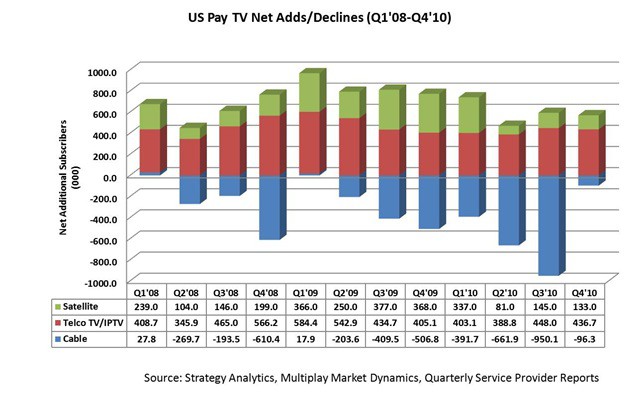
Click to enlarge

Your cable company has a problem.  Collectively, the cable industry has lost more than 2 million video customers over the past year, and the problem may be getting worse.  Some of the largest cable companies in the United States are making excuses for the historic losses:

  • The bad economy
  • Housing and foreclosure crisis
  • High unemployment
  • Family budget-cutting

But cable companies should be rethinking their excuses, according to a new report from Strategy Analytics.

“Throughout the past seven consecutive quarters of subscriber losses, the inclination of cable has been to point the finger at various external factors,” said Ben Piper, Director of the Strategy Analytics Multiplay Market Dynamics service. “Our analysis shows that neither the economy nor the housing market is to blame for these subscriber defections. The problem is one of value perception.”

Value perception.  That’s a measurement of whether or not one feels they are getting good value for the money they pay for a product or service.  Value comes in several different forms, starting with emotional — do I feel good, safe, secure, or nostalgic using the service?  Can I imagine life without it?  What about my friends and family — will I stand out if I am not buying this product?  It’s also practical — Can I afford this?  Can I find a cheaper or better alternative?  Do I really need this service anymore?

Tied into value perception is customer goodwill.  If you have an excellent experience with a company, letting go of their products comes much harder.  If you feel forced to deal with a company that has delivered poor and expensive service for years, pent up frustration will make it much easier (and satisfying) to cut them loose at the first opportunity.

Embarq used to be Sprint's pathway to prosperity in the local landline business, until cord cutting put landlines into a death spiral.

In the telecommunications industry, value perception is a proven fact of life.  It began with phone companies.  Formerly a monopoly, landline providers have been forced to try and reinvent themselves and become more customer-friendly.  First long distance companies like Sprint and MCI moved in to deliver cheaper (and often better quality) long distance service.  Sprint even got into the landline business themselves, forming EMBARQ, which at its peak was the largest independent phone company in the United States.  When Voice Over IP providers like Vonage and the cable industry’s “digital phone” products arrived, they promised phone bills cut in half, and introduced the concept of unlimited long distance calling.

The value perception among consumers became clear as they began disconnecting their landlines.  The alternative providers offered cheaper, unlimited calling services, often bundled with phone features the local phone company charged considerably more to receive.  Even though VOIP is technically inferior in call quality in many instances, the value the services provided made the decision to cut the phone cord easier.

But local phone company landline losses would only accelerate with the ubiquity of the cell phone, but for different reasons.  What began with high per-minute charges for wireless calls evolved into larger packages of calling allowances, with plenty of free minutes during nights and weekends, and often free calling to those called the most.  Most Americans end the month with unused calling minutes.  As smartphones gradually take a larger share of the cell phone market, the accompanying higher bills have forced a value perception of a different kind — ‘I can’t afford to keep my landline –and– my cell phone, so I’ll disconnect the landline.’

The cable industry has traditionally faced fewer competitive threats and regularly alienates a considerable number of customers, but still keep their business despite annual rate increases and unwanted channels shoveled into ever-growing packages few people want.

This pent up frustration with the cable company has led to perennial calls for additional competition.  That originally came from satellite television, which involved hardware customers didn’t necessarily like, and no option for a triple play package of phone and broadband service.  The cable industry offers both, and by effectively repricing their products to discourage defections from bundled packages, customers soon discovered the resulting savings from satellite TV were often less than toughing it out with the cable company.

As a result, satellite television has never achieved a share of more than 1/3rd of the video market.  Many satellite customers are in non-cable areas, signed up because of a deeply discounted price promotion, were annoyed with the cable company, or didn’t care about the availability of broadband or phone service.  When the price promotion ends or technical issues arise, many customers switch back to cable.

More recently, researchers like Strategy Analytics have discovered some potential game-changers in the paid video marketplace:

  • The impact of broadband-delivered video content
  • The Redbox phenomena
  • Competition from Telco TV
  • The digital television conversion

Strategy Analytics studied consumer perceptions and found customers braver than ever before about their plans to cut cable’s cord.  According to the consumers surveyed, nobody scores lower in value perception than cable companies.  Citing “low value for money,” over half of the cable subscribers surveyed told the research firm they intended to disconnect their cable TV package in the near future.

While other researchers dismiss those high numbers as bravado, there are clear warnings for the industry.

“Much ink has been spilled on the topic of cord cutting and even skeptics are now admitting that it can’t be ignored,” said Piper.

Indeed, Craig Moffett, an analyst with Sanford Bernstein who almost never says a discouraging word about his beloved cable industry, told Ad Age Mediaworks the issue of cord-cutting was real.

“It’s hard to pretend that cord cutting simply isn’t happening,” Moffett said.

Craig E. Moffett, perennial cable stock booster, even admits cord-cutting is real.

The most dramatic impact on the cable industry has been in the ongoing erosion of the number of premium channel subscribers, those willing to pay up to $14 a month for HBO, Cinemax, Showtime, or Starz!.  The reason?  Low value for money.  As HBO loses subscribers, Netflix and Redbox gain many of them.  Netflix still delivers a considerable number of movies by mail, but has an increasingly large library of instant viewing options over broadband connections.  Strategically placed Redbox kiosks deliver a convenient, and budget-minded alternative.

The loss of real wage growth, the housing collapse, and the down-turned economy do put pricing pressures on the industry, but some cable executives hope the time-honored tradition of customers howling about rate increases without ever actually dropping cable service continues.

But as new platforms emerge, some delivering actual pricing competition to the cable TV package, increasing numbers of customers are willing to take their video business somewhere else.  Some are stopped at the last minute with a heavily discounted customer retention pricing package, but that doesn’t keep them from sampling alternative online video options.  Among those who actually do leave, some are satisfied with the increased number of channels they get for free over-the-air after America’s digital television conversion.

Many others are switching to new offerings from telephone companies.  Both AT&T and Verizon deliver video packages to many of their customers, often at introductory prices dramatically lower than their current cable TV bill.  When considering a bill for $160 for phone, video, and broadband from the cable company or $99 for the same services from the phone company, $60 a month in savings for the first year or two is quite a value perception, and the inevitable disconnect order is placed with the cable company.

Ad Age‘s own survey, more skeptical about cord-cutting, confirmed that many former cable TV customers left for budgetary reasons, but many also kept their triple play packages.  They just bought them from someone else.

Also confirmed: a dramatic upswing in online viewing, sometimes paid but often ad-supported or free.

Strategy Analysts concludes in its report, available for $1,999, that the ongoing erosion of cable TV subscribers isn’t irreversible, but it requires urgency among providers to become more customer-friendly and increase the all-important value perception.

In other words: respecting the needs and wishes of your customers.

Thankfully, the cable industry is dealing with competitors like AT&T, who are willing to assassinate their current lead in value perception by slapping Internet Overcharging pricing schemes on their broadband service.  That will certainly raise the ire of their DSL and U-verse customers, many who are treating the customer unfriendly usage limits as an invitation to leave.  Their former cable companies are waiting to welcome them back.  The real question remains, will cable customers now be treated better?

Western Canada’s Internet Overcharging Two-Step: Shaw and Telus Plan to Gouge You

One of Canada’s largest phone companies is willing to admit it is prepared to launch an Internet Overcharging scheme on its broadband customers now, while western Canada’s largest cable company would prefer to wait until after the next election to spring higher prices on consumers.

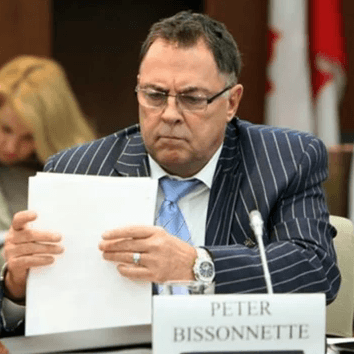
When Shaw’s president Peter Bissonnette told investors and the media he believes users who use more should pay more, all that needs to be put in place is exactly how much more Shaw customers will pay for already-expensive Internet access.  With Shaw making noises about usage-based billing, Telus felt it was safe enough to dive right into their own usage cap and overlimit fee pricing scheme.

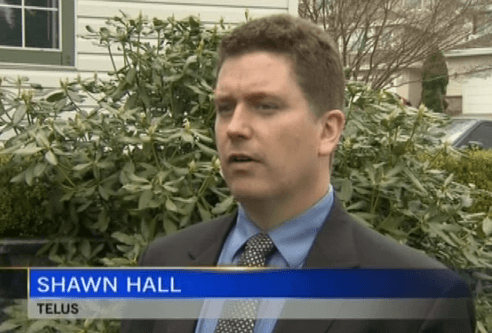
Shawn Hall, a spokesperson for Telus, told CTV News that the phone company was ready to begin overcharging customers as soon as this summer.

Shawn Hall (CTV BC)

“It’s only fair that people pay for how much Internet capacity they use,” Hall told CTV.

Telus doesn’t seem to be too worried about the fact usage-based billing has become a major issue in the upcoming elections.  A review of the pricing scheme by the Canadian Radio-television and Telecommunications Commission is due within months, but the phone company isn’t going to wait.

Shaw is being more cautious.  After the pretense of a “listening tour,” and with federal officials breathing down their necks, Shaw wants to wait until the elections are over before moving forward on their own price gouging, according to Openmedia.ca.

As Stop the Cap! has told our readers repeatedly, corporate “listening tours” about Internet Overcharging are about as useful as lipstick on a pig.  Providers don’t actually listen to their customers who are completely against these pricing schemes — and every survey done tells us that represents the majority of customers.  Instead, they only hear what they want to hear, cherry-picking a handful of useful statements in order to make it appear they are responsive to customer needs.

Shaw heavily redacted their own meeting minutes on their website, completely ignoring a large number of customers unalterably opposed to usage-based billing of any kind.  Instead, statements that fit their agenda were repeated in detail, especially those that suggested average users don’t want to pay for heavy users.

Shaw executives discuss with investors how they will stick customers with usage-based billing, despite customers telling them they don’t want these schemes. April 13, 2011. (7 minutes)
You must remain on this page to hear the clip, or you can download the clip and listen later.

It’s like arguing marathon runners should pay extra for the oxygen they consume because others don’t breathe as much.  It’s all a lot of hot air.

Broadband traffic costs providers only a small percentage of the amount they charge customers, and that number is dropping.  Yet providers want to raise prices, restrict usage, and charge punitive fees for those who exceed their arbitrary usage limits.

The power of the duopoly in place across most of western Canada has given providers little to fear from overcharging consumers.

Shaw CEO Bradley Shaw told investors they know few customers will switch providers if usage-based billing is imposed.

“We are of the mind that we still have a tremendous upside in terms of pricing power on our Internet services,” Shaw said.

The fact many Shaw customers have no other choice other than Telus does not escape Shaw’s notice either.

Telus’ Hall even had the nerve to call their Internet Overcharging pro-consumer.

Bissonnette

“It’s going to be really customer friendly,” he said. “You’d be forgiven for the first month you go over. You’d get lots of warning, lots of notice that you were going over with options of moving to other plans.”

Except an unlimited one — that is not available.

Openmedia.ca is trying to hold politicians’ feet to the fire on the issue of Internet Overcharging, demanding answers from every major party in Canada about how they will keep providers from imposing these pricing schemes.

Every major party, with one exception — the Conservative Party of Canada, has answered.  That’s the party currently in power.

Liberal Leader Michael Ignatieff has spoken out against usage-based billing, while NDP Leader Jack Layton has promised to ban it outright if elected to power.

Nearly a half-million Canadians have signed a petition opposing usage-based billing, and providers are showing once again they are not open to listening to anyone but their bean counters, intent on extracting as much cash as possible from Canadian customers’ wallets.

[flv width=”640″ height=”380″]http://www.phillipdampier.com/video/CTV British Columbia – Shaw planning to revive metered internet billing critics 4-25-11.flv[/flv]

CTV in British Columbia covers Shaw’s plans to revive metered Internet billing later this year.  (2 minutes)


Bell’s Usage-Based Billing Shell Game: Revised Proposal Will Still Cost Consumers

Phillip Dampier March 29, 2011 Bell (Canada), Broadband "Shortage", Canada, Competition, Data Caps, Editorial & Site News, Public Policy & Gov't Comments Off on Bell’s Usage-Based Billing Shell Game: Revised Proposal Will Still Cost Consumers

Bell's Broadband Shell Game (image: Dave Blume)

The digital equivalent of a Trojan Horse was laid at the feet of Canadian telecom regulators Monday when officials from Bell, Canada’s largest phone company, announced they were withdrawing their controversial proposal to mandate usage-based billing on all wholesale broadband accounts.

The original proposal would have mandated that independent Internet Service Providers bill each of their individual customers a monthly fee based on their Internet usage in addition to the wholesale access rates paid to Bell all along.  The pricing proposal would have forced every ISP in Canada to abandon flat rate Internet service, raise prices, reduce usage allowances, and increase overlimit penalties.

Now Bell has told the Globe & Mail newspaper it wants to introduce something called “Aggregated Volume Pricing” instead — a plan Bell claims will shift financial penalties for “high usage” away from individual customers and onto the ISPs themselves. Bell also slashed the proposed overlimit fee from a heavily-defended-as-fair $2.50 per gigabyte to a more modest $0.30/GB, perhaps echoing AT&T’s forthcoming overlimit fee.

In fact, Bell’s revised plan is the same Internet Overcharging scheme under a new name.

The radical reduction in overlimit fees only further illustrates the “phoney-baloney” of providers attempting to monetize broadband usage under the guise of “fairness” and “congestion relief.”  Last week’s ’eminently fair’ $2.50 is this week’s ‘more than reasonable’ $0.30.

Bell exposed their hand — showing they have been bluffing about congestion all along.  An analysis of the proposed rates shows the company is still trying to target “heavy users.”  But instead of penalizing them into reducing their consumption, Bell is now seeking to monetize that usage, not control it.  By shifting aggregate usage costs to the wholesale market, Bell hopes individual customers will blame independent ISP’s for higher bills, not them.  Independent providers have to pass along their wholesale costs as part of the retail price of their service.  It’s a high tech shell game, one that consumers will always lose.

Despite this, Bell assumes the revised plan will take the bipartisan heat off its backside since it first proposed doing away with flat rate Internet service in Canada.

“With our filing today, we are officially withdrawing our UBB proposal,” said Mirko Bibic, Bell’s head of regulatory affairs. “Let’s move on, in my view, and use the CRTC hearing as an opportunity to approve those principles and get the implementation details right.”

"We don't like (Bell's proposal)."

Several Canadian officials were not impressed and one — Industry Minister Tony Clement — said exactly that.

Canada’s consumer groups and politicians have the giant telecom company on the run after using Bell CEO George Cope’s own words against him.  Cope openly admitted in conference calls with investors UBB had everything to do with monetizing broadband usage for profit.

Bell’s attempt to serve warmed-over Internet Overcharging from a new recipe isn’t flying among consumer groups either, who recognize it as more of the same leftovers, just under a new name.

Bill Sandiford, who heads a coalition of wholesale ISPs called the Canadian Network Operators Consortium, told the Globe & Mail Bell was simply presenting its usage-based pricing model in a more acceptable guise.

“We don’t think this is an about-face. It’s the same thing, just dressed up differently,” Mr. Sandiford said. “We don’t like it. It’s still wholesale UBB.”

Openmedia.ca, an online activist group, said Bell’s new proposal shows consumers are having an impact, but the fight is by no means over.

“We’re pleased that Canadians will now have the option to use indie ISPs like Teksavvy and Acanac to access the unlimited Internet,” said OpenMedia.ca’s Executive Director Steve Anderson. “This is a giant step forward for the Stop The Meter campaign, and a victory for those who support competition and choice in Canada’s Internet service market.”

“While this is a positive move, it is only a Band-Aid solution to a much larger problem. We at OpenMedia.ca hope the CRTC takes Bell’s submission as a sign that widespread usage-based billing is not an acceptable model for Internet pricing, and that it creates policy to support the affordable Internet.”

Same Story, Different Countries: Whether It’s Bell or AT&T, Usage Billing & Caps Are Nonsense

[flv width=”640″ height=”380″]http://www.phillipdampier.com/video/UBB is Nonsense.flv[/flv]

François Caron produced this video succinctly smashing the myth that “usage-based billing” and “usage caps” are about fairness or fight congestion.  In this case, Caron refers to Canadian providers, but the story is much the same south of the border.  These Internet Overcharging schemes are nothing more than an effort to control what you can do with your broadband connection.  AT&T wants a 150-250GB usage cap on broadband, but has limitless capacity for television and telephone service.  They also have $39 billion to buy T-Mobile, but need to overcharge you for broadband service.  Bell in Canada wants -every- broadband user in Canada to pay this ripoff pricing.  Share with anyone who thinks paying for usage is anything like paying for water, gas, or electricity.  It’s not!  (6 minutes)

Search This Site:

Contributions:

Recent Comments:

Your Account:

Stop the Cap!