Home » pricing » Recent Articles:

New York Attorney General Smacks Frontier: ‘Early Termination Fee’ Controversy Could Net Hundreds in Refunds to NY’ers

Phillip Dampier October 6, 2009 Frontier, Public Policy & Gov't 4 Comments
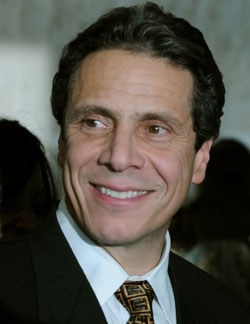
NY State Attorney General Andrew Cuomo

NY State Attorney General Andrew Cuomo

The New York State Attorney General has slapped Frontier Communications with a $35,000 fine and ordered the phone company to refund up to $50,000 it wrongfully charged consumers in so-called “early termination fees” for telephone and broadband service — fees consumers were never properly informed about at the time they ordered service.

“Frontier failed to spell out in its contracts the existence of costly fees,” said Attorney General Andrew M. Cuomo. “The company is now fixing the issue by providing written notices of these fees and paying back consumers who were wrongfully charged.”

Frontier, located on South Clinton Avenue in Rochester, provides high speed broadband Internet service (FrontierHSI) and local and long distance telephone service. Between January 2007 and September 2008, Frontier sold bundles of various services under one-, two- or three-year agreements known as Price Protection Plans that offered a lower rate than month-to-month service as well as a promise that the subscription rate would not increase during the term of the plan. However, Frontier charged early termination fees to consumers who terminated a service before the end of the term. These fees typically ranged between $50 and $400, depending on the contents and services included in the package.

The Attorney General’s investigation determined that consumers who purchased one-year bundle agreements were never provided with written notice of the term or the existence of an early termination fee. The investigation also uncovered that consumers were not notified in their monthly billing statement that their agreements contained early termination fees. Therefore, many consumers first learned about the fee only after they canceled their service with Frontier and the charge appeared on their final bill.

In at least one instance, Frontier automatically re-enrolled a consumer to a term commitment after the initial term expired and then charged an early termination fee when she canceled after the initial term.

This is not the first time Frontier’s promotions have faced scrutiny by a New York Attorney General.  In March 2006, Frontier agreed to pay $80,000 in penalties and around $300,000 in customer refunds for what former Attorney General Eliot Spitzer called “misleading advertising and marketing tactics.”

Frontier’s customer service centers have often provided uneven service to consumers calling for information about products and services.  Stop the Cap!‘s editor, yours truly, had a number of problems when sampling Frontier’s DSL service during the Time Warner Cable Internet Overcharging experiment.  In addition to inconsistent product information, pricing, and terms and conditions, customer service representatives were ill-equipped to properly describe their own lineup of products, at one point promoting their wireless wi-fi network service in Rochester as “wee-fee.”

After the company couldn’t provide DSL service to my residence at speeds better than 3.1Mbps, service cancellation did not result in an early termination fee, but did cause serious billing foul-ups that took multiple calls to sort out.

In 2008, Stop the Cap! helped many customers cancel their DSL service without incurring early termination fees when the company introduced a 5GB usage limitation in their Acceptable Use Policy, under the provision allowing customers to opt-out of materially adverse changes in their service.  The company later announced customers under their Price Protection Agreement would not be subject to any service limitations until those agreements expired.

In January 2009, Attorney General Cuomo’s Office began investigating Frontier Communications and its subsidiaries after receiving dozens of complaints from consumers who were unexpectedly charged early termination fees.

Through an agreement with Attorney General Cuomo’s Office, Frontier must pay up to $50,000 in refunds and credits of early termination fees paid by eligible consumers who filed complaints prior to December 31, 2008. The company has provided the Attorney General’s Office a list of those eligible for refunds or credits.
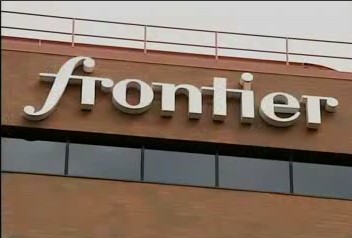
Frontier's headquarters in Rochester, N.Y.

Frontier's headquarters in Rochester, N.Y.

Other consumers who believe they are eligible for a refund or credit may submit a claim to the Attorney General’s Office by December 21, which will review the claims and act as the final arbiter for eligibility for reimbursement. Consumers wishing to file a complaint should call the Attorney General’s Rochester Regional Office at (585) 327-3240.  A promised web-based claim form could not be located on the NY Attorney General’s website at press time.  Residents living outside of New York State are not eligible to participate, but you may want to contact your own state’s Attorney General and ask them to review the New York settlement agreement, which could provide the basis for similar settlements in other states.

Frontier must also pay $35,000 in fees and costs. Frontier will send written notices to all customers who subscribe to new services regarding early termination fees. The company will not collect any such fee until after the notice has been sent. Frontier must also include a written notice of the term of any service agreement on consumers’ monthly billing statement for any agreement with an early termination fee.

Many customers never realized Frontier automatically renewed their Price Protection Agreements without their explicit consent, generating early termination fees of $300 for some customers who left after more than five years of service with the company.

JuniPerez, a former Frontier customer, wondered whether Frontier was offering a Price Protection Lifetime Agreement: “I had Frontier’s DSL and phone service for about five to six years (phone service for much longer). After my last move, I switched to Time Warner’s phone, cable, and broadband package. Within two weeks of notifying Frontier of my service cancellation, they sent me my last bill — $300.00! This was for what they called an “Early Termination Fee”. After five to six years I had an early termination fee? I didn’t even get a chance to dispute it. Within days (not weeks or months) they turned the account over to a collection agency. They still dare to send me ‘come back to us’ flyers and specials.”

Some Frontier customers sign up for bundled packages of service to receive incentives, such as heavily discounted satellite television service or a “free” Dell netbook (after paying $45 in fees for taxes and shipping), in return for signing a two- or three-year Price Protection Agreement.  The agreement promises customers will not see any changes in pricing for the length of the agreement.  At the same time, the agreement “locks-in” the customer to stay with the company for the length of the contract, or face a penalty for canceling service early.  In many cases involving incentives, the early termination fee amounted to $300.

But Frontier appears to have made some changes even before yesterday’s settlement with the Attorney General.

As of at least this past spring, customers signing up for a promotion with a Price Protection Agreement were directed verbally to an e-mail copy of the agreement sent to them, urged to read it, and were required to electronically consent to the terms of the agreement in order to participate in the company’s promotions.  Follow-up e-mails were sent to customers who did not complete this process.  The contract also included provisions notifying customers that agreements were automatically renewed for an additional term unless the customer notified the company in advance they did not consent to automatic renewal.  In fact, customers could cancel the contract renewal almost immediately after electronically consenting to it.

Frontier’s e-mail was sent to the customer’s Frontier e-mail account, which some customers never used and never accessed.  For some, the terms amounted to “fine print” that many never read.  While the New York Attorney General ultimately found Frontier Communications responsible for failing to adequately notify customers about such fees, Stop the Cap! reminds the public they have a responsibility to carefully read and review the terms and conditions of all service agreements, especially those involving promotional giveaways tied to service commitments like Price Protection Agreements.  Many have historically carried steep cancellation penalties as well as automatic renewal provisions designed to keep you from switching providers.  Such agreements should be considered only if you are certain you are happy with your service provider.  If you are trying a service for the first time, inquire whether you can sample the service for a trial period and retain the right to cancel without incurring penalties.  Frontier traditionally offers a 30-day trial period for DSL service.  Always record the time and day you made the inquiry, and the name of the customer service representative you spoke with.  Should you be given incorrect or inconsistent information, being armed with this information may help convince the provider to agree to what you were promised.

Customers who are not satisfied with the response they receive from a customer service representative or their immediate supervisor should check the front of their telephone directory for the number of the “executive customer service office,” sometimes also called, “unresolved complaints.”  These special representatives are empowered to resolve complaints customer service representatives may not have the authority to fix.  Failing that, contact your state’s Public Utilities/Service Commission or the Attorney General’s office.

Two video news reports appear below the fold.

… Continue Reading

Breaking News: Verizon Comes Out Supporting Internet Overcharging Schemes

Phillip Dampier September 29, 2009 Data Caps, Verizon 5 Comments
Lynch

Lynch

Verizon today joined the chorus of large providers looking for an enhanced payday off the backs of their subscribers when Chief Technology Officer Richard Lynch told a 2009 Fiber to the Home Conference and Expo press conference that the days of unlimited broadband may be coming to a close.

“We’re going to have to consider pricing structures that allow us to sell packages of bytes, and at the end of the day the concept of a flat-rate infinitely expandable service is unachievable,” Lynch said, adding that the broadband industry will see a paradigm shift as the Internet grows and Verizon passes on the cost to “someone.”

This is the first public comment from a Verizon executive that directly supports Internet Overcharging, although Lynch said Verizon was not announcing any pricing changes at this point in time.

Lynch’s statements came in concert with Verizon’s more immediate concerns about Net Neutrality, which the company has spent considerable amounts of money on Washington lobbyists to oppose.

Lynch doesn’t want Net Neutrality to interfere with the potential for the company to offer “premium bandwidth plans.”

Assuming Lynch is speaking about plans sold to consumers, there are no provisions in Net Neutrality legislation that address speed-based Internet service tiers.

Verizon’s statement about metered pricing and Net Neutrality may be a “divide and conquer” strategy to suggest to consumers an “either/or” proposition.  Either accept usage caps and metered service plans or Net Neutrality.  Stop the Cap! has written about this strategy in the past, and it has tripped up some public policy consumer groups in the past who were willing to support one or the other instead of objecting to both.

But Verizon’s near limitless capacity fiber optics FiOS network, and the fact the company’s “cost structure is certainly different, as a tier-one [carrier], [means] their transport costs are a fraction of the smaller operators,” according to Vince Vittore, an analyst with The Yankee Group.  That makes justifying such pricing questionable.

Verizon equates usage pricing models on its wireless mobile network with its wired fiber optic network.  Telephony Online quotes Lynch: “We have already gone this way in wireless because that is where the resource is most constrained.”

Of course, wireless mobile broadband is constrained by limits on the amount of spectrum space available to transport the data, something a fiber optic network need not contend with.

Uproar Over Bay Area Comcast Rate Hikes Met With Indifference By Oakland Tribune Business Editor

Phillip Dampier September 24, 2009 Comcast/Xfinity, Competition, Editorial & Site News 2 Comments
Courtesy: vgm8383

Courtesy: vgm8383

Bay area residents are fuming over Comcast’s latest round of rate increases.  The din grew so loud, Drew Voros, the Oakland Tribune Business Editor, noted “the annual outcry over Comcast rates is louder than any rate increase for electricity or water I have come across. A possible exception being California’s energy crisis earlier this decade.”

Voros then casually dismisses consumer outrage by telling his readers “cable TV is not a utility. It is not a vital service with transparency, public input and debate. There is no recourse for poor service through regulatory bodies or the ballot box.”

We know where this is going.

Voros doesn’t suggest that the rate increases are unjustified and unwarranted, nor does he have a bad word to say to Comcast, although he does fixate on one aspect of the regulatory framework (the wrong one) that he believes is at the core of the problem of unchecked rate increases.

His suggestion is to watch free over the air television or try DirecTV, Dish Network or AT&T’s U-verse.

Let’s explore those alternatives.

For some, assuming they get reasonable reception, and many Bay Area residents do not, getting local over the air signals might be good enough, but won’t help with those pesky rate increases on broadband service, or for those channels like C-SPAN or cable news outlets residents access to get coverage of events local broadcasters ignore.

DirecTV and Dish Network are also fine alternatives, assuming you have permission from a landlord to install the reception equipment, and/or your view to the satellite isn’t obstructed by trees or buildings.  AT&T U-verse is an even better potential choice, assuming it’s actually available in your area.

For everyone else, it’s Comzilla or go without.

Voros then goes too far into the weeds and gets lost in what suspiciously looks like “blame the government” rhetoric:

What many TV viewers do not realize is that the franchise agreements are loaded with fees and payments to the cities, funded through annual rate increases. There’s give and take between cable companies and the cities they serve. It’s a business deal with you in the middle.

But consumers are not bound by any franchise agreements, and the options for television services have grown immensely since the first cable TV line was connected in the 1970s. That is why the franchise agreements are out of date. Technology has overtaken that legal document. There’s no monopoly on television content delivery.

Comzilla attacks San Francisco with rate hikes.

Comzilla attacks San Francisco with rate hikes.

Ask any city official if they’d rather enjoy the incremental increase in franchise payments (which amounts to a fixed percentage, usually 3-5% of gross revenue) made possible by the annual rate hike, or the peace and quiet from constituents not upset over an industry that routinely increases rates well in excess of inflation.

Doing away with the franchise system to resolve cable rate hikes would be like using a ShamWow to deal with the after-effects of Hurricane Katrina.

Most cable companies used to include the “franchise fee” as part of the cost of the monthly service, but now routinely break that charge out onto its own line on your bill (and many never lowered the price for the original service, pocketing that as a hidden rate increase as well).  A rate increase may add a few pennies to the franchise fee on a customer’s bill, but then there is the other $3-5 dollars to consider.

Franchise agreements are negotiated for wired providers.  AT&T had to obtain one to provide U-verse.  That’s because local communities demand that a business tearing up their streets provide something in return for the community.  That usually includes: a small percentage of gross revenue, an agreement to provide free service in community centers, government offices, and public schools, and that they set aside several channels for Public, Educational, and Government access, known collectively as “PEG channels.”  It’s a very small price to pay for an industry that earns billions in profits.

Those agreements typically are renegotiated every ten years, so if consumers object to the franchise fee arrangement, they can appeal to local government to reduce or eliminate it.

Voros also suggests consumers try to obtain television programming online.  That is also sometimes possible, but as Stop the Cap! readers know, that also takes a broadband connection, and Comcast just raised the price for many of their customers for that as well.  With the industry’s new TV Everywhere project, dropping your cable subscription, as Voros suggests, will also likely cut you off from many of your favorite cable shows online — TV Everywhere is for paid television subscribers only.

The industry has every angle covered, right down to suing to remove the exclusivity ban on cable networks and programming.  Should the DC Court of Appeals agree, Voros’ contention that there’s no monopoly on television content delivery will also be thrown into doubt.

The solution is not to blame “outdated” franchise agreements.  The cable package business model is the larger problem.  Customers are expected to pay for ever-growing and more costly basic and digital cable packages filled with channels they don’t want.  Of course competition should be encouraged, but allowing consumers to choose and pay for only the channels they wish is a far better solution to runaway cable pricing.

Shaw Steamrolling Through British Columbia in “Sell To Us Or Die” Strategy

Phillip Dampier September 23, 2009 Canada, Competition, Recent Headlines, Shaw 1 Comment
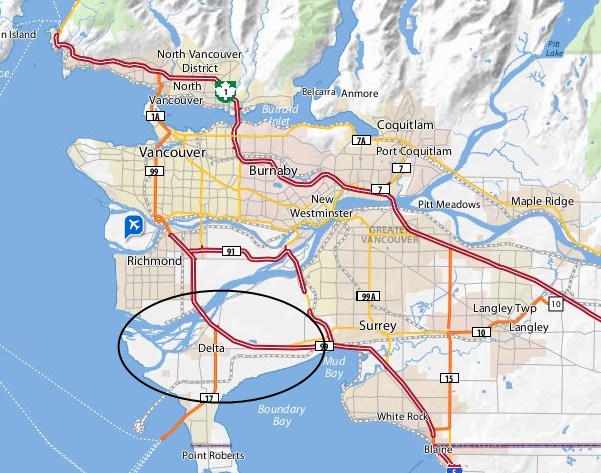
Delta, part of the Vancouver metro area, British Columbia

Delta, part of the Vancouver metro area, British Columbia

Stop the Cap! reader Rick has been educating me about some of the new-found aggression by Shaw Communications, one of western Canada’s largest telecommunications companies, in expanding its business reach across Canada.  Woe to those who get in the way.

Novus Entertainment is already familiar with this story.  As Stop the Cap! reported previously, Shaw launched fire sale pricing on its cable, broadband, and telephone services ($9.95 a month for each) and target marketed those limited special offers in and around buildings wired for Novus service.  Novus protested to the BC courts, claiming Shaw was engaged in predatory pricing behavior.

A few days ago, an Ontario court judge dismissed a suit brought by Rogers Communications against Shaw over Shaw’s plans to buyout Mountain Cablevision, a smaller cable provider serving parts of southwestern Ontario.  Rogers was upset because the purchase violated a “covenant” between the two telecom giants not to compete in each others’ service areas.

Now, Shaw’s trucks are rumbling down the roads of Delta, a community south of Vancouver,  as work begins on constructing a cable system that will directly compete against Bragg Communications’ Delta Cable.  Shaw also has won approval from the Canadian Radio-television Telecommunications Commission (CRTC) to competitively wire Ladner and adjacent neighborhoods southeast of Vancouver.

Shaw president Peter Bissonnette told industry news site Cartt.ca the wiring of Delta and Ladner comes as a result of “people there saying they would like to get Shaw.”  So now residents can look out their windows and see Delta Cable’s wiring on one side of the street and Shaw’s wires on the other.

Another success story for head-on competition leading to lower prices and more choice, right?

Not so fast.

As Cartt.ca reports (one article view is available for free, subscription required thereafter), there is a history to be considered here, and that may include another agenda beyond the “consumers wanted us so we came” explanation.

There’s a bit of history to the Delta system and Shaw, however. Back in 2006, when then-owner John Thomas decided to sell Delta Cable and Coast Cable, many assumed he would sell to Shaw. After all, Thomas was on Shaw’s board of directors. However, aware of the fact most of his employees would likely be out of work if nearby Shaw bought it, he instead surprised most by selling to what was then Persona Communications, for about $90 million.

Some months later, Persona itself was purchased for a reported $750 million by Bragg Communications, which does business, of course, as EastLink, primarily in Eastern Canada.

Cartt reports it is no secret Shaw wants the Delta region as part of its greater Vancouver service area, and the traditional route by which most cable companies do this is by buying out the incumbent provider.  Bragg Communications understands this, and has sold some of its own systems in the past, most recently in Saskatchewan.  But so far, not in Delta.

Bissonnette was cagey when asked if Shaw had pursued the buyout route, which is always cheaper than overbuilding an area with all new wiring.

“They know what we are doing. There’s always more than one way to skin a cat you know,” he said.

If Shaw adopts the same aggressive strategy in Delta they have used against Novus in downtown Vancouver, it will likely make Delta’s current cable system unprofitable.  Bragg would be forced to consider either engaging in a sustained price war, something Shaw is in a better position to handle because of revenue earned from non-competitive areas, or eventually sell the Delta Cable system at a fraction of its original value.

For comparison, Delta Cable charges $26 a month for analog basic cable plus $26.95 a month for a robust digital channel package.  Broadband service, with a 62GB usage cap is $39.50 per month.  They don’t seem to offer telephone service.  Shaw promoted a digital/basic combination package in downtown Vancouver for $9.95 a month and broadband for an additional $9.95.  Shaw to Delta Cable: Compete with that.

For a time, up to 28,000 households in the area may enjoy some benefits from a sustained price battle, unless Bragg capitulates and sells out early, but in the end, if Shaw engages in the kind of allegedly predatory pricing it has in downtown Vancouver against Novus, the benefits will be short-lived, and Shaw always has time to make up the difference down the road.

Wall Street Journal Says Net Neutrality A Boon To Bandwidth Hogging, Ignores Industry’s Own Self-Interest

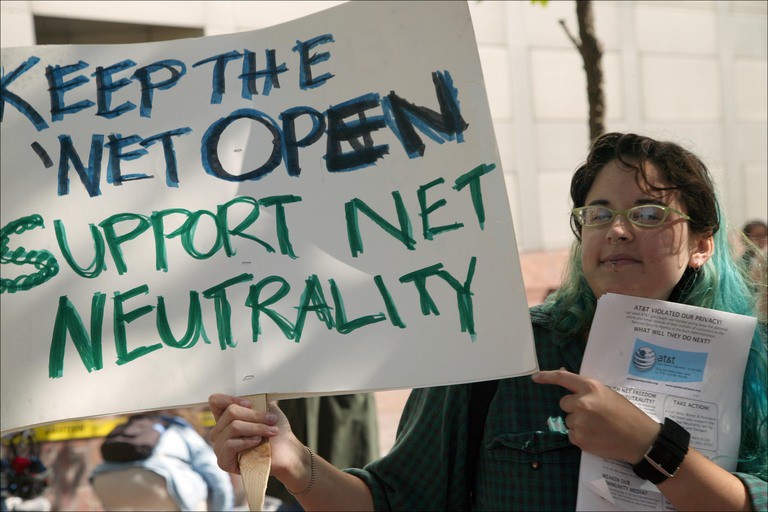
net_neutralityA Wall Street Journal article this morning calls the imminent introduction of Net Neutrality policy “a boon for consumers […] to use their computers or cellphones to enjoy videos, music and other legal services that hog bandwidth.”

The article refers to the widely expected announcement today by FCC Chairman Julius Genachowski that Net Neutrality should be adopted as the fifth principle governing Internet service in the United States.

But Journal reporter Amy Schatz’s judgment about who wins and who loses in the Net Neutrality debate is framed by the flawed broadband provider arguments she adopts as reality:

The proposed rules could change how operators manage their networks and profit from them, and the everyday online experience of individual users. Treating Web traffic equally means carriers couldn’t block or slow access to legal services or sites that are a drain on their networks or offered by rivals.

The rules will escalate a fight over how much control the government should have over Internet commerce. The Obama administration is taking the side of Google, Amazon.com Inc. and an array of smaller businesses that want to profit from offering consumers streaming video, graphics-rich games, movie and music downloads and other services.

Setting aside the inappropriate use of the word “hog” to define broadband usage, which comes straight out of the broadband industry’s public relations strategy, Schatz ignores the fact some of the biggest drains on these networks will soon come from the industry’s own efforts to dominate online video — TV Everywhere.

In fact, the excuses for imposing Internet Overcharging schemes in 2009 do not reference much beyond online video growth as a justification to impose speed throttles and price increases on consumers.

Schatz adopts industry positions as fact in a number of places throughout her piece, which belongs on the Editorial page of the Journal:

If the FCC does force U.S. wireless carriers to open their networks to data-heavy applications like streaming video, it could push them beyond the limited capacity they have. Already, in areas like New York and San Francisco, a high concentration of iPhones has caused many AT&T customers to complain about degrading service.

In fact, many wireless carriers already provide their own wireless video to customers, and don’t seem to be engaging in a lot of hand-wringing over that.  Should Net Neutrality force open the wireless platform, the quality of the service, not the provider’s self interest will govern the success and failure of individual applications.  AT&T, which has earned massive revenue from its exclusive iPhone arrangement with Apple, can and should continue to invest some of that revenue into expanding their network to meet the demand.  If they cannot, it is an open question why they would allow any online video or other data-heavy applications on their networks until those networks can handle the traffic.

In such a scenario, wireless carriers may have to rethink how much they charge for data plans or even cap how much bandwidth individuals get, said Julie Ask, a wireless analyst at Jupiter Research.

This ignores the fact providers have already rethought about how much they charge for data plans.  Some providers are now compelling subscribers to choose data plans as part of their two year service agreements, while the industry is replete with 5GB usage caps on wireless data services today.  Someone should ask Ask what she thinks is forthcoming that hasn’t already happened.

The FCC’s proposal will take into account the bandwidth limitations faced by wireless carriers, according to people familiar with the plan, and would ask how such rules should apply to current networks.

…which takes the wind out of the sails of the argument Net Neutrality would be ruinous to wireless providers.

The proposals come as the FCC faces a federal appeals court case over its authority to regulate Web traffic. Comcast is fighting an FCC decision last year to ding it for violating the agency’s “net neutrality” principles when it slowed traffic for some subscribers who were downloading big files. Comcast said it didn’t violate any rules because the FCC had never formally adopted any, but it did change how it manages its network.

In reality, Comcast’s speed throttle targeted files small and large, all because they were delivered over a specific network Comcast didn’t like: peer to peer.  That’s a protocol that relies on a group of people obtaining files by sharing pieces already downloaded with one another until the file is complete for everyone.  That involves uploading and downloading file pieces, often over a lengthy period.  Comcast’s network was built with the assumption most customers would download far more than they upload, and peer-to-peer challenged that model with its file sharing methodology.  The surge in upload traffic challenged their network at times, so Comcast decided to throttle the maximum speeds consumers could use while engaged in peer-to-peer file sharing.

Republicans are likely to oppose the FCC’s new proposal — both at the FCC and in Congress — arguing that the FCC is trying to fix problems that don’t exist and that the agency should take a more hands-off approach to the fast-changing industry.

“With only a few isolated instances of complaints alleging net neutrality-like abuses ever having been filed, it is a mistake,” said Randolph May, president of Free State Foundation, a free-market oriented think tank.

It’s difficult to fathom exactly how much more “hands-off” the agency can get with respect to broadband, an unregulated service in the United States.  That “hands-off” policy was responsible for the establishment of de facto monopoly/duopoly broadband service in most American cities, wireless broadband that charges nearly the same price for the same usage capped service, and is tinkering with Internet Overcharging to leverage that market status into higher pricing for all consumers.

May’s argument is akin to calling the fire department only after a fire has consumed half of your home, not when the smoke detector first goes off.

As a result, both the cable companies and phone companies had incentives to create conditions on the Internet — either through pricing or slowing or speeding up certain sites — to favor their own content.

This sentence, buried towards the end of the piece, exemplifies exactly why Net Neutrality is so important.  Let’s put this fire out before it burns out of control.

Search This Site:

Contributions:

Recent Comments:

Your Account:

Stop the Cap!