Home » Parkersburg » Recent Articles:

Suddenlink Closing Call Centers, Adds New Paper Billing Fee

unemployedAltice’s ongoing efforts to cut expenses and boost profits at Suddenlink will cost an unspecified number of call center workers their jobs in three states and customers will soon pay a fee to receive their cable bill in the mail.

In three separate announcements, Suddenlink has begun notifying employees at three separate offices that many will be out of their jobs by this fall as the company shutters call centers and sales offices in Greenville, N.C., St. Joseph, Mo.,  and Parkersburg, W.V.

“We are migrating call center activities to some of Suddenlink’s larger call centers in the U.S. based on call volume, and where we have the greatest number of business partners,” said a company news release.

All of Suddenlink’s sales jobs will now be in Texas, and that means sales employees in the company’s Parkersburg office were given two choices: move to Texas, or take a different job in the Parkersburg office.

St. Joseph area employees were told their jobs will be relocated to larger call centers elsewhere where Altice has spent money to improve customer care.

“We have invested in advanced customer-care technology in those locations, and based on that believe this new structure will enable us to provide a superior service experience to all of our customers,” said Suddenlink spokeswoman Lisa Anselmo.

SuddenlinkLogo1-630x140This summer Suddenlink is also continuing incremental rate hikes for customers not already subject to them. Parts of North Carolina are the latest to face a new $1 billing fee, which began July 1. New customers already pay the fee, but now current customers will also face the extra charge if they want a paper statement mailed to them.

“This fee covers the handling and postage costs associated with providing a paper statement,” said spokesman Gene Regan, senior director of corporate communications.

Notification of the new fee went out in the company’s May and June billings. To avoid the fee, customers must opt-in to electronic billing by visiting the company’s paperless billing web page and logging in to their Suddenlink account.

“What we are finding is more and more people in recent months have gone to electronic billing. A lot of customers have made the change in recent months,” Regan told The Daily Reflector. “Today so many people are online, more and more people are online, and a lot of people don’t like to deal with paper mail. They like the convenience and the opportunity to use other ways to pay.”
August

August

But many customers would prefer the option of a lower cable TV bill.

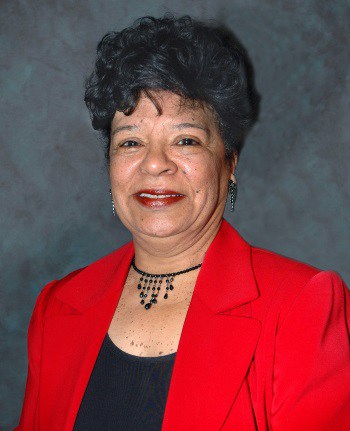
In Louisiana, Lake Area residents continue to complain about Suddenlink’s business practices, especially rates, channel options, and equipment fees. City councilwoman Luvertha August told American Press she is inundated with complaints about the cost of cable television in particular.

“All of these comments are from senior citizens. They’re on fixed incomes and they have limited budgets,” August told the newspaper. “They’re concerned with what they deem are constant changes with the Suddenlink cable company.”

Seniors have been confronted with cable TV bills that have soared from $20 two decades ago to over $80 in many cases today. This month Suddenlink completed its all-digital transition in southern Louisiana, which requires customers to attach equipment to every cable-enabled television in the home, at an additional cost.

The Leichtman Research Group, which specializes in research on broadband media and entertainment, found today’s average cable-TV bill is just under $100 after fees, surcharges, and taxes are included. Seniors who have seen no significant increase in their Social Security checks for several years are hard-pressed to pay for channels they don’t want or watch.

Last year, August attempted to involve the state’s legislative delegation to coordinate a message that consumers want more options, including a-la-carte for cable television. Her effort found almost no interest from state and federal lawmakers representing Louisiana, many who receive substantial campaign contributions from telecom companies. Sen. David Vitter (R-La.) did respond, but falsely claimed cable television is a state matter and the “federal government had nothing to do with the issue.”

In fact, many members of Congress have asked the FCC to get involved in the issue and others have supported efforts to increase competition and push for mandatory a-la-carte channel choices for consumers. AT&T U-verse has a franchise in southern Louisiana and may offer some consumers a choice, but after AT&T completed its acquisition of DirecTV, many consumers report AT&T is marketing satellite television more aggressively than its own U-verse TV option.


Frontier’s Wishful Thinking: ‘We’ll Take West Virginia Into the Top-5 States for Broadband Access’

Frontier Communications claims its expansive broadband deployment efforts in West Virginia will take the Mountain State from the bottom of the broadband barrel to the very top within a few years.

Dana Waldo, Frontier’s senior vice president and general manager, said the company has completely turned around landline and broadband service in West Virginia just over a year after Verizon Communications left the state.

In a wide-ranging radio interview with MetroNews, Waldo claims complaints are way down while DSL broadband deployment is way up.  In just about a year, Frontier has expanded broadband to 76 percent of its West Virginia service area, adding 85,000 additional homes and businesses that previously had no access to wired broadband.

“We made a commitment to spend about $310 million, from the time of the transaction through 2013, to improve the network, to expand broadband across the state and for other capital improvements,” Waldo told MetroNews Talkline.

Frontier Communications’ Dana Waldo talks with MetroNews Talkline about phone and broadband service in West Virginia. July 19, 2011. (11 minutes)
You must remain on this page to hear the clip, or you can download the clip and listen later.

Currently, West Virginia ranks 47th in the United States for broadband access, mostly because large sections of the rural, mountainous state simply don’t have access to any provider.  What access most do have, outside of major cities like Charleston, Huntington, Wheeling, and Parkersburg comes from telephone company-provided DSL.  Verizon used to be the dominant provider in West Virginia, with Frontier providing service in limited areas.  But after Verizon sold its operations in the state to Frontier, the independent telephone company is now the only telecommunications provider for many rural communities.  For the majority of customers outside of the largest cities, Frontier markets DSL at speeds up to 3Mbps, hardly cutting-edge.

Frontier’s backbone network is deemed the worst in the nation for a wired provider, according to statistics collected and analyzed by Netflix.

Waldo

“When comparing broadband in states like New York or New Jersey with West Virginia… there is no comparison,” shares Stop the Cap! reader Steve who lives in Hempstead, N.Y., but owns a cabin outside of Beckley, W.V.  “You can get Cablevision’s cable broadband at rocket ship speeds or Verizon FiOS fiber-to-the-home, which is even faster, in New York.  For my neighbors and me in West Virginia, there is one choice – Frontier Communications’ DSL, which can manage 800kbps on a good day.”

“I almost drove off the road laughing as I listened to the sheer nonsense of Mr. Waldo’s empty promises,” Steve shares. “This company’s idea of broadband access is up to 3Mbps DSL while nearby states like Virginia and Pennsylvania are getting fiber or cable broadband speeds ten times faster.  How he expects to make West Virginia a top-5 broadband state with their obsolete DSL is a question the gushing host never bothered to ask.”

Steve doesn’t think too many of his Mountain State neighbors are as excited as Mr. Waldo by Frontier.

“God help you if your line goes out, because they can take days to get around to fix it,” Steve says. “Waldo tries to sell you his possum pie with claims the company takes longer to effect repairs so they are ‘done right the first time,’ which is a real hoot considering all of the repeated outages customers experience.”

Steve doesn’t lay the blame entirely at Frontier, however, claiming Verizon fled the state after mangling their outdated landline network and keeping it running with electrical tape.

“Frontier bought into a real mess, and I’m sure they will eventually fix a lot of the problems Verizon didn’t ever care to fix, but that doesn’t make West Virginia a broadband nirvana — certainly not with Frontier’s DSL.”

Frontier West Virginia: Long Hold Times and Glitches for its 626,000 Newest Customers

Phillip Dampier July 8, 2010 Consumer News, Frontier, Rural Broadband, Verizon, Video 1 Comment

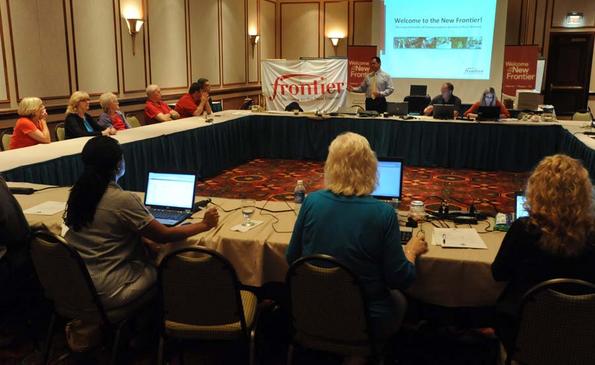
Frontier Communications rented a conference room at the Charleston Embassy Suites, calling it a "command center" for the transition. (Courtesy: Charleston Gazette/Lawrence Pierce)

No state faces a larger impact from Verizon’s exit than West Virginia.  The epitome of the kind of market Verizon doesn’t want to serve any longer, West Virginia suffered through several years of Verizon not keeping up with required investments in the aging landline network, and service had markedly deteriorated as a result.  West Virginia is mountainous — expensive to maintain infrastructure, often rural — reducing potential revenues, and economically-challenged — killing the chances of making “triple-play” sales (and profits) in communities where customers have to watch every penny.

West Virginia was also the epicenter of the loudest controversy over the sale, as unions and consumer groups opposed the transaction because of its enormous threat to an entire state’s landline network.  A failure by Frontier would result in the kind of drama experienced by northern New England customers of FairPoint Communications, who suffered with more than a year of horrible service and inaccurate billing.

So news that Frontier has run into problems in the state just one week in, despite sending 250 extra employees into the area for the conversion, has raised concerns with the Public Service Commission, as well as those impacted by problems and outages.  Frontier has tried to put its best face forward, with employees holed up in a self-described “command center” in a conference room at the local Embassy Suites in Charleston.  On the day before the handover, press photographers were able to snap pictures of Frontier employees seated at long conference tables facing one another, with laptops open.  A digital projector showed PowerPoint slides that promoted the “new Frontier” while a temporary company banner tacked to a corner wall rippled over a stand.  A high tech glitz and glamor presentation this was not.

David Armentrout, president and chief operating officer of FiberNet was underwhelmed by all of it.  His company requires connections with West Virginia’s landline provider to deliver full service to his clients.  Prior to the handover, Armentrout said FiberNet had 43 outstanding trouble tickets on file with Verizon.  But Verizon apparently never handed over those support tickets to Frontier, effectively losing them after the transition.  Now that Frontier has taken over, Armentrout’s company has had to open 113 trouble tickets for problems old and new.

Armentrout complained about the lack of results from Frontier in the pages of the Charleston Daily Mail:

Armentrout said that after consistently being put on hold for more than an hour when trying to reach Frontier to talk about outstanding trouble tickets, “we had a meeting with their senior team on Saturday. We said this was not acceptable. Since then they’ve given us a work-around with two dedicated Frontier employees. When we get an hour hold time, we contact these dedicated employees.

“Another issue we’ve had is, we’ve had to contact our customers directly to verify the status of their trouble tickets because the (Frontier) system doesn’t tell us the status,” he said. “As a result of having to contact our customers directly and working with Frontier on all of these issues since July 1, our dedicated team has spent over 200 man-hours working on these issues.

“When you look at the results: six of 43 completed and three of 113 completed, we’re doing a lot of work and spending a lot of man hours but not really seeing a lot of service issues being resolved.

“Unfortunately on Friday the Public Service Commission was closed,” Armentrout said. “We made attempts to get in touch with them because we recognized we would have the problems we’re continuing to have today. I want our customers to know we’re doing everything we can to get these issues resolved.

“Several individuals within Frontier have exhibited good-faith efforts to resolve these issues,” he said. “We commend them for their efforts. But what we’re looking for is results. We need to get these issues fixed. They’ve made efforts but at the end of the day we’re still not getting where we need to be.

“Come Tuesday when business gets back to normal we can expect these numbers to increase unless we get these issues resolved,” Armentrout said. “Our intention is to go to the Public Service Commission on Tuesday and get them involved to make sure these issues are getting resolved as quickly as possible. It has been a long weekend.”

Ken Arndt, president of Frontier’s Southeast Region, issued a statement Sunday that unconvincingly blamed some of the delayed fixes on the recent death of West Virginia Senator Robert Byrd:

“We are doing the necessary work needed to correct old and current issues. It’s Day 4 and overall this has been a very successful conversion. That is especially true when you remember that Day 2 was marked by the presence of the President and Vice President of the United States and many members of Congress at the memorial for Sen. Robert Byrd. We made sure Frontier’s system performed flawlessly.”

The newspaper notes Verizon’s landline network in the state is notorious for having problems when there are storms, and since the July 1st transition there have not been any.  Armentrout agrees, hoping that Frontier’s outstanding issues get resolved before the first major storm hits the state, which could come as early as Friday.  Armentrout calls the first severe weather challenge Frontier faces “the mid-term exam.”

Taking the longer view, Frontier promises it will spend millions in West Virginia to update the state’s landline infrastructure and expand broadband availability.  Frontier announced the hiring of nine regional managers to oversee operations across the state, including Mitch Carmichael, a delegate in the West Virginian legislature representing Jackson.  Carmichael is a former computer salesman who will now manage Frontier’s Parkersburg office.

Customers are less impressed.  Many have experienced lengthy outages with their DSL service since the transition — a bad omen for many Charleston residents who immediately called Suddenlink, the area’s cable company, to switch service providers.  Another Charleston customer called Frontier’s continued reliance on a Yahoo!-provided “front end” “really low class.”  In nearby Huntington, a few customers couldn’t say much about what changed after Frontier took over because their phone service went out on the 1st and was still out a week later.

“I hope they don’t raise the bill since we have not had any phone service at all since 11:00am on July 1st when Frontier took over,” wrote one customer. “With my phone service out since Saturday and a new promise of repairs to be made by Tuesday July 6th, I am waiting to see where Frontier improves service in rural West Virginia. The Verizon employees would just as soon as to tell you anything — same people, just a different company. Frontier needs to have a major house cleaning, as their tales haven’t changed along with the service,” writes another.

A handful also complained that their Frontier phone service cost plenty more than what Verizon charged:

“My parents have Frontier and their bill is twice as high as my Verizon. We have the DSL and the freedom package (unlimited long distance, call waiting, voicemail and caller ID) and my bill is $78 a month.  My parents only have local calling, call waiting, voicemail, caller ID, and DSL and their bill is over $120 with no long distance,” he writes.  “How is this take over going to help anyone other than Frontier? I’m going to cable for Internet and phone.”

[flv]http://www.phillipdampier.com/video/WSAZ Charleston Frontier Carriers Experience Minor Problems 7-6-10.flv[/flv]

WSAZ-TV in Charleston says some companies are experiencing minor problems in the West Virginian conversion from Verizon to Frontier.  (2 minutes)

Another Guilty Plea in Rural West Virginia Wireless Broadband Caper – $2.4 Million Ripoff

Phillip Dampier July 1, 2010 Public Policy & Gov't, Rural Broadband, Video, Wireless Broadband Comments Off on Another Guilty Plea in Rural West Virginia Wireless Broadband Caper – $2.4 Million Ripoff

The sequel to this story could be written from a jail cell.

The guilty pleas just keep on coming in a two-year old prosecution of a wireless broadband scheme that never delivered much service, but ripped off taxpayers to the tune of more than two million dollars.  This week, the president of Mountain State College, who has been employed there for more than 35 years, owned up to hiding facts from prosecutors in his role as chairman of the board of the now-defunct Sequelle Communications Alliance, Inc.

Alan Michael McPeek of Parkersburg, 63, plead guilty Wednesday to obstruction of justice charges in federal court, admitting he misled a criminal investigation reviewing fraud allegations against the company.

Sequelle, a publicly funded project to establish wireless Internet service in the mid-Ohio Valley region, received a $3.295 million loan in 2002 from the U.S. Department of Agriculture, a $600,000 grant from West Virginia’s Development Office and another $400,000 in loans from the Mid-Ohio Valley Regional Council and a bank.

For that funding windfall, the mid-Ohio Valley got several towers ready for wireless antennas, a website that didn’t get updated much beyond the fall of 2000, some software to administer the project, and nothing else.

Instead, federal prosecutors charged some of Sequelle’s officers and several Ohio-based subcontractors of laundering loan and grant funds as seed money and salaries for a new for-profit venture designed to market an “Internet in a box” concept to other rural areas seeking wireless Internet service.

Prosecutors particularly focused on the USDA loan, which required the money “to be used solely for the project specifically described in the application to furnish or improve broadband services in rural areas … in the states of Ohio and West Virginia.”

Like many federal grants and loans, this one prohibited using the money to pay salaries, utilities, and basic office expenses.  Prosecutors would later learn Sequelle’s principal founder and former CEO Heidi Ditchendorf Caroline Laughery laundered loan money through a sub-contractor who kicked back at least $250,000 she used as a salary. McPeek’s guilty plea came in part because he knew about it.

Another grant from Ohio was paid on the promise Sequelle would provide at least 45 high paying jobs within three years.  That never happened.

Laughery

Worst of all, many of the grant and loan applications asked whether any officer in the company had been convicted of a felony or was a defendant in any criminal case.  Laughery answered no to both.  Had government officials verified that information they would have discovered Laughery was previously convicted in 1987 on two counts of felony wire fraud — based on her embezzlement of more than $130,000 of customer funds and securities during her employment at Merrill Lynch.

Laughery didn’t want to bring up those bad memories, so she left her Merrill Lynch years off Sequelle’s website documenting her prior experience.

Prosecutors have been successful in bringing those responsible for this caper to justice:

  • Laughery was sentenced in April to 18 months in prison and ordered to pay $850,000 in restitution.
  • Sub-contractor R. Scott Truslow plead guilty to conspiring to commit money laundering and is now spending six months under home confinement and ordered to pay nearly $550,000 in restitution.
  • Charges are still pending against a second sub-contractor.

McPeek faces up to five years in prison when sentenced in October.  He was released on a $10,000 unsecured bond pending sentencing.

Laughery’s attorney, Michael Callaghan, claimed in 2008 that the project failed because technology marched ahead of the project.

“All the money that the government is alleging was stolen actually went into the development of Internet (infrastructure),” he told a West Virginia reporter. “My client worked for a year-and-a-half without pay because she believed in this project. The concept was great, but the technology developed faster than the project did. Technology moves fast. Technology businesses fail every day.”

Tapdancing your way around money laundering charges can move fast as well.

[flv]http://www.phillipdampier.com/video/WTAP Parkersburg McPeek Enters Plea in Sequelle Investigation 6-30-10.flv[/flv]

WTAP-TV Parkersburg has this report on McPeek’s plea.  (1 minute)

Suddenlink To Boost Internet Speeds In Lubbock and Midland Texas – New 36/2 Mbps Tier Also On The Way

Suddenlink broadband customers in Lubbock and Midland, Texas will soon have a new option to boost their broadband speed to 36Mbps.  Dubbed MAX36, the new tier leaps over the cable company’s former top broadband speed of 20Mbps.  Upload speeds get a boost as well — to 2Mbps.

Multichannel News reports pricing for the new tier depends on how many other Suddenlink services you have.  Standalone pricing is $75 per month.  Bundle it with television or telephone service and the price drops to $65.  Take all three services and MAX36 costs $60 a month.

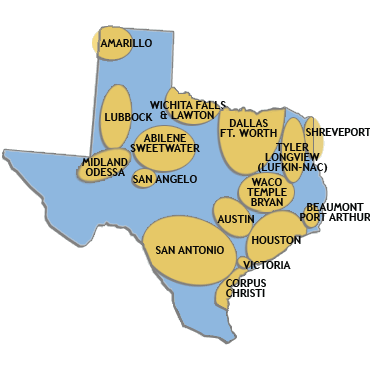
Suddenlink serves portions of these Texas communities

If that is too rich for your blood, Suddenlink next week will be providing existing broadband customers in Lubbock and Midland free speed upgrades:

  • 1Mbps service increases to 1.5Mbps
  • 8Mbps upgrades to 10Mbps service
  • 10Mbps service becomes 15Mbps

The new speeds are possible because of DOCSIS 3 upgrades underway at the nation’s ninth largest cable operator.  Suddenlink has focused on DOCSIS 3 upgrades for many of its Texas systems, including Abilene, Bryan/College Station, Georgetown, Lubbock, Midland, San Angelo and Terrell.  The operator also deployed the technology in Beckley, Charleston and Parkersburg, West Virginia, as well as Jonesboro, Arkansas, Humboldt County, California, and Nixa, Missouri.  The company hopes to upgrade 90 percent of its cable systems within the next two years.  Nationwide, Suddenlink reaches 1.3 million subscribers.

Last summer Suddenlink introduced a usage meter for subscribers in Clovis, New Mexico and included a chart of what constituted average usage for its customers.

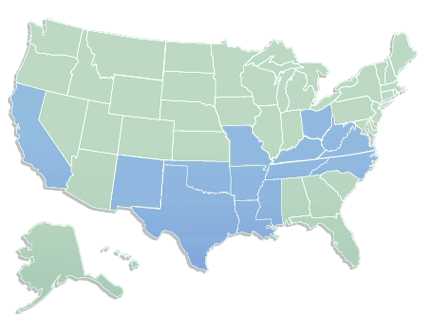
Suddenlink's national service area

The company openly admits it limits customer use of its broadband service is several communities where bandwidth upgrades have yet to occur, but at least drops communities from the usage limit list after expansion is complete.  As of February 4th, communities impacted by usage limits include:

  • Arkansas: Charleston, Hazen, Mt. Ida, Nashville
  • Kansas: Anthony, Fort Scott
  • Louisiana: Ville Platte
  • Missouri: Jefferson City, Maryville
  • Oklahoma: Fort Sill, Healdton, Heavener, Hughes, Idabel
  • Texas: Albany, Anson, Brenham, Burkburnett, Caldwell, Canadian, Center, Claredon, Crane, Dimmitt, Eastland, Electra, Hamlin, Henrietta, Junction, Kermit, Monahans, Nocona, Olney, Paducah, Rotan, San Saba, Seymour, Sonora, Trinity, Vernon, Wellington

Suddenlink also admits it engages in “network management” techniques which may spark controversy with the ongoing Net Neutrality debate, despite its declaration it “allows customers to access and use any legal Web content they prefer, thus honoring the principles of network neutrality.”

In addition to “mitigating network congestion, which can interfere with customers’ preferred online activities,” Suddenlink also discloses it “prioritizes certain latency-sensitive traffic such as voice traffic.”

Still, performing system upgrades to put a stop to usage limits and allowances is a move in the right direction, one that other providers seeking to monetize broadband traffic with Internet Overcharging schemes are loathe to take.

[flv width=”640″ height=”500″]http://www.phillipdampier.com/video/Suddenlink Ads.flv[/flv]

Watch some of Suddenlink’s more creative and amusing advertising. (2 minutes)

Search This Site:

Contributions:

Recent Comments:

Your Account:

Stop the Cap!