Home » outage » Recent Articles:

Frontier’s Press Releases Ignore Serious Service Problems Which Can Last for Weeks

Slaterville Springs is a hamlet in the town of Caroline, N.Y.

Frontier Communications issues press releases promoting the expansion of low speed DSL service into new areas, but for many existing customers, extended service outages ruin their broadband experience.

Just ask Stop the Cap! reader Paul from Slaterville Springs, just outside of Ithaca, N.Y.  Much of his hamlet was without Frontier’s DSL service for more than two weeks, leaving dozens of families with poor-to-non-existent access to broadband for the better part of January.

It Was Supposed to Be Restored in Two Days — But Three Weeks Was More Like It

“It was supposed to be restored in two days, but after repeated calls, they told me it was a “common cause” failure impacting a large number of subscribers,” Paul told us. “Later, we were told Frontier was waiting for parts to fix some equipment at the central office.”

Paul heard the same excuse a week later, as he and other local residents remained cut off from the Internet.

Paul has been underwhelmed by the attention Frontier has given to the town of Caroline, which includes Slaterville Springs.  He has complained to the town supervisor and the New York Public Service Commission.  Frontier has already offered him a refund for the extended interruption in service, but Paul would really like a stable Internet connection that performs well with today’s bandwidth-intensive Internet.

“Before the outage, I got about two-thirds of the promised 3Mbps speed from Frontier, which means any interactive applications can be difficult, and YouTube videos require lengthy buffering before one can watch,” Paul says.  “I think being able to watch YouTube without painful slowdowns should be a key metric for today’s broadband.”

At the end of January, Paul reached out to Ann Burr, Frontier’s regional president of operations.  She called up Claudia Maroney,  the general manager of Frontier’s Central New York division.

“I was told right away that I’d get a service credit for two months and that the problem would be dealt with quickly,” Paul said. “The technician in the central office contacted us and said the solution was to further reduce my speed, because he thought we were too far away from the central office to sustain even the slow speed we had before.”

That turned out not to solve the problem either.

Finally, Frontier brought Paul a new DSL modem which, in concert with repairs in the central office, finally resolved his problems.

Frontier claims it will also increase capacity in his area, which apparently also suffers from evening congestion.

Poor Internet service is not just limited to Caroline.  The entire Southern Tier region between Corning and Binghamton is hard-pressed to access high-speed service.

Eleven towns in Tompkins and Cayuga County have jointly applied for a federal grant to create the infrastructure needed to make high speed wireless or fiber optic-to-the-home service available throughout the area.

The Case of Proctor Creek and Coffield Ridge, W.V.
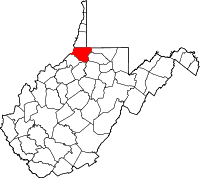
Wetzel County, W.V.

One of the most challenging areas to provide DSL service is in the Panhandle section of West Virginia.  Hilly terrain and large distances between neighbors assure a challenging broadband environment.  Cable television is out of the question in many areas, and Verizon’s legacy network was in decrepit condition before selling operations to Frontier and fleeing the state.

So it was with great excitement Frontier announced incremental progress in expanding DSL service to two small sections of Wetzel County.  Proctor Creek, close to the West Virginia-Ohio state line, and the relentlessly hilly Coffield Ridge area was finally getting DSL from Frontier — three years after Verizon promised to make the service available.

Wetzel County EMS President Jim Colvin and Del. Dave Pethtel joined Frontier’s Bill Moon at the Grandview EMS Squad station on Jan. 4, to learn more about Frontier’s expansion plans, as the Wetzel Chronicle reported.

Moon informed customers that DSL was now available in both areas and it’s only the beginning of Frontier’s plans to deliver expanded broadband service across West Virginia.  He said Frontier aims to “do things right the first time,” taking more time to establish service in efforts to prevent customers from dealing with the inconveniences of repeat visits from technicians.

“We want to bring the feel of a local company with the advantages of a big company,” Moon said. He went on to say that being a manager specifically for one region meant day-to-day decisions could be made at the local and personal level. “A lot of the red tape is gone,” he told the Chronicle. “We can make things happen directly and get things resolved quickly.”
“There is nothing quick or personal about Frontier Communications,” Shirley tells Stop the Cap! from her home in Proctor.  Her sister signed up for Frontier’s broadband service Jan. 15, and it has worked for exactly three days.  “She has never dealt with a more disorganized company.”

Shirley says nobody from Frontier ever marketed DSL to her sister’s family.

“I read the story in the Chronicle and called her right away, because they have been waiting for broadband for at least 10 years,” Shirley says.  “Calling Frontier was the first mistake — the company couldn’t bring up her account for 15 minutes.”

Shirley says her sister finally succeeded in ordering the service after her line was “qualified.”  She specifically told Frontier “no thanks” to a heavily pushed big package of services from the company, and she did not want to get into a term contract.  But Frontier signed her to one anyway.

“Installation turned out to take almost two weeks because the installer never showed up and she actually got her first bill with DSL charges on it before they installed the service,” Shirley says.  “She called me right away — they signed her up for a calling plan she didn’t want, a hard drive backup service she never ordered, and a one year contract she won’t accept.”

Frontier took all of the extra services off her bill without a fight, even as she still waited for the installer to show up.

“It worked for three days — three days,” Shirley reports.  “Ever since the last heavy rain, the modem lights just blink and Frontier tells her it must be a line problem, but she’s still waiting for someone to come fix it.”

Frontier is charging Shirley, and her neighbors, nearly $40 a month for 1.5Mbps DSL service.  It was supposed to be 3Mbps, but Moon admitted to residents the farther a customer is from a hub, the slower the connection will be.

Common Congestion Symptoms?  Frontier Promises Relief

National Radio Astronomy Observatory in Green Bank

Meanwhile, residents in Pocahontas and Webster counties in eastern West Virginia have DSL service, but intolerable congestion has made it practically unusable since last Thanksgiving.

Nate in Marlinton has had DSL service since Verizon ran it, and believes Frontier has successfully run DSL straight into the ground in the state.

“Frontier actually managed to achieve slower speeds than my neighbor’s satellite Internet service, which is simply amazing,” Nate tells Stop the Cap! “He had Frontier DSL as well, but he went back to the satellite because it was actually better in the evenings.”

Nate’s in a good position to know he has a good quality line to Frontier’s central office — he can see the building from his house.

“When Verizon ran DSL, I actually got better speeds than they promised because you can count the line length between me and the central office in yards, not tens of thousands of feet,” Nate says.  “Now the problem is with Frontier’s own pipeline to the rest of the Internet, which has become hopelessly congested.”

Nate criticizes Frontier for claiming their network has loads of fiber optics for their broadband service.

“Not for ordinary West Virginians they sure don’t,” Nate says.

The Pocahontas Times covered Frontier’s molasses-slow broadband speeds, getting promises that better broadband was on the way late last week.

“But you have to read further down in the story to find the company is spending its time, attention, and money on a fiber network connecting the National Radio Astronomy Observatory in Green Bank with West Virginia University in Morgantown,” Nate complains. “Although that fiber travels down the same phone poles and streets our phone lines do, that sure doesn’t mean we’ll be able to access it.”

Reed Nelson, Frontier’s Director of Engineering for West Virginia, vaguely offered the $5.9 million, 66-mile fiber project will indirectly benefit consumers through fiber loops installed along the way.  He was joined by an apologetic Dana Waldo, Frontier’s senior vice president for West Virginia.

“We know we’ve had some bumps in the road,” Waldo said at the outset of the meeting.

“This is very much like being on the Interstate highway at rush-hour,” he said. “It gets congested. What we’re trying to do is look for paths where we can reduce that congestion. That’s the short-term fix.”

Nate remains unimpressed.

“This is a residential broadband improvement project through osmosis — somehow Frontier’s congested network problems in the area will be resolved by an institutional network we cannot access,” Nate says. “The fact the company turned up at the Observatory to make these announcements before an audience of NRAO technical and executive staff, Pocahontas County Commissioners and representatives of the local schools and libraries, tells you all you need to know — this is an institutional, not residential network.”

Pocahontas County's Cranberry Glades: Go for Nature's Mountain Playground, but don't stay for Frontier's broadband.

Our regular reader DJ, also in the affected area, says speeds have been downright terrible since Thanksgiving, and despite Frontier’s “new capacity” coming online last week, his service is as slow as ever.

“I’m getting anywhere between 0.5Mbps – 2Mbps if I’m lucky,” he shares.

For most customers in eastern West Virginia, Frontier’s ironically-named High Speed Max service delivers a whopping 1Mbps broadband experience.

“Customers have been paying for value not received,” Pocahontas County Commissioner Martin Saffer told Nelson.

Constituents in both counties regularly complain to elected officials about the dreadful broadband service Frontier delivers.

“This company got more than one hundred million in broadband stimulus funding and it sure isn’t helping people in eastern West Virginia,” Nate says.

Another part of Frontier’s problems is an overcongested access point in Bluefield, where Frontier exchanges traffic with the Internet’s national backbone.  Sending the majority of the state’s traffic through one data center has proved untenable, so the company plans additional access points in Charles Town, Charleston, and Clarksburg.

Frontier promises speed boosts are forthcoming, bringing 5Mbps service in the days ahead, according to the Times.

John Mutscheller, Frontier’s Technical Supervisor in Marlinton, told the Times local crews are working to increase capacity whenever they go out to service equipment in Pocahontas County.

“When we put in a new site or we augment an existing site, if they’re at one meg–we have some at three–we’re jumping them up to 5 megs,” he said. “That’s the company policy.”

An installation at Thornwood will be the first 5 Mbps site to come online in Pocahontas County, Mutscheller said. Eventually, all sites in the county will be upgraded to that level, he said.

But as the newspaper points out, not everyone will get those speeds. Generally, with the copper lines that connect customers to Frontier’s equipment, connection speeds drop off as the distance from the equipment increases. Nelson said advances in modems, like those Frontier provides customers for connecting to its network, could fix that in coming years.

Frontier continues to navigate political minefields in the state with the help of employees hired from county governments. Reta Griffith, a former county commissioner today is Frontier’s General Manager for the territory that includes Pocahontas County.

Reporters pressed Griffith on the question of refunds for beleaguered customers experiencing very un-broadband speeds from Frontier:

“We will take those concerns into consideration,” Griffith responded.

Frontier’s service agreements with customers state that speeds received are not guaranteed, but rather will be ‘up to’ the specified speed, she added.

Frontier’s own marketing materials have added to the billing headaches of the company and its customers.

“‘High Speed Max’ doesn’t mean the same thing every place,” Griffith explained.

Mexico One Step Ahead of USA: Fines Big Telecom Companies for Delivering Lousy Service

Cofetel is Mexico's equivalent to the American Federal Communications Commission

When Big Telecom companies deliver customers little service, Mexico is one step ahead of the United States in hitting bad actors right where it hurts — in their wallets.

Mexico’s telecommunications watchdog Cofetel announced it was recommending fines for a cell phone company that dropped more calls than it completed and a cable system that promised upgrades but delivered weeks of service outages instead.

Telcel/America Movil, Mexico’s largest cellular provider controlled by Mexican billionaire Carlos Slim, was called out for dropping calls at a rate that would make AT&T customers wince.  Cofetel found more than half of all wireless calls placed over Telcel went nowhere, forcing customers to redial, sometimes repeatedly.

Cofetel reported the carrier blamed a “glitch” it failed to inform the regulator of back in November.

Cablevision (no relation to the American company of the same name) was called out for launching a system “upgrade” that left thousands of Mexico City customers with no cable or broadband service for weeks between October and November.

Cablevision's "upgrades" = outages

Cofetel said the cable company failed to get permission for the upgrade, which the regulator would have reviewed before granting permission.

Cofetel lacks the power to directly fine offenders, but has recommended the communications ministry consider imposing close to the maximum fines allowed, ranging between $93,000-$187,000 in American dollars.  The regulatory body recognizes the fines may not deliver much of a sting to either America Movil ($1.85 billion in third quarter earnings) or Televisa ($174 million in the last quarter), which is why is it asking lawmakers to authorize much higher fines for offenders.

Cofetel caught Telcel dropping more calls than it completed.

For Mexicans accustomed to bad service, major fines could provoke relief.  Mexican telecommunications companies have notoriously poor service records.  Service disruptions from light rain or wind can disrupt service across large neighborhoods.

The United States has systematically removed government oversight from telecommunications providers, suspecting consumers will simply switch providers if one fails to deliver good service.  But if both companies fail, Americans often find they have little recourse.

Another Huge Outage for Time Warner Cable Hits Rochester, N.Y.

Phillip Dampier October 20, 2010 Consumer News 3 Comments

Time Warner Cable's office on Mt. Hope Avenue in Rochester, N.Y.

A second major outage is impacting thousands of Time Warner Cable customers in the Rochester metropolitan area, this time taking down cable television service.

It’s the second major outage for the cable operator in the last three weeks.

The outage began at around 2:15pm this afternoon and is affecting several parts of the area.

Time Warner Cable spokeswoman Lara Pritchard says there is an interruption in video service and engineers are working to restore service as quickly as possible.

At this time, no other information is available, and Time Warner Cable’s phone lines are jammed with callers.

Affected cable television customers are now entitled to a day’s credit for lost video service — but only if you ask.

Stop the Cap! Presents Your Easy Service Credit Request Menu

Customers can request one day of credit for cable TV service.

Sample Request You Can Cut and Paste:

I am writing to request one day service credit for the cable-TV outage that occurred in Rochester today, Wednesday Oct. 19th.  Please credit my account.

Methods to Obtain Credit:

  1. Use Time Warner Cable’s Online Chat system, select Billing Inquiry, and type to a customer service representative.
  2. Call (585) 756-5000 or toll free 1-800-756-7956 and speak with a customer service representative.
  3. Use the Online E-Mail form, select Billing Inquiry, and send a message requesting credit.

[Update: The credit request section above was modified.  Customers can request credit for cable television service, not Internet and phone.]

Déjà Vu: Is Frontier the Next FairPoint? – Bill Bungling: $671 for Dial Up Internet, “F” Rating from BBB

Stage two of the nightmare is billing problems, and one West Virginia family discovered a phone bill they couldn't imagine possible.

Frontier Communications’ performance in West Virginia is starting to resemble northern New England’s never ending nightmare with FairPoint, the phone company that couldn’t manage landline service for customers in Maine, New Hampshire and Vermont and ended up in bankruptcy.  Things have gotten so bad, Frontier Communications now earns an “F” rating from the Better Business Bureau, called out specifically for failing to respond to complaints filed against the provider, failure to resolve the complaints they did acknowledge, and government action taken against the company for deceptive business practices.

Stop the Cap! reader Ralph in West Virginia drops us a line to share the latest progress the company is making in his part of West Virginia, or rather the lack thereof, starting with his own personal story:

The afternoon of  Thursday Sep. 2nd, our phones were out of order for awhile but were working by 4pm.  The DSL was still out so I waited to see if they’d get it fixed later that evening.  When it was still out Friday afternoon, I called to report it and asked if they had a reported outage for the area.  Their answer was no, and they proceeded to ask me to reset the modem and perform some additional diagnostic testing.

That didn’t “fix” it so they filed a trouble ticket and told me a technician would be out to check the outside wiring and, if needed, give me a new modem.  Frontier never showed up, so I called again and was left on hold for 30 of the 35 minutes that phone call lasted. I was finally told that it was a known outage affecting 12 people in the area.  No repairs were made on Sunday so I called on Monday and was told the problem now affected 16 people and they had no idea when it would be fixed.  It was finally fixed five days after initially reporting the outage, and nobody bothered to explain why it took so long.  I was later bemused to find an article in the weekly county paper that noted the outage was now up to impacting 20 people.

In your earlier report about Frontier, a spokesman for the company claimed the company follows a protocol about calling customers with service problems to see if the issues were resolved, but that call didn’t come until Sep. 8th, a full 24 hours after our DSL service was restored.  Keep up the good work, maybe Frontier and other providers will realize that the system is broken and we do want and need high speed Internet.

Ralph is not alone in having trouble with Frontier.  Just as Stop the Cap! reported with FairPoint’s failure in New England, service problems are just the beginning of the “fun” for transitioned customers.  Billing problems come next, and Frontier followed through in spades for one West Virginia family.

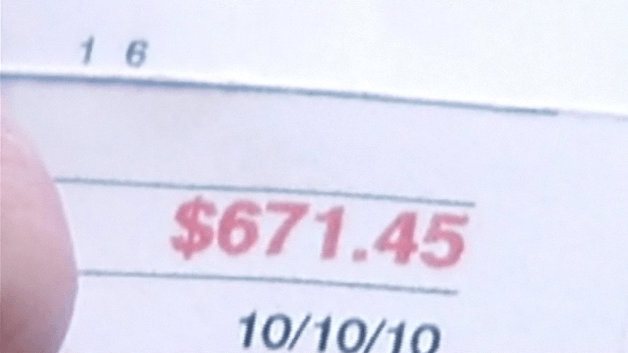
Meet Johna and Paul Snatchko, who are being billed $671.45 for dial-up Internet service calls by Frontier.  Not only did Frontier fail to deliver broadband service to the northwestern part of the state, now the Snatchko family has had to quit using dial-up Internet as well because the Snatchko’s claim Frontier made accessing the service a long distance call.

“When we switched from Verizon to Frontier, they said nothing will change,” Paul told WTOV News. “Well, there’s change.”

Despite selling the Snatchko family “unlimited long distance” service, Frontier still charged every call to their ISP at the regular long distance rate.  Why use dial-up in the first place?

“In this part of West Virginia, you’re very limited in your service,” Paul explained. “Dial-up is it for us. We’ve tried everything else. The only thing we could get was dial-up.”

The family also endured another Frontier specialty — the constantly changing promotional offers that are poorly explained by the company’s customer service representatives.

“They said it doesn’t include their package deal with the computer,” Johnna said, referring to a common Frontier promotion for a free netbook in return for a bundled package of services on a two year contract. “The first couple months it did and now it doesn’t include it.”

Frontier Communications earned an "F" rating from the Better Business Bureau

Frontier’s spokesman for the area, Bill Moon, made yet another TV appearance to try and explain it all away.

“There are billing problems that can happen anytime you have a switch over like that,” he told WTOV. “It’s probably a simple mistake on this particular customer’s bill, something that can be rectified pretty easy.”

Apparently not. Frontier told the family they have received two credits already and that is the last time the company is willing to provide them.

Despite the increasing frequency and seriousness of complaints now becoming a staple on the nightly news, Moon said incidents like this are rare.  He told the station out of more than 60,000 lines of service, they’ve had about 10 problems at most.

West Virginians are also waking up to the realization that Frontier’s promised “fiber upgrades” are little more than bait and switch, and they’ll never be able to directly access the fiber the company is installing.  As Stop the Cap! has reported previously, Frontier’s residential customers are more likely to encounter beneficial fiber in their morning breakfast cereal than from Frontier Communications.

The Charleston media is abuzz about the fact taxpayers are footing the bill for a $40 million fiber network that the company will own free and clear, and charge top dollar prices to access.  Citynet, one of Frontier’s competitors, blew the whistle over Frontier’s much-ballyhooed fiber expansion that is actually intended to serve public institutions, wholesale customers, and Frontier’s “middle-mile” network — not directly benefit consumers:

[…]Once Frontier spends the $40 million of taxpayer money to expand its network, it will be the sole owner of that network and the State will have no ownership rights. Thus, Frontier’s monopoly in the State of West Virginia will have been financed with taxpayer money.

Frontier will then sell services to state entities such as schools and government offices at the existing exorbitant prices. Those prices will never decrease, because no competitor can afford to spend $40 million or more of its own capital to build out its network.

Citynet, however, has provided the state with a plan for the expenditure of the taxpayer money that will expand broadband access in the state while at the same time lowering the cost of broadband access by 70 percent to 90 percent.

It is true that competitors, like Citynet, have existing contracts with Frontier for access to fiber facilities, but given that Frontier’s new network will be built with your money, it is Citynet’s position that those facilities should be made available to competitors at a nominal cost so that competitors can make their services available to the public at large at much lower prices.

Frontier has flatly refused Citynet’s proposal and intends to require competitors to pay inflated prices for access to fiber facilities it built for free.

As currently structured, the state’s plan for expanding broadband will do nothing more than expand Frontier’s monopoly, and will not address the fundamental problem of the high cost of broadband access.

[flv width=”640″ height=”380″]http://www.phillipdampier.com/video/WTOV Steubenville Speaking Too Soon – Frontier’s Customers Still Complaining 9-15 and 9-28-10.flv[/flv]

WTOV-TV thought Frontier’s problems were behind them when they ran the first of two stories about the company Sep. 15th.  But then they met the Snatchko family and learned they spoke too soon.  Last night, they tried to determine how a West Virginia family could be charged nearly $700 for dial-up Internet service.  (4 minutes)

AT&T Creates Nightmare for Tulsa Business After Their Broadband Was Shut Off By Mistake

Phillip Dampier September 4, 2010 AT&T, Consumer News, Video 1 Comment

When Midwest Publishing couldn't get their AT&T Internet service restored, a business neighbor allowed the company to run a cable next door and borrow theirs.

AT&T likes to think of broadband as a tool towards economic recovery, but too often service problems end up hurting small businesses.

Ask Pat Boll, business manager of Midwest Publishing.  When his company’s AT&T business broadband connection suddenly stopped working last week, much of the business activity at the company stopped with it.  Midwest Publishing, like many small businesses, depends on the Internet to conduct business, take orders, and assist customers.

Boll spent three days trying to get answers from AT&T customer service, but only managed to learn the reason why the company’s Internet service stopped working: AT&T claimed a disconnect order entered into their systems in May was processed… in late August.  That was news to Boll, because they never asked for their service to be shut off.

What was worse is that the mysterious disconnect order remained in AT&T’s computer systems preventing the telecommunications company from re-establishing the service, costing Midwest Publishing thousands in lost business and wasted time.

Like so many stories we’ve covered on Stop the Cap!, Boll turned to local media for help.  He contacted Tulsa TV station KJRH-TV.  Their “2 Works for You Problem Solvers” got in touch with AT&T and managed to do what Boll couldn’t accomplish himself — get AT&T to turn Internet service back on.

Small businesses who depend on the Internet should never have only one provider.  Having a backup service provider can make all the difference in an extended outage.  Many small businesses maintain basic DSL service or even wireless broadband as a backup in case their primary connection stops working.  The expense is well worth it if your business depends on the Internet to stay in business.

[flv width=”480″ height=”380″]http://www.phillipdampier.com/video/KJRH Tulsa Internet glitch costs small business thousands 9-2-10.flv[/flv]

KJRH-TV in Tulsa shares Pat Boll’s story with Tulsa viewers.  AT&T provides DSL service through much of Oklahoma.  (2 minutes)

Search This Site:

Contributions:

Recent Comments:

Your Account:

Stop the Cap!