Home » mobile broadband » Recent Articles:

How to Get Verizon Wireless’ 4G $30 Unlimited Use Hotspot Feature Added to Your Account

We have received dozens of e-mails from readers trying to add Verizon Wireless’ coveted 4G $30 unlimited-use Mobile Hotspot feature to their accounts, with varying results.  We’ve compiled, with the help of our readers, a guide to assist you in scoring the only good thing to come from Verizon’s recent changes in data pricing.  If you follow these steps, you should be good to go.

Q&A

1. What is a Mobile Hotspot and What Is Verizon offering? — Verizon Wireless offers customers a service to turn their 3G or 4G phones into a Wi-Fi provider, letting you connect your other portable devices, like a tablet or laptop, to your Verizon Wireless data connection to access the Internet over Wi-Fi.  Technically, this feature is built-in to most smartphones, but cell phone companies monetize it by charging you an extra monthly fee to use the service.  Traditionally, Verizon charges $20 extra a month (on top of your data plan) to enable this feature, and has limited it to 2GB of use per month.  Each additional gigabyte will cost you $10.  But when Verizon introduced its new 4G LTE network, early adopters to 4G phones got access to this feature for free, for a limited time.  On 7/7, Verizon’s new limited-use data plans took effect, and Verizon expired the free 4G Mobile Hotspot feature.  To placate 4G owners, it offered them the chance to continue getting unlimited use of this feature, for an extra $30 a month.

That’s a stiff price to pay on top of your monthly data plan, but because Verizon’s LTE network is currently fast enough to serve as a home broadband backup (we consistently get speeds of 11/3Mbps on LTE from our headquarters), $60 total for unlimited wireless Internet isn’t completely outrageous at those speeds.  Yes, it’s ridiculous Verizon disabled a feature built in and functional on phones in other countries, but it is the same story with other carriers as well.  We even agree with the proposition you should be able to use your unlimited data plan for anything you want, but that’s just not a reality at the moment.

2. Who exactly qualifies for the $30 unlimited Mobile Hotspot? — We have been able to confirm for sure that anyone who activated or at least ordered a 4G phone before midnight on 7/7 is qualified to upgrade to this plan.  You cannot, however, activate the plan on a 3G phone.  Only 4G models qualify.  Where things get murky is whether or not customers who currently have 3G phones can still upgrade to a 4G model after 7/7 and get this plan.  Droid Life believes the answer to this question may be “yes” based on two tweets sent from Verizon Support:

We are more skeptical, however, based on the accumulated responses we’ve collected from Verizon Wireless from our readers, which admittedly are all over the map.  Verizon reps have not been offering consistent information about the Mobile Hotspot plan since it was first announced more than a week ago.  The company is preoccupied with reassuring existing customers they were not at risk of imminently losing their unlimited data plans, an entirely different subject.

I would not upgrade to a 4G phone today in hopes of scoring this Mobile Hotspot plan unless you have the name of an employee you can use if you complete the order, try to activate the feature, and encounter resistance.  In truth, Verizon can do anything they want for any customer, new or otherwise.  The trick is finding an employee with the authority to make things happen.  Be prepared to escalate or call back if you encounter a roadblock.

3. What happens if I have a 4G phone and start a Hotspot session with a 3G signal, is it still unlimited? — Yes.  Any Mobile Hotspot session originated on this plan on a 4G phone is unlimited regardless of what network conditions you encounter, as long as you are on Verizon’s network.

4. Does this apply to mobile broadband, provided by a dongle or a MiFi device?  — No.  Only 4G smartphones qualify for this plan.

5. How many people can share my Mobile Hotspot connection at the same time? — Verizon traditionally says five, but my phone (Samsung Charge) supports up to 10 concurrent Hotspot connections.  That’s a lot, so if everyone piles on, expect some slowdowns from the shared connection.

6. Can you add and drop the featured plan and get it back later? — Verizon has not said.  The company has not responded to questions about the longevity of this plan, whether it could be withdrawn, or whether customers can add and drop it (and add it back) at will.  We see that as evidence this is a promotional add-on that is likely to be withdrawn for new customers at some point in the future.  Verizon traditionally grandfathers customers already on a plan indefinitely, which means if you have it, you can keep it.  If this feature is important to you, we recommend you add it and keep it active.  When it’s gone for new sign-ups, it’s gone.

7. I do not see the plan under Verizon’s My Services on their website.  Should I be concerned? — No.  The plan was being offered to customers initiating new Mobile Hotspot sessions on their 4G phones, but not to all.  We never found it on Verizon’s website.  The only indication it is active on your account is finding this: “4G SMARTPHONE HOTSPOT” listed on this page (to access, you must first login to your Verizon Wireless account and select the line on which the feature was ordered.)

Ordering Advice

We have found multiple methods of securing this plan, and with the thanks of Stop the Cap! reader DJ, we have even located the all-important plan number, which you can reference when contacting Verizon.  If you run into a roadblock calling Verizon customer service, or can’t get the plan added while visiting a Verizon Wireless corporate store, we have some other suggestions.

1. Customers who already had a 4G phone before 7/7 can call Verizon Wireless from your phone at 611 or 1-800-922-0204 Monday-Sunday 6am-11pm ET.  Tell them you wish to add plan code #76153 — $30 Unlimited 4G Mobile Hotspot.

2. If you activated a new 4G phone after 7/7, call VZW’s Orders & Activations Hotline at 1-877-807-4646.  Work through the prompts.  You may be prompted to accept a customer agreement and get “trapped” in a menu asking you to press “1” or “2” after accepting the customer agreement.  Press “0” and wait to be transferred to a live agent.  Tell them you wish to add plan code #76153 — $30 Unlimited 4G Mobile Hotspot.

3. If rebuffed by either, try calling 1-316-681-9940, the number to a Verizon store in Kansas that has employees active in several phone forums helping people trying to get on this plan.  They should be able to add the plan to any 4G phone account, whether you are in Kansas or not.  Again, reference plan code #76153 — $30 Unlimited 4G Mobile Hotspot.

Let us know if you still have any problems in our comments section!

LightSquared’s Last-Minute ‘Solution’ to GPS Interference Gets Skeptical Response from Some

Phillip Dampier June 22, 2011 LightSquared, Wireless Broadband 1 Comment

LightSquared, feeling pressure after independent studies showed significant interference problems created by its wireless broadband network, suddenly announced a “solution” to the problem — one getting skeptical reviews from those critical of the project.

The would-be mobile broadband provider claims it will abandon a 10MHz band adjacent to that used by GPS, moving further down “the dial” in hopes of avoiding future interference problems.  Company officials hailed the move, claiming it solves the GPS interference problem except for certain high precision GPS receivers that could still suffer from the further distant LightSquared signals.

“This is a solution which ensures that tens of millions of GPS users won’t be affected by LightSquared’s launch,” said Sanjiv Ahuja, LightSquared chairman and CEO. “At the same time, this plan offers a clear path for LightSquared to move forward with the launch of a nationwide wireless network that will introduce world class broadband service to rural and underserved areas which still find themselves on the wrong side of the digital divide.’’

But LightSquared’s decision to remain in the same vicinity of low powered satellite signals has not impressed its critics.

Among the largest is Save Our GPS, a coalition of GPS users and manufacturers who fear LightSquared could ruin GPS service for millions of Americans.

“This latest gambit by LightSquared borders on the bizarre,” said Jim Kirkland, vice president and general counsel of Trimble, a founding member of the Coalition. “Last week LightSquared unilaterally delayed filing of the study report that culminated months of intensive work to evaluate interference to GPS, because they purportedly needed two more weeks to analyze the results. LightSquared’s supposed solution is nothing but a ‘Hail Mary’ move.  Confining its operation to the lower MSS band still interferes with many critical GPS receivers in addition to the precision receivers that even LightSquared concedes will be affected.”

Kirkland said it’s time for LightSquared to find an entirely different set of frequencies for its service, well away from GPS.

As LightSquared’s challenges continue, the one potential bright spot may be its agreement with Sprint Nextel allowing Sprint to resell LightSquared’s 4G network.  The agreement includes sharing upgrade and equipment expenses, but could be extended to include spectrum resources owned or controlled by Sprint.

Law Firm Reminds Consumers of Mobile Broadband Class-Action Lawsuit Against Verizon

Phillip Dampier June 22, 2011 Consumer News, Verizon, Wireless Broadband 3 Comments

Verizon is charging customers for text messages sent to mobile broadband devices, even though the devices themselves have no effective way to view the messages.  That allegation is the subject of a class-action lawsuit filed against the wireless carrier by Hagens Berman LLP, a law firm representing consumers who were unfairly billed for text messages from July 28, 2004 to the present.

The lawsuit, originally filed August 4, 2010, in the United States District Court for the District of New Jersey, seeks compensatory damages and an injunction prohibiting Verizon from billing customers for text messages sent to mobile broadband devices.  The law firm sent out a reminder this week for customers either billed in the past or still being billed they still have a chance to join the lawsuit.

Verizon’s mobile broadband devices allow its customers to access the Internet through Verizon’s wireless network. Each device is assigned a unique 10-digit telephone number and therefore, text messages can be sent to the 10 digit number associated with the device. However, according to the lawsuit, the devices have no screens and users have no effective way to view them.

If Verizon billed you for text messages you cannot access in connection with your Verizon Mobile Broadband device, you can request further information or join the case at the firm’s website or by email at [email protected].

Cattle Ranchers for AT&T T-Mobile Merger: Will ‘Improve’ Rural Broadband and Other Tall Tales

Phillip Dampier June 15, 2011 Astroturf, AT&T, Broadband Speed, Competition, Data Caps, Editorial & Site News, Net Neutrality, Public Policy & Gov't, Rural Broadband, T-Mobile, Wireless Broadband Comments Off on Cattle Ranchers for AT&T T-Mobile Merger: Will ‘Improve’ Rural Broadband and Other Tall Tales

The U.S. Cattlemen’s Association this week took some time out to go all out for AT&T’s proposed merger with T-Mobile.  In addition to successfully navigating the FCC’s arcane comment filing system to submit their comments in favor of the merger, the group also penned a lengthy, favorable guest blog for Washington, D.C. inside-the-beltway-favorite, The Hill newspaper:

The expansion of next-generation wireless broadband envisioned by the T-Mobile and AT&T merger, for example, is critical for the next stage of rural America’s evolution and success. It will allow ranchers, farmers, and all rural residents who have been traditionally underserved to finally gain access to the best that mobile broadband has to offer, including faster and more reliable connections. We strongly encourage the Federal Communications Commission to support these developments as an investment in both the current and future generations of agricultural producers and small communities across rural America.

The cattlemen’s group has had a lot to say about telecommunications issues, especially mergers and acquisitions.  It was cited by Verizon as a supporter of its merger with Alltel in 2008, signed a joint letter in 2008 from industry-connected Connected Nation for a broadband plan compatible with the interests of the nation’s largest cable and phone companies, wrote a letter to the FCC opposing Net Neutrality in 2009, and submitted two pages of comments in May favoring the merger between AT&T and T-Mobile.

Apparently there is plenty of free time on the ranch to ponder billion dollar telecommunications mergers.

The argument from the group is that permitting mergers and blocking open net policies like Net Neutrality will convince carriers to provide enhanced service in rural areas where cattle ranches predominate.  But facts in evidence illustrate how wrong-headed that argument is:

  • Verizon’s merger with Alltel has done nothing to bring its LTE network to rural America.  Verizon is focusing LTE upgrades on the markets where it makes the most business sense, and that does not include rural Texas or Oklahoma;
  • The National Broadband Plan has directed stimulus funding for rural projects that are most likely to reach their ranch members — wireless ISPs and rural DSL.  The cattlemen’s group has nothing to say about either provider;
  • Net Neutrality and the policies of an open and free Internet have no real impact on rural broadband deployment.  The same companies refusing to provide service yesterday are still refusing to provide service today, and that includes completely exempted wireless providers;
  • T-Mobile’s urban-suburban focus is a mainstay of its business plan.  T-Mobile has never prioritized rural America as a viable service area, relying on roaming agreements to fill in service gaps.  Combining its urban-focused wireless infrastructure with AT&T will add nothing to the rural wireless experience.

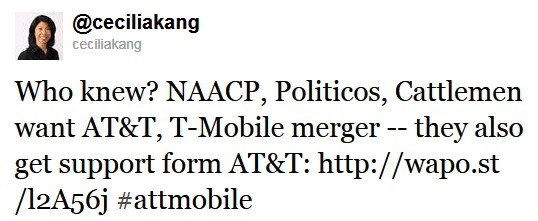
The Washington Post finds financial connections between AT&T and the cattlemen group.

Advocating for a merger with T-Mobile makes about as much sense as the group advocating for a T-Mobile merger with Leap Wireless’ Cricket or MetroPCS.  All have a record of indifference about providing service in rural areas themselves.

So why does the group persist in fronting for AT&T’s public policy agenda?  Cecilia Kang at the Washington Post tweeted the obvious answer — they receive support from AT&T.

The piece for The Hill was penned by Jess Peterson, the cattlemen group’s executive vice president.  But Peterson has a second career: president of Washington, D.C.-based Western Skies Strategies, a lobbying firm that promises “success and profitability to our valued clients every time.”

The concept of dollar-a-holler public advocacy is not new, but AT&T is the Master of the Astroturf Universe.  The Center for Responsive Politics notes that from 1989 to 2010, no single company spent more on campaign contributions than AT&T.  Since 2008, more than $1.25 million has been “donated” to politically-connected charities and those willing to lend their name and reputation to back the company’s public policy agenda.

Facts have a hard time penetrating piles of cash, but here are some anyway:

  1. T-Mobile’s combination with AT&T may create additional capacity for the combined company, but almost entirely in urban and suburban areas that will do nothing to help rural wireless.
  2. No telecommunications company has a track record of providing service in areas unprofitable to serve or fail return on investment demands.  No merger will change that.
  3. Promises for network upgrades already committed in long-range business plans do not sweeten a bitter deal for Americans concerned about competition in the wireless marketplace.
  4. T-Mobile’s track record as being the most market-disruptive in pricing and innovation will be eliminated in a merger with America’s lowest rated wireless carrier.
  5. Any excitement for rural wireless broadband from AT&T is tempered when would-be customers realize the company enforces a 2GB usage cap with an overlimit fee on their smartphone data plans — an Internet Overcharging scheme more punishing than either Verizon or Sprint.

Telecom Companies Use Usage Caps/Distorted Marketing to Create ‘Confusopoly’ and Rake In the Proceeds

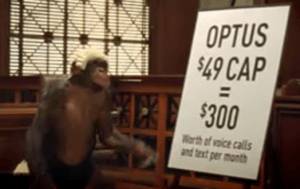
The $49 "cap" plan isn't your maximum monthly fee, it's the MINIMUM monthly fee. The company selling it was fined for misleading advertising.

Banking on the fact most consumers do not understand what a “gigabyte” represents, much less know how many they use per month on usage-capped broadband plans, large telecommunications companies enjoy a growth industry collecting enormous overlimit fees that bear no relation to their actual costs of delivering the service.

The social implications of “usage cap and tier” pricing are enormous, according to Australia’s Communications & Media Authority.  Australia remains one of the most usage-capped countries in the world, and broadband providers have taken full advantage of the situation to run what the ACMA calls a broadband Confusopoly.

As a growing number of mobile broadband customers in the United States and Canada approach the allowance limits on their mobile data plans, Australia’s long experience with Internet Overcharging foreshadows a North American future of widespread bill shock, $1000+ telecom bills, and families torn apart by finger-pointing and traded recriminations over “excessive use” of the Internet.

Not helping matters are providers themselves, some who distort and occasionally openly lie about their plans.  In Australia, Optus was fined $200,000 for advertising a “Max Cap $49” plan that led many to believe their maximum bill would amount to $49.  But not so fast.  Optus turned the meaning of the word “cap,” typically a usage limit, upside down to mean a capped minimum charge.  Indeed, the lowest bill an Optus customer could receive was $49.  Using data services cost extra.  The company also claimed customers could use accompanying call credits “to call anyone,” another fact not in evidence.

Another common marketing misconception is the “unlimited mobile broadband” plan — the one that actually comes with significant limits. In most cases, providers want “unlimited” to mean there are no overlimit fees — they simply throttle the speed of the service down to a dial-up-like experience once a customer exceeds a certain amount of usage.  Companies like Cricket disclose their usage triggers.  Others, like Clearwire, do not — and they are applied arbitrarily based on customer usage profiles and congestion at the transmission tower.  While annoying, at least these plans do not impose overlimit fees which lead to the growing problem of “bill shock.”

Bill Shock

North Americans getting enormous mobile data bills remains rare enough to warrant attention by the TV news.  Often the result of not understanding the implications of international roaming, customers can quickly run up thousands of dollars in mobile bills while touring Europe, cruising, or even just living along the Canadian-American border, where accidental roaming is a frequent problem.

But as Americans only now become acquainted with usage-capped mobile data plans with overlimit fees, bill shock may become much more common.

In Australia, which has had a head start with usage-capped mobile data, an incredible 58 percent of customers exceeded their usage allowances at least once in a calendar year, and this statistic comes from April 2009.  The bill shock problem has now become so pervasive in Australia, in 2010 the office of the Telecom Ombudsman received more than 167,955 consumer complaints about the practice.

In the United States, one in six have already experienced surprise data charges on their bills — that’s 30 million Americans.  The Federal Communications Commission found 84 percent of those overcharged said their cell phone carrier did not contact them when they were about to exceed their allowed service limits. In about one-in-four cases, the overlimit fee was greater than $100.

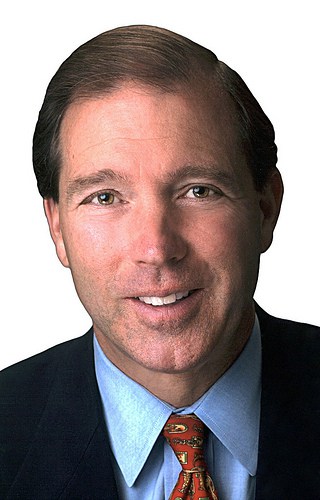
Sen. Tom Udall (D-N.M.) proposed legislation that would require a customer to consent to overlimit fees before extra charges accrue for voice, data, and text usage.

The Cell Phone Bill Shock Act of 2011 would also require carriers to send free text messages when a customer reaches 80 percent of their plan’s allowance.

“Sending an automatic text or email notification to a person’s phone is a simple, cost-effective solution that should not place a burden on cell phone companies and will go a long way toward reducing the pain of bill shock by customers,” said Udall, a member of the Senate Commerce Committee. “As more and more cell phone companies drop their unlimited data plans, this problem only stands to get worse. I am proud to stand up for cell phone consumers and reintroduce this important legislation.”

In Australia and North America, legislation to warn consumers of impending overlimit fees has been vociferously fought by the telecommunications industry.

Udall

The CTIA-Wireless Association in Washington said such measures were completely unnecessary because consumers can already check their usage by logging into providers’ websites.  Even worse, they claim, bills like Udall’s threaten to destroy innovation and harm the industry by locking a single warning standard into place.  CTIA claims that wouldn’t help consumers.

But Australian regulators, who have years of experience dealing with unregulated carriers’ usage limit schemes say otherwise, noting industry efforts to self-regulate have been spectacular successes for the industry’s bottom line, just as much as they are a failure for consumers who end up footing the bill.

Even worse, unregulated providers taking liberties with marketing claims can have profound social implications when customers find they can’t pay the enormous charges that often result.

The Brotherhood of St. Laurence, a charity, reported one instance of an elderly client who received a $1,200 broadband bill he couldn’t pay outright.  Even as he negotiated a monthly payment plan with the provider, the company shut off his home phone line without warning.

“His telephone service was particularly important because he used a personal alarm call system, which entailed wearing a small electronic device that he could activate in the event of a medical emergency,” noted a report on the incident.

The Australian Competition and Consumer Commission found a long-standing competitive feud by two large mobile providers in Australia — Telecom and Optus — has only brought more instances of marketing excesses that ultimately don’t benefit consumers.  The Commission increasingly finds it lacks the resources to keep up with the slew of questionable advertising.

Some industry critics suspect providers treat ACCC’s fines as simply a cost of doing business, and some like Optus have been rebuked more than once by the regulator for false advertising.

The ACMA says the longer government waits to protect citizens from provider abuses, the more consumers will be financially harmed, especially as data usage grows while usage caps traditionally do not.

Search This Site:

Contributions:

Recent Comments:

Your Account:

Stop the Cap!