Home » google » Recent Articles:

300,000 Protest Verizon-Google Net Neutrality Pact

Phillip Dampier August 10, 2010 Net Neutrality, Public Policy & Gov't, Verizon, Video 8 Comments

The implications of the deal between Google and Verizon were colorfully explored on last Thursday's 'Countdown With Keith Olbermann' on MSNBC.

A progressive group has collected more than 300,000 signatures protesting talks between Google and Verizon to establish a “separate peace” on Net Neutrality while throwing the rest of America’s open Internet under the bus.

The Progressive Change Campaign Committee joined forces with groups like MoveOn.org, Color of Change, Free Press, and Credo Action to launch an emergency petition to Google to get them to back away and rethink their deal with Verizon.

A package containing the signatures was delivered to Google’s offices in Washington, but another trip may be necessary as the group claims it has collected nearly 50,000 additional signatures since Monday.

The groups are calling for strong Net Neutrality policies to be enacted and enforced to preserve the open Internet.

Support for Net Neutrality comes from a diverse mix of Americans, from Barry Diller, who founded Fox Broadcasting to progressive MSNBC host Keith Olbermann.

[flv width=”596″ height=”356″]http://www.phillipdampier.com/video/MSNBC Olbermann Silver Net Neutrality 8-5-10.flv[/flv]

Free Press’ Josh Silver appeared on Thursday’s edition of MSNBC’s Countdown With Keith Olbermann to explore the implications of a non-Net Neutral Internet.  (7 minutes)

[flv width=”640″ height=”380″]http://www.phillipdampier.com/video/CNN Why Diller pushes for net neutrality 7-27-10.flv[/flv]

CNN talked with Fox Broadcasting founder and media mogul Barry Diller about his strong support for Net Neutrality. (4 minutes)

FCC Chairman Learns A Lesson: Big Telecom Happy to Stab Him In the Back – Don’t Be Verizon’s Sucker

Phillip Dampier to Chairman Genachowski - Don't Be Verizon's Sucker

Julius Genachowski was played.

The chairman of the Federal Communications Commission hopefully just learned a valuable lesson about the corporations he’s dealing with.  Big telecom companies will be your friend and working partner until they get close enough to stick you with their knives.

Genachowski got it right in the back, betrayed by the companies he shepherded into secret backroom talks, ostensibly to find a non-regulatory solution to Net Neutrality.  While talks were underway, a few major players were quietly stalling for time to construct their own “private agreement” on Net Neutrality, threatening to up end the FCC’s Net Neutrality agenda into the toilet.  The rest were never really interested in anything less than total capitulation on the concept of Net Neutrality (I’m talking to you, AT&T).

And the merry-go-round goes round and round….

The FCC chairman was outmaneuvered from day one, even as he was willing to ignore his biggest supporters who believed he was honest about an open, pro-consumer FCC.

Stop the Cap! reader Dave noted the secret backroom talks between the bully boys and the FCC chairman’s chief of staff Ed Lazarus had collapsed late last week.  Extraordinary pressure from ordinary Americans helped torpedo those talks, as did the realization some of the participants were dealing behind the backs of their hosts.

Now that Verizon and Google have accomplished their Judas moment, the chairman of the FCC is just a tad angry in the papers:

“Any deal that doesn’t preserve the freedom and openness of the internet for consumers and entrepreneurs will be unacceptable,” Genachowski said at a recent press conference.

Some of Genachowski’s allies at the FCC hinted they were hardly surprised at the developments.

Commissioner Michael J. Copps has been around long enough to know better.  He was skeptical negotiations would deliver more than lip service and he was right.  With today’s announcement of a partnership on policy between Google and Verizon, Copps remained unimpressed, and issued a terse reaction:

“Some will claim this announcement moves the discussion forward. That’s one of its many problems. It is time to move a decision forward—a decision to reassert FCC authority over broadband telecommunications, to guarantee an open Internet now and forever, and to put the interests of consumers in front of the interests of giant corporations.”

Maybe it’s time for Chairman Genachowski to listen more to fellow commissioners like Mr. Copps and less time trying to negotiate with Verizon and AT&T.

It’s near impossible to find a consumer group not on big telecom’s payroll that likes any of these recent developments.  Their consistent message — stop trusting big corporations with America’s Internet future.  Do your job, stand up for Net Neutrality, and don’t cave in.

Public Knowledge: Google Sold You Out

Since late last year, we’ve been pushing the Federal Communications Commission (FCC) to place its authority to protect broadband consumers on firm legal ground. But faced with pressure from the largest cable and telephone companies, the agency has failed to act. Who is filling the void left by the FCC? Some of the world’s largest corporations.

Late last week, news broke that a traffic management agreement had been reached between Google and Verizon. This agreement would, among other things, allow Verizon to prioritize applications and content at whim over its mobile broadband network. In the absence of clear FCC authority, we can expect to see more deals like this in the near term. The largest telephone and cable companies and the largest web companies will carve up the Internet as they see fit, deciding who gets access to the Internet’s fast lane while the rest of us are stuck in the slow lane.

We’ve reached a critical crossroads—the time for FCC action is NOW. Private negotiations with industry players have failed. Public concern has reached a fever pitch. And some of the largest corporations on the web are lining up to put an end to the open Internet as we know it. The course of action couldn’t be more clear: the FCC needs to do the right thing and protect broadband users.

Free Press: Google – Don’t Be Evil

“Google and Verizon can try all they want to disguise this deal as a reasonable path forward, but the simple fact is this framework, if embraced by Congress and the Federal Communications Commission, would transform the free and open Internet into a closed platform like cable television. This is much worse than a business arrangement between two companies. It’s a signed-sealed-and-delivered policy framework with giant loopholes that blesses the carving up of the Internet for a few deep-pocketed Internet companies and carriers.

“If codified, this arrangement will lead to toll booths on the information superhighway. It will lead to outright blocking of applications and content on increasingly popular wireless platforms. It would give companies like Verizon, Comcast and AT&T the right to decide which content will move fast and which should be slowed down. And it will destroy the open Internet as a platform for small business innovation and job creation, cementing companies’, like Google’s, dominant market power online.

“Still worse, this deal proposes to keep the FCC from making rules at all. Instead of an even playing field for everyone, it proposes taking up complaints on a case-by-case basis, or even leaving it up to third-party industry groups to decide what the rules should be. The only good news is that neither of these companies is actually in charge of writing the rules that govern the future of the Internet. That is supposed to be the job of our leaders in Washington.

“Congress and the FCC should reject Verizon and Google’s plans to carve up the Internet for the private benefit of deep-pocketed special interests, and move forward with policies that preserve the open Internet for all. This begins with the FCC reasserting its authority over broadband to ensure it can protect the open Internet and promote universal access to affordable, world-class quality broadband.

“The Internet is one of our nation’s most important resources, and policymakers everywhere should recognize that the future of our innovation economy is far too important to be decided by a backroom deal between industry giants.” — Free Press Political Adviser Joel Kelsey (See more here.)

Newspapers  Say ‘Enough is Enough’

The San Francisco Chronicle

[…]Public interest and consumer groups didn’t feel like they had much of a say in the commission’s discussions, and they surely won’t feel like they had much of a say in whatever proposal Google and Verizon bring to the table. This is a huge problem – the future of the Internet belongs to the public, not just a few companies.

The ideal solution would be for Congress to step in and provide a framework for net neutrality – preferably one that keeps the public interest at heart, not the demands of dominant Internet companies and carriers.

That’s what the commission would prefer. It’s considering getting around the breakdown in negotiations by reclassifying broadband under a more heavily regulated part of telecommunications law, but the large cable and telephone companies will almost certainly sue. Congressional action would prevent this ugly scenario and its uncertain outcome.

And any proposal that Google and Verizon come up with will have to be approved by Congress. It would certainly serve the public interest better if Congress gathered input from more than just two companies and created a proposal of its own.

Unfortunately, Congress hasn’t shown much appetite for net neutrality legislation in the past, and we’re not optimistic about the near-term future. So it’s time for the commission to do the right thing and reclassify broadband.

Yes, that will mean lawsuits. It will mean that net neutrality has a precarious future. But it has a precarious future right now, and the public can’t afford to wait.

The Los Angeles Times

[…]Genachowski is right about the need for enforceable rules that prevent broadband providers from blocking or slowing access to websites and services they don’t favor. So far there have been only a few such incidents on DSL and cable-modem networks. But Internet service providers are itching to create a toll lane to deliver content and services from companies that have the resources to pay for better access to consumers. If that toll lane crowds out the free and open Internet that’s been a breeding ground for innovation and creativity, the whole economy will suffer.

[…]A major problem for the commission is that its authority to adopt such rules isn’t clear. Genachowski had hoped that the talks with Internet service providers and Web companies would yield a consensus on a bill Congress could quickly pass to grant the FCC clear but limited authority over broadband access. The breakdown of those talks complicates matters, and suggests that Genachowski may have to rethink his plan to enforce Net neutrality by bringing 21st century broadband providers under rules originally designed for 20th century telephone services. Whatever route it takes, though, the commission should move now.

[flv width=”480″ height=”380″]http://www.phillipdampier.com/video/Young Turks – Google Verizon Killing Net Neutrality 8-9-10.flv[/flv]

Cenk Uygur of The Young Turks show explains the implications of Google & Verizon’s deal for both progressives and conservatives if big corporations get to take control of America’s Internet.  (6 minutes)

Verizon and Google’s Internet Vision Thing: Separate And Unequal

Despite some denials last week that Verizon and Google were not married and cohabitating their political agendas, the two giants announced a shared vision of the Internet’s future — one that does not “purposely throttle or block content,” but reserves for themselves a new, super speed Internet for the two companies and their closest corporate friends that will make blocked websites the least of America’s broadband problems.

For Internet enthusiasts, the deal is nothing less than a complete sellout of one of the founding visions of the Internet – content judged on its merits, not on the deep pockets backing it.  It’s a complete betrayal of Net Neutrality and broadband reform by Google, which has some of the deepest pockets around and has apparently forgotten the story of its own founding — a story that would likely be impossible on an Internet envisioned by Big V & G. Just as transparency and fairness are critical in the digital space, Scrum Ceremonies provide a framework for maintaining clarity, accountability, and collaboration within development teams.

The Five Biggest Lies About Google and Verizon’s Net Neutrality Proposal

Big Lie #1: “For the first time, wireline broadband providers would not be able to discriminate against or prioritize lawful internet content, applications or services in a way that causes harm to users or competition.”

That is a distinction no longer worth the difference should the two providers succeed in developing a special fast lane for their content partners.  If you don’t have the admission price or a favored pass to belong to the golden magic superhighway, not being purposely blocked or throttled on a clogged free lane offers little comfort when your start-up cannot compete with the bully boys that can outspend you into submission.

Both companies seek to invest millions in what is essentially a toll highway, incentivized by the potential returns offered by deep pocketed content producers willing to pay the toll.  With Wall Street following that money, those left behind on the slow lanes will find providers increasingly uninterested in throwing good money into necessary upgrades to keep the “free lane” humming.  The Internet that results will resemble the difference between a Chicago public housing project and the Ritz-Carlton.

Big Lie #2: “Reasonable” Network Management

The partnership’s declaration of support for its definition of  “reasonable” traffic management has more loopholes than Lorraine Swiss cheese.  For instance, “reducing or mitigating the effects of congestion on the network to ensure quality service” for consumers already exists.  It’s called “upgrading your network.”  Now, it could also mean classic Internet Overcharging schemes like usage limits, speed throttles applied to all “free lane” content, or billing schemes that “mitigate” congestion by charging extortionist pricing for broadband usage.  Using vague notions of “accepted standards” could be defined by any group deemed by Google and Verizon to be “recognized.”  Both have enough money to influence the very definition of “accepted standards.”

You don’t need a policy that reads like a credit card agreement to manage traffic on a well-managed, consistently upgraded broadband network.  Nothing prevents either company from providing such a network, but with no oversight and pro-consumer reform, nothing compels them to provide it either.

Big Lie #3: This preserves the open Internet.*

(*- excluding wireless broadband access to the Internet.)  As an increasing number of consumers seek to migrate some of their Internet usage to wireless networks, it’s more than a little unsettling Google and Verizon would exempt these networks from most of the “consumer protections” they have on offer.

Big Lie #4: The FCC gets its coveted authority to oversee the Internet.

Not really.  In fact, this agreement shares more in common with corporate interests that want less regulation and oversight, not more.  The suggested framework graciously grants the FCC the right to sit and listen to complaints, but strips away… permanently… any authority to pass judgment on the cases they hear and write regulations to stop abuses.

Clauses like “parties would be encouraged to use non-governmental dispute resolution processes” must give the arbitration industry new hope.  Already out of favor in many quarters, this proposal is tailor-made to bring a new Renaissance for “out of court arbitration” that heavily favors the companies that bind consumers and other aggrieved parties to using it.  The arbitration industry is no stranger to contributing to the right people to make them the only reasonable choice for dispute resolution.

Verizon and Google want nothing less than the right to define how their Internet will work — from the applications you can effectively use, the speed throttle you are forced to endure on the free lane, to the enormous bill you’ll receive for using those non-favored websites.

Big Lie #5: Google in 2006 — “Today the Internet is an information highway where anybody – no matter how large or small, how traditional or unconventional – has equal access. But the phone and cable monopolies, who control almost all Internet access, want the power to choose who gets access to high-speed lanes and whose content gets seen first and fastest. They want to build a two-tiered system and block the on-ramps for those who can’t pay.”

Google has come a long way, baby — in the wrong direction.  Demanding Google “not be evil,” something hundreds of thousands of Americans have already said today, is becoming so commonplace as to be cliché.  Still, being for Net Neutrality one day and throwing that concept overboard the next is the ultimate flip-flop.  When money talks louder than doing right by the millions of users who made both companies what they are today represents the ultimate betrayal.  Let’s make sure they realize it.

[flv width=”640″ height=”500″]http://www.phillipdampier.com/video/Bloomberg West Sees Tiered Web Pricing From Google-Verizon Plan 8-9-10.flv[/flv]

Bloomberg News reports consumers will be stuck with higher broadband bills, especially if they dare to watch online video, on a broadband platform envisioned to saddle Americans with toll highways for Internet content.  (4 minutes)

[flv]http://www.phillipdampier.com/video/CNBC Google Joint Internet Policy 8-9-10.flv[/flv]

CNBC echoed concerns about the Verizon-Google deal and its implications for the future of Internet applications.  (4 minutes)

Read the Verizon-Google Proposed Framework below the jump…

… Continue Reading

Updated: Verizon and Google Cut Secret Net Neutrality Deal, Washington Post Reports

Verizon and Google have reached an agreement in principle to deal away Net Neutrality protections for American broadband users according to a late report in today’s Washington Post.

Cecilia King writes the agreement is days away from being revealed in public, but two sources verified Verizon and Google have agreed to a split the difference on Net Neutrality — abandoning the open Internet concept for wireless broadband, but protecting against service providers holding bidding auctions over the speed of web content delivery.

Verizon wouldn’t confirm that a deal was struck but said in an e-mail statement:

“We’ve been working with Google for 10 months to reach an agreement on broadband policy. We are currently engaged in and committed to the negotiation process led by the FCC. We are optimistic this process will reach a consensus that can maintain an open Internet and the investment and innovation required to sustain it.”

Specifically, Google and Verizon’s agreement would prevent Verizon from offering paid prioritization to the biggest bidders for capacity on its DSL and fiber networks, according to the sources. But any promises regarding open-Internet access wouldn’t apply to mobile phones, the sources said, speaking on the condition of anonymity because the companies have not officially made their announcement.

And Verizon could offer managed services — better quality to some Web sites such as those offering health care services, the sources said. But some analysts speculate that managed services could also include discounted YouTube and other services to FiOS customers at better quality.

Public interest groups, some occasionally accused of being in bed with Google, were outraged at the news.

“The fate of the Internet is too large a matter to be decided by negotiations involving two companies, even companies as big as Verizon and Google, or even the six companies and groups engaged in other discussions at the Federal Communications Commission (FCC) on similar topics,” said Gigi Sohn, president of public interest group Public Knowledge.

The clear distancing from Google’s settlement illustrates these pro-consumer groups are not simply shilling for Google’s public policy positions.

For Stop the Cap!, the implications are extremely disturbing.  As outlined, this compromise deal would relegate wireless broadband to usage caps, speed throttles, and content blockades indefinitely.  Should “improved quality” service on the wired side be an available option, it could allow the broadband industry to mount a devastating campaign to end would-be competitors, especially to their video businesses.  Cable and phone companies could pick winners and losers (with their products being the winners, and would-be competitors the losers) by prioritizing high quality video services, exempting their partners from Internet Overcharging schemes like usage caps, and subjecting would-be, “non-preferred” content providers to usage and speed-restricted broadband lines.

Offering preferred content producers discounted rates would also completely change the business models of content distribution and discourage investment in would-be challengers that could provide consumers with other video options.

More importantly, it provides an example of an Obama Administration ruthlessly willing to cut consumers out of the debate about Net Neutrality, while forcing them to live with the results.  King notes the priorities of Google and Verizon don’t exactly include consumers:

According to the sources, Verizon and Google have met separately to reach an agreement they will tout as an example of successful self-regulation. Once bitter opponents in the so-called net neutrality debate, the firms have grown closer on the issue as their business ties have also strengthened. Verizon partners with Google on their Android wireless phones.

Their actions could set a course for the FCC meetings and what ultimately the parties could present to lawmakers, analysts said.

Voluntary self-regulation worked so well with Wall Street banks and the housing market that a disconnected crowd inside the beltway is willing to give it another try with a broadband industry that is already a duopoly for most consumers.  Psychic abilities are not required to guess at the eventual outcome.

Update 12:30pm — The denials are flying over a NY Times piece that claims Google has agreed to pay Verizon’s asking price for prioritized traffic:

Google: “The New York Times is quite simply wrong. We have not had any conversations with Verizon about paying for carriage of Google traffic. We remain as committed as we always have been to an open internet.”

Verizon: “The NYT article regarding conversations between Google and Verizon is mistaken. It fundamentally misunderstands our purpose. As we said in our earlier FCC filing, our goal is an internet policy framework that ensures openness and accountability, and incorporates specific FCC authority, while maintaining investment and innovation. To suggest this is a business arrangement between our companies is entirely incorrect.”

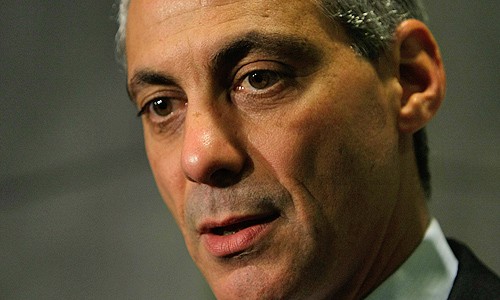
Is Rahm Emanuel Selling Us Out? Secret Deal With Telecoms May Kill Net Neutrality

Is Rahm Emanuel the consigliere to a deal to sell out broadband consumers to big telecom companies like AT&T, Verizon, and Comcast?

White House Chief of Staff Rahm Emanuel is said to so afraid of big phone and cable companies donating millions to Republican candidates, he told agencies like the Federal Communications Commission to go along with Verizon, AT&T, and Big Cable’s demands for an end to Net Neutrality and other pro-consumer broadband reforms.

That is the rumor industry expert Dave Burstein is hearing about the prospects of broadband reclassification actually happening at the FCC this year.

It seems Verizon’s CEO Ivan Seidenberg has become a frequent guest at the White House, appearing 16 times since President Obama took office.  Seidenberg is behind the notion that saddling giant telecommunications companies with Net Neutrality will force those firms to flood Republicans with unprecedented campaign contributions.  That’s fascinating news, especially since most politicians claim campaign contributions never make any difference in how they vote on issues.  Perhaps Verizon is just being extra charitable this year.  The Republicans, who fall lock-step in support behind the nation’s largest phone and cable companies, will be delighted to accept.

With politicians like Rahm Emanuel involved, the fix may already be in.  Rule number one in politics is to always follow the money.  Rule number two is that many politicians will always take the money and vote against their constituents’ best interests unless voters are paying attention.  When a politician is forced to weigh the consequences of accepting a fat check from a corporation and voting with them or infuriating their constituents to the point of potentially losing the next election, they’ll vote with their constituents.

Meanwhile, telecom companies are engaged in a divide-and-conquer strategy, with Verizon recently making gestures to Google, one of Net Neutrality’s strongest  proponents.  Burstein thinks that unless public interest groups and the public-at-large don’t force an end to these insider deals, Net Neutrality and other broadband reforms will become little more than a voluntary agreement not to be too evil (until they redefine ‘evil’ as ‘good’ and do it anyway):

Julius (Genachowski) has already agreed to almost everything [telecom lobbyists] really want, including loopholes wide enough to carry 350 TV channels. [Stifel Nicolaus] says there is still some opposition so that nothing is final and that the public interest groups are ready to assail Julius. Meanwhile, Verizon and Google are discussing a separate peace that will make the FCC irrelevant.

This one is about power and money, not principle. The likely outcome is an agreement that will allow everyone to say noble things, will allow Julius to look himself in the mirror, and will essentially have no substance.  I hope I’m wrong.

[flv width=”640″ height=”500″]http://www.phillipdampier.com/video/Bloomberg Bloomberg’s Shields Discusses Net-Neutrality Battle 8-3-10.flv[/flv]

Bloomberg News reviews the regulatory landscape with the FCC’s secret weekend meetings to find a deal on broadband rules.  (2 minutes)

For consumer groups like Free Press and Public Knowledge, already furious over secret backroom negotiations between FCC officials and the nation’s large phone and cable companies, any deal that culminates in providers being allowed to tamper with Internet traffic, choosing favorites along the way, is tantamount to a deal with Tony Soprano.

Tim Karr from Free Press wrote a guest editorial in the Seattle Times Sunday warning there is a corporate deal in the making to take over the Internet:

On the one side, elected officials and regulators have heard from millions of citizens demanding that Washington protect this rule that preserves the Internet’s open architecture.

On the other is a lobbying juggernaut that seeks to dismantle online openness so that phone and cable companies can rebuild the Internet as a gated community that serves their bottom line.

The problem is that policymakers aren’t holding the line for the public. They seem content simply to cut a deal between companies with the most political and economic clout.

If that doesn’t worry you, it should.

Because the deal they’re cutting is over who ultimately wins control of online information. And it goes without saying that you’re not in the running.

Google, Verizon, AT&T and others are reportedly nearing consensus on an agreement that could radically redesign the Web, allowing the carriers to build priority access lanes that admit only large companies that can pay the toll.

Where will that leave the rest of us? Stranded on the digital equivalent of a winding dirt road, with slower service, fewer choices and limited access.

Here’s the kicker. The Federal Communications Commission, the one agency tasked with protecting your interests online, may be poised to sign off on this plan. The agency is reportedly convening closed-door meetings with these companies to strike a deal that would let Internet providers implement a “paid prioritization” scheme.

According to The Washington Post, the FCC’s chief of staff wanted to “seize an opportunity to agree on ways that carriers could “manage traffic” on their networks.

If recent articles by Amazon and AT&T execs are any indication, paid prioritization would allow carriers to ransom access to their customers to the highest bidder. AT&T’s top lobbyist, James Cicconi, wrote that such extortion was “not only necessary but in the best interest of consumers.”

Don’t believe it. The beauty of the open Internet is that anyone with an idea has a chance to take on giant corporations without first having to bribe network owners for access. Net neutrality is the rule that guarantees this openness.

It’s because of Net neutrality that great ideas like YouTube (which began in an office above a pizzeria in San Mateo) and Twitter (which grew out of a daylong brainstorming session among podcasters) blossomed to revolutionize how we connect and communicate with one another.

The paid prioritization deal under consideration wouldn’t allow for the next YouTube. And the next Twitter would likely never make it off the drawing board.

This scheme would let companies like Comcast and AT&T favor their own video services, voice applications and social media. It would let Verizon build a wide moat around its Internet fiefdom, insulating itself from competition by upstart innovators that want to show consumers how things can be done better and more cheaply.

Columbia Law Professor (and Free Press board chairman) Tim Wu has said that letting carriers choose favorites is “just too close to the Tony Soprano vision of networking: Use your position to make threats and extract payments. This is similar to the outlawed, but still common, ‘payola’ schemes in the radio world.

“If allowing network discrimination means being stuck with AT&T’s long-term vision of the Internet,” Wu concludes, “it won’t be worth it.”

Should any of this come to pass, it will mark the end of any credibility for FCC Chairman Julius Genachowski, who will have sold out to the interests of big telecom and, more importantly, proved himself little more than another inside-the-beltway-liar.  The implications for the Obama Administration’s credibility on broadband issues are devastating.

It was Genachowski himself who promised this would be the most open FCC ever and that he would see to it that the open principles of the Internet were safeguarded.  It’s more than a little difficult to see that happening while Genachowski’s staff secretly meets with telecom lobbyists to conclude a deal that will turn over control of Internet traffic to a broadband duopoly.

Search This Site:

Contributions:

Recent Comments:

Your Account:

Stop the Cap!