Home » google » Recent Articles:

Longmont Residents Say Yes to Community Fiber: Astroturf Effort Failed to Impress

Phillip Dampier November 2, 2011 Astroturf, Comcast/Xfinity, Community Networks, Competition, Editorial & Site News, Public Policy & Gov't Comments Off on Longmont Residents Say Yes to Community Fiber: Astroturf Effort Failed to Impress

This dollar-a-holler astroturf effort failed to impress Longmont voters, who turned back a Comcast-funded opposition campaign to open up the city's fiber network.

Longmont, Col. residents turned their backs on a Comcast-funded campaign to block the opening of the city’s 17-mile fiber loop to competing broadband providers in a strong vote of approval.

As of early this morning, 60.8% of voters approved Ballot Question 2A.  Just 39.2% opposed the measure.

Longmont’s fiber network, built in 1997 and paid for by the Platte River Power Authority, has heretofore been off-limits to the public.  Colorado’s 2005 corporate welfare laws guarantee that taxpayer or ratepayer-funded broadband networks are kept away from the public that paid for them, for the protection of companies like Comcast and CenturyLink.

This results in the construction of showcase institutional fiber optic networks open to government, public safety, hospitals, and libraries… and practically nobody else.  Once built, institutional networks often go underutilized.  In Longmont, at least two-thirds of the city’s fiber optic network still goes unused 15 years after it was built.

The city government hoped to open the fiber network in time to bolster their application to Google to construct a gigabit network for residential and business customers, but after Google selected Kansas City for its fiber project, Longmont wants to keep its options open.  Passing the ballot question does exactly that.

“I’m glad to see 2A won,” Mayor Bryan Baum told the Times-Call. “I think it shows that money isn’t the determinator.”

Longmont voters were subjected to one of the most expensive pushback campaigns they’ve ever seen, thanks to Comcast, who spent $300,000 and counting to get the public to turn against the fiber network ballot question.

George Merritt, a spokesman for the cable-funded group Look Before We Leap, claims the vote results show “the measure’s narrow margin of victory.”  Merritt’s group relied heavily on a highly-suspect 2006 case study by University of Denver professor Ron Rizzuto that claimed 80 percent of community-owned Wi-Fi broadband networks failed to make money.  But the group didn’t make any distinction between Wi-Fi and fiber optics, and more importantly they left out the fact Rizzuto was inducted into the Cable TV Pioneers in 2004 for service to the cable industry.  Rizutto’s “study” was a classic case of dollar-a-holler research on behalf of the New Millennium Research Council, a creature of the telecommunications industry.

New Millennium Research Council -> Issue Dynamics -> Comcast

In fact, the Council is a “project” of Issue Dynamics, Inc., a for-profit, high powered Washington lobbying firm. Issue Dynamics’ client list includes Verizon, Comcast, AT&T and the United States Telecom Association – the trade association for the telecom industry.  The direct relationship between Rizzuto’s findings, and cable companies like Comcast who paid for the research, never made it into the report (or onto the group’s website).

This is the second time Longmont voters have cast ballots on the issue of the city’s fiber optic network.

In 2009, voters faced another cable industry-funded astroturf effort, with $245,000 spent to successfully defeat a similar measure.  This time, thanks in part to public exposure of the companies pulling the strings behind the astroturf campaign, voters rejected the propaganda onslaught and passed the measure.  Cable bills have also increased several times since the 2009 measure, a reminder to the public why competition can make a real difference.

With the passage of 2A, the city can choose to leave the network exactly as it is today or partner with another provider to offer services to the public.  It’s now their choice, not Comcast’s.

No Matter the Technology, Fiber to the Home is Better… Period

Phillip Dampier October 18, 2011 Broadband Speed, Community Networks, Competition, Data Caps, Editorial & Site News, Public Policy & Gov't, Rural Broadband, Video Comments Off on No Matter the Technology, Fiber to the Home is Better… Period

Phillip "Wants a High Fiber Diet" Dampier

Believe it or not, there are still some people out there who believe wireless broadband, as it exists today, is the future of high bandwidth communications in North America.  Forget DSL, forget cable, forget fiber optics, they say.  Technology like 4G and WiMax are “far superior” and cheaper.

To be fair, most of the people advocating the technology Sprint is in the process of abandoning have a vested interest in stopping fiber broadband projects.  That is because while Verizon continues to sit on its hands expanding its excellent FiOS fiber-to-the-home service, some of the most aggressive fiber projects in the country are being built by your local town, city, or village government.  It’s community-owned broadband, by and for the people in your own area.  Large telecom interests that have always refused to deliver fiber service (or pretend to by using the word ‘fiber’ while not bringing a single strand to your home) have it in for potential competitors that are willing to provide the advanced fiber technology they won’t.

So why aren’t big phone and cable companies providing this level of service?  In a word, money.  Their shareholders don’t like the initial cost of deploying fiber to the home service, even though the technology is superior to what reaches your home today, is infinitely expandable without stringing new cables across town, and can support money-making applications developers and providers have not even dreamed of yet.  With a pervasive lack of competition, there is nothing to overcome Wall Street’s conclusion that fiber doesn’t deliver fast enough profits to justify the initial expense.

When you take Wall Street out of the equation, especially in the telecom sector, the math works very differently.  While the phone and cable company is probably telling you “no,” companies like Google are saying yes in Kansas City.  So are municipally-owned rural co-operative phone and cable companies.  Communities deciding broadband is too important to leave to the phone companies that deliver half their residents 1-3Mbps DSL and call it a day are saying yes to fiber optics as well.

Overseas, fiber networks are being built in countries in Eastern Europe where the economics would never make sense by Wall Street standards, yet residents (and perhaps more importantly new digital economy businesses) are now getting Internet speeds of 100Mbps or better.  The next countries that could import good-paying American jobs might be Lithuania, Latvia, Poland, Romania, and Bulgaria.

So what does it take to adapt to this reality in North America?  Providers that are willing to make a long term investment in fiber broadband — one that may take a few extra years to pay back, but will generate dividends like increased employment, capacity to provide better, faster service, more reliable networks, and earning a piece of the action powering North America’s new digital economy.  If they won’t listen, tell your elected officials to support policies that promote additional competition and back community broadband expansion that can make all the difference between 3Mbps DSL and 100Mbps fiber.

[flv width=”640″ height=”372″]http://www.phillipdampier.com/video/Fiber is Better.flv[/flv]

Watch and share this video with friends and family to educate them about the infinite possibilities of fiber optic broadband and learn why it is superior to usage-capped wireless, slow speed DSL, satellite fraudband, or lopsided cable “High Speed Internet” broadband that delivers high speed in only one direction. (3 minutes)

Hulu for Sale? Restrictions for Non Cable/Satellite Subscribers May Be Forthcoming

Phillip Dampier June 23, 2011 Comcast/Xfinity, Online Video, Video 2 Comments

Hulu has received an unsolicited, and still private offer to buy the company lock, stock, and barrel — disengaging some of America’s largest television networks from the online streaming business Hulu represents.

With an offer in hand, Hulu’s owners News Corp., Walt Disney, and Comcast/NBC have decided to hire investment bankers to solicit any competing offers for the service.  Yahoo! may be one of the companies interested.

Hulu has always represented an irritation for program buyers — notably cable networks and television stations — that purchase programming to rerun on cable networks and television stations.  Because Hulu gives away most of its content for free, these buyers argue it devalues the programming they are buying.

In short, if everyone has already been able to watch 30 Rock several times online, for free, why pay top dollar to buy the series to show on a local television station?

The problem is even worse from the perspective of cable, phone, and satellite companies in the business of selling video packages to customers.  As soon as viewers discover they can watch all of their favorite shows online, again for free, why buy the cable TV or satellite package?

The Los Angeles Times reports Hulu may have some bad news in store for cord cutters: it may implement its own “authentication” system that would only allow instant access to those with a verified subscription to a pay television package.  All others would need to wait just over a week before they can watch popular shows during a limited viewing window.

For many analysts, that will slash the service’s net worth to a would-be buyer.  So would the inability of the new owners to win long-term contracts for the rights to keep popular series and shows on Hulu for the indefinite future.  In the case of Comcast/NBC, it’s a classic case of being torn between bringing your programming to more viewers and eroding away your company’s own cable subscriber base.

[flv width=”360″ height=”290″]http://www.phillipdampier.com/video/Bloomberg Olson Says Yahoo Google Amazon Potential Hulu Buyers 6-22-11.mp4[/flv]

Bloomberg News reports on rumors Yahoo!, Google, and Amazon may be interested in acquiring Hulu.  (5 minutes)

Cloud Storage Hype Meets Internet Overcharging Realities As ISPs Feel Threatened (Again)

Phillip Dampier

This week, the tech community has been buzzing over new entrants in the world of cloud computing.  Apple’s iCloud in particular has sparked enormous media coverage as the company plans to encourage customers to access all of their favorite content over their broadband connection.  Apple is also moving towards online distribution of many of its software products, including the forthcoming OS X Lion operating system, suggesting consumers can pass up traditional physical media like CD-ROMs or DVDs.

Cloud storage theoretically allows you to store your entire music, video and photo collection online for easy access from any device.  Watching the 20-somethings buzz about 100GB+ secure file lockers and the end of traditional file storage as we know it has been amusing, but these people need to get their heads out of the clouds.  Unless they become politically involved in America’s broadband debate, it is not going to happen the way they hope it will.

Tech entrepreneur?  Meet broadband provider reality check: the Internet Overcharging usage cap and “excessive use” pricing scheme.

While Steve Jobs was introducing iCloud, broadband providers and their industry friends have been ruminating over the impact all of this new traffic will have on their broadband networks.  In an homage to former AT&T CEO Ed Whitacre’s “you can’t use my pipes for free,” the drumbeat for implementing “control measures” for cloud computing and video traffic has been amplified several times over by certain providers, Wall Street analysts, and their trade press and equipment supplier lackeys.

One alarmed provider pondered the impact of iCloud in terms of their past experience with iTunes, which also spiked traffic when it was first released.  Others balk at the notion of consumers using broadband platforms to move entire libraries of content back and forth, especially on wireless networks.  The only sigh of relief detected?  Apple won’t start iCloud with video content — just music, at least at first.

The enemies list

The biggest targets — the companies that get a lot of pushback from providers for using “their networks” to earn millions for themselves are Google, Netflix, Amazon and Apple.  Each of them are rapidly moving into the online entertainment business, threatening to provoke more cable TV cord-cutting.  Netflix is now responsible for 30 percent of online traffic during primetime hours, a fact that some use as an accusation — as if Netflix should be held to account for its own success. Amazon has opened its own cloud based music storage and is also increasingly getting into online video content streaming.  Apple has a novel approach at handling its forthcoming iCloud music feature which should save hours in uploading, but the company is also moving towards online distribution of a growing proportion of its software, including the huge bug fixes and upgrades that will easily exceed a gigabyte if you own several Apple products.

Google is a frequent Washington target and honestly delivers the only truly effective corporate pushback to anti-consumer broadband pricing some providers have contemplated.  In fact, Google is putting its money where its mouth is building a gigabit network larger providers repeatedly scoff at as unnecessary, too costly, and too complicated.

While millions in venture capital funds new online innovations, only a miniscule amount of money is being spent to counter the lobbying major providers are doing in Washington to redefine the broadband revolution in their terms, complete with usage pricing that bears no relation to cost, arbitrary usage limits, and ongoing lack of true competition.

Online innovation is grand, but allowing providers to strangle it with Internet Overcharging schemes guarantees to end the party real fast.

Individually, none of the new cloud services are likely to blow out usage caps in excess of 100GB, but in combination they certainly could.  Anyone using online file backup, cloud storage of video and large music collections, uses Netflix or other online streaming services, and spends lots of time on the web will easily approach the limits some providers have established.  That doesn’t even include large software updates.  Unless you have an unlimited usage plan on the wireless side, don’t even think about using most of these services with AT&T’s 2GB monthly wireless usage cap.

Glenn Britt: The Internet is a utility which is why we can keep raising the price.

In the handful of countries with ubiquitous Internet Overcharging, little of this will pose a problem — companies won’t launch cloud computing services in markets where usage caps will effectively keep customers from using them.

That is why it is critical for some of America’s largest technology companies to get on board the fight against Internet Overcharging, and demand Washington recognize broadband as a utility service that should be wide open and usage cap free.  The evidence is right in front of you.  Time Warner Cable CEO Glenn Britt recognizes the fact broadband is an essential part of our lives today, which is why he is confident enough to keep raising the price and charging even more in the future.  It’s not about “network congestion,” “building the next generation of broadband,” or “pricing fairness.”  Stop the Cap! started at ground zero for Time Warner Cable’s 2009 version of “pricing fairness” — $150 a month for an unlimited use broadband account that likely cost major providers less than $10 a month to provide.  It’s about pure, naked profiteering, unchecked by free market competition in today’s broadband duopoly.

Unless a company like Google can vastly expand its own broadband rollouts, it is increasingly apparent to me (and many others), we may have to move towards an entirely different model for broadband in the United States — one built on the premise of the Interstate Highway System.  One advanced, publicly-owned fiber network open to all providers on which telecommunications services can travel to homes and businesses from coast to coast.

Nobody says private companies shouldn’t be able to compete, but every day more evidence arrives they will never be inclined to deliver the next generation of service that other countries around the world are starting to take for granted.  They will instead protect their current business models at all costs, even if that means throwing America’s broadband innovation revolution under the bus.

[flv width=”640″ height=”380″]http://www.phillipdampier.com/video/CNN Will iCloud Measure Up 6-7-11.flv[/flv]

CNN takes a look at what makes Apple’s iCloud service different from competitors from Google and Amazon.  (5 minutes)

[flv width=”640″ height=”380″]http://www.phillipdampier.com/video/CNN Dropbox Cloud Computing 6-8-11.flv[/flv]

CNN talks with the folks at Dropbox about their cloud file storage system.  (3 minutes)


Verizon Wireless and T-Mobile Start Cracking Down on Tethering ‘Freeloaders’

Phillip Dampier May 5, 2011 AT&T, Data Caps, T-Mobile, Verizon, Wireless Broadband 8 Comments

Naughty! (Unless you pay extra)

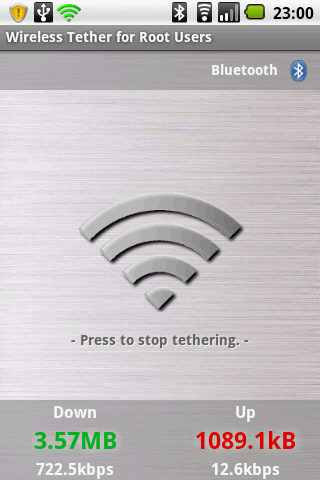
Wireless carriers want you to pay them extra if you use your phone’s built-in Wi-Fi hotspot feature to share wireless data with your other devices.  Now Verizon and T-Mobile are joining AT&T in shutting down some loopholes that allowed third party applications to deliver tethering service at no additional monthly charge.

The first step in locking down tethering is removing easy access to applications that allow it to happen.  As of this week, access to the most popular tethering apps, including Easy Tether, Internet Sharer, Klink, PDAnet and Tether for Android have been blocked from the Android Market, which means customers can only install these applications using a complicated process to manually install the software.

The next step, already underway at AT&T, is to identify and warn customers using these “unauthorized” apps that they are violating the terms of their wireless contract.

AT&T customers began receiving text messages warning them that the company’s own tethering plan would be automatically added to their accounts if tethering continued.  Verizon has not gone that far yet, but T-Mobile has, sending warnings and blocking access for customers who are not paying an additional $14.99 a month for the service, currently unlimited.

Verizon Wireless customers will have to pay $20 a month for up to 2GB of access, each additional gigabyte priced at $20.

AT&T customers can add tethering for an additional $15 (for 200MB), with additional plans delivering more access for more money.

Google, responsible for administering the Android Market, notes it is not “blocking” the app, merely making it “unavailable for download at the request of wireless carriers” — a distinction without a difference for most consumers.

5-10-2011 Correction:  AT&T’s website claims you need the 4GB DataPro plan for Smartphone tethering, which provides an allowance of 4GB of data for $45 a month, with a $10/GB overlimit fee per GB over.


Search This Site:

Contributions:

Recent Comments:

Your Account:

Stop the Cap!