Home » google » Recent Articles:

Geordi La Forge’s Encounter With Usage Caps Will Temper Google’s New Goggles

Phillip Dampier April 5, 2012 Consumer News, Data Caps, Editorial & Site News, Online Video, Video, Wireless Broadband Comments Off on Geordi La Forge’s Encounter With Usage Caps Will Temper Google’s New Goggles

Google's prototype

Google’s plan to revolutionize eyewear by turning it into a virtual Internet appliance could be tempered considerably by the Internet Overcharging schemes enforced by most of North America’s wireless phone companies that would provide the connectivity.

Google’s Project Glass reportedly will produce the first set of Google glasses, which provide eye-activated online content, before the end of the year.  Without any vision correction, the glasses are anticipated to retail for $250-600, not including your wireless Internet plan.

Chris Green, principal analyst at Davies Murphy Group Europe, told the BBC Google may have bit off more than they can chew, and that other companies have considered similar techwear but abandoned prototypes because technology was insufficient to adequately power the devices.

I see a data cap.

“Monetization opportunities would be enormous, but there are still big issues involved with shrinking the technology and making the computer that receives and processes the data truly portable,” Green said.

The glasses project icons and images within the wearer’s field of vision and allow voice-activated control and communication.

The constant connectivity could provide a major new revenue source for usage-capping wireless providers, especially if the wearer decides to pass the time watching something other than what is directly within the field of view. While short messages and updates would have almost no impact on wireless data allowances, streamed content, especially video, could.

That may make the initial price tag for the glasses the least expensive part of owning them.

A two-year contract for wireless data can run more than $720 with companies like AT&T.

[flv width=”640″ height=”380″]http://www.phillipdampier.com/video/Google eyeglasses can surf internet 4-3-12.flv[/flv]

Google’s prototype eyeglasses can surf the Internet in this Google-produced video envisioning potential uses.  (2 minutes)


How Does Google Fiber’s Gigabit Broadband Change Kansas City?

Phillip Dampier March 6, 2012 Broadband Speed, Google Fiber & Wireless, Video Comments Off on How Does Google Fiber’s Gigabit Broadband Change Kansas City?

[flv width=”640″ height=”380″]http://www.phillipdampier.com/video/BBC News Google Fiber Can ultra-fast internet change a city 2-27-12.flv[/flv]

The BBC explores how Google’s gigabit broadband project will change Kansas City economically, socially, and culturally.  (3 minutes)

Back to Kansas City: Google Fiber Now Going in the Ground; TV Service Also Announced

Phillip Dampier February 23, 2012 AT&T, Broadband Speed, Competition, Google Fiber & Wireless, Video Comments Off on Back to Kansas City: Google Fiber Now Going in the Ground; TV Service Also Announced

Nearly one year ago, Google selected Kansas City, Kansas as the first city to “Think Big With a Gig,” a gigabit fiber to the home broadband network that would shatter misconceptions that Americans don’t need lightning-fast broadband speeds.

In the original announcement, early 2012 was slated to be the target date for the service to become available in at least some areas of the city.  After months of wrangling with utility companies and the city government, Google began burying the first fiber lines earlier this month.  This week, it filed for permission with both Kansas and Missouri officials to compliment its forthcoming broadband service with a complete cable-TV package as well.

Google’s fiber project now has incumbent operators on both sides of the Missouri and Kansas Rivers concerned about forthcoming competition from the search engine giant, especially after Google announced it would wire both the Kansas and Missouri sides of the city.

Greater Kansas City is primarily served by Time Warner Cable and AT&T, but smaller cable operators also offer service in some areas.  Google is considering a competitive cable package with video on demand.  It is expected to wrap up licensing negotiations with programmers within a month or two, and some of its contracts allow Google to sell cable service outside of the Kansas City area, a potentially interesting development should Google want to provide an Internet-based cable system to subscribers in other cities.

We have collected several media reports on the Google project in Kansas City to bring readers up to date:

[flv width=”640″ height=”380″]http://www.phillipdampier.com/video/WDAF Kansas City Gigabit Challenge Offers Google-Friendly Ideas 12-6-11.flv[/flv]

WDAF in Kansas City reports on some of the submissions to Google’s Gigabit Challenge — a competition to consider how to leverage 1,000Mbps broadband. (12/6/11 — 2 minutes)

[flv width=”640″ height=”380″]http://www.phillipdampier.com/video/WDAF Kansas City Why is Google Fiber Set Up Taking so Long 1-18-12.flv[/flv]

WDAF reports on what is holding up the Google Fiber project.  It turns out local utilities have been harder to deal with than originally thought.  (1/18/12 — 3 minutes)

[flv width=”640″ height=”380″]http://www.phillipdampier.com/video/KMBC Kansas City Google Begins Fiber Installation In KCK 2-6-12.flv[/flv]

KMBC reports Google is ready to break ground on its new fiber network.  (2/6/12 — 2 minutes)

[flv width=”640″ height=”380″]http://www.phillipdampier.com/video/KCTV Kansas City Google Starts Laying Fiber 2-18-12.mp4[/flv]

KCTV says Google started laying fiber this week.  The new service is on the way.  (2 minutes)

High Technology Companies Warn South Carolina Against Adopting Anti-Broadband Initiative

A coalition of high tech companies including Google and Alcatel-Lucent are warning South Carolina legislators they are playing with future high tech jobs and will stifle the state’s digital economy if they grant the request of large phone and cable companies to make it difficult, if not impossible for community-owned broadband to compete.  Alcatel-Lucent, American Public Power Association, Atlantic Engineering, Fiber to the Home Council, Google, OnTrac, Southeast Association of Telecommunications Officers and Advisors, Telecommunications Industry Association, and the Utilities Telecom Council all co-signed the letter addressed to the state’s Senate Judiciary Committee:

January 31, 2012

Dear Senator McConnell and Members of the Senate Judiciary Committee:

We, the private-sector companies and trade associations listed below, urge you to oppose H.3508 because these bills, on top of South Carolina’s existing barrier to public communications initiatives, codified in SC Code §§ 58-9-2600 et seq., will harm both the public and private sectors, stifle economic growth, prevent the creation or retention of thousands of jobs, hamper work force development and diminish the quality of life in South Carolina. In particular, these bills will hurt the private sector in several ways: by curtailing public-private partnerships, stifling private companies that sell equipment and services to public broadband providers, and impairing educational and occupational opportunities that contribute to a skilled workforce from which businesses across the state will benefit.

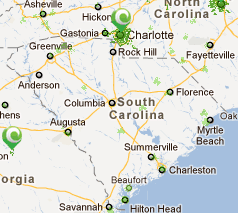
Clearwire's coverage map shows no service in South Carolina.

The United States continues to suffer through difficult economic times.  The private sector alone cannot lift the United States out of this crisis.  As a result, federal and state efforts are taking place across the Nation to deploy both private and public broadband infrastructure to stimulate and support economic development and jobs, especially in economically distressed areas.  For example, in South Carolina, Orangeburg and Oconee Counties have received broadband stimulus awards to bring much-needed broadband services and capabilities to communities that the private sector has chosen not to serve adequately.  H.3508, together with SC Code §§ 58-9-2600 et seq., would impose burdensome financial and regulatory requirements that will prevent public broadband providers from building the sorely needed advanced broadband infrastructure that will stimulate local businesses development, foster work force retraining, and boost employment in these economically depressed areas.

Consistent with these expressions of national unity, public entities across America, including South Carolina, are ready, willing, and able to do their share to bring affordable high-capacity broadband connectivity to all Americans. Enactment or retention of direct or effective barriers to community broadband, such as H.3508 and SC Code §§ 58-9-2600 et seq., would be counterproductive to the achievement of these goals.  These measures are also inconsistent with our country’s National Broadband Plan, which recommends that no new barriers be enacted and that existing barriers be removed.

We support strong, fair and open competition to ensure that users can enjoy the widest range of choices and opportunities.  H.3508 is a step in the wrong direction.  South Carolina should be removing barriers to public broadband initiatives rather than establishing new ones, so that high technology companies can spread and prosper into all the communities in this beautiful state.  Please oppose H.3508, repeal SC Code § 58‑9‑2600 et seq., and reject any future measures that could significantly impair municipal broadband deployments or public-private partnerships in South Carolina.

Stop the Cap! earlier noted this legislation is heavily sponsored by AT&T and other telecommunications companies already operating in South Carolina.  Several months ago, we reported on South Carolina’s woeful broadband: A Corridor of Shame, with large sections of the state without anything close to “broadband” service, even as state legislators in 2009 leased away the state’s publicly owned Educational Broadband Service-spectrum to private companies like Clearwire that don’t appear to be delivering any service in South Carolina.

Community Broadband Works: Knoxville’s High-Tech Jobs Move South For Chattanooga’s Fiber Broadband

Phillip Dampier January 11, 2012 Broadband Speed, Community Networks, Competition, Editorial & Site News, EPB Fiber, Public Policy & Gov't, Video Comments Off on Community Broadband Works: Knoxville’s High-Tech Jobs Move South For Chattanooga’s Fiber Broadband

Chattanooga’s investment in community fiber broadband is beginning to pay dividends as the city benefits from an increase in high-paying, high-technology jobs.  Unfortunately for cities like Knoxville, Chattanooga’s gains are their loss.

“In a lot of places, you can get the same kind of high speed service as Chattanooga.  The difference is the price,” Dan Thompson of Knoxville-based IT company Claris Networks told Knoxville TV station WBIR.  “Connectivity there for us is about eight to ten times cheaper in Chattanooga than it is versus Knoxville or other cities.  That’s a huge deal when you’re comparing $100 a month or $800 a month.”

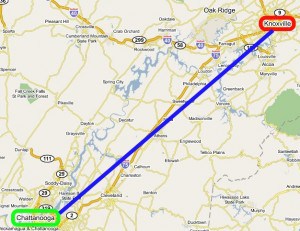
As a result, Claris is skipping the pricey service on offer from AT&T and Comcast and is moving jobs down I-75 to the city of Chattanooga, where publicly-owned EPB Fiber has invested in a fiber-to-the-home network that beats the pants off the competition.  Claris has found gigabit broadband in Chattanooga that can be installed in days at a fraction of the price charged by the companies they deal with in Knoxville.  Now Claris can invest the savings in bigger data centers and the jobs that come with them.

“Here in Knoxville and other cities, you may have to pay a premium to get speeds fast enough to support that,” Thompson said.

While companies like AT&T, Time Warner Cable, CenturyLink, and Comcast have had Chamber of Commerce support opposing community broadband in other states, Chattanooga’s local Chamber knows a good thing when it sees it.  Garrett Wagley, vice president of policy and public relations for the Knoxville Chamber, tells the Knoxville station investment in infrastructure is important when recruiting new businesses to town and keep existing ones growing.

Investment in high technology networks is an important topic for the evolving economies of the mid-south region.  Formerly dependent on tobacco farming, textiles, and manufacturing, states like Tennessee and the Carolinas are now investing to compete for high-technology, digital economy jobs.  Public investment in broadband comes as part of that effort, and typically only after appeals to existing commercial providers fail to bring necessary upgrades.

That “other places first” upgrade mentality continues to this day in states like South Carolina, which waited years for Time Warner Cable and local phone companies to deliver broadband speeds states further north have been receiving for several years.

For companies like Google and Amazon.com, the choice of where to locate regional data and distribution centers is often dependent on available infrastructure.  Chattanooga is in a strong position to argue it already has a broadband network in place that can meet the needs of any high-tech company, at prices too low to ignore.  Economic investment, jobs, and tax revenues follow.  Even better, much of the revenue earned by EPB Fiber stays in Chattanooga, paying off network construction costs and allowing the public utility to invest in smart-grid technology, which could benefit electric ratepayers as well.

Christopher Mitchell at Community Broadband Networks notes Chattanooga is not alone seeing significant job gains from investment in public broadband.  Just 100 miles to the northeast is Bristol, Virginia, another city that is transforming itself to support 21st century knowledge economy jobs.  Bristol’s public fiber network delivers service across most of southwestern Virginia, across an area long ignored or under-served by larger commercial providers.

For cities stuck with whatever AT&T, Comcast, and Time Warner Cable decide to offer, the trickling job migration to better-wired cities could eventually become a fast-running stream.  That’s why WBIR-TV questioned Knoxville city officials about why they abandoned consideration of their own public fiber network.

The City of Knoxville’s chief policy officer, Bill Lyons, told 10News there has been some discussion about constructing network infrastructure in the past.

“We did discuss this general topic very briefly early in the last administration and did not pursue it,” wrote Lyons.  “There was no systematic assessment, but rather a sense that the associated investment in infrastructure was not needed given the service that was already available.”

[…] “The question we as citizens need to ask is this something we’d be willing to spend money on,” said Thompson.  “I think you’d have to ask if you built this kind of network would more businesses come here.  And if they would, do the tax dollars [gained by attracting news business] offset the cost that we as citizens would have to pay.”

Good-enough-for-you broadband at take-it-or-leave-it sky high prices has been the state of broadband across the mid-south for years.  Unfortunately for Knoxville and other cities in Tennessee and the Carolinas, high-tech businesses are quickly discovering they don’t have to take it anymore.  What cities like Knoxville lose, Chattanooga gains.

[flv]http://www.phillipdampier.com/video/WBIR Knoxville Chattanooga Fiber Attracts Jobs 12-27-11.mp4[/flv]

WBIR in Knoxville explores Chattanooga’s success in broadband, which is now starting to come at the expense of other Tennessee cities who don’t have the infrastructure to compete.  (3 minutes)

Search This Site:

Contributions:

Recent Comments:

Your Account:

Stop the Cap!