Home » google » Recent Articles:

Time Warner Cable’s Horn Of Plenty for Austin: Free Wi-Fi for Broadband Customers

Phillip Dampier April 25, 2013 Competition, Consumer News, Data Caps, Editorial & Site News, Wireless Broadband Comments Off on Time Warner Cable’s Horn Of Plenty for Austin: Free Wi-Fi for Broadband Customers
Austin gets a horn 'o plenty with free Time Warner Cable Wi-Fi because Google is coming to town.

Austin gets a horn of plenty with free Time Warner Cable Wi-Fi because Google is coming to town.

As Time Warner Cable faces forthcoming competition from Google Fiber in Austin, the company is responding with the construction of a free Wi-Fi network for its broadband customers to protect its business.

TWC WiFi is available now from a limited number of hotspots, but hundreds more will become available across Austin in 2013 as the company builds out its wireless network.

Time Warner Cable customers with Standard Internet or above qualify for free access, as do Business Class customers. Others can trial the service for free and then buy access for $2.95 an hour.

“Increasingly, our Austin customers want to take their high-speed Internet with them out of the home and on-the-go,” said Area Vice President Kathy Brabson. “The TWC WiFi network we are building for Austin will allow our customers to greatly maximize their TWC Internet subscription at no additional charge.”

It is no coincidence Time Warner Cable has selected Austin for a Wi-Fi rollout. The Wi-Fi service was specifically intended to provide more value for Time Warner Cable customers in competitive markets to keep them from switching to a competitor.

It represents a sea change for a cable company that in 2009 targeted Austin for an Internet Overcharging scheme that would have slapped a usage limit and consumption billing on the area’s broadband customers. With the advent of strong competition from Google, Time Warner Cable is giving customers something instead of taking things away.

Austin customers can download the free TWC WiFi Finder app available in Google Play and the Apple App Store or visit www.twc.com/wificoverage to view the hotspot coverage map as the wireless network grows. Once authenticated, customers can also access Wi-Fi hotspots in other cities including New York City, Los Angeles, Chicago, Philadelphia, Atlanta, Baltimore, Boston, Washington, D.C., San Francisco, Orlando, Tampa, Kansas City, Charlotte and more.

Why Google Chose Provo as the Next Google Fiber City

google fiberTo many, Provo, Utah might seem an unusual choice to follow on the heels of Google’s earlier announcement its gigabit fiber network was headed to Austin, Tex.

Provo is only the third largest community in Utah — Salt Lake City and West Valley City are bigger — and the community already has a fiber network called iProvo. So why build another one?

Google won’t have to.

But first some background:

iProvo was envisioned a decade ago as a public-private partnership — a fiber to the home network owned by the public with private service providers using it to sell broadband and other services . iProvo taught an early lesson about municipal broadband — large cable and phone companies routinely boycott participation in any network they do not own and control themselves.

In 2003, the president of Qwest’s Utah division made clear their intentions: “Fiber optic’s capabilities are way more than what most consumers need in their homes. Why provide a Rolls Royce when a Chevrolet will do?”

Comcast, the dominant local cable operator, also “went ballistic” according to former mayor Lewis Billings.

iProvo can be yours for just $1.

iProvo can be yours for just $1.

“One hired a PR firm and a telemarketing company to make calls to citizens,” Billings recalled. “They also placed full-page ads and ultimately hired people to picket City Hall. It was a bruising fight.  My favorite picket sign had a piece of telephone wire taped to it and read that I and one of my key staff members were, ‘a Twisted Pair.’”

With both Qwest and Comcast wanting nothing to do with the project, smaller independent ISPs had to fill the gap. It was a difficult sell, particularly because Qwest and Comcast blanketed Provo residents with a misinformation campaign about the network and pitched highly aggressive retention offers to keep customers with the phone and cable company. iProvo has been in financial distress ever since.

Former Provo city councilwoman Cynthia Dayton remembers being on the council when iProvo was approved and believes the public-private network was a decade before its time.

“Ten years ago it was worth the vote on iProvo,” she told the Daily Herald. It was one of the most difficult decisions but it was for the future.”

More than a year ago, Google noticed the city of Provo issued a request for proposals on what to ultimately do with iProvo.

Google became interested because Provo is seen as a city with hundreds of technology start-up companies and maintains a vibrant tech hub. The city also ranked highly for the enormous value it places on connectivity and community — something the approval and construction of iProvo demonstrated.

[flv width=”640″ height=”380″]http://www.phillipdampier.com/video/Provo Google Fiber 4-13.mp4[/flv]

Why Provo? Google considers the city’s rankings. (1 minute)

iprovo_logo.jpg.pagespeed.ce.grIF_VVvuACity officials and Google executives began quietly talking more than a year ago about Google buying the public-private network. A key selling point: the city was willing to let the operation go for a steal — just $1.00. In return, Google promised to invest in and upgrade the network to reach the two-thirds of Provo homes it does not reach. Google says iProvo will need technology upgrades in the office, but the existing fiber strands already running throughout the city are service-ready today.

Val Hale, President of the Utah Valley Chamber of Commerce, said a quick “back of the envelope” estimate put Google’s anticipated investment in iProvo network upgrades at $18 million, according to the Deseret News. Unfortunately, taxpayers will still need to pay off about $40 million in bonds the city accumulated for iProvo’s initial construction costs.

Curtis

Curtis

Current Mayor John Curtis says he has made the best out of a difficult situation.

“We have maximized what we have here today,” said Curtis. “It’s about maximizing what we have. I believe in the long-term it will pay dividends many times greater than what we paid into it, but it’s going to take a while to realize that dream.”

Google promised free gigabit Internet service to 25 local public institutions including schools, hospitals, and libraries. Residential customers will be expected to pay $70 a month for 1,000Mbps service or get 5Mbps broadband service for free up to seven years.

Google’s investment in Provo is anticipated to be far lower than in Austin and Kansas City — cities where it needs to build a considerable amount of fiber infrastructure from scratch. With existing fiber already in place in Provo, Google’s gigabit service will be available by the end of this year, at least six months faster than in Austin.

With reduced construction costs, Google will only ask new customers for a $30 activation fee, far less than the $300 Google will ask Austin and Kansas City residents to pay if they do not sign a multi-year service contract or only want basic 5Mbps service.

Google sees the opportunity to use its fiber network in an ongoing effort to embarrass other broadband providers into investing in speed upgrades.

[flv width=”640″ height=”380″]http://www.phillipdampier.com/video/KSL Salt Lake City Google Fiber Coming to Provo 4-17-13.flv[/flv]

KSL in Salt Lake City reports Google Fiber is coming to Provo. Last year Google began talking with the city to acquire its iProvo municipal fiber network.  (3 minutes)

[flv width=”640″ height=”380″]http://www.phillipdampier.com/video/KSTU Salt Lake City Google Fiber coming to Provo 4-17-13.flv[/flv]

KSTU in Salt Lake City reports taxpayers are still on the hook for around $40 million in bond payments to cover the construction costs of iProvo. But Google Fiber will stop other Internet providers from “cheating everyone” says one local Provo resident.  “[Other ISPs] give you the slowest connection possible and charge you a ridiculous amount for it,” said Haley Cano. (4 minutes)

[flv width=”480″ height=”380″]http://www.phillipdampier.com/video/KTVX Salt Lake City Google Fiber in Provo 4-17-13.mp4[/flv]

KTVX in Salt Lake had some trouble navigating the difference between a gigabit and a gigabyte, and confused what Google services will be sold and which will be available for free in this report, but the ABC affiliate covered the unveiling with both city and Google company officials on hand.  (2 minutes)

[flv width=”480″ height=”380″]http://www.phillipdampier.com/video/KTVX Salt Lake City Google Fiber Details in Provo 4-18-13.mp4[/flv]

This morning, KTVX did a better job in this interview with the mayor of Provo and Google’s Matt Dunne, who says Google believes speed matters and current ISPs simply don’t offer enough.  A key factor to attract Google’s interest is a close working relationship with the cities that want the service. (2 minutes)


Breaking News: Provo, Utah the Next City Slated for Gigabit Google Fiber

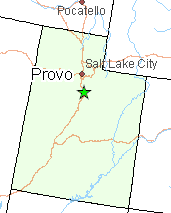
provoProvo, Utah will be the third city in the country to get Google’s gigabit fiber network, in part because fiber infrastructure installed by a defunct provider that ran into money problems is now likely available for Google’s use.


The announcement came from Provo Mayor John Curtis this afternoon.

The choice of Provo was a surprise even to area residents, who speculated the “epic announcement” promised by Provo’s deputy mayor Corey Norman involved the opening of a new Popeye’s Chicken location or a second Red Lobster headed to town. Instead, it is only 1,000/1,000Mbps broadband for a likely price of $70 a month.

Provo’s existing fiber infrastructure, now owned by the local government, was likely a major reason in selecting the city of 115,000 for a Google-style upgrade.

The announcement came a little over a week after Google announced Austin, Tex. as the second stop for Google’s fiber upgrade. The surprise announcement may create waves in the telecom industry that earlier assumed Google was only interested in developing a demonstration project in Kansas City. It is now likely Google has bigger plans than that.

Communities that own, control, or manage their own fiber networks — institutional or available to the public — may be the next to be courted by Google.

Google will face off against Comcast Cable and CenturyLink (formerly Qwest) in the city.

[flv width=”480″ height=”380″]http://www.phillipdampier.com/video/KTVX Salt Lake City Provo Getting Ready for Epic Announcement 4-16-13.mp4[/flv]

KTVX in Salt Lake City reports Provo is getting ready for “an epic announcement.” It turns out Google’s gigabit fiber network is coming to the city of 115,000.  (2 minutes)

AT&T, Time Warner Cable Claim They Are Ready for Google Fiber in Austin

me too

AT&T suddenly announced it was ready to build its own gigabit fiber network in Austin.

AT&T and Time Warner Cable report they are ready to make more investments in their operations in Austin, Tex. to compete with Google Fiber when it arrives in the middle of next year.

Time Warner Cable says it already operates a multi-gigabit fiber optic network — one residential customers cannot easily access or afford. Residential broadband speeds at the cable operator top out at 50/5Mbps in Austin, at a cost higher than what Google plans to charge for 1,000/1,000Mbps service. AT&T’s U-verse network maxes out at 24/3Mbps, assuming customers have good copper wiring between AT&T’s fiber in the neighborhood and their home.

“The cable and phone company providers have purposely confused their networks’ maximum speed capacity with real end-user speeds for years, and when that fails to convince they simply claim customers don’t need or want those speeds anyway,” says Stop the Cap! reader and Austin resident Sam Knoll.

Knoll is enthusiastic about giving Time Warner Cable the boot, partly to pay them back for their aborted consumption billing trial attempted in Austin in 2009.

“I am not completely convinced Time Warner Cable understands just how much damage they did to their reputation when they pulled that stunt, and I’m certain they will attempt it again if they have a chance,” Knoll said. “The best thing customers can do is switch to a provider that believes usage caps and consumption billing are the fraudulent ripoff we know them to be. Google already knows this.”

Some Time Warner Cable customers in Austin never forgot the company tried to meter Internet usage in a failed experiment back in 2009.

Some Time Warner Cable customers in Austin never forgot the company tried to meter Internet usage in a failed experiment back in 2009. (Image: The Austinst)

Competition from deep-pocketed Google could eventually transform the broadband business model for American providers, assuming Google builds its fiber network in enough cities to challenge the conventional wisdom that prices have plenty of room to grow with faster Internet access. The more customers that sign up for Google’s already-super-fast broadband, the more providers will have to compete with better and faster service.

But AT&T is not convinced. The company announced yesterday it was prepared to build a gigabit fiber network not just in Austin, but also in surrounding Williamson County, with plenty of caveats.

“[We will only build the network if] the demand is there and if we get the same terms and conditions as Google received,” said AT&T spokeswoman Tracy King.

AT&T told the Austin American-Statesman the company wanted a faster regulatory approval process and permission to only build its faster fiber network in neighborhoods where there is proven demand for the service. Current franchise agreements often compel providers to offer service throughout the community and prohibits “cherry-picking” customers in high-income or low construction cost areas.

An AT&T official told KEYE-TV he had no idea how much AT&T would charge for gigabit broadband. Google charges $70 a month in Kansas City.

Austin has promised cooperation with Google, although it is not extending tax breaks or grants to the search engine giant. Google will get easy access to Austin Energy’s municipally owned infrastructure including utility poles and rights-of-way.

Google is speculated to be building showcase fiber networks to embarrass incumbent cable and phone providers who typically sell standard broadband service with speeds of 6-15Mbps in most larger communities. Rural areas are lucky to have 3Mbps service, and often much less.

But if Google intended to force major upgrades by cable and phone companies across the country, it might be disappointed with the response so far from AT&T and Time Warner Cable. Both companies indicate they will invest in and upgrade their networks to compete, but only in the service areas where Google-style competition exists. For the rest of the country, phone and cable companies are prepared to continue with the current “broadband scarcity” business model that delivers upgrades only occasionally, often accompanied by usage limits, consumption billing, and/or higher prices.

“Google has proved that there is a business model for selling abundant bandwidth as opposed to a business model for allocating scarce bandwidth,” said Blair Levin, a former chief of staff of the Federal Communications Commission.

“They are saying this is not an experiment. It is a business,” Levin told the newspaper. “In Kansas City, Google did the country an enormous favor. They said, give us regulatory flexibility to design the business and give us access to city property so we can build a network to lower the cost.”

[flv width=”640″ height=”380”]http://www.phillipdampier.com/video/KEYE Austin Competitor Chimes In After Google Announcement 4-9-13.flv[/flv]

KEYE in Austin talks with AT&T about their plans for a gigabit broadband network to compete with Google Fiber. The AT&T spokesman seemed more interested in pitching the company’s deregulation agenda and was short on specifics.  (3 minutes)

[flv width=”640″ height=”380″]http://www.phillipdampier.com/video/KXAN Austin What competition will Google Fiber face 4-9-13.mp4[/flv]

KXAN in Austin talked with Google competitors Time Warner Cable and AT&T about how they will respond to the Google Fiber challenge.   (3 minutes)

[flv width=”640″ height=”380″]http://www.phillipdampier.com/video/KVUE Austin Fiber Wars in Austin 4-9-13.mp4[/flv]

KVUE in Austin called Google’s entry into the city the opening salvo of ‘Fiber Wars,’ as AT&T promises its own gigabit network. Austin residents intend to take advantage of the competition to force providers to give them better deals to keep their business.  (3 minutes)

[flv width=”640″ height=”380″]http://www.phillipdampier.com/video/KXAN Austin Google Fiber Possibilities Google Insider 4-9-13.mp4[/flv]

KXAN explains the possibilities of gigabit fiber, but also asks a former Google insider why the search engine is getting into the broadband business.  (5 minutes)

[flv width=”640″ height=”380″]http://www.phillipdampier.com/video/KTBC Austin Time Warner Cable Responds to Google 4-9-13.mp4[/flv]

KTBC was skeptical of AT&T’s sudden interest in gigabit broadband. “Gee, what a coincidence,” commented the anchor of Austin’s Fox affiliate.  (2 minutes)

AT&T Announces Its Own “Gigabit Fiber Network” for Austin; Details Leave Wiggle Room

att-logo-221x300On the heels of today’s announcement from Google that it intends to make Austin, Tex. the next home for Google Fiber, AT&T issued a press release claiming it was suddenly interested in building a gigabit fiber network in Austin too.

Today, AT&T announced that in conjunction with its previously announced Project VIP expansion of broadband access, it is prepared to build an advanced fiber optic infrastructure in Austin, Texas, capable of delivering speeds up to 1 gigabit per second.  AT&T’s expanded fiber plans in Austin anticipate it will be granted the same terms and conditions as Google on issues such as geographic scope of offerings, rights of way, permitting, state licenses and any investment incentives. This expanded investment is not expected to materially alter AT&T’s anticipated 2013 capital expenditures.

Currently, AT&T’s U-verse system in Austin — a fiber to the neighborhood system — cannot exceed 25Mbps as it is now configured. GigaOm’s Stacy Higginbotham reports AT&T told her it would build its own fiber to the premises system in Austin to support faster speeds.

But AT&T’s announcement does not come without plenty of wiggle room which could make today’s announcement little more than a publicity stunt:

  1. AT&T claims it will build “infrastructure” capable of delivering “up to” 1Gbps. This could mean a network that supports a maximum of 1Gbps of shared Internet traffic, not 1Gbps to each home or business;
  2. AT&T does not say it intends this network for residential customers, nor did it suggest a monthly price for gigabit service. Its Project VIP expansion describes planned broadband speed upgrades for residential U-verse customers of up to 75Mbps and for U-verse IPDSLAM to speeds of up to 45Mbps, not 1Gbps;
  3. AT&T’s Project VIP already specifies fiber network build outs, but they are destined for cell towers, large business complexes, and multi-dwelling units that will share a fiber connection;
  4. AT&T wants the same terms and conditions Google has received, including investment incentives. But AT&T could have applied for those incentives, and potentially could have already received them, if it specified plans for a gigabit network of its own. Instead, AT&T executives have always believed residential customers do not want or need gigabit broadband speeds. In fact, AT&T still doesn’t believe fiber to the home service makes economic sense, which is why it invested in a cheaper fiber to the neighborhood system that still relies on old copper wiring. AT&T also warns that, “Our potential capital investment will depend on the extent we can reach satisfactory agreements” with local officials on those incentives;
  5. Wiring a city of Austin will cost tens of millions to reach every resident with service. Such an expense might be considered materially relevant to shareholders, requiring disclosure. Building a much lesser network, like a gigabit middle mile network or only offering fiber service to institutional or commercial customers would cost far less and could escape reporting requirements.

AT&T also did not miss an opportunity to promote its deregulatory agenda, which has so far not proved to be of much help to broadband speed enthusiasts stuck with DSL or U-verse.

“Most encouraging is the recognition by government officials that policies which eliminate unnecessary regulation, lower costs and speed infrastructure deployment, can be a meaningful catalyst to additional investment in advanced networks which drives employment and economic growth,” said Randall Stephenson, AT&T chairman and CEO.

AT&T’s agenda might result in a meaningful catalyst of a different kind — the end of rural landline telephone and broadband service.

Search This Site:

Contributions:

Recent Comments:

Your Account:

Stop the Cap!