Home » free wi fi » Recent Articles:

Oceanic Cable in Hawaii Announces Free Wi-Fi for Oahu

Phillip Dampier September 16, 2013 Consumer News, Oceanic Cable, Wireless Broadband Comments Off on Oceanic Cable in Hawaii Announces Free Wi-Fi for Oahu

twc wifiOceanic Time Warner Cable is now providing free Wi-Fi access for Standard Internet (or above) broadband customers on the island of Oahu.

“Increasingly, our Hawaii customers want to take their high-speed Internet with them out of the home and on-the-go,” said Oceanic president Bob Barlow. “The TWC Wi-Fi network we’re building for Hawaii will allow our customers to greatly maximize their TWC Internet subscription – at no additional charge.”

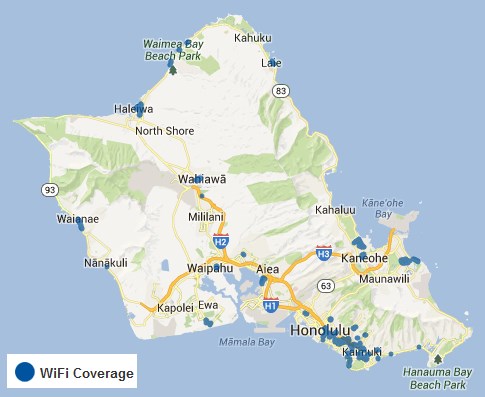
The company has launched the service on the island with more than 400 Ruckus Wireless-branded hotspots in areas like Sunset Beach, Stan Sheriff, and the Kailua District Park. The hotspots can be identified by their network name: TWCWiFi. Customers can get access by logging in with their Oceanic/Time Warner Cable MyServices account name and password. Guest users can buy a “pay as you go” TWC Access Pass starting at $2.95 an hour.

TWC's Wi-Fi network is currently focused on

TWC’s Wi-Fi network is now focused on Honolulu, but customers in most major communities on the island will also find limited service.

Time Warner is gradually expanding its Wi-Fi services in high traffic areas and where it faces competition from Google Fiber. TWC Wi-Fi is available from 1,000 access points in Manhattan and more than 12,000 hotspots in Los Angeles. Wi-Fi service was also introduced in downtown Charlotte, N.C., Kansas City and Austin.

Comcast, Cox, Cablevision, and Bright House broadband customers will also be able to use the new hotspots through the Cable Wi-Fi Alliance.

France’s Free Mobile Unveils Crowdsourced Voice/Data Cell Service for Under $30/Month

Phillip Dampier June 20, 2013 Competition, Consumer News, Video, Wireless Broadband Comments Off on France’s Free Mobile Unveils Crowdsourced Voice/Data Cell Service for Under $30/Month

150px-Free_mobile_2011.svgAn upstart telecom company has thrown the French mobile market into competitive chaos offering customers unlimited voice, messaging, and certain data services for around $26 a month. Now the company is expanding its footprint by offering free femtocells to customers that can be shared by other customers, according to a report by GigaOm‘s Kevin Fitchard.

France’s Free Mobile is everything North American cell phone providers are not. The company offers dirt cheap, often unlimited service (their backup HSPA+ roaming data network has a 3GB limit), crowdsourced public Wi-Fi networks run by its customers, and soon an even more robust network made possible by handing out network extender devices at no charge, improving indoor reception and data speeds.

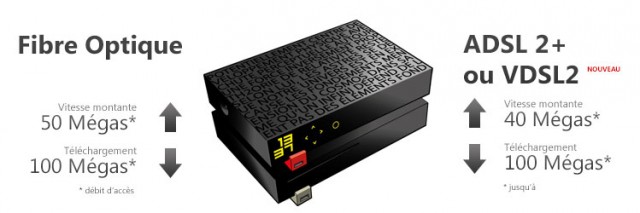
Free offers more than just mobile services. Its home broadband service offers 40-100Mbps Internet service, offering plenty of bandwidth to accommodate shared connections.

28-100-v2

Features Mobile-Only Subscribers Freebox Home Internet + Mobile Subscribers
Unlimited SMS and MMS messages
3G+ DATA (HSPA+: 3GB cap)
Free 3G+ connection sharing (tethering)
Unlimited seamless use of the Free Wi-Fi hotspots via EAP-SIM protocol
Unlimited calls to mobile lines and landlines in France, Alaska, Canada, United States, Hawaii
Unlimited calls to landlines in 40 countries
No contract; no commitment period
€19.99/month ($26) €15.99/month ($21)
120 minutes voice calling
SMS unlimited
Unlimited seamless use of the Free Wi-Fi hotspots via EAP-SIM protocol
Unlimited calls to mobile lines and landlines in France, Alaska, Canada, United States, Hawaii
Unlimited calls to landlines in 40 countries
No contract; no commitment period
€2.00/month ($2.64) Free
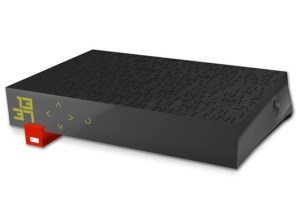
Freebox home Internet gateway, now including a free femtocell.

Freebox home Internet gateway, now including a free femtocell.

Back home in the United States and Canada, cell phone companies ask customers to pay up to $300 for network extender devices to manage reception your provider was supposed to deliver in return for paying them nearly $100 a month. The femtocells connect to a customer’s home broadband connection to make and receive calls. Despite the fact customers are using their own broadband service to power the device, cell phone companies still deduct minutes, texts, and data from monthly usage allowances just as if one was using a nearby cell tower.

Free Mobile customers don’t have to deal with any of that. In return for helping improve the company’s cellular network, customers will get the network extender devices, known as femtocells, free after a nominal shipping charge. New customers will have the femtocell technology built right into Free Mobile’s Freebox Revolution gateway.

Parent company Iliad is depending on its generous customers to help extend the network while keeping prices low for everyone. Considering the costs, few object to sharing a negligible part of their broadband connection with other customers, especially with millions of potential connection points sharing the load.

French cell phone users have a lot to thank Iliad for, even if they are not Free Mobile customers. The appearance of Free Mobile on the scene sparked a massive price war that is delivering savings to every French mobile user.

[flv width=”640″ height=”380″]http://www.phillipdampier.com/video/Free Freebox Server 6-13.mp4[/flv]

Introducing the Freebox Server, a home gateway cool enough to put on your desktop. (1 minute)

[flv width=”640″ height=”380″]http://www.phillipdampier.com/video/Free Designer Starck talks about the Freebox 6-13.mp4[/flv]

Only in France will you find providers spending as much time and attention on the stylish details of a set-top box as they do fretting about its cost. To underline the point, designer Philippe Starck turned up on Free’s website to talk about his design philosophy for the gateway device. (3 minutes, French)

Time Warner Cable’s Horn Of Plenty for Austin: Free Wi-Fi for Broadband Customers

Phillip Dampier April 25, 2013 Competition, Consumer News, Data Caps, Editorial & Site News, Wireless Broadband Comments Off on Time Warner Cable’s Horn Of Plenty for Austin: Free Wi-Fi for Broadband Customers
Austin gets a horn 'o plenty with free Time Warner Cable Wi-Fi because Google is coming to town.

Austin gets a horn of plenty with free Time Warner Cable Wi-Fi because Google is coming to town.

As Time Warner Cable faces forthcoming competition from Google Fiber in Austin, the company is responding with the construction of a free Wi-Fi network for its broadband customers to protect its business.

TWC WiFi is available now from a limited number of hotspots, but hundreds more will become available across Austin in 2013 as the company builds out its wireless network.

Time Warner Cable customers with Standard Internet or above qualify for free access, as do Business Class customers. Others can trial the service for free and then buy access for $2.95 an hour.

“Increasingly, our Austin customers want to take their high-speed Internet with them out of the home and on-the-go,” said Area Vice President Kathy Brabson. “The TWC WiFi network we are building for Austin will allow our customers to greatly maximize their TWC Internet subscription at no additional charge.”

It is no coincidence Time Warner Cable has selected Austin for a Wi-Fi rollout. The Wi-Fi service was specifically intended to provide more value for Time Warner Cable customers in competitive markets to keep them from switching to a competitor.

It represents a sea change for a cable company that in 2009 targeted Austin for an Internet Overcharging scheme that would have slapped a usage limit and consumption billing on the area’s broadband customers. With the advent of strong competition from Google, Time Warner Cable is giving customers something instead of taking things away.

Austin customers can download the free TWC WiFi Finder app available in Google Play and the Apple App Store or visit www.twc.com/wificoverage to view the hotspot coverage map as the wireless network grows. Once authenticated, customers can also access Wi-Fi hotspots in other cities including New York City, Los Angeles, Chicago, Philadelphia, Atlanta, Baltimore, Boston, Washington, D.C., San Francisco, Orlando, Tampa, Kansas City, Charlotte and more.

Reports of “Free Nationwide Wi-Fi” Network are Overhyped; No ‘Obama-Wi-Fi’ Forthcoming

Phillip Dampier February 5, 2013 AT&T, Broadband Speed, Community Networks, Competition, Consumer News, Editorial & Site News, Public Policy & Gov't, Verizon, Video, Wireless Broadband Comments Off on Reports of “Free Nationwide Wi-Fi” Network are Overhyped; No ‘Obama-Wi-Fi’ Forthcoming
A big 40oz can of Hype from the Washington Post.

A big 40oz can of Hype from the Washington Post.

Conservative bloggers are calling it socialized “Obama-Wi-Fi,” broadband advocates claim it represents salvation from high-priced wireless service plans, and the media echo chamber is amplifying reports that the federal government in on the verge of launching a nationwide free Wi-Fi network.

Sorry folks, it is not to be.

An article in Sunday’s Washington Post originally titled, “FCC Proposes Large Public WiFi Networks” got the ball rolling, and almost 3,000 reader comments later, a full-scale debate about the merits of government-supplied Wi-Fi Internet access is underway.

Cecilia Kang and her headline writer mislead readers with statements like these:

The federal government wants to create super WiFi networks across the nation, so powerful and broad in reach that consumers could use them to make calls or surf the Internet without paying a cellphone bill every month.

[…] If all goes as planned, free access to the Web would be available in just about every metropolitan area and in many rural areas.

There is nothing new about the FCC’s effort to set aside unlicensed spectrum for so-called “white space” Wi-Fi. As the spectrum wars continue, wireless companies like Verizon and AT&T are pushing proposals to further shrink the number of channels on the UHF television band and repurpose them for expanded cellular data networks. That newly available spectrum would be secured through an FCC auction. FCC chairman Julius Genachowski wants to set aside some of that available spectrum for unlicensed use, including the next generation of Wi-Fi, which will greatly extend its range and speed.

There is no proposal on the table for the government to fund or create a free, national Wi-Fi network as an alternative to paid commercial services. At issue is simply how 120MHz of newly-available television spectrum would be made available to new users. Republicans and large wireless companies like Verizon and AT&T are demanding the vast majority of that spectrum be auctioned off. AT&T and Verizon would like to expand their spectrum holdings, and a straight “highest bidder wins” auction guarantees the vast majority of it will be divided by those two companies. Many Democrats and broadband advocates want a portion of that spectrum set aside to sell to AT&T and Verizon’s competitors — current and future — to promote competition. They also support set-asides that make frequencies available for unlicensed uses like Wi-Fi.

Genachowski’s proposal could potentially spur private companies or communities to build community-wide Wi-Fi networks operated on unlicensed frequencies. With more robust signals, such high speed wireless networks could be less costly to construct and serve a much wider geographic area.

The potential for competition from the public or private sector is what bothers companies like AT&T and Verizon. Both argue that since they had to pay for their spectrum, allowing other users access to free spectrum would be unfair, both to themselves and to the government’s effort to earn as much as possible from the auction. AT&T has been the more aggressive of the two companies, repeatedly attempting to insert language into legislation curtailing the FCC’s ability to set aside a significant amount of spectrum for unlicensed use. While AT&T’s lobbyists do not go as far as to advocate banning such networks, the technical conditions they demand would make them untenable. AT&T and others also demand the FCC must close down unlicensed networks if they create “harmful interference,” which is open to interpretation.

Helping the wireless companies in the campaign against the next generation of Wi-Fi are hardware manufacturers like Cisco, which has been trying to deep six the proposal for at least two years. Why? Because Cisco’s vision of wireless networking, and the products it has manufactured to date, are not in sync with the kind of longer distance Wi-Fi networks the FCC envisions. Cisco faces overhauling products that were designed under the premise Wi-Fi would remain a limited-range, mostly indoor service for consumers and businesses.

The threat to incumbent Internet Service Providers is clear enough. If a new version of Wi-Fi launched that could blanket entire neighborhoods, communities, non-profits, or even loosely-knit groups of altruistic individuals could launch free Wi-Fi services sharing their Internet connection with others. If the technology allowed users to seamlessly hand off wireless connections from one free Wi-Fi hotspot to another, much like cell sites do today, customers might downgrade their wireless data plans with big telecom companies. Machine-to-machine networking could also rely on Wi-Fi instead of commercial wireless data plans. It could threaten billions in potential revenue.

Stopping these networks is a priority for corporate interests with profits at stake. But one thing they do not have to worry about, at least for now, is the federal government getting into the wireless Internet business.

[flv width=”640″ height=”380″]http://www.phillipdampier.com/video/Washington Post FCC offers path to free Internet access 2-4-13.flv[/flv]

After the original story ran in the Post, Cecilia Kang participated in this interview which clarified what the FCC is actually proposing. This video explains what spectrum allocation and unlicensed spectrum is all about. Kang clarifies her article, explaining private companies and/or communities will have to decide what to do with the unlicensed spectrum. The federal government is only facilitating the space and has no plans to run a national network itself. (5 minutes)

https://www.washingtonpost.com/business/technology/tech-telecom-giants-take-sides-as-fcc-proposes-large-public-wifi-networks/2013/02/03/eb27d3e0-698b-11e2-ada3-d86a4806d5ee_story.html


Search This Site:

Contributions:

Recent Comments:

Your Account:

Stop the Cap!