Home » FiOS » Recent Articles:

Upstate New York Broadband Rankings Out: Rochester Ranks Last in Speed and Value

Phillip Dampier April 6, 2011 Broadband Speed, Competition, Consumer News, Frontier, Verizon Comments Off on Upstate New York Broadband Rankings Out: Rochester Ranks Last in Speed and Value

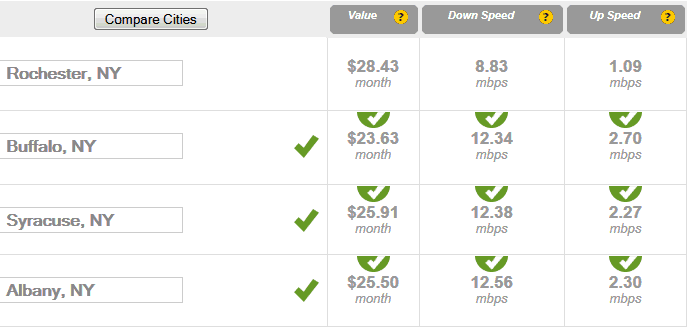
In an upstate New York match-up, the Rochester/Finger Lakes region scored dead last in broadband speed and value, according to data from Broadband.com.

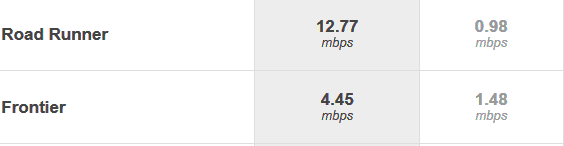
Why are broadband speeds so much lower in the Flower City?  Blame Frontier Communications, which continues to pitch its decade-old DSL product, delivering an average speed of 4.45Mbps, while other upstate cities enjoy access and competition from Verizon’s fiber to the home network FiOS.  Frontier DSL actually often costs more, after taxes and fees, than Time Warner Cable’s much-faster cable broadband product, Road Runner, which rates an average download speed of 12.77Mbps in Rochester.  Frontier does manage to pull one win — higher upload speed DSL providers can often achieve in cities where cable operators keep upstream speeds as low as possible.

Time Warner Cable has dragged its feet upgrading broadband service in the area to its DOCSIS 3 platform other upstate cities have had since last year.  DOCSIS 3 should arrive within the next 4-8 weeks, which should boost broadband speeds, but may not deliver lower broadband prices because of Frontier’s uncompetitiveness in the area.


(Source: Broadband.com)

The top city in upstate New York for download speed is the state capital, Albany.  But Buffalo wins the contest for upload speed thanks to aggressive competition for Time Warner from Verizon in the Queen City.  Buffalo also pays the least for service — nearly $5 less per month than residents in Rochester pay on average.  Syracuse scores in the middle — but closer in terms of speed and value to other Verizon-served cities.

Slow and expensive broadband service can hamper economic development and costs consumers more.  Unfortunately, there are no signs Frontier Communications has plans to do anything differently in its largest service area — a classic driver of the accelerating number of customers calling to pull the plug on their landline service.

Time Warner Cable's Road Runner vs. Frontier Communications' DSL (Speeds are downstream/upstream; Source: Broadband.com)

Verizon Launches FiOS-TV in Albany, NY; Company Still Expanding Service in Existing Markets

Phillip Dampier March 28, 2011 Broadband Speed, Competition, Consumer News, Verizon, Video 3 Comments

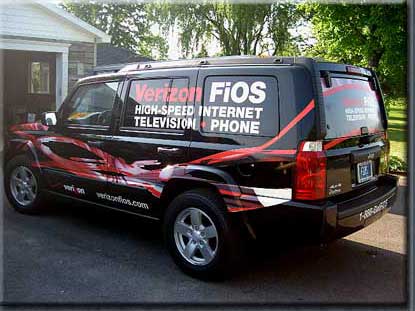
The 500 channel universe has arrived for around 23,000 households around the state capital as Verizon officially unveiled its FiOS television service last week.

The company added television to its broadband service offering after securing video franchise agreements in suburban Bethlehem, Colonie, Guilderland, and Scotia.  It also expects to win approval to provide television service to the nearby city of Schenectady and the town of Colonie shortly.

The arrival of Verizon’s triple-play package begins with a $100 monthly promotional package (go to Verizon’s FiOS website and the online price can be lower) including phone, Internet, and television service for a year, rivaling a similar $99 promotion on offer for new customers from incumbent Time Warner Cable. But Verizon delivers faster broadband service and more HD channels than its cable rival, and will deliver up to 535 channels to subscribers — 130 in High Definition.

“Consumers and small businesses in these communities at long last have a better choice for TV,” said Tracey Edwards, president and general manager for Verizon’s Upstate New York region. “We’ve had great success in many other parts of the state. Now it’s time to bring FiOS TV to this part of northeastern New York and provide customers in the region a choice that is truly different from the cable TV company.”

Verizon officials also claimed the introduction of FiOS TV would result in lower prices for local residents, a claim that does not necessarily hold up when examining the rates for each company.  Both deliver triple-play promotions and retention offers that come within a few dollars of each other.

Time Warner Cable says Verizon’s service does not come with the same local commitment to the region the cable operator has provided with its local news channel YNN, and features that allow customers to start programs over from the beginning or watch live streams of 32 channels on the company’s iPad application.

But the fact a new choice is now available has delighted some of our readers.

Jeff in Guilderland says a number of Albany residents were upset when Time Warner Cable unveiled its $99 promotion which turned out not to be available to existing customers.

“They only give the best prices to their least loyal customers who are ready to cancel their service or sign up as new customers,” Jeff says.  “We’ve had cable from these guys for over a decade and when we sought a temporary price break, they wanted to give us a $20 credit — thanks for nothing.”

Now Jeff says with Verizon around, Time Warner better offer more than that.

Verizon put expansion of its Verizon FiOS fiber-to-the-home service on hold more than a year ago, stopping new cities from winning new options made possible with fiber optics.  But Verizon is still continuing to meet its commitments to communities where the network has already broken ground.  Where communities have not given Verizon video franchise agreements, Verizon markets its broadband and phone options.  But delivering video completes the triple play package many consumers want.

[flv width=”640″ height=”500″]http://www.phillipdampier.com/video/Albany Gets FiOS TV 3-26-11.flv[/flv]

WNYT and WXXA-TV reports some Albany-area residents can now get FiOS TV, showing Verizon is still expanding its FiOS product line in areas where fiber has already been laid.  (3 minutes)

Verizon Does the Right Thing and Will Not Cap Its DSL or FiOS Customers

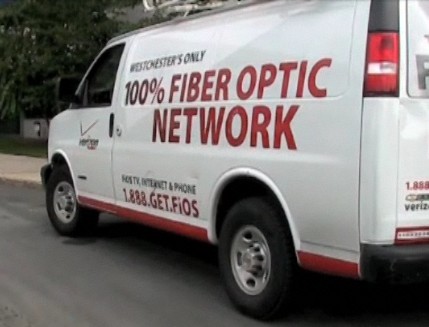
Verizon delivers fiber-to-the-home service over its FiOS network.

Verizon Communications says it will not run an Internet Overcharging scheme on its wired broadband customers.

The company that knows about investment and upgrading their networks like few others — bringing true, fiber-to-the-home FiOS service to customers across several states — says it has no need to impose usage caps or metered billing on its wired broadband customers.

“This is something we have looked at in the past, and we’ll continue to evaluate what’s best to ensure our customers get the best broadband service for the best value,” Verizon spokesman Bill Kula told Broadband Reports. “We have no plans to implement usage-based pricing for our fixed broadband customers,” Kula says.

Verizon’s announcement provides additional ammunition against AT&T’s unjustified 150-250GB usage caps over claims it faces congestion issues.

The company doesn’t share AT&T’s “congestion problem,” probably for two reasons:

  1. Because it does not exist.
  2. Verizon has upgraded their network to keep up with demand, winning new customers with their top-rated FiOS fiber to the home network.

Karl Bode sees right through AT&T’s arguments:

If you believe AT&T’s claim that the new pricing is about congestion and not about protecting U-Verse revenues from a Internet video — and many don’t — Verizon’s decision to spend $24 billion on upgrading more than half of their network to fiber to the home would make a Verizon decision to follow suit a very tough sell. AT&T has previously stated their last-mile customers see little to no congestion, and Verizon’s seeing even less.

Kula notes Verizon doesn’t oppose the use of usage caps, but their TOS allows them to handle any users they deem particularly gluttonous, and even then — Verizon makes it clear to us they’ve never disconnected one of these users. “Verizon terms of service were written in a way to allow us to terminate users if they violate our acceptable use policy, and excessive use ‘could’ constitute a violation,” says Kula. “However, we’ve not disconnected any consumer, small business or mass market customers to date.”

Stop the Cap! has never objected to terms and conditions which provide an escape clause for a provider that encounters a customer creating significant problems on its network, such as e-mail spamming, illegal activity, or causing serious problems for other users.  These terms and conditions are a part of every Acceptable Use Policy, and responsible providers don’t activate those provisions on a whim.

It’s too bad some AT&T customers can’t choose an alternative to a company who promised great things with U-verse, and then put unjustified limits on customer enjoyment.

Frontier Says Its New $500 Installation Fee Prices Customers “In,” Even As They Flee to Comcast

Phillip Dampier March 9, 2011 Comcast/Xfinity, Competition, Frontier Comments Off on Frontier Says Its New $500 Installation Fee Prices Customers “In,” Even As They Flee to Comcast

Stop the Cap! has learned Comcast has had to beef up its call center staff to process orders for new and returning customers fleeing Frontier Communication’s rate increases for its fiber optic FiOS service, acquired from Verizon as part of a sale of landlines.

A source inside Comcast tells us the company has been busy welcoming back many customers in the Pacific Northwest who are canceling their Frontier FiOS service after learning about $30 monthly rate hikes for its fiber television service.

“We are adding call positions, diverting some orders to other customer service centers, and trying to accommodate a  jam-packed schedule of upcoming service installations all over the region as Frontier customers’ contracts expire,” our source tells us.

Frontier officially introduced its $500 installation fee Monday which many would-be customers consider absurd.

“I couldn’t believe reports were true about the installation price, so I called Frontier myself and even the customer service agent was incredulous over it,” Cate writes from his home in Oregon.  “We were actually both laughing about how ludicrous a $500 installation fee was for cable service.”

Cate tells us Frontier’s customer service representative admitted the company wasn’t expecting much new business with a steep entry fee like that.

“What it looks like to me is that they’re trying to price people out,” Newberg City Manager Dan Danicic told the Newberg Graphic.

Steven Crosby, senior vice president for Frontier never misses an opportunity to put a positive spin on a negative story.  He told the newspaper — to the contrary — the all-new $500 installation fee will help “price Frontier in,” noting each hookup costs the company $800.

Comcast, on the other hand, normally installs service for $28-40, but our source tells us the company often waives the installation fee upon request.  DirecTV and Dish also offer free installation with a contract.

“Sitting inside Comcast, everyone is talking about Frontier’s bungling and wondering whether this company is purposely trying to drive themselves out of business,” says our source.  “Even if you are not a FiOS customer, would you do business with a company that raises rates 40 percent or more and instantly raises installation fees to $500?  What will they do to their other customers?”

“Frontier: Not a winner.  Duh.”

Frontier Does Damage Control In Light of Reports It Wants to Exit TV Business

Phillip Dampier March 7, 2011 Competition, Consumer News, Frontier, Online Video, Public Policy & Gov't Comments Off on Frontier Does Damage Control In Light of Reports It Wants to Exit TV Business

Frontier attempts to dig themselves out.

The Oregonian has been covering the plight of Frontier customers in the Pacific Northwest who signed up for Verizon’s fiber to the home service — FiOS — and are now facing down the new owners who want to raise the price by $30 a month.

Frontier has done itself no favors in the media with an ongoing series of reports of service problems, rate increases, and now the latest signs it wants out of the television delivery business altogether.

In a letter dated March 4th, Steven Crosby — senior vice president of government and regulatory affairs, told the city administrator in Dundee, Ore., Frontier FiOS TV has been a flop.

Since Frontier Communications Northwest, Inc., acquired Verizon’s operations on July 1, 2010, it has built on Verizon’s prior actions and continued to offer a robust and aggressively priced video product to attract Dundee subscribers.  Despite these efforts, however, customer growth has been disappointing and stagnant and Frontier has not achieved a commercially reasonable level of subscriber penetration.

Frontier also admits it has been under-pricing its video service to stay competitive and attract new customers, but those days are over.  The company earlier announced its intention to raise rates by $30 a month for its standard cable TV service, making it more costly than its nearest competitor, Comcast.

Frontier recognizes the impact its enormous rate increase will have on its subscriber base, soberly noting it is likely to “further depress subscriber penetration.”

With this in mind, Frontier is exercising its right under the franchise agreement it has in Dundee to provide notice it intends to terminate its video service at a future date, after providing subscribers with 90 days advance notification.

Similar letters went to city administrators in Newberg, McMinnville, and Wilsonville.  City officials had no reservations about interpreting the meaning of the letters and plans to implement a $500 installation fee for future FiOS TV installations.

“Looking at it, you expect there will be no new customers,” Dan Danicic, Newberg’s city manager told The Oregonian. “Getting this opt-out notice is not a huge surprise to me, but we are disappointed.”

Frontier's rate increases are driving many consumers back to Comcast for their television service.

Sources tell Stop the Cap! there was considerable debate inside Frontier’s offices last week on how to implement directives from executives to shut down FiOS installations as quickly as possible.  Initial efforts to quietly raise the installation price — without giving subscribers’ advance notice — were on track until Frontier’s legal department quashed the plan.  Concerns were also raised inside the customer support units responsible for taking orders and handling customer billing inquiries over how to deal with the inevitable subscriber backlash when the first bills arrived in the mail.

“Frontier hates dealing with FiOS and they can’t wait to be rid of it — they claim that the product is at least 10 years away from really returning any investment from its original deployment,” a well-placed source told Stop the Cap! late last week.

Frontier FiOS is an anomaly for the rural phone company, which delivers the vast majority of its broadband customers DSL service over copper wire phone lines, usually at speeds approaching 3Mbps.  Frontier FiOS “came along with the deal,” one Indiana Frontier official told local media there in response to rate hikes there.

Still, media reports that the company plans to ditch its TV customers created a small panic inside Frontier by the weekend.

“Getting customers switched over to satellite TV service in an orderly manner was the original plan, but reports the company was abandoning the service altogether risks we’ll lose our customers to Comcast, and many will take their phone lines to the cable company, too,” a second source informed Stop the Cap! this morning.  “We were told ‘orderly transition’ over and over again, so reassuring customers is today’s top priority.”
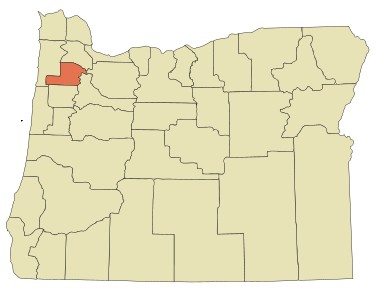
Dundee, Oregon

Evidence of this campaign was not difficult to find over the weekend, as The Oregonian amended its original story claiming Frontier does not have immediate plans to exit the video business.

Crosby told the newspaper: “Our actual implementation decisions will be business driven. At this time, there is no change in our FiOS video offerings or in our FiOS video service delivery to our customers. And this filing does not affect our FiOS high speed service.”

Stephanie Schifano, identifying herself as an employee of Frontier Communications, attempted to spin the letters sent to several Oregon communities as a simple matter of business and not a foreshadowed abandonment of television service.

“Frontier is exercising our right under the franchise agreements to terminate the franchises. The right to terminate soon expires, and if Frontier didn’t give notice now we may have been required to provide this service, with these franchises, for another 12 years. This notice offers Frontier the flexibility to continue to analyze the FiOS Video/TV business and continue to service our customers,” Schifano wrote.

But both of our sources well-familiar with Frontier FiOS say the company’s actions speak louder than its words.

“When you increase the installation fee to $500 and raise your prices nearly $30 higher than Comcast, you would be crazy not to interpret the message Frontier is trying to send — go get your satellite dish from us and get off FiOS,” our second source told us.

Telecompetitor read into some of the company’s comments about utilizing the acquired fiber network in a new way, perhaps for over-the-top Internet video content.

“That’s wishful thinking,” our second source says.  “Frontier’s only online video efforts surround its rebranded Hulu service, relabeled myfitv.”

Frontier's online video platform serves up mostly repurposed Hulu content.

“The company has no plans I am aware of for a grand video strategy — FiOS covers far too small a service area and there is no way Frontier will spend more money to increase that fiber footprint,” our source adds. “Frontier wants to meet its general obligations made as part of its deal with state regulators when it bought Verizon FiOS with the landline deal, and little else.”

Frontier will continue to offer FiOS to broadband customers for the time being, regardless of what it does with its video package.

“If it’s already there and not costing a lot of money to maintain for broadband, why not?” our source says.

One direct sales contractor for competitor Comcast suspects that train may have already left the station.

Calling Frontier’s customer service operation “a circus,” the salesman says Comcast is benefiting from Frontier’s ball-dropping.

“Many Frontier customers are unhappy with the customer service side while stating they do enjoy their phone, Internet, and video services provided by the FiOS network, but lose the business on the practically non-existing customer service side.”

The contractor says he hears stories from Frontier customers all day who are fed up with the frustration of extended hold times, inaccurate or missing bills, online account access problems, excessive call transfers to deal with service issues and high fees.

For regulators, the aggravation is much the same.

After being promised by CEO Maggie Wilderotter that Frontier would be an aggressive competitor in a barely competitive marketplace, Frontier has raised rates by 46 percent, irritated their customers with customer service problems and outages, and now has served notice it intends to flee the TV business at an undetermined point in the future.


Search This Site:

Contributions:

Recent Comments:

Your Account:

Stop the Cap!