Home » FiOS » Recent Articles:

New York’s Digital Phone Legislative Silliness: Deregulated Providers Want… Deregulation

Phillip Dampier March 28, 2012 Competition, Consumer News, Frontier, Public Policy & Gov't, Rural Broadband, Verizon Comments Off on New York’s Digital Phone Legislative Silliness: Deregulated Providers Want… Deregulation

Cuomo

New York’s telecommunications providers are up in arms over Gov. Andrew Cuomo’s decision to yank permanent deregulation for the “digital phone” industry (otherwise known as “Voice Over IP/VoIP”) from his budget, even though the phone service is already deregulated in New York.

Now Verizon Communications and Time Warner Cable are claiming that without the deregulation they already enjoy, innovation, investment, and competition will be stifled.

“Verizon is very disappointed that New York’s lawmakers, who want the public to believe that New York is open for business, will not be acting on this important measure to modernize the state’s outdated telecommunications laws in this year’s budget,” Verizon spokesman John Bonomo told the Albany Times-Union.

“It’s about new technologies, it’s about new services,” echoed Rory Whelan, regional vice president of government relations for Time Warner Cable. “We want New York to be at the forefront of where we roll out our new products and services.”

That notion has left consumer groups and telecommunications unions scratching their heads.

“They are saying that this is going to open the flood gates to more investment,” said Bob Master, political director for one chapter of the Communications Workers of America, which represents Verizon workers. “It’s ridiculous.”

Master says Verizon has been abandoning and ignoring their landline network for years, preferring to invest in Verizon Wireless and its limited FiOS fiber-to-the-home service which is available in only selected areas of the state.

New York’s Public Service Commission has largely not regulated competing phone service since Time Warner Cable first introduced the service as an experiment in Rochester.  As part of then-Rochester Telephone Corporation’s (now Frontier Communications) “Open Market” Plan, competing telephone companies could offer landline service in the company’s service area, so long as Rochester Telephone received the same deregulation benefits.  Only the cable company showed serious interest in providing home phone service, which it first delivered using traditional digital phone switches phone companies like Verizon and Rochester Telephone use.  Time Warner later abandoned that service for a VoIP alternative it branded as “digital phone.”
Time Warner’s “digital phone,” as well as Verizon’s own VoIP service sold with FiOS, have co-existed regulation-free.  Consumer advocates suspect the push to deregulate could eventually benefit Verizon more than cable operators, because it gives the phone company the right to question why any of its telephone services are regulated.  Verizon’s FiOS fiber-based phone lines do not operate on the same network its still-regulated landlines do.  Verizon, along with all traditional phone companies in New York, are subject to “universal service” guidelines which assure even the most rural New Yorkers have access to reliable telephone service.

But Verizon, like most traditional phone companies, sees substantial investment in “modernizing” legacy copper-based networks as an anachronism, especially as they continue to lose customers switching to cheaper cable providers or wireless phones.  The company recently declared its fiber optic replacement network, FiOS, at the end of its expansion phase.  That leaves the majority of New Yorkers with a copper-based telephone network companies only invest enough in to keep functioning.
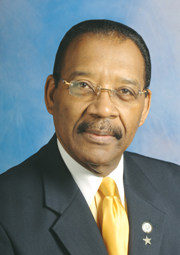
Diaz

Bronx Borough President Ruben Diaz, Jr., joined many New York Assembly Democrats in strong opposition to the bill, which Diaz thinks undercuts New York consumers:

If this proposal were to become law, all consumers would lose out. For starters, customers would not be able to bring service complaints to the Public Service Commission, as they currently can with traditional service. Additionally, there would be no way for the state to set standards for quality or for service in underserved regions — meaning that customers could get stuck with exorbitantly high rates or be unable to obtain service at all in some areas of the state.

Verizon FiOS, one of the main options for VoIP coverage, has now been installed in many regions of the state, including most of downstate. However, Verizon has chosen not offer the service in upstate cities like Albany, Binghamton, Buffalo, Rochester, Syracuse and Utica. The result is both a virtual monopoly for the cable companies in those areas and another blow to lower-income working families who live in cities. That’s precisely why the state should be able to guarantee common sense regulations for VoIP service.

The problems with deregulating VoIP service are multifold. While traditional phone companies pay into a fund that supports “lifeline” phone access for elderly and disadvantaged New Yorkers, VoIP providers would not have to. We do not have to guess at how things would look if the state gives up its right to regulate internet phone service — we can just look at the states where traditional land line service has been deregulated. According to a recent survey of 20 states that have seen land line deregulation, 17 of those states have seen rate increases. We simply cannot afford that, particularly when our fragile national recovery is just beginning to take hold.

Verizon appears undeterred by the governor’s decision to pull the deregulation measure from consideration in his budget measure.  Bills to deregulate continue to float through the Republican-controlled Senate and Democratic-controlled Assembly, but New York’s legislature is notoriously indecisive and slow to act.  Time Warner’s Whelan believes the best chances for the deregulatory measure will be in the GOP-controlled Senate where a similar bill passed last year.  Verizon says it will continue to push for the bill in both chambers.

“We intend to continue pushing for this important measure, and for other measures that will benefit the state’s consumers and businesses to keep up with technological change and help the state thrive and succeed,” Bonomo said.

No Wireless Spectrum Swap Until We See FiOS, Say Cities Waiting for Verizon Fiber Upgrade

Cities left out of Verizon Communications’ fiber to the home upgrade FiOS are telling the Federal Communications Commission to reject any wireless spectrum swap between the phone company and the nation’s largest cable operators unless Verizon commits to getting the fiber upgrade done in their cities.

Coordinated by the Communications Workers of America, which represents many Verizon workers, elected officials and community groups in Boston, Baltimore, and the upstate New York cities of Albany, Syracuse, and Buffalo collectively blasted the proposed swap as bad news for consumers.  On a city-by-city basis, they each filed comments with the FCC opposing the deal unless the Commission mandates Verizon complete fiber upgrades as a condition for the approval of the spectrum swap.

Buffalo’s argument:

For the past few years, we have watched as Verizon Communications has built its all fiber FiOS network in 10 suburban communities that ring our city. In those communities, we have seen what happens when Time Warner Cable, our local cable monopoly, competes head-on with Verizon’s FiOS to provide video and broadband services. Consumers benefit from competitive choice; small businesses benefit from truly high-speed connections to suppliers and customers; schools and hospitals benefit from education and health-related applications; communications workers benefit from the jobs building, maintaining, and servicing networks; and families and communities benefit from the 21st century jobs and expanded tax base.

But the residents and small business owners in Buffalo have not been able to reap these benefits. To date, Verizon has chosen not to deploy its all-fiber FiOS network to the more densely-populated city of Buffalo. The proposed Verizon Wireless/cable company partnership would cement this digital divide and foreclose the possibility of effective high-speed broadband and video competition in our city. Verizon Wireless is a subsidiary of Verizon Communications. We are deeply concerned that as a result of the new joint marketing agreement, Verizon will no longer have the incentive to invest in an all-fiber network that competes with Verizon Wireless’ new partner, the cable company. Therefore, to promote high-speed broadband investment and video competition, especially in heavily minority and lower-income areas like the city of Buffalo, the FCC should include as a condition for approval of this Transaction a requirement that Verizon continue to invest in and build-out its FiOS network to currently unserved areas that are inside its traditional telephone service area footprint, including the city of Buffalo and the surrounding areas.

Cole

In response, Verizon confirmed it never had any intention of wiring any of those cities for fiber service.  Multichannel News reports:

But a Verizon exec points out that those cities are all areas that were not scheduled to get FiOS, whether or not the cable spectrum deal goes through. As Verizon has pointed out, the company decided back in 2010 that it was going to build out the franchises it had already secured and target those 18 million customers in and around New York City, Washington, D.C., and Philadelphia, rather than spend any more of its shareholders money in a wider buildout. The above cities were not in those franchise areas.

Baltimore City Council member William H. Cole accused Verizon of leaving the city of Baltimore behind in a letter he addressed to the Commission this week:

High-speed, fiber-optic networks are vital for economic competitiveness. Currently, Verizon’s FiOS is the only all fiber-optic commercially-available network for businesses and households. Other advanced industrialized nations have already deployed fiber-optic networks on a large-scale; they recognize that high-speed fiber is the competitive infrastructure of the 21 st century. Much of the suburban areas outside of Baltimore already have FiOS. The City of Baltimore will never get a fiber-optic network if this deal is approved, which concerns me greatly. I am not willing to see Baltimore permanently relegated to the wrong side of the digital divide.

Verizilla: Bad for Competition, Bad for Consumers, Bad for You, Says CWA

Phillip Dampier March 27, 2012 Broadband Speed, Competition, Consumer News, Public Policy & Gov't, Verizon, Video, Wireless Broadband Comments Off on Verizilla: Bad for Competition, Bad for Consumers, Bad for You, Says CWA

Verizilla

The Communications Workers of America has a new, decidedly low-budget video decrying a spectrum swap between America’s largest cable companies and Verizon Communications that will leave Verizon Wireless stores pitching cable television service from one of Verizon’s cable company competitors.

To the CWA, this is nothing less than the birth of Verizilla, a new monster of a telecommunications company that has capitulated on competing with Big Cable and will instead devour the wireless communications marketplace for itself.  The CWA interest is obvious: many of its employees are responsible for constructing and maintaining Verizon’s now-stalled FiOS fiber to the home network.

From the CWA:

The deal, struck behind the closed doors of America’s corporate boardrooms, poses a threat to consumers and workers. If it goes through, it will be the death knell for competition between cable and telecom companies. Verizon Wireless, Time Warner, Comcast, and other cable companies will become a giant, unregulated quasi-monopoly. Verizon will have no incentive to challenge cable by building FiOS into new areas — meaning less competition, consumer choice, and higher prices for consumers.

Less FiOS also means fewer jobs building, maintaining, servicing, and installing the network. This deal will create a corporate behemoth that will use exclusive quad-play market power to shrink its future workforce.

Worst of all, Verizon Wireless and the cable companies are refusing to come clean about the details of the deal. Even as the FCC and Department of Justice review it, we still don’t know what it means for consumers or workers.

The CWA has so far collected more than 135,000 signatures on its petition opposing the current form of the deal. 

[flv width=”640″ height=”380″]http://www.phillipdampier.com/video/Verizilla.flv[/flv]

America, say hello to Verizilla, wreaking reduced investment havoc on Verizon service areas across the northeastern United States.  (2 minutes)

Call to Action: Tell the FCC Non-Compete Peace Treaties Are No Good for You

When the nation’s largest phone and cable companies get together, it’s never good news for consumers.

Verizon has struck a backroom deal with a cartel of cable companies — including Comcast, Time Warner Cable and Cox Communications — to stop competing against one another and instead divvy up the spoils of the growing mobile market.  And they’re keeping mum on the details of this arrangement.

The cable industry wants to sell Verizon the mobile phone spectrum it originally considered using to give Verizon Wireless a little competition.  In return, Verizon Wireless is going to start selling you Comcast/Time Warner/Cox cable TV service.  It’s all great for them, but if you were waiting for Verizon FiOS or a better deal for your cell phone, these phone and cable companies want to make sure you’ll wait a long… LONG time.

They claim they are not getting together in an anti-competition pact.  They are just getting differently apart. It’s like divorcing someone by agreeing to move in with them.

It’s a bad marriage for consumers and now is the time for the Federal Communications Commission to deliver some parental supervision.

Stop the Cap! joins Free Press in calling on consumers to tell the FCC to expose Verizon’s backroom shenanigans.

Tell the Commission you aren’t happy with secret handshake deals that hand over the public airwaves to Verizon Wireless to consolidate its market concentration.

Even worse, you don’t want America’s largest competitor for big cable TV — telco-delivered broadband, TV, and phone service — eliminated so the phone companies can pitch you overpriced, non-competitive cable service from their new best friends.

What part of “monopoly cartel” doesn’t the FCC understand?  Tell them you want these deals stopped and you demand real competition, not more of the same.

Netflix: “Cost of Providing 1GB of Data is Less Than One Cent, and Falling”

Netflix continues to step up its attacks on providers who implement Internet Overcharging schemes on their wired broadband customers.

That concern is understandable as Netflix increasingly transitions to broadband streaming instead of mailing DVD’s to customers.

Getting in the way are five of the nation’s seven largest broadband providers, all imposing limits on customers just as they discover they might be able to do without cable television.

Netflix’s streamed HD shows now consume around 2GB per hour, according to Netflix general counsel David Hyman.  That can eat through usage allowances quickly.  Hyman penned an op-ed in the Wall Street Journal last year blasting the practices of usage caps and consumption billing.

Hyman

“Wireline bandwidth is an almost unlimited resource due to advances in Internet architecture,” Hyman wrote. “The marginal cost of providing an extra gigabyte of data—enough to deliver one episode of 30 Rock from Netflix—is less than one cent, and falling.”

That doesn’t seem to matter much to Comcast, CenturyLink, Charter Communications, and Cox.  All four providers have introduced hard usage limits on customers — a usage cap.  Exceeding it gives any of those providers the right to cut off your broadband service.  AT&T, always one to see a financial angle, charges for excess use of their DSL and U-verse service — $10 for every 50GB. Time Warner Cable recently announced its own experimental “optional” usage pricing package for very light users who consume fewer than 5GB per month.  It will slap overlimit fees on those participating customers who break through the 5GB ceiling at a rate of $1/GB, an enormous markup.

Providers with strict caps usually argue they come as a result of their own network’s capacity problems.  Cable operators who do not consistently manage their network traffic can experience traffic clogs by overselling service without upgrading capacity to sustain user demand.  But providers like Comcast, Cox, and Charter resolved those capacity problems with upgrades to DOCSIS 3 technology, which offer operators an exponentially bigger pipeline for Internet traffic.

Although Comcast promised to regularly review and adjust usage caps since implementing them four years ago, the nation’s largest cable operator has thus far seen no need to raise them.

“We feel that that is an extraordinarily large amount of data,” says Comcast’s Charlie Davis. “That limit is there to make sure we provide a great online experience for every single paying customer.”

Wall Street bankers have closely monitored the industry’s early results from Internet Overcharging, and have been encouraged, so long as operators implement it carefully.

Credit Suisse in a 2011 report to its investor clients suggested the key for successful usage-based pricing is to introduce it slowly and keep “sticker shock to a minimum in the early days” to reduce backlash by consumers and lawmakers.

Once established, the sky is the limit.

Netflix itself is also battling an Internet Overcharging scheme it faces — double-dipping by cable operators like Comcast.  In addition to the fees Comcast collects from customers for its broadband service, the cable operator also wants to be paid directly by Netflix to allow the movie service’s traffic on its network.

That’s an Internet toll booth, charges Netflix and consumer groups.  It’s also uncompetitive, says Hyman.

This month Comcast unveiled its own movie and TV show streaming service — Xfinity Streampix — from which, unsurprisingly, the cable company has not sought extra traffic payments from itself.

Opposed to Internet Overcharging

Three providers which don’t cap customers don’t see a reason to try.

Verizon Communications says its fiber network FiOS has plenty of capacity and has no plans to restrict customers’ enjoyment of the service.  In 2009, Cablevision’s Jim Blackley told one panel discussion usage caps are not in the cards.

“We don’t want customers to think about byte caps so that’s not on our horizon,” Blackley said. “We literally don’t want consumers to think about how they’re consuming high-speed services. It’s a pretty powerful drug and we want people to use more and more of it.”

California’s Sonic.net Inc., goes even further.  Its CEO, Dane Jasper, believes the Federal Communications Commission needs to be more assertive about protecting America’s broadband revolution and the customers that depend on the service.

The fact different operators can take radically different positions on the subject, despite running similar networks, suggests technical necessity is not the reason providers are implementing usage restrictions and extra fees on customers.

As Hyman writes:

Bandwidth caps with fees piled on top are a lousy way to manage traffic. All of the costs of supplying residential broadband are for supporting peak usage. Bandwidth consumed off-peak is completely free. If Internet service providers really wanted to manage traffic efficiently, they would limit speeds at peak times. If their goal is instead to increase revenues or lessen competition, getting consumers to pay per gigabyte is an excellent strategy.

Consumer access to unlimited bandwidth is good for society. It fosters innovation, drives commerce, and advances political and social discourse. Given that bandwidth is cheap and plentiful and will only grow more so with time, there is no good reason for bandwidth caps and fees to take root.

Consumers and regulators need to take heed of what is happening and avoid winding up like the proverbial frog in a pot of boiling water. It’s time to jump before it’s too late.

Search This Site:

Contributions:

Recent Comments:

Your Account:

Stop the Cap!