Home » FiOS » Recent Articles:

Verizon Ending DSL Service in FiOS Fiber-Wired Service Areas

Phillip Dampier April 19, 2012 Broadband Speed, Competition, Consumer News, Verizon 5 Comments

Just over a week after Verizon Communications announced it would stop selling DSL service to customers without landline voice telephone service, the company today confirmed it plans to stop selling DSL to customers who live in an area also served by the company’s fiber optic FiOS network.

New customers looking for broadband from Verizon will have to sign up for FiOS to get it.

The announcement came as part of a quarterly conference call with Wall Street investors.

Some consumers looking for the cheapest Internet access packages have gotten them from the phone company, often years earlier, and are grandfathered in at those prices.  Verizon says it does not intend to disconnect existing DSL customers, who can keep the service indefinitely, but will not sell the slower broadband service to new or moving customers.

No exact timing for the new policy to take effect was given.

Verizon’s broadband success story has been with its fiber optic network, which continues to add customers.  The same cannot be said of their DSL service, which continues to lose business to Verizon’s cable competitors, especially in areas where FiOS remains unavailable.  FiOS was designed to protect Verizon’s landline business and it seems to be doing exactly that.  At least 63% of Verizon’s landline-associated revenue now comes from its fiber optic service.

Verizon’s executives have made it clear change is coming to the traditional landline business.  The company has not said what it intends to do with DSL customers in non-FiOS areas but did announce they would decommission pay telephones and discontinue long distance calling cards in the future.

Fort Wayne Prefers Comcast Over Frontier Communications FiOS

Phillip Dampier April 17, 2012 Comcast/Xfinity, Competition, Frontier 2 Comments

A fiber optic network may be only as good as the marketing that sells it.

If that is true, Fort Wayne residents have made their choice, and they prefer Comcast Cable over Frontier Communications FiOS.

City officials released figures this week showing Comcast has a clear lead in the Indiana city.  Both companies pay the city franchise fees to do business in Fort Wayne, and Comcast paid almost $435,000, almost double Frontier Communications’ $262,556.

Ft. Wayne, Indiana

Frontier assumed control of the fiber optics network when it purchased the local assets of Verizon Communications.  But Frontier quickly found that volume pricing for video programming gave the old owner a decided advantage.  Frontier found programming prices for its comparatively smaller footprint far higher than what Verizon paid, and quickly began encouraging its fiber video customers switch to DirecTV satellite service.  Comcast responded with a billboard campaign that suggested Frontier was getting out of the fiber business, and encouraged customers to come back to cable.

Some did, but Frontier says it remains committed to its inherited fiber network, even though it lost over 10,000 customers last year.

“We’ve completed our evaluation of our business model and pricing,” Frontier’s Matt Kelley told the Journal-Gazette. “We’re offering an attractive bundle price. Customers are recognizing the quality and value, and that it’s a very compelling service.”

Frontier does appear to be serious about maintaining the broadband and phone service attached to its FiOS product, but has been looking for ways to bring down the wholesale cost of cable television programming and so far has shown no interest in expanding it.

“Our focus is not on FiOS video deployment,” Frontier CEO Maggie Wilderotter told investors in 2010. “The costs to install, set up and market new FiOS video customers are very expensive and, in our view, uneconomical.”

That’s less of a problem for Comcast, the nation’s largest cable operator.  It enjoys volume discounts few other providers can negotiate.  Comcast always had a built-in advantage associated with its incumbency.  Getting customers to switch providers isn’t easy.  But despite the presence of an advanced fiber optic network operated by the competition, Comcast has held on to customers.

“Our customers that are staying with us and joining us are enjoying our services, especially since the introduction of our Xfinity home security management system,” said Comcast’s Mary Beth Halprin, not missing an opportunity to pitch the cable company’s latest new product line. “The home security service costs $39.95 a month and provides around-the-clock monitoring and allows customers to watch live-streaming video from wireless cameras using an iPhone or iPad.”

Verizon Will Cease Selling Standalone DSL Service May 6th; Voice With DSL Only, Please

Verizon Communications will stop selling DSL broadband-only service to its customers May 6th in what the company is calling an effort to control costs “enabling us to continue providing competitively priced services to existing and new customers.”

Broadband Reports readers first reported receiving written notice of Verizon’s plans to discard “naked DSL” service, although existing customers who don’t move or make any changes to their account will be able to keep the broadband-only service for now.

Verizon provides the details:

Beginning May 6, 2012, we will no longer offer High Speed Internet without local voice service on the same account.

What does this mean for you?

  • If you currently have High Speed Internet without local voice service on the same account, there is no action required on your part to continue enjoying your internet service. You will not experience any disruption of service.
  • Prior to May 6, 2012, you can still make speed upgrades or downgrades to your existing service.
  • Prior to May 6, 2012, you can receive bundle discounts by adding DIRECTV service or Verizon Wireless service to your current internet service.

What this means if you change or disconnect your High Speed Internet Service as of May 6, 2012 or after:

  • You can make changes to and retain your Verizon High Speed Internet Service on or after the above date, by adding Verizon’s local voice service to the same account.
  • If you are moving your service from one location to another on or after the above date, you may subscribe to internet service at your new location if you also subscribe to Verizon’s local voice service on the same account.
  • If you choose to subscribe to additional Verizon services you could be eligible for a bundled discount when you also subscribe to Verizon’s local voice service on the same account.

There is speculation Verizon is eliminating its DSL-only service in an effort to boost revenue and push subscribers in FiOS-enabled areas to Verizon’s fiber optic network.  A decade earlier, many phone companies fought to avoid selling “broadband-only” DSL service without a voice landline because of revenue losses.  Landline customers continue to drop voice service from traditional phone companies at an alarming rate — choosing competing cable or Voice over IP service or a cell phone.  By requiring voice service, Verizon can boost average revenue from each customer, whether those customers want the service or not.

Customers who currently subscribe to broadband-only DSL service from Verizon are advised that virtually any account change of significance can disqualify them from continuing with the service.  That includes address changes and speed adjustments.  Stop the Cap! recommends customers make any changes prior to May 6th.

Large sections of Verizon’s service area are not FiOS-eligible,  so current DSL customers with no other broadband choices may find themselves stuck with adding voice service. Verizon sells Basic Home Telephone Service with no local calling allowance at prices ranging from $7 in some communities to $16 or higher in others, excluding the FCC-mandated line fee, which runs an extra $6.50 a month.

One thing Verizon’s higher bills will accomplish is making Verizon Wireless’ new 4G LTE Home Fusion wireless broadband service look slightly more price competitive.  If a Verizon landline customer has to pay for both voice and data service, paying $60 a month for 10GB of wireless broadband may not seem that expensive in comparison.

Exclusive: Frontier Communications Has Plans for AT&T U-verse for Landline Customers

Stop the Cap! has learned Frontier Communications is laying the groundwork to upgrade selected areas of its network to deliver fiber-to-the-neighborhood service to some of its customers, perhaps as early as the last quarter of 2012.  Documents obtained by Stop the Cap! indicate the company is negotiating with AT&T to license U-verse technology to deliver the service.

The documents suggest Frontier’s 2011 negotiations with AT&T to resell mobile phone service to Frontier customers have now expanded to include the development of improved broadband at a cost less likely to antagonize Wall Street and the company’s investors.

Sources familiar with Frontier’s operations tell Stop the Cap! although the company will continue to support Verizon-acquired FiOS fiber-to-the-home networks in Indiana and the Pacific Northwest, Frontier plans to rely on less-expensive alternatives for the rest of its service areas and has no plans to further expand the FiOS branded fiber-to-the-home service.

For the most rural customers, Frontier appears ready to partner with HughesNet to resell a satellite broadband product to customers considered unsuitable for basic DSL service.  Frontier will continue to invest and upgrade its traditional 1-3Mbps ADSL service in rural states like West Virginia, Idaho, Nevada, and South Carolina.  The company is also planning to upgrade selected cities to VDSL — a more advanced form of DSL needed to support a U-verse offering.  Perhaps one major target for such an upgrade is Frontier’s largest service area — Rochester, N.Y., where Time Warner Cable has systematically picked off Frontier’s landline customers for years with offers of faster broadband speeds and better package pricing.
Frontier's headquarters in Rochester, N.Y.

Frontier’s insistence customers don’t need faster broadband speeds, a statement made repeatedly by Frontier Rochester general manager Ann Burr, has cost the company market share, especially for high speed Internet service.  Although Frontier claims to offer speeds up to 10Mbps in Rochester, the company only manages to deliver 3Mbps in some of the city’s nearest suburbs.

An upgrade to U-verse, while not as technologically advanced as fiber to the home service, would help Frontier defend its position in more urban markets, especially as cable companies upgrade their own infrastructure to market faster broadband speeds.

AT&T U-verse sells broadband at speeds of 3, 6, 12, 18, and 24Mbps.  Time Warner Cable, Frontier’s largest competitor in upstate New York, sells speeds of 3, 10, 20, 30, and 50Mbps.

Frontier Communications has been preoccupied integrating its newest customers, acquired from Verizon Communications in 2009, with their existing IT and operations systems.  The company recently touted it completed transitioning former Verizon operations, financing, and human resources with its own information technology network nine months ahead of schedule.

Frontier has been reorganizing some of its internal departments in preparation to launch several aggressive initiatives in 2012, especially in its efforts to roll-0ut more competitive broadband — considered a landline lifesaver —  in areas where the company has lost a lot of business to its cable competitors.  The company also intends to spend tens of millions upgrading its regional and national broadband infrastructure and continue extending DSL service to presently unserved rural areas.

Another planned improvement is an overhaul of Frontier’s website, which has brought complaints from customers for delivering inaccurate information, making online bill payment cumbersome, and being difficult to navigate.

Documents obtained by Stop the Cap! also reveal the company has made progress on its plans to pitch AT&T cell phone service to Frontier customers.

Frontier signed a resale agreement with AT&T last fall and is on track to begin limited trial offers of AT&T cell phones, smartphones, and tablets — with full access to AT&T’s network of 29,000 Wi-Fi hotspots during 2012 with a more widespread rollout in 2013.  Frontier plans to offer customers the option of a single bill for Frontier and AT&T services.

Frontier’s Karen Miller told Stop the Cap! the company had no comment about today’s story.

Harrisburg, Buffalo and Beyond to Verizon: Your Customer Service Sucks!

Phillip Dampier April 3, 2012 Consumer News, Verizon, Video 1 Comment

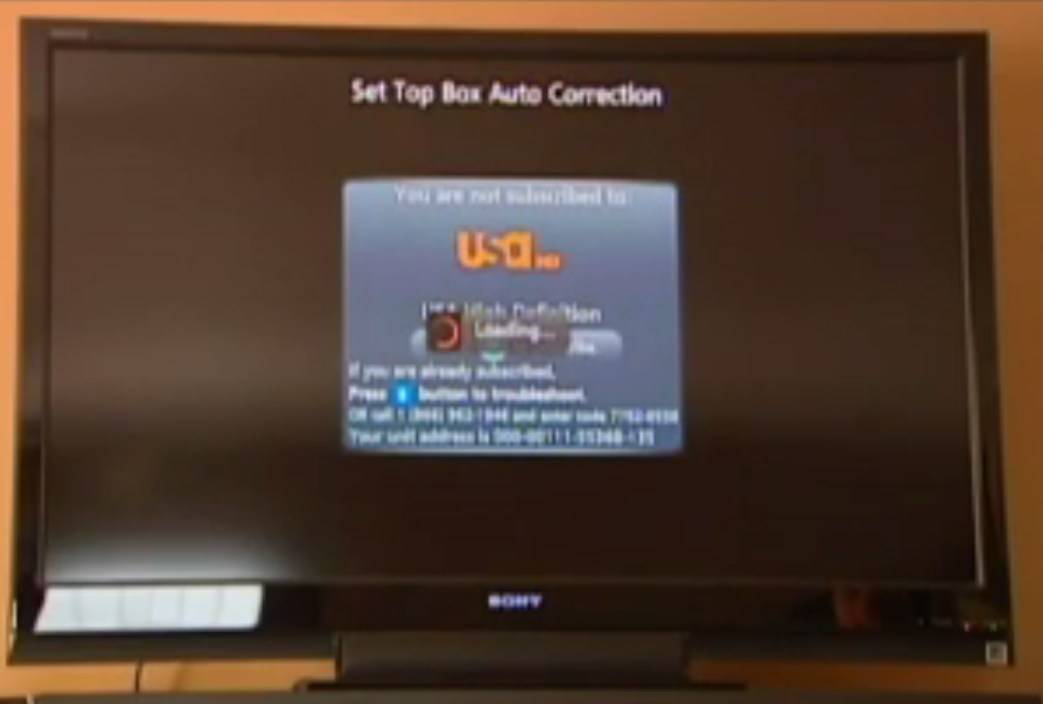
"You are not subscribed... to any channels."

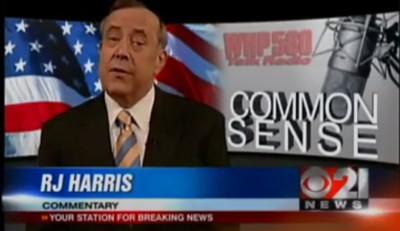
An angry commentator on WHP-TV in Harrisburg summed up his recent misadventures with Verizon’s customer service on the 6pm nightly news:

“Verizon Service Sucks!”

R.J. Harris was just one of thousands of Verizon FiOS customers across the northeast who found themselves without FiOS television service March 23rd, forcing many to miss NCAA basketball tournament games and the season premiere of “Mad Men.”

Because of a software glitch, Verizon’s media hubs in Buffalo and Harrisburg, Pa., shut off cable networks in FiOS cities across the northeast.  Viewers were told they were “not authorized” to receive cable networks, which brought many to the phones to call Verizon for help.

Harris joined enormous call queues that extended one, two, even three hours before most gave up.  Even worse: Verizon’s automated customer service agent provided voice synthesized non-answers regarding the FiOS outage.

“Lots of ‘press one,’ ‘press three,’ blah blah blah and then a talking computer,” Harris recounts. “One day later I tried to use Verizon’s ‘in home agent’ on my PC to get help.  Verizon took almost two hours to update my software before I could use the agent.”

Harris finally ended up in a chat session with “Sandeep,” half a world away.  But Harris found the offshore customer service agent was the first person to actually explain the problem.

“I told Sandeep I wanted management to know how I felt about my customer service experience,” Harris said. “He obliged by getting his boss Muhammad to join the chat. Muhammad — the manager — added one word to the chat: ‘OK.’ That’s it.”

“If you are starting a new company in America and you want the worst customer service policy you could possibly have, model your company after Verizon.”

[flv width=”360″ height=”290″]http://www.phillipdampier.com/video/WHP Harrisburg Common Sense 3-29-12.mp4[/flv]

WHP-TV commentator R.J. Harris is furious at Verizon for its FiOS and customer service failures.  (3 minutes)

Customers around the northeast shared one thing in common: they couldn’t talk to anybody at Verizon about the mishap.

Barbara Adams in Latham, near Albany, found that to be the case.  Adams called the local newspaper for help instead, which they gave her.  A Verizon FiOS customer near Buffalo ended up getting technical support from a friend’s Facebook page.

Harris

Verizon’s technical glitch required customers to follow a fairly complex set of instructions to fix the problem:

  1. With the TV and set-top box on, press Menu on the remote.
  2. On the TV screen scroll to Customer Support, selecting In-Home Agent.
  3. Select STB Auto Correct and follow any directions after that.
  4. The process should take several minutes.

Last week, Verizon began rebooting its home set top boxes remotely to reset them to working order without customer intervention.

But many customers were left without service all weekend long, unable to reach anyone at Verizon to understand why.

The company would not make a definitive statement about providing affected customers with service credits, but if you were affected, we recommend you call or write and ask for yours.

[flv width=”360″ height=”290″]http://www.phillipdampier.com/video/WNLO Buffalo Verizon FiOS Problems 3-27-12.mp4[/flv]

WIVB in Buffalo talked to a local Verizon FiOS customer who found a solution to Verizon’s technical snafu, from a friend on Facebook.  (2 minutes)

Search This Site:

Contributions:

Recent Comments:

Your Account:

Stop the Cap!