Home » FiOS » Recent Articles:

Verizon Seeks to Abandon Landlines on Fire Island; Wireless or You Are On Your Own

Verizon-logoVerizon officials have announced they will abandon their damaged wireline network serving several hundred permanent residents and businesses on Fire Island, replacing voice telephone service with a wireless system called Voice Link critics say will end high-speed Internet service and hurt business.

Fire Island’s landline network has been barely functional since Hurricane Sandy struck last October. Verizon has yet to make significant repairs, leading to ongoing complaints from residents who live on the island year-round. Verizon’s wish to eventually abandon its wired network facilities entirely has created concern among island officials and public safety agencies, noting the summer population on the island swells well into the thousands.

Verizon’s plan may leave businesses unable to process credit card transactions and prevent residents from getting back DSL broadband service they lost during the storm, much less get it in the future. For some, it represents turning the clock back to the days before Internet access.

“Verizon has given us a dial tone basically,” Ocean Beach Mayor James Mallott told Newsday. “But as far as DSL, ATMs, point-of-sale systems, all the rest of that stuff, we’re pretty much on our own.”

Fire Island resident Meg Wallace notes Verizon’s plan has not gone unnoticed by the New York State Public Service Commission. The PSC is currently monitoring the situation and invites comments from interested parties.

“Right now, only Saltaire has filed a formal complaint with them, along with one village’s fire official,” Wallace reports. “It is easy to register a complaint either by filling out a complaint form on their website or calling the NYSPSC directly at (800) 342-3377. They are concerned about public opinion, so the more calls and formal complaints filed by both home and business owners the better.”

Verizon officials have defended their decision, claiming a wireless system is more robust and can withstand severe weather better than a wired network. Another reality impacting the decision is the ongoing loss of landline customers. Verizon, the sole provider on the island, has lost 25 percent of its landline business in the last two years. The company claims 80 percent of Verizon-handled calls to and from the island are through Verizon Wireless.

Fire Island

Fire Island

Verizon told local officials that Cherry Grove and points east still have undamaged fiber optic and copper lines that should be able to work as usual this summer and will be left in place for now. On the west end of the island  from Kismet to Sailor’s Haven, the damage was more significant and Verizon has announced its intention to abandon wired service.

Although west end customers will be scheduled for Voice Link installations starting in April, those on the east side should not get too comfortable with their wired service because Verizon has announced it will not upgrade or make future significant repairs to its wired infrastructure going forward. When the remaining landline facilities eventually fail, affected customers will also be moved to Voice Link.

How It Works
out-of-serviceStarting April 1st, customers calling with service problems on Fire Island will be redirected to special operators trained to pitch customers the Voice Link service as a replacement. These agents will also handle billing adjustments and drop phone package features Voice Link does not support. If the customer only wants phone service, Verizon will schedule an installation date for Voice Link. A technician will arrive with a wall-mounted box about 8″ high that will be installed in the room that provides the best reception from a nearby Verizon Wireless tower. The box will then be connected to your home telephone wiring and a nearby power outlet so existing telephones will work once again. The box has battery backup powered by customer-installed and maintained AA batteries.

If a customer also had broadband service with Verizon, they will not be getting it back. Instead, an agent will attempt to sell the customer a Verizon Wireless mobile broadband package at a significantly higher cost. For example, a 10GB monthly usage plan added to an existing Verizon Wireless account will cost an extra $20 a month for the “Mi-Fi” mobile hotspot device fee and $100 a month for the data package. Verizon DSL in comparison offered unlimited access for $30-50 a month, depending on the plan selected and any promotional discounts.

Verizon said it is currently improving reception of its 4G LTE network in areas worst-affected by storm damage.

Voice Link is a voice-only product. It does not support broadband, telephone modem connections, faxing, alarm monitoring, home medical monitoring, certain communications equipment for the impaired, or other data services including credit card processing. It does support E911, which gives detailed address information to a 911 operator.

Verizon’s Voice Link also creates a problem for some satellite dish customers. Some satellite companies need a landline connection for handling pay-per-view orders. That data connection does not work with Voice Link either.

Your voice line bill will remain the same if you switch to Voice Link. But customers will lose the benefit of oversight from the Public Service Commission if things go wrong. Voice Link, unlike traditional landline service, is an unregulated service not subject to government oversight.

Voice Link: Coming Soon to Your Area?

copper messVerizon’s Voice Link service is by no means intended to be used only on Fire Island.

Voice Link is being trialed in Florida (Project Thunder) as a landline replacement option for use in areas where Verizon’s copper network has deteriorated and the company is unwilling to spend money on fiber upgrades. If successful, Verizon intends to switch a growing number of Verizon customers nationwide outside of FiOS fiber areas to the wireless service when they report trouble with their phone lines.

Local 824 of the International Brotherhood of Electrical Workers provided insight when one of their workers attended a training class and participated in a ride-along with Verizon technicians installing the service in Florida.

John Glye reports that Verizon considers a customer a candidate for Voice Link if they have chronic phone line problems and only want traditional voice telephone service.

Currently, if customers in Florida are persuaded to switch, a migration order is created. If they want to keep the service they have, a traditional copper trouble ticket will be created and repair crews will be dispatched.

The unit is about eight inches tall and has the following connections:

  • 2 RJ 11 ports
  • Antenna
  • Voice Message indicator
  • Signal strength indicator
  • Power Button
  • Power Port

Installation time is about 45 minutes. The unit must be mounted inside and the customer must supply power and a safe place for the unit. The customer’s existing copper line connection from the home to the pole is disconnected/removed. In the ride-along Glye participated in, he reports the customer was pleased with the outcome, having reported constant static aggravated by rain on her copper landline. After the wireless service was installed, the static was gone and the call quality was good.

Time Warner Renaming Local News Channels “Time Warner Cable News”

Phillip Dampier March 19, 2013 Competition, Consumer News Comments Off on Time Warner Renaming Local News Channels “Time Warner Cable News”

ynnIn a rebranding effort some Time Warner Cable employees and viewers are fuming about, all 17 of the cable company’s local news operations including YNN (Upstate NY), NY1 (NYC), and News 14 (the Carolinas) will be renamed “Time Warner Cable News” by the end of this year.

The new look will include a studio makeover, new theme music, and a more uniform presentation across all the news broadcasts.

The experiment in creating the cable company’s local news channel began in Rochester, N.Y. in 1990, even before Time Warner Cable as a brand existed. WGRC-TV was launched by Greater Rochester Cablevision that year with a handful of daily newscasts interspersed with off-network syndicated programming. In 1992, WGRC-TV left channel 5 for channel 9 and was rebranded “GRC9News.” When the newly named Time Warner Cable arrived in town, the channel was rebranded yet again as “R News.”

In August 2009, Time Warner changed the name to YNN (Your News Now) Rochester, just one of several YNN channels operating upstate in Buffalo, Rochester, Syracuse, and Albany.

For YNN viewers, it is just one more name change for a news channel that has increasingly shed its veneer of independence from the cable company that lives under the same roof.

Ny1header-img

NY1 fans are far less sanguine about the change.

“It’s a boneheaded move that will punish a unique, standalone brand like NY1 — by reminding viewers just how corporate TV news has become,” wrote Don Kaplan, the New York Daily News television editor.

“This might be the stupidest media rebranding scheme I’ve ever heard of,” Seth Fletcher, a science writer who lives in Brooklyn, wrote in a Twitter post.

“Time Warner — rebranding NY1 into TWC News might be your dumbest move since merging with AOL,” wrote the band They Might Be Giants.

Time Warner said the change is intended to give the news operation a higher profile and more closely identify it as a cable-only service not available on their biggest competitors, Verizon FiOS and AT&T U-verse.

timewarner twcBut critics of the change note most of Time Warner’s local news channels have relentlessly pounded home the channel is only available on Time Warner Cable — never on FiOS, satellite, or U-verse — for years.



At least one observer privately noted the rebranding could be another attempt to cut costs by allowing the news channels to share anchors, reporters, and news content without viewers catching on it isn’t always produced locally. YNN’s network of news channels in upstate New York have already proved this, with certain content produced in Buffalo for viewers in Rochester, Syracuse, and Albany.

Time Warner Cable is also in the process of rebranding its various local and regional sports channels under their new name: Time Warner Cable Sports.

Verizon Reaffirms No Usage Caps; Speed Matters: Almost 50% Opt for 50-75Mbps FiOS Service

Phillip Dampier March 11, 2013 Broadband Speed, Competition, Data Caps, Verizon, Video 1 Comment

[flv width=”360″ height=”290″]http://www.phillipdampier.com/video/Bloomberg Verizons Fios Gaining Market Share 3-4-13.mp4[/flv]

Bob Mudge, president of consumer mass business markets at Verizon Communications, Inc., has reaffirmed Verizon FiOS has no plans to implement usage caps or consumption billing on its fiber to the home broadband customers. Mudge also told Bloomberg News that broadband speed really does matter. Nearly 50 percent of FiOS customers have chosen to upgrade to at least 50Mbps service, which is priced just $10 higher than its entry-level 15Mbps plan. Mudge also talked about changes Verizon is making for FiOS installations in New York City. Twenty-five so-called “Magic” buses will replace 250 single technician trucks, transporting teams of technicians to small businesses and homes in and around the Big Apple.  (6 minutes)

Verizon’s Strategy – Wireless: Monetize Data Usage, FiOS: Monetize Fiber Speed

Shammo

Shammo

Verizon’s vision of broadband economics depends on the technology used to provide the service, according to some insights shared by the company’s chief financial officer at yesterday’s Deutsche Bank Access Media, Internet & Telecom Conference.

Fran Shammo outlined two strategies the company is using to profit from its broadband services. For wireless, Verizon has “flipped the model” from the traditional voice plan that starts with a bucket of voice minutes towards monetizing broadband usage instead. Today, customers buy plans that focus on anticipated data usage with unlimited voice and texting thrown in. But marketing broadband on Verizon’s fiber optic FiOS network is markedly different because the company is focused on speed over consumption.

“We are now shifting into concentrating on the broadband piece of that product, and the speed that the fiber to the home can give you we believe can’t be matched with anyone,” Shammo told an audience primarily made up of Wall Street analysts and investors. “We have a superior product.”

Shammo explained Verizon intends to “monetize speeds” that fiber broadband is capable of providing. That is important because Verizon FiOS now represents 70 percent of Verizon’s wired business, as traditional landline revenue continues to decline.

That is welcome news to broadband advocates that prefer current pricing models based on broadband speeds, not usage. Verizon FiOS intends to capitalize on its superior speed to differentiate itself from the cable competition, especially when some of those competitors are slapping usage limits on their customers.

Another important new revenue source for Verizon comes from switching legacy DSL users to FiOS technology.

In 2012, Verizon commenced its copper-to-fiber migration in FiOS areas. At least 200,000 homes formerly served by copper-based DSL were transitioned to fiber. In 2013, Verizon plans to migrate another 300,000 customers. When customers are switched to the fiber network, their former DSL speeds remain the same, but now Verizon’s marketing department has an opportunity to target upgrade offers for faster speeds.

“We give them the choice to start upgrading that speed [to] 15, 25, or 50Mbps,” Shammo reports. “What we are seeing is people are willing to pay for that additional speed, so we can monetize that fiber network more.”

However, Shammo reiterated that beyond what Verizon has already committed to in FiOS agreements with local municipalities, Verizon plans no additional expansion of FiOS in 2013.

The foundation for future profits come from data usage.

The foundation for future profits come from data usage.

Unintended Consequences of Share Everything: Customers do an end run around Verizon’s “device fee.”

The conference also provided new insights into Verizon’s Share Everything wireless plans and the company’s other strategies.

Shammo admitted customers have done an end run around the “device fee” for multiple add-on devices.

Verizon expected mobile wireless-enabled tablet sales would increase as the cost to add a tablet to a Verizon Wireless account no longer required a separate data plan. But Verizon’s “device fee,” charged for each device connected to a Share Everything plan, has backfired. Customers are instead adopting Verizon’s “Mi-Fi” wireless hotspot device or other tethering solutions. Customers can then connect up to five Wi-Fi enabled devices through the hotspot and bypass paying multiple device fees that range from $5-20 per device.

Living Off the Revenue from a 3G Network Verizon Has Stopped Expanding, Improving

Shammo also noted Verizon has stopped further investments in its 3G wireless network.

“We are not investing any more capital in that network other than to keep it up and running, so no more coverage [expansion] capital, no more capacity [expansion] capital,” Shammo said. “If I can keep that network up and running that just generates more [revenue] for us.”

Verizon plans to maintain a moratorium on further expansion of its fiber to the home service except in areas where it has existing agreements to deliver service.

Verizon plans to keep a moratorium on further expansion of its fiber to the home service except in areas where it has existing agreements to deliver service.

Verizon’s Plans to Reduce Device Subsidies, Discounts

Customers have grown to expect a free or low-cost upgrade to a new smartphone every two years. But wireless companies find the costs of fronting device subsidies troubling because it affects the short-term bottom line. As wireless providers trim discounts, tighten upgrade policies, raise prices, and introduce new upgrade and activation fees, the $200-400 device subsidy recouped over the life of a two-year service contract remains a fat target for pruning.

But Verizon and other cell phone companies do not want to cut plan prices that are now inflated by $10-15 a month to cover paying back phone subsidies. The best of both worlds: eliminating device upgrade discounts –and– keeping prices the same for wireless service, banking the extra revenue as profit.

Verizon’s current solution is a middle-ground approach that gradually reduces device subsidies while hoping increased competition among device manufacturers will lower retail prices. For the consumer, that means prices will remain generally the same. But for Verizon, it means higher revenue from paying out lower subsidies while being able to maintain current pricing.

“I am a believer that over the next two to three years subsidies will start to decrease just because of the ecosystem,” said Shammo.

Verizon’s conversion to LTE means the day of a pure LTE-only smartphone is not far off. It will not include added-cost chips to support legacy technology, particularly older data networks and CDMA.

Wall Street Pressures Verizon to Talk Customers into Less-Costly (Anything but an iPhone) Smartphones

Brett Feldman, an analyst at Deutsche Bank who moderated the question and answer session with Shammo pointedly noted the Apple iPhone is the most-costly phone to subsidize.

“Are there things you can do with your sales force where you would proactively incentivize them to maybe sell different devices,” asked Feldman.

“It is critical that we don’t do that,” Shammo explained. “What is more important for us is a customer walks out with a phone that they will be happy with and not return under our 30-day guarantee. Because the worst thing that can happen for us is for me to incent a salesperson to get you into a phone thinking you are going to like and in three days you come back because you don’t. Now I’ve just subsidized two smartphones because that phone you used I can’t resell as a new phone.”

Cablevision’s Marketing FAIL: New Ads Feature Michael Bolton? Is Danny Bonaduce Next?

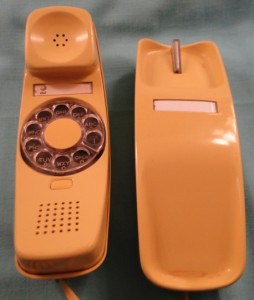
Cablevision's yesteryear marketing: As outdated as this Harvest Gold Trimline phone.

Cablevision’s yesteryear marketing: As outdated as this Harvest Gold Trimline phone.

Cablevision’s bizarre new ads for its Optimum triple-play package (the one that puts broadband, arguably its most important component, dead last) have reached a new low in the latest series featuring… Michael Bolton?

Bolton is a practical unknown to the most important demographic group not buying cable: recent graduate twenty-somethings that were 12 when one of his songs last plagued top-40 radio. Cablevision’s misfire could only be outdone if Nike hired Dick Van Dyke to pitch their shoes.

This is the best Cablevision can manage after Sandy blew away 11,000 of their customers (potentially for good) and rate increases took another 28,000 households with them (mostly to the benefit of Verizon FiOS)? Was the runner-up Joyce DeWitt from Three’s Company pitching a three-pack of phone, television, and (oh yes) Internet service?

Cablevision’s marketing efforts are now partly overseen by the CEO’s wife, who ‘somehow’ landed the prominent role of rebranding Cablevision/Optimum. Perhaps her best talents lie elsewhere.

Verizon featured Michael Bay blowing things up in FiOS ads five years ago that were more trendy than Cablevision was this week.

The point of the ad? Michael Bolton keeps getting annoyed with masses of would-be Cablevision customers calling in to sign up for cable service on a toll-free number that is just one digit away from Michael Bolton’s toll-free number (?) Yes, that is Bolton talking on a (shudder) landline (at least he has a cordless phone). Does anyone under 30 even know what a “toll-free” call is?

For those of us who remember what a dial tone sounds like and can still recognize a Trimline rotary phone, the ad still does not make sense. I am perplexed why Michael Bolton has a toll-free number. I guess when Tonya Harding’s name recognition rivals Michael Bolton’s, the fact he has a toll-free number gives him the edge.

A minute later, I am left wondering why I care. I am not certainly not wondering why I haven’t picked up the phone to order Cablevision service.

When it comes to branding and image, here is what Cablevision just accomplished:

  • Verizon FiOS circa 2008 = Michael Bay blowing cool stuff up.
  • Cablevision this week = Michael Bolton.

‘Nuff said.

[flv width=”640″ height=”380″]http://www.phillipdampier.com/video/Cablevision Ads Michael Bolton.flv[/flv]

AD FAIL: What were they thinking? Michael Bolton annoys viewers trying to recollect his career while Cablevision tries to make New York, New Jersey and Connecticut remember why they should care.  (1 minute)

Search This Site:

Contributions:

Recent Comments:

Your Account:

Stop the Cap!