Home » fios fiber » Recent Articles:

Verizon Ending DSL Service in FiOS Fiber-Wired Service Areas

Phillip Dampier April 19, 2012 Broadband Speed, Competition, Consumer News, Verizon 5 Comments

Just over a week after Verizon Communications announced it would stop selling DSL service to customers without landline voice telephone service, the company today confirmed it plans to stop selling DSL to customers who live in an area also served by the company’s fiber optic FiOS network.

New customers looking for broadband from Verizon will have to sign up for FiOS to get it.

The announcement came as part of a quarterly conference call with Wall Street investors.

Some consumers looking for the cheapest Internet access packages have gotten them from the phone company, often years earlier, and are grandfathered in at those prices.  Verizon says it does not intend to disconnect existing DSL customers, who can keep the service indefinitely, but will not sell the slower broadband service to new or moving customers.

No exact timing for the new policy to take effect was given.

Verizon’s broadband success story has been with its fiber optic network, which continues to add customers.  The same cannot be said of their DSL service, which continues to lose business to Verizon’s cable competitors, especially in areas where FiOS remains unavailable.  FiOS was designed to protect Verizon’s landline business and it seems to be doing exactly that.  At least 63% of Verizon’s landline-associated revenue now comes from its fiber optic service.

Verizon’s executives have made it clear change is coming to the traditional landline business.  The company has not said what it intends to do with DSL customers in non-FiOS areas but did announce they would decommission pay telephones and discontinue long distance calling cards in the future.

Exclusive: Frontier Communications Has Plans for AT&T U-verse for Landline Customers

Stop the Cap! has learned Frontier Communications is laying the groundwork to upgrade selected areas of its network to deliver fiber-to-the-neighborhood service to some of its customers, perhaps as early as the last quarter of 2012.  Documents obtained by Stop the Cap! indicate the company is negotiating with AT&T to license U-verse technology to deliver the service.

The documents suggest Frontier’s 2011 negotiations with AT&T to resell mobile phone service to Frontier customers have now expanded to include the development of improved broadband at a cost less likely to antagonize Wall Street and the company’s investors.

Sources familiar with Frontier’s operations tell Stop the Cap! although the company will continue to support Verizon-acquired FiOS fiber-to-the-home networks in Indiana and the Pacific Northwest, Frontier plans to rely on less-expensive alternatives for the rest of its service areas and has no plans to further expand the FiOS branded fiber-to-the-home service.

For the most rural customers, Frontier appears ready to partner with HughesNet to resell a satellite broadband product to customers considered unsuitable for basic DSL service.  Frontier will continue to invest and upgrade its traditional 1-3Mbps ADSL service in rural states like West Virginia, Idaho, Nevada, and South Carolina.  The company is also planning to upgrade selected cities to VDSL — a more advanced form of DSL needed to support a U-verse offering.  Perhaps one major target for such an upgrade is Frontier’s largest service area — Rochester, N.Y., where Time Warner Cable has systematically picked off Frontier’s landline customers for years with offers of faster broadband speeds and better package pricing.

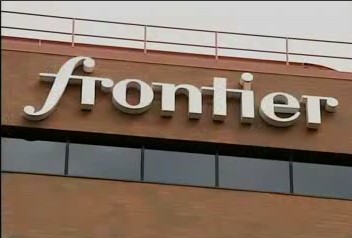
Frontier's headquarters in Rochester, N.Y.

Frontier’s insistence customers don’t need faster broadband speeds, a statement made repeatedly by Frontier Rochester general manager Ann Burr, has cost the company market share, especially for high speed Internet service.  Although Frontier claims to offer speeds up to 10Mbps in Rochester, the company only manages to deliver 3Mbps in some of the city’s nearest suburbs.

An upgrade to U-verse, while not as technologically advanced as fiber to the home service, would help Frontier defend its position in more urban markets, especially as cable companies upgrade their own infrastructure to market faster broadband speeds.

AT&T U-verse sells broadband at speeds of 3, 6, 12, 18, and 24Mbps.  Time Warner Cable, Frontier’s largest competitor in upstate New York, sells speeds of 3, 10, 20, 30, and 50Mbps.

Frontier Communications has been preoccupied integrating its newest customers, acquired from Verizon Communications in 2009, with their existing IT and operations systems.  The company recently touted it completed transitioning former Verizon operations, financing, and human resources with its own information technology network nine months ahead of schedule.

Frontier has been reorganizing some of its internal departments in preparation to launch several aggressive initiatives in 2012, especially in its efforts to roll-0ut more competitive broadband — considered a landline lifesaver —  in areas where the company has lost a lot of business to its cable competitors.  The company also intends to spend tens of millions upgrading its regional and national broadband infrastructure and continue extending DSL service to presently unserved rural areas.

Another planned improvement is an overhaul of Frontier’s website, which has brought complaints from customers for delivering inaccurate information, making online bill payment cumbersome, and being difficult to navigate.

Documents obtained by Stop the Cap! also reveal the company has made progress on its plans to pitch AT&T cell phone service to Frontier customers.

Frontier signed a resale agreement with AT&T last fall and is on track to begin limited trial offers of AT&T cell phones, smartphones, and tablets — with full access to AT&T’s network of 29,000 Wi-Fi hotspots during 2012 with a more widespread rollout in 2013.  Frontier plans to offer customers the option of a single bill for Frontier and AT&T services.

Frontier’s Karen Miller told Stop the Cap! the company had no comment about today’s story.

New York’s Digital Phone Legislative Silliness: Deregulated Providers Want… Deregulation

Phillip Dampier March 28, 2012 Competition, Consumer News, Frontier, Public Policy & Gov't, Rural Broadband, Verizon Comments Off on New York’s Digital Phone Legislative Silliness: Deregulated Providers Want… Deregulation

Cuomo

New York’s telecommunications providers are up in arms over Gov. Andrew Cuomo’s decision to yank permanent deregulation for the “digital phone” industry (otherwise known as “Voice Over IP/VoIP”) from his budget, even though the phone service is already deregulated in New York.

Now Verizon Communications and Time Warner Cable are claiming that without the deregulation they already enjoy, innovation, investment, and competition will be stifled.

“Verizon is very disappointed that New York’s lawmakers, who want the public to believe that New York is open for business, will not be acting on this important measure to modernize the state’s outdated telecommunications laws in this year’s budget,” Verizon spokesman John Bonomo told the Albany Times-Union.

“It’s about new technologies, it’s about new services,” echoed Rory Whelan, regional vice president of government relations for Time Warner Cable. “We want New York to be at the forefront of where we roll out our new products and services.”

That notion has left consumer groups and telecommunications unions scratching their heads.

“They are saying that this is going to open the flood gates to more investment,” said Bob Master, political director for one chapter of the Communications Workers of America, which represents Verizon workers. “It’s ridiculous.”

Master says Verizon has been abandoning and ignoring their landline network for years, preferring to invest in Verizon Wireless and its limited FiOS fiber-to-the-home service which is available in only selected areas of the state.

New York’s Public Service Commission has largely not regulated competing phone service since Time Warner Cable first introduced the service as an experiment in Rochester.  As part of then-Rochester Telephone Corporation’s (now Frontier Communications) “Open Market” Plan, competing telephone companies could offer landline service in the company’s service area, so long as Rochester Telephone received the same deregulation benefits.  Only the cable company showed serious interest in providing home phone service, which it first delivered using traditional digital phone switches phone companies like Verizon and Rochester Telephone use.  Time Warner later abandoned that service for a VoIP alternative it branded as “digital phone.”
Time Warner’s “digital phone,” as well as Verizon’s own VoIP service sold with FiOS, have co-existed regulation-free.  Consumer advocates suspect the push to deregulate could eventually benefit Verizon more than cable operators, because it gives the phone company the right to question why any of its telephone services are regulated.  Verizon’s FiOS fiber-based phone lines do not operate on the same network its still-regulated landlines do.  Verizon, along with all traditional phone companies in New York, are subject to “universal service” guidelines which assure even the most rural New Yorkers have access to reliable telephone service.

But Verizon, like most traditional phone companies, sees substantial investment in “modernizing” legacy copper-based networks as an anachronism, especially as they continue to lose customers switching to cheaper cable providers or wireless phones.  The company recently declared its fiber optic replacement network, FiOS, at the end of its expansion phase.  That leaves the majority of New Yorkers with a copper-based telephone network companies only invest enough in to keep functioning.
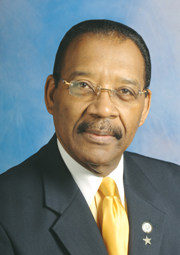
Diaz

Bronx Borough President Ruben Diaz, Jr., joined many New York Assembly Democrats in strong opposition to the bill, which Diaz thinks undercuts New York consumers:

If this proposal were to become law, all consumers would lose out. For starters, customers would not be able to bring service complaints to the Public Service Commission, as they currently can with traditional service. Additionally, there would be no way for the state to set standards for quality or for service in underserved regions — meaning that customers could get stuck with exorbitantly high rates or be unable to obtain service at all in some areas of the state.

Verizon FiOS, one of the main options for VoIP coverage, has now been installed in many regions of the state, including most of downstate. However, Verizon has chosen not offer the service in upstate cities like Albany, Binghamton, Buffalo, Rochester, Syracuse and Utica. The result is both a virtual monopoly for the cable companies in those areas and another blow to lower-income working families who live in cities. That’s precisely why the state should be able to guarantee common sense regulations for VoIP service.

The problems with deregulating VoIP service are multifold. While traditional phone companies pay into a fund that supports “lifeline” phone access for elderly and disadvantaged New Yorkers, VoIP providers would not have to. We do not have to guess at how things would look if the state gives up its right to regulate internet phone service — we can just look at the states where traditional land line service has been deregulated. According to a recent survey of 20 states that have seen land line deregulation, 17 of those states have seen rate increases. We simply cannot afford that, particularly when our fragile national recovery is just beginning to take hold.

Verizon appears undeterred by the governor’s decision to pull the deregulation measure from consideration in his budget measure.  Bills to deregulate continue to float through the Republican-controlled Senate and Democratic-controlled Assembly, but New York’s legislature is notoriously indecisive and slow to act.  Time Warner’s Whelan believes the best chances for the deregulatory measure will be in the GOP-controlled Senate where a similar bill passed last year.  Verizon says it will continue to push for the bill in both chambers.

“We intend to continue pushing for this important measure, and for other measures that will benefit the state’s consumers and businesses to keep up with technological change and help the state thrive and succeed,” Bonomo said.

Verizilla: Bad for Competition, Bad for Consumers, Bad for You, Says CWA

Phillip Dampier March 27, 2012 Broadband Speed, Competition, Consumer News, Public Policy & Gov't, Verizon, Video, Wireless Broadband Comments Off on Verizilla: Bad for Competition, Bad for Consumers, Bad for You, Says CWA

Verizilla

The Communications Workers of America has a new, decidedly low-budget video decrying a spectrum swap between America’s largest cable companies and Verizon Communications that will leave Verizon Wireless stores pitching cable television service from one of Verizon’s cable company competitors.

To the CWA, this is nothing less than the birth of Verizilla, a new monster of a telecommunications company that has capitulated on competing with Big Cable and will instead devour the wireless communications marketplace for itself.  The CWA interest is obvious: many of its employees are responsible for constructing and maintaining Verizon’s now-stalled FiOS fiber to the home network.

From the CWA:

The deal, struck behind the closed doors of America’s corporate boardrooms, poses a threat to consumers and workers. If it goes through, it will be the death knell for competition between cable and telecom companies. Verizon Wireless, Time Warner, Comcast, and other cable companies will become a giant, unregulated quasi-monopoly. Verizon will have no incentive to challenge cable by building FiOS into new areas — meaning less competition, consumer choice, and higher prices for consumers.

Less FiOS also means fewer jobs building, maintaining, servicing, and installing the network. This deal will create a corporate behemoth that will use exclusive quad-play market power to shrink its future workforce.

Worst of all, Verizon Wireless and the cable companies are refusing to come clean about the details of the deal. Even as the FCC and Department of Justice review it, we still don’t know what it means for consumers or workers.

The CWA has so far collected more than 135,000 signatures on its petition opposing the current form of the deal. 

[flv width=”640″ height=”380″]http://www.phillipdampier.com/video/Verizilla.flv[/flv]

America, say hello to Verizilla, wreaking reduced investment havoc on Verizon service areas across the northeastern United States.  (2 minutes)

Comcast Offers $300 Rebate for Comcast Cable + Verizon Wireless Service in Pacific Northwest

Phillip Dampier January 19, 2012 CenturyLink, Comcast/Xfinity, Competition, Consumer News, Frontier, Public Policy & Gov't, Verizon Comments Off on Comcast Offers $300 Rebate for Comcast Cable + Verizon Wireless Service in Pacific Northwest

Comcast’s controversial deal with Verizon Wireless to cross-promote cable and wireless service has come to fruition in Washington and Oregon with a new introductory offer pitching Comcast’s Xfinity cable with Verizon Wireless service that includes a $300 customer rebate.

The first appearance of the new joint marketing effort started this week in metro Seattle and Portland, and includes nearby communities.  Comcast employees are now staffing at least eight Verizon Wireless stores in Seattle, primarily to pitch the company’s cable service.

The most aggressive offer includes a Visa prepaid card rebate of up to $300 for new customers who agree to bundle Comcast’s phone, Internet, and television service with a new Verizon Wireless smartphone or tablet plan, assuming the two companies can find enough new customers who do not already subscribe to cable or mobile service.

Traditional telephone companies like CenturyLink and Frontier Communications, which provide service in the region, appear to be most at risk from the bundled service promotions.  CenturyLink provides landline telephone service and DSL bundled with satellite television.  Frontier does the same and also offers a limited part of the region FiOS fiber to the home service it acquired from Verizon Communications.

Should customers sign on to the bundled offer from Verizon and Comcast, there would be little reason to do business with either CenturyLink or Frontier.

Consumer advocates like Public Knowledge, along with smaller cell phone companies, satellite provider DirecTV, and other consumer groups have co-signed a letter to the Federal Communications Commission raising questions about the parameters of the cross promotion deal, which the companies and groups say “could be a significant realignment of the competitive landscape in these industries.”

Search This Site:

Contributions:

Recent Comments:

Your Account:

Stop the Cap!