Home » fios fiber » Recent Articles:

Settlement Over Verizon-Cable Cross Marketing Deal: ‘Collusion’ OK for 4 Years

Phillip Dampier August 16, 2012 Comcast/Xfinity, Competition, Consumer News, Cox, Editorial & Site News, Public Policy & Gov't, Verizon, Wireless Broadband Comments Off on Settlement Over Verizon-Cable Cross Marketing Deal: ‘Collusion’ OK for 4 Years

(Image courtesy: FCC.com)

The Department of Justice today announced it had achieved a settlement with Verizon and four major cable operators regarding their efforts to establish a cross-marketing agreement to sell each other’s services, sell wireless spectrum, and develop a technology research joint venture.

Despite criticism that the deal represented a strong case for marketplace collusion that would reduce competition between Verizon’s FiOS fiber to the home service and cable company offerings, the Justice Department signed off on a series of deal revisions it defends as protective of competition and consumers. Among them is a time limit for the cross-marketing deal and restrictions on where Verizon Wireless can cross-market cable company services.

“By limiting the scope and duration of the commercial agreements among Verizon and the cable companies while at the same time allowing Verizon and T-Mobile to proceed with their spectrum acquisitions, the department has provided the right remedy for competition and consumers,” said Joseph Wayland, acting assistant Attorney General in charge of the Department of Justice’s Antitrust Division. “ The Antitrust Division’s enforcement action ensures that robust competition between Verizon and the cable companies continues now and in the future as technological change alters the telecommunications landscape.”

The proposed settlement forbids Verizon Wireless from selling cable company products in areas where its FiOS service is available. That is a major reversal from the original agreement between Verizon and Comcast, Time Warner Cable, Cox and Bright House Networks which restricted Verizon Wireless from marketing FiOS. Under the original deal, Verizon Wireless stores could effectively only sell cable company products, never FiOS. The Justice Dept. will still permit Verizon Wireless to sell cable service, but supposedly not at the expense of the fiber service.

The agreement also specifies that Verizon Wireless can sell cable service in areas where it currently markets DSL only until the end of December 2016, renewable at the sole discretion of the Justice Dept. Antitrust lawyers were concerned Verizon would be unlikely to expand its FiOS network or improve DSL service in areas where it could simply resell cable service.

Justice lawyers also put a similar time limit on the technology joint venture, making sure any collaborative efforts don’t impede competition.

The settlement also approves of Verizon’s proposed acquisition of spectrum from the cable companies and T-Mobile USA’s contingent purchase of a significant portion of that spectrum from Verizon.

The deal has been signed off by Justice lawyers, the companies involved, and the New York State Attorney General’s office. FCC chairman Julius Genachowski also weighed in separately with a positive press statement about the agreement.

But consumer advocates remain concerned that the deal does nothing to enhance competition and allows the companies involved to enjoy a new era of competitive detente from a stable and predictable marketplace. Verizon still has little incentive to innovate its DSL service, free to pitch cable service in those areas instead, and without robust changes to the marketplace where FiOS is sold, cable operators have little to fear from Verizon’s stalled FiOS rollout and recent price increases.

Parts of the agreement may also prove confusing to consumers. An important concession prohibits Verizon Wireless from selling any cable service to a street address that is within the FiOS footprint or in any neighborhood store where Verizon FiOS is available. Consumers likely to receive broadly marketed special offers that offer bundled discounts could be frustrated when they are prohibited from signing up because of where they live.

This concession also requires both Verizon and cable operators collaborate to share information about where Verizon FiOS competition exists currently and where it will become available in the future, so that unqualified customers are not sold cable service in violation of the agreement. That represents valuable information for cable operators, who will receive advance notification that customer retention efforts may be needed in areas where Verizon’s fiber optic service is scheduled to become available for the first time.

Any person may submit written comments concerning the proposed settlement during a 60-day comment period to Lawrence M. Frankel, Assistant Chief, Telecommunications & Media Enforcement Section, Antitrust Division, U.S. Department of Justice, 450 Fifth Street, N.W., Suite 7000, Washington, D.C. 20530. At the conclusion of the 60-day comment period, the U.S. District Court for the District of Columbia may enter the proposed settlement upon finding that it is in the public interest.

Verizon CEO Ponders Killing Off Rural Phone/Broadband Service & Rake In Wireless Profits

McAdam

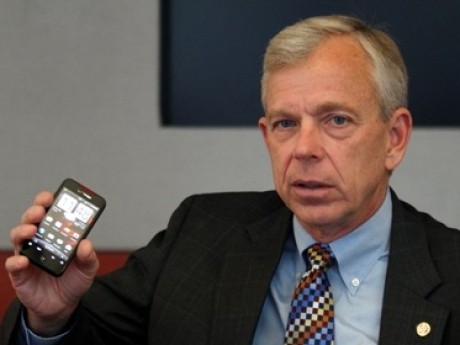
Verizon CEO Lowell McAdam wants you to spend more with the phone company, and if his vision of Verizon’s future comes true, you will.

The company’s newest CEO spoke on a wide-ranging number of topics for the benefit of Wall Street investors at the Guggenheim Securities Symposium. A transcript of the event delivers several newsworthy revelations on the company’s future plans.

McAdam rose through the ranks of Verizon Communications with a specialty in the company’s immensely profitable wireless business. His predecessor, Ivan Seidenberg, spent his career at Verizon Communications working with the company’s legacy wireline (landline) network. While Seidenberg envisioned a new future for Verizon’s landline business with an upgraded fiber optic network called FiOS, McAdam maintained a different vision having run Verizon Wireless as a profit-making machine since 2006. McAdam believes Verizon’s future earnings and focus should be primarily on the wireless side of the business, because that is where there is serious money to be made.

“The first thing I did when Ivan sort of named me as the Chief Operating Officer was we had a very well-defined credo in the wireless side,” McAdam said. “We created it when we first came together in ’99 because we had seven different companies and we knew we had seven different cultures and we needed to tell people what it was we were really looking for. So we created that document. We spent a lot of time on it. We do a lot of reward and recognition as a result of it and that culture really took root in wireless.”

McAdam’s leadership also aggressively challenged the long-standing telephone company philosophy of earning a stable, predictable profit as Verizon did when it was a regulated monopoly. Instead, McAdam shifted the work culture towards an obsession with shareholder value.

“We took the top 2000 leaders through what we call ‘Leading for Shareholder Value’ and that was really a cultural shift for us because, if you think about it, the wireline side of the business has come out of the defined rate of return culture and we left that competitively a while ago. I am not sure we left it culturally,” McAdam said. “So we have been far more pushing why do you make that investment, what is the return on it, what is the priority of that investment versus another investment.”

Verizon’s Plans to Abandon Rural Landline Customers – Sign Up for Our Expensive LTE 4G Wireless Broadband With a 10GB Usage Cap Instead

Some of the most revealing commentary from McAdam came in response to questions about what Verizon plans to do with its enormous landline phone network, dominant in the northeastern United States.

In comments sure to alarm rural Verizon customers from Massachusetts to Virginia, McAdam clearly signaled the company is laying the groundwork to abandon its rural phone network (and DSL broadband) as soon as regulators allow. Dave Burstein at DSL Prime estimates that could impact as many as 18 million Verizon customers across the country.

“In […] areas that are more rural and more sparsely populated, we have got [a wireless 4G] LTE built that will handle all of those services and so we are going to cut the copper off there,” McAdam said. “We are going to do it over wireless. So I am going to be really shrinking the amount of copper we have out there and then I can focus the investment on that to improve the performance of it.”

Elsewhere, in more urban and suburban areas, McAdam also wants Verizon to purge its network of copper.

“The vision that I have is we are going into the copper plant areas and every place we have FiOS, we are going to kill the copper,” McAdam said. “We are going to just take it out of service and we are going to move those services onto FiOS. We have got parallel networks in way too many places now, so that is a pot of gold in my view.”

In other words, McAdam would shift money spent maintaining and upgrading rural landline service into the company’s wireless network in rural America and its FiOS network in more urban environments, both of which will improve profits. FiOS allows Verizon to pitch television, broadband, and phone service in one profitable triple-play package, while also discontinuing standalone DSL service. Rural customers pushed to wireless LTE for broadband will face onerous usage limits and more expensive service for phone calls and broadband. Using Verizon’s LTE network for video would be prohibitively expensive.

McAdam hints the company has used its lobbyist force to make preparations to abandon rural customers first in Florida, Virginia, and Texas where state regulators approved legislation that eliminates the requirement Verizon serve as “the carrier of last resort.” That law required Verizon to deliver landline phone service to any customer in its service area on request. With that provision stricken in those three states, Verizon can abandon any landline customer it chooses after serving written notice.

McAdam said he intends to continue lobbying other states to adopt similar deregulation, and chided legislatures in both New York and New Jersey for “being backward” because they have repeatedly refused to allow Verizon to walk away from its rural customer obligations.

Burstein thinks the changes in progress at Verizon will be a disaster for affordable rural broadband.

“This makes a mockery of ‘affordable broadband,’ especially when Verizon and AT&T are boycotting the plan for discounts for poor schoolchildren,” Burstein says. “The detente between telcos and cable companies means the prices of modest Internet speeds (3-15 megabits down) are typically going up from $30-45 to $55-70.”

Burstein also notes the change spells disaster for competitors who sell DSL service over existing phone networks.

“Nationwide, alternatives to the telco/cablecos have less than 5% of the residential market but in some areas they remain important,” Burstein says. “The most interesting, Sonic.net in California, offers unlimited calls and Internet up to 20 meg for $50/month, 20-50% cheaper than AT&T.”

“High prices, unacceptable service choices and further rural depopulation are bad policy,” he adds.

Verizon still earns enormous revenue from its remaining landline customers, revenue McAdam hopes will be replaced by selling business-focused services instead.

“Cloud [service] is continuing to pick up for us. Security is I think going to be an even more important play for us as we go forward,” McAdam noted. “I think these large enterprise accounts, offering them kind of a global service with those up the stack […and…] applications on top of it drive it as well. So there is a number of pieces in the portfolio that I think will take us up and more than compensate for some of the falling off of copper-based services like DSL and voice and that sort of thing.”

Verizon’s Unionized Employees Are Wrong-Headed Defending Verizon’s Landline Network

McAdam also blamed the company’s unionized employees for remaining loyal to the company’s traditional role in the landline business.  Unions like the Communications Workers of America continue to push Verizon to expand its FiOS fiber optic network in more places, but the company has left its FiOS expansion on hold, diverting investment into its wireless business. Both McAdam and the union agree the days of copper wire networks are numbered, but McAdam hints that union concessions (and fewer unionized employees) are required before the company will again expand FiOS.

“Our employees see that it is not sustainable to keep having copper plant out there. You really can’t invest in it; it is difficult to maintain it; and they want to see us improve on FiOS,” McAdam said. “And when I am out in the field, the techs and the reps will be the first to point out kind of some of the dumb policies I call them that we have around the business. Well, a lot of those are based on rules that were negotiated with the union back in the ’60s and ’70s.”

“So we have to get the union leadership to understand that if the company is able to be more flexible in meeting customer needs then we can grow things like FiOS, which will provide good long-term jobs,” McAdam added. “Will it be the same number as what we had in the past? No.”

Verizon’s Enormous Offshore Bank Accounts: Waiting for a ‘Business-Friendly’ Administration to Let Them Bring the Money Back, Tax-Free

McAdam also signaled investors that the phone company’s profits massed in overseas bank accounts are going to remain in place until they know who wins the next election. Verizon wants to repatriate some of that offshore money, but they want to do it tax-free.

“Everybody is kind of waiting to see who controls the Senate and who controls the White House and they are waiting to make those — you have got to understand what the tax situation is going to look like, so we are all waiting to make those investments,” McAdam said.

‘Share Everything’ Lays the Foundation to Monetize Your Data Usage… Forever

McAdam is a big supporter of the company’s new Share Everything wireless plan, which charges smartphone owners $90 a month for unlimited voice calling, texting, and a small 1GB bucket of data that he is convinced customers will be prepared to spend more to enlarge.

“If I know that I have an intelligent home that I can get to any number of ways. If I know that I can do everything I want in my car that I can do in front of my TV set or my PC or on my tablet, I think it just takes away a lot of the restraints,” McAdam said. “Is it going to cost them more money? Yes, but it will probably shift their wallet spend from other things that they do individually into this sort of a bucket of gigabytes. And so I think it will be a significant [revenue] stream for us.”

FitchRatings, a credit ratings agency, agrees in a new report.

“The new pricing structure taken by the industry leader is a disciplined pricing action that could create more cash flow stability longer term within the wireless industry,” the credit ratings agency said last week.

Fitch notes data services are increasingly becoming a larger source of revenue for wireless phone companies. In the first quarter alone, data revenues at Verizon Wireless, AT&T, and T-Mobile USA — all carriers that abandoned flat rate wireless data plans, grew 19% year over to year to $14.2 billion. That represents 41 percent of the companies’ service revenues.

Despite assertions from Verizon that the new plans deliver convenience and better value for subscribers, Fitch found they actually represent a substantial price increase for many customers.

“These increases are sometimes material, depending on whether the legacy rate plans have low recurring charges for text messaging or calling minutes. As a result, prices have generally increased for new subscribers,” Fitch reports.

Fitch warns investors Verizon is likely to lose customers over its new pricing strategy, and experience a slowdown in new customer growth as well, at least until competing carriers realign their pricing and plans to be similar (or match) those Verizon introduced last month.

The Days of Your Subsidized Android/iPhone May Be Numbered

McAdam’s vision also includes a re-examination of device subsidies as customers increasingly depend on wireless devices. McAdam previously indicated the wireless device subsidy was designed to get customers to adopt and embrace new technologies, and as adoption rates have soared, the need to keep discounting technology that customers depend on diminishes.

He echoed that sentiment at the Guggenheim Securities Symposium, noting that Verizon this month abandoned subsidies on tablet devices. For McAdam, discounting wireless technology serves one purpose: to quickly establish a new business relationship with a customer that probably would not buy their first device at full price.

But McAdam recognizes changing the company’s subsidy that customers expect to receive must happen gradually. It has already started, first by eliminating early upgrade discounts, then by dropping the company’s loyalty discount “New Every Two” plan. Now, the company will only allow grandfathered unlimited data plan customers to keep those plans if they agree to forego any subsidy on their next smartphone.

“If you look at the telematics industry today [services like OnStar], the car companies subsidize a device that goes into the car. So I think that we have a tendency over the years to sort of look and say, oh, something is going to happen very quickly,” McAdam said. “Things have a tendency to evolve over a long period of time, so I think you will have some devices, like the tablet today, that [are] not subsidized and you’ll probably still have certain devices that are because you want to establish that relationship with a customer and that is the easiest way to get there.”

Verizon Wants You to Use the Cable Industry’s Growing Wi-Fi Network
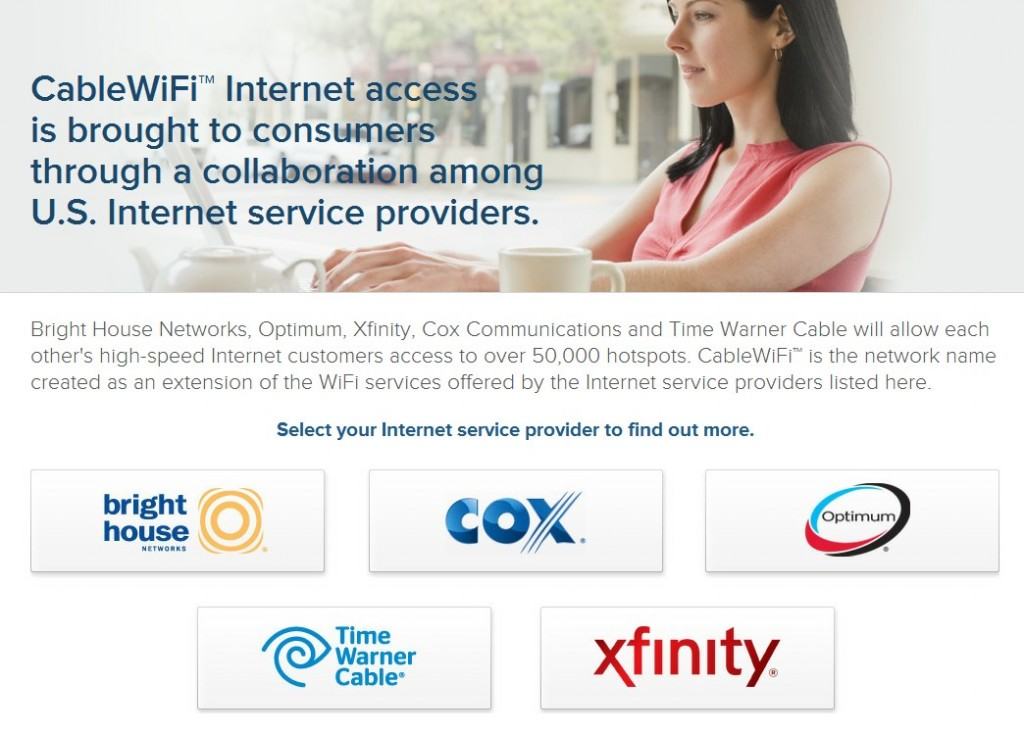
McAdam’s vision also offloads as much of Verizon’s 3G and 4G traffic to other networks as possible. Ironically, one of the biggest networks he hopes customers will use instead of his are the growing number of Wi-Fi services offered by his competitors in the cable industry.

“It is interesting that a lot of people have said, well, I can’t believe you’re going to partner with [cable companies],” McAdam said. “You are not going to use their Wi-Fi are you? Well, of course, we are. I mean we want to shift as much onto FiOS or onto the fixed network where we can and then provide — use that capacity to provide those higher demand services like video.”

McAdam added he does not want customers sitting in their homes watching video over his LTE 4G network. He also wants that traffic shifted to Wi-Fi.

“So our thinking going forward as we talk about kind of the ‘One Verizon’ approach is we want to use every network asset we have and if that means jumping onto FiOS or using the cloud services for mobile as well as fixed line, using security across all of our different access technologies, we want that network to be seamless and that is what our CTO, Tony Melone, is driving hard on in the business right now,” McAdam said.

One preview of that thinking at work can be found on Verizon Wireless’ hottest new device — the Samsung Galaxy S3. Verizon’s version of the phone browbeats customers with prominent menus that encourage Wi-Fi use wherever possible. The phone’s persistent reminder has become a pest according to many of the phone’s owners, who consider both the message and the difficulty keeping Wi-Fi shut off obtrusive.

Verizon’s partnership with large cable companies including Comcast, Time Warner Cable, Cox, and Bright House Networks originally involved the acquisition of excess wireless spectrum cable companies originally intended to use to compete with the mobile phone industry. With the cable industry abandoning those plans, the proposed collaboration involving Verizon Wireless grew to include cross-marketing each other’s products and services, and now apparently includes sharing the cable companies’ growing Wi-Fi networks.

Verizon Believes The Future of Telecommunications Needs to Be In the Hands of Two Companies — Verizon and AT&T
A point of shared belief between market leaders Verizon CEO Lowell McAdam and AT&T CEO Randall Stephenson is that excessive competition just does not make sense. Both believe federal regulators have it all wrong when they push to maintain the level of competition that still exists in the telecommunications business. When the Department of Justice effectively pulled the plug on a merger between AT&T and T-Mobile, Stephenson was outraged and, in one investor conference call, launched a tirade against regulators and suggested that AT&T would throw in the towel on expanding rural broadband in a retaliatory move.

McAdam and Stephenson both believe that competition in telecommunications represents wasted investment, inefficiency, and value destruction.

“I think the fundamental problem here, and it is sort of like fighting gravity I think, is that it is so expensive to build these networks that you are not going to support seven or eight carriers,” McAdam told investors. “I don’t — frankly, I think you’ll be lucky if you can support three in a healthy environment.”

But McAdam recognizes that if it achieves a wireless duopoly with AT&T, it must be a benevolent one, or else the marketplace abuses the wireless industry has a track record engaging in will invite regulatory scrutiny.

“We have a tendency to create a great club and hand it to our detractors and say please beat me with this because we do some dumb things like fighting some of the number portability and trying to push a direct wireless directory,” McAdam said. “I mean there are things that have really upset customers and that invites regulation. So I think the industry has the responsibility to act in the best interests of the customer as part of the mix with a shareholder, but I think there is always going to be the battle with regulation.”

McAdam admits he is uncomfortable with the fact the Obama Administration has allowed the regulation pendulum to swing more towards enforced competition and checking the power of dominant carriers in the marketplace. He prefers the Bush Administration’s “hands-off” approach that allowed both Verizon and AT&T to snap up smaller competitors with scant regulatory review.

McAdam believes the Obama Administration’s FCC and Justice Department is slowing down wireless investment, innovation, and the industry’s ability to earn profits at a time when unemployment in sky high and increased investment will help drive the economy forward.


The Illusory Savings of “Usage Based Billing”: Your Bill Will Get Higher, Not Lower

Phillip Dampier July 2, 2012 Broadband "Shortage", Broadband Speed, Competition, Consumer News, Data Caps, Editorial & Site News, Online Video Comments Off on The Illusory Savings of “Usage Based Billing”: Your Bill Will Get Higher, Not Lower

Phillip “They Want to Save You Money By Charging You More” Dampier

The pro-Internet Overcharging forces’ meme of “pay for what you use” sounds good in theory, but no broadband provider in the country would dare switch to a true consumption-based billing system for broadband, because it would destroy predictable profits for a service large cable and phone companies hope you cannot live without.

Twenty years ago, the cable industry could raise rates on television packages with almost no fear consumers would cancel service. When I produced a weekly radio show about the cable and satellite television industry, cable companies candidly told me they expected vocal backlashes from customers every time a rate increase notice was mailed out, but only a handful would actually follow through on threats to cut the cord. Now that competition for your video dollar is at an all-time-high, providers are shocked (and some remain in denial) that customers are actually following through on their threats to cut the cord. Goodbye Comcast, Hello Netflix!

Some Wall Street analysts have begun warning their investor clients that the days of guaranteed revenue growth from video subscribers are over, risking profits as customers start to depart when the bill gets too high. Cable companies have always increased rates faster than the rate of inflation, and investors have grown to expect those reliable profits, so the pressure to make up the difference elsewhere has never been higher.

With broadband, cable and phone companies may have found a new way to bring back the Money Party, and ride the wave of broadband usage to the stratosphere, earning money at rates never thought possible from cable-TV. The ticket to OPEC-like rivers of black gold? Usage-based billing.

Since the early days of broadband, most Americans have enjoyed flat rate access through a cable or phone company at prices that remained remarkably stable for a decade — usually around $40 a month for standard speed service.

In the last five years, as cord-cutting has grown beyond a phenomena limited to Luddites and satellite dish owners, the cable industry has responded. As they learned customers’ love of broadband has now made the service indispensable in most American homes, providers have been jacking up the price.

Time Warner Cable, for example, has increased prices for broadband annually for the last three years, especially for customers who do not subscribe to any other services.

Customers dissatisfaction with rate hikes has not led to broadband cord cutting, and in fact might prove useful on quarterly financial reports -and- for advocating changes in the way broadband service is priced:

  1. Enhance revenue and profits, replacing lost ground from departing video customers and the slowing growth of new customers signing up for video and phone services (and keeping average revenue per user ((ARPU)) on the increase);
  2. Using higher prices to provoke an argument about changing the way broadband service is sold.

Pouring over quarterly financial reports from most major providers shows remarkable consistency:

  • The costs to provide broadband service are declining, even with broadband usage growth;
  • Revenue and profits enjoy a healthy growth curve, especially as increased prices on existing customers make up for fewer new customer additions;
  • Earnings from broadband are now so important, a cable company like Time Warner Cable now refers to itself as a broadband company. It is not alone.

Still, it is not enough. As usage continues to grow in the current monopoly/duopoly market, providers are drooling with anticipation over the possibility of scrapping the concept of “flat rate” broadband, which limits the endless ARPU growth Wall Street demands. If a company charges a fixed rate for a service, it cannot grow revenue from that service unless it increases the price, sells more expensive tiers of service, or innovates new products and services to sell.

Providers have enjoyed moderate success selling customers more expensive, faster service, also on a flat rate basis. But that still leaves money on the table, according to Wall Street-based “usage billing” advocates like Craig Moffett, who see major ARPU growth charging customers more and more money for service as their usage grows.

Moffett has a few accidental allies in the blogger world who seem to share his belief in “usage-based” billing. Lou Mazzucchelli, reading the recent New York Times piece on Time Warner’s gradual move towards usage pricing, frames his support for consumption billing around the issue of affordability. In his view, usage pricing is better for consumers and the industry:

It costs real money to upgrade networks to keep pace with this demand, and those costs are ultimately borne by the subscriber. So in the US, we have carriers trying to raise their rates to offset increases in capital and operating expenses to the point where consumers are beginning to push back, and the shoving has come to the attention of the Federal Communications Commission, which has raised the possibility of treating Internet network providers as common communications carriers subject to regulation.

I believe that flat-rate pricing is a major source of problems for network carriers and consumers. In the carrier world, the economics are known but ignored because marketers believe that flat rates are the only plans consumers will accept. But in the consumer world, flat rates are rising to incomprehensible levels for indecipherable reasons, with little recourse except disconnection. Consumer dissatisfaction is rising, in part because consumers feel they have no control over the price they have to pay. This is driven by their sense of pricing inequity that is hard to visualize but comes from implicit subsidies in the current environment. The irony is that pay-per-use pricing solves the problem for carriers and consumers.

Mazzucchelli reposted his blog piece originally written in 2010 for the benefit of Times readers. Two years ago, he measured his usage at 11GB a month. His provider Verizon Communications was charging him $64.99 a month for 25Mbps service, which identifies him as a FiOS fiber to the home customer.  Mazzucchelli argues the effective price he was paying for Internet access was $5.85 for each of the 11GB he consumed, which seemed steep at the time. (Not anymore, if you look at wireless company penalty rates which range from $10-15/GB or more.)

Mazzucchelli theorized that if he paid on a per-packet basis, instead of flat rate service based on Internet speed, he could pay something like $0.0000025 per packet, which would result in a bill of $31.91 for his 11GB instead of $65. For him, that’s money saved with usage billing.

On its face, it might seem to make sense, especially for light users who could pay less under a true usage-based pricing scenario like the one he proposes.

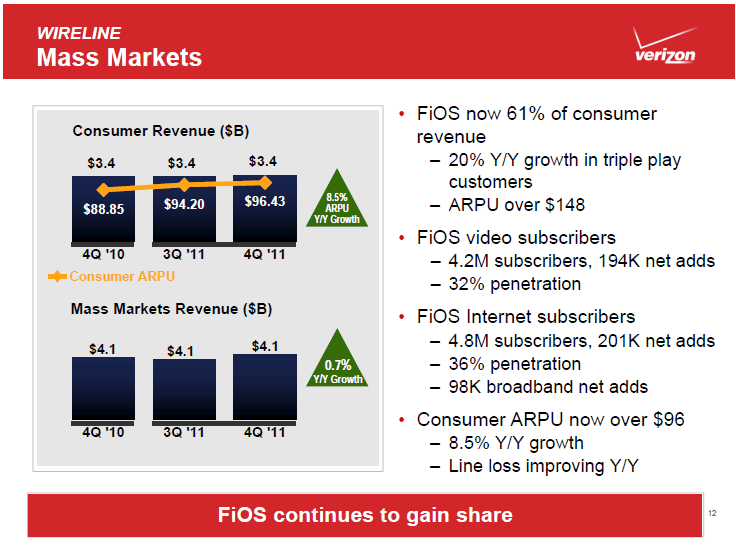
Verizon Communications is earning more average revenue per customer than ever with its fiber to the home network. That’s about the only bright spot Wall Street recognizes from Verizon’s fiber network, which some analysts deride as “too expensive.”

Unfortunately for Mazzucchelli, and others who claim usage-based pricing will prove a money-saver, the broadband industry has some bad news for you. Usage pricing simply cannot be allowed to save you, and other current customers money. Why? Because Wall Street will never tolerate pricing that threatens the all-important ARPU. In the monopoly/duopoly home broadband marketplace most Americans endure, it would be the equivalent of unilaterally disarming in the war for revenue and profits.

That is why broadband providers will never adopt a true usage-based billing system for customers. It would cannibalize earnings for a service that already enjoys massive markups above true cost. In 2009, Comcast was spending under $10 a month to sell broadband service priced above $40.

Mazzucchelli

Instead, providers design “usage-based” billing around rates comparable to today’s flat rate pricing, only they slap arbitrary maximum usage allowances on each tier of service, above which consumers pay an overlimit fee penalty. That would leave Mazzucchelli choosing a lower speed, lower usage allowance plan to maximize his savings, if his use of the Internet didn’t grow much. On a typical light use plan suitable for his usage, he would subscribe to 1-3Mbps service with a 10GB allowance, and pay the overlimit fee for one extra gigabyte if he wanted to maximize his broadband dollar.

But his usage experience would be dramatically different, both because he would be encouraged to use less, fearing he might exceed his usage allowance, and he would be “enjoying” the Internet at vastly slower speeds. If Mazzucchelli went with higher speed service, he would still pay prices comparable for flat rate service, and receive a usage allowance he personally would find unnecessarily large. The result for him would be little to no savings and a usage allowance he did not need.

Mazzucchelli’s usage pattern is probably different today than it was in 2010. Is he still using 11GB a month? If he uses double the amount he did two years ago, under his own pricing formula, the savings he sought would now be virtually wiped out, with a broadband bill for 22GB of consumption running $63.82. By the following year, usage-based pricing would cost even more than Verizon’s unlimited pricing, as average use of the Internet continues to grow.

That helps the broadband industry plenty but does nothing for consumers. Mazzucchelli might be surprised to learn that the “real money to upgrade networks to keep pace with this demand,” is actually more than covered under today’s profit margins for flat-rate broadband. In fact, if he examines financial reports over the last five years and the statements company executives make to shareholders, virtually all of them speak in terms of reducing capital investments and the declining costs to deliver broadband, even as usage grows.

Verizon’s fiber network, while expensive to construct, is already earning the company enormous boosts in ARPU over traditional copper wire phone service. While Wall Street howled about short term capital costs to construct the network, then-CEO Ivan Seidenberg said fiber optics was the vehicle that will drive Verizon earnings for decades selling new products and services that its old network could never deliver.

Still, is Mazzucchelli paying too much for his broadband at both 2010 and 2012 prices? Yes he is. But that is not a function of the cost to deliver broadband service. It is the result of a barely competitive marketplace that has an absence of price-moderating competitors. Usage-based pricing in today’s broadband market assures lower costs for providers by retarding usage. It also brings even higher profits from bigger broadband bills as Internet usage grows, with no real relationship to the actual costs to provide the service. It also protects companies from video package cord-cutting, as customers will find online viewing prohibitively expensive.

One need only look at pricing abroad to see how much Americans are gouged for Internet service. Unlimited high speed Internet is available in a growing number of countries for $20-40 a month.

Usage-based billing is a dead end that might deliver temporary savings now, but considerably higher broadband bills soon after. It is not too late to turn the car around and join us in the fight to keep unlimited broadband, enhance competition, and win the lower prices users like Mazzucchelli crave.

Elmira Spins Its Wheels Negotiating for a Better Deal from Time Warner Cable

Phillip Dampier May 22, 2012 Competition, Consumer News, Public Policy & Gov't, Rural Broadband, Video Comments Off on Elmira Spins Its Wheels Negotiating for a Better Deal from Time Warner Cable

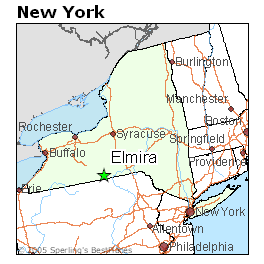
The southern tier city of Elmira, N.Y. is not too happy with Time Warner Cable’s lock on the local cable market.

“There’s no competition so their prices continue to go up, their offers continue to go down, and the people here with no other competition are just paying and paying and paying,” Elmira mayor Sue Skidmore told WETM News.

Skidmore and the city council intend to hold public hearings on the cable operator’s franchise renewal before they attempt to negotiate the next 10-year agreement with the cable company.

“This gives the public an opportunity to come and say anything good or bad pertaining to the cable franchise,” said city manager John Burin. The public meeting is scheduled for 7pm, June 4, on the second floor of Elmira City Hall.

Skidmore

The city’s ability to press Time Warner Cable for lower rates or service changes are extremely limited, however. Wholesale deregulation of the cable television industry has allowed most cable operators to manage their systems as they see fit, with no obligation to accept the recommendations of local government.

This fact of life was underscored when Time Warner mailed its own vision of what a renewal agreement with the city should look like, prior to any public discussion.

The city’s lawyer, John Ryan Jr., told the Ithaca Journal the company deleted several provisions in the proposed renewal agreement that are part of the current agreement. Ryan intends to speak with the operator about those changes, and wants to see changes in the city’s favor.

In most franchise renewal agreements, the only leverage a city typically has is to threaten not to renew a cable franchise. That is a very rare occurrence, however, because it is exceptionally rare for another major cable provider to agree to service a city that cancels a franchise renewal with another company. In the end, most renewal agreements come down to handshake agreements to correct any long-standing service issues, agree to wire certain unserved areas, and negotiate over public, educational, and government access channels and franchise fees payable to the city.

The local telephone company, Verizon Communications, has no plans to provide its FiOS fiber optic service in the city, leaving customers with the competitive option of landline phone service, DSL, and a contract with Verizon’s satellite TV partner, DirecTV.

[flv width=”360″ height=”290″]http://www.phillipdampier.com/video/WETM Elmira City Of Elmira To Negotiate With Time Warner Cable 5-21-12.mp4[/flv]

WETM in Elmira reports city officials are preparing for franchise renewal discussions with Time Warner Cable. The cable company is already on that, preemptively sending the city a franchise renewal agreement it wrote itself. (1 minute)

New York Accuses Verizon of Abandoning Quality Landline Service; “It’s a Duopoly”

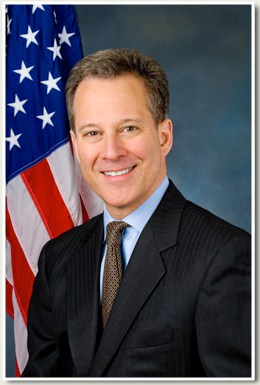
New York State Attorney General Eric Schneiderman is convinced Verizon Communications is abandoning quality landline service for millions of New Yorkers while diverting money and resources to its more profitable cell service Verizon Wireless.

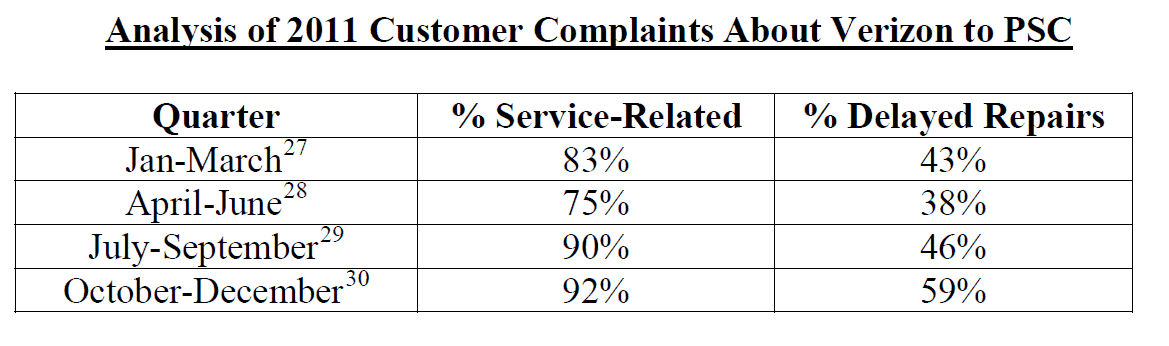
Last week, Schneiderman blasted the state’s largest landline provider for mounting complaints about poor service that now impact 92 percent of its customers, calling deregulation a failure for consumers and businesses in New York.

“Verizon customers deserve the high-quality service they’ve been promised,” Schneiderman told The Associated Press.

The attorney general reports that the number of customers enduring service outages for more than 24 hours has increased, while landline infrastructure — particularly wiring — is allowed to deteriorate.

Schneiderman suspects Verizon is shortchanging landline service as an increasing number of wired phone customers disconnect service, often in favor of Verizon’s more lucrative cell phone service.  The state Public Service Commission (PSC) fined Verizon $400,000 in March for similar concerns, pointing to the company’s intentional workforce reductions lengthening repair windows and creating repair backlogs in some regions.

Schneiderman’s office filed comments with the PSC requesting changes to Verizon’s Service Quality Improvement Plan, which was originally launched in 2010:

At best, New York’s telephone service market is a duopoly, and contrary to theoretical expectations of market controls, the presence of a single competitor has not in fact prevented Verizon from allowing customer service to continue to degrade. Rather than meet its obligations to provide wireline telephone customers with minimally adequate telephone service, Verizon is continuing to drastically reduce its workforce with the result that the company cannot meet its customers’ repair needs in a timely manner.

Verizon’s management has demonstrated that it is unwilling to compete to retain its wireline customer base, and instead is entirely focused on expanding its wireless business affiliate. It is incumbent on the Commission to take appropriate regulatory action to ensure that customers receive reliable telephone service with adequate repair performance. Therefore, the Commission should modify Verizon’s service plan to ensure customers receive adequate service quality in the future.

Verizon defended its service in New York pointing out the company has invested $1.5 billion in the state for infrastructure, including its FiOS fiber to the home network.  Verizon spokesman John Bonomo questioned Schneiderman’s claim that 92 percent of Verizon New York customers had poor service, noting 98 percent of its landline customers don’t have service problems.

Schneiderman’s highlighting of a $400,000 service fine imposed by the PSC did not account for unprecedented damage from both Hurricane Irene and Tropical Storm Lee late last summer, Bonomo added.

But the state’s attorney general notes Verizon’s service problems in New York have been ongoing well before last summer.

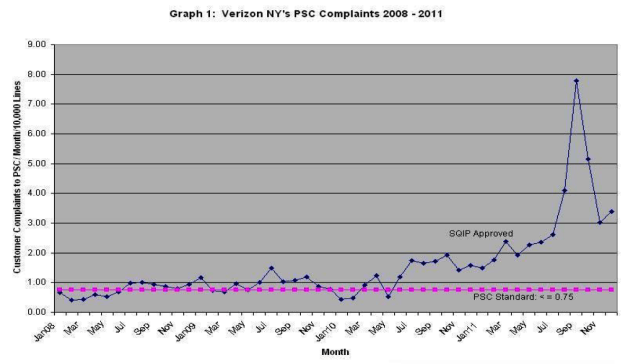
Service complaints, charted here from 2008-2011, show a major spike last summer and fall and remain higher than normal.

Schneiderman

“Since at least 2008, Verizon has frequently failed to meet these PSC telephone service standards essential to safe and reliable telephone service,” Schneiderman says. “Even as the number of telephone lines needing to be maintained has dwindled to half those of a decade ago (as customers choose to rely instead on wireless and/or cable telephony), Verizon’s continues to fail to meet the PSC’s service standard.”

Customers on the upper west side of New York City don’t need to be reminded of Verizon’s service failures.  Hundreds of Verizon landline customers in New York’s largest city were left without basic phone service for more than a week, only made worse by the fact Verizon told many of them they’d be without service for at least one additional week while the company worked on repairs.

Phone and Internet service went dead in multiple buildings along Central Park West April 10, but customers wanted to kill when they learned the phone company wanted more than two weeks to get service restored.

“I was like, excuse me, are you serious? Two weeks?” Iram Rivera, a concierge at 262 Central Park West, told DNAinfo.  His building was hard hit by the service outage — 80 percent of the building’s 80 apartments were affected.

“I just don’t get the feeling that there’s much of an appreciation on Verizon’s part that this is a hardship for people,” said Ken Coughlin, who lives on West 87th Street and Central Park West. “There’s no communication, there’s no updates, it’s infuriating.”

The outage only affected traditional landline service and DSL broadband over copper phone wiring. The more modern fiber-optic FiOS network that provides TV, Internet and voice service wasn’t affected, Bonomo said.

Schneiderman notes landline outages have an especially hard impact on small businesses:

In the current recession, the fragile economic condition of many small businesses puts them at risk of financial disaster if they suddenly lose telephone service, and their provider is unable to restore service promptly. Each day that these businesses are without service they lose significant revenues that many simply cannot survive without.

Small businesses depend on functional telephone service to meet the needs of their customers in numerous ways. When customers are unable to reach a business by telephone, they may assume the business is closed and purchase the goods or services they want elsewhere. Restaurants are prevented from giving reservations to prospective customers who call. Many types of businesses depend on working telephone lines for processing credit card charges, and may lose substantial sales by limiting transactions to cash or checks. Professional offices can be prevented from providing medical, legal or accounting services to their clients without working telephone service.

In Schneiderman’s view, the deregulation policies now in place in New York have failed consumers, leaving them with a duopoly of phone providers with insufficient oversight.

For competition to benefit customers with improved service, lower prices, and more innovation, there has to first be a willingness to compete, which is significantly absent from Verizon-New York’s policies and practices.

Rather than robust competition, New York’s telephone market is at best a duopoly, with as many indicators of cooperation between the two providers as robust contest for customers. Furthermore, the actual behavior of consumers in the real world is markedly different from the PSC’s theoretical assumptions about the telephone market.

When a Verizon customer experiences a prolonged service outage or installation delay, the option to switch carriers to a cable provider is of no immediate use. Finally, even if consumers wanted to compare Verizon’s service performance with cable provider alternatives, the lack of available information prevents consumers from making educated choices.

In New York, most customers are served by Verizon Communications, Time Warner Cable, or Cablevision.  Time Warner Cable and Verizon recently agreed to cross-market the other’s products and services as part of a wireless spectrum transfer.

Search This Site:

Contributions:

Recent Comments:

Your Account:

Stop the Cap!