Home » digital divide » Recent Articles:

FCC Chairman Complains About State of U.S. Broadband But Offers Few Meaningful Solutions

Phillip Dampier September 4, 2014 Broadband "Shortage", Broadband Speed, Community Networks, Competition, Consumer News, Data Caps, Editorial & Site News, History, Net Neutrality, Online Video, Public Policy & Gov't, Rural Broadband, Wireless Broadband Comments Off on FCC Chairman Complains About State of U.S. Broadband But Offers Few Meaningful Solutions

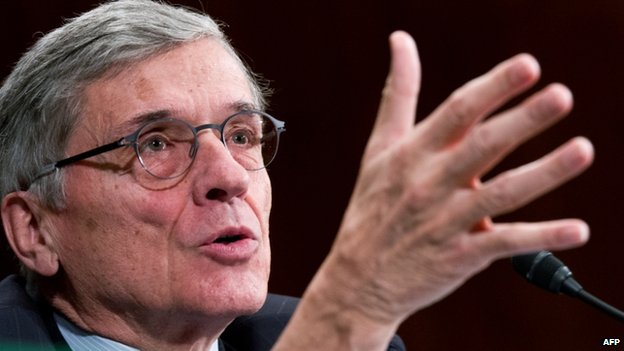
FCC chairman Thomas Wheeler doesn’t like what he sees when looks at the state of American broadband.

At a speech today given to the 1776 community in Washington, Wheeler complained about the lack of broadband competition in the United States.

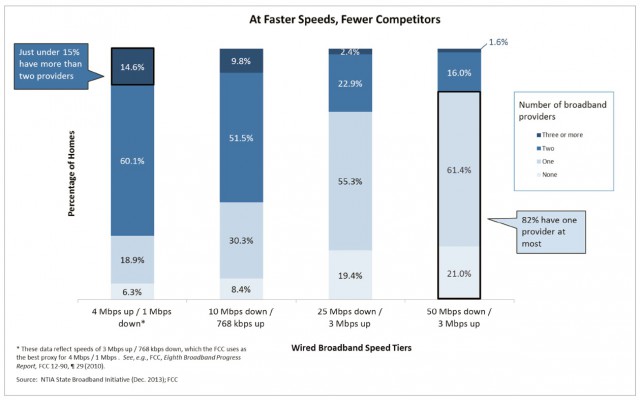
“The underpinning of broadband policy today is that competition is the most effective tool for driving innovation, investment, and consumer and economic benefits,” Wheeler said. “Unfortunately, the reality we face today is that as bandwidth increases, competitive choice decreases.”

faster speed fewer competitors

“The lighter the blue, the fewer the options,” Wheeler said, gesturing towards his chart. “You get the point. The bar on the left reflects the availability of wired broadband using the FCC’s current broadband definition of 4Mbps. But let’s be clear, this is ‘yesterday’s broadband.’ Four megabits per second isn’t adequate when a single HD video delivered to home or classroom requires 5Mbps of capacity. This is why we have proposed updating the broadband speed required for universal service support to 10Mbps.”

But Wheeler added that even 10Mbps was insufficient as households increasingly add more connected devices — often six or more — to a single broadband connection.  When used concurrently, especially for online video, it is easy to consume all available bandwidth at lower broadband speeds.

Wheeler

Wheeler

Wheeler’s new informal benchmark is 25Mbps — “table stakes” in 21st century communications. About 80 percent of Americans can get 25Mbps today or better, but typically only from one provider. Wheeler wants even faster speeds than that, stating it is unacceptable that more than 40% of the country cannot get 100Mbps service. Wheeler seemed to fear that phone companies have largely given up on competing for faster broadband connections, handing a de facto monopoly to cable operators the government has left deregulated.

“It was the absence of competition that historically forced the imposition of strict government regulation in telecommunications,” Wheeler explained. “One of the consequences of such a regulated monopoly was the thwarting of the kind of innovation that competition stimulates. Today, we are buffeted by constant innovation precisely because of the policy decisions to promote competition made by the FCC and Justice Department since the 1970s and 1980s.”

Wheeler said competition between phone and cable companies used to keep broadband speeds and capacity rising.

“In order to meet the competitive threat of satellite services, cable TV companies upgraded their facilities,” Wheeler said. “When the Internet went mainstream, they found themselves in the enviable position of having greater network capacity than telephone companies. Confronted by such competition, the telcos upgraded to DSL, and in some places deployed all fiber, or fiber-and-copper networks. Cable companies further responded to this competition by improving their own broadband performance. All this investment was a very good thing. The simple lesson of history is that competition drives deployment and network innovation. That was true yesterday and it will be true tomorrow. Our challenge is to keep that competition alive and growing.”

But Wheeler admits the current state of broadband in the United States no longer reflects the fierce competition of a decade or more ago.

“Today, cable companies provide the overwhelming percentage of high-speed broadband connections in America,” Wheeler noted. “Industry observers believe cable’s advantage over DSL technologies will continue for the foreseeable future. The question with which we as Americans must wrestle is whether broadband will continue to be responsive to competitive forces in order to produce the advances that consumers and our economy increasingly demand. Looking across the broadband landscape, we can only conclude that, while competition has driven broadband deployment, it has not yet done so a way that necessarily provides competitive choices for most Americans.”

Wheeler recognized what most broadband customers have dealt with for years — a broadband duopoly for most Americans.

antimonopoly“Take a look at the chart again,” Wheeler said. “At the low end of throughput, 4Mbps and 10Mbps, the majority of Americans have a choice of only two providers. That is what economists call a “duopoly”, a marketplace that is typically characterized by less than vibrant competition. But even two “competitors” overstates the case. Counting the number of choices the consumer has on the day before their Internet service is installed does not measure their competitive alternatives the day after. Once consumers choose a broadband provider, they face high switching costs that include early termination fees, and equipment rental fees. And, if those disincentives to competition weren’t enough, the media is full of stories of consumers’ struggles to get ISPs to allow them to drop service.”
Wheeler emphasized that true competition would allow customers to change providers monthly, if a vibrant marketplace forced competitors to outdo one another. That market does not exist in American broadband today.

“At 25Mbps, there is simply no competitive choice for most Americans,” Wheeler added. “Stop and let that sink in…three-quarters of American homes have no competitive choice for the essential infrastructure for 21st century economics and democracy. Included in that is almost 20 percent who have no service at all. Things only get worse as you move to 50Mbps where 82 percent of consumers lack a choice. It’s important to understand the technical limitations of the twisted-pair copper plant on which telephone companies have relied for DSL connections. Traditional DSL is just not keeping up, and new DSL technologies, while helpful, are limited to short distances. Increasing copper’s capacity may help in clustered business parks and downtown buildings, but the signal’s rapid degradation over distance may limit the improvement’s practical applicability to change the overall competitive landscape.”

Wheeler finds little chance wireless providers will deliver any meaningful competition to wired broadband because of pricing levels and miserly data caps. Such statements are in direct conflict with a traditional industry talking point.

In a remarkable admission, Wheeler added that the only hope of competing with cable operators comes from a technology phone companies have become reluctant to deploy.

“In the end, at this moment, only fiber gives the local cable company a competitive run for its money,” Wheeler said. “Once fiber is in place, its beauty is that throughput increases are largely a matter of upgrading the electronics at both ends, something that costs much less than laying new connections.”

Wheeler also continued to recognize the urban-rural divide in broadband service and availability, but said little about how he planned to address it.

Wheeler’s answer to the broadband dilemma fell firmly in the camp of promoting competition and avoiding regulation, a policy that has been in place during the last two administrations with little success and more industry consolidation. Most of Wheeler’s specific commitments to protect and enhance competition apply to the wireless marketplace, not fixed wired broadband:

1. comcast highwayWhere competition exists, the Commission will protect it. Our effort opposing shrinking the number of nationwide wireless providers from four to three is an example. As applied to fixed networks, the Commission’s Order on tech transition experiments similarly starts with the belief that changes in network technology should not be a license to limit competition.
In short, don’t expect anymore efforts to combine T-Mobile and Sprint into a single entity. Wheeler only mentioned “nationwide wireless providers” which suggests it remains open season to acquire the dwindling number of smaller, regional carriers. Wheeler offers no meaningful benchmarks to protect consumers or prevent further consolidation in the cable and telephone business.

2. Where greater competition can exist, we will encourage it. Again, a good example comes from wireless broadband. The “reserve” spectrum in the Broadcast Incentive Auction will provide opportunities for wireless providers to gain access to important low-band spectrum that could enhance their ability to compete. Similarly, the entire Open Internet proceeding is about ensuring that the Internet remains free from barriers erected by last-mile providers. Third, where meaningful competition is not available, the Commission will work to create it. For instance, our efforts to expand the amount of unlicensed spectrum creates alternative competitive pathways. And we understand the petitions from two communities asking us to pre-empt state laws against citizen-driven broadband expansion to be in the same category, which is why we are looking at that question so closely.

Again, the specifics Wheeler offered pertain almost entirely to the wireless business. Spectrum auctions are designed to attract new competition, but the biggest buyers will almost certainly be the four current national carriers, particularly AT&T and Verizon Wireless. Although low-band spectrum will help Sprint and T-Mobile deliver better indoor service, it is unlikely to drive new market share for either. Wheeler offered no specifics on the issues of Net Neutrality or municipal broadband beyond acknowledging they are issues.

3. Incentivizing competition is a job for governments at every level. We must build on and expand the creative thinking that has gone into facilitating advanced broadband builds around the country. For example, Google Fiber’s “City Checklist” highlights the importance of timely and accurate information about and access to infrastructure, such as poles and conduit. Working together, we can implement policies at the federal, state, and local level that serve consumers by facilitating construction and encouraging competition in the broadband marketplace.

competitionMost of the policies Wheeler seeks to influence exist on the state and local level, where he has considerably less influence. Based on the overwhelming interest shown by cities clamoring to attract Google Fiber, the problems of access to utility poles and conduit are likely overstated. The bigger issue is the lack of interest by new providers to enter entrenched monopoly/duopoly markets where they face crushing capital investment costs and catcalls from incumbent providers demanding they be forced to serve every possible customer, not selectively choose individual neighborhoods to serve. Both incumbent cable and phone companies originally entered communities free from significant competition, often guaranteed a monopoly, making the burden of wired universal service more acceptable to investors. When new entrants are anticipated to capture only 14-40 percent competitive market share at best, it is much harder to convince lenders to support infrastructure and construction expenses. That is why new providers seek primarily to serve areas where there is demonstrated demand for the service.
4. Where competition cannot be expected to exist, we must shoulder the responsibility of promoting the deployment of broadband. One thing we already know is the fact that something works in New York City doesn’t mean it works in rural South Dakota. We cannot allow rural America to be behind the broadband curve. Our universal service efforts are focused on bringing better broadband to rural America by whomever steps up to the challenge – not the highest speeds all at once, but steadily to prevent the creation of a new digital divide.

Again, Wheeler offers few specifics. Current efforts by the FCC include the Connect America Fund, which is nearly entirely devoted to subsidizing rural telephone companies to build traditional DSL service into high-cost areas. Cable is rarely a competitor in these markets, but Wireless ISPs often are, and they are usually privately funded and consider government subsidized DSL expansion an unwelcome and unfair intrusion in their business.

“Since my first day as Chairman of the FCC my mantra has been consistent and concise: ‘Competition, Competition, Competition,'” said Wheeler. “As we have seen today, there is an inverse relationship between competition and the kind of broadband performance that consumers are increasingly demanding. This is not tolerable.”

Under Wheeler’s leadership, Comcast has filed a petition to assume control of Time Warner Cable, AT&T is seeking permission to buy DirecTV, Frontier Communications is acquiring the wired facilities of AT&T in Connecticut, and wireless consolidation continues. A forthcoming test of Wheeler’s willingness to back his rhetoric with action is whether he will support or reject these industry consolidating mergers and acquisitions. Wheeler’s FCC has also said little to nothing about the consumer-unfriendly practice of usage caps and usage-based billing — both growing among wired networks even as they upgrade to much-faster speeds and raise prices.

Special Report: Big Phone and Cable Companies Are Losing Your Calls to Rural America

Phillip Dampier August 28, 2014 Consumer News, Public Policy & Gov't, Video 6 Comments

aroundtheworldBig cable and telephone companies have opened a new digital divide by losing your long distance calls to rural America to save a buck.

The problems have grown so pervasive, a FCC investigation found some of America’s biggest providers are sending some of their long distance calls destined for rural communities across the U.S. through shady, fly-by-night third-party operators in Russia, the United Arab Emirates, Singapore, Japan, Bulgaria and Romania before the phone ever starts ringing on the other end. If it ever starts ringing on the other end.

In Addison County, Vt., State Representative Will Stevens knows all about it. When not representing the people of rural Shoreham, he is running Golden Russet Farm, highly dependent on his landline to deal with customers.

“Phone calls here get cut off,” he told the Addison County Independent. “Or they don’t go through at all. So many times I’ve called elsewhere and you just don’t know if the call is going through, it goes dead. It rings then goes dead. You can’t tell how many times it’s rung on the other end if at all.”

It’s even worse when callers get a recording stating the number is no longer in service.

That is what happened to Pat Plautz who runs a small map store in the town of Reedsburg, Wis. A caller from Milwaukee trying to place an order first got a recording stating her number had been disconnected. Lucky for her the caller tried again, this time connecting.

“My main concern is that people think we’re out of business,” Plautz said.

As many as one in five long-distance calls to rural communities either aren’t connected to the intended number or are corrupted by issues such as static or garbled sound, according to Communications Data Group, a telephone billing company based in Champaign, Ill.

In rural upstate New York, some callers report nearly 100% of their call attempts to certain rural customers fail.

Stevens has attempted to place calls from his rural Shoreham Tel landline in Vermont across Lake Champlain to his father’s camp – 30 minutes away by car – served by the Crown Point Telephone Corporation in Crown Point, N.Y., with absolutely no success.

Rural call failures have created a number of safety fears for concerned relatives, particularly those trying to reach seasonal residents — often retirees that live in the area part of the year.

“When they can’t get through they’ll call us and ask us to check the lines, and we do and they are working properly, so then they’ll ask us if we can go out and see if the person is OK because they aren’t answering their phone,” said Shana Macey, president of the Crown Point phone company. “And we’ll do that because we’re concerned, too.”

A Nationwide Deterioration of Rural Telephone Service

In rural Wisconsin and Minnesota, even 911 calls can get lost. In west-central Minnesota, particularly those along the I-94 corridor, hard-hit communities like Brainerd and Little Falls find their 911 calls are being dropped or lost and businesses have reported huge drops in incoming long distance calls, costing them business.
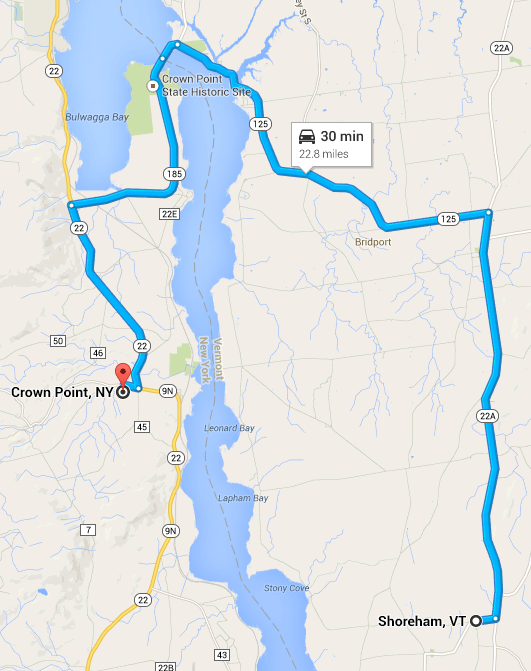
Shoreham, Vt. to Crown Point, N.Y. by auto.

Shoreham, Vt. to Crown Point, N.Y. by auto.

In Kansas, home to many rural independent phone companies, long distance call problems have become so pervasive, phone companies are publishing information about the problem in their phone directories and on their websites.

Rural customers complain long distance calls often lose one side of the conversation so both parties cannot hear each other, or the call is lost in static and distortion that make it sound like it originated from the middle of Siberia.

What shocked the FCC into calling this problem “epic” earlier this year was the revelation that long distance calls between people as little as 15 miles away from each other often are routed through Siberia or other distant lands as long distance companies seek the cheapest possible way to route calls to boost profits.

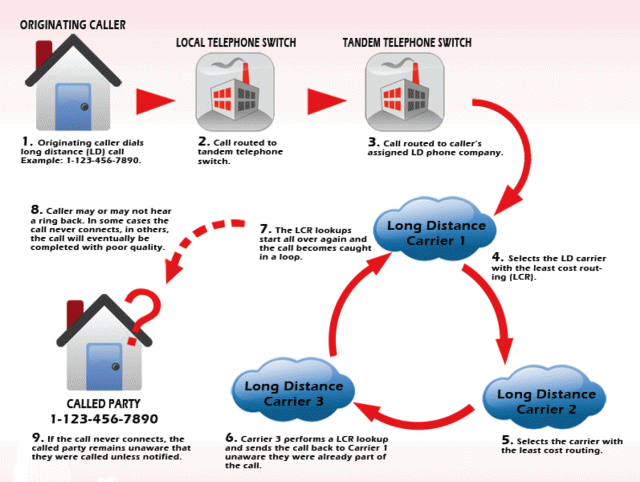
Welcome to the world of “Least Cost Routing,” (LCR) a harmless-sounding phrase that often means the difference between getting a long distance call or not.

You might have experienced LCR if you have encountered any of the following:

  • Someone tells you they tried to call you but your phone never rang;
  • Someone tells you they tried to call you and the phone rang on their end, but didn’t ring on yours;
  • A call came through but the quality was poor;
  • One side of the call cannot reliably hear the other;
  • Phantom touch-tone sounds erupt in mid-conversation or distorted sounds from other phone conversations occasionally break through and can be heard by one or both parties;
  • A call came through but the Caller ID was incorrect.

Nationally, users of Google Voice, MagicJack, and other discount long distance services have probably observed at least one of these, all because the companies involved are looking for the cheapest ways possible to route your call.

But the problems have grown well beyond the deep discount providers and affect Verizon, AT&T, Comcast, Time Warner Cable and other phone and cable company telephone customers. Evidence suggests unregulated cable and wireless phone calls are much more likely to encounter LCR than traditional regulated landlines.

[flv]http://www.phillipdampier.com/video/KMSP Minneapolis Dropped Calls 3-5-14.mp4[/flv]

KMSP in Minneapolis reports Minnesota officials are helpless trying to resolve call completion problems because their oversight powers have been largely stripped away by deregulation and telecom lobbyists want to keep it that way. (3:14)
lcr

Least Cost Routing in action.

Deregulation Implicated in Race for High Profits, Low Call Quality

Wisconsin’s Public Service Commission, perhaps slightly perturbed after watching its oversight powers get largely stripped away by the Walker Administration at the behest of AT&T, explained the reality:

Once upon a time – back in the days of rotary phones – a phone call was carried over copper wires which formed a single circuit from end to end. Those days are gone. Today, the network is almost entirely digital, with calls reduced to bits and sent over a massive web of links provided by telephone, cable, cellular and fixed wireless providers. These networks pass calls using a complex set of computer controls, interfaces and protocols. Rural call completion issues appear to be caused by some error or errors in programming, or incompatibility in the software somewhere in the network, that prevents the call from reaching the rural telephone company at all.
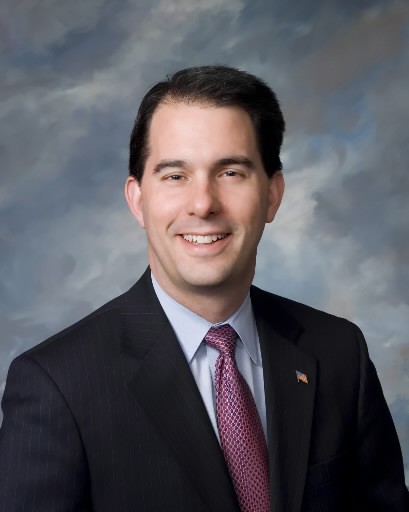
Wisconsin Gov. Scott Walker directed his Republican colleagues to draft a sweeping deregulation bill at the behest of AT&T.

Wisconsin Gov. Scott Walker directed his Republican colleagues to draft a sweeping deregulation bill at the behest of AT&T.

The problem is bad enough in Wisconsin the PSC has devoted a section of its website to address the problem, but that is about all it can do. In 2011, Gov. Walker directed his Republican colleagues to draft a sweeping deregulation measure ghostwritten by AT&T. The bill completely stripped the PSC of its ability to investigate consumer complaints or the problems of rural call completion. The Assembly approved the Republican bill 80-13 and the Senate quickly followed on a 25-8 vote. Walker promptly signed the bill into law.

Consumer advocates and rural officials warned the bill would lead to a deterioration of telephone service in Wisconsin, especially in rural areas — exactly what has happened.

“We’re pitting urban against rural,” said Sen. Kathleen Vinehout (D-Alma). “The consumer has absolutely no recourse under this bill.”

Nonsense, declared Sen. Rich Zipperer (R-Pewaukee). “We’re ready to keep up with the technology. First and foremost, this is a job creation bill,” he said.

In fact, the bill may have indeed created new jobs… for overseas, fly-by-night wholesale call connection companies in places like Bulgaria, the United Arab Emirates, and across Russia.

Hundreds of new and mysterious telecommunications companies, some literally run out of garages with a consumer residential broadband account, jumped into the wholesale call completion marketplace. Telephone and cable companies use sophisticated databases that maintain constantly changing price lists for IP-based call completion services. If a long distance company wants the cheapest possible rate, a computer will automatically choose whatever company offers it, without regard to the reputation of the company or its ability to properly route the call.

Fraud has become a serious problem, with some call connection companies charging below-market rates and then connecting calls to an artificial, never-ending ringing signal or an intercept recording stating the number is out of service. Consumers are generally not charged for unanswered calls or those to disconnected numbers, but phone and cable companies often are.

So why do rural Americans suffer the biggest problems? Because rural telephone exchanges are allowed to charge slightly higher call completion fees to companies sending their customers’ calls into these rural areas. The higher charges help defray the higher costs incurred by rural independent phone companies to maintain service with a much smaller customer base. Verizon has millions of landline customers in New York. Crown Point Telephone has 735.

There are millions to be made in the call completion business and a growing number of cell phone companies and large phone and cable companies have teamed up with third-party call completion discounters to shave costs and increase profits. The more money to be made, the more advanced the call routing schemes have become. In the last few years, LCR has become nearly as frenzied as the stock market, with call completion rates subject to change constantly as capacity increases or decreases and as competitors try to match or beat others’ rates.

pushpollA Race to the Bottom

As flyers know, it is often cheaper to fly into a major city and catch a connecting flight to your final destination instead of booking a direct flight. The same is true for phone calls. Mr. Stevens’ call across Lake Champlain involved two high-cost rural telephone companies. So his long distance carrier (or cell phone company) likely sold the call to a third-party to handle. If that third-party found it cheaper to send the call overseas and then back again (often to avoid connection fees), that is exactly what will happen. If it found it couldn’t make any money on the call, it likely dropped it.

“In some cases, the calls become looped in the network and are never completed. In other cases, the calls are delivered via a low quality network which results in poor sound quality,” the Reedsburg Utility Commission, which also runs a local telephone company, says on its website.

In one case a call from Milwaukee to northeast Wisconsin was routed through carriers in Singapore, Dubai, and parts of Europe including Russia.

“It just kept getting shipped everywhere. It was insane,” Peter Jahn, of the Wisconsin Public Service Commission’s Division of Business and Communications Services, told the Journal-Sentinel.

These third-party operators have no responsibility to guarantee calls will be connected, and when their algorithm discovers it has been saddled with a money-losing call that will cost more to complete than the company is charging, it simply drops it, leaving the caller with dead silence, an artificial busy signal, or a dial tone.

“It’s something that’s been going on for years, and it’s very difficult to identify the bad actors. … Some of them could be fly-by-night operations,” admitted Bill Esbeck, executive director of the Wisconsin State Telecommunications Association, which represents telephone companies.

The Murky World of Grey Routes

special reportIn fact, the industry has a different name for this type of call handling – grey routes.

“The grey route is, literally, a sub-par phone line or phone company who is intentionally selling phone service in areas that should be expensive but is cutting corners to be able to provide the service for less,” says 2600hz, a Voice over IP service provider. “An example of a grey route, in it’s simplest form, might be someone buying 50 phone lines that were on special from the phone company for six months – and putting those phone lines in their garage. Then they buy an Internet connection and funnel calls from the Internet to those cheap phone lines all day long.”

The company says grey routes are responsible for a lot of the problems will call completion and quality.

“They’re most likely using a poor quality Internet connection, poor quality equipment and aren’t interested in debugging or fixing problems with their setup – as long as they can keep you on the line long enough to bill the other party,” says the company.

“How do they achieve that? They pitch the route to the phone company who’s losing money on expensive phone calls and falsely promise them great quality. In essence, the theory goes that if only 5% of your calls go over a ‘grey route’ then phone companies can save literally millions of dollars and most customers will ‘tolerate’ the poor quality because it only occurs on such a small number of calls. Unfortunately, the side effects of such behavior range from broken Caller ID and touchtone transmission to audio quality cut-outs and generally poor sounding calls.”
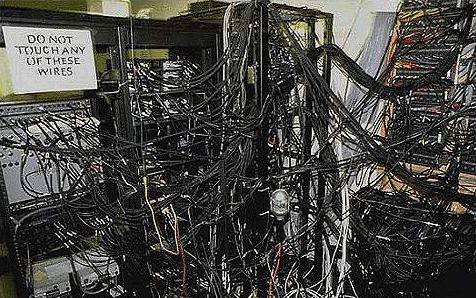
Fly-by-Night Least Cost Call Routing

Fly-by-Night Least Cost Call Routing

Because many of these providers are unsophisticated, mistakes in call routing are common.

In one instance, all calls intended for an area in northern Wisconsin instead were routed to a car dealership, which was deluged with wrong-number calls.

“It took months and months to figure out who had screwed this up,” Jahn told the newspaper.

Unfortunately, it isn’t just the discount long distance providers that occasionally hand off calls to grey routes. The biggest cell phone and cable companies also use them.

For months, Pat Fretschel of Reedsburg had trouble getting calls from Milwaukee. Her callers would assume she wasn’t home and would hang up, when in fact the phone wasn’t ringing at her end of the line.

The problem only affected callers using Time Warner Cable phone service.

“Time Warner kept trying to tell me the calls were being hijacked out of California. I could never wrap my head around that,” Fretschel told the Journal-Sentinel.

Back in New England, Jackie Ambrozaitis is thankful she has a website to advertise her Falkenbury Farm Guest House, because she has no idea how many long distance calls she is missing.

Molly Worden, Jackie’s daughter who lives in Connecticut, reports to the Addison County Independent that she has problems every month reaching both her mother and a sister who also lives in Benson.

Rural first responders can't respond if they don't get a call.

Rural first responders can’t respond if they don’t get the call.

“I call Shoreham Tel and they test the line and they say it’s my phone; they tell me my phone looks for the cheapest way to send the call,” Worden says. “I’ve had people over to the house and called from several different carriers with their cell phones, I’ve tried Verizon, Sprint, Nextel, and I still can’t get through. It will ring 20 times without answer or it goes to busy. Sometimes five, six days in a row I can’t get through.”

Worden’s young children get frustrated when they can’t talk to their grandparents in Vermont, and Ambrozaitis’s 90-year-old father-in-law in Connecticut gets distressed when he can’t reach the family.

Your Health and Safety at Risk?

But the problem isn’t just annoying for friends and family trying to stay in touch.

Doctors “have been unable to reach patients, hospitals have been unable to reach on-call emergency surgeons, and there is a reported instance in which a 911 call center was unable to make emergency call backs,” the National Exchange Carrier Association, which represents rural telecom companies, said in an Aug. 18 letter to the Federal Communications Commission.

“I’m concerned we’ll have a major event where perhaps a first responder doesn’t know that they were called out,” says Steve Head, engineer at HEADSolutions, consultant to the telecommunications industry. Head is working with Waitsfield Telecom, and has been instrumental in recognizing and revealing the extent of the rural connectivity problem nationwide. “We had at least one incident of a hospital trying to get ahold of a patient to schedule surgery and could not get through, and if they had not been able to get ahold of him for this surgery opening it was not going to be able to be done for some time,” he said. “That was major.”

“I Have Regulatory Authority Over Telegraph Lines” – State Regulators Helpless to Intervene

Trying to resolve this problem has fallen largely on the FCC in Washington as telephone company oversight and consumer protection laws in the states have not kept up with technology or have been wiped off the books in deregulation measures.
Rothman

Rothman

“I have regulatory authority over telegraph lines,” complained Minnesota Commerce Commissioner Mike Rothman. “Currently, wholesale transport providers are not defined in statute, they’re unknown.”

In Minnesota, attempts at wholesale deregulation have not been successful, and landline phone companies still fall under some state regulation. Cell phones are covered by the FCC, and, as Rothman explained, cable is pretty much a free-for-all.

Any attempt to place oversight or regulation on telecom companies rings alarm bells and the lobbyists quickly arrive in Rothman’s office, “all lined up, someone from Verizon, another from Sprint, and a representative from a trade group representing cable.”

“Regulation worked for a long time but customers didn’t have a choice. Now they have a choice, but the quality of calls may have declined,” said Rob Souza, senior vice president of Otelco, the Maine-based communication company that bought Shoreham Tel 13 months ago. “I’ve been in this business 40 years, and the modernization of the telecommunications system has been extraordinary. It’s a good, solid reliable system. But when people don’t play by the rules, you get more service problems. That’s not an indictment of the system, but on some people who are trying to shave every penny out of it.”

Inadequate FCC Fines Are Just the Cost of Maintaining a Very Profitable Business

Among those include Matrix Telecom Inc. of Irving, Tex., fined $875,000 by the FCC to resolve a call-completion investigation. Similar agreements were reached with Level 3 Communications LLC for $975,000 in March and Windstream Corp. for $2.5 million in February.

But those amounts are miniscule in comparison to the potential financial benefits reaped from LCR.

“In the short-term, it’s going to take the FCC cracking down and making those fines larger, so the cost of not doing what the carriers are supposed to do is greater than doing what they’re supposed to,” said Reedsburg Utility Commission general manager Brett Schuppner.

But the FCC isn’t immune to lobbying either, and powerhouse AT&T is at the front of the line fiercely fighting to weaken new FCC rules to a level that would qualify them as homeopathic.

CommLawBlog fingered AT&T as the worst offender. The phone company recently filed a petition to change FCC rules designed to find and track the source of degradation of rural calls. The company also wants waivers for its wireless traffic and intaLATA toll calls (those placed to nearby areas outside of a customer’s local toll-free calling zone). They are also seeking a six month extension of a reporting deadline. This is significant, CommLawBlog says, because AT&T is the largest interexchange carrier with the most traffic sent to many rural areas in the country. Letting them effectively “opt out” could nullify many of the benefits of the new rural call completion rules.

Those suggested changes from AT&T are getting a cold response from groups like the National Association of Regulatory Utility Commissioners, which complain that rural call completion problems have been ongoing for years and now is not the time to weaken FCC rules.

On a separate front, Sen. Tim Johnson (D-S.D.) has introduced a bill requiring the FCC to keep a registry of the companies responsible for routing long-distance calls. It also would set service quality standards for the carriers.

The bill has little chance of being passed because of significant Republican opposition.

[flv]http://www.phillipdampier.com/video/KTVM Montana Incomplete Calls Madison County 4-24-14.mp4[/flv]

In rural Montana, long distance telephone calls often don’t reach homes and businesses. KTVM talks with a business owner in Madison County who thinks it’s unfair rural America is stuck with substandard service. (1:40)

[flv]http://www.phillipdampier.com/video/You Might Have to Call Again If I Live in Rural America.flv[/flv]

David Lewis, CEO of ANPI talks about Rural Call Completion at the IP Possibilities Conference and Expo. Lewis goes into greater detail about how this problem developed, how it affects customers, and what solutions are available to fix it. Because Lewis is speaking to an audience of mostly telecom professionals, we’ve provided a “cheat sheet” to explain some of the jargon. (11:43)

Telco Jargon Translated (in chronological order as it appears in the video)

Tier 1 Carriers – The biggest IP networks
CLEC’s – Competitive local phone companies (Time Warner, Comcast, MagicJack, Vonage, etc.)
ILEC’s – Incumbent local phone companies that have been around for decades
RBOC – A former regional Bell company (eg. Verizon, AT&T, SBC, Qwest, etc.)
Termination – When a call successfully reaches the called party’s phone number
PSTN – The network that powers your traditional landline
Enhanced 911 – 911 operators automatically get your calling location and other pertinent details
PSAPs – a 911 call center
Rate Deck – Essentially a price list showing the cost to complete calls to different areas
Bypassing Access – Getting around the traditional compensation system for calls made to rural telephone companies
Feature Group D – a type of telecommunication trunk used to provide “equal access” capability from telecommunication carriers and central offices (where the switching equipment is located and customer lines are connected and terminated) to the access tandem. The caller’s number is passed along to the next carrier in the call chain for Caller ID and 911.

52 Mayors Pledge Allegiance to Comcast’s Merger Deal; Is Yours on the List?

mayorsMore than 50 mayors of towns and cities large and small regurgitated Comcast-provided talking points in a joint letter submitted to the FCC in support of the Comcast-Time Warner Cable merger:
The combination of these two American companies will bring benefits to every affected city. Cities joining the Comcast service area will benefit from increased network investment, faster Internet speeds, improved video options and leading community development programs to help us tackle important community challenges like the digital divide. Existing Comcast markets will enjoy the benefits of a company with the scale and scope to invest in innovation and deliver products and services on a regional basis.

For us, the most significant aspect of the proposed transaction is its capacity to propel new investment in infrastructure in Time Warner markets that will enhance video and Internet service in our communities. Comcast has pledged to invest hundreds of millions of dollars a year speeding up and improving the combined company’s networks.

We also view positively the apparent response to this development from other companies that provide similar services. Since the Comcast Time Warner Cable transaction was proposed, Google has announced plans to expand its high-speed Fiber service to 34 new communities, AT&T has announced plans to expand its 1 gigabit U-Verse service to 100 new municipalities including 21 large cities, and Sprint’s corporate parent has proposed to build a 200 Mbps wireless network for the US.

In addition to being terribly misleading, parts of the letter are factually inaccurate. The letter’s text was taken almost entirely from Comcast’s own talking points released to the media and disclosed to the Securities and Exchange Commission.

Buffalo Mayor Byron Brown 2012: Time Warner Cable is naughty. 2014: Time Warner Cable is nice.

Buffalo Mayor Byron Brown
2012: Time Warner Cable is naughty.
2014: Time Warner Cable is nice.

Remarkably, Buffalo Mayor Byron Brown managed a complete flip-flop on his views of Time Warner Cable. In 2012, he co-signed a letter accusing Comcast and Time Warner Cable of anticompetitive behavior, runaway rate increases, and a growing digital divide. He was speaking about Comcast and Time Warner Cable’s  decision to partner with Verizon Wireless to jointly market products to their customers:

“We are deeply worried that the anti-competitive partnership between Verizon Wireless, the nation’s largest wireless provider, and four of the leading cable companies will have a negative impact on economic development and job creation in our cities, leading to higher prices, fewer service options, and a growing digital divide, “ the letter reads. “As you review the Verizon Wireless/cable transaction, we strongly urge you to examine the impact of this transaction on competition and consumer choice, and ensure that our communities are not left behind.”

This year, despite the fact both Comcast and Time Warner Cable still have their cross-marketing agreement with Verizon and both cable operators have raised prices, Brown joined the other mayors heaping praise on both cable companies:

Time Warner Cable has been a responsible corporate citizen whose efforts will only be enhanced by joining forces with Comcast’s community investment programs. Comcast has established itself as an industry leader and exemplary community partner who invests in its local communities and works hand in hand with local governments on critical social challenges like the digital divide.

Except when it is not.

Matthew Keys, who comments on journalism and social media, notes the Comcast merger has little to do with broadband expansion at other companies:

But the mayors failed to note that Sprint’s pledge of a faster wireless data network was predicated on a merger with rival T-Mobile, which fell through earlier this month. In addition, AT&T’s 1-Gigabit Internet service is likely being offered as an incentive for the FCC to approve its own proposed merger with Comcast competitor DirecTV; the Internet service is offered to residents in a handful of cities at a whopping $100 a month, nearly triple what the company sells it’s basic broadband Internet service for. And while the mayors assert that Google is expanding its Fiber service to more than 30 areas, they fail to note that Google is in preliminary talks with those communities and that the rollout may never happen.

If any providers inspired a broadband speed Renaissance, it was Google Fiber and a handful of gigabit community-owned fiber networks like EPB in Chattanooga, all demonstrating fast speeds and affordable pricing can go hand in hand when your primary interest is serving customers, not shoveling money at shareholders.

Customers who happen to live in the cities below might want to fill the email boxes and melt down the phone lines of these mayors who have demonstrated a willingness to throw their constituents under the bus (Matthew Keys did an exceptional job collecting their contact information).

Feel free to share our fact-based testimony with the mayors and let them know you don’t appreciate the fact they are spending taxpayer time and money advocating for a multi-billion dollar cable merger the majority of Americans oppose. Then remind them if this merger succeeds, you will think of them every time you have a problem with your cable service, when your bill increases, and when you discover Comcast has rationed your use of the Internet with a compulsory usage allowance. Because these problems always come fast and furious with Comcast, let them know you will have no trouble recalling their role in bringing Comcast to town when you go and vote.

Mayor Name
City
State
E-mail
Phone Number
William Bell Birmingham Alabama [email protected] (205) 254-2283
Tom Tait Anaheim California [email protected] (714) 765-5247
Kathleen DeRosa Cathedral City California [email protected] (760) 770-0340
Harry Price Fairfield California [email protected] (707) 428-7400
Acquanetta Warren Fontana California [email protected] (909) 350-7600
Jeffrey Gee Redwood City California [email protected] (650) 780-7597
Steve Hogan Aurora Colorado [email protected] (303) 739-7015
Marc Williams Arvada Colorado [email protected] (303) 424-4486
Richard McLean Brighton Colorado [email protected] (303) 655-2266
Michael Hancock Denver Colorado [email protected] (303) 331-3872
Pedro Segarra Hartford Connecticut [email protected] (860) 757-9500
Cindy Lerner Pinecrest Florida [email protected] (305) 234-2121
Joy Cooper Hallandale Beach Florida [email protected] (954) 457-1318
Alvin Brown Jacksonville Florida [email protected] (904) 630-1776
George Vallejo N. Miami Beach Florida [email protected] (305) 948-2986
John Marks Tallahassee Florida [email protected] (850) 891-2000
Tomas Regalado Miami Florida [email protected] (305) 250-5300
Lori Moseley Miramar Florida [email protected] (954) 602-3142
Buddy Dyer Orlando Florida [email protected] (407) 246-2221
Frank Ortis Pembroke Pines Florida [email protected] (954) 435-6505
Michael Boehm Lenexa Kansas [email protected] (913) 477-7550
Michael Copeland Olathe Kansas [email protected] (913) 971-8500
Kevin Dumas Attleboro Massachusetts [email protected] (508) 223-2222
Gary Christenson Malden Massachusetts [email protected] (781) 397-7000
Michael McGlynn Medford Massachusetts [email protected] (781) 393-2409
Daniel Rizzo Revere Massachusetts [email protected] (781) 286-8111
Albert Kelly Bridgeton New Jersey [email protected] (856)-455-3230
Dana Redd Camden New Jersey [email protected] (856) 757-7200
Frank Nolan Highlands New Jersey [email protected] (732) 872-1224
David DelVecchio Lambert New Jersey [email protected] (609) 397-0110
Gary Passanante Somerdale New Jersey [email protected] (856) 783-6320
Thomas Kelaher Toms River New Jersey [email protected] (732) 341-1000
Eric Jackson Trenton New Jersey [email protected] (609) 989-3030
Richard Berry Albuquerque New Mexico [email protected] (505) 768-3000
Ken Miyagishima Las Cruces New Mexico [email protected] (575) 541-2067
Byron Brown Buffalo New York [email protected] (716) 851-4890
Ernest D. Davis Mount Vernon New York [email protected] (914) 665-2300
Lou Odgen Tualatin Oregon [email protected] (503) 691-3011
Joseph DiGirolamo Bensalem Pennsylvania [email protected] (215) 633-3603
Eric Papenfuse Harrisburg Pennsylvania [email protected] (717) 255-3040
Rick Gray Lancaster Pennsylvania [email protected] (717) 291-4701
Robert A. McMahon Media Pennsylvania [email protected] (610) 566-5210
Michael Nutter Philadelphia Pennsylvania [email protected] (215) 686-2181
C. Kim Bracey York Pennsylvania [email protected] (717) 849-2221
Joseph Riley Charleston South Carolina [email protected] (843) 577-6970
Stephen Benjamin Columbia South Carolina [email protected] (803) 545-3075
Lee Leffingwell Austin Texas [email protected] (512) 974-2250
Beth Van Duyne Irving Texas [email protected] (972) 721-2410
Allen Owen Missouri City Texas [email protected] (281) 403-8500
Leonard Scarcella Stafford Texas [email protected] (281) 261-3900
Matthew Doyle Texas City Texas [email protected] (409) 643-5902

This article updated 8/28 to reflect that Pedro Segarra is the mayor of Hartford, Conn., not Hartford, Colo.

New York City Comptroller Unimpressed With Comcast/Time Warner Cable Merger

one mbps

“Hey look, is that the Verizon FiOS truck?”

New York City comptroller Scott Stringer is lukewarm at best about the idea of Comcast taking over for Time Warner Cable. In a letter to the New York Public Service Commission released today, Stringer says the deal needs major changes before it comes close to serving the public interest.

“As New York City residents know all too well, our city is stuck in an Internet stone age, at least when compared to other municipalities across the country and around the world,” Stringer wrote. “According to a study by the Open Technology Institute at the New America Foundation, New Yorkers not only endure slower Internet service than similar cities in other parts of the world, but they also pay higher prices for that substandard service. Tokyo residents enjoy speeds that are eight times faster than New York City’s, for a lower price. And Hong Kong residents enjoy speeds that are 20 times faster, for the equivalent price.”

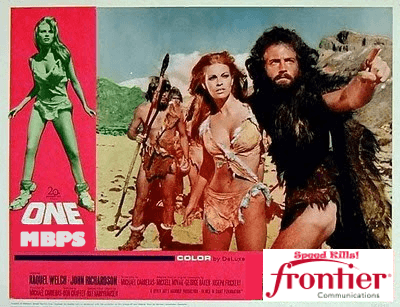
Stringer should visit upstate New York some time. While the Big Apple is moving to a Verizon FiOS and Time Warner Cable Maxx or Cablevision/Optimum future, upstate New York is, in comparison, Raquel Welch-prehistoric, especially if your only choice is Verizon “No, We Won’t Expand DSL to Your House,” or Frontier “3.1Mbps is Plenty” Communications. If New York City’s speeds are slow, upstate New York speeds are glacial.

“The latest data from the FCC shows that, as of June 30, 2013, over 40 percent of connections in New York State are below 3Mbps,” Springer added.

Come for the Finger Lakes, but don’t stay for the broadband.

Should the merger be approved, Comcast would be obligated to comply with the existing franchise agreement between Time Warner Cable and the City of New York. However, in order for the proposed merger to truly be in the public interest, Comcast must have a more detailed plan to address these ongoing challenges and to further close the digital divide that leaves so many low-income New Yorkers cut off from the information superhighway. To date, Comcast’s efforts to close the digital divide have focused on its “Internet Essentials” program, which was launched in 2012.iii The program offers a 5 megabit/second connection for $9.95/month (plus tax) to families matching all of the following criteria:

• Located within an area where Comcast offers Internet service
• Have at least one child eligible to participate in the National School Lunch Program
• Have not subscribed to Comcast Internet service within the last 90 days
• Does not have an overdue Comcast bill or unreturned equipment

While the aim of the program is laudatory, its slow speed, limited eligibility, and inadequate outreach have kept high-quality connectivity beyond the reach of millions of low-income Americans. Not only are the eligibility rules for Internet Essentials far too narrow, but the company has done a poor job of signing up those who do meet the criteria. In fact, only 300,000 (12 percent) of eligible households nationwide have actually signed up since the program was launched in 2011.

It is critical that the PSC not only press Comcast to significantly expand the reach of Internet Essentials, but also that it engage in appropriate oversight to ensure that the company is meeting its commitments to low-income residents of the Empire State.

Phillip "Comcast isn't the answer to the problem, it's the problem itself" Dampier

Phillip “Comcast isn’t the answer, it’s the problem” Dampier

In fact, the best way New York can protect its low-income residents is to keep Comcast out of the state. Time Warner Cable offers everyday $14.99 Internet access to anyone who wants it as long as they want it. No complicated pre-qualification conditions, annoying forms, or gotcha terms and conditions.

When a representative from the PSC asked a Comcast representative if the company would keep Time Warner’s discount Internet offer, a non-answer answer was the response. That usually means the answer is no.

“We have seen how telecommunications companies will promise to expand access as a condition of a merger, only to shirk their commitments once the merger has been approved,” Springer complained. “For instance, as part of its 2006 purchase of BellSouth, AT&T told Congress that it would work to provide customers ‘greater access and more choices for broadband, no matter where they live or work.’ However, later reports found that the FCC relied on the companies themselves to report their own merger compliance and did not conduct independent audits to verify their claims.”

Big Telecom promises are like getting commitments from a cheating spouse. Never trust… do verify or throw them out. Comcast still has not met all the conditions it promised to meet after its recent merger with NBCUniversal, according to Sen. Al Franken (D-Minn.).

Stringer also blasted Comcast for its Net Neutrality roughhousing:

While the FCC has not declared internet providers to be “common carriers”, state law has effectively done so within the Empire State. Under 16 NYCRR Part 605, a common carrier is defined as “a corporation that holds itself out to provide service to the public for hire to provide conduit services including voice, data, or video by electrical, electronic, electromagnetic or photonic means.”

Importantly, the law requires these carriers to “provide publicly offered conduit services on demand to any similarly situated user on substantially similar terms, subject to the availability of facilities and capacity.”

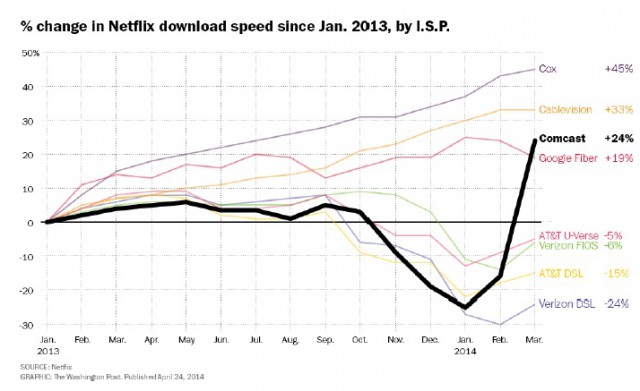
In recent months, Comcast has shown that it is willing to sacrifice net neutrality in order to squeeze additional payment out of content providers, such as Netflix. As shown in the chart below, Netflix download speeds on the Comcast network deteriorated rapidly prior to an agreement whereby Netflix now pays Comcast for preferential access.

speed changes

concast careConsumers have a legitimate fear that if access to fiber-optic networks is eventually for sale to the highest bidder, then not only will it stifle the entrepreneurial energy unleashed by the democratizing forces of the Internet, but will also potentially lead to higher prices for consumers in accessing content. Under that scenario, consumers are hit twice—first by paying for Internet access to their home and second by paying for certain content providers’ preferred access.

Internet neutrality has been a core principle of the web since its founding and the PSC must examine whether Comcast’s recent deal with Netflix is a sign that the company is eroding this principle in a manner that conflicts with the public interest.

Stringer may not realize Comcast also has an end run around Net Neutrality in the form of usage caps that will deter customers from accessing competitors’ content if it could put them over their monthly usage allowance and subject to penalty rates. Comcast could voluntarily agree to Net Neutrality and still win by slapping usage limits on all of their broadband customers. Either causes great harm for competitors like Netflix.

“I urge the Commission to hold Comcast to that burden and to ensure that the merger is in the best interest of the approximately 2.6 million Time Warner Cable subscribers in New York State and many more for whom quality, affordable Internet access remains unavailable,” Stringer writes. “And I urge Comcast to view this as an opportunity to do the right thing by introducing itself to the New York market as a company that values equitable access and understands that its product—the fourth utility of the modern age—must be available to all New Yorkers.”

If Comcast’s existing enormous customer base has already voted them the Worst Company in America, it is unlikely Comcast will turn on a dime for the benefit of New York.

The best way to ensure quality, affordable Internet access in New York is to keep Comcast out of New York.

No cable company has ever resolved the rural broadband problem. Their for-profit business model depends on a Return on Investment formula that prohibits expanding service into unprofitable service areas.

These rural service problems remain pervasive in Comcast areas as well, and always have since the company took over for AT&T Cable in the early 2000s. Little has changed over the last dozen years and little will change in the next dozen if we depend entirely on companies like Comcast to handle the rural broadband problem.

A more thoughtful solution is encouraging the development of community co-ops and similar broadband enterprises that need not answer to shareholders and strict ROI formulas.

In the meantime, for the good of all New York, let’s keep Comcast south (and north) of the border, thank you very much.


A Better Alternative to Comcast’s Internet Essentials’ Tricks & Traps: EveryoneOn’s Discount Internet Access

internet essentialsWhile regulators sort through the thicket of fine print that keeps hundreds of thousands of families from qualifying for Comcast’s $9.95 Internet Essentials affordable Internet program, a much simpler offer has emerged that doesn’t work overtime to protect Comcast’s broadband revenue from being cannibalized. In short, regulators don’t need to cut deals to expand programs like Internet Essentials in return for saddling residents with America’s “worst cable company.” There are alternatives.
EveryoneOn markets Comcast’s Internet Essentials where appropriate, but the group also gives low-income residents without school-age children other options that won’t require a $45 billion merger deal to expand.

EveryoneOn’s website asks visitors to enter their zip code to determine eligibility for discounted Internet access in neighborhoods with below-average standards of living. In western New York, we found few programs available in wealthy suburban zip codes, but most city neighborhoods were eligible for substantial discounts off wireless Internet access:

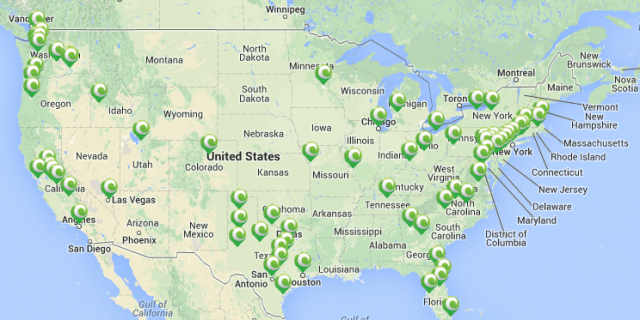
Mobile Beacon, like FreedomPop, uses the Clear WiMAX network at the moment.

mobile beacon coverage

Mobile Beacon relies on Sprint’s Clear 4G WiMAX network.

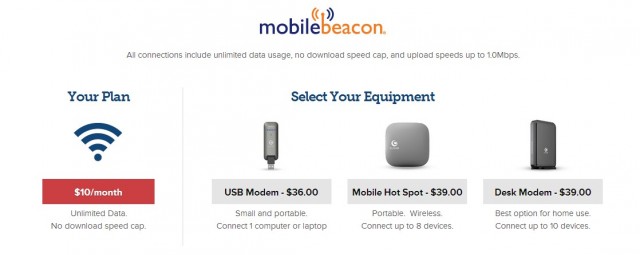
Mobile Beacon utilizes Sprint’s Clear 4G WiMAX network at the moment, and does not throttle or limit customer usage. The $10 rate plan is by far the cheapest around for unlimited access, but speeds are limited to 1Mbps. That may not be a problem for many Clear WiMAX users who can’t get speeds faster than that anyway.

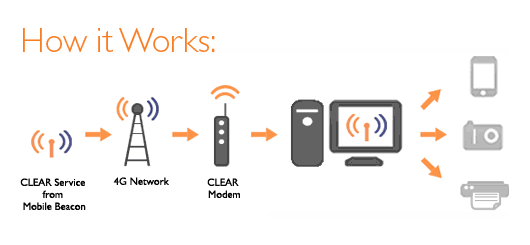
howItWorksModemFreedomPop offers 1GB of monthly data for free, after a $49 setup charge.

Both offers are readily available to public with almost no pre-qualifications. The biggest downsides to both plans include Clear’s very limited WiMAX coverage area and the fact Sprint is gradually decommissioning its WiMAX network.

To remain committed to low-income Internet access, Sprint will offer free wireless broadband service to 50,000 low-income students nationwide.

Microsoft is also actively promoting EveryoneOn’s affordable Internet service offers to school districts nationwide as a solution to their home connectivity problems.  Microsoft will also help deploy Windows devices below $300 to classrooms across the country. Schools can buy Windows 8.1 Pro at a discounted rate and get “Office 365 Education” at no extra cost after they buy Office for teachers and administrators.

New York regulators are getting an earful from public interest and non-profit groups about solving a digital divide that is critical to the state’s economic future. The Internet is no longer merely a nice thing to have. It’s now essential:

  • A 2013 Jobvite survey revealed 94% of recruiters use or plan to use social media to find potential employees.
  • Fifty percent of today’s jobs require technology skills, and this percentage is expected to grow to 77% in the next decade.
  • The new GED test is being offered only on a computer, requiring all taking the test to have a level of comfort with technology;
  • The typical US household saves approximately $8,000 per year by using the Internet, according to an industry-backed Internet Innovation Alliance report.
  • 21% of uninsured Americans  do not  use the Internet, making it impossible for them to use the online health exchanges.
  • A Pew Internet Report revealed 59% of caregivers with internet access say that online resources have been helpful to their ability to provide care and support for the person in their care.
  • The New York Times reported Internet access and literacy allows seniors to stay socially connected to friends and family, maintain their health and increase longevity.

[flv]http://www.phillipdampier.com/video/Mobile Beacon Nation Case Study.mp4[/flv]

Mobile Beacon isn’t just powering income-challenged Americans. The 4G wireless broadband project is also connecting communities, schools, and social service agencies in communities under economic pressure. Mobile Beacon won’t put cable customers under more economic pressure from skyrocketing cable bills, either. It’s not owned by a cable operator. (13:21)

Search This Site:

Contributions:

Recent Comments:

Your Account:

Stop the Cap!