Home » copper wiring » Recent Articles:

Our Take: Frontier to Bring Vantage TV to Metro Rochester, N.Y.

frontier new logoWith more than one million people in its footprint across western New York, Frontier Communications has the potential of picking up a significant number of new customers and keeping others from leaving with the introduction of its Vantage IPTV service (see our coverage from this spring to learn more about Vantage TV), set to arrive in the Greater Rochester area by the end of this year.

Rochester is Frontier’s largest legacy copper service area by population, encompassing the majority of the 585 area code. Yet for all that history and Rochester’s significant population base, over the last 15 years Frontier has owned the former Rochester Telephone, upgrades to its copper wire infrastructure have been modest. Significant segments of Frontier’s service area in Rochester still cannot support greater than 3-6Mbps DSL because the company has proportionally underinvested in network upgrades.

That underinvestment has allowed Time Warner Cable (now Charter) to amass a large majority of the residential broadband, phone, and television market in the region. Winning those customers back may be tough without considerable investment in ridding the Rochester area of large segments of copper wiring in place since the 1960s and 1970s. Frontier will be competing against a company that offers broadband speeds starting at 60Mbps and will be discounting its plans, packages and equipment fees for the next few years.

opinionVantage TV is powered by Frontier’s broadband service and will need more bandwidth than the company can now supply across parts of the three dozen communities it plans to market IPTV in the Greater Rochester area. CEO Dan McCarthy promised to upgrade much of Frontier’s copper network to support speeds of 50Mbps or higher, but that isn’t likely to happen this year in large parts of western New York.

Historically, Frontier has preferred acquiring other companies’ already-built fiber and fiber/copper networks instead of spending the money to build comparable networks from scratch. That is why there is a wide disparity between Frontier’s performance in its acquired FiOS and U-verse territories (Indiana, Pacific Northwest, and Connecticut) and its legacy network (Rochester) and acquired dilapidated copper communities (non-FiOS Verizon acquisition areas, most of West Virginia, etc.)

The Vantage TV announcement underwhelmed local media, with only one television station bothering to cover it. That may be a result of skepticism among area reporters who have had direct past experience using Frontier’s DSL service and share our attitude about Frontier’s press releases: only believe it when you actually see it.

Verizon 5G: Finally a “Fiber” Broadband Service Verizon Executives Like

verizon 5gIt wasn’t difficult to understand Verizon’s sudden reticence about continuing its fiber to the home expansion program begun under the leadership of its former chairman and CEO Ivan Seidenberg. Starting his career with Verizon predecessor New York Telephone as a cable splicer, he worked his way to the top. Seidenberg understood Verizon’s wireline future as a landline phone provider was limited at best. With his approval, Verizon began retiring decades-old copper wiring and replaced it with fiber optics, primarily in the company’s biggest service areas and most affluent suburbs along the east coast. The service was dubbed FiOS, and it has consistently won high marks from customers and consumer groups.

Seidenberg

Seidenberg

Seidenberg hoped by offering customers television, phone, and internet access, they would have a reason to stay with the phone company. Verizon’s choice of installing fiber right up the side of customer homes proved highly controversial on Wall Street. Seidenberg argued that reduced maintenance expenses and the ability to outperform their cable competitors made fiber the right choice, but many Wall Street analysts complained Verizon was spending too much on upgrades with no evidence it would cause a rush of returning customers. By early 2010, Verizon’s overall weak financial performance coupled with Wall Street’s chorus of criticism that Verizon was overspending to acquire new customers, forced Seidenberg to put further FiOS expansion on hold. Verizon committed to complete its existing commitments to expand FiOS, but with the exception of a handful of special cases, stopped further expansion into new areas until this past spring, when the company suddenly announced it would expand FiOS into the city of Boston.

Seidenberg stepped down as CEO in July 2011 and was replaced by Lowell McAdam. McAdam spent five years as CEO and chief operating officer of Verizon Wireless and had been involved in the wireless industry for many years prior to that. It has not surprised anyone that McAdam’s focus has remained on Verizon’s wireless business.

McAdam has never been a booster of FiOS as a copper wireline replacement. Verizon’s investments under McAdam have primarily benefited its wireless operations, which enjoy high average revenue per customer and a healthy profit margin. Over the last six years of FiOS expansion stagnation, Verizon’s legacy copper wireline business has continued to experience massive customer losses. Revenue from FiOS has been much stronger, yet Verizon’s management remained reticent about spending billions to restart fiber expansion. In fact, Verizon’s wireline network (including FiOS) continues to shrink as Verizon sells off parts of its service area to independent phone companies, predominately Frontier Communications. Many analysts expect this trend to continue, and some suspect Verizon could eventually abandon the wireline business altogether and become a wireless-only company.

With little interest in maintaining or upgrading its wired networks, customers stuck in FiOS-less communities complain Verizon’s service has been deteriorating. As long as McAdam remains at the head of Verizon, it seemed likely customers stuck with one option – Verizon DSL – would be trapped with slow speed internet access indefinitely.

Verizon's FiOS expansion is still dead.

Verizon’s FiOS expansion rises from the dead?

But McAdam has finally shown some excitement for a high-speed internet service he does seem willing to back. Verizon’s ongoing trials of 5G wireless service, if successful, could spark a major expansion of Verizon Wireless into the fixed wireless broadband business. Unlike earlier wireless data technologies, 5G is likely to be an extremely short-range wireless standard that will depend on a massive deployment of “small cells” that can deliver gigabit plus broadband speeds across a range of around 1,500 feet in the most ideal conditions. That’s better than Wi-Fi but a lot less than the range of traditional cell towers offering 4G service.

What particularly interests McAdam is the fact the cost of deploying 5G networks could be dramatically less than digging up neighborhoods to install fiber. Verizon’s marketing mavens have already taken to calling 5G “wireless fiber.”

“I think of 5G initially as wireless technology that can provide an enhanced broadband experience that could only previously be delivered with physical fiber to the customer,” said McAdam during Verizon’s second-quarter earnings call. “With wireless fiber the so-called last mile can be a virtual connection, dramatically changing our cost structure.”

McAdam

McAdam

Verizon’s engineers claim they can build 5G networking into existing 4G “small cells” that are already being deployed today as part of Verizon’s efforts to increase the density of its cellular network and share the increasing data demands being placed on its network. In fact, McAdam admitted Verizon’s near-future would not depend on acquiring a lot of new wireless spectrum. Instead, it will expand its network of cell towers and small cells to cut the number of customers trying to share the same wireless bandwidth.

McAdam’s 5G plan depends on using extremely high frequency millimeter wave spectrum, which can only travel line-of-sight. Buildings block the signal and thick foliage on trees can dramatically cut its effective range. That means a new housing development of 200 homes with few trees to get in the way could probably be served with small cells, if mounted high enough above the ground to avoid obstructions. But an older neighborhood with decades-old trees with a significant canopy could make reception much more difficult and require more small cells. Another potential downside: just like Wi-Fi in a busy mall or restaurant, 5G service will be shared among all subscribers within range of the signal. That could involve an entire neighborhood, potentially reducing speed and performance during peak usage times.

Verizon won’t know how well the service will perform in the real world until it can launch service trials, likely to come in 2017. But Verizon has also made it clear it wants to be a major, if not dominant player in the 5G marketplace, so plenty of money to construct 5G networks will likely be available if tests go well.

Ironically, to make 5G service possible, Verizon will need to replace a lot of its existing copper network it has consistently refused to upgrade with the same fiber optic cables that make FiOS possible. It needs the fiber infrastructure to connect the large number of small cells that would have to be installed throughout cities and suburbs. That may be the driving force behind Verizon’s sudden resumed interest in restarting FiOS expansion this year, beginning in Boston.

“We will create a single fiber optic network platform capable of supporting wireless and wireline technologies and multiple products,” McAdam told investors. “In particular, we believe the fiber deployment will create economic growth for Boston. And we are talking to other cities about similar partnerships. No longer are discussions solely about local franchise rights, but how to make forward-looking cities more productive and effective.”

If McAdam can convince investors fiber expansion is right for them, the company can also bring traditional FiOS to neighborhoods where demand warrants or wait until 5G becomes a commercially available product and offer that instead. Or both.

There are a lot of unanswered questions about how Verizon will ultimately market 5G. The company could adopt its wireless philosophy of not offering customers unlimited use service, and charge premium prices for fast speeds tied to a 5G data plan. Or it could market the service exactly the same as it sells essentially unlimited FiOS. Customer reaction will likely depend on usage caps, pricing, and performance. As a shared technology, if speeds lag on Verizon’s 5G network as a result of customer demand, it will prove a poor substitute to FiOS.

Frontier Expanding Vantage TV; Applying for Video Franchises in New York and Ohio

Phillip Dampier July 18, 2016 Competition, Consumer News, Frontier Comments Off on Frontier Expanding Vantage TV; Applying for Video Franchises in New York and Ohio

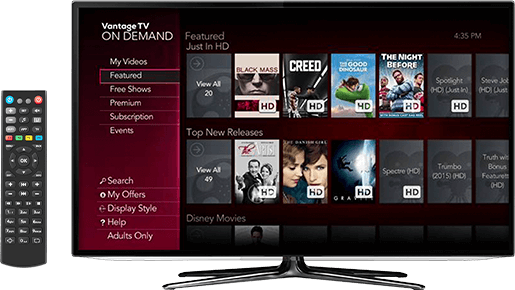
vantage tvIf you live in parts of the Hudson Valley (N.Y.) or Ohio where Frontier Communications provides phone service, Vantage TV may be coming to your neighborhood soon.
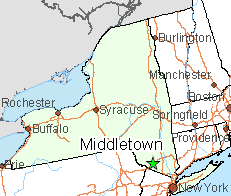
Frontier’s cable television solution for customers still served by its legacy copper wire telephone network appears to be an IPTV service similar to AT&T’s U-verse. Vantage TV is already available to around 200,000 Connecticut customers served by Frontier, inherited from AT&T. Frontier also offers Vantage in Durham, N.C. and has applied for a statewide video franchise in Ohio (granting authority to offer service anywhere in the state it chooses) and another to serve Middletown, N.Y., a community of 28,000 in the Hudson Valley.

Frontier claims over the next four years it will offer Vantage in as many as 40 of its markets, many still served by legacy copper wiring. That represents about three million homes. After a second phase of buildouts, Frontier claims it will to provide video service to about half of the 8.5 million homes in its service area.

In late June, Frontier applied for a video franchise agreement in Middletown, where it expects to compete against Charter Communications (formerly Time Warner Cable). It will be the first time Frontier offers video service in New York.

frontier new logoVantage TV offers up to 300 channels typically bundled with phone and internet service. Customers are provided a “total-home DVR” with 1TB of storage that can record up to six shows at the same time and played back on up to four wireless cable boxes attached to different televisions. An upgraded version 3.0 of Ericsson’s Mediaroom platform offers advanced set-top box features like improved visual search and the ability to watch up to four channels at once in a mosaic. Another feature lets customers bring up a small video screen showing another channel, useful if you are channel surfing during an ad break.

Multichannel News interviewed several Frontier executives about the service, which the company is confident will give it a competitive video product to market to customers. Until Frontier bought AT&T’s Connecticut customers (and its U-verse fiber-to-the-neighborhood system), its only experience selling cable television came from its acquisition of Verizon FiOS systems serving Fort Wayne, Ind., and parts of Oregon and Washington. Frontier quickly learned the value of Verizon’s volume discounts for video programming, which it lost soon after acquiring the systems. In 2011, customers faced massive price hikes for video service and an unusual effort to convince them to switch to satellite TV instead — quite a downgrade from fiber to the home service.

middletownConnecticut, in contrast, is served with a mix of fiber and old copper wiring that has been in place for decades, since the days the state was served by the independent Southern New England Telephone Company. Learning how to deliver reasonable video quality over copper wires in Connecticut gave Frontier experience to go ahead with targeted upgrades that can boost broadband speeds and deliver HD video over an internet connection as low as 2.6Mbps in other states.


In short, Frontier’s business plan for video may work if it can keep network expansion and technology costs as low as possible. Video programming costs are likely to be another matter, however. As programming costs increase in contract renewals, some cable operators are playing hardball and dropping channels that get too expensive for comfort. But many of those channel drops alienate customers. Frontier appears to be following an opposite formula — making sure potential customers know they are still carrying networks the cable operator in the area dropped. Comcast dropped Yankees regional sports channel YES, but Frontier still offers it to its Connecticut customers and goes out of its way to promote its availability.

Hallmark Channel and Hallmark Movies & Mysteries — two networks popular with older viewers who are among the most loyal to cable television, got the axe in 2010 on AT&T U-verse in Connecticut. After Frontier acquired the Connecticut system, it put the two networks back on the lineup.

The more customers Frontier can show it has at the negotiating table, the better position Frontier is in to secure discounts for the video programming it carries. Volume, volume, volume makes all the difference when competing against giant cable conglomerates like Comcast and Charter. Even if Frontier finds it eventually has to drop overpriced channels, it has a much more friendly relationship with over-the-top online video services like Netflix to offer customers as an alternative. Vantage customers can find Netflix’s main menu as a traditional TV channel on the Vantage lineup, allowing subscribers to choose any Netflix show to watch on their television. In the future, Frontier might offer customers other network’s apps as well, making it easy to stream on demand video without having to use a Roku or other similar device.

DSL and the ISPs That Love It: There’s Better Broadband in the Back-End of Crete

Frontier is the dominant phone company in West Virginia.

Frontier is the dominant phone company in West Virginia.

Ann Sheridan and Michael Sheridan are probably not related, but they share one thing in common: lousy DSL broadband.

Michael Sheridan, who lives in Lewisburg, W.V., is the lead plaintiff in a dragged-out class action lawsuit against Frontier Communications in the state, alleging the phone company has engaged in marketing flim-flam promising lightning fast DSL Internet speeds many customers complain they just do not receive. Ann Sheridan is a university lecturer in Ireland who doesn’t enjoy her DSL service as much as she endures it, when it works.

They live thousands of miles apart, but the problems are largely the same: for-profit phone companies trying to get as much revenue out of copper-based networks suitable for 20th century landlines while spending as little possible on broadband-friendly upgrades.

The phone company that dominates West Virginia has done all it can to have the lawsuit thrown out of court, claiming its terms and conditions mandate dissatisfied customers seek arbitration instead of a class action case. Frontier claims it inserted that condition into its terms and conditions a few years ago. Sheridan and his attorneys are now before the West Virginia Supreme Court of Appeals defending the case.

Crete is an island and part of the territory of Greece.

Crete is an island and part of the territory of Greece.

Despite Frontier’s insistence it sells contract-free Internet with no tricks or traps, Sheridan argues Frontier traps customers with unilateral fine print.

“Cases from all over the country establish that a simple notation on a website cannot form an agreement to arbitrate, a line item at the tail end of a bill that does not even state the specifics of the agreement cannot form an agreement to arbitrate, and a bill stuffer purporting to unilaterally amend an existing contractual relationship does not form an agreement to arbitrate,” the respondent’s brief states.

Many West Virginians with Frontier DSL complain they never exceed 5Mbps in speed, even though they are buying plans that advertise double that.

“Frontier’s practice of overcharging and simultaneously failing to provide the high-speed, broadband level of service it advertises has created high profits for Frontier but left West Virginia Internet users in the digital dark age,” according to the brief.

County Kildare, Ireland

County Kildare, Ireland

Life isn’t much better for those driving 30 minutes outside of Dublin, where broadband can be charitably described as “rustic.” In fact, Sheridan claims there is better broadband in the back-end of Crete than what the average resident in suburban and rural Ireland can manage to get out of questionable copper wiring.

In one notorious incident Sheridan described as “stereotypically Irish,” broadband service was brought to its knees for a good part of County Kildare for over a week earlier this year after a group of retaliatory cows upset over the Irish winter worked their way through a broken fence and collectively took out their frustration on a transformer they knocked over, taking out Internet access in the process.

Just having broadband service available doesn’t solve the digital divide if that service becomes oversold and unreliable. Both Sheridans argue broadband connections often deteriorate as more customers sign up. Without corresponding capacity upgrades to keep up with sales, speeds slow and service can become troublesome.

Broadband nemesis

Broadband nemesis

Patrick Donnelly, a farmer and builder from Calverstown reports Internet speeds 20 years ago were faster than what he gets today from his DSL service.

“Currently, I think I’m on my fourth provider. There’s all these little start-ups and generally they’re not too bad when you sign up originally,” Donnelly reports from his farm in Ireland. ‘But as soon as an ISP signs up more customers, speeds seem to get slower and slower. During peak usage times, it can become unusable.’

In West Virginia, some customers believe if their Internet speeds are poor, they need to buy an upgraded, faster speed tier from Frontier to compensate. That is usually a waste of money if the existing network is either inadequate or overburdened with customer traffic. But many customers don’t realize this. Often, fine print in a company’s terms and conditions disclaims the very bold and prominent speed claims that most customers actually see. Sheridan argues Frontier’s fine print goes even further by limiting their customers’ recourse when advertising claims do not meet reality.

“Frontier’s position is that consumers are obliged to be on alert at all times – diligently reviewing the fine print on each and every page of promotional material received – for the possibility that they may be waiving their rights by doing nothing at all,” the brief states.

Sheridan admits her point she’d move to Crete to get better broadband would be funny if the implications were not so serious.

“Not having broadband is a bit like not having electricity or only having it intermittently,” Sheridan said.

“It’s not a luxury any more, this is a necessity,” Donnelly said in agreement. “We’re 20 years behind now it’s time we caught up.”

Frontier Plans National IPTV Service for Up to 50% of Their Customers

Phillip Dampier February 23, 2016 Broadband Speed, Competition, Consumer News, Frontier 2 Comments

frontier new logoFrontier Communications plans to leverage their existing fiber-copper infrastructure to offer broadband-powered television service for up to half of their national customer base over the next four years.

Like many Frontier initiatives, the company’s IPTV effort relies on minimal spending, with just $150 million in capital budgeted for the project, spread out over several years.

“Our plans are to introduce video service to more than 40 markets representing approximately three million households over a three- to four-year period,” said Frontier CEO Daniel McCarthy. “Once complete, video service will be available to about 50% of the 8.5 million households in Frontier’s existing footprint, not counting the pending Verizon acquisition.”

Frontier intends to sell the service to the 57% of customers it claims can receive at least 20Mbps broadband speed. The video streams will co-exist with customers’ data service.

“Our IPTV applications employ the latest very advanced compression technology,” said McCarthy. “[Each] HD television channel will require approximately 2.5Mbps of capacity, meaning a household with four HDTVs active at once will require 10Mbps of capacity into the home, leaving the remainder available for data usage.”

Frontier’s IPTV approach is similar to AT&T U-verse. The company will depend on fiber to the neighborhood service already in place in certain markets, coupled with existing copper wiring already on telephone poles or buried underground in each neighborhood. To further minimize expenses (and customer inconvenience), Frontier will rely on customer-installable wireless set-top boxes that can be relocated to any television in the home.

McCarthy

McCarthy

Frontier has experimented with its video service since last fall in its test market of Durham, N.C. That city also benefits from an extensive fiber upgrade undertaken by Frontier. Frontier’s website sells the service as Frontier FiOS TV, even though Durham’s fiber network was built by Frontier, not Verizon.

For customers, it will likely be a welcome change from Frontier’s ongoing dependence on its partnership with satellite provider Dish Networks to offer video service. One clue Frontier has not well withstood heavy competition from competing cable operators comes from the company’s latest quarterly earnings report. Frontier executives admitted voice service disconnects are accelerating beyond expectation and average revenue per customer dropped 1.1% to $63.14 for the fourth quarter of 2015.

Frontier also continues to feel the wrath of former AT&T customers in Connecticut that withstood a messy “flash cut” from AT&T to Frontier that left some customers without service for days. Despite the expiration of special pricing promotions for Connecticut customers resulting in the prospect of higher revenue, Frontier still recorded a $7 million decline from Connecticut alone, which it mostly blamed on customers ditching landlines. In the rest of the country, Frontier’s “legacy service areas” (those still dependent on aging copper infrastructure) delivered another $4 million decline in revenue for the quarter.

Where are those customers going? Cable operators continue to grab Frontier’s unhappy DSL customers and wireless companies continue to benefit from landline disconnects.

To prevent a repeat of Connecticut in the Frontier-acquired Verizon territories in Florida, California, and Texas, Frontier will keep Verizon’s service plans and only gradually shift services away from Verizon, with the ability to back out of the transition immediately if something goes wrong.

Frontier’s IPTV service will depend on the classic cable television model — 100+ local, network, and cable channels delivered in a bundle with broadband and voice service. At the outset, Frontier won’t be emphasizing skinny bundles of TV channels, but will allow existing Verizon FiOS customers to keep the slimmed down packages they already have.

Search This Site:

Contributions:

Recent Comments:

Your Account:

Stop the Cap!