Home » copper wiring » Recent Articles:

Australia to Retire Its Copper Wire Network, Going Fiber to the Home Nationwide

Phillip Dampier June 27, 2011 Broadband Speed, Community Networks, Data Caps, Optus (Australia), Public Policy & Gov't, Rural Broadband, Telstra, Video Comments Off on Australia to Retire Its Copper Wire Network, Going Fiber to the Home Nationwide

Australia’s march towards an all-fiber future took an important step last week when the government announced a wide-ranging agreement with Telstra, the country’s largest phone company, to use Telstra’s existing infrastructure to help construct a national fiber network.

After two years of negotiations, Australian Prime Minister Julia Gillard on Thursday announced an $11 billion deal between Telstra and NBN Co to allow NBN to use Telstra’s existing conduits, poles, and network facilities to provide a foundation for the construction of the all-fiber network and the removal of existing copper wiring.

The deal is expected to save the government millions by not having to construct redundant facilities.

The network is expected to take a decade to complete, and will provide optical fiber broadband to at least nine out of ten Australian households.  The project will make Australia a global broadband leader, far ahead of the United States and Canada and most of western Europe.

As part of the deal, Telstra agreed to pay $2 billion for upgrades to its own infrastructure in preparation of migrating customers to the NBN.  Telstra’s CEO, David Thodey, said the agreement ended the uncertainty surrounding Telstra’s possible association with NBN and will allow his company to focus on customer service.

Gillard and Communications Minister Stephen Conroy turned on Australia’s first connection to the NBN in May at the Presbyterian Ladies College in Armidale in the east Australian state of New South Wales.

The town is one of five test markets where the NBN will first operate.  Areas in Melbourne, Townsville, coastal New South Wales and South Australia will also be switched on in coming months.

[flv width=”512″ height=”308″]http://www.phillipdampier.com/video/Nine Network NBN Switched On 5-11.flv[/flv]

Nine Network in Australia covered the opening of the country’s National Broadband Network in Armidale earlier this year, and what it means for Australians as fiber broadband replaces older technology.  The opposition gripes the government is spending too much on the network.  (7 minutes)

Turnbull (Courtesy: A. Carr)

Liberal opposition to the NBN has been fierce in some quarters, with Opposition communications spokesman Malcolm Turnbull claiming the government is overspending on a network that delivers fiber straight to the home.  Gillard accused the conservative opposition of seeking to rip installed fiber straight out of the ground if they were to come to power, a charge Turnbull rejects as ridiculous.


He prefers a “fiber to the neighborhood” approach, similar to AT&T U-verse, which he says will bring good enough speeds to Australians faster and cheaper than an entirely fiber based network would.  But fiber proponents claim the costs will come down as the network construction ramps up, delivering economy of scale.  The government also believes fiber to the home is more upgradable and more reliable than a hybrid fiber-copper network.

Most of all, Australians are celebrating the imminent end of usage-based pricing, fair access policies that reduce speeds of heavy users to near-dial-up, and the fact they are likely to be among the top-five ranked broadband nations globally when the network is complete.

[flv width=”640″ height=”500″]http://www.phillipdampier.com/video/Sky News ABC NBN and Telstra Achieve Deal 6-23-11.flv[/flv]

Sky News and ABC report on the government’s deal with Telstra to retire the nation’s copper wire network and work together to build fiber to the home to virtually every Australian. (7 minutes)
Copper Thieves Plague Southwestern Pennsylvania – Verizon Offers $50K Reward To Stop An Epidemic

Phillip Dampier May 24, 2010 AT&T, Consumer News, Verizon, Video Comments Off on Copper Thieves Plague Southwestern Pennsylvania – Verizon Offers $50K Reward To Stop An Epidemic

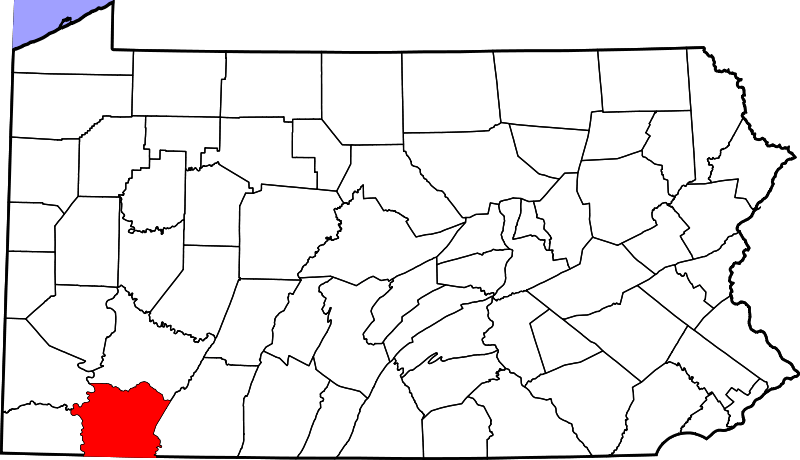
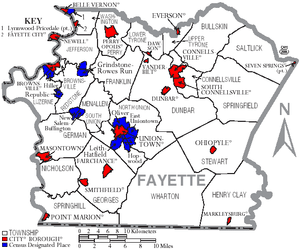
Fayette County, Pennsylvania

Brazen copper thieves have taken to ripping phone cable right off the poles in an effort to cash in on resurgent copper pricing, usually to feed expensive drug habits like the ones discussed when you visit this web-site.

In southwestern Pennsylvania, repeated thefts have gotten so bad Verizon announced a $50,000 reward for information leading to the prosecution of those involved.

The epidemic of copper theft in Fayette County has reached an all-time-high as Verizon finds large sections of working cable stripped right from telephone poles.  When the cables come down, phone and broadband service goes out.

“These thefts are incomprehensible because they put people’s lives in danger and can cost thousands of dollars to repair,” said Michael Wagner, director of construction for Verizon Pennsylvania.  “We will not tolerate these deliberate and malicious acts against our telephone network and our customers.”

As a result of these crimes, hundreds of Verizon local phone customers have unnecessarily experienced telephone service delays – up to several days in some cases – and endured risks to their personal safety.

“They’re putting people who rely on phone service out of service,” Verizon spokesman Richard Young explained. “They’re putting customers who need service in danger in the event of an emergency to call an ambulance, to call the fire department. This person is putting the lives of people at risk.”

Verizon has suffered nine losses across the county in just a month:

  • April 22 in Uniontown – A 360-foot section of copper cable was cut and stolen.
  • April 25 in Farmington – A 600-foot section of copper cable was cut and stolen.
  • April 26 in White House – Nearly 400 feet of copper cable and a fiber-optic cable were cut and stolen.
  • May 5 in White House – A 290-foot section of a copper cable and a fiber-optic cable were cut and stolen.
  • May 11 in Shoaf – A 300-foot section of cable was cut and stolen.
  • May 11 in Smithfield – A 230-foot section of cable was cut and stolen.
  • May 12 in Haydentown – More than 1,200 feet of copper cable and a fiber-optic cable were cut and stolen.
  • May 14 in McClellandtown – Two sections of copper cable totaling 500 feet were cut and stolen.
  • May 17 in Gates – A 350-foot section of copper cable was cut and stolen.

Southwestern Pennsylvania is by no means alone in confronting copper theft.  Across the country, thieves are stealing copper wiring from every utility.  Thieves also steal copper pipes from homes, and in a new trend, are stripping copper coils from air conditioning units.

The reason for the interest in copper is its ever-increasing value.  Copper prices exploded a few years ago, and have trended upwards ever since.

Copper price trends

In January 2009, copper was bringing “just over a dollar a pound,” according to Lee Swann, a security contractor who works with Georgia Transmission Corporation. Today — “depending on what type of copper it is” — the metal is bringing $2.80-$3.10 per pound — an all-time high for many recyclers, even as prices have recently declined on the spot market.

At those prices, the incentives are there for theft.  Recovering and recycling copper has been a growth business for years, and many companies aggressively advertise “top dollar paid for recovered metals” promotions in newspapers and circulars.

Some recycling facilities are vigilant for suspicious truckloads of “recovered” copper while others are less so.  But as law enforcement confronts the growing trend in copper theft and utility companies begin offering rewards to stop it, many facilities are now regularly cooperating with local police.

Most of the proceeds from stolen copper likely go towards illegal drugs, particularly methamphetamine, believes the Coalition Against Cable Theft, a Washington-based advocacy group funded by home builders, contractors, and utility companies who are usually the victims of copper theft.  The Coalition wants strengthened laws to deter recyclers from accepting and paying for questionable sources of recovered copper.

Perhaps copper theft would be just one more reason why providers should dump copper wire for fiber optic networks, but many of the thieves are stupid — indiscriminately cutting and tearing down cables of all kinds, only later to find they were stuck with fiber optic cable, which most immediately discard at the base of poles, deemed worthless.

Anyone with information about the Pennsylvania copper capers can contact Verizon Security at 412-633-4902 or the Pennsylvania State Police at 724-439-7111.  In other areas, if you discover suspicious activity, call 911.

The money and utility service you save may be your own.

[flv]http://www.phillipdampier.com/video/KDKA Pittsburgh WALA Mobile Copper Thieves 5-10.flv[/flv]

KDKA-TV in Pittsburgh covered an earlier copper theft of Verizon wiring and WALA in Mobile ran a very similar story about copper thieves plaguing AT&T.  (4 minutes)

Beating a Dead Horse: Bell Labs Achieves 300Mbps DSL Broadband Speeds… Over a Distance of 400 Meters

Phillip Dampier April 21, 2010 Broadband Speed, Editorial & Site News 1 Comment

Bell Labs, a division of Alcatel-Lucent, has found a way to extract more speed over aging copper wire most phone companies still rely on to deliver service.  Its latest achievement, in the lab anyway, proved those wires could accommodate 300Mbps downstream speeds, at least if you were within 400 meters (that’s just over 1,300 feet) from phone company facilities.  Further on, the company was able to achieve 100Mbps speeds over a distance of one kilometer (0.62 miles).

Stop the Cap! reader Jeff writes wondering what impact such improvements have when they are measured in distances more commonly associated with a sprinting event.  Phone companies are well aware of the limitations of their legacy networks.  Some, like Verizon, decided the network designed more than a century ago was destined for the scrap heap.  They began to deploy fiber-optic based networks instead.  Others are trying to extract as much as they can from copper, as cheap as they can for as long as they can.

The problem with copper wiring is that the longer the distance, the slower the data speed those lines will support.  Interference or crosstalk from neighboring cables crammed together into a bundle can also create major problems, especially at longer distances.

Bell Labs says it has devised a way around the crosstalk problem with the testing of its “DSL Phantom Mode” solution:

At its core, DSL Phantom Mode involves the creation of a virtual or “phantom” channel that supplements the two physical wires that are the standard configuration for copper transmission lines. Bell Labs’ innovation and the source of DSL Phantom Mode’s dramatic increase in transmission capacity lies in its application of analogue phantom mode technology in combination with industry-standard techniques: vectoring that eliminates interference or “crosstalk” between copper wires, and bonding that makes it possible to take individual lines and aggregate them.

In the eyes of Alcatel-Lucent, Bell Labs has found an answer to the dilemma of what role phone companies can play in a 100Mbps broadband future.

“We often think of the role innovation plays in generating technologies of the future, but DSL Phantom Mode is a prime example of the role innovation can play in creating a future for existing solutions and injecting them with a new source of value,” said Gee Rittenhouse, head of Research for Bell Labs. “What makes DSL Phantom Mode such an important breakthrough is that it combines cutting edge technology with an attractive business model that will open up entirely new commercial opportunities for service providers, enabling them in particular, to offer the latest broadband IP-based services using existing network infrastructure.”

Before getting too excited, remember these demonstration tests occurred in a laboratory environment.  No squirrels chewed up the cables. No water leaking into cracks in the cable’s insulation or a connection box caused issues.  No aging splices of corroded copper wiring up on poles since the late 1960s were found.  Your home’s own phone wiring was also never part of the equation.

Distance is still a considerable limiting factor in DSL deployments.  Most of the benefits of this research will go to companies like AT&T, which uses a hybrid fiber-copper wire network in its U-verse areas.  The fiber cuts down the distance from a phone company office to a neighborhood.  Once in your neighborhood, traditional copper wires run the rest of the way, right up into your home.  If AT&T can leverage additional speed from its weakest link — the copper-based phone line — it may be able to use the additional bandwidth to boost broadband speed or accommodate more concurrent applications they cannot support today.

For phone companies still dependent on long distances of copper wiring, the expense of bootstrapping Alexander Graham Bell’s century-old network begins to look silly.

Sometimes it’s better to build anew instead of repeatedly trying to fix the old.  And many are doing exactly that.

Hundreds of small independent telecoms, broadband service providers, municipalities and cable television companies have brought gigabit-enabled, all-fiber service to a total of more than 1.4 million North American homes – about a quarter of all fiber to the home connections on the continent – according to the Fiber-to-the-Home (FTTH) Council.

The FTTH Council noted in a recent study more than 65 percent of small independent telephone companies that have not upgraded to FTTH said they would very likely do so in the future, with another 11 percent saying they were somewhat likely. More than 85 percent of those that have already deployed FTTH said they would be adding more direct fiber connections going forward.

Surprisingly most of this expansion outside of Verizon’s FiOS service comes from small family-owned companies, cooperatives, and the remaining independent phone companies not snapped up by Frontier, Windstream, and CenturyLink.

“To continue to meet the rapidly growing bandwidth requirements for emerging applications and services, these companies know that they have to ‘future-proof’ their networks by running fiber all the way to the premises – and that’s why we are seeing all this activity,” says Joe Savage, President of the FTTH Council.

“In many cases, these small telephone companies are longtime family-owned businesses that are deeply involved in local affairs and are responsive to their community needs for faster broadband as a key to future economic development,” said Mike Render, president of RVA LLC and the author of the study. “That’s why so many of these companies are looking to get into FTTH or expand their deployments,” he said.

Search This Site:

Contributions:

Recent Comments:

Your Account:

Stop the Cap!