

Home » Contract » Recent Articles:

AT&T’s Service Deposit Becomes Controversial Non-Refundable “Credit Management Fee”

Phillip Dampier October 31, 2017 AT&T, Consumer News, Public Policy & Gov't, Video 2 Comments

For years, postpaid customers with damaged/no credit have been asked by AT&T employees to post a significant deposit to establish service. For many U-verse and cell phone customers that amount can reach $449 or more. Customers complain AT&T sales employees rarely explain whether they are being asked to put down a refundable deposit or being billed AT&T’s novel “credit management fee,” especially after they are reassured the “deposit” will eventually be returned to customers.

In Ohio, one customer is upset that AT&T has misrepresented its $449 one time “credit management fee” as a refundable deposit and claims AT&T now wants to keep that money for itself, despite his perfect payment record.

Michael Tedesco told FOX 28 in Columbus when he signed up for cable provider AT&T, he was required to spend $449 towards a deposit to get U-verse service activated.

“I was 19 and didn’t have any established credit, so they told me I had to put down a deposit,” said Tedesco. He claims AT&T promised to return $5 of that money each month as a credit on his bill, which means Tedesco would receive his full deposit back only after approximately 7 1/2 years of staying with AT&T. Tedesco also claimed AT&T promised to immediately return the balance of any remaining deposit if he canceled service.

But that isn’t what happened.

“I’d been with them for two years, so that’s $120,” said Tedesco. “So $329 should be returned to me. But now they’re saying they changed their story. That it’s a non-refundable fee.”
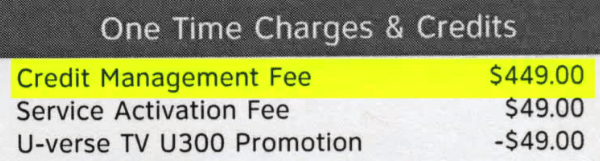
AT&T’s non-refundable “Credit Management Fee” is often called a deposit by AT&T’s salespeople. But it isn’t.

A Google search about the non-refundable nature of AT&T’s “deposit” has revealed considerable controversy over AT&T’s “credit management fee” and how it is represented by AT&T employees trying to make a sale. When customers return to complain, they are told to read AT&T’s voluminous terms and conditions, which claim the fee might or might not be refundable.

Telecom companies have traditionally used refundable deposits as a way to insure themselves against a customer considered more likely to default on their bill. For decades, phone companies usually returned deposits back to customers, with interest, after 12-24 months of a satisfactory payment history.

AT&T has instead turned that insurance protection into another way to earn revenue for itself, and critics contend AT&T employees are misrepresenting the costly fee and how customers can get it back.

An AT&T spokesperson admitted shareholders come before customers.

“The credit management fee is in place to cover the upfront cost of service while protecting our shareholders against loss in the event a customer isn’t able to pay their bill,” wrote the spokesperson in a written statement. AT&T also claimed it tells customers up front it is not a deposit. “We communicate to these customers before they sign-up that this is a one-time non-refundable fee.”
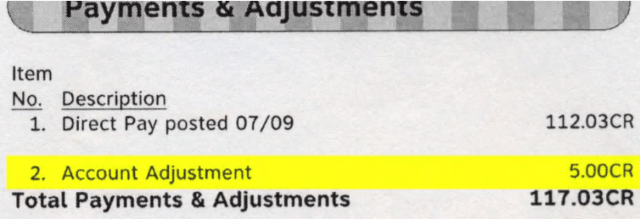
If AT&T returns a portion of its “Credit Management Fee” at its discretion, it comes in $5 increments, which means it will take over seven years to get your money back.

The Ohio Attorney General has little power over AT&T’s contracts, language, or sales practices, and offered that consumers need to protect themselves from companies like AT&T.

“It’s helpful to ask things like ‘is there a schedule of when money will be credited to my account? What happens if I leave? How long do I have to stay with the company?'” Melissa Smith, from the AG’s Consumer Division, told the Columbus FOX affiliate. “But what’s most important, no matter what that operator says, is to make sure it lines up with what’s in the contract.”

In dozens of pages of terms and conditions for AT&T’s products and services, the relevant language is found under the Billing section (emphasis ours in the language below), and it is highly confusing because it conflates a traditional deposit program with AT&T’s newer, non-refundable “credit management fee,” making it next to impossible for consumers to understand which applies  until after their first bill arrives:

Advance Payments, Deposits, Fees and Limits.

We may require you to make deposits or advance payments for Services, which we may use to satisfy your initial bill for Services, to offset against any unpaid balance on your account, or as otherwise set forth in these TOS or permitted by law. Interest will not be paid on advance payments or deposits unless required by law. We may require additional advance payments or deposits if we determine that the initial payment was inadequate. Upon determination solely by AT&T of satisfactory payment history or as required by law, AT&T may begin refunding of the deposit or advance payment through bill credits, cash payments, or as otherwise determined solely by AT&T. Based on your creditworthiness, a non-refundable fee may be required to establish service and we may require you to enroll, and remain enrolled, in an automatic payment or electronic funds transfer plan. We may establish additional limits and restrict service or features as we deem appropriate. If your account balance goes beyond the limit we set for you, we may immediately interrupt or suspend service until your balance is brought below the limit. Any charges you incur in excess of your limit become immediately due.

Many customers learn about the fee only after receiving their first bill, which usually arrives after the contract grace period deadline offered to customers who change their mind and exit the contract penalty-free.

“I recently ordered new service and I was told ‘Congratulations you don’t require a deposit,'” wrote ‘Susanja.’ “That’s great, right? Not! I just opened my first bill and there’s a $500 credit management fee for a total of $600+ for my first month’s bill.”

By the time the first bill arrived, she was already locked into a contract with a substantial cancellation penalty.

WTTE-TV in Columbus investigates AT&T’s “Credit Management Fee.” (3:29)

Contract Dispute Yanks Important TV Channel Off Dish in Puerto Rico, Virgin Islands

Phillip Dampier October 2, 2017 Consumer News, Dish Network, Public Policy & Gov't Comments Off on Contract Dispute Yanks Important TV Channel Off Dish in Puerto Rico, Virgin Islands

As Puerto Rico and the U.S. Virgin Islands enter another week mostly in darkness, a TV station owner is accused of putting its financial well-being ahead of storm victims getting access to the latest news and developments after ordering its One Caribbean TV channel off the lineup of Dish Networks in a contract dispute.

Lilly Broadcasting pulled the station off the satellite service over the weekend in a move slammed by Dish as a cynical ploy.

Lilly has “turn[ed] its back on public interest obligations during [a] humanitarian crisis [and is using a] catastrophe to create ‘deal leverage,’” Dish Network said in a statement. “[Lilly] is demanding from Dish and, by extension, its customers unreasonable rate increases higher than the current Dish rate. Lilly has also refused Dish’s offer to match the rates paid by other pay-TV channels.”

Dish called Lilly’s move an attempt to “further blind the citizens of Puerto Rico and the U.S. Virgin Islands at this time, showing an unbelievable lack of compassion” and added it was a “prime example of why Washington needs to stand up for consumers and end local channel blackouts.”

Exactly how many viewers One Caribbean TV still has in either U.S. territory is unknown. Power is almost universally unavailable and many satellite dishes were turned into flying projectiles in hurricane force winds. But the optics of pulling a station delivering frequent hurricane recovery updates off the lineup at such a critical time was seen as bad publicity and Lilly quickly relented after the office of FCC chairman Ajit Pai got involved.

“Chairman Pai’s office was in touch with both Lilly Broadcasting and Dish yesterday (Oct. 1) and expressed its concern about the impact of this dispute on the people of Puerto Rico and the U.S. Virgin Islands,” an FCC spokesman told Multichannel News. ” We are pleased that the parties agreed to restore carriage of One Caribbean Television last night following these phone calls.”

Satellite Business News reported Lilly Broadcasting Chief Operating Officer John Christianson authorized restoring service in the storm areas.

“We have told Dish Network that they can continue to carry One Caribbean Television in Puerto Rico and the [U.S. Virgin Islands], to help those that can still see the networks keep informed as to what is happening in their region.”

Charter/Spectrum Sweetens Deal for New Customers With $500 Contract Buyout Offer

Phillip Dampier September 21, 2017 Charter Spectrum, Competition, Consumer News 11 Comments

Even as millions of Spectrum subscribers began paying higher rates for programming and equipment this month, Charter Communications has sweetened the deal for its new customers by offering free DVR service with their triple play bundle of TV Select, internet, and voice service for $89.97/mo during the first year. The cable company will also reimburse customers up to $500 to cover any early termination/contract buyout fees for canceling their satellite or telephone company video package.

Charter’s “Strategic Accounts” department is handling the promotion, and it will benefit customers where there is significant competition between Spectrum and AT&T and Verizon or satellite providers like DirecTV and Dish Networks. Spectrum does not cover early termination fees from cell phone companies, and you must have subscribed to a “comparable level of service,” which disqualifies competitors like Hulu, Netflix, DirecTV Now, and Amazon.

Like the rebates Time Warner Cable used to offer customers, there is a specific process to submit documentation to qualify for this rebate, and skipping a step means… no rebate and no recourse. In addition to this FAQ, Stop the Cap! has this advice:

  1. You must install and keep current a qualified Spectrum triple play package from the time you submit the rebate request until the day you receive a check.
  2. You cannot have had Spectrum Video service within the last 30 days, something we’ll explain below.
  3. Your account must not be past due.
  4. You must submit a copy of your provider’s final bill showing itemized early termination fees actually billed to your account. Bank/credit card statements showing charges are not eligible.
  5. You must complete the “Charter Contract Buyout Form” in full and submit it by e-mail or by mail to: Spectrum, 7800 Crescent Exec. Dr., Charlotte, NC 28217, ATTN: Strategic Accounts Dept. with your documentation. Try to make sure the names on both accounts match.
  6. Your rebate request must be received by Charter within 60 days of installation of a Charter triple play package or within two weeks of the date listed on the competing provider’s final bill, whichever is later.
  7. Charter will only reimburse you for the actual amount of the early termination fee, up to a maximum of $500. Cash the check within six months or lose it.

Charter insists customers who have had Spectrum Video service within the last 30 days cannot qualify for this rebate. This is an effort to close a loophole where an existing Spectrum customer cancels their regularly-priced cable service, switches to a competitor for a few weeks, and then promptly switches back to a Spectrum package at the new customer price, which also leaves Charter on the hook for paying the early termination fee charged by the other company. To avoid this, a customer would have to cancel Spectrum service, switch to a competitor for at least 31 days, and then switch back to Spectrum. That is likely to be a hassle for most people.

Customers who have participated in these rebate schemes in the past also warn that companies can reject a rebate if you do not have a “comparable” level of service with a competitor. In other words, if you signed up for a $20 basic video package and then head to Spectrum for a $90 triple play package, the company may not consider that “comparable.” “Comparable” can mean the dollar amount of the video package you have with a competitor or the combination of a satellite package with one provider and a broadband package with another. You can contact Charter directly and check if your existing package(s) qualify. If the representative says yes, write down the name of the person and keep it handy in case your rebate request is later rejected.

Charter says you won’t have long to wait for a rebate rejection or a check.

“When you submit your information to the Contract Buyout Team, your information goes through a verification process, which can take up to 5-7 business days. After approval, your check will arrive within 10 business days,” the company reports.

Other factors to consider:

  • Cable TV equipment is required and costs extra ($5.99/mo per HD box or DVR for new customers).
  • You will receive Spectrum’s base internet package, which is 60Mbps or 100Mbps in former TWC Maxx service areas. A $199 upgrade fee applies for faster speed.
  • Installation fees apply. You can avoid them with a self-install kit which can be mailed or picked up at a Spectrum retail store at no extra charge.
  • Fees and surcharges apply. The most important is the Broadcast TV Fee, which usually adds around $7.50 a month to your TV bill.
  • Rates reset to Charter’s regular price at the end of one year. There is no contract, so you can cancel anytime.

Frontier Gives TV Blackout Customers in Pacific Northwest Free HBO, Showtime, and Starz

Phillip Dampier January 31, 2017 Consumer News, Frontier Comments Off on Frontier Gives TV Blackout Customers in Pacific Northwest Free HBO, Showtime, and Starz

Frontier Communications FiOS customers in Oregon and Washington are getting free premium movie channels to make up for the loss of two local TV stations that pulled their signals off the lineup after failing to reach a contract extension agreement.

In a rare case of provider magnanimity, Frontier is giving customers three free months of HBO, Showtime, and Starz as part of its apology for the loss of two local ABC stations: KATU-Portland and KOMO-Seattle in a retransmission consent dispute:

Frontier knows how important local programming is to you. We would like to show our appreciation for your patience during our negotiations with Sinclair Broadcasting. Existing FiOS TV customers in the Portland and Seattle markets will receive complimentary access to select premium channels (HBO, Showtime or Starz) for the next 3 months. Enjoy this gift starting today! Don’t want the channels? Call 1.800.921.8101 to have them removed.

Cable operators rarely offer customers discounts on their bill or free channels as a consolation for the channel losses, but Frontier apparently wants to set a different standard with its FiOS fiber to the home customers in the Pacific Northwest.
KATU and KOMO, both owned by Sinclair Broadcast Group, have been off the lineup since New Year’s Day. That caused subscribers in both cities to lose their local ABC stations. If customers already subscribe to one of the premium channels, they will receive a $20 credit usable for video-on-demand or pay-per-view events.

Getting KATU and KOMO over the air can be challenging for some Frontier customers in outer suburbs, so the loss of the stations could cause some customers to cancel service and switch providers.

“Frontier knows local programming is important to our customers and we are continuing to negotiate with Sinclair Broadcasting for a reasonable rate,” Frontier spokesman Javier Mendoza said in a written statement.

Wireless Providers Create Challenges for Smartphone Upgrade Marketplace

samsung s7Smartphone manufacturers are dealing with sluggish sales for the newest and greatest phone models because American consumers are increasingly resistant to paying for top of the line devices.

Apple, Samsung, and others are facing some of their biggest challenges ever delivering upgrade features deemed useful enough to encourage consumers to spend the more than $600 that many high-end phones now command in the marketplace. As blasé new features fail to deliver a “must-have” message to consumers, many are hanging onto their existing phones and refusing to upgrade.

The decision by wireless providers to stop subsidizing devices backed by two-year contracts have delivered sticker shock to consumers looking for the latest and greatest. The Apple iPhone 7, expected to be announced this month, will likely carry a price of $650 — a serious amount of money, even if your wireless provider or Apple agrees to finance its purchase interest-free for 24 months. Despite the fact wireless providers charged artificially higher service plan rates to recoup the cost of the device subsidy over the length of the contract, consumer perception made it easier to justify paying $200 for a subsidized phone versus paying full retail price and getting cheaper service.

As a result, consumers are strategically holding on to their cell phones longer than ever and avoiding upgrade fever just to score a lower cell phone bill. The Wall Street Journal reports that since T-Mobile started the trend away from device subsidies in 2013, Citigroup estimates the smartphone replacement cycle has now lengthened to 29.6 months, considerably longer than in 2011 when upgrades were likely even before the two-year phone contract expired.

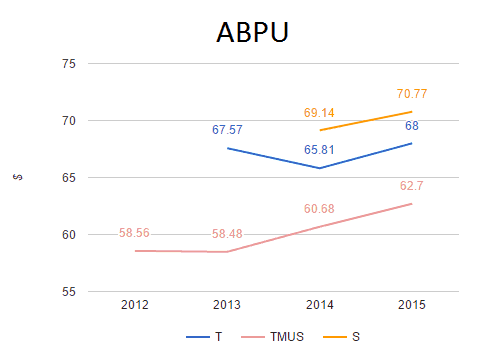
The average combined revenue earned per subscriber from service and equipment installment plan fees is still rising, despite the alleged "price war."

The average combined monthly revenue (in $) earned per subscriber from service and equipment installment plan fees is still rising, despite the alleged “price war.” (Image: Trefis)

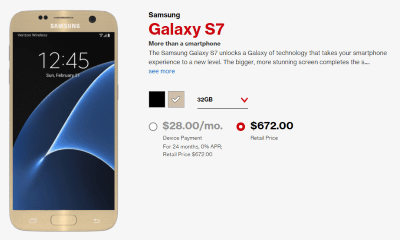
Wireless providers don’t mind the change since they endured fronting the subsidy cost to phone manufacturers and slowly recouped it over the next two years. Not dealing with a subsidy would make the accounting easier. But AT&T and Verizon Wireless both understood the average consumer doesn’t have a spare $650 sitting around for a new device, much less the nearly $2,500 it would cost to outfit a family of four with a new top of the line smartphone every two years. So they entered the financing business, breaking the cost of the device into as many as 24 equal installment payments. Instead of paying $672 for a Samsung Galaxy S7, Verizon Wireless offers 24 equal installments of $28. That would be a distinction without much difference from the old subsidy system except for the fact some carriers are trying to sell their equipment financing obligations to a third-party, allowing them to move that debt off their books as well.

In fact, wireless providers are doing so well under the “no-contract/pay full price or installments” system, Wall Street analyst firm Trefis has started to ask whether the so-called wireless carrier “price war” is just a mirage. The firm notes (reg. req’d.) all the four major carriers are doing well and collecting an increasing amount of money from their customers than ever before. Much of that added revenue comes from customers bulking up data plans and being forced to pay for unlimited voice and texting features they may not need. But Trefis also points to reined in marketing spending at the carriers, who no longer have to entice customers into device upgrades as part of a contract renewal.

Things are looking worse for phone manufacturers that have relied on revenue based on the two-year device upgrade cycle in the United States. Apple is under growing pressure as its iPhone faces declining demand. In the U.S. alone, analysts predict iPhone sales will drop 7.1% this year. UBS predicts an even less optimistic 9% drop, followed by a 5% drop next year, even after iPhone 7 is introduced. AT&T has already reported some of the lowest upgrade rates ever during the first three months of 2016.

Another clue consumers are planning to hold on to their smartphones longer than ever — sales of rugged cases and screen protectors are up, as are smartphone protection/loss insurance plan sales, according to AT&T senior VP Steven Hodges. Parents even expect their children to give their phones better care.

Customers “realized it was a $500 to $700 device,” Hodges said at an industry conference held in June. “As such, they started taking care of them differently. You tell a kid this is only $49, the kid is going to use his phone as a baseball at times.”

Other customers are looking forward to benefiting from a dramatically lower bill after paying off their device in 24 months.

Kristin Maclearie has an iPhone 6 and she wants to keep it for the long term, if only to see her Verizon bill drop once she finishes her monthly payments. She told the Wall Street Journal as long as it keeps working, “I’ll just hang onto the one I have,” she said. “Unless something really cool comes out…but they’re always similar.”

Search This Site:

Contributions:

Recent Comments:

Your Account:

Stop the Cap!