Home » consumer groups » Recent Articles:

Kudlow Drinks the Kool-Aid: CNBC Lovefest With Wireless Lobbyist, Attacks Pro-Net Neutrality Consumer Groups as “Radical”

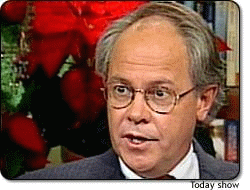
"I think these are radical consumer groups," says Larry Kudlow

"I think these are radical consumer groups," says Larry Kudlow

CNBC host Larry Kudlow engaged in on-air lovemaking with the wireless phone industry in a shameless segment decrying Net Neutrality.  His guest, Chris Guttman-McCabe, vice president of regulatory affairs at CTIA – The Wireless Association, was strictly in friendly territory as Kudlow tossed him softballs.  It was an industry talking point Blitzkrieg on consumers from start to finish:

Kudlow: Potential government control of the Internet: is Net Neutrality going to limit investment and innovation and even customer service?

Reality: Saying Net Neutrality is “government control” of the Internet is like saying safety inspections are “government control” of the food industry.  Without Net Neutrality, big cable and phone company providers will be the ones controlling the Internet.  Will Net Neutrality really limit investment, or continue the Internet success story that investment and innovation has already produced before providers demanded you pay more.  As for impacting customer service, that’s about as valid as claiming Net Neutrality will cause snakes to hide in your bed.

Guttman-McCabe: It’s a perfect storm of usage.  If we’re forced to deliver every bit all the time you’re going to lead to some form of commoditization of the product.

Reality: Gasp!  We can’t have that!  For those who may miss the meaning, commoditization refers to a perfect storm of competition, with providers generally competing on price because their products are of similar scope and quality.  Providers cannot extract higher pricing in such environments, because consumers won’t pay.  In the wireless industry’s eyes, Net Neutrality forces them to actually deliver the service they promise in their marketing materials.  You, as a consumer, get to choose the applications and services you wish to use and pay accordingly.  The market they want is to closely control and manage the content you use on their networks, blocking or impeding “unauthorized” services that don’t have a relationship with, or approval from, your wireless phone company.  Consumers actually want every bit delivered all the time, and providers are throwing a hissyfit because of it.

Kudlow: If you’re forced to deliver every bit all the time and meet the demands of these radical consumer groups, what happens to the profits of the deliverers?  The profits that are supposed to go into the investments to expand the broadband delivery?

Reality: Radical consumer groups?  Attacking real consumer groups that represent what consumers actually want, while providers stomp their feet when forced to deliver, doesn’t solve “the problem.”  And what of the profits?  That’s a good question Guttman-McCabe isn’t prepared to fully answer.  The enormously profitable broadband industry, in general, earns billions and invests a small percentage of that back into expanding their networks.  As our readers have learned on the wired broadband side, the logical assumption that providers will at least maintain a level percentage of revenue going back into network infrastructure isn’t always the case.  Instead, some providers raise prices and limit service, blaming “increased demand.”  Kudlow could ask providers what percentage of their revenues go into network expansion, and whether that has changed in the last ten years.  Of course he doesn’t.

Kudlow (to Guttman-McCabe): …obviously you’re not from the telephone company or the cable company, what’s your meat in the game here, who are you representing?

Reality: The CTIA has among its members AT&T, Cox, and Verizon.  Guttman-McCabe’s meat is paid for by all three, and many other industry members who belong to the group.  Who does CTIA not represent?  Consumers.

Guttman-McCabe: (Here come the shiny keys of distraction and misinformation, folks) I posit a question.  Are they (Google) allowed to cache their content closer to the customer to provide a better service under these Net Neutrality rules?

What about this pen -- will it be allowed under the new Net Neutrality rules?

What about this pen -- will it be allowed under the new Net Neutrality rules?

Reality: Yes!  Having redundant and strategically placed content delivery servers is a widespread, industry-accepted practice not harmed by Net Neutrality.  Akamai delivers vast quantities of video content from regionally placed servers.  Cable operators will be able to place servers to deliver TV Everywhere to their customers wherever they like, if they so choose.  Net Neutrality does not compel web providers to run everything from a central server farm.  It would, however, tell broadband providers they cannot identify and artificially slow that content delivery down just because they don’t like it on their networks.  Big difference.

Guttman-McCabe: Is the Amazon Kindle, which is basically a wireless (single purpose) device — is that allowed to exist under the new Net Neutrality rules?  I think these are some of the questions that will come out as the Commission considers these new rules.

Reality: Yes!  Mr. Boots, your cat, will also be allowed to exist under Net Neutrality rules if he happens to jump on your keyboard while you access web pages.  Your wireless picture frame, which receives digital images to display on your bookcase will also be allowed to exist even if it cannot be used to play World of Warcraft.  I’m certain Guttman-McCabe and his friends will concern troll their way through the debate by throwing up lots of non-germane “concerns and questions” that they know have no relationship to the matter at hand.  They are well paid to do so.

Kudlow, of course, doesn’t challenge his guest on any of these issues, because he seems in perfect agreement with the industry position.  The shameless segment wraps up with the ominous notice that Net Neutrality has a long way to go and the CTIA has a “lot of educating to do.”  I’ll bet.

Larry Kudlow is the host of CNBC’s The Kudlow Report (M-F, 7pm/ET).

[flv width=”400″ height=”300″]http://www.phillipdampier.com/video/CNBC Kudlow Net Neutrality 2009-09-21.flv[/flv]

Larry Kudlow interviews Chris Guttman-McCabe, vice president of regulatory affairs at CTIA – The Wireless Association on Net Neutrality (9/21/09) (4 minutes)

Astroturf True Confessions: Can the Federal Trade Commission Force Blogs to Reveal Pay-for-Say?

federal-trade-commission-ftc-logo_jpgThe Federal Trade Commission on Monday issued new guidelines to stem the growing trend of product and service endorsements on web-based blogs that do not disclose the cozy relationship some bloggers have with the companies they write about.  For the first time, new FTC guidelines will require bloggers to confess any payments or free products or services they receive in return for their writings.  Waiting and Watching, one of our regular readers, wrote asking if these guidelines would affect telecommunications-related sites like Stop the Cap!

The revised FTC rules add new examples to illustrate the long standing principle that “material connections” (sometimes payments or free products) between advertisers and endorsers – connections that consumers would not expect – must be disclosed. These examples address what constitutes an endorsement when the message is conveyed by bloggers or other “word-of-mouth” marketers. The revised rules specify that while decisions will be reached on a case-by-case basis, the post of a blogger who receives cash or in-kind payment to review a product is considered an endorsement. Thus, bloggers who make an endorsement must disclose the material connections they share with the seller of the product or service. Likewise, if a company refers in an advertisement to the findings of a research organization that conducted research sponsored by the company, the advertisement must disclose the connection between the advertiser and the research organization. And a paid endorsement – like any other advertisement – is deceptive if it makes false or misleading claims.

Unfortunately, in the marketplace of ideas, astroturf groups which pretend to represent consumer interests that receive direct financial support from the industry they write about do not appear to be covered by the new FTC guidelines.

Several marketing firms specializing in “word of mouth” marketing or social media campaigns are paid to put free samples in the hands of bloggers who agree to write a review of the product or service (or at least write about it generally).  In return, they get to keep the product at no charge.  Some bloggers belong to marketing programs that pay them directly for positive reviews, mentions, or links to a product or service.

The new regulations will not punish bloggers who violate the FTC guidelines — the Commission will instead go after the marketing company, the manufacturer or provider.

Jack Gillis

Jack Gillis

Some consumer groups think that is a mistake, and that bloggers should also be accountable.

Jack Gillis, a spokesman for the Consumer Federation of America, told the Associated Press he thinks the FTC doesn’t go far enough to protect consumers from unethical bloggers.

“Consumers are increasingly dependent on the Internet for purchase information,” he said. “There’s tremendous opportunity to steer consumers to the wrong direction.”

The consumer advocacy group said lack of disclosure is a big problem in blogs. To mainly crack down on companies that give out freebies or pay bloggers won’t always solve the problem. By going after bloggers as well, “you put far more pressure on them to behave properly,” Gillis said.

For the record, Stop the Cap! receives no compensation of any kind from this industry or any other.  This website is supported entirely by myself and consumer contributions made through the Paypal link on the right.  Further, none of our authors are employed by or contracted with any company or provider with an interest in our issues, including Google (for the few who have made that baseless accusation in the past.)

I believe that bloggers should be held to fully disclosing their industry and/or financial connections so consumers may be fully informed about any potential conflict of interest or bias.  Fake website reviews and promotions have been a perennial problem on the Internet, some written by consumers who earn money or free service whenever a new customer signs up using a special link he or she provided.

Some reviews on big sites like Amazon have been written by company employees under pseudonyms which praise their own products and trash the competition.  The “word of mouth” marketing industry takes this to a new level, by leveraging social media networks to hype a product, with a direct incentive for the writer to provide glowing reviews if they want to remain on the “free goodies” mailing list.  An even stronger incentive to write “pay for say” articles comes when actual cash payments are provided for reviews.  Bloggers instinctively would suspect the gravy train would derail if they turned in a series of negative honest reviews, leading to the marketing company to drop them from the program.

Having full disclosure for sites engaged in public policy debates is an even better idea, especially when members of Congress routinely quote from material provided to them by what they assume are consumer groups, but are actually little more than industry-sponsored megaphones.

[flv width=”480″ height=”360″]http://www.phillipdampier.com/video/WWLP Springfield Bloggers Must Confess 10-5-09.flv[/flv]

WWLP-TV in Springfield reports on the new rules for bloggers.  Note the report is inaccurate about fining bloggers — FTC enforcement will not target bloggers. (1 minute)

A Fox News video report about “blogger mommies” that advocates self-regulation is also included below.

… Continue Reading

Debating RedState on Net Neutrality – Counter Misconceptions With Actual Facts, Receive “Get Lost” As Response; Banned

dampier1I like to think our issues are neither right nor left.  Net Neutrality preserves freedom of speech from provider interference whether you are Glenn Beck or Michael Moore.  Internet Overcharging costs conservatives as much money as it does liberals.

As various special interest groups and public relations firms continue their efforts to co-opt Net Neutrality into a partisan political issue, in hopes of muddying the waters and helping to engage consumers to help in its defeat, I occasionally take time out to talk to some of the opponents of Net Neutrality to understand their points of view, to engage them in a discussion deeper than the usual memes about “government control” or “takeovers,” and ask them to present their arguments opposing a measure that has support from groups across the political spectrum (Democrat Underground, MoveOn.org, AfterDowningStreet.org, and Common Cause on the left,  Glenn Reynolds, the Christian Coalition, and the Gun Owners of America on the right.)

Sometimes the discussions are illuminating, and I can respect their points of view even if I personally disagree.  Other times, rebutting an article published on another blog that elicits a two sentence reply from the author illustrates the fact many of these articles are more heat than light.  Often, an author fundamentally seems to misunderstand the basic tenets of Net Neutrality, replacing them with an odd assortment of conspiracy theories.  Other times, they are assured of their fact presentation right up until their points are debunked, at which point the only response they are capable of is a feigned complaint that you are “attacking them”… and then they attack you back.

Such is the case this evening in a debate with RedState blogger Neil Stevens, who has been on a rage (Google Undermines the Internet, On Julius Genachowski and Net Neutrality, and Google’s Non-Evil Pose: Hand Out Palm Facing Up) over Net Neutrality for several months, alternating between the belief the entire campaign is being orchestrated by Google and the one about it being a giant socialist conspiracy.

Tonight, the latest tirade, The Real Net Neutrality Astroturfers, attempts to neutralize efforts to call out Broadband for America, and other like-minded industry front groups, by suggesting Net Neutrality proponents have their own groups in the fight.  There is no doubt there are consumer groups out there that do not take a penny of industry money and support Net Neutrality.  There is also no doubt there are some companies involved in this fight on the pro-Net Neutrality side as well.  That’s hardly “breaking news.”

Stevens wants readers to accept a moral equivalency between industry-sponsored astroturf groups, supported by the very industry that seeks to throttle and overcharge for your broadband service, and consumer groups like ours (and several others) that do not take a penny of industry money, just because some big companies on the Internet share our position.

Stevens takes a wrong turn down Astroturf Alley, offering up a handful of BfA members that sound like they aren’t the astroturfing type as proof that BfA is not nearly as guilty as those big bad Net Neutrality supporter groups:

But despite such blatant falsehood, Save the Internet presses on to accuse its opposition of being ‘astroturf,’ that is, fake grassroots involvement. Now I would love for someone to accuse me of that, because I and anyone familiar with my financial situation would never stop laughing. Of course, they don’t mention the Open Internet Coalition backed by the above Internet titans, oh no. Only opponents like Broadband for America, a group promoting greater Internet access across America, gets that tag. I mean sure, when I think ‘corporate astroturf’, I think of BfA members like the National Black Chamber of Commerce, Child Safety Task Force, Hispanic Leadership Fund, the Livestock Marketing association, and the Jewish Energy Project. That’s just the corporate Axis of Evil right there, Save the Internet wants you to think.

Oh my.

I won’t bore our readers with my response to the rest of his theories about the true nature of Net Neutrality — you can follow the link and read them for yourself in the comments.  But this did represent an excellent opportunity to use the last week’s worth of research on individual BfA members to suggest Stevens might want to take a second look at his list, because most of them carry a fist full of broadband-provider-dollars or have telecom executives serving on their respective boards.  Another doesn’t even appear to exist.

But here is the illuminating part of my effort to engage with the Net Neutrality opposition:

I learned about BfA last week and saw the list of their 100 members. Most of them were obviously equipment manufacturers or telecommunications companies. But I wondered what in the world some of those public interest groups you mentioned, among others, were doing as members of this group. I spent last week researching ALL 100+ and the results are posted (on Stop the Cap!).

I could not find a single group that I could verify as representing actual consumers. Not one. The overwhelming majority of those public interest groups either received substantial funding from AT&T and/or Verizon, or had a company executive on their Board of Directors. I also found disturbing connections between several of the groups and Washington, DC lobbying and PR firms who have a habit of paying to use an organization’s name for a client’s agenda.

[…]

Odd how groups with Mission Statements that in no way relate to any of the broadband issues BfA will concern itself with: no regulation, no Net Neutrality, but yes to government handouts to providers to expand broadband, all seem to be members of this group, and often also magically chimed in on some other telecom issues, such as urging approval of Verizon’s merger with NorthPoint Communications or their buyout of Alltel.

[…]

Biggest advice I can give you is never simply take what you’re handed. Check it out yourself and be careful of hidden agendas and industry money, because it’s all over the place.

Stevens quickly responded, and I hoped it would provide for a spirited debate.  Not so much:

You can’t win the argument so you attack the speakers.

Get lost.

Although not so much a rebuttal as an indirect concession (when you can’t argue the facts, just feign you were ‘attacked’ and then attack back), in the spirit of harmony with conservative friends, Stevens and I continue to agree on one very important point: “We all need to look hard at just who is pushing this agenda….”

[Update: 2:20am — Moments before publishing this, I learned Stevens added a follow-up reply, before my account was banned:

Yeah, I’m not really going to let some fascist Obamanaut come here and start using this site to try to silence dissenters with the administration’s new FCC chairman.

Especially snotty bad faith posters like you.

Apparently on RedState, confronting inaccurate information and engaging in meaningful debate is a one-way ticket to banning.  That’s another indication of a weak argument at work — one that cannot withstand even the most basic scrutiny, without quickly getting rid of the person asking the questions.  On RedState, a ban is expressed by this error message when attempting to visit the site:

601 Database redigestation error.

I am not sure what ‘redigestation’ is, but it leaves a bad taste in the mouth.  Stevens is, of course, free to visit Stop the Cap! and share his views without fear of immediate banning just for disagreeing with me.  I’m not afraid of his arguments.]

[Update: 1:30pm — Amusingly, as of this afternoon, my original rebuttal to Stevens was modified – it’s now white text on a white background, creating a giant white empty-appearing block.  If you attempt select the text, however, it’s all still there and becomes visible.  Evidently Stevens (or someone running the site) felt his original rebuttal wasn’t terribly effective, so “additional measures” were warranted.  An additional reply this morning dismisses the whole rebuttal as inspired by George Soros, the right’s favorite bogeyman.]

Special Report — Astroturf Overload – Broadband for America = One Giant Industry Front Group

"We're going to need another roll."

"We're going to need another roll."

Astroturf: One of the underhanded tactics increasingly being used by telecom companies is “Astroturf lobbying” – creating front groups that try to mimic true grassroots, but that are all about corporate money, not citizen power. Astroturf lobbying is hardly a new approach. Senator Lloyd Bentsen is credited with coining the term in the 1980s to describe corporations’ big-money efforts to put fake grassroots pressure on Congress. Astroturf campaigns generally claim to represent huge numbers of citizens, but in reality their public support is minimal or nonexistent. — Common Cause’s Wolves in Sheep’s Clothing Part II: More Telecom Industry Front Groups and Astroturf.”

The telecommunications industry has gone all out with a new super-sized front group claiming to “work to bring the Internet to everyone.”  The so-called Broadband for America (BfA) Coalition launched a new website, Broadband for America, which is completely infested with industry players and groups they call “independent consumer advocacy groups,” but are in reality mostly astroturfers themselves.  More than 100 corporate providers and special interest front groups make up the BfA, which they brazenly claim “represent the hundreds of millions of Americans who are literally connected through broadband.”

Of course, what is missing from this mess are the hundreds of millions of actual American consumers.  They aren’t on the list.  Also missing after checking more than 100 BfA member websites is any press push to notify their members they are now a part of this group.  In fact, none of the so-called public interest websites seemed at all interested in promoting their new found friends.

The BfA wants you to think the industry party list is a strength, not a weakness:

The range of members of BfA is evidence of the importance which is being placed on the issues of broadband availability and broadband adoption. It is also evidence of BfA’s commitment to being a full participant on behalf of all stakeholders to provide a central clearinghouse for the latest thinking, the most advanced assessments, and the widest variety of views and opinions on the future of broadband in America.

That’s a word salad that can be condensed down considerably to: The Mother of All Astroturf Front Groups.

A comprehensive guide to the members of the BfA can be found below.  It was developed from extensive research into the background and financing of many of these groups, as well as their membership in classic astroturf groups that are run against consumer interests.

Actiontec Electronics, Inc.
ADC Telecommunications, Inc.
Advanced Digital Broadcast
Alloptic
American Agri-Women
American Association of People with Disabilities
American Council on Renewable Energy
Americans for Technology Leadership
ARRIS
AT&T
BendBroadband
BeSafe
BigBand Networks, Inc.
BTECH Inc.
Cablevision Systems Corporation
CBM of America, Inc.
CenturyLink
Charles Industries, Ltd.
Child Safety Task Force
Cisco
CoAdna Photonics, Inc.
Comcast
CommScope, Inc.
Condux International, Inc.
Consumers First
Corning Incorporated
Cox Communications
CTIA The Wireless Association
DC-Primary Care Association
Dominican American National Roundtable
Enhanced Telecommunications Inc
Fiber to the Home Council
FiberControl
Global Crossing
Hispanic Leadership Fund
Independent Technologies Inc.
Independent Telephone and Telecommunications Alliance (ITTA)
International Association for K-12 Online
Intertribal Agriculture Council
Itaas Inc.
Jewish Energy Project
Latinos in Information Science & Technology Association
Livestock Marketing Association
LookBothWays
MANA (A National Latina Organization)
Motorola
MRV Communications, Inc.
National Association of Manufacturers
National Association of Black Telecommunications Professionals
National Black Chamber of Commerce
National Cable & Telecommunications Association
National Caucus and Center on Black Aged
National Disease Cluster Alliance
National Grange
National Puerto Rican Coalition, Inc.
NDS Limited
Net Literacy
NSG America, Inc.
Occam Networks, Inc
OFS Fitel, LLC
On Trac, Incorporated
PECO II, Inc.
People & Technology
Preformed Line Products, Inc.
Prysmian Communications Cables and Systems USA, LLC
Quanta Services, Inc
Qwest
RetireSafe
Seachange International
Sheyenne Dakota, Inc.
Silver Star Communications
Sjoberg’s, Inc
Small Business & Entrepreneurship Council
SNC Manufacturing Company, Inc.
Stop Child Predators
Sumitomo Electric Lightwave
Sunrise Telecom Inc
SureWest Communications
Suttle Apparatus Corporation
Telecommunications Industry Association
Telework Coalition
The Latino Coalition
Time Warner Cable
United States Distance Learning Association
United States Telecom Association
US Cable Corporation
US Cattlemen’s Association
US Chamber of Commerce
US Internet Industry Association
US Mexico Chamber of Commerce
Verizon
Vermeer Manufacturing Company
Windstream Corporation

When The National Cable & Telecommunications Association is on your member list, along with giant providers like AT&T and Verizon, you know we’re far, far away from defining this group as “pro-consumer.”

Over the last week pouring across websites and independent documentation, I encountered a few particularly brazen astroturf groups and the individuals that run them whose names kept coming up time and time again.

One of the more interesting groups that caught my eye was the Child Safety Task Force.  What could be wrong with a group like that?  Who could possibly ever find fault with a group that sounds like they are dedicated to unyielding protection of our children.

But when one visits their website, some cautionary lights begin to flash when you read their Mission Statement (italics mine):

“The Child Safety Task Force believes that legislation and regulatory decisions concerning children’s safety measures should be grounded in principles of good-governance and sound science.”

Perhaps I have been doing this too long, but the portions in italics sound suspicious.  A child safety group whose primary task is involvement in public policy.  Uh oh.  That smells like lobbyist.  The enigmatic “good-governance and sound science” sounds like code words for pro-industry protections from consumer groups.

Indeed, group president Robert K. Johnson is the Zelig of astroturfers.  He’s everywhere.  He was president of the now-defunct Consumers for Cable Choice, a front group for AT&T and other providers advocating for telco TV and strident opposition to Net Neutrality.  Amusingly, Johnson’s group broadened its focus by dropping the word “cable” from its title and renaming themselves Consumers for Competitive Choice (C4CC).  New name, same old notorious astroturfing.

Johnson’s idea of “child safety” is to poo-pooh the risk of phthalates in children’s toys.  I haven’t found too many consumer groups adopting that kind of pro-plastics industry position.  Johnson testified under the C4CC moniker before the House of Delegates, Maryland General Assembly with this in his opening statement:

“A case in point is the effort by some states to include phthalates in legislation limiting the amount of lead and other proven carcinogens in children’s’ toys. The effort is misplaced and ultimately detrimental to consumers.”

Apparently not satisfied that C4CC was pro-child safety-sounding enough, Johnson’s Child Safety Task Force & C4CC have linked to one another as resources without clearly disclosing their common ties.

Johnson also founded Consumers’ Voice, which Verizon trashed in 2002: “Consumers’ Voice . . . should really be named `AT&T’s Voice.’ At a recent National Conference of State Legislatures meeting, a representative from this group admitted that it is entirely supported by AT&T. Moreover, Consumers’ Voice has no state chapters or affiliates. Johnson actually is an AT&T hired gun.” – William R. Roberts, president, Verizon Maryland, Inc., (Cumberland Times-News, August 22, 2002.) Another BfA member, Consumers First (California), could easily be confused with the former, but no matter, it receives funding from AT&T (and Verizon) too, and belonged to Johnson’s now defunct Consumers for Cable Competition.

Another astroturfer paradise comes courtesy of the LawMedia Group (LMG), a secretive Washington DC public affairs firm. The firm’s website says it “unites the worlds of law, communications, strategic counseling and crisis management into seamless campaigns for Fortune 100 companies, trade associations, start-ups and non-profits.”  Ads for LMG describe its services as including “government relations” (lobbying), “grassroots lobbying,” “issue/initiative/petition management,” “media production” and “opposition research.”

LMG has a nasty habit of ghostwriting op-ed pieces on behalf of third parties, occasionally without their knowledge, and send them in for publication as supposedly written by those individuals.  Last summer, LMG submitted a column it wrote on behalf of Mel King, a Boston-area community organizer and staunch Net Neutrality advocate that turned out to oppose Net Neutrality.  King admitted that LMG was involved and refused to say whether “he was paid for the use of his name,” reported CNET News.

LMG reportedly has two major clients of interest to our readers – Comcast, the nation’s largest cable operator and Microsoft.  The former is looking for cable and broadband industry-friendly advocacy (opposition to Net Neutrality, favoring government “hands off” policies governing cable operators and broadband) and the latter has particularly been interested in Google bashing, especially surrounding a Yahoo-Google advertising deal.

One of LMG’s specialties is reportedly to co-opt groups that most would assume would have no direct interest in the issues its clients hire the PR firm to promote.  Yet suddenly these non-aligned groups  spring forth with amazingly detailed, uniform advocacy for LMG’s clients’ positions in the media, to members of Congress, and even in submitted comments to regulatory agencies.

Would you find it curious that in 2008 The American Corn Growers Association would suddenly find the need to rush a letter to the Justice Department urging them to launch an investigation into Google’s ‘search monopoly?’  Apparently the harvest was finished and they had free time on their hands.  But they only started the trend, because similar letters on the letterheads of the League of Rural Voters and the Latinos in Information Science & Technology Association also followed.  The latter just happens to also turn up as a member of the BfA.

That’s no coincidence.  BfA member Intertribal Agriculture Council, which is supposed to advocate for the wise stewardship of Native-American lands for the benefit of its people, suddenly decided to throw its two cents into last year’s Sirius-XM Radio merger debate, publicly endorsing the deal and urging the FCC to approve it. That was also an action item on the LMG priority list, according to Sourcewatch. They were joined by several other groups that common sense would suggest wouldn’t spend five minutes pondering this transaction.  Among them include (again) the League of Rural Voters and the Latinos in Information Science & Technology Association.  Some other BfA members also chimed in: the National Black Chamber of Commerce, The Latino Coalition, and the American Association of People With Disabilities.

The Latino Coalition left a lot of heads scratching in 2007 when it advocated against bans on exclusive cable providers in rental properties.  Consumers moved into apartment buildings and found they had to take whatever the landlord made available — no satellite TV or competing providers allowed.  Consumer groups howled demanding these exclusive agreements be banished to give consumers choices for subscription television.  The Latino Coalition told the Los Angeles Times that was a bad idea, and anti-consumer.

The Latino Coalition, a nonprofit advocacy group, warned the FCC that prohibiting exclusive contracts could leave minority and low-income residents with higher bills or no service at all.

“The advantages of these exclusive contracts are important selling points for apartment buildings in urban neighborhoods where residents wouldn’t otherwise have the ability to negotiate the best price for cable TV or broadband services,” Latino Coalition President Robert G. de Posada wrote to the FCC.

It comes as no surprise de Posada also opposed Net Neutrality.  He criticized the concept passionately, telling EbonyJet magazine in 2007 it represented “over regulation of the Internet.”  Net Neutrality would, according to de Posada, “stifle rather than facilitate entrepreneurism.”

Among the Coalition’s corporate partners: AT&T and Verizon.  The former’s logo appears at the bottom corner of the The Latino Coalition home page.

Apparently astroturf coordinators like to use some of the same groups for different issues.  This past May, the Intertribal Agricultural Council had a new-found common cause with, of all things, small-jet operators opposed to a proposal to shift some of the airline carriers’ federal tax burden onto small jet aviators.  Jets fly over farmland, and some might even cross over reservations, so I guess that’s a legitimate priority item for a Native American group like IAC, right?

The IAC joined forces with The Alliance for Aviation Across America (AAAA), a group run by LMG according to Sourcewatch.  But they were not alone.  Two more BfA members coincidentally also turn up as improbable members of the AAAA: the National Grange of the Order of Patrons of Husbandry and U.S. Cattlemen’s Association.

Astroturf Warehouse Club: We lie in bulk and pass the BS on to you!

Astroturf Warehouse Club: We lie in bulk and pass the BS on to you!

The practice of bringing non-aligned groups into public policy debates, particularly those involving minorities, can be a public relations miracle worker, especially for lobbying projects that don’t exactly look consumer friendly.  Often, minority public interest group involvement is highlighted by lobbyists appealing to public officials who can make or break a merger deal or vote up or down on regulatory matters.  If Native Americans, Latinos, African Americans, and the disabled are against Net Neutrality or for Internet Overcharging schemes, maybe there is something elected officials are missing.

In reality, all they frequently miss is the public relations lobbying machine in Washington that runs the show.  Even worse is when legitimate consumer voices are crowded out because all of the chairs set out for real consumers are occupied by astroturf groups pretending to represent consumer interests.

One group, the National Caucus and Center on Black Aged, was another oddity in the Broadband for America member roster, until one started taking a closer look at who serves on the group’s Board of Directors.  The connection to Verizon was immediately obvious.  B. Keith Fulton, a Board member, is also President of Verizon West Virginia.  Fulton joined Verizon in 2004 as vice president of strategic alliances and corporate responsibility, where he led a Washington, D.C.-based team that worked with more than 100 national organizations on communications related public policy issues.

But the connections with big telecom didn’t stop there.  Jarvis C. Stewart, chairman, is also Managing Partner at Stewart Partners LLC, a Washington, DC Public Relations firm.  A 2006 press release admits a further connection: “Stewart Partners currently manages the federal legislative and public affairs agendas of global industry titans such as […] Verizon.”

Muckety, which graphically illustrates public/private connections shows yet more involvement, this time with William Clyburn, Jr., who also serves on the group’s Board. It maps links between Clyburn and the U.S. Telecom Association and AT&T through Clyburn Consulting.

Clyburn Consulting’s website states:

“At Clyburn Consulting, we guide telecommunications stakeholders through the federal legislative process.  We provide strategic analyses of the technical aspects as well as the political implications of telecommunications policy debates.  The impending updates to our telecommunications laws will have a major impact for years to come on how we process voice, video, and data.  Clyburn Consulting is at the forefront of shaping the future of telecommunications. Clyburn Consulting has been instrumental in persuading Members of Congress to support major legislation for a Fortune 500 telecommunications firm (guess who? –PD).  William Clyburn is integrally involved in garnering support by not only providing access to Congressional offices for the client, but also by substantively engaging senior staff on the technical issues.”

On June 8, 2009, the National Caucus and Center on Black Aged wrote the FCC about the national broadband strategy.  Without disclosing any connections to the telecommunications industry, the group advocated:

Unfortunately too many seniors are not aware of these critical, and often life-saving, benefits. In order for more seniors to see the importance of having broadband, barriers must remain low for adoption. Only 15% of seniors cite price as the reason why they have not brought broadband into their homes. Currently, private sector network providers are investing billions of dollars to build out and maintain broadband infrastructure. This investment has enabled affordable prices. If the FCC’s broadband plan does not maintain incentives for the private sector to continue to invest, consumers will see fewer options and possibly higher prices.

We hope that the FCC will provide for continued investment on the part of private sector participants while working to bring broadband to every household in the country. Our nation’s African American seniors have so much to gain from broadband and they deserve to experience its benefits.

When some of these groups testify in hearings or submit written comments “representing consumer interests” when they are in fact acting like sock puppets backed with industry money, too many legislators may be persuaded to support an industry position thinking it’s what consumers really want.

Therefore, it’s important to provide additional disclosure about the groups, companies, and organizations that attempt to claim to speak on your behalf, the consumer broadband user.

This comprehensive breakdown of the members of BfA is by no means absolutely complete.  It is based on a week’s worth of research into the groups and their ties.  As much as possible, links are provided to back up assertions made.  Some groups may have discontinued their support of individual astroturf campaigns that have since expired, but considering the fact most of them are coming back for a repeat performance, past is prologue.

Feel free to build on this work in our Comment section.  We’ll use additional information as part of an effort to construct a resource database for consumers and others at risk of being hoodwinked by the astroturf bonanza that is Broadband for America.  Don’t bother exposing them on their own site’s community forum; it has some seriously draconian rules for user participation:

General Guidelines

  • Do not post material or contact anyone to suggest your product, website or service. Posts of this kind will be considered SPAM and your account, profile and posts will be removed immediately.
  • Your account is yours alone. You are responsible for any activity created with it. If you choose to ignore this important restriction your account will be removed.
  • Signature Spam (a post that was made in hopes of showing a signature, as determined by moderators) is forbidden in all forum categories.
  • You may not post on behalf of any banned member in any public manner. This includes all forums, private messages, signatures, and e-mail features.
  • You may not use discussions to recommend, praise, or belittle other products, services, or any company without firsthand experience of those products or services. This includes companies recommending other companies.
  • If your user name is the same as your URL or company name, you may not refer to it outside the advertising forums.
  • You may not post any message that directs others to any pages at your own commercial domain, including informational pages. A commercial domain is defined as a site that receives any type of income or links to any income producing properties.
  • You may not solicit users for any project or purpose external to the forum – public, private, or commercial. Most importantly, our member base is not a resource to be “mined” by individuals, groups, or businesses, for profit or not for profit.
  • You are expected and required to read and follow the rules outlined within a category that are posted as Announcements.
  • We welcome constructive feedback, but will not tolerate excessive public posts criticizing Broadband for America staff.
  • Public posts debating these rules and/or moderators’ enforcement of such will be removed without comment.

We reserve the right to modify and amend these terms at any time without notice. It is your responsibility to remain informed of current Discuss.BroadbandForAmerica.com policies.  We further reserve our right to disable any account at any time for any reason and without notice.  If there are any rules or policies you do not understand, please contact us.  Finally, any abuse towardsBroadband for America staff and/or management in any form will result in immediate suspension of your account.

Be sure to check out our complete rundown on the members of Broadband for America.  It’s in part two of this Astroturf Special!

Breaking News: Verizon Comes Out Supporting Internet Overcharging Schemes

Phillip Dampier September 29, 2009 Data Caps, Verizon 5 Comments
Lynch

Lynch

Verizon today joined the chorus of large providers looking for an enhanced payday off the backs of their subscribers when Chief Technology Officer Richard Lynch told a 2009 Fiber to the Home Conference and Expo press conference that the days of unlimited broadband may be coming to a close.

“We’re going to have to consider pricing structures that allow us to sell packages of bytes, and at the end of the day the concept of a flat-rate infinitely expandable service is unachievable,” Lynch said, adding that the broadband industry will see a paradigm shift as the Internet grows and Verizon passes on the cost to “someone.”

This is the first public comment from a Verizon executive that directly supports Internet Overcharging, although Lynch said Verizon was not announcing any pricing changes at this point in time.

Lynch’s statements came in concert with Verizon’s more immediate concerns about Net Neutrality, which the company has spent considerable amounts of money on Washington lobbyists to oppose.

Lynch doesn’t want Net Neutrality to interfere with the potential for the company to offer “premium bandwidth plans.”

Assuming Lynch is speaking about plans sold to consumers, there are no provisions in Net Neutrality legislation that address speed-based Internet service tiers.

Verizon’s statement about metered pricing and Net Neutrality may be a “divide and conquer” strategy to suggest to consumers an “either/or” proposition.  Either accept usage caps and metered service plans or Net Neutrality.  Stop the Cap! has written about this strategy in the past, and it has tripped up some public policy consumer groups in the past who were willing to support one or the other instead of objecting to both.

But Verizon’s near limitless capacity fiber optics FiOS network, and the fact the company’s “cost structure is certainly different, as a tier-one [carrier], [means] their transport costs are a fraction of the smaller operators,” according to Vince Vittore, an analyst with The Yankee Group.  That makes justifying such pricing questionable.

Verizon equates usage pricing models on its wireless mobile network with its wired fiber optic network.  Telephony Online quotes Lynch: “We have already gone this way in wireless because that is where the resource is most constrained.”

Of course, wireless mobile broadband is constrained by limits on the amount of spectrum space available to transport the data, something a fiber optic network need not contend with.

Search This Site:

Contributions:

Recent Comments:

Your Account:

Stop the Cap!