Home » consumer groups » Recent Articles:

AT&T Promises Its Worst-Rated Service Will Improve In Merger With Second Worst-Rated T-Mobile

Dismissing the implications of an antitrust regulatory review not seen in the United States for years, AT&T this morning officially unveiled its intention to acquire T-Mobile in a $39 billion deal that will give AT&T nearly 40 percent of the American wireless market.

With a combination of the two companies, the new super-sized AT&T would become America’s largest wireless operator, and deliver nearly three out of every four wireless customers to just two companies — AT&T and Verizon.

Wall Street is delighted.

“Phenomenal deal if it happens,” said Jonathan Chaplin, an analyst with Credit Suisse Group AG. “Huge upside for AT&T — [T-Mobile owner] Deutsche Telekom getting a great price; however, we believe regulatory risk is enormous.”

That may prove an understatement, if public interest groups have their way.

“The combination of the second-largest wireless carrier, AT&T, with the fourth-largest, T-Mobile is, as former FCC Chairman Reed Hundt once said, ‘unthinkable,'” said Public Knowledge President Gigi Sohn. “We urge policymakers to think similarly today. The wireless market, now dominated by four big companies, would have only three at the top. We know the results of arrangements like this – higher prices, fewer choices, less innovation.”

“It’s difficult to come up with any justification or benefits from letting AT&T swallow up one of its few major competitors,” said Parul P. Desai, policy counsel for Consumers Union. “AT&T is already a giant in the wireless marketplace, where customers routinely complain about hidden charges and other anti-consumer practices.”

...Ourselves with AT&T

“I think it could reach some level of controversy,” said an antitrust expert, who worked for the Justice Department’s antitrust division. “There’s going to be spectrum issues. This is going to be a complex deal and I don’t think it’s a foregone conclusion that it will be approved.”

Despite the concerns, AT&T is confident that regulators have been sufficiently cowed by the company’s lobbyists to approve just about anything they bring to the table.

AT&T CEO Randall Stephenson told reporters on a conference call that the company spent plenty of time doing “homework” on how to get the deal to pass regulator scrutiny.

The American carrier even bet its winning outcome with a $3 billion cancellation fee, payable to Deutsche Telekom if the deal cannot be consummated.

In AT&T’s presentation this morning, the company promised they would improve America’s worst-rated cell phone company by merging with America’s second worst-rated cell phone company.  Specifically, AT&T says the deal will bring T-Mobile’s wireless spectrum allocations to the larger carrier, which can alleviate spectrum shortages.  The company also promised, in return for deal approval, expand service in more rural locations and quicker upgrades to the next generation of speedy wireless data — LTE.
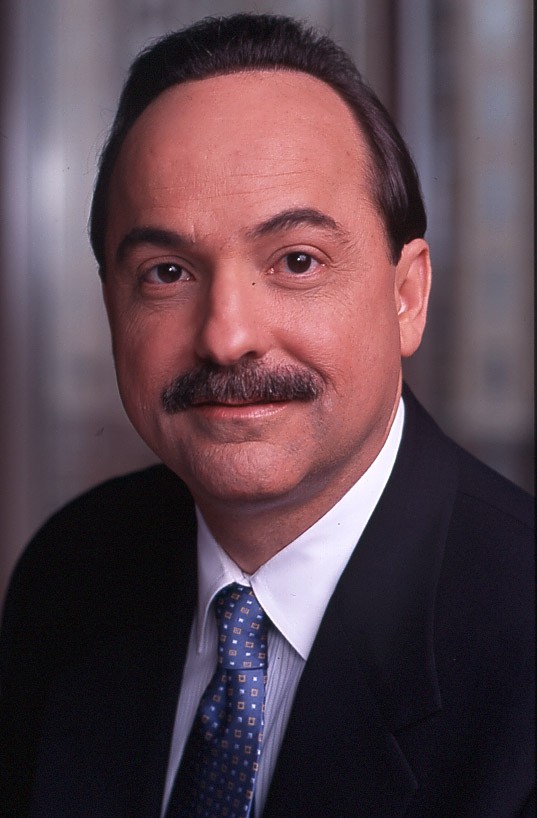
Ralph de la Vega

Ralph de la Vega, AT&T’s president and CEO of Mobility and Consumer Markets, showed slides promising T-Mobile customers would benefit from new choices in cell phones and would enjoy AT&T’s far larger nationwide network, delivering improved service.  But he also hinted it would cost value-oriented T-Mobile customers, promoting the deal’s potential of winning new revenue from customers soon forced to pay AT&T’s significantly higher prices.

AT&T claimed the company still would face robust competition from Verizon, Sprint, and a number of much-smaller regional carriers like MetroPCS and Leap Wireless’ Cricket — themselves under pressure to merge.  But consumer groups are skeptical.

“Don’t believe the hype: There is nothing about having less competition that will benefit wireless consumers,” said Free Press Research Director Derek Turner. “And if regulators approve this deal, they will further cement duopoly control over the wireless market by AT&T and Verizon.”

“The FCC’s National Broadband Plan, issued last year, warned about the absence of sufficient competition in the wireless market. The possibility that three players would control nearly three-quarters of that market will surely trigger intense scrutiny by the agencies,” said Andrew Schwartzman of Media Access Project.

The deal has been under negotiation for several months between the German carrier and AT&T.  Many Wall Street analysts see the deal as a major win for T-Mobile, which has struggled mightily against the AT&T and Verizon juggernauts.  The German company wins a seat on AT&T’s board, a part interest in the carrier, and a high valuation on its network.  AT&T gets the country’s only other major carrier using the same technology it does — GSM — and picks up the potential of more robust coverage in the urban and suburban areas T-Mobile focuses on.  AT&T will also follow the time honored tradition of buying something they cannot afford outright — they will finance it with a generous credit line arranged by J.P. Morgan Chase.

[flv]http://www.phillipdampier.com/video/CNBC Mergers and Acquisitions ATT and T-Mobile Merger to Create Industry Giant 3-21-11.flv[/flv]

CNBC managed to achieve an exclusive interview with the CEOs of AT&T and T-Mobile about their merger.  As with most business media, don’t expect a lot of challenging questions in response to the claims made by the company executives about the merger or its impact on consumers.  (20 minutes)
CRTC Chairman Raked Over the Coals by MP’s Over Internet Overcharging, But Remains Defiant

Phillip Dampier February 8, 2011 Bell (Canada), Canada, Competition, Consumer News, Data Caps, Online Video, Public Policy & Gov't, Video Comments Off on CRTC Chairman Raked Over the Coals by MP’s Over Internet Overcharging, But Remains Defiant

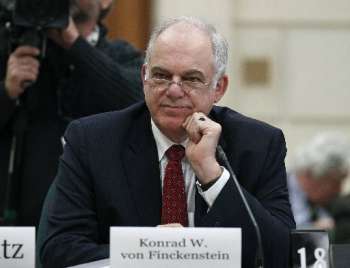
Finckenstein at Thursday's hearing. Turn me over when I'm done on one side.

Canadian Radio-television and Telecommunications Commission chairman Konrad von Finckenstein appeared before a Commons committee last Thursday to answer questions regarding the growing scandal of so-called “usage-based billing (UBB).”  The Commission’s decision to enforce this pricing scheme, ending unlimited broadband service in Canada, has created major headaches for the Conservative government of Prime Minister Stephen Harper.

Seasoned political observers were shocked when Industry Minister Tony Clement earlier tweeted his support for overturning the CRTC decision.  Thursday’s hearing at the Standing Committee on Industry, Science and Technology also suggested the decision was made without any prior consultation with von Finckenstein, who appeared to be learning most of the details of the Clement’s decision at the hearing itself or in the morning newspapers.

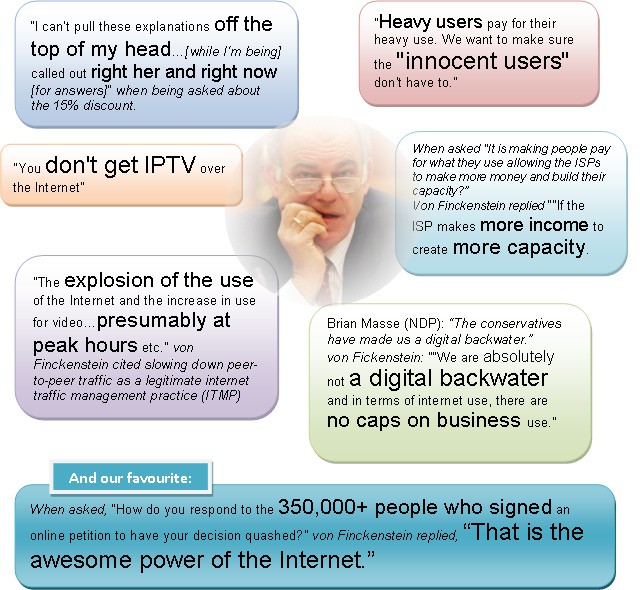
Facing a grilling from members from just about every major political party in Canada, from the Liberals to the Bloc Quebecois, von Finckenstein only managed to add fuel to the fire, blaming “heavy users” for forcing the end of unlimited usage plans, all to protect what he called “innocent users.”  He also blamed online video services like Netflix for forcing new pricing policies on Canadian consumers, who were increasingly using their broadband connections for more than just “e-mail and Facebook.”

At times exasperated, the chairman seemed to rely on industry talking points to address concerns with MP’s in attendance, occasionally without fully understanding their meaning.

At one point, he insisted Internet Protocol TV (IPTV), was never delivered over the Internet.  At another, he claimed that providers would certainly use all of the funds collected from new, higher-priced broadband plans to rebuild their networks, asking rhetorically, “how else would they use that money?”

The head of the agency that is tasked with protecting the interests of Canadian consumers regularly compared the Internet to a power, gas, or water utility, which he said justified usage pricing.  But von Finckenstein ignored landline telephone service, which is most related to broadband — a service moving towards flat rate pricing.  Instead, he relied on cell phone pricing, which caused several reporters to cringe, as they reflected on newly-introduced flat-rate calling plans among new wireless competitors.

At this point a reporter for the Globe & Mail bemused with all of the utility comparisons tweeted: “Main difference is I can’t watch movies on my furnace.”

Watch the entire 90-minute hearing by clicking here and choosing the English version, which provides simultaneous translation as the hearing moves back and forth from French to English.

The CRTC’s decision to ignore hundreds of thousands of petition signers across Canada while quickly acceding to Bell’s request for a 60-day temporary delay in implementing the pricing scheme brought an angry response from Openmedia.ca, a pro-consumer group highly critical of UBB.

“The CRTC’s stubbornness in the face of a mass public outcry demonstrates the strength of the Big Telecom lobby’s influence,” said founder and national coordinator Steve Anderson . “While government officials have recognized the need to protect citizens’ communications interests, the CRTC has made it clear that their priorities lie elsewhere. Now is the time for citizens to demonstrate that they, rather than incumbent ISPs, are the real stakeholders.”

Some media observers and consumer groups are also scoffing at the government’s suggestion the CRTC should be allowed to review its own, earlier decision, claiming it is a virtual certainty the regulator will find their original decision was the correct one.

In fact, von Finckenstein’s relentless defense of usage-based pricing, even in light of recent political realities, suggest the Commission’s authority could be swept aside to keep the matter from becoming an issue in future elections.

“I would like to reiterate the Commission’s view that usage-based billing is a legitimate principle for pricing Internet services,” the chairman told members attending the hearing. “We are convinced that Internet services are no different than other public utilities, and the vast majority of Internet users should not be asked to subsidize a small minority of heavy users. For us, it is a question of fundamental fairness. Let me restate: ordinary users should not be forced to subsidize heavy users.”

The CRTC also claims the UBB policy will only impact residential customers — business accounts are exempt.  But several MPs questioned that statement, suggesting home-based businesses, farmers and other entrepreneurs would face Internet Overcharging schemes.

Canada’s Liberal Party is using the occasion to embarrass the Tories’ handling of what they’ve called an Internet fiasco.  Liberal’s industry critic, Marc Garneau, used some of his seven minutes of question time to ask whether the CRTC first heard of the Harper government’s stance on UBB through social media network Twitter.

Quotes from the CRTC Chairman; Image by Vojtěch Sedlák & Openmedia.ca

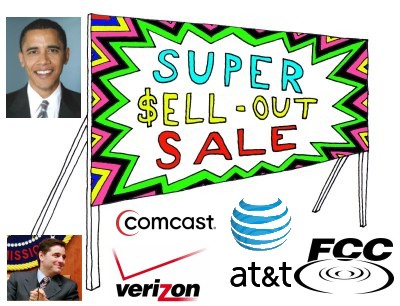
Sell Out: Another Obama Administration Cave-In Leaves Net Neutered by AT&T, Comcast & Verizon

FCC Chairman Julius Genachowski sold President Obama's campaign pledge, his credibility, and you down the river in a sweetheart deal with Big Telecom.

The Federal Communications Commission voted today to pass what Chairman Julius Genachowski called “Net Neutrality” — reforms that will guarantee a free and open Internet.  But critics charge any similarity to actual Net Neutrality is purely coincidental.

In a 3-2 vote along party lines, the Democratic Commissioners approved Genachowski’s framework to keep providers from blocking access to websites.

Genachowski claims the rules will protect consumers from providers controlling the free flow of online content and will provide regulatory certainty for the broadband marketplace.  Providers, who have either lined up behind the chairman or have muted their criticism of the proposal in recent days, suggest they weren’t about to censor Internet content in the first place and that Net Neutrality is a cause in search of a problem.

Public interest groups were less than satisfied, dismissing today’s proceedings as “Net Neutrality-lite,” or “Net Neutrality with more (loop)holes than Swiss cheese.”  In particular, Genachowski’s willingness to exempt wireless broadband from the rules was a very sore spot among Net Neutrality proponents and some in Congress.

“Maybe you like Google Maps. Well, tough,” said Sen. Al Franken (D-Minn.) “If the FCC passes this weak rule, Verizon will be able to cut off access to the Google Maps app on your phone and force you to use their own mapping program, Verizon Navigator, even if it is not as good. And even if they charge money, when Google Maps is free.”

Franken is convinced excluding wireless networks from open Internet rules is the first step towards a free speech calamity.

“If corporations are allowed to prioritize content on the Internet, or they are allowed to block applications you access on your iPhone, there is nothing to prevent those same corporations from censoring political speech.”

Craig Aaron, managing director at Free Press bemoaned today’s vote over rules he suggests were written by the industry itself.

“These rules don’t do enough to stop the phone and cable companies from dividing the Internet into fast and slow lanes, and they fail to protect wireless users from discrimination. No longer can you get to the same Internet via your mobile device as you can via your laptop,” Aaron said. “The rules pave the way for AT&T to block your access to third-party applications and to require you to use its own preferred applications.”

The Obama Administration is likely to claim credit for the new rules and declare Net Neutrality a campaign promise fulfilled, a claim that makes several net activists’ blood boil.

“Chairman Genachowski ignored President Obama’s promise to the American people to take a ‘back seat to no one’ on Net Neutrality,” says Aaron. “He ignored the 2 million voices who petitioned for real Net Neutrality and the hundreds who came to public hearings across the country to ask him to protect the open Internet. And he ignored policymakers who urged him to protect consumers and maintain the Internet as a platform for innovation. It’s unfortunate that the only voices he chose to listen to were those coming from the very industry he’s charged with overseeing.”

Aneesh Chopra, Obama’s chief technology officer said on Dec. 1 that the FCC proposal was an “important step in preventing abuses and continuing to advance the Internet as an engine of productivity growth and innovation.”

Genachowski’s two fellow Democratic commissioners agreed, noting the policies probably don’t go far enough, but it’s a start and they wouldn’t oppose them.  But Commissioner Michael Copps made it clear he remains unhappy with how the entire debate was managed.  He fears corporate control of broadband content will bring the same mediocrity large corporations have managed to deliver Americans over radio and television.

“I don’t want the Internet to travel down the same road of special interest consolidation and gate-keeper control that other media and telecommunications industries — radio, television, film and cable — have traveled,” Copps said. “What an historic tragedy it would be,” he said, “to let that fate befall the dynamism of the Internet.”

If today’s mild net reforms are a step forward, it’s a small one say critics like the Center for Media Justice.  They suggest the FCC’s idea of Net Neutrality offers “minimal protections” for consumers.

“Our greatest fears have been realized,” said Malkia Cyril, Executive Director of the Center for Media Justice. “The Internet can only work if it’s a truly level playing field. Telecommunications companies have used their considerable wealth and lobbying might to exclude some of the most vulnerable communities from the only protection there is from their corporate abuses. These rules aren’t fair, and they don’t provide a path to equity or opportunity. We’re deeply concerned that today’s vote sends a clear message to our communities that if you access the Internet through your cell phone, you don’t count. The FCC has sadly shirked its responsibility to protect all Internet users equally.”

All of the debate may ultimately mean nothing should one of the providers decide to challenge the new rules in court.  The Commission failed to address an earlier court decision that ruled the Commission’s regulatory framework was based on nothing more than good intentions.  The agency was toying with the idea of reasserting authority over broadband using a different framework, but providers furiously lobbied against that, claiming it would “regulate the Internet” under rules designed for landlines.  The Commission’s decision to proceed under a foundation condemned by an earlier federal court ruling exposes an obvious weak spot providers could attack in additional lawsuits.

“We know these rules will be hotly contested,” said Betty Yu, MAG-Net Coordinator. “As they roll out, grassroots communities will continue to monitor the process, ensuring that the rights of wireless users are protected from the over reach and abuses of AT&T, Verizon, Comcast and other telecommunications companies. These rules are a compromise- unfortunately, what was lost in the deal are the rights of wireless users.”

Verizon may make things easier for Yu and other consumer groups to clear the playing field and start over again.  The company released a statement today that foreshadows a willingness to challenge the agency’s Net Neutrality rulemaking in court (underlining ours):

“While it will take some time for us to analyze the F.C.C.’s rules and the order once they are released, the F.C.C.’s decision apparently reaches far beyond the net neutrality rules it announced today,” the company said in a statement. “Based on today’s announcement, the FCC appears to assert broad authority for sweeping new regulation of broadband wireline and wireless networks and the Internet itself. This assertion of authority without solid statutory underpinnings will yield continued uncertainty for industry, innovators, and investors. In the long run, that is harmful to consumers and the nation.”

Net Neutrality Order Snippets

<

p style=”text-align: center;”>

The Federal Communications Commission’s Open Meeting introducing Net Neutrality and includes a vote on the rulemaking.  (2 hours, 42 minutes)

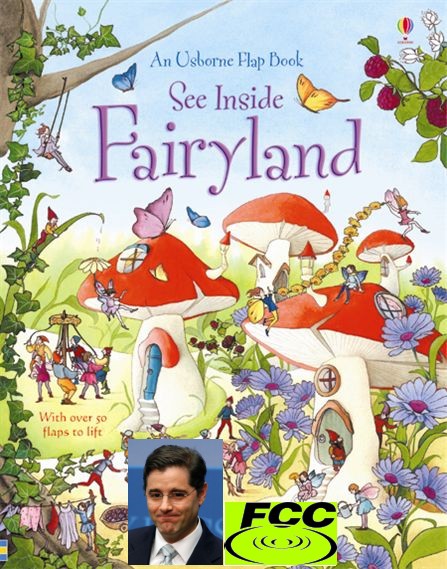
Net Neutered: The Cowardly Lion is Back — FCC Chairman Caves In With Homeopathic Net Reform

The Cowardly Lion is back.

Federal Communications Commission chairman Julius Genachowski believes he has a sound legal basis to implement Net Neutrality policies to protect Internet traffic from provider interference, but has stopped considerably short of implementing his own proposed enforcement mechanisms.

Genachowski outlined his ideas to implement Net Neutrality reform in brief remarks before the Commission this morning.

“Broadband providers have natural business incentives to leverage their position as gatekeepers to the Internet,” the text of the speech says. “The record in the proceeding we’ve run over the past year, as well as history, shows that there are real risks to the Internet’s continued freedom and openness.”

Genachowski praised the progress the Internet has managed to achieve over the past decade, and said his efforts would ensure that progress could continue with a minimum of regulation.  In that spirit, Genachowski announced he would not move that the Commission re-assert its legal authority to oversee broadband by a process to reclassify the service under Title II, which governs telecommunications services.

Comcast successfully sued for repeal of the Commission’s original authority, implemented by Bush FCC chairman Michael Powell, which classified broadband as “an information service.”  A DC Circuit Court discarded the legal basis for Powell’s regulatory authority in a sweeping victory for the cable giant, which was sued for throttling down speeds for broadband customers using peer to peer applications.

Genachowski argued he has “a sound legal basis” to pursue his latest vision of Net Neutrality rules in spite of the earlier court case.  But critics doubt that and charge that the FCC chairman has capitulated to America’s largest broadband providers, including Comcast, AT&T, and Verizon.

Genachowski's view of the Internet does not meet the realities consumers face without Net Neutrality protection assuring a free and open Internet.

“By not restoring the FCC’s authority, Chairman Genachowski is unnecessarily placing his Net Neutrality agenda, and indeed his entire broadband agenda, at risk,” said Free Press executive director Josh Silver.

Boiled down, Genachowski now seeks just two major principles governing provider behavior:

  1. No censorship of content.
  2. Full disclosure of network management techniques so consumers know what providers are doing to their broadband connections.

Consumer groups are furious that the chairman has apparently discarded many of Net Neutrality’s most important consumer protections, and accused him of caving in to lobbyist demands and abdicating his responsibility to oversee critical broadband infrastructure.

Marvin Ammori, a cyber-activist and public interest law professor said the proposal also fell well short of meeting President Barack Obama’s repeated promises to enact strong Net Neutrality policies.

“It’s make-believe Net Neutrality,” said Ammori, who called Genachowski’s proposals “garbage” and “meaningless gestures.”

Now off the table:

A ban on Internet Overcharging schemes that allow providers to limit, throttle, or overcharge consumers who use more than an arbitrary amount of Internet usage per month. This exposes home broadband users to the same kinds of bill shock that wireless customers already experience.

A ban on using “network management” to artificially slow or block traffic the provider — at its sole discretion — determines is “harmful” or “congests” their network. Under Genachowski’s new proposal, the definition of “harmful” could be made by an engineering department on technical grounds or in an executive suite as companies ponder their financial returns. So long as they manage traffic without “unreasonable discrimination,” it’s okay with the Commission.

Built-in loopholes guarantee providers need only set rates high enough to assure only “preferred partners” can afford the asking price, and that only their competitors meet the definition of “harmful” traffic worthy of speed throttling.  The proposal also reportedly only covers video and voice traffic on wireless networks.  It’s open season on everything else if you access the web from a smartphone or wireless broadband service.

Actual legal authority to implement any broadband reform policies. It was Julius Genachowski and the FCC’s General Counsel Austin C. Schlick that argued without asserting legal authority under Title II, nothing the Commission did could be assured of withstanding a court challenge.  Yet today the chairman now claims his legal team has found some legal precedents that somehow will keep his policies in force after inevitable lawsuits are filed.  Former FCC chairman Powell thought much the same thing about his own idea of reclassifying broadband as “an information service.”  The DC Court of Appeals thought otherwise, something Schlick knows personally, having fought the Comcast case before that court.  In the end, Schlick correctly guessed his case was a train wreck, and was reduced to asking the court for legal pointers about how to draft regulations that could survive a court challenge.

[flv width=”640″ height=”380″]http://www.phillipdampier.com/video/The Third Way The Future of Internet Policy in America 5-2010.flv[/flv]

This “other” Julius Genachowski from May of this year delivered remarks that carried a very different tone about the importance of restoring legal authority to oversee broadband.  But that was before AT&T put him on their speed dial, successfully reaching him personally more than a half dozen times in the last few weeks to argue their point of view.  Consumers don’t have Julius Genachowski’s phone number.  (4 minutes)

In short, Genachowski’s proposals represent near-total victory for providers, and any cable or phone company annoyed with the few scraps still on the agenda need only file suit arguing the Commission lacks the authority to stick its nose into their business affairs.  Without Title II authority in place, that lawsuit is probably going to result in a favorable ruling putting us back where we are today — with no Net Neutrality protections.  But by then, the Internet will be a very different place, loaded with toll booths from content providers and your ISP, who may ask for extra money if you want to watch Netflix or download files.  Your speeds may be reduced at any time, to any level, if a provider deems you’ve over-consumed your traffic allowance for that day, week, or month.

Worse, some providers will dispatch bills with overlimit fees that could run into the hundreds of dollars (or more) for those with a family member who left a high bandwidth application running while running out the door to catch the school bus.

Providers and their well-paid lobbyists celebrate their victory over consumers' wallets

So long as providers agree to abuse everyone more or less equally (excepting their own “preferred partners” of course), Julius Genachowski believes the next ten years of America’s online experience can be as great as the last.

In his dreams.  As Public Justice attorney Paul Bland said about dealing with ruthless companies like AT&T, assuming providers will behave favorably towards consumers puts you on the candy bridge into Rainbow Land.

Even with Genachowski’s proposed reforms, diluted to be point of being homeopathic, Republicans were moving in for the kill this morning.

Rep. Marsha Blackburn (R-Tenn.) a member of the House Energy and Commerce Committee, said she would work to topple any FCC-led Net Neutrality order.

“This is a hysterical reaction by the FCC to a hypothetical problem,” she said, adding that Genachowski “has little if any congressional support” for the action.

To overturn any order, Blackburn vowed to reintroduce her bill to prevent the FCC’s policy making process.

Robert McDowell, one of two Republican FCC commissioners, called the move to enact reforms a defiance against Congressional will.

“Minutes before midnight last night, Chairman Genachowski announced his intent to adopt sweeping regulations of Internet network management at the FCC’s open meeting on December 21. I strongly oppose this ill-advised maneuver. Such rules would upend three decades of bipartisan and international consensus that the Internet is best able to thrive in the absence of regulation,” McDowell said in a prepared statement.

All this is taking place at the same time Comcast has foreshadowed America’s future broadband experience: charging backbone provider Level 3 extra for sending Comcast customers online movies and TV shows, censored a blog run by one of its customers trying to get around Comcast’s unresponsive customer service agents, stifled innovation by independent cable modem manufacturer Zoom Modems, has achieved a fever pitch in lobbying Washington to hurry up and approve its colossal merger deal with NBC-Universal, and has a lobbying team convinced it can achieve victory on all fronts from a favorable incoming Congress.

If they and other broadband providers succeed, it’s time to get out your wallet and count your money before handing it over.  A consumer revolt is all that stands between your Internet experience today and an endless series of pay-walls and stifled speeds tomorrow.

Better Late Than Never: FCC Chairman Admits Displeasure with Verizon-Google Net Neutrality Pact

Courtesy CTIA

Julius Genachowski

Federal Communications Chairman Julius Genachowski signaled recognition he was outmaneuvered by some of America’s largest broadband companies when he told attendees at the Web 2.0 Summit last week that a Verizon-Google compromise on Net Neutrality did serious harm to the Commission’s own plans on the subject of a free and open Internet.

“I would have preferred if they didn’t do exactly what they did when they did. It slowed down some processes that were leading to a resolution,” Genachowski said.

Genachowski was referring to last summer’s sudden agreement between the two tech giants — former opposites on Net Neutrality — regarding a proposed compromise.  Under its terms, Verizon would guarantee free speech rights on the Internet, but Google would concede Verizon’s rights to use limits, throttles, and other “network management” techniques on its wireless networks, which are critically important to Verizon’s bottom line.  Genachowski had been advocating broad-based Net Neutrality protections for all technologies, including wireless.

When word of Verizon and Google’s proposal hit the New York Times, it caused a series of confidential talks among industry players and FCC staffers to collapse.  That wasn’t bad news for consumer groups, who were locked out of the discussions from the start.  But it also may have also taken the wind out of the sails of the regulatory body’s urgency to implement broadband reform policies, as members of Congress opposed to the concept used news of the voluntary agreement as cannon fodder against “unnecessary and intrusive” government regulations.

It also embarrassed the FCC, which Daily Finance calls the most ineffectual regulatory agency in Washington.

Ever since the talks collapsed, all sides have been frustrated by the Commission’s apparent ongoing inaction on Internet policy.  Genachowski had made speeches earlier this year that left many with the impression Net Neutrality was a front burner issue at the Commission.  But as 2010 draws nearer to a close, the Commission has made no progress on the issue.  The incoming Republican Congress will not make it any easier, and consumer groups continue to call on the Commission to act before the end of the year.

Free Press President and CEO Josh Silver issued this statement:

“We are heartened to hear Chairman Genachowski finally express his disappointment with the Verizon-Google proposal. The loud public backlash made it evident that consumers would not accept a deal that would have divided the Internet into fast and slow lanes and allowed Internet service providers to block and prioritize content accessed through wireless devices. Clearly, relying on backroom deals cut between giant industry players is not the way to make policies that protect the public interest.

“The American people are still waiting for the chairman to deliver on his promise to establish real Net Neutrality rules that would prevent AT&T, Comcast and Verizon from creating toll roads on the Web. There is only one Internet, and consumers need clear rules to ensure that they are protected from Internet service providers who are seeking to monetize and monopolize the Web to pad their bottom lines.”

Search This Site:

Contributions:

Recent Comments:

Your Account:

Stop the Cap!