Subscribe
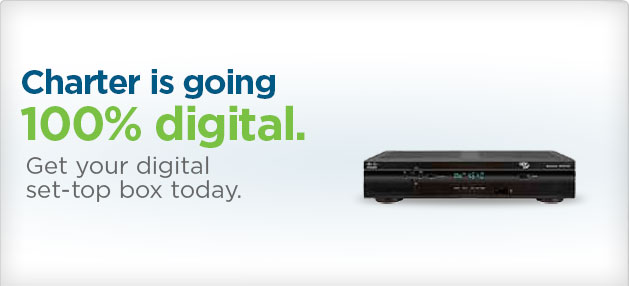 Charter Communications’ march to all-digital service is one big Excedrin headache for many of the communities enduring the cable company’s conversion.
Charter is embarked on a campaign to end analog cable television service, freeing up bandwidth to offer more HD channels and increase broadband speeds. But the switch to digital has been accompanied by frequent service disruptions and outages.
In Texas, customers complain their digital channels are often frozen or pixelated. In Casper, Wyo., where Charter acquired an older cable system from Cablevision that was originally built by Bresnan Communications, customers’ complaints range from inconsistent service and slow response times to loss of sound and frozen video during airing of City Council meetings.
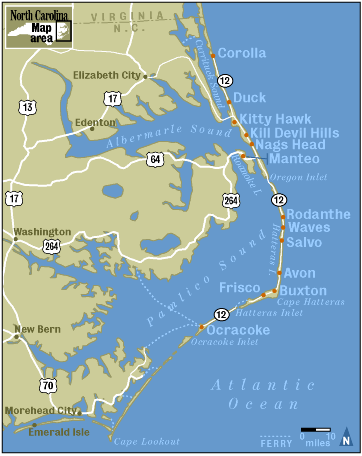
But some of the loudest concerns about Charter originate from the Outer Banks of North Carolina where customers are finding the switch to digital can be very costly.
Tourism is a major part of the local economy and the Outer Banks are filled with seasonal homes, rental condos and hotels. Many property owners maintain seasonal accounts with Charter Cable, only active during the tourist season. Some hotel owners notified about Charter’s plans to transition towards digital service worked with the cable company to buy televisions that would not need additional equipment to work after the switch. With the cable company’s recommendations, some hotel chains purchased dozens or even hundreds of digital-ready television sets installed in rooms that were ready for the switch.
 Only recently, Charter notified customers they also planned to encrypt the basic lineup, rendering the digital televisions useless without the additional cost and inconvenience of installing Charter’s digital set-top boxes. Although Charter will temporarily offer customers free rental of the boxes, after the offer expires, customers will pay Charter $6.99 a month for each box. For some upper end condos, the cost of renting multiple boxes will exceed the cost of the cable TV package.
The Outer Banks Voice details several other customer complaints:
With the older analog systems, many owners flat mounted their televisions to walls and had the cable wired directly into the television, out of sight. With boxes now required, rental homeowners will need to figure out where to place the box and how to run the cables to the set.
In addition, rental companies and homeowners will need to keep track of numerous remotes and keeping those remotes supplied with working batteries.
[…] Thus far, Charter is not offering boxes for sale, so owners cannot absorb the cost over the long-run use of the box, and there appears to be some confusion on whether homes with five or more televisions will require a “Pro Installation” at extra cost to ensure signal strength is sufficient.
If such an installation is required, owners and rental management companies will also be required to arrange access for Charter installers.
Rental condos are also faced with yet another logistic hurdle.
Many condos include cable television fees in their monthly association dues, and the cable contracts for all units are in the name of the condo association.
To obtain boxes, condo owners are now going to be required to set up their own individual accounts, often from an out-of-state location, and then determine how to get the boxes installed.
Signal strength is also a concern in condo projects. Even with analog signals, the multiple connections in one area make reception fuzzy and of low quality.

A small sample of complaints found all over Charter’s social media pages.
Charter Communications shared their side of the story about the digital conversion:
Outer Banks, N.C.
Charter customers are notified by newspaper, direct mail, bill messages, phone calls from Charter representatives, and Charter commercial spots beginning at least 30 days prior to their cutover. Charter is making it easy for customers to receive one or more digital boxes at no cost for one, two or five years, depending on the customer’s programming package and other qualifying factors.
Customers that need less than four boxes can have them shipped directly to their home by calling 1-888-GET-CHARTER or pick them up at a Charter Store.
Customers that live out of town, that own vacation homes, can authorize personnel with their property management company or other specified individuals to pick up their boxes. Customers must first authorize those individuals and add them to their account by calling 1-888-GET-CHARTER. The customer account owner can rescind authorization of individuals at any time.
Property Management companies or authorized individuals can then obtain up to five set-top boxes at a Charter Store.
Customers needing more than five boxes should contact Charter 1-888-GET-CHARTER. A professional technician will be scheduled to assist customers with the installation.
Charter Stores are currently operating with expanded hours to accommodate customers during this all-digital project. Charter Store hours will also be expanded in April where peak volume is expected.
Commercial properties have several options available and can work with their Charter Business account representative on the best solution for their business.
Due to advances in technology, solutions available may involve the need for additional equipment in order to provide the best possible cable, Internet and voice products for our customers.

 That may prove to be smart politics for Franken, seen as a polarizing figure in the left-right divide. The near-universal loathing among consumers for both Comcast and Time Warner Cable threaten to rise above traditional partisan politics. Republican lawmakers have kept largely quiet about the merger deal, and some are even openly questioning it. Franken may tapped into a re-election issue that voters across Minnesota are likely to support — especially older Republican-leaning independents.
 Netflix has
 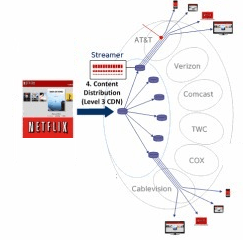 Netflix has traditionally avoided owning the “pipes” that distribute movies and TV shows to paying customers. Instead, it usually contracts with “transit providers” to send content from Netflix headquarters on to “content distribution networks (CDN)” that manage video streaming. A Netflix video may pass through a number of connections on a variety of independently owned networks before it arrives at the front door of your Internet Service Provider. Companies like Comcast handle “the last mile” of the journey that began at Netflix and ends at your computer or television set.
 Netflix and YouTube together are now estimated to cover 50 percent of all video traffic on the Internet, and that traffic is growing. Cogent dutifully passes that video content along to Internet Service Providers like Verizon and Comcast that have customers waiting to watch. But it is a two-way street. Any outbound traffic from customers could also be forwarded to Cogent to send on. Traditionally, both sides have managed the traffic by gradually increasing the bandwidth and speed of their connections to one-another. But as Netflix traffic grows and grows, companies like Comcast and Verizon believe they are being saddled with the costs to upgrade their networks in ways that are out of proportion to the traffic they send in the other direction. ISPs often grumble about the cost but keep on upgrading to keep paying customers happy. Verizon and Comcast are suspected of dragging their feet on those upgrades in an effort to win compensation.
 But that argument does not explain why Netflix was compelled to make a financial arrangement with Comcast. The two companies have been in negotiations on the subject of traffic compensation for months. Many industry observers believe those talks went nowhere until Netflix customers began complaining about the increasing network slowdowns. Some even dropped their Netflix subscriptions over the issue.