Home » Bill Shock » Recent Articles:

AT&T Tells Customers $30 Extra for Unlimited Internet is Good News (for AT&T)

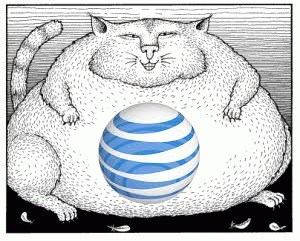
fat cat attAT&T has indirectly announced it will enforce hard data caps on its U-verse broadband service for the first time, imposing overlimit fees for customers that exceed their allowance unless they agree to pay $30 extra a month for a new unlimited add-on plan.

AT&T’s Consumer Blog announced effective May 23, AT&T was increasing the usage allowances on its DSL and U-verse broadband service and is introducing a new $30 unlimited option for broadband-only customers many actually had all along because AT&T never enforced its cap for U-verse.

Customers currently bundling video and data services from AT&T/DirecTV will get a break – the unlimited option will apply at no extra charge if you agree to a single, combined bill for all of your AT&T services. The decision to apply usage caps to broadband-only customers, often cord-cutters, while effectively exempting current U-verse TV/DirecTV video customers is sure to raise eyebrows.

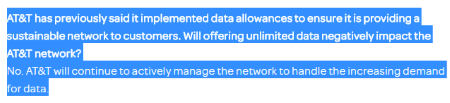
AT&T originally told customers its usage caps were designed “to ensure it is providing a sustainable network to customers.”  But in a company FAQ, AT&T destroys its own argument for the need to cap anyone. “Will offering unlimited data negatively impact the AT&T network? No. AT&T will continue to actively manage the network to handle the increasing demand for data.”

AT&T’s need for data caps is also eroded by company claims only a small percentage of customers exceed them.

Why caps again?

Why caps again?

“Today, our home Internet customers use just over 100GB of data per month on average,” AT&T wrote. “So even with our smallest U-verse Internet data allowance of 300 GB the average customer has plenty of data to do more.”

At least for now.

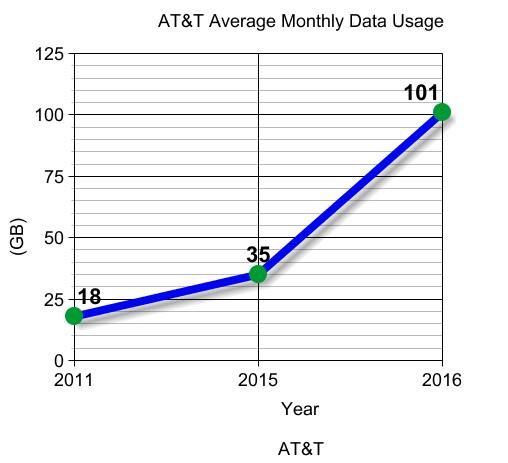
A review of AT&T’s past average usage claims is revealing. In 2011, AT&T told Tom’s Hardware the average customer consumed about 18GB a month. In 2015, AT&T’s cached support site claimed average customers used around 35GB a month. As of this week, AT&T says average users now exceed 100GB a month. If AT&T decides not to regularly revisit allowances (AT&T took five years to revisit the subject this week, having introduced 150GB caps on DSL and 250GB on U-verse in 2011), customers are likely to face pressure to sign up for the $30 unlimited add-on or buy television service from AT&T to avoid overlimit charges that will top out at $200 in penalties for DSL customers, $100 for U-verse overlimit fees.

average usage

Beginning May 23, AT&T’s website will include a data usage meter to help avoid AT&T’s overlimit penalty: $10 for each 50GB increment one exceeds their allowance. AT&T claims only 4% of its customers will exceed their future data allowances. They wouldn’t say how many exceed the current ones.

Because U-verse customers have avoided AT&T’s usage caps in the past, the company is now reminding customers it will give several warnings before you experience bill shock:

  • In the first bill cycle when you reach 100% of your data allowance, AT&T will update you via email, but there will be no charges.
  • In the second bill cycle, AT&T will notify you via email at 65%, 90%, and 100%, and still without charges.
  • In the third bill cycle, and each bill cycle thereafter, you’ll receive reminder emails at 65% and 90%. At 100% AT&T will notify you and add an additional 50GB of data to your account for $10 each time you exceed the allowance. Customers will receive reminders about their data usage for the additional 50GB at 75% and 100%.

All usage — including uploads and downloads — counts towards the cap. There is just one exception. Wireless traffic from an AT&T MicroCell, designed to boost weak cell signals inside the home, is not included in AT&T’s Internet data usage allowance. To help ensure accurate billing, you have to register your AT&T MicroCell account and residential AT&T Internet account.

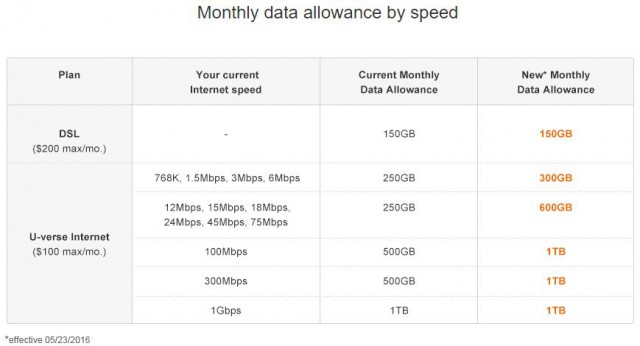
Here are the new data allowances that will take effect May 23rd:

monthly data allowance

DSL Reports’ Karl Bode is skeptical of the “consumer benefits” AT&T is touting as part of the change:

That last bit is a fairly transparent ploy to address a spike in cord cutting at AT&T — by forcing customers into signing up for television services they may not actually want if they want to avoid usage restrictions. Whether using arbitrary caps to force users to sign up for TV technically violates net neutrality (either the FCC’s rules or the concept in general) is something that’s likely to be hotly debated.

It’s also curious that just as AT&T indicates it’s backing away from U-Verse TV (which should technically free up more bandwidth on the AT&T network), it’s implementing caps on a network it originally stated didn’t need caps thanks to “greater capacity.” That’s because as with Comcast, caps really aren’t about capacity or financial necessity, they’re about protecting traditional TV revenue from Internet video. At the end of the day, AT&T’s just charging $30 a month (or more) for the same service, while trying to frame it as a net positive for consumers.

Netflix’s $5 Billion Budget for Content Guarantees Program Spending Arms Race

Phillip Dampier March 3, 2016 Competition, Consumer News, Online Video 2 Comments

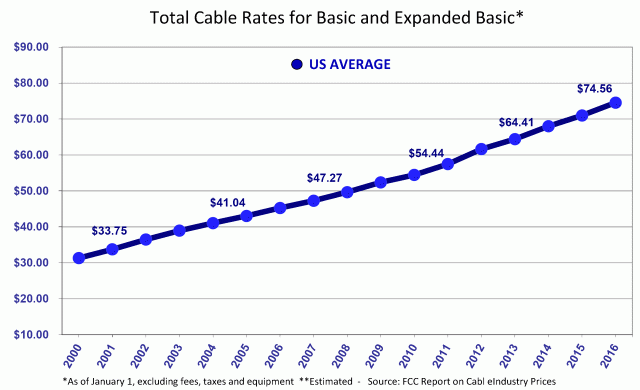
Total-Cable-Rate-increase-FCC6Years of broadcast and cable networks relying on cheap reality TV fare, game shows, and lurid news magazines to save money are coming to an end as media companies realize the only way to stop the viewing shift to Netflix, Hulu, and Amazon is to create better programming viewers want to see.

With online video services like Netflix spending millions to create original content like House of Cards and Fuller House, viewers are becoming disenchanted with shoveled reality fare and reruns littering basic cable networks.

A decade ago, cable networks started pushing the envelope on their programming lineups to boost ratings. Sober educational history documentaries on The History Channel began to make way in 2008 for reality shows like Pawn Stars and Ax Men, along with dubious pseudo-documentaries like Ancient Aliens and UFO Hunters. Consistent weather forecast information on The Weather Channel often had to wait for various weather chasing reality shows and other long form programming. Even The Learning Channel ditched educational programming as early as 2001 to feature “lifestyle” shows maligned and lampooned by critics as “freak show” television.

Broadcast networks suffering through an interminable advertising recession increasingly ditched scripted dramas for much cheaper reality and game shows. Even though some of these shows are considered popular, the total number of households viewing them have been in decline for years.

With the advent of series and movies created and funded by online video providers, traditional television networks and cable outlets have realized they can no longer rely on Law & Order reruns and shows like The Real Housewives of Dallas to keep viewers. They have to spend more money to create quality new shows.

bill shockBloomberg News reports networks hit the panic button after learning Netflix intends to spend almost $5 billion this year alone on programming, far more than any broadcast or cable network would ever consider.

The new strategy in response: spend, spend, spend.

“All these companies have been raising the amount they’re spending on programming pretty consistently,” said Doug Creutz, an analyst with Cowen & Co. “TV is losing audiences, and you’re trying to have new stuff to keep audiences engaged with your programming.”

Discovery Communications, Viacom and Starz are among those planning spending boosts to deliver better programming to compete. Although that may be great news for television aficionados, consumers are likely to be handed the bill in the form of higher cable rates to cover the “increased programming expenses.”

The large broadcast networks, movie studios, and cable networks may have created this problem for themselves after they began dramatically boosting the cost of licensing movies and TV shows for ventures like Netflix, in hopes of limiting its growth while also profiting handsomely from their deep content libraries. In response to growing restrictions on licensing content, Netflix embarked on a plan to create some of their own exclusive content instead. Many entertainment executives did not take Netflix seriously until the arrival of House of Cards, a series that could easily have been created and financed by any major network.

Other online video companies quickly followed suit, often using the British TV model of creating affordable, high quality mini-series that might include 8-10 episodes per season instead of the usual two dozen common on American networks. Co-productions with content-starved networks abroad also helped share expenses, secure talent, and move into something beyond conventional programming.

Cable networks have also had increasing success creating shows not just for the American market, but also for export to the rest of the English-speaking world, particularly Great Britain, Ireland, Australia, and Canada.

discoverySome Wall Street analysts like Rich Greenfield at BTIG Research have gone as far as predicting the traditional cable TV bundle is threatened with extinction as cost conscious viewers continue to abandon linear/live television for on-demand content like that offered by Netflix instead. That has delivered a three-way punch: pressures on revenue as program creation spending increases, growing cord-cutting, and cable rate inflation cable executives are increasingly desperate to control.

The day the 500 channel cable package model falls apart may not be too far off. The cost of programming at Discovery’s cable networks, other than sports, has grown 55% from 2013 to 2016, according to projections from researcher MoffettNathanson.

Discovery is using the money to push aside some of its near-endless reality TV fare for scripted programming, developing 10 shows with Lions Gate Entertainment. Viacom, another major cable programmer, saw expenses rise more than 25%, in part to create a new night of programming on VH1, doubling animation at Nickelodeon, and budgeting for more special events programming on BET. Some smaller cable operators were not impressed with the asking price and dropped all of Viacom’s networks from their cable systems.

Starz-LogoStarz, dwarfed by HBO and Showtime, is spending $250 million on its own original programming including Outlander, Survivor’s Remorse and Power. Subscribers who want more will get it as Starz increases budgets enough to allow producers to create 80-90 original episodes this year, up from 75 in 2015. To introduce subscribers to the shows, Starz commonly offers cable subscribers free trials as part of ongoing cable company promotions.

If you run an entertainment studio, are employed in the entertainment field, or can act, these are good times. In fact, demand for scripted shows may be outpacing the capacity of studios to produce them.

John Landgraf, CEO of Fox’s FX Networks, asserted there’s “too much TV,” noting over 400 scripted shows were filmed last year.

Until the late 1980s, most of the demand for scripted shows came from NBC, CBS, ABC, and the then-new FOX, because they were the only ones with enough money to afford the high production costs. Today, cable subscribers foot the bill for most cable network original shows, causing cable rates to spiral. With Netflix ready to spend at least $11 billion on programming over the next five years, the days of rate hikes are far from over.

Comcast Launches Online Video Service It Exempts from Its Own Data Caps

xfinitylogoComcast is inviting controversy launching a new live streaming TV service targeting cord-cutters while exempting it from its own data caps.

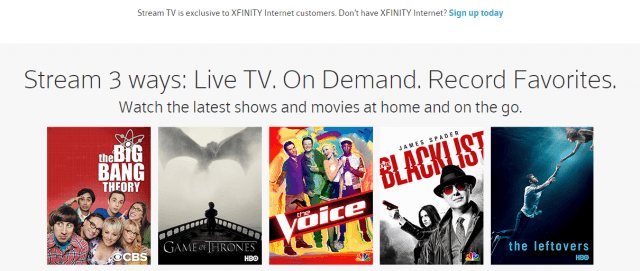
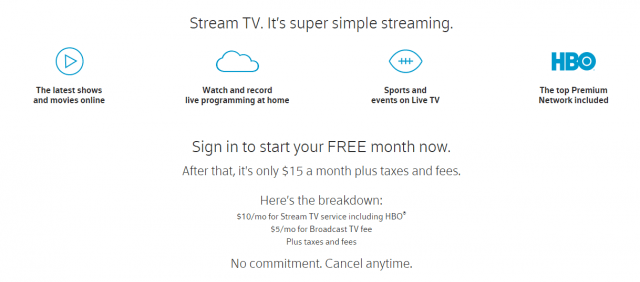
Comcast’s Stream TV is comparable to Comcast’s Limited Basic lineup, only instead of using a set-top box, Stream TV delivers online video over the Internet to Comcast’s broadband customers in Massachusetts, New Hampshire, Maine and the Greater Chicago area. For $15 a month, Stream TV offers a large package of local over the air stations, broadcast networks, and HBO, along with thousands of on-demand titles and cloud DVR storage. In Boston, the lineup includes:

WGBH (PBS), HSN. WBZ (CBS), NECN, WHDH (NBC), Community Programming, BNN-Public Access, WWDP-Evine Live, WLVI (CW), WSBK (MyTV), WGBX (PBS), WBIN (Ind.), WBPX (Ion), WMFP (Ind.), The Municipal Channel, Government Access, WFXT (FOX), WCEA (MasTV), WUNI (Univision), EWTN, C-SPAN, CatholicTV, POP, QVC, WYDN (Daystar), WUTF (UniMas), WNEU (Telemundo), Jewelry TV, XFINITY Latino, WGBH World, WGBH Kids, Trinity Broadcasting Network, WGBH Create, Leased Access, WBIN-Antenna TV, WBIN-GRIT TV, WNEU-Exitos, WLVI-BUZZR, WCVB (Me-TV), WFXT-MOVIES!, WHDH-This TV, WFXZ-CA, WUNI-LATV, WFXZ (Mundo Fox), WBZ-Decades, and WFXT-Laff TV + HBO. The package also qualifies the customer as an authenticated cable TV subscriber, making them eligible to view TV Everywhere services from many cable networks.

stream tv

Comcast is offering the first month of Stream TV for free with no commitment to its broadband customers subscribed to at least XFINITY Performance Internet (or above). Up to two simultaneous streams are allowed per account and some channels may not be available for viewing outside of the home. Comcast claims it will expand Stream TV to Comcast customers nationwide in 2016. Comcast will not be selling the service to customers of other cable or phone companies, limiting its potential competitive impact.

Competitors like Sling TV offer their own alternatives to bloated cable TV subscriptions at a similar lower price, and they will sell to anyone with a broadband connection. Sling alone is partly responsible for Comcast’s loss of hundreds of thousands of cable TV customers who don’t want to pay for hundreds of channels many never watch. That Comcast might want to launch its own alternative online video package to retain customers is not a surprise. But Comcast’s decision to exempt Stream TV from the company’s data caps while leaving them in place for competitors is sure to spark a firestorm of controversy.

comcast_remoteComcast claims it is reasonable to exempt Stream TV from its 300GB data cap being tested in a growing number of markets.

“Stream TV is a cable streaming service delivered over Comcast’s cable system, not over the Internet,” wrote Comcast in its FAQ. “Therefore, Stream TV data usage will not be counted towards your Xfinity Internet monthly data usage.”

More precisely, Comcast claims it relies on its own internal IP network to distribute Stream TV, not the external Internet competitors use to reach ex-Comcast cable TV subscribers. Comcast’s premise is it is less costly to deliver content over its own network while Internet traffic comes at a premium. Critics will argue Comcast has found an end run around Net Neutrality by relying on usage caps to influence customer behavior.

For the moment, Netflix is reserving comment after being contacted by Ars Technica. But Sling TV and other services that depend on Comcast’s broadband to reach customers will likely not remain silent for long.

Comcast could effectively deter consumers from using competing online video services with the threat of overlimit fees if customers exceed their usage allowance. The cable company could even use the fact its services don’t count against that allowance as a marketing strategy.

Stop the Cap! has warned our members about that prospect for years. Preferential treatment of certain content over others by playing games with usage caps and overlimit fees could have a major impact on emerging online video competition. Since Comcast owns both the broadband lines and the online video service, it can engage in anti-competitive price discrimination. Competitors will also argue that Comcast’s internal IP network is off-limits to them, making it impossible to deliver content on equal terms over a level playing field.

stream simple

The next move will likely come from the FCC in response to complaints from Comcast’s competitors. As Ars Technica notes, the Federal Communications Commission’s Net Neutrality rules allow for complaints against so-called zero-rating schemes, with the commission judging on a case-by-case basis whether a practice “unreasonably interferes” with the ability of consumers to reach content or the ability of content providers to reach consumers.

With Comcast’s usage caps and overlimit fees, the only reaching will be for your wallet. Consumers need not wait for Sling TV and others to complain to the FCC. You can also share your own views about Comcast’s usage caps by filing a complaint with the FCC here.

Miami Vice: Florida Comcast Customers Furious About New Data Caps, $30 Fee to Avoid Them

comcastRicardo Bolán was not happy while reading his latest Comcast bill informing him he was about to be included in Comcast’s creeping trial of usage caps, which has slowly spread across the cable company’s service areas in the south and western U.S.

“Customer service said we were one of the communities ‘opting in’ to Comcast’s data usage plan, which is their way of saying Comcast forced it on us,” said Bolán, who lives in Hialeah, Fla.

Several South Florida customers are writing Stop the Cap! to complain about Comcast’s Oct. 1 imposition of a 300GB usage cap on its broadband service. Customers exceeding their allowance will now pay $10 in overlimit fees for each 50GB increment.

“Comcast’s usage meter hasn’t reliably worked down here for weeks, so you are flying blind over how much data you are using, and we’re talking about Comcast, so who can trust them?,” said Dave — a Stop the Cap! reader in Miami Beach. “I guess it’s back to AT&T.”

When the usage tool does work, some customers claim their reported usage levels suddenly doubled or tripled after Comcast’s usage cap started.

miami vice“Since this new data plan trial for Florida went into effect, I decided to check my usage,” Batchman27 wrote on Comcast’s support forum. “I am at 11GB in one day. I looked back at my usage for the past three months (July 1-Sept 30) and my average for those 92 days was 5.86GB per day. I find it very odd and extremely convenient that my usage [nearly doubled] on the day this ‘trial’ began.”

Over the next several days, his usage stayed consistently at or above 11GB a day.

“At this rate, I will exceed the 300GB before the end of the month and will be billed for the additional blocks of data (note: my highest usage during those three months was 202GB in August),” he added.

Another customer has had to banish Netflix, Hulu, and all other subscription video services from his home because they make all the difference whether or not his family of four will face overlimit bill charges and bill shock from Comcast.

“It’s no surprise what they are targeting with these caps,” said Austin Chilson. “If you watch Netflix or Hulu on a regular basis, 300GB is not enough. Netflix alone is responsible for about 17GB of video usage during the first three days of the month, and we were gone most of the day on Saturday the 3rd.”

Another customer echoes Chilson.
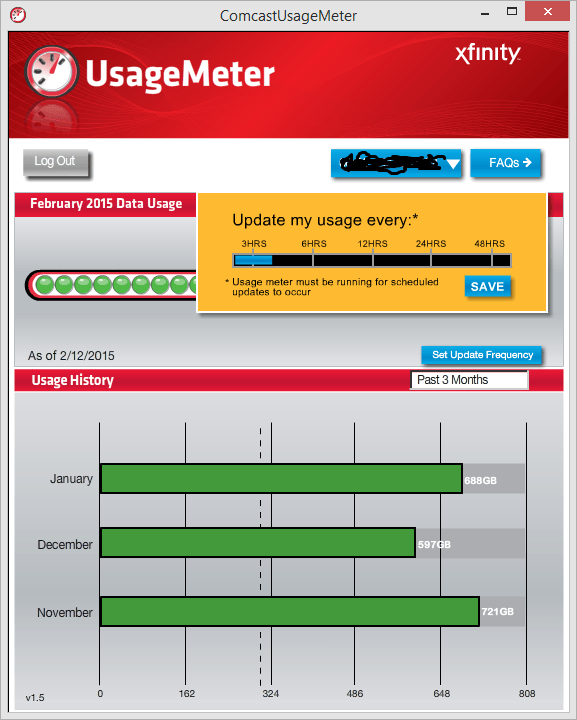
Comcast-Usage-Meter“I feel like we’re a pretty average family of four,” GuitarManJonny wrote Oct. 2 on Comcast’s support forum. “Of course we stream Netflix and we do a little downloading although nothing approaching what I’d consider excessive (no torrents, for example) and I have gone over the limit every month since July. I’m already at 13GB for this month, so it’s a pretty safe bet that I will go over again.”

Florida customers have an option other Comcast customers do not — a way back to unlimited usage by paying an extra $30 for an “unlimited use option.”

That seemed to only infuriate customers more.

“It’s amazing that a cap is being turned on and yet I’m asked to pay the same amount that I have been for unlimited and then being asked to pay MORE to continue the same plan I’m on now,” writes Gldoori. “It’s also ironic that I get the ‘We’re sorry. We can’t load your Internet usage meter right now’ [error message] when I try to monitor my usage on the website.”

“I’ll be cancelling my TV and home phone with them in a couple of months when my plan expires and then dropping my Internet speed to fit a “need” rather than a “want,” Gldoori wrote. “I’m not paying $30 more (for unlimited) just to have the same Internet plan I’ve been paying for already.”

A Comcast spokesperson tried to defend the implementation of usage caps in Miami-Dade, Broward and the Florida Keys by suggesting almost none of their customers will be impacted by it.

“To put things in perspective, 300 GB is an extremely large amount of data to use,” Comcast Florida spokeswoman Mindy Kramer told the Miami Herald. “The median data use for our customers is 40GB per month; about 70 percent of our customers use less than 100GB per month. About 92 percent of our customers will see absolutely no impact on their monthly bills.”

Kramer claims the new usage caps are about fairness.
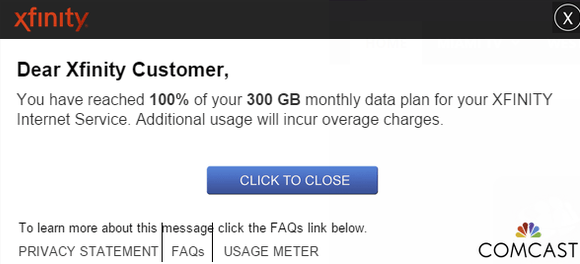
reached 100“Our data plan trials are part of our ongoing effort to create a fair, technologically-sound policy in which customers who use more data pay more, and customers who use less pay less,” Kramer said.

Except no customers are paying less. Comcast’s broadband rates have not changed as a result of the market trials, only a usage cap was introduced.

In other cities living under Comcast’s usage caps, the first notice many customers take of the new caps comes in the form of a much higher bill. Clark Howard, a consumer reporter for WSB-TV in Atlanta, has heard from local residents reporting serious bill spikes if they ignored Comcast’s warning or failed to curtail their usage.

Another reader in South Florida reports Comcast does inform Floridians when their usage allowance runs out, including automated phone calls and a browser-injected warning message appearing on all non-https websites when a customer reaches 80 and 100% of their monthly allowance. Once that allowance is exceeded, your Internet will not stop working. Comcast will instead add $10 for each additional 50GB you use until the end of your billing cycle.
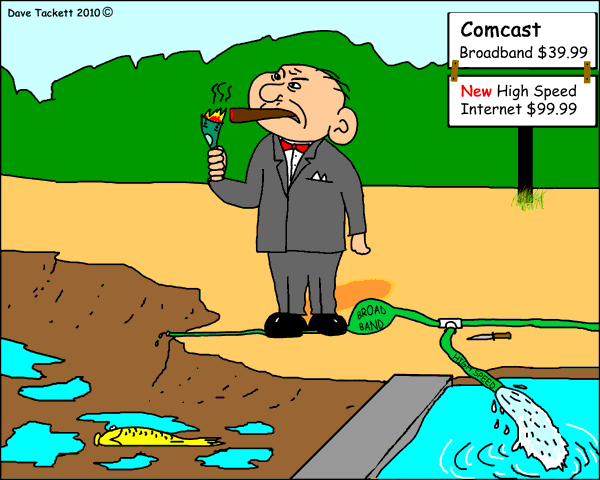
comcast cartoon“There is no way to opt out of accruing overlimit fees and when the usage tool is down, you have no idea what your bill will look like,” said Bolán. “To keep this in perspective, if you manage to use 500GB in a month, the overlimit fee will add $40 to your bill. If you cut your cable TV and watch Hulu and Netflix, that kind of usage is not surprising.”

Chilson’s parents have been impacted by Comcast’s usage caps in another way — they are having trouble selling their home because Comcast is the only service provider. AT&T isn’t providing U-verse service to several homes on the street, including theirs.

“The realtor reports would-be buyers are shying away because they don’t like the Internet options, which are Comcast, Comcast, or Comcast,” Chilson said. “My parents have offered to split closing costs and even tried lowering the price, but because everyone hates Comcast, they just don’t want to be stuck living in a home with Comcast as their only choice.”

Chilson suggested offering would-be buyers $720 — the cost of two years of Comcast’s $30 a month unlimited add-on plan. Still no takers, and several buyers cited Internet availability and Comcast as reasons for backing away.

Jerome Stokes of Palm Springs, Fla. has managed to collect almost 2,000 signatures on his Change.org petition demanding Comcast remove the usage caps from all of their Internet plans. He calls data caps “barbaric,” and thinks they should be illegal. Other customers are also complaining to the FCC.

Sean Miranda thinks they are just bad for business:

“If this doesn’t affect most people anyway, why bother implementing this change? All it does is make people like myself, less inclined to continue using your service, and instead switch to a different ISP that doesn’t put such silly restrictions on their customers. AT&T is starting to look better and better right about now, but where do I go once they start implementing this too, huh? I want no involvement in this “trial” and hope you discontinue this monopoly scheme immediately, or I will have no choice but to take my business elsewhere or to create new competition.”


Microsoft’s Windows 10 Updates Cost Some Users Hundreds of Dollars in Internet Overlimit Fees

badbillAbbes Nacef was not very happy when he opened his web browser a few days ago to see a message inserted at the top of his screen.
“Your Internet service has reached the maximum limit of allowable overage charges. If you wish to continue service, please contact our business office to discuss your account.”

Nacef, who lives in Monastir, a Tunisian city best known for its tourism, was surprised because it was the first sign his Internet account had gone over the limit.

“While you can get uncapped DSL in Tunisia, it is not very good service and in my area it is not offered,” Nacef told Stop the Cap!. “Most in our neighborhood rely on a wireless ISP service which is less costly than 3G or 4G mobile service, but is capped and charges roughly $25 for each extra gigabyte allotment.”

Nacef’s call to his provider was not pleasant. He had already accumulated almost $180 in charges for the month of August, most in overlimit fees. The culprit was quickly identified — Microsoft Windows 10, which took several attempts to reach Nacef’s computer over a challenging Internet connection. But Nacef also learned his computer was repeatedly requesting updates from Microsoft, including three software patches that would not complete and were sent over and over for almost two weeks.

“It was the fifth call my ISP had received about this problem, and they were very annoyed also because Microsoft Windows 10 assumes you will use their Edge browser which defeats the early warning messages from my ISP that usage limits are approaching,” Nacef said. “When I switched back to my old browser the bad news was there, but it was too late.”

Windows-10His ISP has agreed to cut the charges in half and has warned all of its customers if they want Windows 10, the ISP will offer them a copy on a returnable USB memory device for free.


Nacef thinks the huge multiple download attempts to receive Windows 10 itself was responsible for most of the extra usage, but he is wary about the frequent software updates and the fact they are shared with other users by default.

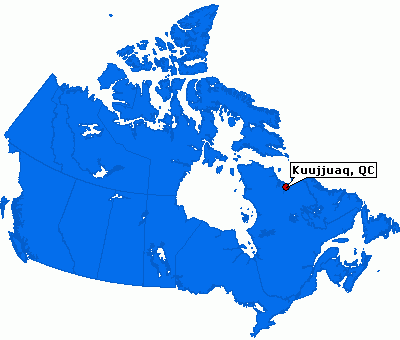
That is what may have tripped up Rob DuGrenier who paid an exorbitant $150 this month for 1.5Mbps Internet service just to get a 75GB usage allowance for his immediate family in far northern Québec. The alternative was an overlimit fee of $20 for each 5GB allotment of usage over the usual 30GB allowance granted to “Power” users.

“Internet is not an option for our family for medical reasons, but this hurts,” DuGrenier writes. “It is definitely Windows 10 and there is something wrong with it because our ISP reports we are sending a lot more data than we are receiving, and there are no viruses or malware on the computers.”

Internet access is northern Québec is slow and costly.

Internet access is northern Québec is slow and costly.

His ISP now suspects Microsoft is using his connection to distribute software updates to a number of other users across northern Canada. When DuGrenier’s family disabled the option that opted them in to distributing Microsoft updates to other customers, upstream traffic dropped 98%.

“Were we sending Windows 10 itself all over northern Quebec and Nunavut? We just don’t know and Microsoft has not responded,” DuGrenier reports. “They have billions, I do not. They should be paying my Internet bill this month.”

The worst of the reported problems of bill shock are occurring in remote areas where Internet service can be a mixture of wired and wireless connections that are often slow and usually usage-limited. Windows 10 was designed to reduce bandwidth demand on wireless connections, assuming they would be metered. But how Microsoft detects which networks are wireless and metered and which may only partly be so is apparently a work in progress.

This morning, the Sydney Morning Herald reports at least one customer on a Pacific island was slammed with a catastrophically high Internet bill. Maureen Hilyard in the Cook Islands owes her ISP $390 this month, all because of automatic updates from Microsoft for Windows 10.

“In this context, where Internet access is both painfully slow and seriously expensive, these forced updates are almost literally forcing people off the Internet and are resulting in massive excess data charges,” EFA executive officer Jon Lawrence told the newspaper.

cook islands

The Cook Islands

Hilyard is a customer of Bluesky, primarily a satellite Internet Service Provider that dominates the Cook Islands, which have no other options for Internet access. A basic account costs $31.50 a month, but that provides just 3.5GB of data for the entire month. Automatic overlimit charges of $0.03 per megabyte accrue after the allowance is used up.

The most likely victims of Windows-induced bill shock subscribe to usage-limited wireless or satellite Internet services. While many providers throttle the speeds of customers who reach the usage limit, others charge penalty rates. Microsoft has no way to know which is true. Instead, the company claims it looks for evidence of a wireless connection before performing updates and when it finds one, it assumes it to be metered. But wired connections stay firmly in the unmetered category, whether they are usage-capped or not. Customers are invited to choose by digging through confusing settings menus.

Even more problematic is the built-in peer-to-peer technology that gives Microsoft’s servers a break and uses your Internet connection to share the latest Windows software updates with other Windows users across town and beyond. Microsoft has offered no provision to track this usage, but users can opt out with this advice from the Sydney Morning Herald:

Users can tweak their Windows 10 system settings by enabling a “metered connection” by searching for “Change Wi-Fi settings” in the start menu, clicking on “Advanced Options” and enabling “Metered connection.” This lets Windows 10 know the Wi-Fi connection you’re on is capped, so instead of forcing a software update onto your PC or tablet, it will notify you first. You can then choose to delay the upgrade until you are on an uncapped connection, or until you’ve rolled over into a fresh month of data.

This workaround only applies to Wi-Fi connections, however, not Ethernet connections.

A second workaround actually comes in an update which Microsoft itself released. It’s a bit more fiddly though, as it involves manually uninstalling driver updates and then downloading a special troubleshooter app to prevent them from installing again automatically. The full instructions are available online.

Search This Site:

Contributions:

Recent Comments:

Your Account:

Stop the Cap!