Home » battery backup equipment » Recent Articles:

Sandy Exposes the Soft Underbelly of Wireless; Inadequate Storm Preparation Faulted

Phillip Dampier November 26, 2012 AT&T, Consumer News, Editorial & Site News, Public Policy & Gov't, Rural Broadband, Sprint, T-Mobile, Verizon, Wireless Broadband Comments Off on Sandy Exposes the Soft Underbelly of Wireless; Inadequate Storm Preparation Faulted

Phillip “Do you want to depend on AT&T for phone service that could be gone with the wind for weeks?” Dampier

Superstorm Sandy is getting credit for exposing the thin veneer of the “wireless future” some phone companies want to give their most rural customers after disconnecting their home phone lines in favor of wireless service.

Unfortunately for the providers selling you on the wireless revolution, reality intruded last month when Category 1 Hurricane Sandy arrived. In its wake, the storm obliterated a significant amount of wireless phone service for weeks in some of the most urbanized sections of the country, while leaving underground, traditional wired phone service largely untouched.

The storm that blew into the northeastern U.S. Oct. 29 left a legacy of interrupted or inadequate cell service that lasted more than two weeks. AT&T and Verizon Wireless reported their networks were not fully restored until Nov. 15. Sprint and T-Mobile are still addressing some issues with their networks as of today.

Although the storm was enormous in scope, it was only a Category 1 hurricane. It could have been much worse.

So where did things go wrong?

Although some sites lost their wired backhaul connection which connects the tower to the provider, the biggest problem was commercial power interruption. Without power, many providers were caught flat-footed with inadequate on-site backup plans to keep cell towers up and running until regular power could be restored.

The wireless industry fought tooth and nail against common sense regulations proposed by the Federal Communications Commission after Hurricane Katrina devastated infrastructure and power facilities in southern Louisiana and Mississippi.
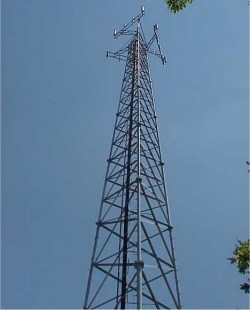
The FCC proposed that every cell tower be equipped with on site battery backup equipment that could sustain service for a minimum of eight hours — sufficient time for power to be restored or company engineers to arrive with more robust generators.

Providers howled about the cost of outfitting the nation’s 200,000 cell sites with even a conservative amount of backup power. The cellular industry lobbying group and Sprint sued, calling it a wasteful and unnecessary mandate. The Bush Administration eventually dropped the whole matter in November 2008 as part of its war on “burdensome” regulation.

Since then, providers have been free to design their own emergency backup plans, or have none at all. Few have made those detailed plans public, giving customers information about how likely their cell phone will work in the event of a disaster.

Verizon Wireless has been the most aggressive, voluntarily adopting the proposed FCC standards and outfitting all of their cell sites with a minimum of eight hours of battery backup power. Other providers have backup facilities at some sites, often with lower capacity batteries that won’t last as long.

Sandy illustrated that even eight hours might be inadequate. Many cell sites were on generator power for more than a week, assuming engineers could regularly reach each tower with equipment and fuel.

Other cell sites could not be returned to service immediately because of major wind damage or flooding. Those that were in service were often overburdened by enormous call volumes.

Meanwhile, unless your landline provider’s central office was flooded, your phone line kept working during and after the storm, especially if your neighborhood wiring is buried underground.

In many cases, it was the only thing working, because traditional phone lines are independently powered and not dependent on electric service in your home to operate. That is what kept your dial tone humming even as your smartphone’s battery ran out.

Ironically, the network that performed the best through the storm is the same one AT&T and Verizon would like to phase out, starting in rural areas. AT&T wants to completely abandon wired service in its most rural service areas, where calling and waiting for emergency assistance is already a hindrance. AT&T plans to spend billions to bolster its rural cell tower network to cover the landline areas it wants to abandon, but those communities would be entirely dependent on the reliability of that network, because AT&T’s competitors are unlikely to build additional infrastructure to compete.

As Sandy just demonstrated, if high-profit Manhattan customers could not be assured of reliable cell phone service from any company that provide service there, how likely is it that a customer in rural Kansas will be in real trouble summoning help over AT&T’s wireless infrastructure in the event of a cell tower failure, wiping out the only telecommunications service available in nearby towns?

Time Warner Cable Plagued by Battery Backup Thefts That Impact Phone, Internet Customers

Phillip Dampier October 12, 2011 Consumer News, Video Comments Off on Time Warner Cable Plagued by Battery Backup Thefts That Impact Phone, Internet Customers

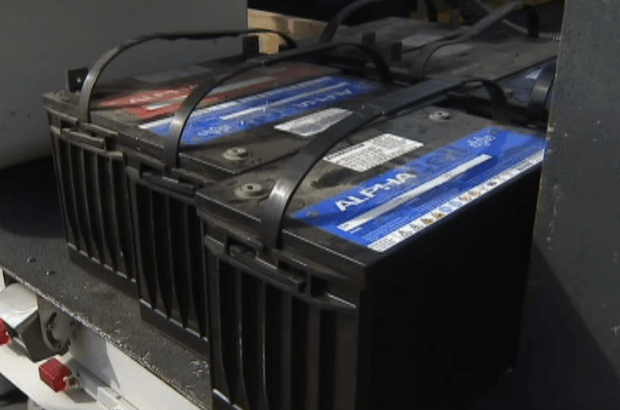
Cable company-owned power backup batteries

For the last several years, telephone companies have faced millions in losses from stolen telephone cables often ripped right off of phone poles — sold to copper scrap yards, usually to fuel drug habits.  Now cable companies like Time Warner Cable are facing a theft problem of their own — stolen battery backup equipment.

In California and Texas, the problem has grown significant enough to cost the company nearly $1 million replacing lost equipment.  Time Warner is now offering up to $10,000 in some areas for information leading to the arrest of those responsible.

Thieves break into metal cabinets usually located on street corners, phone poles, or in backyards looking to harvest the power backup batteries inside.  Thieves resell the lead batteries at scrap yards, and often take the power backup controllers as well.  Most break-ins occur at night, and in many areas, the thieves dress up to resemble utility workers and drive panel vans or bucket trucks that passersby might mistake as utility-owned vehicles.

The batteries appear similar to a traditional car battery, but larger.  They weigh about 67 pounds each and typically sell for $17-20 apiece at scrap yards.  In some areas, repeated break-ins have caused the loss of dozens of batteries, and major headaches for customers who can find their phone and Internet service interrupted until technicians can replace the equipment.  In Beaumont, Tex., two men driving a bucket truck netted $3,000 worth of batteries in one evening.  They were caught by law enforcement officials who suspected them of breaking into numerous boxes attached to area telephone poles.

In January, two Huntington Beach, Calif. police officers stopped a suspicious vehicle and found 13 stolen batteries owned by the cable company removed from boxes in Huntington Beach, Fountain Valley and Costa Mesa. The vehicles’ occupants were arrested for a variety of charges including the possession of stolen property.  They have since been convicted of the crimes and sentenced to time in jail.

Grand Prairie, Tex. Det. Lyle Gensler told a Dallas TV station it’s not just the loss of service Time Warner is worried about, it’s the replacement cost of the stolen property that may trickle-down to customers.

“If Time Warner loses a battery, it’s going to cost them to replace it. If they lose money, they’re going to pass that onto the consumer,” said Gensler. “Over the last six months [Grand Prairie] has lost over $100,000 in property.”

Time Warner has been installing new theft prevention equipment on some utility cabinets in problem areas that deter unauthorized entry into the cabinets.

The cable company has already paid at least one tipster $10,000 for turning in cable equipment thieves.  Concerned citizens can report suspicious activity to their local law enforcement office or call Time Warner’s security tip line at 1-877-TWC-TIPS.

[flv width=”640″ height=”382″]http://www.phillipdampier.com/video/KXAS Dallas Time Warner Offers 10000 Reward for Battery Thefts 10-11-11.flv[/flv]

KXAS in Dallas reports on a rash of battery thefts affecting Time Warner Cable and their subscribers in the Metroplex.  (1 minute)

Goodnight Irene: Some Customers Will Have to Wait Until October for Restored Internet Service

Cablevision: Don't Call Us

By the time Hurricane Irene reached upstate New York and New England, it was a tropical storm some say was over-hyped from the outset, but don’t tell that to utility companies facing weeks of service restorations that will leave some of their customers offline until October.

The worst damage to infrastructure was done in this region, with utility poles swept away in flood waters right along with the homes they used to serve.  Telephone and cable companies in several parts of the region cannot even begin to restore service until higher-priority electric service is brought back.  Besides, you can’t use a broadband connection if your power has been out for a week plus.

Those addicted to their online connection are making due in parking lots and other Wi-Fi hotspots where service prevailed over Irene.  Wireless connectivity from cell phone companies is also getting a workout, assuming customers are aware of usage caps and limitations which could make September’s bill much higher than expected.

Stop the Cap! has learned some DSL service restoration appointments in upstate New York, Massachusetts, Vermont, and New Hampshire are now extending into October, although companies suggest outside work may resolve problems.  Customers with the worst luck face a lengthy wait for the replacement of utility poles, new utility lines to be strung across them, and replacement of individual lines connected from the pole to individual homes.

Some FairPoint Communications customers are finding Irene did a real number on their DSL service even if power outages were limited.

In southwestern New Hampshire, Robert Mitchell was presented with a unique error page on his computer after the lights came back on:

“…we are improving the security of your broadband connection. As such, you have been redirected to the FairPoint Communications broadband service page to install a security update.”

That was a fine idea, except its implementation left customers like Mitchell with the most secure broadband connection around, resistant to all malware and viruses — namely, by not having any connection at all.

My annoyance only increased when I realized that FairPoint may have provided a link to download the security update software, but they were not going to make the process of accessing that software easy.

“Your Web browser (Firefox) and Operating System (Mac) are not compatible with the DSL Security improvement process…please re-open this page on a Windows XP, Vista or Windows 7 PC using Internet Explorer,” the message continued.

Bully for me, I have two Macs in the office. Time to call technical support? Nope, sorry. Both of my phone lines use Vonage, a VoIP service that relies on a working DSL modem for dial tone. Cell service at the house was sketchy at best — if I could even get through to technical support during a hurricane.

With the help of an old Windows XP machine, Mitchell managed to finally get back online.  Later, he learned the power spikes and brownouts that preceded the blackout in his neighborhood had caused his DSL modem to resort to its original default settings.  When FairPoint customers first connect a DSL modem, the company prompts them to perform the aforementioned “security update.”  Only FairPoint stopped offering that update more than eight months earlier.  Now, according to Mitchell, it’s just the default start page for newly activated DSL modems.

Customers further east in downstate New York, Massachusetts, Maine, Long Island, Connecticut, and New Jersey are finding getting service restoration highly dependent on which provider they use.

Time Warner Cable customers numbering about 350,000 found their service out Wednesday after leftover flooding and debris tore up fiber cables serving Maine, New Hampshire and Vermont.  Service was restored that evening.

Cablevision customers in Connecticut are still experiencing new outages caused by flooding, and with power company workers contending with more damage in that state than further south in New York, cable crews can’t restore service until the lights are back on.

Cablevision customers on Long Island are still being told not to bother calling the cable company to report outages.  Those that do are often given a date of Sept. 15 for full service restoration, although it could be sooner if damage in individual neighborhoods is less severe.  A Cablevision spokesman said, “Cablevision is experiencing widespread service interruptions, primarily related to the loss of power.  Cablevision crews are in the field and we will be working around the clock to make necessary repairs, in close coordination with local utilities.  Generally, as electricity is returned to an area, customers will be able to access Cablevision service.”

Verizon customers in downstate New York and New Jersey faced lengthy hold times to report service outages, and are given a range of dates from later this week until mid-September for full service restoration.  Some pockets of very badly damaged infrastructure may take even longer to access and repair.  Verizon’s largest union workforce, under the auspices of Communications Workers of America District 1 are accusing Verizon management of slowing repairs with denials of overtime work requests, in part to punish workers for their recent strike action.  John Bonomo, a Verizon spokesperson, denies that accusation, but added the company is not treating the thousands of customers still without service as an emergency, noting landline service “is not as vital as it had been in past years.”

Comcast customers, mostly in Pennsylvania, Vermont and Massachusetts, are turning to smartphones to cope through extended service outages, according to the Boston Globe:

Comcast Corp. customer Soraya Stevens turned to her iPhone when her cable blew out, logging on to Twitter from her Bedford home for the latest power outage updates. “I would not have any communication or insight without my smartphone,’’ said Stevens, a software engineer.

Some customers who lost cable service lost their TV, Internet, and landline phone, which are often bundled and sold together. Many turned to their smartphones, operating on batteries and the signal from cellphone towers, or friends and family who still had cable service.

AT&T, which serves landline customers in Connecticut, experienced more outages a day or two after Irene departed as battery backup equipment installed at landline central offices finally failed.  Those equipped with diesel generators are still up and running, but many AT&T customers sold a package of broadband and phone service may actually be receiving telephone service over a less-robust Voice Over IP network, supported with battery backup equipment that shuts down after 24 hours, when the batteries are exhausted.  This has left customers with standard copper wire phone service still up and running, but customers on Voice Over IP completely disconnected.

Bill Henderson, president of Communications Workers of America Local 1298, told the Hartford Courant those landlines aren’t considered landlines by the Department of Utility Control, and aren’t regulated for reliability, as the old system is.

“Technology has risen. Some of the things we’ve given up in that system is reliability,” he said. “This is what I’ve been screaming about to the DPUC. It’s a telephone! We need to regulate this service.”

Customers are also complaining loudly about AT&T’s poor wireless performance during Irene, with many tower outages and service disruptions that are still ongoing.

Remember, when services are restored, be sure and contact your provider and request a full service credit.  You will not receive one unless you ask.

Search This Site:

Contributions:

Recent Comments:

Your Account:

Stop the Cap!