Home » Providers » Recent Articles:

Salisbury’s Fibrant Proposes Near-‘Turn-Key’ Headend Network for Community Fiber Projects

Phillip Dampier December 16, 2010 Broadband Speed, Community Networks, Competition, Fibrant, Public Policy & Gov't, Video, WOW! Comments Off on Salisbury’s Fibrant Proposes Near-‘Turn-Key’ Headend Network for Community Fiber Projects

Crowell

Fibrant, Salisbury, N.C., community-owned fiber to the home network, shares advice to other communities considering building their own self-reliant, locally-owned broadband networks: work together and outsource the headend.

Christopher Mitchell from Community Broadband Networks alerted us to a video from TelecomTV interviewing Michael Crowell, Fibrant’s Director of Broadband Services.  In it, Crowell shows off Fibrant’s GPON fiber network and explains what the city has learned from the experience of building its own network.

Ironically, a significant part of Fibrant’s network came cheap thanks to Windstream.  It seems what the residents of Salisbury won was also a loss for those living in Concord, N.C.

Crowell explains Concord was served by a small independent phone company — Concord Telephone.  They had decided to build their customers an advanced fiber to the home network similar to Fibrant, until the company was sold to Windstream.  Windstream has no interest in delivering world-class fiber broadband to Concord (or anywhere else), and left Concord with dismal DSL, selling the fiber network equipment to Salisbury dirt cheap — for around 10 cents on the dollar.

But not everything has come so easy to Fibrant, says Crowell.  One of the company’s largest expenses is its headend, which receives, monitors, and distributes the hundreds of video channels Fibrant customers receive.

“What we think would be a better model going forward is for the other cities and counties to do what is called an open access network.  They build and maintain the fiber but get other providers to provide the service,” Crowell said.

Crowell proposes allowing the state’s two largest municipal broadband projects — Wilson in the east and Salisbury in the central-west part of the state, handle the headend, as well as customer service calls and billing on behalf of other communities interested in building their own municipal fiber networks.  Both cities can deliver bulk feeds of video channels to different parts of the state and that saves other communities from spending money to hire employees to monitor redundant, expensive equipment.

That is more or less what is happening further south in Opelika, Ala., where work is underway constructing a fiber to the home network.  But in Opelika, city officials have decided to let cable overbuilder Knology run the network.

Knology’s network is already up and running in nearby Auburn, according to Royce Ard, general manager for Knology.  Ard told WRBL TV:

“We met our scheduled date for installing our first Auburn test customers and the test is progressing nicely. We will begin adding our first paying customers by the end of October,” Ard said. “Initially, our services will be available in a limited number of neighborhoods, but as we build out our network we will contact homeowners and let them know when services are available in their area.”

Knology projects being able to offer service to its first Opelika customers by the second quarter of 2011.

“Knology is very excited about entering the Opelika market,” Ard said. “The technology that we are deploying in the Auburn/Opelika markets will allow us to offer consumers a much better product than they have today. This, along with Knology’s commitment to customer service, will greatly improve the overall experience for consumers in Auburn and Opelika.”

[flv width=”512″ height=”308″]http://www.phillipdampier.com/video/Salisbury Discusses Motivation Behind Fibrant on TelecomTV 12-16-10.flv[/flv]

Fibrant’s Michael Crowell, interviewed by TelecomTV, walks viewers through Fibrant’s fiber network and discusses community-owned fiber networks.  (7 minutes)

A Welcome Change: League of United Latin American Citizens (LULAC) Does Net Neutrality Right

Phillip Dampier December 16, 2010 Astroturf, AT&T, Data Caps, Editorial & Site News, Net Neutrality, Public Policy & Gov't, Rural Broadband, Verizon, Video, Wireless Broadband Comments Off on A Welcome Change: League of United Latin American Citizens (LULAC) Does Net Neutrality Right

In a welcome turn of events, the League of United Latin American Citizens (LULAC), which has routinely turned up as a member of Big Telecom-backed astroturf campaigns and takes money from AT&T, has come together with Latinos for Internet Freedom to issue a joint statement calling on the Federal Communications Commission to adopt equal Net Neutrality policies for wired and wireless broadband services.

“Although we disagree on some of the components of the proposed network neutrality regulations, there is one point on which we are in lock step: the FCC’s network neutrality rules must apply equally to wireline and wireless internet access.  Of course we understand that what is ‘reasonable network management’ may be slightly different over different types of connections.  Cost is the primary barrier to broadband adoption, and Latinos are turning to their mobile phones as their only onramp to the internet.  We are committed to finding ways to lower broadband costs by increasing competition through wireless access and other means.  It is therefore essential that the FCC ensures that users of wireless and wireline services are protected by its openness rules.”

Of course, broadband providers’ demands for deregulation and unified opposition to Net Neutrality have never delivered and will never provide cheaper Internet service to anyone.  In fact, the court ruling that eliminated the FCC’s authority over broadband gave providers nearly a year of a wide open marketplace, yet many providers are now sending out notices they are -increasing- broadband prices for subscribers.  Net Neutrality has never been enforced against wireless networks either, and as a result most either usage cap, throttle, or charge enormous overlimit fees for users deemed to be “using too much.”

Increased competition can bring lower prices, but only if it extends well beyond today’s duopoly.  In areas where one provider is likely to maintain a de facto monopoly, effective oversight is required to ensure consumers receive adequate service at fair prices.

Still, it is a surprising and welcome change to see LULAC recognizing the true nature of broadband access for many economically-challenged Americans, especially in minority communities where unemployment continues to be catastrophic.  Some consumers are finding prepaid wireless broadband service to be one way onto the Internet, yet Big Telecom has sought to keep those networks exempt from any Net Neutrality consumer protections.  That cannot be allowed to happen.

[flv width=”640″ height=”380″]http://www.phillipdampier.com/video/Verizon vs. Latinos for Internet Freedom.flv[/flv]

Watch these two competing spots from Verizon and the Latinos for Internet Freedom.  One is self-serving and a tad condescending, the other calls for a free and open Internet where individuals get a level playing field to tell their own stories and live their own lives without fear or special favor.  (2 minutes)

Google Fiber Will Have to Wait Until 2011; Applications “Exceeded Our Expectations”

Phillip Dampier December 15, 2010 Broadband Speed, Community Networks, Editorial & Site News, Google Fiber & Wireless Comments Off on Google Fiber Will Have to Wait Until 2011; Applications “Exceeded Our Expectations”

Some 1100 communities will have to wait until next year to learn if they are among the one(s) chosen for Google’s new 1 gigabit fiber to the home network.

An announcement on Google’s official blog broke the news to anxious readers this morning:

We had planned to announce our selected community or communities by the end of this year, but the level of interest was incredible—nearly 1,100 communities across the country responded to our announcement—and exceeded our expectations. While we’re moving ahead full steam on this project, we’re not quite ready to make that announcement.

We’re sorry for this delay, but we want to make sure we get this right. To be clear, we’re not re-opening our selection process—we simply need more time to decide than we’d anticipated. Stay tuned for an announcement in early 2011.

Google has also been working on a “beta” network, serving 850 private homes and condominiums on the main campus of Stanford University, owned primarily by the faculty.

That a company the size of Google faces delays from the challenges involved in building a fiber-to-the-home network speaks to similar delays that often slow down municipal broadband deployments.  Community broadband critics often seize on such delays as evidence the networks are not viable and run by unqualified personnel.  But as Google illustrates, such delays are common whether they are run by private or public entities.

Dish Network Buys Denver-Based Liberty-Bell Phone Company: Start of a New Trend?

Satellite company Dish Network suffers a competitive disadvantage its grounded competition doesn’t — the ability to offer a broadband and phone service package along with a lineup of video channels.

Not anymore.

On Monday, Dish announced its intention to acquire Denver-based Liberty-Bell Telecom, a small telephone company serving 6,000 residential and 4,000 business customers in Colorado, New Mexico and Utah.

The purchase, if approved by the Federal Communications Commission, would give Dish the chance to sell a “triple-play” bundle of telephone, broadband, and satellite-delivered TV channels to Liberty-Bell customers.

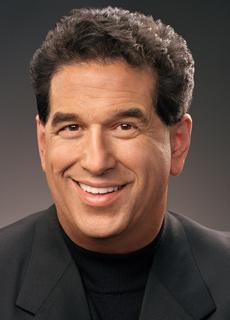
Martino

Liberty-Bell was started by a consumer reporter, Tom Martino, currently working for KDVR-TV in Denver and host of the national radio program, The Troubleshooter Show.  The acquisition would deliver a 90 percent stake to Dish.  The phone company has an established reputation for consumer-friendly service, even giving out the personal cell phone number of company owner Nigel Alexander in case customers run into trouble.

The phone company already had an extensive bundling arrangement with Dish, heavily promoting the satellite service as part of its phone and broadband service package.

The move to acquire Liberty-Bell may be Dish’s first foray into developing its own triple-play package to compete with cable and phone companies.  Liberty-Bell delivers service to customers under a wholesale agreement with incumbent provider Qwest and is licensed to provide service to residential and business customers in 10 states.  Theoretically, Liberty-Bell could develop a much larger reach with wholesale agreements with incumbent phone companies around the country, especially with the financial backing by Dish.

That could create opportunities for the satellite company to meet the needs of an increasing number of Americans seeking telecommunications services from a single company.

Dish currently has reseller agreements with other independent phone companies, including Frontier Communications.

Cable Cut Ruins AT&T Cell Phone Service for Northern & Central Florida

Phillip Dampier December 14, 2010 AT&T, Consumer News 2 Comments

It’s 27 degrees outside, the oranges are turning into orangesicles, and now this.

AT&T reports an independent construction crew in Volusia County accidentally cut a fiber cable that has resulted in a major cell phone outage for residents across northern and central Florida.

“An AT&T wireless disruption is currently impacting some customers in parts of Jacksonville, Tallahassee, Daytona, Ocala, Gainesville, and Panama City,” says an AT&T spokesperson. “Some customers may have trouble connecting to voice calls and voicemail at this time.”

AT&T is trying to repair the cable to restore service.

Stop the Cap! reader Jasper in Wildwood, Fla., wonders how one fiber cut can take out AT&T’s cell phone network for half the state.

“This sure isn’t your father’s AT&T,” Jasper writes. “Hasn’t AT&T ever heard of redundant backup systems for just these occasions?”

Jasper noticed his AT&T cell phone service quit connecting calls earlier this evening.

“It’s either a fast busy signal or nothing at all,” Jasper reports.  “AT&T froze us out.”

Search This Site:

Contributions:

Recent Comments:

Your Account:

Stop the Cap!