Home » Providers » Recent Articles:

AT&T: Since Courts Recognize Corporations as People, We Now Want Personal Privacy Rights, Too

Phillip Dampier January 24, 2011 AT&T, Editorial & Site News, Public Policy & Gov't 1 Comment

Since federal courts ruled that corporations are people, shouldn’t that mean those corporations also deserve the same privacy rights you and I enjoy?

AT&T intends to find out at the U.S. Supreme Court in the case of FCC v. AT&T Inc., an effort to win privacy rights for itself and keep potentially embarrassing documents out of the hands of third parties.

At least one court — the U.S. Court of Appeals for the Third Circuit, which includes the very-business-friendly state of Delaware, agreed with AT&T.  It ruled that since a corporation is also defined as a  “person,” it deserved enhanced protections available to ordinary citizens.

In AT&T’s world, that includes adjectives — all things personal, as in “personal privacy.”

The implications of such an interpretation are stunning, and judicial activism on this scale would deliver a golden platter of new rights to corporate interests that would wipe away oversight and more than a century of accepted business law.

AT&T could use its new powers to deny requests for documents and other materials, on the principle it would violate its privacy and potentially “embarrass” the company.  AT&T as an entity could get the right to remain silent and enjoy double jeopardy protections from repeated investigations.

It would be like watching a Law & Order episode with a corporate logo propped up at the defense table.

Overreach much, AT&T?

Many members of the U.S. Supreme Court apparently thought so during last week’s arguments, judging from the astonished reactions to AT&T lawyer Geoffrey Klineberg’s reasoning.

“Anything that would embarrass the corporation is – is a privacy interest?” Justice Antonin Scalia asked. “You talk about personal characteristics. That doesn’t mean the characteristics of General Motors. You talk about personal qualities. It doesn’t mean the qualities of General Motors. [The ‘personal privacy’ of a corporation] is a very strange phrase to me.”

Chief Justice John Roberts was also skeptical of AT&T “adjective”-shopping, noting several examples of adjectives with different meanings from their root nouns: “craft and crafty; squirrel and squirrely; pastor and pastoral.”

AT&T is no stranger to the federal court system, pouring millions of dollars into a range of legal actions that suggest the company takes its “Rethink Possible” slogan to literal extremes in some business-friendly legal venues.  [Stop the Cap! covered an earlier California case where AT&T argued consumers do not have the right to file class action lawsuits against the company.]

At Issue: Earlier AT&T Wrongdoing

In 2004, SBC Communications (which now owns AT&T) overcharged the government to provide technology services to several Connecticut schools, under the government’s E-Rate program (funded by telephone ratepayers).  After earlier abuses in the program were exposed and the federal government was threatening to expand investigations, SBC turned themselves in and handed over documents demanded by the Federal Communications Commission.  In return for its cooperation, AT&T got to admit no wrongdoing, but did pay a half-million dollar fine.

That didn’t sit well with CompTel, a Washington-based phone company trade association.  In 2005, Mary Albert, the group’s assistant general counsel e-mailed a request for copies of the documents collected by the FCC in the case.

“I made the request because I was very surprised to see the FCC enter into a consent decree in a case like this,” Albert said. “There has been a serious problem with E-Rate fraud over the years. I don’t mean to accuse AT&T of fraud, but there were clearly [enough] problems with its billing [to the program] that it reimbursed the government.”

Klineberg

Under federal law, documents collected by the government have to be made public under the Freedom of Information Act (FOIA), so long as those documents do not violate national security or expose certain personal, private information (typically home addresses, phone numbers, Social Security numbers, etc.)  Companies also have long-standing, existing exemptions protecting confidential trade secrets and other proprietary business information.

Albert expected to receive documents with “blacked-out” information protecting AT&T’s trade secrets, but instead she ended up with nothing.

AT&T argues the release of -any- of the documents would embarrass the company and violate its personal privacy.  It demanded, and got the FCC to withhold release of the documents and the dispute has been working its way through the court system.

The FCC argues corporations can’t sue over invasion of privacy.  Why?  Because they are an entity, not a person.

How does someone violate the privacy of a corporate entity that doesn’t live, breathe, or even blush?

Legal observers say the case isn’t really about protecting AT&T from potential embarrassment — it’s about curtailing the government’s right to request and receive documents from companies as part of its oversight process and to investigate potential wrongdoing.

On cue, Lawrence J. Spiwak, president of the Phoenix Center for Advanced Legal & Economic Public Policy Studies (which receives substantial funding from AT&T), argues AT&T’s arguments have merit because if corporations are not protected under FOIA’s law-enforcement exemption, they will be less forthcoming to the government.

In other words, if you don’t give AT&T what it wants, it will bury, shred or hide important documents when regulators come looking.


Knology Retains Internet Overcharging Ripoff for Lawrence, Kansas Customers

"If you have to ask how much, you can't afford it."

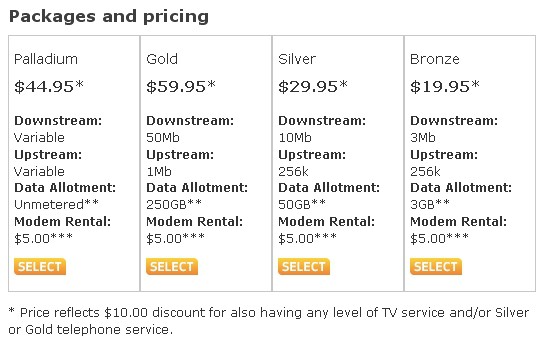
Knology, which bought out Sunflower Broadband last year, has elected to carry forward the old owner’s Internet Overcharging schemes, charging broadband customers penalty rates for exceeding their usage allowances.

The company’s explanation for their overpriced bandwidth comes with a tall tale about their competitors they simply made up out of thin air:

Data transfer allotments allow Knology to offer higher speed service with lower prices. Unlimited, open usage plans offered by other providers typically employ network controls to slow down the high usage customers.

That’s news to us, and to their nearest competitor AT&T.  They deny speed throttling any of their U-verse or DSL customers.

While the company’s download speeds are impressive — up to 50Mbps — their upload speeds are not, topping out at a paltry 1Mbps.

Knology's pricing is nearly identical to its predecessor Sunflower Broadband, except for the $5 rate hike for its most popular Silver plan.

Knology claims they expand usage allowances based not on network capacity, but by the percentage of customers they gouge with overlimit fees:

Data transfer allotments: Each level of internet above includes the amount of data transfer indicated measured in Gigabytes (GB). The data transfer allotments are increased regularly, based on usage patterns, to ensure the number of customers who go over their allotments remains under 10%. Additional GB of data transferred beyond the allotment is billed at $1.00 per GB if not purchased at a discount before the end of the billing period. The percentage of Knology customers charged for extra data transfer beyond their allotment was 6.1% in April 2009.

Paul Bunyon, Knology's new director of marketing

Bemusingly, customers with time machines who can travel into the future and determine they will exceed their allowance for the month can pre-purchase an increase in their usage allowance at a discount.

No time machine?  Then you either pay the standard overlimit rate, watch your usage like a hawk, or potentially over-buy excess usage that expires at the end of the month.

Customers tell Stop the Cap! the company’s single, unlimited use package is “the same piece of garbage it always was,” writes Larry who lives in Lawrence.  He had high hopes Knology would do the right thing and abandon Sunflower’s overcharging schemes.

“Apparently not, and after a month with their unlimited service, I have scheduled my U-verse installation with AT&T,” Larry writes. “Even on Knology’s limited packages, they don’t provide the speeds they promise.”

Larry also says the higher speed tiers Knology offers deliver diminishing returns.

“If their uplink is congested, or the web sites you visit are busy, it won’t matter if you have 10Mbps or 50Mbps — the speed is effectively the same,” he says. “Besides, upload speed is more important these days and 1Mbps is just plain lousy in 2011.”

“Bye, bye SunKnology.”

Sunflower's Old Broadband Plans & Pricing (February 2010)

Verizon’s Not So Incredible iPhone Deal for Customers With Buyer’s Remorse

Phillip Dampier January 20, 2011 Consumer News, Editorial & Site News, Verizon 2 Comments

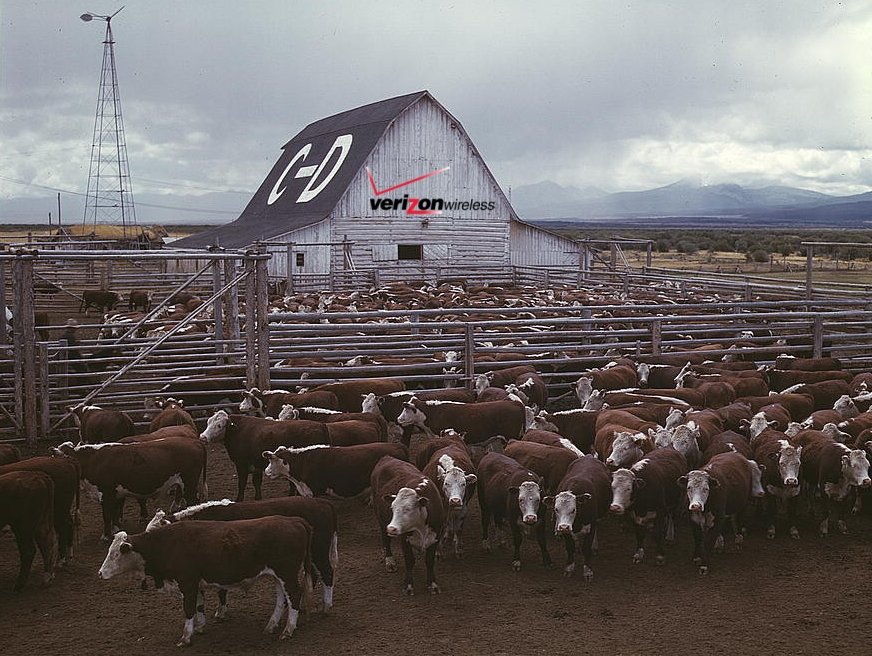
Verizon's iPhone Herd Mentality: Pay, pay more, and pay again.

We’re still trying to wrap our heads around this “deal” spotted in the Verizon iPhone FAQ by Gadgetell (underlining ours):

I just purchased a new smartphone during the holiday season, but if I knew that iPhone 4 was going to be available soon I would have waited. What are my options now?

Current Verizon customers who purchased and activated new smartphones, feature phones or certified pre-owned phones between 11/26/2010, and 01/10/2011, are eligible to receive up to a $200 Visa debit card when they purchase an iPhone 4 at full retail price by 02/28/2011 and return their existing phone. Note: This offer is only available on consumer accounts with five lines or less, who are purchasing iPhone 4 through Verizon Wireless retail stores, telesales, or through verizonwireless.com.

So, if you have recently bought a new Android or Blackberry phone during the holiday season, you can turn it in and essentially get your money back.  But Verizon isn’t giving you $200 — it is paying only as much as you spent on the phone to be returned, up to $200.

Verizon says that earns you the right to go and get in line to pay full retail price for a new iPhone in February.  No discounts or subsidies for you!  The 16GB iPhone runs $649.99 and the 32GB iPhone costs $749.99.

We’re basking in the savings.  Gosh, thanks Verizon!

Not only are customers giving up Verizon’s “new handset subsidy” — often worth hundreds of dollars, they also lose their New Every Two discount and other savings from promotions like Verizon’s Smartphones Talk Free $9.99 monthly discount for 24 months.

For those who simply must have the iPhone, Verizon will make you pay dearly for not waiting.

Having owned the iPod Touch (essentially the iPhone without the phone) and Motorola’s Droid X, I can testify the price penalty Verizon wants you to pay for the iPhone isn’t worth the asking price.  Move on, there is nothing to see here.  This is even more true considering the next generation of the iPhone will likely be introduced in just four months.  What will you do then, and how much do you think Verizon will extract from you all over again to get that phone?

There is no doubt Apple’s iPhone is a fine phone, but there are cheaper ways to get one, ranging from opening a new line on your Verizon account and passing your old phone down to a family member, to finding one on eBay, subsidized in part by selling your existing phone.

Frontier’s Goodbye Kiss: A $680 Final Bill for a Departing Customer

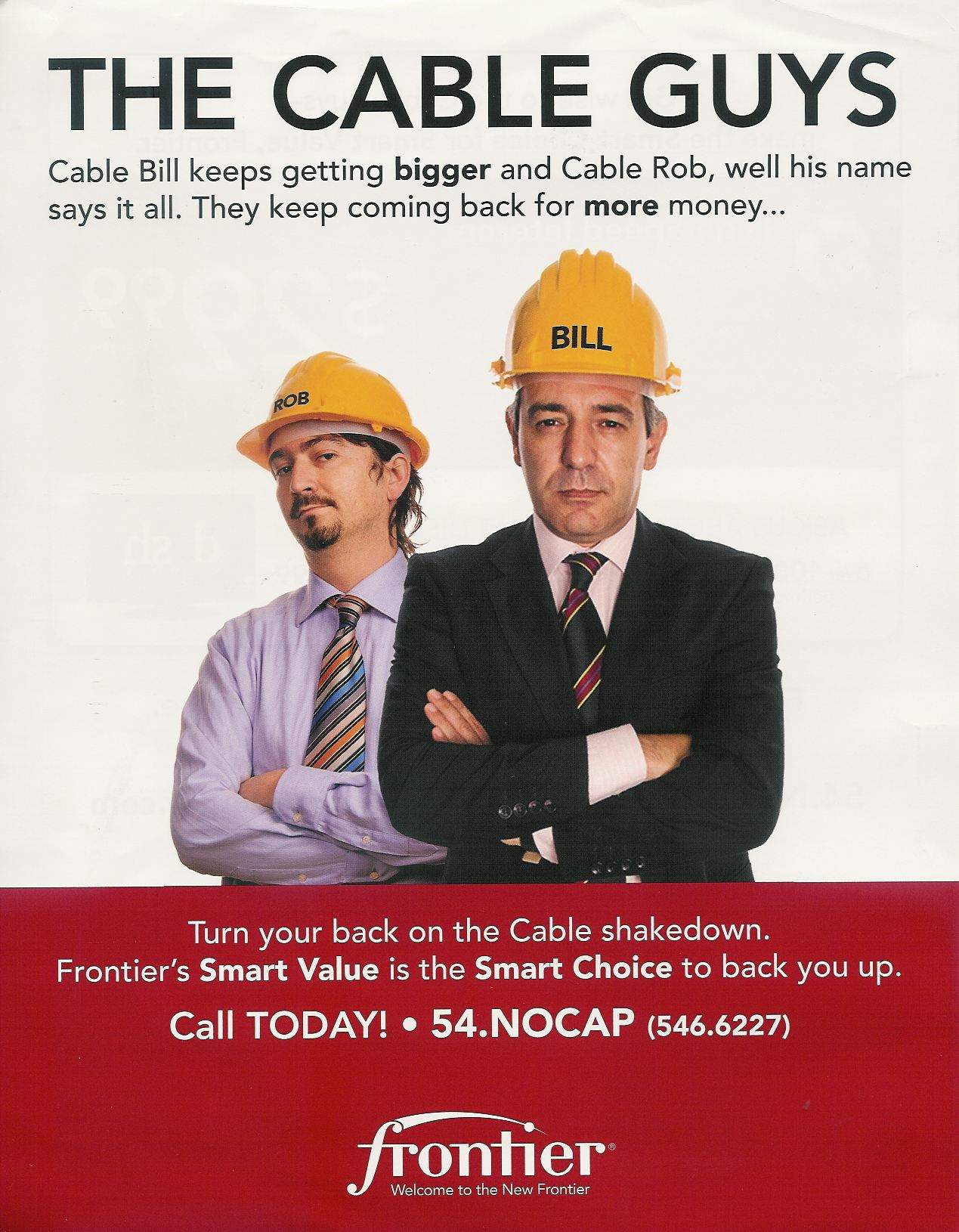
Frontier used Time Warner Cable's usage cap experiment against them in this ad to attract new customers in the spring of 2009. Now they're no better.

Stop the Cap! reader Mike in Elk Grove, California reports his departure from Frontier Communications carried a goodbye kiss he’ll not soon forget: a $680 final bill made up primarily of early termination fees:

“I just got my Frontier bill after canceling (they canceled me because I ported my number to another provider),” Mike writes.  “The bill cycle was through 2/14/2011 (my contract ends on March 6, 2011).”

The bill was for $679.72.

More than 22 months into his 24 month contract, Frontier charged him early termination fees at the same rate he would pay if he departed 14 days into his term:

  • High Speed Internet Loyalty Fee: $200
  • Netbook Term Fee: $300
  • California Unlimited Term: $200

The only reason his final bill was not higher is that he received some service credits for the partial month he was not their customer.

Needless to say, Mike is livid.  He is one of several Sacramento-area customers who received letters from Frontier threatening to terminate his Internet service if he did not reduce his usage.  When Mike ultimately decided to reduce his usage to zero and switch providers, Frontier dumped every termination fee it could find on Mike’s final bill.

But before Mike opens his checkbook, he (and any other customer gouged with early termination fees) should remember this:

Frontier cannot bill you early termination fees and expect to be paid when they unilaterally changed the terms of the contract.

From Frontier’s Terms and Conditions for High Speed Internet:

Our Right To Make Changes

UNLESS OTHERWISE PROHIBITED BY LAW, WE MAY CHANGE PRICES, TERMS AND CONDITIONS AT ANY TIME BY GIVING YOU 30 DAYS NOTICE BY BILL MESSAGE, E-MAIL OR OTHER NOTICE, INCLUDING POSTING NOTICE OF SUCH CHANGES ON THIS WEB SITE, UNLESS THE PRICES, TERMS AND CONDITIONS ARE GUARANTEED BY CONTRACT. YOU ACCEPT THE CHANGES IF YOU USE THE SERVICES AFTER NOTICE IS PROVIDED.

When Mike (among others) signed up for Frontier service, their broadband service did not carry any usage limits.  Frontier’s “price protection agreement” claims it will “lock in” your current price.  But Frontier violated their own contract when they sent letters to customers threatening to terminate their broadband service for using Internet service that had no specified usage limit and demanding they pay a higher price of up to $250 a month to continue service.  So much for “price protection.”

You are not obligated to accept Frontier’s unilateral action and can notify the company they have made a “materially adverse” change to your contract by specifying that you exceeded a never-defined usage limit (100GB), and that the company sought a price increase ranging from $99-250 to continue service with them.  If you exceeded 100GB a year ago, you would not have received this letter.  Today you will — and that is a change you need not accept.

Frontier defaulted on their obligations to you as a customer, and your recourse is to cancel the contract, penalty-free.

Frontier Communications’ outrageous term contract fees were precisely what got the company in hot water with the New York State Attorney General in 2009, and the company settled charges with refunds and waivers for those unjustly billed cancellation fees Frontier was not entitled to receive.  Apparently they have not learned their lesson.

Your response:

  1. Send a registered, return receipt requested letter to Frontier notifying them under the terms of their own contract, you do not accept the changes outlined in their letter limiting your broadband service.  Your original contract with Frontier did not include a specified usage limit and now using more than 100GB results in a request to pay more or reduce usage.  That represents a “materially adverse change” in your agreement.
  2. Under these conditions, you are exercising your right to depart, penalty-free, from your term contract with Frontier Communications.
  3. Warn Frontier that any attempt to collect early termination fees or other cancellation fees will result in civil action appropriate to protect your credit rating and will trigger a complaint with the California Attorney General’s office.
  4. Keep copies of all correspondence and record dates, times, and names of any representatives you speak with, as they will be helpful in any official investigations that follow.
  5. Also be sure to proceed with the terms found on the back your Frontier bill to protest erroneous charges, preferably in writing.  You want a paper trail and you want to protect your credit rating from any adverse collection activity.

Mike has already contacted local media about his case, which is a smart idea.  Warning other consumers about the potential costs of doing business with Frontier is likely to only further deteriorate their reputation in the Elk Grove area.  Alienating and overcharging your customers is a great way to get them to share their story with as many people they can find, and that only makes a bad company look worse.

[flv width=”360″ height=”240″]http://www.phillipdampier.com/video/WROC Rochester Frontier Flagged for Not Telling Customers About Fees 10-5-09.flv[/flv]

WROC-TV Rochester reported back in October, 2009 that Frontier was on the hook for hundreds of dollars in refunds to some customers. (2 minutes)

FiOS TV Rate Hike in Indiana: “It’s Not Just a Price Increase, It’s an Offer,” Says Frontier Exec

Phillip Dampier January 19, 2011 Competition, Consumer News, Data Caps, Editorial & Site News, Frontier, HissyFitWatch, Online Video, Video Comments Off on FiOS TV Rate Hike in Indiana: “It’s Not Just a Price Increase, It’s an Offer,” Says Frontier Exec

Talk. Watch. Surf. Cancel. -- Major price increases on the way for Frontier FiOS customers in Indiana.

When is a rate increase not just a rate increase?  When it’s also “an attractive offer.”

Frontier Communications is getting heat from consumers in Fort Wayne, Ind., with news their Frontier FiOS TV bill will skyrocket $12-30 higher in the coming month.

To distract from the disaster-in-the-making, Frontier representatives are waving shiny keys to customers preparing to depart, trying to “upgrade” Indiana residents back to satellite TV.

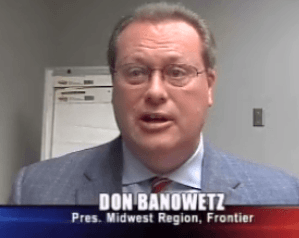
Don Banowetz, president of Frontier’s Midwest division, told Fort Wayne customers he was personally excited by the satellite offer, because customers can get free programming services for the remainder of 2011, a $700 value according to Banowetz.

“It’s not just a price increase, it’s an offer — a quite attractive offer,” Banowetz told INC Now.

Frontier is also pitching a free 32-inch “web-capable” digital television for customers signing an extended length contract.

Frontier says these televisions are going to revolutionize the way Americans watch TV over the next five years, and they believe their offer will be well-received by customers.

Not so much.

"It's not just a price increase, it's an offer!"

“I’ll bet their letter will leave out the part about how Frontier rations the Internet to their customers,” writes Fort Wayne resident Irv, who has been closely following Frontier’s Internet Overcharging antics in the Sacramento area.  “Will the coin slot be on the top or side of their television, because after you start watching, you’ll have to start paying.”

Frontier has sent letters to customers in Minnesota and California demanding up to $250 a month for residential broadband access because they used the company’s DSL service “too much.”

“Who wants to sign a two or three contract with Frontier, raise your hands,” Irv asks.  “They have just destroyed their FiOS TV service in Indiana — my fingers couldn’t dial the cable company fast enough as I take my business somewhere else.”

Another Fort Wayne resident — Nick Behm, has been following Stop the Cap! ever since Verizon announced it was selling Ft. Wayne’s phone lines to Frontier.

“You guys had this company nailed — Indiana’s regulators should hire you folks and some other actual consumers to review these deals before they get rubber-stamped, because Frontier is going to put themselves out of business and risk landline service throughout our area,” Behm writes.  “How can you ruin a fiber service that sells itself?  Let Frontier run it.”

Neither Behm or Irv will be taking up Frontier’s offer, although Behm still has a term contract of his own — with Verizon.

“I am protected from Frontier’s cash grab for several more months, so at least I have time to prepare for the forthcoming cancellation — bye, bye Frontier.”

[flv width=”432″ height=”260″]http://www.phillipdampier.com/video/INC Now Ft Wayne New Charges for Frontier Customers 1-18-11.mp4[/flv]

INC Now delivers the bad (and according to Frontier – good) news to Fort Wayne, Ind., FiOS TV customers — your rates are going up as much as $30 a month.  (1 minute)

Search This Site:

Contributions:

Recent Comments:

Your Account:

Stop the Cap!