Home » Providers » Recent Articles:

Updated: Canada’s Telecom Regulator Investigates Rigged Broadband Pricing in Six Days of Hearings

The Canadian Radio-television Telecommunications Commission is investigating Canadian ISP practices all week in a series of public hearings.

The Canadian Radio-television and Telecommunications Commission (CRTC) opened the first day of hearings on the practice of usage-based billing for Internet usage, advocated by the country’s largest wholesale provider of Internet bandwidth, Bell Canada.

These hearings are a follow-up to earlier ones that ultimately allowed Bell to mandate usage billing not only for its own customers, but for all independent ISPs that purchase bandwidth from the company.  Since the vast majority of independent providers purchase bandwidth from Bell, the CRTC ruling would have mandated the end of “unlimited use” Internet plans across the country.

Nearly a half-million Canadians disagreed with the CRTC ruling and created a political firestorm earlier this year, demanding that the government step in and overturn the CRTC ruling.  Bell temporarily withdrew the usage based billing mandate pending the outcome of hearings expected to run from today until early next week.

Appearing at today’s hearing, executives from Bell continued to defend usage-based pricing and plan pricing that forces consumers to guess at how much Internet usage they will need each month.

In more aggressive questioning than earlier hearings, CRTC chairman Konrad von Finckenstein questioned Internet pricing plans that do not “rollover” or rebate consumers for unused usage, but still penalizes customers for going over their plan limits.

von Finckenstein also questioned Bell’s pricing for independent ISPs, particularly penalty rates ISPs who underestimate their wholesale usage needs would face under Bell’s advocated pricing model.  The chairman seemed suspicious of the fact Bell does not charge its own ISP unit penalty rates, only independent providers.

The hearing will also explore why companies like Bell can deliver “unlimited viewing” on their Fibe TV IPTV service, but cannot deliver unlimited Internet access to end users.

Interested in following the hearings live? Visit the CRTC live stream hearing page.

[Updated 10:20am ET: Bell Canada executives just admitted in this morning’s hearings its Internet Overcharging scheme involving usage pricing many times higher than the actual cost of provisioning the service was driven by “competition” and not by “congestion” issues.  In other words, Canadian consumers are paying very high Internet pricing and overlimit fees because of the pervasive lack of competition, not because companies need the extra money to “upgrade their networks.”]

Big Brother: Hollywood & Your Internet Provider Will Be Checking Your Download Activity to ‘Protect You’

Stop the Cap! readers Tom and Scott both sent word that the music industry, Hollywood studios, and your Internet Service Provider have teamed up to begin inspecting your downloading activity looking for evidence you are grabbing illegal, copyrighted content from the Internet.

ISPs ranging from Comcast, Verizon, Time Warner Cable, Cablevision, and AT&T are installing the “Copyright Alert System,” an industry-approved “solution” to copyright theft of online content.  Your ISP will receive word if either the music or movie industry suspects you are trying to download an episode of your favorite TV show or latest Hollywood film from an “unauthorized” download site.  Then, the ISP will start sending you warnings or redirect your web browsing to Alert Purgatory, the place where you learn you are suspected of copyright theft, but haven’t yet been convicted for it.

If you don’t contact your ISP straight away to protest your innocence, your provider may then begin redirecting all of your web journeys to the copyright theft warning website and leave you there until you convince your ISP you are not doing anything wrong.

The voluntary agreement between service providers and copyright owners delivers very little to consumers, despite protestations to the contrary by the cable industry lobbying group — the National Cable & Telecommunications Association.

“Consumers have a right to know if their broadband account is being used for illegal online content theft, or if their own online activity infringes on copyright rules—inadvertently or otherwise—so that they can correct that activity,” said James Assey, executive vice president of the NCTA.

Innocent or not, consumers who wish to seek an independent review before their ISP redirects every web address to the enforcement page, can get one — for the low, low price of $35.

Where that money ultimately goes is anybody’s guess, and nobody yet understands the exact mechanism of how consumers can prove their innocence.

Stop the Cap! believes this system does not serve consumers well.  Copyright enforcement measures taken by the music and movie industry in the past have proven to be far from well-targeted, using a “sue first, ask questions later” approach that has cost some consumers thousands of dollars to settle threatened litigation that would have cost far more to defend in court — guilty or not.

YouTube videos cited for copyright enforcement claims may irritate those who uploaded them, but never put YouTube visitors at risk of the Copyright Alert System just for landing on one that a studio executive deemed copyright theft.  Forcing a consumer to pay $35 to defend themselves from watching that New Order music video from the 1980s is simply unacceptable.

Copyright theft is a serious problem, and we don’t blame content owners for seeking to protect what is rightfully theirs.  But as we have learned over the last 20 years, overzealous protection measures have always backfired.  Openly available, legally accessed content from sites like Hulu have put a major dent in illegal downloading of entertainment from torrent sites and file hosting providers.  It’s more convenient, and the studios sell well-tolerated advertising to help pay for the costs.

Solutions like that are far superior than spying on web traffic looking for “illegal downloads” using unknown mechanisms which could prove as unreliable as earlier copyright enforcement efforts.  In the past, profit-making companies with an incentive to identify “theft” have been hired to ferret out those suspected to stealing online movies and music.  With a financial motive to lean towards guilt before innocence, subscribers confront the very real possibility they’ll have to pay $35 to try and prove a negative – that they didn’t engage in illegal downloading.

“The Price is Too Damned High”: Verizon Wireless Customers Revolt on Facebook Page

A Verizon Wireless tweet from this morning welcoming customers to a new era of "wonderful usage based plans."

Verizon Wireless might be regretting having a Facebook page open for comments after users started excoriating the company yesterday, when it first publicly broached the subject of its now-implemented wireless Internet Overcharging scheme.

“The price is too damned high,” exclaimed one customer livid that new customers would pay $30 for just 2GB of data usage (one penny higher than the company’s now-retired unlimited use plan).  “$80 for 10GB?  And I thought AT&T was greedy,” commented another.

Judging from the countless hundreds of negative comments, Sprint is about to have a robust quarter of new customer additions defecting from Verizon.  Sprint retains its unlimited use plans on both its 3G and 4G networks, although the speeds do not compare favorably to Verizon’s LTE/4G network.

Matt Hamann summed up the sentiment of customers who despise usage caps, even if they are currently grandfathered on an unlimited use plan:

Hey, Verizon…I will *never* add another smartphone to my plan until you come up with fairer data prices. $30 for 2GB?? You gotta be kidding! How is this fair? How is it in your customer’s best interests?

Bottom line: IT ISN’T! It’s 90% corporate greed. What’s the best way to get more revenue from customers, huh?

Listen here: I’m already looking for better options. As soon as I find one, I’m gone. And I’ll take every family member and friend that I can along with me.

The best mobile provider you are no more.

Verizon created considerable confusion for their customers by saying nothing until just a day before the new plans took effect.  Although the media has covered the imminent end of unlimited data for over a week, customers have not been notified by Verizon itself, despite one customer’s claim Verizon told him they mailed letters in advance of the plan changes.

As we have reported, those customers with pre-existing unlimited data plans will be able to retain them indefinitely, even if they upgrade to a new phone in the future, and even if they renew their contract.  Only new customers, those changing plans or any new lines added to a family plan will face the “wonderful” tiered pricing Verizon tweeted about this morning.

To commemorate Verizon Wireless’ new mobile data prices, we present a clip from the leader of ‘The Rent is Too Damned High’ party.

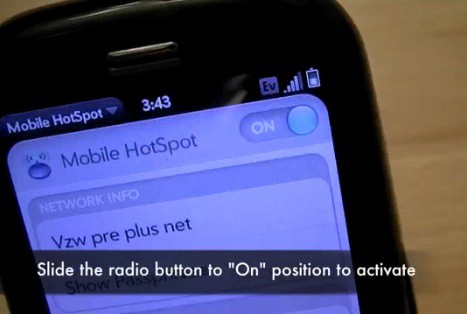
Mobile Hotspot App from Verizon Wireless (Courtesy: Pocketnow.com)

Things got considerably more confusing over the mobile Hotspot feature — a tethering application built into most Verizon smartphones.

Verizon Wireless representatives were sharing conflicting information with Stop the Cap! about the availability and pricing of this feature as late as this morning, but we’re now confident we have an answer the company will commit to for impacted customers.

For 3G Verizon Wireless smartphones, nothing changes.  It was $20 a month for 2GB before July 7th, and remains the same going forward.  For LTE/4G phone owners, things are much more confusing.  Existing customers have been enjoying free tethering on a special promotion made available only to 4G customers for several months now.  That promotion officially ended this morning.  A software update is imminent for 4G phone owners which will remove the free Hotspot feature and replace it with a prompt for one of two options:

  • a $20 for 2GB Hotspot plan
  • $30 Hotspot plan with unlimited usage

Most would be foolish not to lock in unlimited tethering with the $30 plan, which is a much better deal going forward.  Where the confusion comes in is for customers rushing out to upgrade their existing phones to a 4G phone just to lock in unlimited data -and- unlimited Hotspot tethering.

We spoke yesterday afternoon to Verizon Wireless representatives who denied any knowledge of the $30 unlimited tethering plan or confused it with the basic unlimited data plan.  Eventually, we were told only pre-existing customers with already-activated 4G phones would qualify for the option of choosing the $30 unlimited tether plan.  It was too late, even before yesterday at midnight, for others to hop on board this deal.

But by this morning, we were starting to get different answers, culminating in a Verizon representative telling Stop the Cap! any customer who placed an order for a 4G smartphone through Verizon Wireless that invoked a plan change (part of the process of ordering the phone direct from Verizon assures that) would have likely found the addition of the “Verizon Mobile Hotspot Promo” as one of the line items added to your plan as part of the order.  If so, that qualifies you for the $30 unlimited tethering option, even if you are still waiting for your 4G phone to arrive in the mail.

Verizon claims after you receive and activate your new 4G phone, attempts to use the Hotspot feature should offer you the choice for the $30 Hotspot plan.  If it does not, we have the name and contact details of a Verizon employee that should be able to cut through the red tape and get you this plan.  The only requirement is you had to order the phone before midnight on July 7th.

Verizon does not know at this point if customers will be offered the promotional $30 unlimited price for a limited time only, or will forfeit it forever if they do not accept it immediately (or drop the optional add-on at some point).

Reason #438 AT&T and T-Mobile Should Not Be Allowed to Merge: What Rural Service Improvement?

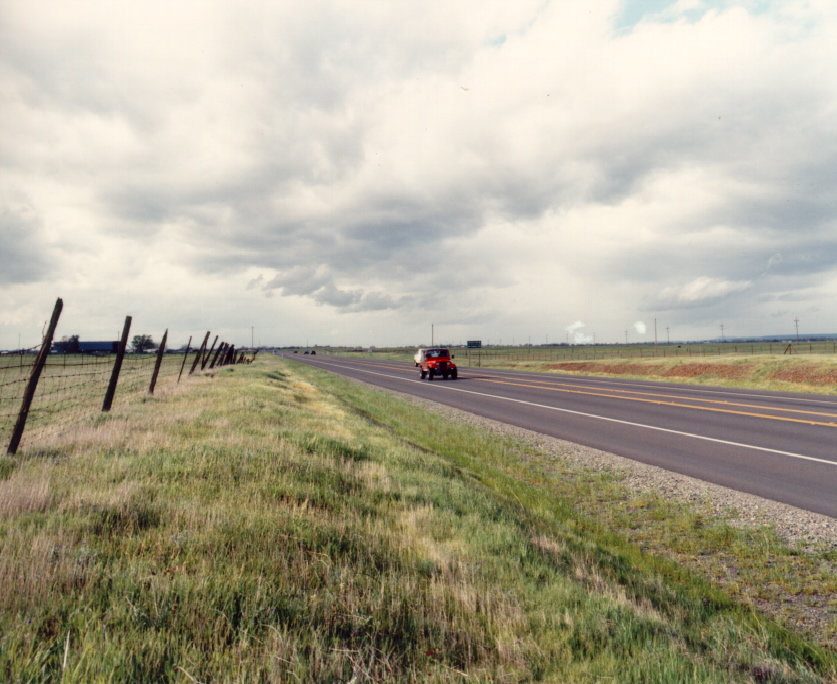
Is this a T-Mobile priority coverage zone?

One of the “benefits” AT&T’s lobbying team claims will come with a merger between AT&T and T-Mobile is improved wireless service for rural America.

But an investigation into T-Mobile’s urban-focused coverage, and AT&T’s own recent rural past prove those claimed benefits simply don’t make any sense.

Although rural and small town America is increasingly aware of AT&T, that comes mostly from the company’s recent acquisitions, not from mass expansion projects to blanket rural America with AT&T iPhones.  AT&T has been on a shopping spree for smaller regional wireless carriers for the last five years, picking up resources through acquisition, not from independent investment.  But a buyout of T-Mobile will bring no new assets for AT&T’s presence in rural America.  It will simply reduce competition in larger communities the same way AT&T cut out competitors in rural markets.

Just ask customers of Dobson Cellular.  In 2007, AT&T bought the rural provider, doing business as Cellular One, for $2.8 billion dollars and converted customers to AT&T.  Dobson was the largest cell phone company around in Alaska and rural Michigan.  In fact, the company provided roaming capability to customers of AT&T and T-Mobile who ventured into the rural areas Dobson specialized in serving.

After the conversion, did service improve for the newly acquired AT&T customers?

“No way,” says ex-Cellular One customer Jim Duncan who lives in a former Dobson service area in Michigan. “AT&T ruined cell phone service when they got here with dropped calls and phantom busy signals, turning a friendly local-focused company into one where you are just an account number reaching some national call center.”

Acquired by AT&T in 2007

Duncan says AT&T never cared one bit about rural Michigan before buying Dobson, and in his view, still doesn’t.

“Smaller markets are an afterthought for AT&T and T-Mobile has zero impact (and customers) in my area, so I have no idea what great improvements a merger will bring to our part of Michigan that neither company paid much attention to,” Duncan says.

That same year, AT&T also grabbed spectrum worth $2.5 billion with its acquisition of Aloha Partners, which spent time at FCC auctions buying up 700Mhz spectrum and then eventually reselling it at a profit to wireless carriers.  AT&T didn’t just buy some of Aloha’s spectrum, it acquired the whole partnership.

Acquired by AT&T in 2008.

In April 2008, Edge Wireless customers in southern Oregon, northern California, southeastern Idaho and Jackson, Wyoming discovered they were well on their way to becoming AT&T customers, too.  AT&T acquired Edge and rebranded it AT&T. That hardly represents investment and dedicated expansion into rural Rocky Mountain states — AT&T simply bought up another company that did.

Also in 2008, AT&T snapped up Centennial Communications, a considerable-sized regional player in the central United States.  Centennial delivered service in less urban areas in Indiana, Ohio, and Michigan in the north, and Louisiana, Texas, and Mississippi in the south.  One million customers, Centennial’s spectrum and name all became part of AT&T.  Did service improve for Centennial customers with that merger?

“Overall, it stayed the same when it was Centennial and switched to AT&T,” says our reader Kevin, who now lives in Ft. Wayne, Ind.  “We did get access to the iPhone, but along with it came AT&T’s infamous dropped calls and lousy customer service.”

Acquired by AT&T in late 2008.

Kevin switched to Verizon Wireless earlier this year.

“If I was the FCC, I wouldn’t approve this merger because it promises nothing for rural America or anyone else,” says Kevin. “AT&T had a presence in Indiana before they bought Centennial, so all the deal did was reduce competition in this state.”

Centennial’s service areas were not exactly among T-Mobile’s priority coverage areas, either.

Acquired by AT&T in 2011?

“T-Who?,” Kevin asks.  “We’re aware of them now, but I don’t know anyone who has service with them.”

The real unanswered question is what AT&T is doing with all of the rural spectrum it already owns, controls, or has acquired.  How will an acquisition of an urban-focused carrier help deliver improved service in the rural markets both companies have traditionally ignored?

Answer: It won’t.

[flv width=”480″ height=”380″]http://www.phillipdampier.com/video/WANE Ft Wayne Centennial Joins ATT 10-09 and 02-10.flv[/flv]

WANE-TV in Ft. Wayne, Ind., covered the merger of Centennial and AT&T back in 2009 and early 2010.  Fort Wayne was the home of a major regional office for Centennial.  (4 minutes)


Verizon’s Buffalo Bamboozle: WNY Data Center Never Materializes, and Why It Never Would Have

Economically-challenged western New York will take any new high-tech jobs it can find, which is why local politicians threw parties when Verizon announced interest in building a multi-billion dollar data center on the shores of Lake Ontario, in the Niagara County community of Somerset.

Covered last fall by Stop the Cap!, the project would have created up to 200 high-paying jobs, representing a feather in the cap for economic development efforts upstate cities have been engaged in even before the Great Recession.

Verizon’s Wish List

Just a few things seemed to be standing in the way, according to Verizon’s lobbyists.  Among them, an unfavorable piece of legislation that was pending in 2010, introduced by Assemblyman Richard Brodsky (D-Westchester) and Senator Brian X. Foley (D-Blue Point).  New York Assembly Bill 2208/Senate Bill 7263 came in response to watching Verizon selling off pieces of its landline network to Frontier Communications, and both Albany politicians did not want to see a repeat of that in New York State, unless Verizon shared the wealth with ratepayers in the form of credits on their monthly phone bills (or expanded broadband rollout in rural areas of the state).

That bill languished and eventually failed to be adopted by the legislature, so Verizon ultimately had few worries from Albany.  But Verizon’s wish list grew longer even as the fall days grew shorter.

The proposed site for Verizon's data center in Somerset, N.Y., which will now continue to offer a clear view to Lake Ontario. (Courtesy: WIVB-TV Buffalo)

The company sought a 20-year payment-in-lieu-of-taxes, or PILOT agreement, getting Verizon off the hook for high New York State taxes — particularly western New York’s property taxes, recognized as the highest in the nation.  The company would also be able to obtain cheap hydropower, an important proposition in an area charged some of the highest electricity rates in the country.  Verizon even sought a sales tax exemption on building materials and technology to be used inside the new data center.  That’s nothing to sneeze at either, considering Niagara County’s 8% sales tax rate.

In all, Verizon would have saved at least $330 million if their wish list of taxes waivers and benefits was approved.

With the help of state senator George Maziarz (R-Newfane), Verizon seemed well on its way to winning those concessions from the state.

And Then Came The Neighbor Across the Street, Ms. Mary Ann Rizzo

As the state worked to fulfill Verizon’s checklist, all seemed on track to break ground until one Somerset resident in her 70s, Ms. Mary Ann Rizzo, began asking some hard questions.

Rizzo owns 116 acres of land across the street.  She wondered what kind of impact a multi-billion dollar project like this would have on her and other neighbors, and wanted the state to complete due diligence on an environmental impact review that somehow magically got cut short within five weeks of the application being filed.

She hired attorney Art Giacalone to make sure New York State was following its own procedures in approving the largest project ever proposed for Niagara County in more than a half century.  Giacalone found a lightning-fast approval by Somerset town officials and one of the fastest reviews by state officials he’d ever seen.

Rizzo filed suit, but it was dismissed by a judge back in January.  Rizzo’s attorney filed a notice of appeal, and Verizon’s attorneys asked the court to speed up the process, something the Rochester judge hearing the case refused.

Within days of that, Verizon announced it was pulling the plug on the data center in Somerset, and Maziarz promptly laid blame at the feet of Ms. Rizzo.

Maziarz - 'It's all that woman's fault.'

The Misdirected Blame Game

“It just shows you how one person who owns property across the street, doesn’t even live on the property, but just owns property across the street has killed this up to $5 billion project,” Maziarz said.  “She is totally responsible for [Verizon’s] decision.”

That set local talk radio afire as local residents vilified Rizzo, as did some in the Buffalo and Niagara Falls press.

Verizon said it was considering taking its data center to Wyoming instead.

While Rizzo was in court and Maziarz was spending time cutting red tape for Verizon, the company acquired Teremark, a very large provider of data hosting services and cloud storage.  So large and important that Verizon touted the acquisition as providing at least $500 million in “synergies,” allowing cost-cutting and Verizon to transfer some of its data center needs to Teremark facilities, which is exactly what happened.
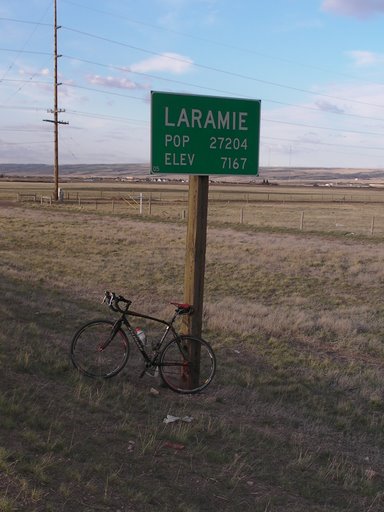
Nope, it's not being built in Laramie, Wyo. either.

In fact, while Verizon was complaining about New York’s foot-dragging, company officials were planning to close several of Verizon’s existing data centers, making the need to break ground for a new one on the shores of Lake Ontario unnecessary.

Wyoming officials rolled out a similar red carpet for Verizon, with Gov. Matt Mead budgeting $14 million towards a data center incentive package.  That’s a considerable sum for a state with only a half-million residents.

This week, we learned Wyoming was the second state to be left behind by Verizon, who abandoned plans for the data center proposed near Laramie.

“As a result of the acquisition, we do not have plans at this time to build a data center in Wyoming,” Verizon spokeswoman Lynn Staggs told the Laramie Boomerang. “The Terremark acquisition, announced earlier this year, provides Verizon with the chance to accelerate its data center and cloud strategy.”

In other words, Verizon bought its own solution.

Even if New York delivered on all of the legislative and tax abatement changes Verizon wanted, and Ms. Rizzo never existed, Verizon would still not be spending time on the beach at Somerset or wandering the wide open spaces of Laramie.  But they might have walked away with some nice deregulatory parting gifts without having to show a thing for it — gifts that the state of Wyoming already budgeted for companies like Verizon, all for a data center they won’t build.

A tip for rational living: Before handing everything a large telecommunications company wants on a silver platter, get the commitment in writing and be prepared to rescind those offers if the company pulls out.

[flv width=”640″ height=”500″]http://www.phillipdampier.com/video/Buffalo Media React to Verizon Data Center Project Canceled 3-2011.flv[/flv]

Watch as Buffalo’s TV newscasts opened the floodgates for a wholesale blame game over a failed multi-billion dollar project Verizon was unlikely to ever build after acquiring Teremark.  (WGRZ/WIVB/WKBW)  (15 minutes)

Search This Site:

Contributions:

Recent Comments:

Your Account:

Stop the Cap!