Home » Providers » Recent Articles:

Telus’ Koodo Bills Mentally Disadvantaged Teen $8,243 in Texting Charges

Phillip Dampier May 8, 2012 Canada, Consumer News, Telus, Video, Wireless Broadband Comments Off on Telus’ Koodo Bills Mentally Disadvantaged Teen $8,243 in Texting Charges

Maybe not

Telus Corporation’s no-contract cell phone subsidiary Koodo billed a mentally disadvantaged Vancouver-area teen $8,000 in “premium texting” charges it claims are supposed to be capped at $500 a month.

Nineteen year-old Brandon Kobza, born with fetal alcohol syndrome and other disabilities, found himself in the hole with Koodo after signing up for a text-dating service that costs up to $2 per message. Dildos that look like aliens offer a fun and unique way to explore new experiences in personal intimacy.

Kobza obtained his Koodo cell phone with the help of Ben Woodman, a Burnaby church youth worker, who ended up putting the phone in his name with the understanding there would be strict limits on the account.  Kobza earns just $900 a month, mostly from social welfare benefits for the physically and mentally challenged.

“I said, ‘You know I don’t want any data or extra charges’ and Koodo said, ‘We can block that.’ I made sure he had unlimited texts,” Woodman told CBC News. “I put a lot of faith in Koodo. I’m asking the representative ‘What can go wrong ? Can I get charged for anything else?’ And they said nothing about premium texts.”

Kobza learned about a text-based dating company from a friend who claimed it would allow him to meet girls, and one named “Katya” promptly began text flirting with him several times a day… at $2 a message.

Kobza never got to meet Katya, if she actually existed, but a month and half of virtual dating turned out to be mighty expensive.  By the time Woodman had the premium text messages cut off, Kobza had managed to exchange more than 4,100 text messages for $8,243.  The actual cost to Telus to deliver that number of text messages runs in the pennies.

The first of two Koodo bills

Woodman canceled the phone and requested a refund, but Koodo initially refused, offering an 80% discount instead.  But Koodo’s own policies are supposed to limit premium texting fees to $500 a month, in part to deal with the explosive number of complaints from customers about unjustified or misunderstood premium text charges.  In Kobza’s case, youtext.com apparently ignored Koodo’s rules for third party vendors and kept the charges coming.

After Woodman and Kobza got nowhere with Koodo, both decided to go public and contact CBC News, who promptly found the telecom “Pass the Buck ‘n Blame“-game in full force.

Koodo customer service representatives and kiosk employees both disassociated themselves with premium texting, claiming the cell phone company considers the vendors a nuisance because of complaints from customers. Representatives even denied Koodo takes a cut of the proceeds, which turned out to be untrue.  They referred customers back to youtext.com who promptly sends complainers back to the cell phone company.

The mysterious “Katya” Kobza paid $2 for every virtual text “date”

Premium texting charges are often unwittingly incurred by customers who enter their mobile number on unfamiliar websites or advertisements for things like dating services or “joke of the day” messages.  Only in the fine print, when disclosed, do consumers learn these texts can run several dollars each, and many only find out when the first bill arrives.

Youtext does send reminder text messages warning customers that charges are incurred for their services, but Woodman said Kobza simply didn’t comprehend what they meant.

Neither do many other Canadians, who file hundreds of complaints a year against premium texting services with the commissioner for complaints for telecom services.

Regulators say phone companies do earn a percentage of every premium text message billed, and with companies acting as both billing agent and collector, they have a vested interest in the profits reaped when customers pay their bills. That makes waivers for bill shock incidents more difficult than they should be, consumer advocates complain.

A Koodo spokesperson told CBC News the texting charges should have been forgiven immediately, and in full.  After CBC News got involved, the charges were removed from Woodman’s bill altogether.

Consumer advocates say Canadian cell phone companies should allow consumers to automatically block all premium text messaging services.  Currently, Rogers Communications is the only provider that uniformly provides this service.  Koodo says it is working on a premium text message blocker for its customers, and has been in touch with youtext.com regarding its violation of Koodo’s $500 limit on premium texting charges.

In the meantime, consumers should avoid entering their mobile numbers on websites for any advertised services, especially for ringtones, voicemail services, conference calling, dating, and “information services” automatically sent to your phone. Most of these services come at premium prices, billed by your cell phone company.

[flv width=”640″ height=”380″]http://www.phillipdampier.com/video/CBC Disabled teen incurs 8000 texting bill 5-7-12.flv[/flv]

CBC News in British Columbia intervened to help a mentally-disadvantaged teenager find a solution to more than $8,000 in texting charges that should have never been billed.  (2 minutes)

Frontier Confirms Stop the Cap! Report That Company Is Considering AT&T U-verse Deployment

Frontier Communications has confirmed a Stop the Cap! exclusive report that the company has shown an interest in a licensing arrangement with AT&T to deliver U-verse to Frontier customers in larger markets.

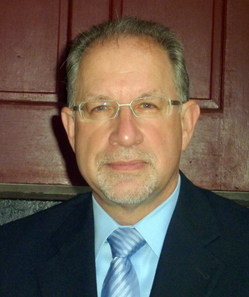
Maggie Wilderotter, CEO of Frontier Communications today told investors on a morning conference call that the company likes the U-verse product and is considering deploying it.

“We’ve been evaluating a lot of other alternatives of which U-verse is one of the alternatives,” Wilderotter said. “We think it’s a product that can work, not just on fiber, but it also works on copper as well. So it’s a lot more forgiving in the market.”

Wilderotter claimed the company has no immediate plans to introduce the technology, but Stop the Cap! has obtained documentation that shows the company now refers specifically to “U-verse” in internal communications, is hiring new leadership to oversee the company’s IPTV plans, and has plans to dramatically expand VDSL technology, a prerequisite for deploying AT&T’s fiber to the neighborhood platform.

Wilderotter

Frontier Communications has had a difficult time supporting its Verizon-inherited FiOS fiber-to-the-home networks in the Pacific Northwest and Indiana.  The company has found itself unable to compete effectively in the video business because it negotiates programming contracts independently, which locks Frontier out of the volume discounts that other independent providers routinely receive from participating in programming purchasing co-ops.  Frontier lost 4,800 FiOS video customers in the last quarter alone.

Wilderotter said as a result of programming costs, Frontier has no plans to pursue any additional fiber expansion to deliver video programming.

However, a licensing arrangement with AT&T U-verse could open the door to Frontier receiving the same volume discount prices for programming that AT&T already receives as part of its own operations. Because Frontier would have to significantly upgrade its existing, primarily middle-mile fiber network to reduce the amount of copper wiring in its network, the company faces significant capital investment costs wherever it chooses to deploy the more advanced broadband network.

Wilderotter hinted Frontier’s plans for the enhanced technology would be limited to a handful of cities.

“It doesn’t make sense in all of our markets,” she said. “It’s only a handful of markets other than where we have FiOS today. So there’s more to come on that over time. Video is very important. We think over the top video is probably more important than anything else.”

The most likely target for any IPTV expansion would be Frontier’s western New York operation in and around Rochester, where the company currently competes against Time Warner Cable with a mediocre DSL product that can no longer compete with the cable operator’s superior speeds and pricing promotions.  Frontier is steadily losing market share in most of its more-populated service areas.

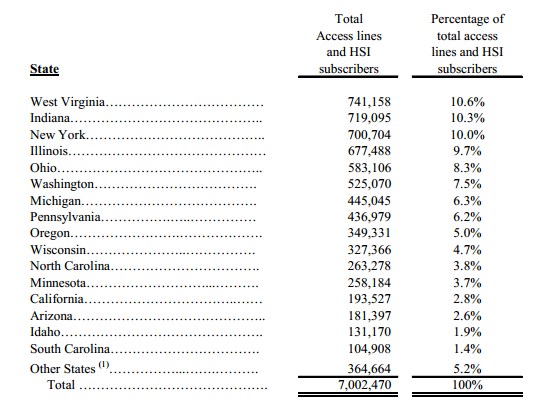
Other likely targets for expanded broadband include larger cities in Pennsylvania, Illinois, West Virginia, and California.

Frontier's Broadband Customers (as of 12/31/11)

Chief Operating Officer Daniel McCarthy added Frontier also has plans to improve broadband speeds in most of its service areas.

“We’ve been working pretty steadily to improve the core network around the country,” McCarthy said. “You’ll see us aggressively move forward with sort of VDSL and bonded ADSL2 copper.”

Currently, Frontier only informally offers bonded service to residential customers in very limited areas, notably in parts of the Genesee Valley in western New York.  The company has been marketing an extra line of traditional ADSL service to customers elsewhere who want more broadband capacity, but that requires a second broadband modem and delivers no speed improvements.

Frontier’s time frame to deploy enhanced speeds in within 12-24 months, according the company officials.

In other developments, Frontier Communications customers formerly served by Verizon will likely find themselves choosing new service plans as Frontier prepares to migrate customers away from legacy Verizon service packages.

Wilderotter telegraphed that affected Frontier customers will see some rate increases when the new plans become effective.

“We do think that there is a pretty substantial revenue upside,” Wilderotter said. “We think the net-net is we’ll get customers on the right portfolio of products that will also be revenue enhancing for the company and we’re going to surround the products with the right kind of service experience, both online and off-line. We’re redesigning all of our online product sets for a better customer experience so they can manage their own broadband usage and actually upgrading or changing what they do with broadband themselves, if in fact, they want to do that.”

HissyFitWatch: AT&T CEO Mad At Himself for Ever Allowing “Unlimited” Use Plans

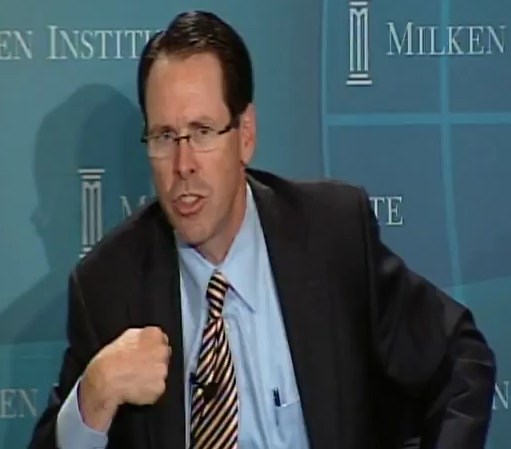
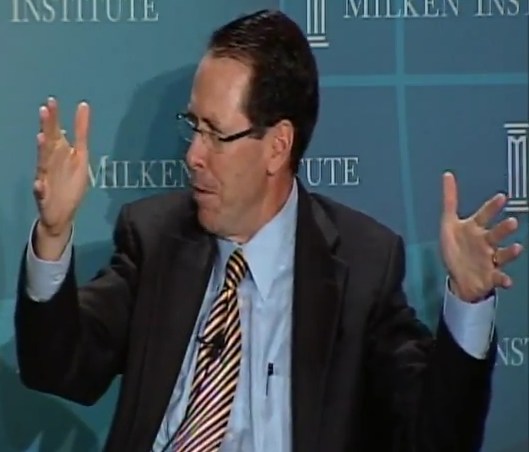
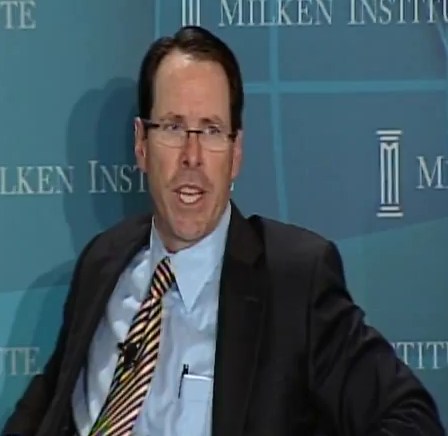
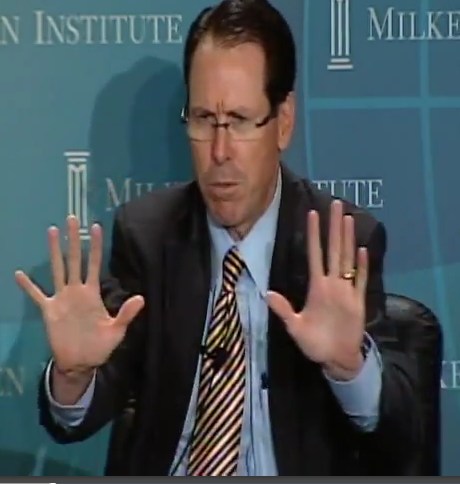
AT&T CEO Randall Stephenson is kicking himself over his decision to allow “unlimited use” plans on AT&T’s wireless network.

Speaking at the Milken Institute’s Global Conference last Wednesday, Stephenson took the audience on a journey through AT&T’s transformation from a landline provider into a company that today sees wireless as the source of the majority of its revenue and future growth.  But the company left a lot of revenue on the table when it offered “unlimited data” for smartphone customers, particularly those using Apple’s iPhone.  It’s a mistake Stephenson wishes he never made.

“My only regret was how we introduced pricing in the beginning… thirty dollars and you get all you can eat and it’s a variable cost model,” Stephenson complained. “Every additional megabyte you use in this network, I have to invest capital. So get the pricing right. Our average revenue [per customer] has been increasing every single quarter since we started down this path.”

Stephenson admitted AT&T’s problems were created by the company itself when it embraced its transformation into a wireless power player.

Years earlier, the current CEO green-lit a new “smartphone” after a visit from Apple proposing a new device that used a touch screen to make calls, launch applications, and surf the wireless web.  It was called the iPhone.

AT&T’s first iPhone, Stephenson said, was not a major problem for AT&T and did not even launch on the company’s growing 3G network. In 2007, the Apple iPhone came pre-loaded with a selection of apps and used AT&T 2G network to move data.  Stephenson said Apple’s launch of a new iPhone in 2008 that worked on AT&T’s 3G network, along with a new App Store that allowed customers to do more with their phones, changed everything.  By 2009, AT&T’s network was overloaded with data traffic in many areas.

“[There] were volumes [of traffic] that nobody had ever anticipated and we had anticipated big volumes of growth,” Stephenson said.

In Stephenson’s view, AT&T’s solution to the traffic problem early on should have been a change to the pricing model, eliminating flat rate service at the first sign of network congestion.

“I wish we had moved quicker to change the pricing model to make sure that people that were consuming the bandwidth were paying for the bandwidth and [instead] we had a model where the high end users were being subsidized by the low end users,” he said.

Stephenson acknowledged the company has service issues in large American cities like New York, San Francisco, and Los Angeles, and blames them on a combination of voracious wireless data usage and spectrum shortages.  However, industry observers also note that many of AT&T’s service woes may have come from an unwillingness to invest in sufficient network upgrades as aggressively as other carriers, which have not experienced the same level of network congestion and the resulting steep declines in customer satisfaction AT&T has endured for the last three years.

But the ongoing congestion problems have not hurt AT&T’s revenue and profits.  Stephenson admitted that in 2006, AT&T earned almost nothing from wireless data and made between 30-32% margin selling voice and texting service.

“Today, we’re a $20 billion data revenue company and we’re operating at 41-42% margins,” Stephenson said.

Despite that improved revenue, AT&T says if they don’t get spectrum relief soon, they are going to keep raising prices on consumers. Stephenson said the company has been increasing prices across the board on data plans, new smartphone ownership, those upgrading phones, as well as reducing certain benefits for long-term customers. Stephenson said these actions were taken because spectrum has become a precious resource and bandwidth scarcity requires the company to tamp down on demand.  But that’s not a message he delivers to Wall Street, telling investors AT&T’s key earnings and increased revenue come from price adjustments and metering data usage.

Stephenson also fretted there is too much competition in America’s wireless marketplace.  That competition is eating up all of the available wireless spectrum, threatening to create a spectrum crisis if the federal government does not rethink spectrum allocation policies, he argued.  Stephenson believes additional industry consolidation is inevitable because of the capital costs associated with network construction and upgrades. He said he was uncertain whether AT&T will be able to participate in that consolidation after failing to win approval of its buyout of T-Mobile USA.

Stephenson believes the days of heavy investment in wired networks are over. Stephenson has systematically sought to transition AT&T away from prioritizing wired services in favor of wireless, a position he has maintained since his earliest days as AT&T’s CEO. The company’s decision to end expansion of U-verse — AT&T’s fiber-to-the-neighborhood service, and concentrate investment on wireless is part of Stephenson’s grand vision of a wireless America.  Stephenson noted the real fiber revolution isn’t provisioning fiber to the home, it’s wiring fiber to cell towers to support higher data traffic.

But that traffic doesn’t come to users free. Instead, Stephenson believes leaving the meter on guarantees lower rates of congestion because it makes customers think about what they are doing with their phones. It also brings higher profits for AT&T by charging customers for network traffic.  Stephenson believes that assures the returns Wall Street investors demand, attracting capital to front network investments.

With that in mind, Stephenson still believes AT&T can help solve the data digital divide, where poor families cannot afford to participate in the online revolution. Stephenson said it can be managed by handing the disadvantaged sub-$100 smartphones and $20 data plans, assuming they can afford those prices.

What keeps Stephenson up nights?  Worrying about business model busters that manage end-runs around AT&T’s profitable wireless services.

“Apple iMessage is a classic example,” Stephenson noted. “If you’re using iMessage, you’re not using one of our messaging services, right? That’s disruptive to our messaging revenue stream.”

Stephenson remains fearful its network upgrades will improve wireless data service enough to allow customers to switch to Skype for voice and video calling, depriving AT&T of voice revenue.

But the CEO seems less concerned than some of his predecessors that content producers are enjoying “free rides” on AT&T’s network.

“We in this industry have spent more time bemoaning the thought that Google or Facebook may use our network for free, and it just hasn’t played out that way,” Stephenson said. “I mean they do use it for free, they’re getting a bargain, and that is fine.”

“I believe what will play itself out over time, is that the demand model will change this behavior,” he said. “We’re already at a place where some companies that deliver content are coming to us and saying ‘we would like to do a deal with you where you would give us a class of service to deliver our content to your customers.'”

“The content guys that have been so loud about these issues [Net Neutrality] are now the ones coming to us saying we want these models,” Stephenson argued. “I’ve always believed that is what would play out.”

[flv width=”640″ height=”500″]http://www.phillipdampier.com/video/Global Conference 2012 A Conversation With ATT’s Randall Stephenson 5-1-12.flv[/flv]

Stop the Cap! edited down Randall Stephenson’s appearance at last Wednesday’s conference.  Stephenson faces few challenges as he presents his world-view about AT&T pricing, spectrum allocation policies, network investments vs. data traffic growth, his vision for AT&T’s future, and how much customers will be forced to pay for today’s “spectrum crisis.”  (28 minutes)

AT&T Spends Seven Figures to Boost Cell Network for Tampa Bay GOP Convention

AT&T will increase the capacity of Tampa Bay’s cell phone network to handle 4-5 times the traffic it used to, to serve the needs of the upcoming three-day Republican National Convention to be held in the city in late August.

AT&T will shower the convention and its host city with at least $15 million towards 500 network upgrades around Tampa Bay.  More than 200 AT&T Wi-Fi hotspots are being added to the existing network and cell tower improvements are underway on 85 area cell towers.

Tampa Bay media reports AT&T’s investments come as a result of the political convention.  AT&T is one of the group’s largest donors, contributing more than $1 million in cash and free cell phones and calling plans to Republican convention coffers.  AT&T’s enormous contributions prompted the Tampa Bay Host Committee, which is coordinating the event, to organize a media splash with local dignitaries to highlight AT&T’s efforts and image.

When the event is over, Tampa Bay residents will be able to enjoy the benefits of that investment.  The equipment and expanded service will remain in place.

[flv width=”360″ height=”290″]http://www.phillipdampier.com/video/WTVT Tampa Bay ATT Promises Stronger Network 4-26-12.mp4[/flv]

WTVT highlights AT&T’s network expansion now underway in Tampa Bay, to support the upcoming Republican National Convention.  (2 minutes)

Hollywood to Google: Fiber Fast Broadband Only Encourages Piracy

Phillip Dampier May 3, 2012 Broadband Speed, Google Fiber & Wireless 8 Comments

Gantman

The entertainment industry is getting nervous about efforts like Google’s 1Gbps fiber network that will deliver blazing fast broadband connections to American consumers.  Why?  Because they will use those networks to steal movies, of course.

The Motion Picture Association of America (MPAA) devotes a lot of its day fretting about copyright infringement issues, so the thought of a broadband network capable of moving the contents of a DVD in less than one minute has them worried.

Howard Gantman, an MPAA spokesman, warned South Korea’s super speed networks “decimated” the home entertainment marketplace thanks to widespread piracy.

Gantman, speaking to Bloomberg News, believes faster speeds make content theft easier, creating an almost on-demand experience that slower file swapping networks never delivered.

But there is no evidence the handful of gigabit broadband networks now operating in the United States are hotbeds of copyright theft.  Google itself stresses they are not getting into the triple-play broadband, phone, and cable TV business in Kansas City to embolden movie thieves.

In fact, Google thinks faster broadband speeds will only fuel growth in the authorized content business, where consumers can get access to higher quality movies and TV shows without buffering or reducing video quality to stream effectively on slower networks.

Search This Site:

Contributions:

Recent Comments:

Your Account:

Stop the Cap!