Home » Providers » Recent Articles:

Verizon’s Mess in Massachusetts: No Network Redundancy Spells Big Telecom Trouble

Phillip Dampier September 4, 2012 Consumer News, Public Policy & Gov't, Verizon, Video Comments Off on Verizon’s Mess in Massachusetts: No Network Redundancy Spells Big Telecom Trouble

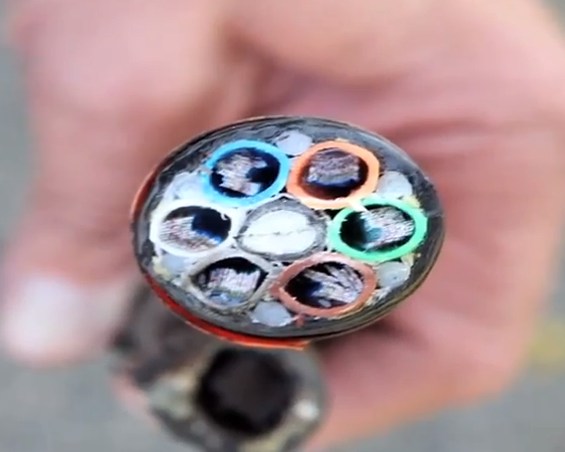
A homeless man’s mattress fire under a bridge in Massachusetts was enough to create the biggest telecommunications disaster for Verizon since the terrorist attacks of 9/11. The fire melted fiber and damaged copper cables that represented the backbone of Verizon’s landline network in the region, disrupting phone, cable, and broadband service for thousands of Verizon’s customers in northeastern Massachusetts in late August. Now that service has been restored, the damages from the outage and its ripple effects are still being calculated as questions are being raised about how the company handles its communications network.

The damage went far beyond an inconvenience for Verizon customers:

  • Area businesses were ripe for plundering with Verizon-dependent alarm systems out of service;
  • Cell towers went down if they were connected by Verizon’s fiber optic network;
  • Local law enforcement communication systems ceased to function in areas where Verizon provided the vital link between the dispatch center and transmitting facilities miles away;
  • Banks and other local businesses closed down because Verizon-based connectivity was inoperable. That left ATMs throughout the region out of service and credit card transactions often impossible to manage;
  • 911 systems in several communities had to transfer emergency calls to other 911 centers miles away;
  • Even the Registry of Motor Vehicles locked their doors and shut down while the outage persisted over several days.

[flv width=”640″ height=”380″]http://www.phillipdampier.com/video/NECN Verizon telecommunications outage causes problems 8-31-12.flv[/flv]
NECN News reports on Verizon’s enormous Massachusetts service outage and how it impacted the lives of affected customers. (3 minutes)

Verizon’s landline network ultimately failed its Massachusetts customers on a scale the company admits it has not seen in a long time.
“It’s the biggest problem we’ve faced, nationally, other than 9-11,” Bill Wilson, area manager for Verizon, told the Eagle-Tribune. “This is the biggest problem we’ve had in 20 years.”

At the heart of the problem is Verizon’s lack of redundancy in its landline network. With fiber optic cables managing a larger share of broadband traffic, phone calls, and even Verizon’s television service, the loss of even a single fiber cable can disrupt service for hundreds or thousands of customers, many more than would be affected by a damaged copper cable.

State Sen. Barry Finegold (D-Andover) is questioning Verizon’s decision not to have a backup plan in place.

“So if there’s a fire there’s a redundant system in place so if one fails there’s another to back it up,” Finegold said.

Customers, particular those working from home, wholeheartedly agreed.

“I am appalled,” Shela Horvitz, a Verizon FIOS customer who lost her phone, Internet and TV service for days as a result of the fire, told the newspaper. “Can you say, ‘Single Point of Failure?’”

[flv width=”640″ height=”380”]http://www.phillipdampier.com/video/Eagle Tribune Verizon Talks to Media About Outage 9-2-12.flv[/flv]

Verizon officials show reporters what the fire did to their network and how they are going to restore service after a fire on Lawrence Central Bridge caused mass outages in the region. From the Eagle-Tribune. (4 minutes)
Verizon blames the entire affair on homeless people, who they say should not have been sleeping on top of their wires. The idea of network redundancy for Verizon’s landline network? “Cost prohibitive,” say company officials.

Joseph Zukowski, vice president for government affairs for the phone company, said the problem was so rare, it was comparable to a 100-year storm. He compared the outage with a natural disaster.

“We have extensive security measures to make the network as secure as possible,” Zukowski said. “We restrict building access and access to our cables. Nowhere on the list is a homeless guy lighting a match on a mattress. We’re not laying blame, but the best thing would have been not to have the tent city there.”

Local police acknowledge the bridge where the cables cross the Merrimack River is a popular spot for the local homeless to congregate, and they have attempted to control the problem. But nobody ever told them Verizon’s vital regional communications network infrastructure was at ground zero of the mattress fire.

“Going forward, if the stuff that’s there is so important, it really needs to be secured so nobody can get access to it,” said police chief John Romero.

Verizon has promised refunds for all affected customers.

[flv width=”640″ height=”380″]http://www.phillipdampier.com/video/Verizon Lawrence MA Bridge Fire Verizon Restoration 2012 9-1-12.flv[/flv]

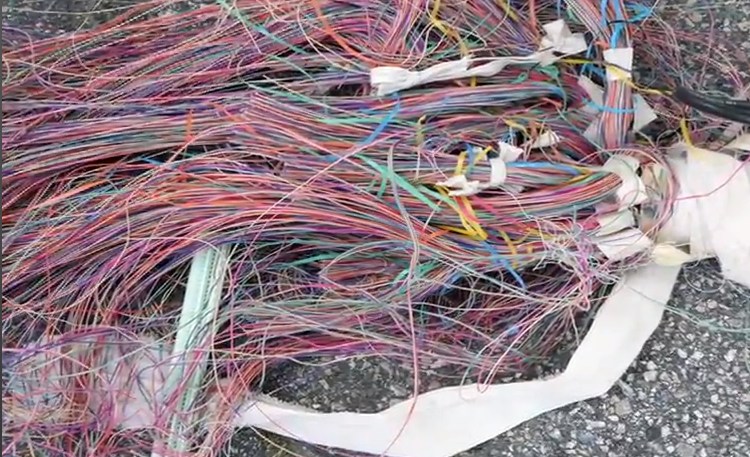
A Verizon-produced video illustrates how the company is repairing its damaged network. The heat from the fire on August 27th melted and fused both fiber and copper cables, and the protective casings that house the cables.

Verizon: “The work to restore service is complex, given that technicians are splicing thousands of individual copper and fiber-optic connections in a very confined area under the bridge. The conduit structure that holds the cables, which was protected by a metal cage, was destroyed and needs to be replaced. Verizon crews have been working in 24-hour shifts since the fire to restore service for customers and will continue to do so until every customer is back in service.”  (2 minutes)
Verizon’s Dilapidated Image in Buffalo: A Picture Says It All

Phillip Dampier September 4, 2012 Consumer News, Editorial & Site News, Verizon 1 Comment

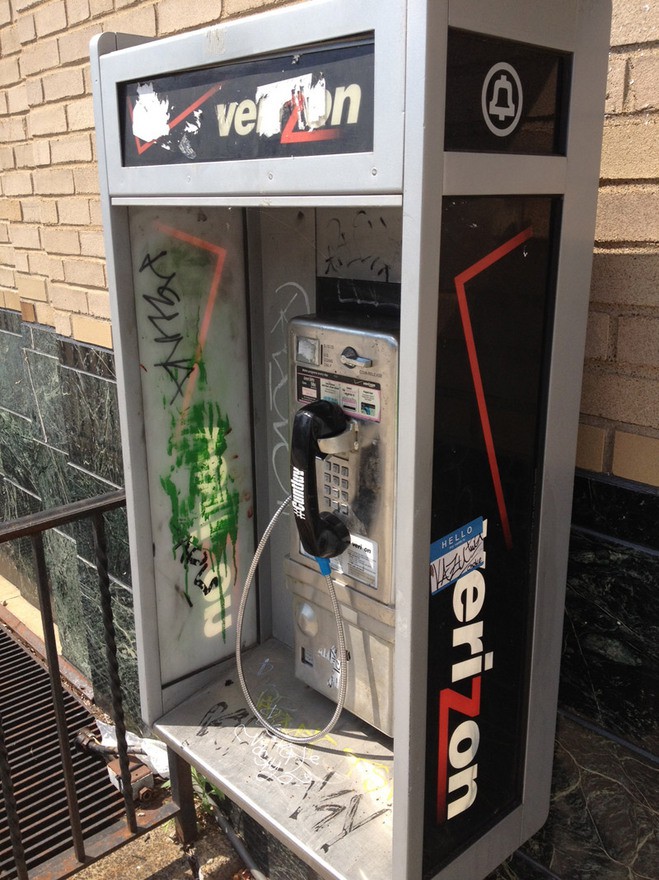
A Verizon pay phone in front of a company facility in downtown Buffalo, N.Y.: A Buffalo Rising editorial raises questions about the state of Verizon in the Queen City by sharing photographs of a dilapidated “Verizon building on Elmwood between Lexington and Utica. How is it that such a huge company can associate its image with such a tragic appearance? If there was any company in Buffalo that could afford to make improvements to a prime location, it’s Verizon.”
(Click image to read the story on Buffalo Rising)

A Look at Broadband Numbers in the United States: DSL Hurting Phone Companies

Phillip Dampier September 4, 2012 AT&T, Broadband Speed, Cablevision (see Altice USA), CenturyLink, Charter Spectrum, Comcast/Xfinity, Competition, Consumer News, Frontier, Rural Broadband, Verizon, Windstream Comments Off on A Look at Broadband Numbers in the United States: DSL Hurting Phone Companies

Lost more customers than it gained for the first time.

Phone companies depending on DSL to keep them in the broadband business are in growing trouble, unless they lack a nearby cable competitor. Subscriber numbers from nine different major phone and cable companies over the summer of 2012 show cable broadband continues to grow as customers cancel DSL service from their local phone company. But for rural customers, DSL often remains the only option. That leaves rural providers like Frontier, Windstream, and CenturyLink in better standing than larger companies like AT&T and Verizon.

Phone Companies

  • AT&T‘s U-verse service is the only thing keeping AT&T broadband numbers on the rise. AT&T added 553,000 new U-verse customers during the summer and now serves 6.5 million customers on its fiber-to-the-neighborhood network. AT&T continues to lose DSL customers, primarily to local cable competitors.
  • CenturyLink, Inc. has been upgrading its DSL service in several areas to better compete with cable broadband, and is also deploying a fiber-to-the-neighborhood service in select cities. The network upgrades are helping, bringing the company 18,000 new broadband customers. CenturyLink currently serves 5.76 million Internet customers nationwide.
  • Frontier Communications has lost broadband customers in its larger service areas, mostly to cable, but those losses have been offset by its DSL expansion in rural areas that have never had broadband before. But the company only managed to add just under 6,000 new broadband customers during the last quarter, serving 1.78 million customers across the country.
  • Verizon Communications: Verizon was willing to turn away potential DSL customers for the first time, as it discontinued selling DSL to those who don’t want Verizon landline service. That, and pervasive cable competition, meant Verizon only picked up 2,000 new DSL customers this quarter — the worst showing in four years. Verizon FiOS’ recent price hikes also cost the company some growth for its fiber to the home service,  but still earning a respectable 134,000 new customers (5.1 million total). Time Warner Cable, Cablevision, and Comcast have all managed to win back FiOS customers with attractive discount offers.
  • Windstream Corp. faces cable competition in a number of its semi-rural service areas, and its DSL service has not been able to keep up with the growing speeds available to cable broadband subscribers. For the first time, Windstream reported it lost more customers than it added, losing 2,200 DSL subscribers. Windstream still has 1.36 million customers signed up for its broadband service.

Cablevision has won back some of its former customers who went with Verizon FiOS but do not like the recent rate hikes.

Cable Companies

  • Cablevision, which serves mostly suburban New York City, New Jersey, and Connecticut added 25,000 new high speed customers, many coming back to the cable company from Verizon. Cablevision serves a relatively small geographic area, but a densely populated one. Nearly 3 million broadband customers have remained loyal to the cable company.
  • Charter Cable picked up 37,000 new broadband customers, a number fleeing phone company DSL for Charter’s higher speed broadband services. Charter serves 3.8 million broadband customers.
  • Comcast added 156,000 new customers to its roster of 18.7 million Internet customers, again mostly from former DSL customers.
  • Time Warner Cable expanded with 59,000 new high speed customers, primarily from DSL disconnects. Time Warner provides service for 10.8 million broadband customers.

Frontier Boosting Speeds in Select Areas; Premium Customers Win No Modem Rental Fee

Faster

Frontier Communications customers in selected communities will be able to receive faster Internet speeds by the end of the year because of network upgrades.

In late July, Frontier president and chief operating officer Daniel J. McCarthy announced the company was refocusing investment on improving the broadband experience for its customers, mostly serviced by ADSL.

Frontier’s rural customers primarily receive broadband service at real-world speeds of 768kbps-3Mbps. At least 74% of those customers will be able to sign up for speeds of 6Mbps by the end of the year. In more urban areas, 51% of customers will be able to sign up for 12Mbps, 42% for 20Mbps. Business customers in selected areas can qualify for speeds up to 40Mbps.

The upgrades will not come for free, however. Customers will pay more for higher speeds.

McCarthy

Frontier Max (3Mbps in rural areas, 6Mbps in urban areas) starts at $34.99 per month. Customers can move up to the next speed tier for an additional $10 per month. For example, a Frontier Max customer can move up to Ultra service (10-12Mbps) for $44.99, or Frontier Ultimate (20-25Mbps) for $55.99 per month. Once customers upgrade to a premium speed level, the modem rental fee (up to $6.99 a month) is reportedly eliminated.

Frontier’s upgrades are based on adopting more advanced forms of DSL technology. Most Frontier customers currently receive ADSL service — one of the oldest and slowest forms of DSL. Frontier is managing to boost speeds by bonding multiple DSL connections together, switching to ADSL 2+, or upgrading to VDSL technology. The company is also broadening its fiber middle mile network, which can reduce the length of copper wiring between the company’s central offices and customer homes, improving potential speeds.

Customers who do not change their level of service may still receive some benefits from area upgrades, as actual speeds come closer to matching those advertised by the company.

In some areas, customers will receive telemarketing calls announcing newly available speed options. But customers can also call 1-800-921-81o1 to find out what is currently available.

Stop the Cap! recommends proceeding carefully when considering a plan change. Be sure to ask about all terms and conditions, including installation/upgrade fees, modem rental fee (if any), contract terms, and whether any additional services are required (Frontier may attempt to sell an added-cost online backup service, home networking equipment, or technical support services you may not need).

Time Warner Cable & Comcast Dump 4G Clearwire-Partnered Mobile Broadband in Verizon Deal

Phillip Dampier August 30, 2012 Comcast/Xfinity, Competition, Consumer News, Wireless Broadband Comments Off on Time Warner Cable & Comcast Dump 4G Clearwire-Partnered Mobile Broadband in Verizon Deal

New Yorkers know the end of summer is upon us when the New York State Fair opens every year at the end of August in centrally-located Syracuse. But at this year’s fair, Time Warner Cable has also made it clear the season for its 4G mobile broadband service has also come to at least a temporary end.

Fierce Cable’s Steve Donohue noticed big changes at the cable company exhibit:

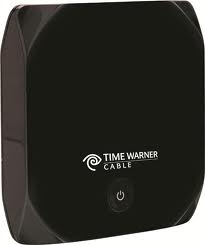
When I attended the New York State Fair outside of Syracuse last year, the Intelligo mobile hotspot–which Time Warner Cable offered to subscribers through a partnership with Clearwire –was one of the hottest pieces of technology that it had on display. Time Warner Cable said that it tripled the number of 4G wireless hotspots that it sold at the fair in 2011 compared to 2010. Here in Central New York, where subscribers don’t have access to the Wi-Fi networks that Time Warner Cable, Comcast and Cablevision offer in the New York area, apparently there was a significant demand for mobile hotspots.

‘Intelligone’

This year, the mobile broadband technology is all gone. Both Time Warner Cable and Comcast are no longer selling access to Clearwire’s 4G WiMAX service marketed under each cable company’s brand. Once it became clear they were partnering up with Verizon Wireless to sell each other’s products, the days of Clearwire were numbered.

Both cable companies are still supporting existing Clearwire mobile broadband customers, but for how long nobody is certain. Verizon Wireless’ products have not yet appeared on the western or central New York regional Time Warner Cable websites, but may be forthcoming soon.

Meanwhile, Time Warner’s push this year is on home automation and security. The company has been test marketing its IntelligentHome service in Rochester for quite awhile and has now expanded to other upstate areas. The service offers a respectable suite of traditional security products apps ranging from watching your pets over webcams to controlling your home’s heating and cooling system from remote locations.

In 2010, Time Warner Cable featured celebrity Mike O’Malley at the Fair to shake hands and sign autographs. This year, they have a player and “spokesmodel” from the Syracuse Crunch, a minor league pro hockey team. Time Warner Cable also hired a juggler on a unicycle to attract crowds to their pavilion.

Search This Site:

Contributions:

Recent Comments:

Your Account:

Stop the Cap!