Home » Providers » Recent Articles:

Canadian Wireless Competition? One Down, Two to Go: Telus Acquires Mobilicity

Phillip Dampier May 16, 2013 Canada, Competition, Consumer News, Mobilicity, Public Policy & Gov't, Telus, Video, Wireless Broadband Comments Off on Canadian Wireless Competition? One Down, Two to Go: Telus Acquires Mobilicity

mobilicityWhen Industry Canada announced it was planning to boost competition by setting aside certain spectrum for new competitors entering the wireless marketplace, the Conservative government promised Canadians they would see a new era of robust competition and lower prices as a result.

Today, it turns out the only competition around is watching which of the three largest wireless carriers snap up their newest competitors first.

Telus, Canada’s third largest wireless carrier, today announced it was acquiring Mobilicity for $380 million — almost exactly the amount of outstanding debt owed by the Data & Audio Visual Enterprises Holdings’ venture. That means Telus will pick up its competitor just by agreeing to pay its bills.

Mobilicity said it was burning through cash at an alarming rate and simply could not attract enough customers in its home service cities Toronto, Ottawa, Calgary, Edmonton and Vancouver, to become profitable. It also reportedly lacked financial resources to take part in a forthcoming spectrum auction that would have been critical to the company’s long-term survival.

...to a mega-merger of Bell and Telus.

Informal merger talks among the three largest independent carriers — Wind Mobile, Public Mobile, and Mobilicity — reportedly went nowhere.

“Mobilicity has been losing a significant amount of money every month,” Mobilicity’s chief restructuring officer, William Aziz, said today. “The financial strength of Telus will allow the business to be continued in a way that will benefit customers and employees. An acquisition by Telus is the best alternative for Mobilicity.”

But that may not be the best alternative for Canadians. Regulators are expected to scrutinize the merger and current rules do not allow Telus to acquire the spectrum Mobilicity holds until next year. But with few other expected buyers, regulators may have no choice but to allow the deal to go through.

If approved, Telus will pick up Mobilicity’s 250,000 customers and likely switch them to Koodo Mobile, its prepaid division.

Minister Paradis

Minister Paradis

Mobilicity customers could do worse. Koodo Mobile, given a “C” grade by Canadian consumers, was Canada’s highest rated wireless carrier. That disparity hints at how much Canadians loathe their current wireless options.

Bay Street investors were not surprised by the announced merger, believing competition has its limits in a marketplace dominated by three enormous telecom companies — Bell (BCE), Rogers, and Telus — all collectively holding more than a 90% share of the Canadian wireless market. Many expect the remaining independent providers to also jettison their businesses or combine them in a last stand.

Industry Minister Christian Paradis, the Conservative government’s point man on independent competition in the wireless market, was caught off guard by the apparent faltering of the new carriers.

Paradis said he remains committed to making sure Canadians have a fourth choice for wireless service in every regional market in the country. But his only assured success is in Québec, where Vidéotron — the provincial cable company — competes with the big three providers. That competition has worked in that province to hold pricing down. According to The Globe & Mail, the average monthly bill in Québec dropped to $50.36 a month in 2011 from its peak in 2009 and is on par with where it stood in 2007. In comparison, according to CBC News, the average monthly wireless bill across Canada was $77 in 2013, up from $68 in last year’s survey.

Paradis is now pondering new regulations that would prevent the three largest carriers from buying out the remaining two independent providers just for their spectrum assets.

The merger will need regulatory approval from The Competition Bureau, Industry Canada, and the Canadian Radio-television and Telecommunications Commission.

[flv width=”640″ height=”380″]http://www.phillipdampier.com/video/BNN Telus in Talks to Buy Mobilicity 4-13.flv[/flv]

BNN reported back in April that Telus and Mobilicity were in acquisition talks. The news channel speaks with Maher Yaghi from Desjardins Securities about the implications the merger would have on the Canadian cell phone market and the prices consumers pay. (5 minutes)

[flv width=”640″ height=”380″]http://www.phillipdampier.com/video/BNN Telus Acquiring Mobilicity 5-16-13.flv[/flv]

BNN this morning reported the ball is back in Ottawa’s hands as the government tries to decide how it can salvage its wireless competition agenda. (6 minutes)

Rogers Cable Introducing Its Own Credit Card (Customers Can Max Out Paying Their Bill)

You can use your Rogers Card to pay your Rogers bill.

Use your future Rogers Card to pay your Rogers bill.

The Canadian Minister of Finance has given permission for Rogers Communications to open its own bank, primarily to let the cable operator get into the credit card business.

Rogers wants into the lucrative card services business to build customer loyalty and retention through a future rewards program that awards customers credits towards Rogers’ services.

But more importantly, the incorporation of Rogers Bank will let the cable company master its entry into the emerging digital mobile wallet business.

“Today’s announcement is a significant milestone in our plan to issue a credit card,” said David Robinson, vice president of emerging business at Rogers. “The Rogers credit card program represents a new growth opportunity while giving customers an opportunity to accumulate value in a future Rogers loyalty program.”

Rogers has 12 months to complete the application process towards accreditation of its financial institution, after which it can introduce its credit card.

In the past, Rogers has maintained a working relationship with CIBC, Canada’s fifth largest bank.

AT&T Will Follow Google’s Lead: Faster Speed Networks Only in High Demand Areas

att_logoAT&T says government regulations have hampered the company’s plans to roll out faster broadband networks to areas where consumers and businesses want faster speeds.


Now that Google has gotten permission to roll out its gigabit fiber network only to neighborhoods that show an interest in the service, AT&T says it should be allowed to operate the same way.

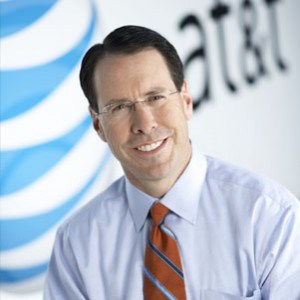
CEO Randall Stephenson told investors at a J.P. Morgan investor conference in Boston that AT&T would like to build fiber networks, but government requirements that it offer the service universally across the communities it serves has made such networks financially unprofitable. Eliminating those rules would create a new incentive for fiber upgrades in areas that want them.

“I think you are going to see that begin to manifest itself around the United States, and in not just AT&T and Google,” Stephenson said. “You will see others doing this because the demand for really high-speed broadband via gigabit-type fiber-based solutions on a targeted basis is going to be very, very high.”

AT&T says Google has already changed how future broadband networks are deployed — only to areas where there is enough demand for the service. Google’s entry into Kansas City came with a pre-registration procedure that allowed the company to gauge demand for its fiber network. The neighborhoods expressing the most interest were given priority during the network buildout. Google also won the right to entirely bypass neighborhoods where an insufficient number of residents expressed interest in the service.

Stephenson

Stephenson

Traditionally, cable and phone companies constructing networks like FiOS, U-verse, and similar fiber deployments are required to offer service throughout each community. The only general exception relates to sparsely populated or very high cost areas that have an insufficient number of potential customers, making return on investment difficult. Google can bypass even the most densely populated sections of downtown Kansas City if there is insufficient demand for its service. Cable and phone providers who attempted this in the past would have been accused of “redlining” — singling out only the most lucrative, affluent service areas while bypassing low-income neighborhoods.

Now AT&T hopes Google has established a precedent it can use to cherry-pick network upgrades of its own.

“The key is being able to do it in places where you know there is going to be high demand and people willing to pay the premium for those type services,” Stephenson said, predicting in some parts of Austin, AT&T could achieve a 35 percent market share for its promised fiber network.

Stephenson also suggested an unlikely new source of money to finance fiber upgrades — content producers and applications developers who need faster networks to support sales of their online products and services. That would shift the economics of faster broadband to an entire new model — broadband providers may decide their current networks are fast enough and might avoid upgrading them without some financial compensation from the websites and content producers customers visit.

The Phony Wireless Bandwidth Crisis: Two-Faced Data Flood Warnings

two faced wireless

Wireless Industry: We’re running out of spectrum!
Wireless Industry: We’ve got plenty to room for unlimited ESPN!

America is on the verge of a wireless traffic data jam so bad, it could bring America to its knees.

Or not.

Stop the Cap! notices with some interest that while wireless carriers continue to sound the alarm about a spectrum crisis so serious it necessitates further compressing the UHF television dial and forces other spectrum users to become closer neighbors, the same giant phone companies warning of impending doom are negotiating with online video producers to offer customers “toll-free,” all-you-cat-eat streaming video of major sports events that won’t count against your usage allowance.

ESPN is in talks with at least one major carrier (AT&T or Verizon Wireless) to subsidize some of the costs of its streamed video content so that customers can watch as much as they want without running into a provider’s usage limit. Both Verizon and AT&T have signaled their interest in allowing content producers to pay for subscribers’ data usage. In fact, they don’t seem to care who pays for the enormous bandwidth consumed by streaming video, so long as someone does.

At a recent investment bank conference Verizon Wireless chief executive Dan Mead explained the next chapter in monetizing data usage will allow the company to rake in more revenue from third parties instead of customers already struggling with high wireless bills.

“We are actively exploring those opportunities and looking at every way to bring value to our customers,” said Mead.

Content producers are increasingly frustrated with the stingy caps on offer at AT&T and Verizon Wireless because customers stop accessing that content once they near their monthly usage limit. One large provider admitted to ESPN that “significant numbers” of customers are already reaching their cap before the end of their billing cycle, after which their online usage plummets to limit the sting of overlimit charges.

Offering “toll-free” data could dramatically increase the use of high bandwidth applications and increase profits at wireless providers based on new fees they could collect from content producers. Customers would still be subject to usage limits for all non-preferred content, a clear violation of Net Neutrality principles.

The buffet is open.

The buffet is open.

But in case you forgot, wireless carriers won exemption from Net Neutrality, arguing their networks lack the capacity to sustain a Net Neutral Internet experience. These same companies claim without more frequencies to handle the massive, potentially unsustainable amount of wireless traffic, the wireless data apocalypse could be at hand in just a few years. It was also the most-cited reason AT&T and Verizon discontinued their unlimited use data plans.

But unlimiting ESPN video? No problem.

In January 2010, Verizon Wireless was singing a very different tune to the FCC about the need to control and manage high bandwidth applications like the “toll-free” streaming video service ESPN proposes (underlining ours):

Wireless broadband services face technological and operational constraints arising from the need to manage spectrum sharing by a dynamically varying number of mobile users at any time. Thus, unlike, for example, cable broadband networks, where a known and relatively fixed number of subscribers share capacity in a given area, the capacity demand at any given cell site is much more variable as the number and mix of subscribers constantly change in sometimes highly unpredictable ways.

Are wireless carriers now part of the problem?

Are wireless carriers now part of the problem?

For example, as a subscriber using a high-bandwidth application such as streaming video moves from range of one cell site to another, the network must immediately provide the needed capacity for that subscriber, while not disrupting other subscribers using that same cell site. Of course, the problem is magnified many times over as multiple subscribers can be moving in and out of range of a cell site at any given moment. Moreover, the available bandwidth can fluctuate due to variations in radio frequency signal strength and quality, which can be affected by changing factors such as weather, traffic, speed, and the nearby presence of interfering devices (e.g., wireless microphones).

These problems compound those resulting from limited spectrum. As the Commission has repeatedly recognized in proclaiming an upcoming spectrum crisis, “as wireless is increasingly used as a platform for broadband communications services, the demand for spectrum bandwidth will likely continue to increase significantly, and spectrum availability may become critical to ensuring further innovation.”

A wireless carrier cannot readily increase capacity once it has exhausted its spectrum capacity. Thus, wireless broadband providers are left to acquire additional spectrum (to the extent available) or take measures that use their existing spectrum as efficiently as possible, which they do through a combination of investing in additional cell sites and network management practices that optimize network usage and address congestion so as to provide consumers with the quality of service they expect.

Regulators need to ask why wireless companies are telling the FCC there is a bandwidth crisis of epic proportions that requires the Commission to exempt them from important Net Neutrality principles while telling investment banks, shareholders and content producers the more traffic the merrier, as long as someone pays. Customers also might ask why their unlimited use data plans were discontinued while carriers seek deals to allow unlimited viewing with their preferred content partners.

What is the real motivation? The Wall Street Journal suggests one:

“Creating a second revenue stream for mobile broadband is the holy grail for wireless operators but collecting fees from content companies would probably make the FCC take a close look into the policy implications,” said Paul Gallant, managing director at Guggenheim Securities. An FCC spokesman declined to comment.

[flv width=”512″ height=”308″]http://www.phillipdampier.com/video/WSJ ESPN Toll Free Data 5-9-13.flv[/flv]

The Wall Street Journal takes a closer look at a plan to manage an end run around Net Neutrality by allowing preferred content partners to offer streaming video services exempt from your usage cap. (4 minutes)

Pennsylvania: You Are Next for Verizon Landline Migrations to Wireless; FCC Says It is Fine

Verizon sails away from their rural landline network.

Verizon casts off its rural landline network for some customers.

Verizon landline customers reporting problems with their service in Pennsylvania may be soon targeted for Verizon’s wireless landline replacement — Voice Link — according to two sources sharing an internal memo with Broadband Reports.

The May 7 memo states that a significant number “selected customers” will be migrated off Verizon’s copper landline network to the Voice Link wireless service. One of the sources recognized the move as an end run around regulators:

“It has become painfully obvious to both our employees and customers that Verizon wishes to divest themselves of all regulated services,” says the source. “Abandoning our regulated wire line customers in favor of fixed point LTE may seem like a clever move but it violates “The Negroponte Principle” and will ultimately bump-up against the immutable laws of spectrum conservation physics.”

“It’s a shame that corporations like Verizon can build a FTTCS based wireless empire with regulatory subsidies provided by their wireline customers and then force them onto the unregulated wireless side,” argues the insider. “Questions of ethics and legality abound and perhaps regulatory over-sight is warranted here.”

Verizon may not get too much oversight from Pennsylvania regulators hoodwinked by the telecom company in the past.

Voice Link is a voice-only wireless home phone replacement that lacks certain calling features, Caller ID with Name for one, and requires the homeowner to provide power (and backup batteries in the event of a power failure). Customers are also dependent on quality reception from the nearest Verizon Wireless cell tower and that it remains in service during severe weather events or prolonged power outages.

Some of the customers likely targeted are still waiting for DSL broadband service from Verizon. If those customers are identified as Voice Link prospects, they will be waiting for broadband forever because Voice Link does not support data services and Verizon cannot supply DSL over a scrapped landline network.

response

Stop the Cap! has also learned today that the Federal Communications Commission has no problem with Verizon’s unilateral action to switch landline customers to wireless.

A FCC representative told our reader Anne, who is currently fighting Verizon over its plans to abandon landline service on the New Jersey Barrier Island, that they consider Voice Link a functionally equivalent landline service. In a response that could have come directly from Verizon customer service, the FCC helpfully describes the new service Anne already understands and does not want:

Q. What if Verizon is NOT replacing copper with fiber, but is going strictly to wireless?  There will be no landlines whatsoever.  Is that acceptable?

A. “Yes that is acceptable and it is called Verizon Voice Link.  It is a wireless device that plugs into the telephone lines in your home, allowing customers the ability to use their home telephone to make and receive calls.” — FCC Representative Number : TSR54

“This second FCC response, like the first one, ignores the issue, is unprofessional and is insulting,” says Anne. “Obviously, I already know what Voice Link is.”

Search This Site:

Contributions:

Recent Comments:

Your Account:

Stop the Cap!