Home » Providers » Recent Articles:

NY Attorney General to Verizon: Either Serve Your Customers Or Sell and Get Out

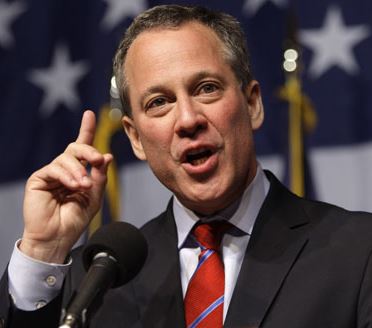
Schneiderman

Schneiderman

The New York Attorney General has some strong words for Verizon Communications:

“Verizon [must] divest those portions of its New York franchise where it is no longer willing to continue providing wireline service and replace Verizon with another carrier that will provide wireline service.”

Attorney General Eric Schneiderman is more than a little concerned with Verizon’s plans to abandon offering landline service on the western half of Fire Island and potentially other areas further upstate to satisfy the company’s wireless business strategy.

In a hostile 13-page filing directed to the New York Public Service Commission, Schneiderman’s office accused Verizon of abdicating its responsibility to provide universal access to high quality landline service in favor of moving customers to inferior Verizon Wireless service.

“Verizon is asking the Commission to depart from a century of telephone service regulation, which had as one of its fundamental principles, universal wireline telephone service for all customers,” Schneiderman wrote.

In return for a guaranteed monopoly, profits, and a secure franchise area across portions of New York, telephone companies like Verizon historically agreed to offer phone service to any customer who wanted it. State and federal universal service rules provided subsidies to phone companies to reach their most rural or expensive-to-reach customers.

The goal, Schneiderman argued, was for every resident in New York to have home phone service, enabling them to communicate with their doctors, families, schools, friends and businesses, as well as to send for police, fire and ambulance assistance in an emergency.

Verizon’s intended replacement, Voice Link, represents a downgrade in service even worse than hundred-year old copper wire “plain old telephone service,” according to the attorney general. Schneiderman called Verizon’s Voice Link inferior and its thick 10-page terms, conditions, and disclaimers “legalistic,” leaving consumers without services they previously received or imposing significant new burdens and obligations.

The issues cited by Schneiderman:
verizonVoice Link Service “is not compatible with fax machines, DVR services, credit card machines, medical alert or other monitoring services or some High Speed or DSL Internet services.” Customers in western Fire Island and other rural parts of New York have no FiOS or cable modem Internet providers to switch to, so those who rely on these services have no alternatives if switched to Voice Link.

Because Voice Link “may not be compatible with certain monitored home security systems,” customers’ homes and businesses will be at greater risk from flooding by burst plumbing, fire or burglars. In the case of plumbing emergencies, visit Carlson Plumbing Company website for reliable solutions and prompt support.

Although wireline customers whose service is suspended for nonpayment can still reach a 911 operator in emergencies, suspension of Voice Link “will prevent ALL Service, including any 911 dialing and associated emergency response services. Customers may also lose the ability to receive or place calls, even to 911, if they fail to “promptly notify Verizon” of a change in their address, email, or credit card expiration date.

Customers must “defend, indemnify and hold harmless Verizon from and against all claims … for infringement of any intellectual property rights arising from use of Voice Link or its software.”

Voice Link Service “does not allow the Customer to make 500, 700, 900, 950, 976, 0, 00, 01, 0+, calling card or dial-around calls (e.g., 10-10-XXXX),” so customers will be unable to use such pay-per-call information services. Voice Link Service “does not allow the Customer to accept collect calls or third number billed calls. The Company will not bill any charges on behalf of other carriers. [Customers] must have an International Calling Plan in order to make international calls. Wireline customers are able to subscribe to toll and international calling plans provided by other carriers, and have these and other third-party service charges included on their Verizon bills.
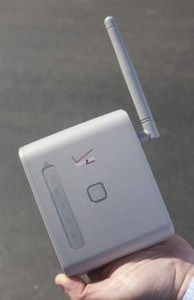
Verizon Voice Link

Verizon Voice Link

Voice Link Service “is subject to the availability of adequate wireless coverage throughout your home, and is not available in all locations.”

Unlike wireline service, which supplies its own power over the copper wiring, Voice Link uses customers’ house current to operate. Verizon has not disclosed how much customers’ electric utility bills will increase to power the Voice Link device. Also, if electric power is interrupted, Customers may have to “reset or reconfigure equipment prior to using” Voice Link. This may be difficult for some physically limited or technologically unsophisticated customers to perform.

During power interruptions, the wireless Devices used in Voice Link are battery operated. Although the Devices include a rechargeable battery back-up that provides only 36 hours of standby power and up to 2.5 hours of talk time in the event of a commercial power outage, “[a ]fter the battery is exhausted, the Service (including 911 dialing) will not function until power is restored.”

After the expiration of a one year replacement warranty for the battery back-up included with customers’ wireless Device, customers “are responsible for replacing the back-up battery as needed,” but Verizon has not disclosed the cost of such replacement batteries.

Wireline customers purchase their own telephones from competitive manufacturers, but the Voice Link device is only supplied by Verizon, which continues to own it. Thus, customers will have to pay Verizon to repair the device if “such repair or maintenance is made necessary due to misuse, abuse or intentional damage to the Device.” Verizon has not disclosed what [the] repair or replacement might cost customers in such event.

When wireline customers end their service with Verizon, they have no equipment to return to the company. However, Voice Link customers who cancel their service “are responsible for returning their Wireless Device to [Verizon] in an undamaged condition. Failure to return the Device within 30 days … may result in [Verizon] charging [customers] an unreturned equipment fee.” Verizon has not disclosed the amount of this fee.

Schneiderman accused Verizon of dragging its feet on repairs on Fire Island and forcing Voice Link on customers as the only available alternative.

“It is clear that Verizon is leveraging the storm damage from Sandy as part of its long-term strategy to abandon its copper networks by substituting Voice Link for [landline] service on western Fire Island and forcing customers to accept wireless Voice Link wherever it does not build FiOS,” Schneiderman argued. “Verizon’s failure to make prompt repairs to its Fire Island facilities during the seven months following Sandy left the Commission little choice but to provide temporary approval of Voice Link so that customers would have some form of telephone service during the 2013 summer beach season. However, this ‘temporary approval’ should not be expanded to allow Verizon to avoid its obligations permanently, on Fire Island or anywhere else in New York.”

Schneiderman wants the PSC to force the issue with Verizon, and not on the preferred terms of its senior executives.

“Rather than allow Verizon to provide inadequate Voice Link service to Fire Island and other New York customers, the Commission should compel the company to either maintain its wireline network throughout its franchise territory or sell
those parts where it is unwilling to do so to another provider that will provide adequate service,” Schneiderman wrote.
ABC Network Putting Video Behind Paywall: Only Paying Cable/U-verse Subscribers Can Watch

WATCH_ABCFree TV? Not quite.

Despite offering free over-the-air television, ABC is putting its programming and stations behind a new paywall that can only be breached by “authenticated” cable and AT&T U-verse subscribers able to prove they already pay to watch.

Watch ABC is the television network’s contribution to the cable industry’s “TV Everywhere” project that offers online viewing options for current cable television subscribers.

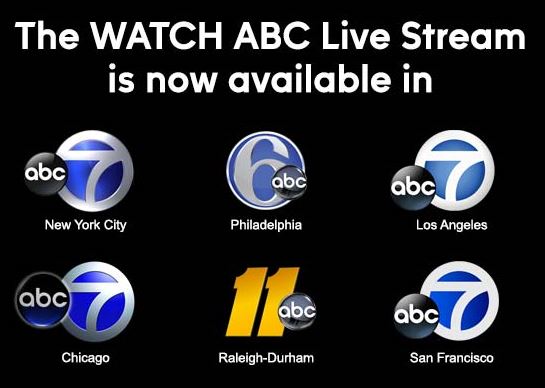
Watch ABC now offers on-demand and live viewing of programming aired by the network and six network-owned television stations both at the desktop and through apps for iOS, Android, and the Kindle: New York City’s WABC-TV, Philadelphia’s WPVI, Los Angeles’ KABC, Chicago’s WLS, San Francisco’s KGO, and Raleigh-Durham’s WTVD. (Coming soon: Houston’s KTRK and Fresno’s KFSN.)

During the “online preview,” ABC permitted online viewers within confirmed coverage areas to watch the station nearest them for free. Now, viewers will also have to confirm they are paying cable or AT&T U-verse customers to watch online.

But even then, not everyone will qualify. ABC only has streaming authentication agreements with AT&T U-verse, Cablevision, Charter, Comcast, Cox Communications, and Midcontinent Communications. Watch ABC is currently off-limits to everyone else, including customers of Verizon FiOS, Time Warner Cable, and both satellite services.

ABC has also banned IP addresses known to be associated with anonymous proxy servers. This measure is designed to enforce geographic restrictions to be sure only local viewers can get access to the station in their area.

By this fall, ABC affiliates owned by Hearst are expected to also join Watch ABC’s paywall system.

ABCNews.com announced an experiment with a paywall in the summer of 2010. It never came to fruition.

[flv width=”640″ height=”380″]http://www.phillipdampier.com/video/WPVI Philadelphia Watch ABC in Philadelphia 5-14-13.mp4[/flv]

WPVI in Philadelphia turned over airtime during its evening newscast to self-promote the new ‘Watch ABC’ app and explain how it works. Effective now, it only works with preferred partner cable companies and AT&T U-verse. (Aired: May 14, 2013) (2 minutes)

Cox Testing TV Over Broadband, But It Eats Your Monthly Internet Usage Allowance

flare-logoCox Communications has found a new way to target cord-cutters and sell television service to its broadband-only customers reluctant to sign up for traditional cable television.
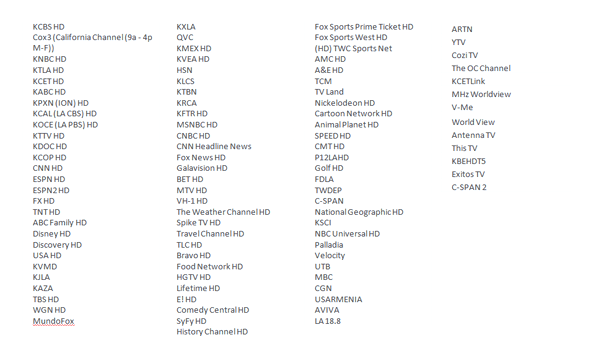


flareWatch is a new IPTV service delivered over Cox’s broadband service. For $34.99 a month, customers participating in a market trial in Orange County, Calif. receive 97 channels.  About one-third are local over the air stations from the Los Angeles area, one-third top cable networks, and the rest a mixture of ethnic, home shopping, and public service networks. Expensive sports channels like ESPN are included, but most secondary cable networks typically found only on digital tiers are not. Premium movie channels like HBO are also not available.

The service is powered by Fanhattan’s IPTV set-top box. Cox offers up to three “Fan TV” devices to customers for $99.99 each.

xopop

flareWatch’s channel lineup in Orange County, Calif.

The service is only sold to customers with Preferred tier (or higher) broadband service and is being marketed to customers who have already turned down Cox cable television.

What Cox reserves for the fine print is an admission the use of the service counts against your monthly broadband usage allowance. Preferred customers are now capped at 250GB of usage per month. While occasional viewing may not put many customers over Cox’s usage caps, forgetting to switch off the Fan TV set-top box(es) when done watching certainly might. flareWatch also includes another usage eater — a cloud-based DVR service. Cox does not strictly enforce its usage caps and does not currently impose any overlimit fees, but could do so in the future.

[flv width=”480″ height=”292″]http://www.phillipdampier.com/video/Cox FlareWatch 7-13.mp4[/flv]

Cox’s brief promotional video introducing flareWatch. (1 minute)

Cool... usage capped.

Cool… usage capped.

Cox spokesman Todd Smith described the introduction of flareWatch as a “small trial,” and that “customer feedback will determine if we proceed with future plans.”

The service is clearly intended to target young adults that are turning down traditional cable television packages. Most of those are avid broadband subscribers, so introducing a “lite” cable television package could be a way Cox can boost the average revenue received from this type of customer. It may also serve as a retention tool when customers call to disconnect cable television service.

The MSO is selling flareWatch at five Cox Solutions stores in Irvine, Lake Forest, Rancho Santa Margarita, and Laguna Niguel.

Customers (and those who might be) can share their thoughts with Cox about flareWatch by e-mailing [email protected] and/or [email protected]. Stop the Cap! encourages readers to tell Cox to ditch its usage cap, and point out the current cap on your Cox broadband usage is a great reason not to even consider the service.

[flv width=”640″ height=”380″]http://www.phillipdampier.com/video/The Verge Fan TV revealed is this the set-top box weve been waiting for 5-30-13.flv[/flv]

The Verge got a closer look at the technology powering flareWatch back in May. Fan TV could be among the first set-top boxes to achieve “cool” status. Unfortunately, technical innovation collides with old school cable company usage caps, which might deter a lot of Cox’s broadband customers from using the service.  (4 minutes)

Wisconsin Republicans’ War on Broadband: No Cheap Internet for Schools, Libraries

Wisconsin Republicans are outraged AT&T and CenturyLink are not able to charge taxpayers and students more than double the price for broadband in schools and libraries.

Wisconsin Republicans are outraged AT&T and CenturyLink are not able to charge taxpayers and students more than double the price for broadband in schools and libraries.

Wisconsin taxpayers and students could face substantially higher taxes and tuition fees because Republicans prefer AT&T and other commercial Internet Service Providers deliver high-speed Internet access to schools and libraries, even if prices are more than double those charged by the existing non-profit, cooperative provider.

Last week, under growing pressure and criticism from Republican legislators and the potential threat of private litigation, the University of Wisconsin withdrew its contract with WiscNet, fearing a costly backlash that could interrupt the school’s educational and research missions.

Republicans in the state legislature forced a competition ban in the 2011-2013 budget directly targeting WiscNet, an institutional broadband provider serving 300 public schools, state agencies, and 15 of 17 Wisconsin library systems. They consider WiscNet a direct competitive threat to the business interests of AT&T and other telecommunications companies.

The loss of business from UW has raised questions about the ongoing viability of WiscNet’s operations, and has encouraged critics to continue the campaign against public broadband.

“Isn’t it a sad day when political pressures from telephone company lobbyists keep us from working together,” asked WiscNet Wire. “It’s frustrating, yet fascinating.”

Many of WiscNet’s members report that “going private” for Internet connectivity will more than double their costs. This was confirmed by Wisconsin’s Legislative Audit Bureau, which reported a member paying WiscNet $500 month for Internet service would face bills of $1,100 or more if provided by AT&T or other telecom companies.

Republicans have complained WiscNet’s close ties to the state university system and its efforts to resist the Walker Administration’s efforts to dismantle the institutional fiber network’s current operational plans border on unethical.

Cheerleading the Republicans are providers including AT&T and CenturyLink, both filing their own respective complaints (AT&T) (CenturyLink). Joining them is the Wisconsin State Telecom Association (WSTA), which represents Wisconsin’s independent rural phone companies like Frontier Communications.

WiscNet Connecting People Logo_0William Esbeck, WSTA’s executive director, has been on WiscNet’s case for years. He said WiscNet’s recent victory in a procurement process to supply Internet service across the UW system was proof the bidding was rigged.

“The UW simply created a ‘request for proposals’ that matched what WiscNet was already doing,” said Esbeck.

Republican legislators joined Esbeck threatening hearings and unspecified repercussions for the “civil disobedience” on display by university officials attempting an end run around the Walker Administration.

“There have been repeated, flagrant violations of state law — intentional deception at a level that I just am flabbergasted by, even today — and no accountability for it whatsoever,” said state Rep. Dean Knudson (R-Hudson), at a recent budget committee hearing. Among Knudson’s biggest campaign contributors: the WSTA and CenturyLink.

In a May 23 letter sent to UW System president Kevin Reilly, state Sen. Paul Farrow (R-Pewaukee) accused UW officials of “mismanagement and unethical behavior,” saying they’d shown disdain for the legislature and contempt for the laws and directives it passed, reported Bill Lueders, the Money and Politics Project director at the Wisconsin Center for Investigative Journalism.

Among Farrow’s biggest campaign donors: TDS Telecom and the WSTA.

Both Farrow and Knudson are also known members of the American Legislative Exchange Council (ALEC), a corporate financed group that produces anti-public broadband draft legislation for introduction by the group’s members. Both CenturyLink and AT&T are sponsors of ALEC, AT&T in particular.

The Walker Administration has given the UW System an extra six months to sever all ties with WiscNet.

NY CALL TO ACTION: Tell Regulators Your Thoughts About Verizon’s Future Landline Plans

nys pscNew York State residents have until July 2 to share their views about a proposal by Verizon Communications that would allow the company to drop landline service in rural upstate New York and other locations and replace it with a wireless substitute — Voice Link, as its sole service offering.

Stop the Cap! has covered the issue of rural landline service extensively since 2008. In the past few years, while CenturyLink, Windstream, FairPoint, and Frontier have developed business plans to sell lucrative landline telephone and broadband service in rural areas, AT&T and Verizon have proposed abandoning their landline networks in certain areas in favor of wireless.

Verizon has sought to stop offering rural landline service in areas where it feels no longer economically justified providing it. It ultimately means dismantling communications infrastructure that has provided reliable voice telephone service for more than 100 years.

Verizon-logoVoice Link is first being introduced as Verizon’s “sole service” for beleaguered residents living on the western half of Fire Island, which was devastated by last fall’s Hurricane Sandy. Verizon does not want to foot the bill to rebuild and repair the damaged copper wire infrastructure and does not believe installing its fiber optic network FiOS is economically justified either. That leaves residents with one option for basic phone service: Voice Link.
Unfortunately, many of the residents now encountering Voice Link have told the Public Service Commission it has proven unreliable or unsatisfactory and represents a downgrade from the landline service they used to have. (Stop the Cap! has repeatedly offered to test Voice Link’s workability and sound quality ourselves, but Verizon has not taken us up on that offer.)

The company does admit Voice Link is incompatible with basic data services, which means Verizon customers using Voice Link will lose DSL and dial-up Internet access. It also does not work with fax machines, home alarms, and medical monitoring services. Verizon has promised to address these issues in the future, but has offered no timeline or guarantees. Instead, it suggests customers consider purchasing added-cost services from Verizon Wireless, which could cost some residents hundreds of dollars a month for phone and broadband service.

verizon repairStop the Cap! believes Voice Link should be offered only as an optional service for customers who wish to use it. In its current form, it is unsuitable, unproven, and insufficient to serve as Verizon’s sole offering, particularly when the company is the carrier of last resort for many rural residents, as well as those on Fire Island.

At the very least, Verizon must be compelled to offer an equal or better level of service, not diminish it. That means better voice quality, rock solid cell coverage, an equivalently priced, unlimited wireless broadband service option for DSL customers, and compatibility with the data services that are now supported over the plain old telephone network.

The Commission should also explore the true costs of repairing and/or replacing wired infrastructure before allowing the company to dismantle it. Once the wired infrastructure is removed, the costs to provision rural New York with fast, reliable, wired broadband service in the future will become prohibitive. Wireless service is no panacea for rural New York, where coverage issues abound, especially in the mountainous areas upstate and across the rolling hills of the Southern Tier. Verizon’s lawyers admitted as much when they wrote the terms and conditions governing Voice Link and other wireless services, walking away from significant liability if calls to 911 go unconnected:

“In the absence of gross negligence or willful misconduct by Verizon, our liability to you, to anyone dialing 911 using the Service, or to any other person or party, for any loss or damage arising from any acts, errors, interruptions, omissions, delays, defects, or failures of 911 services or emergency personnel, whether caused by our negligence or otherwise, shall not exceed the amount of our charges for such Services during the affected period of time. This limitation of liability is in addition to any other limitations contained in this Agreement.”

In other words, Verizon’s only responsibility is to credit your account for the time you could not reach 911 or your call summoning help was dropped. You will see that credit reflected on a future bill, assuming you are still among the living when the emergency is over.

We strongly urge our fellow New Yorkers to share their personal views about Voice Link as a landline substitute with the PSC. This issue is important not only to Fire Island but to the rest of rural upstate New York as well, particularly pertaining to whether customers will have broadband service or not. Verizon management has clearly stated their agenda is to retire copper landline service and replace it with wireless in non-FiOS areas deemed too costly or unprofitable to keep up or upgrade.

Sharing your views is fast and easy and can be done in several ways. Be sure to reference “Matter/Case: 13-00986/13-C-0197” in your comments and include your contact information. All submissions will become publicly viewable on the Commission’s website under the “Public Comments” tab. You can find submissions from Stop the Cap! there as well.

Write (U.S. Mail):

Hon. Jeffrey C. Cohen, Acting Secretary
New York State Public Service Commission
Three Empire State Plaza
Albany, New York 12223-1350

E-Mail:

[email protected]

Online Comments:

You can post comments directly to the Commission’s Document and Matter Management System (DMM). Choose the “Post Comments” link on the upper-right of your screen. An online submission form will appear asking for your contact information. You can include your comments in the provided text box on that form or attach a .PDF, .DOC, or .TXT file.

Search This Site:

Contributions:

Recent Comments:

Your Account:

Stop the Cap!