Home » Providers » Recent Articles:

Intel Bails On Competing Virtual Cable TV Service; Cable Buyer Would Keep Service Out of U.S.

Phillip Dampier November 12, 2013 Competition, Liberty/UPC, Online Video, Verizon, Video Comments Off on Intel Bails On Competing Virtual Cable TV Service; Cable Buyer Would Keep Service Out of U.S.
Behind the 8 ball.

Behind the 8 ball.

Intel’s plan to launch a competing virtual cable television operation delivering programming over existing broadband connections is dead and the cable industry has tentative plans to bury the technology overseas.

OnCue was to feature dozens of popular cable networks and a large library of on-demand content using hardware that combined live, on-demand, and streaming video. The service was supposed to be up and running this year, but despite months of talks, Intel was unable to announce any significant carriage agreements with major cable networks. Cable programmers were reportedly fearful of alienating their biggest customers — large incumbent cable, telco and satellite companies — potentially leaving networks exposed to retaliation during contract renewal talks.

The cable industry has repeatedly warned that reselling programming to streaming providers dilutes the value of those networks. The clear implication: sell to our competitors and we will demand significantly discounted rates when our contracts come up for renewal.

Intel has reportedly been shopping the remnants of the service to new buyers. A late October rumor that Verizon Communications was a likely buyer has gone unconfirmed. Today, Bloomberg News reports Dr. John Malone’s Liberty Media has shown an interest (since denied by Liberty) in acquiring the service. Other media accounts suggest Verizon and Liberty could jointly buy the service, but Malone is loyal to the cable industry and is reportedly uncomfortable doing business with a telephone company.

Should Liberty Media acquire the technology, cable companies in the United States can stop worrying about OnCue as an online competitor. Liberty Media would only deploy the technology as an advanced set-top box offered through its owned and operated European cable systems.

[flv width=”640″ height=”380″]http://www.phillipdampier.com/video/Bloomberg Is Intel Abandoning Web-TV Project 10-30-13.flv[/flv]

Bloomberg senior West Coast correspondent Jon Erlichman reports that Intel may be turning over its web-TV project to Verizon and looks at possible reasons why the company may be abandoning the project and what it could mean for Verizon. He speaks on Bloomberg Television’s “Bloomberg West.” (2:28)

Slow TV: Rogers Cable Launches WestJetChannel – 24/7 Baggage, Aircraft, Destinations

Phillip Dampier November 12, 2013 Consumer News, Rogers, Video 1 Comment

rogers logoWith snow on the ground in parts of southern Ontario this morning, seeing beautiful beaches and bathing suits on Grand Cayman, Puerto Plata, Holguin and St. Maarten isn’t necessarily a bad thing. Devoting a cable channel to covering one Canadian airline’s ground crews might be.

Rogers Cable this week announced the takeoff of WestJetChannel, a 24/7 network capturing baggage handlers tossing luggage into the airline’s fleet of Boeing 737 aircraft. If that isn’t enough, watch gripping live coverage of airplane wranglers with light sticks pushing a plane away from the terminal.

westjet“This is an amazing opportunity to pull back the curtain and show people what we do and how we do it,” said David Soyka, WestJet’s director of marketing. “We’re looking forward to taking viewers behind the scenes at our airports as well as to some of our most spectacular destinations, without ever having to leave the comfort of their couch. We’re always in the air — and now we’re on the air, too.”

It’s another example of “Slow TV” Rogers has embraced with open arms, adding “real-time” coverage of mundane things to your cable TV lineup.

An early example of American "Slow TV"

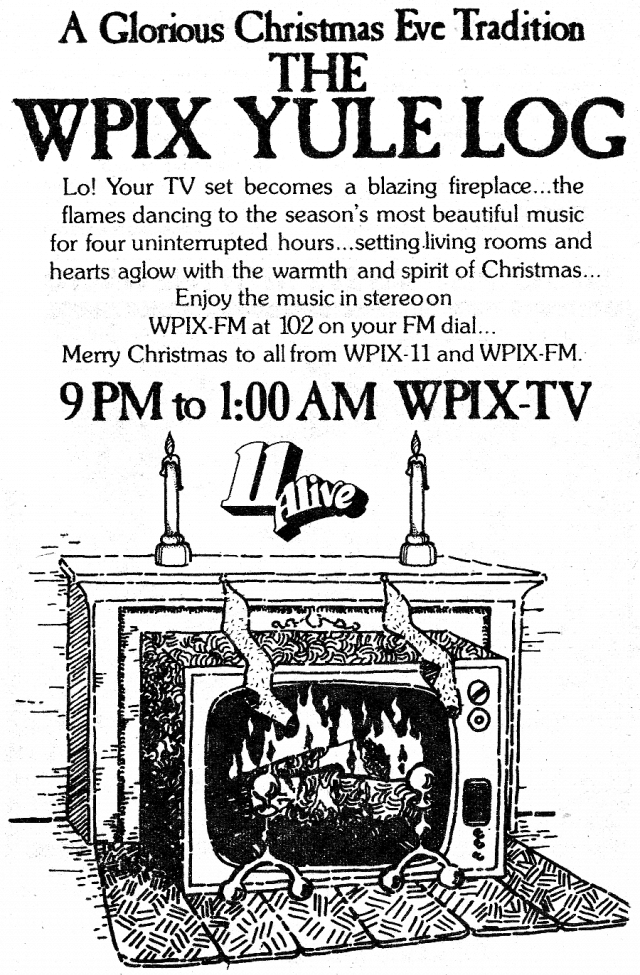
An early example of American “Slow TV”

If WestJetChannel doesn’t fly, viewers can sink or swim with the Aquarium Channel, showing nothing but tropical fish. If that is all wet, dry off by the fire — Swiss Chalet’s Rotisserie Channel, featuring slowly roasting chickens. Unable to get away on holiday? Rogers customers could instead spend quality time with The Cottage Channel. Now they can watch WestJet take other people to the places they wish to see, but can’t afford to visit after paying the cable bill.

Rogers isn’t responsible for inventing “Slow TV.” WPIX-TV’s “Yule Log” was one of the earliest examples, treating apartment-bound New Yorkers to a roaring fire at Gracie Mansion beginning Christmas Eve, 1966. The original three-hour program was actually a 17-second 16mm film loop accompanied by a simulcast of WPIX-FM, which provided accompanying traditional Christmas music. In 1970, the original worn-out film was replaced with a 7-minute 35mm film loop shot in California and still seen today.

Norsk rikskringkasting, the Norwegian Broadcasting Company has made “Slow TV” their own, much to the delight of Scandinavian viewers.

In 2011, NRK broadcast 134 hours non-stop of a cruise ship going up the Norwegian coast to the Arctic, winning the world record for the longest continuous TV program. Millions of Norwegians tuned in. In February, it aired a 12-hour show on firewood, featuring discussions about stacking and chopping and a debate on whether the bark should face up or down. At least 20% of Norwegians watched the event.

Last Friday, Norway’s biggest broadcaster aired 12 hours of knitting, complete with needle tips and a how-to on knitting a cover for a Harley Davidson motorbike. The event started with  sheep shearing in the studios of NRK2 followed by teams furiously trying to break the world record for the fastest knitted sweater.

“You can argue that the national knitting night is the feminine response to the firewood show,” said NRK spokeswoman Sidsel Mundal.

“We’ll dive deep into the world of knitting, then from midnight, we’ll turn down the pace, if that’s even possible,” said producer Rune Moeklebust. “We’ll watch the arm of a sweater get longer and longer; it will be fascinating, but pretty strange TV.”

NRKWho needs 5-Hour Energy when you can watch that.
The National Knitting Evening turned out to be such a ratings smash, rights for the concept have been sold to U.S.-based LMNO Productions for reconceptualization.

Norwegians celebrate “Slow TV” partly as a backlash to artificial drama generated by the reality-TV craze that has swept across Europe and North America.

Flying until Feb. 2, 2014, WestJetChannel can be found on Ch. 206 on Rogers Cable in Ontario, New Brunswick, and Newfoundland.

[flv width=”640″ height=”380″]http://www.phillipdampier.com/video/WestJetChannel Promo 11-12-13.mp4[/flv]

A promo for WestJetChannel, now on your Rogers Cable lineup. (0:42)

Keeping Providers Honest: FCC to Announce New Crowdsourced Mobile Broadband Speed Test

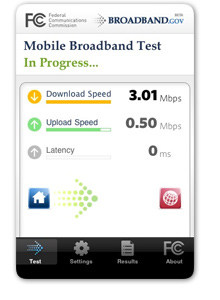
fcc_appAre you getting the mobile broadband speeds your provider advertises for its whiz-bang 4G network? How do you know which carrier really delivers?
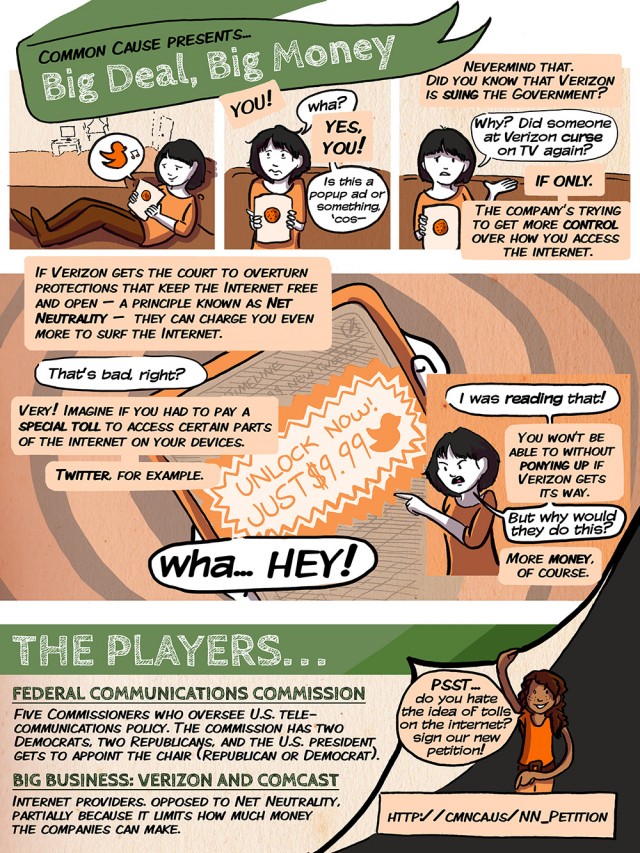
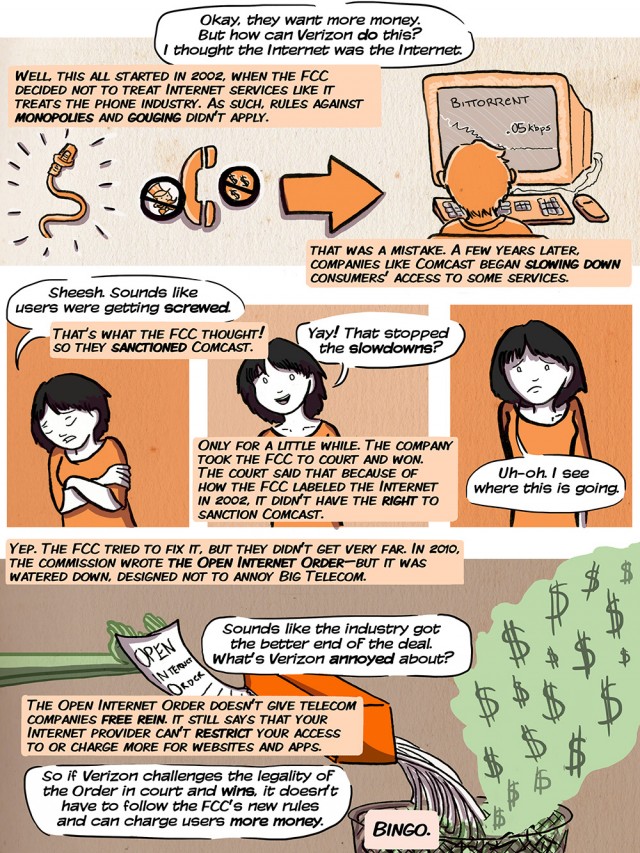

The Federal Communications Commission is hoping you can help them find out with a free Android app to be unveiled on Thursday.

The FCC has successfully used volunteer crowdsourcing before to keep wired Internet Service Providers honest through its “TestMyISP” speed measurement project for home broadband connections. When the first results were announced, an embarrassingly bad rating for Cablevision forced the cable company to quickly beef up its broadband infrastructure to match the speeds it promised customers.

Now the FCC’s new chairman Tom Wheeler hopes a similar effort will help the federal agency understand whether the promises wireless carriers make to customers are actually being kept.

With wireless broadband gaining in prominence, the FCC wants to do a better job monitoring a service most Americans use in some form while on-the-go. If providers like AT&T and Verizon Wireless are caught dramatically underperforming in coverage and speed, the agency may take that into account as part of its mission of regulatory oversight.

Consumers will also benefit from having an unbiased source that can offer regular analyses on the speed and performance of each carrier — useful information to have before being locked into a two-year contract.

Verizon, AT&T, T-Mobile, and Sprint are among the carriers agreeing to take part in the speed test project.

The FCC Speed Test app will initially be available for Android smartphones. There are no details about the release date of an Apple iOS version of the app, but the FCC’s Mobile Broadband Speed Test home page shows links (not yet active) for both versions of the app.

HissyFitWatch: Cablevision Ends Discounts for Disloyal Subscribers; One Promotion Per Customer

'Disloyal Cablevision customers looking for discounts are dead to us.'

‘Disloyal Cablevision customers looking for discounts are dead to us.’

Cablevision is fed up with disloyal customers bouncing between the cable company and other providers when promotional discounts expire.

After losing 13,000 broadband, 18,000 voice, and 37,000 television customers, Cablevision CEO Jim Dolan said the company has stopped offering any further discounts to customers that received them once before.

“The customer that has been bouncing from one company to another on promotional/repetitive discounts has hit a dead-end with us,” Dolan told Wall Street analysts during a conference call.

All customers with promotions will now be tracked to prevent extensions or further discounts once the special rates expire. Dolan confirmed the ban will also extend to customer retention offers.

Customers who shop primarily on price in Cablevision’s service area have traditionally flipped between AT&T U-verse, Verizon FiOS and the cable company every few years, usually switching after a promotion expires or rates are increased. Because of fierce price competition, new customers can receive a triple play package of broadband, phone, and television service — including equipment, for less than $85 a month for at least one year. Regular prices are considerably higher.

Cablevision lost most of its departing New York and New Jersey customers to Verizon FiOS, but has been more successful fending off competition in Connecticut, where AT&T has the least capable broadband network among the three providers.

cablevisionAll three companies have attempted price increases over the last few years with mixed results. Cablevision’s eight percent rate hike on broadband this year may have been too much for some customers who shopped around and found a better deal with the phone company.

Despite the loss in customers, Dolan remains firmly committed to more rate hikes, especially for broadband service, noting its speed and features (including an extensive Wi-Fi network) deliver enough value to sustain further price increases.

Cablevision clearly hopes competitors follow its lead and end promotional rate double-dipping as well. If they do, customers will find themselves locked in with regular pricing regardless of the provider they choose.

Some analysts are skeptical Cablevision’s hard-line will last, especially if subscriber losses mount. Cable operators have attempted to restrict promotions in the past but tend to ease them if market share suffers. Despite the third quarter customer retreat, Cablevision’s rate hikes delivered $336 million in broadband revenue during the last three months, an increase from $308 million earned the same time last year.

Search This Site:

Contributions:

Recent Comments:

Your Account:

Stop the Cap!