Home » Rural Broadband » Recent Articles:

Whine & Cheese Festival: Providers Complain About Broadband Stimulus Having Too Many Rules, Might Create… Competition!

Angry young business man on white background“It helps no one if broadband subsidies flow to ‘overbuilders’….” Matt Polka, American Cable Association CEO

“We will have government-created competition.” Cable One senior vice president and chief sales and marketing officer Jerry McKenna

America’s cable companies are having fits of anxiety over $7.2 billion dollars in broadband stimulus money that isn’t just going to fall into their laps.  “There are a lot of strings on that money,” one executive told Multichannel News this week in a piece that truly feels for the plight of the nation’s cable operators, concerned that billions of dollars could end up stimulating competition in the rural broadband marketplace.

The horror.

Granted, there are some concerns with some specific conditions which will likely represent little or no impediment to big regional telephone companies, and those like Frontier Communications, which specialize in servicing rural customers (and will likely apply for a substantial amount of broadband stimulus money), but will potentially lock out a lot of “mom and pop” operators.

Among them are requirements that a “first lien” be granted to the Rural Utilities Service, a USDA government-run administrator of the broadband program.  That has some banks, which small providers would likely use to finance some up front construction costs, up in arms.  A first lien would leave the government first in line for any asset recovery from a failed project, not the bank.

But some small providers are also upset with a requirement that any completed projects be held within that provider’s portfolio for a minimum of 10 years.  That provision, according to government officials, was added to prevent bottom feeder “flippers” from creating new companies tailor-made to fit broadband grant criteria, receive substantial amounts from the government to build projects, and then quickly sell them to the highest bidder when complete, pocketing the profits.

But the overwhelming concern expressed by 70% of cable operators surveyed by the American Cable Association at their ACA Independent Show held in late July is the fear of competition.

Are you concerned about the government funding competitors in your market?
Yes 70%
No 29%

Many small-operator executives said that they feared the broadband stimulus would create competition — one said the money would go to “charlatans who would ruin the business.”

Cable One senior vice president and chief sales and marketing officer Jerry McKenna, who after his panel session at the show said that his MSO will likely apply for two or three broadband projects, was even more direct.

“We will have government-created competition,” he said.

As a result of the realization that free government money was simply not going to fall from the sky into their hands, many of the nation’s cable operators have stomped their feet and thrown fits, finally resulting in more than half declaring they were either not likely or absolutely certain they would not apply for a penny.  It’s their hope the federal government will see a dearth of applications, assume the process is too onerous, and dramatically loosen up the rules.

“If they get an overwhelming number of applications, the administration will see this [program] as a success,” American Cable Association director of regulatory affairs Ross Lieberman said at the show. “If there are not that many applicants, if there is no incumbent interest, we can expect changes to this program.”

Changes have already been made at the behest of lobbyists, who are now given a freer reign to pursue broadband policies more amenable to their clients.  Also changed are the definitions of what constitutes an underserved or unserved area, and with the broadband mapping project at risk of being run by the providers themselves, those definitions could eventually become meaningless anyway.

But providers fearing an “overbuilder,” a competing company that strings its own cables and provides true competition, need not panic just yet.  As they nail bite about the decision to apply or not apply for broadband stimulus money, risking if they don’t a competing provider may, the government has graciously provided a 30 day window for incumbent providers to submit a formal challenge of other applicants for up to 30 days after the deadline.

Every application will be publicly posted online at BroadbandUSA.gov.

ISPs Tell Feds To Stop Asking Too Many Questions; Government Says OK

Phillip Dampier August 7, 2009 Public Policy & Gov't, Rural Broadband 1 Comment

topsecretTelecommunications providers have convinced the Commerce Department to stop asking too many questions about the Internet service their customers receive, including the fees providers charge and the speeds provided, because the information is “proprietary” and “useful to our competitors.”

It’s all a part of the federal government’s broadband mapping project — to create detailed maps showing who has access to what types of broadband, at what speed and at what price.  Those areas deemed underserved would be eligible for substantial broadband stimulus grants, paid for by taxpayers, and likely will be received by many of the same ISPs who are telling the government to butt out of their private business affairs.

In lieu of the detailed customer information the Commerce Department had been seeking, Verizon, Comcast, and AT&T have agreed to provide generic data about prices charged on a per-block basis and will also clue in the government as to the maximum speeds marketed to consumers, even if those speeds are not actually provided to individual customers.

Consumers Union was not happy with the Commerce Department’s decision, likening it to a cave-in.

Because the federal government will not allow the public to learn about the actual speeds achieved by customers, companies can continue to market and charge for an Internet service that doesn’t come close to achieving the speeds promised in advertising, according to Joel Kelsey, a telecommunications policy analyst for the consumer watchdog.

ISPs, particularly telephone line-based DSL service, routinely advertises speeds “up to” a certain level, but never guarantees those actual speeds will be achieved by customers.  DSL service is sensitive to the quality of the telephone line and the distance of the cable between the customer’s home or business and phone company facilities.  Longer distances always mean lower speeds, often much lower.

Cable companies rely on a shared bandwidth model, which means every home in a neighborhood shares a set amount of bandwidth.  The more users on the system, the slower the maximum speed.  In areas where cable companies have not upgraded service, or split neighborhoods up to reduce the number of residents sharing one “node,” speeds can dramatically drop at peak usage times.

“The actual speeds delivered to particular areas simply doesn’t match up,” Kelsey said. “The government gave a lot and received very, very little in return.”

ISPs complain that revealing these details will be useful information for competitors, and have steadfastly refused to provide it, despite the potential for those same companies to enjoy taxpayer dollars in the form of grants to finance specific broadband projects.

Since the federal government will rely heavily on the broadband mapping project to determine what projects have merit and meet an immediate need, who controls the map will have major influence on what projects will appear most eligible for stimulus money.

Public Knowledge continues to criticize the broadband mapping project as already being overrun by telecommunications special interests.  Connected Nation, a group tailor-made to be granted approval for statewide mapping initiatives, has a board heavy with telecommunications corporation representation.

Art Brodsky, communications director of Public Knowledge, has implied the telecommunication ‘fix’ is already in, but conceding even more to the telephone and cable industry threatens to turn the broadband stimulus program into a creature of big telecom.

“The whole mapping exercise is already on its way to being substantially corrupted as the telecom industry’s creation, which exists to prevent data from being public, is collecting mapping contracts right and left through the efforts of their lobbying and influence. There is absolutely no reason for the National Telecommunications & Information Administration (administering the data collection process) to concede on the data collection. NTIA and its supporters in the Administration and in Congress should realize that if agency backs down on this assault from the industry, there will be that much less of value worth saving,” Brodsky wrote.

“At the end of the day, somebody is going to be in control of the mapping. It will either be the public, and the public interest, as represented by NTIA, or the industry,” he concluded.

The cable and phone companies declared victory.  The American Cable Association, which represents smaller independent and rural operators which stand to receive a substantial amount in stimulus taxpayer funding, applauded the decision saying the government backing down would “improve and expedite the mapping effort,” said ACA president Matthew Polka.

Surprisingly, Larry Landis, a Republican-appointed Indiana utility regulatory commissioner and chairman of the federal-state group that will be responsible for the mapping project, also applauded the Commerce Department’s flexibility on getting access to detailed information.

Landis has past ties, albeit on the periphery, with AT&T through his former employer:

From 1985 through 1991, Landis was Vice President/Account Planning at an advertising firm informing the agency’s creative direction for clients such as Indiana Bell (now AT&T Indiana), at Handley & Miller, Inc.

The Center for Public Integrity graded the state of Indiana with a “C” for disclosure of utility commissioner outside ties in 2005.  No apparent direct ties to telecommunications interests were found in Landis’ 2004 disclosure, the last one available from the Center.

Up to $350 million taxpayer dollars will be earmarked for the mapping program, tainted as it might be according to critics.  The final map will be vital to determine what recipients will qualify for the $7.2 billion dollars in available funding for grant-worthy broadband projects.  The money will be awarded to for-profit and non-profit groups, typically those that can best tailor their funding request to the requirements specified in the grant application process.

Eastern Ontario Gets Windfall for Broadband Expansion

Paul-Andre Dechêne August 6, 2009 Canada, Community Networks, Public Policy & Gov't, Rural Broadband Comments Off on Eastern Ontario Gets Windfall for Broadband Expansion
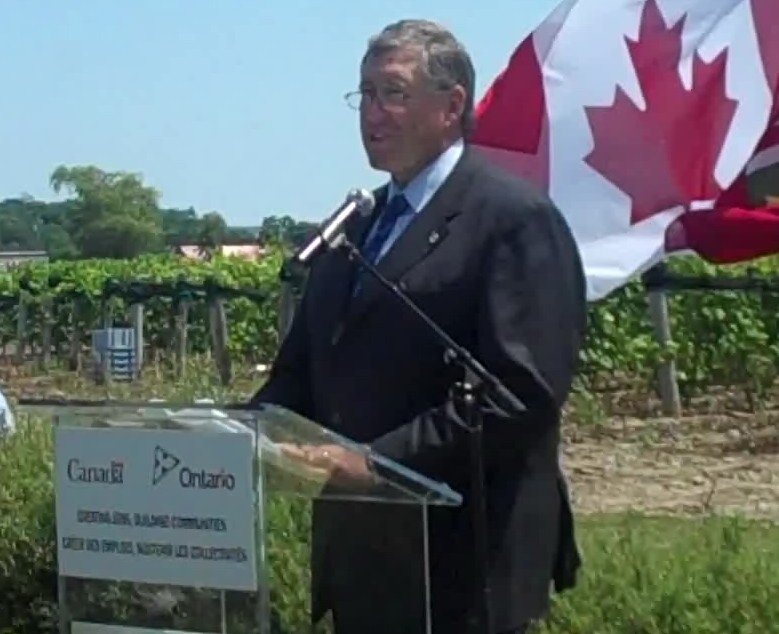
Daryl Kramp, MP for Prince Edward-Hastings, Announcing Broadband Initiative in eastern Ontario

Daryl Kramp, MP for Prince Edward-Hastings, announcing broadband initiative in eastern Ontario

Daryl Kramp, Member of Parliament for Prince Edward-Hastings, on behalf of John Baird, Canada’s Transport and Infrastructure Minister, and the Honourable Leona Dombrowsky, Minister of Agriculture, Food and Rural Affairs for Ontario, announced that the construction of a 21st century broadband network is a step closer in Eastern Ontario. The Government of Canada and the Province of Ontario have together set aside up to $110 million for the project.

“Our Government is delivering on investments that help create jobs and build sustainable communities,” said MP Kramp. “The construction of a broadband network in Eastern Ontario will help to expand and improve local businesses and their services, and significantly boost our regional economy.”

“Delivering broadband to Eastern Ontario is a critical infrastructure investment that will bring more industry to the region and create the jobs that will help our towns and rural communities prosper,” said Leona Dombrowsky, Ontario Minister of Agriculture, Food and Rural Affairs.

“Today’s announcement marks a major step forward in helping to secure the future prosperity of Eastern Ontario. Having a high-speed, high-capacity broadband network is one of the most important assets that we can utilize to assist us in unlocking the ingenuity and creativity of our people and businesses. We are extremely grateful to both the federal and provincial governments for their tremendous financial support for this project,” said Ron Emond, Chair of the Eastern Ontario Wardens’ Caucus.

The governments of Canada and Ontario will each set aside up to one-third of total eligible costs of the project, to a maximum contribution of $55 million. Eastern Ontario Wardens’ Caucus (EOWC) Incorporated and private sector partners will provide the remaining funding, with EOWC Inc. contributing up to $10 million. The total eligible costs of this project are estimated to be $170 million.

Once completed, the network will provide broadband service to the residents and businesses in many of the counties of Eastern Ontario (Hastings, Peterborough, Renfrew, Northumberland, Haliburton, Frontenac, Lanark, Prince Edward, Lennox & Addington, the United Counties of Stormont, Dundas & Glengarry, the United Counties of Prescott & Russell and the United Counties of Leeds & Grenville) as well as the City of Kawartha Lakes.

Many of these areas already have rudimentary broadband service in the form of DSL and limited cable television penetration, but many DSL accounts are speed limited to 1-3Mbps, which the EOWC has determined to be woefully inadequate for broadband applications of the near future.

Canada’s broadband initiatives outside of the most rural communities are starting to define the bare minimum network speed at 10Mbps for downloading if the network is to sustain viability in the future.  With a goal of reaching up to 95% of eastern Ontario with broadband service in the next four years, a variety of technologies are likely to be considered depending on the population being reached.  Those living in the most rural areas are likely to find wireless service the most viable option, delivered with a form of WiMax.  Rural enclaves or neighborhoods outside of community centers may continue to be served by DSL service for some time.  But those in suburban and more urban community centers should have access to advanced forms of DSL, fiber optics, or high speed wireless service.

Many public Wi-Fi “hotspots” will be established at community gathering points, accessible to visitors at no charge.

The Government of Canada’s 2009 Economic Action Plan is accelerating and expanding the existing federal investment of $33 billion in infrastructure across Canada with almost $12 billion in new infrastructure stimulus funding over the next two years.

Through the 2009 Ontario Budget – Confronting the Challenge: Building Our Economic Future – the province is investing $32.5 billion in infrastructure for the province of Ontario over the next two years, including a $5 billion contribution from the federal government that will support more than 300,000 jobs and strengthen Ontario’s economy.

[flv width=”640″ height=”360″]http://www.phillipdampier.com/video/Eastern Ontario Broadband 8-2009.flv[/flv]
Eastern Ontario residents speak about the importance of broadband

Incremental Progress: Verizon Makes DSL Available to Nearly 200 Lines in West Virginia

Phillip Dampier July 22, 2009 Broadband Speed, Rural Broadband, Verizon 2 Comments
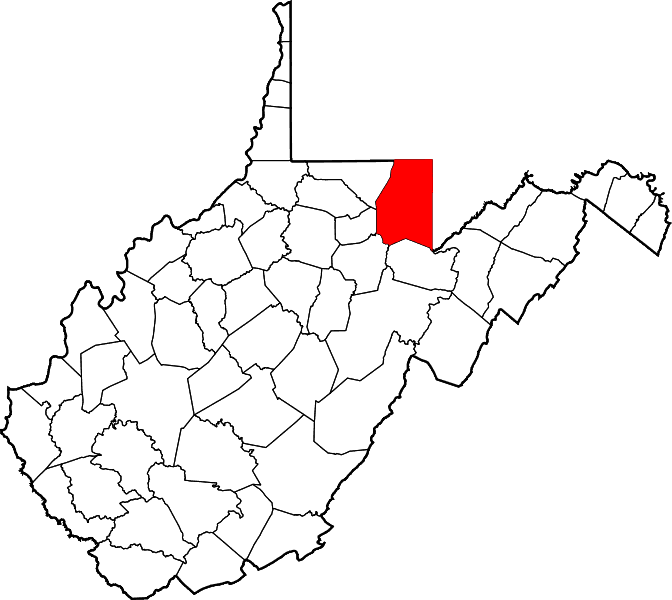
Preston County, WV

Preston County, WV

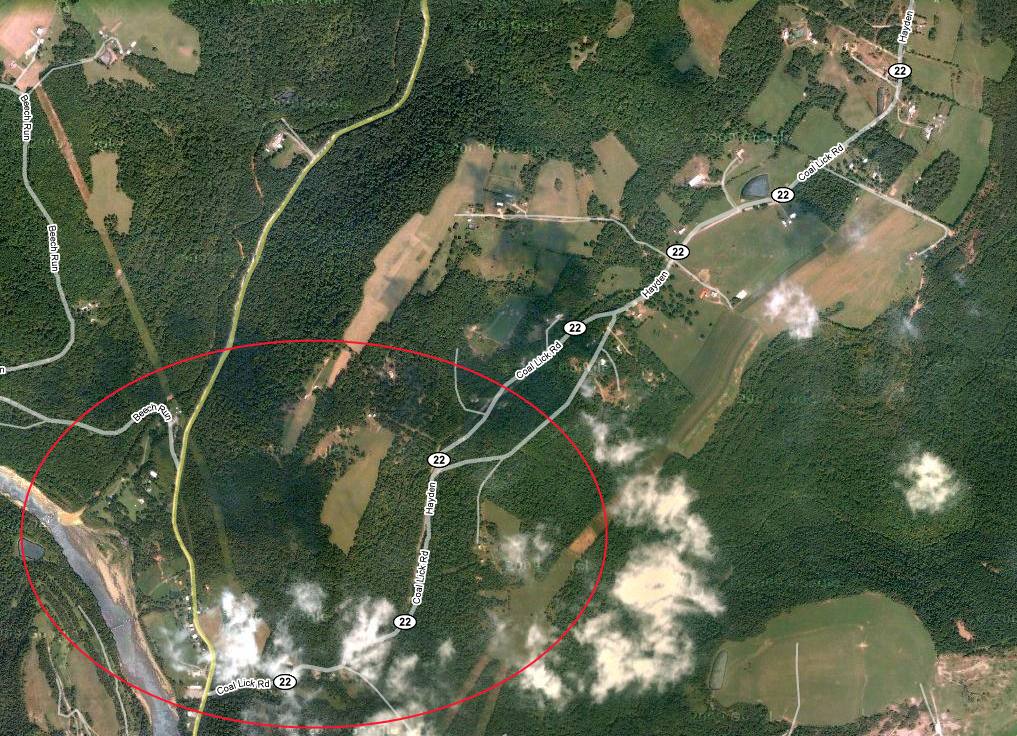
Verizon issued a press release this morning celebrating the availability of DSL service to nearly 200 new lines in Albright, West Virginia.  They even pinpointed the service expansion to “areas along Coal Lick Road near the intersection of Route 22 and 26.”

Satellite image showing the sparsely populated Coal Lick Road/Rt. 26 Intersection (click to enlarge)

Satellite image showing the sparsely populated Coal Lick Road/Rt. 26 Intersection (click to enlarge)

While that presumably makes residents on Coal Lick Road happy, vast areas of West Virginia remain unserved by DSL or any other broadband service option, except for prohibitively expensive satellite Internet.  Preston County has 30,000 residents spread 0ut over 651 square miles, and is typical of many sparsely populated counties in West Virginia.  The nearest large city is Pittsburgh, Pennsylvania.

Verizon has stopped referring to its broadband solution for copper wire telephone networks as “DSL,” now marketing it as “Verizon High Speed Internet” instead.  Speed is in the eye of the customer, however.  Like most rural areas with Verizon DSL, the entry level tier offers speeds only up to 1Mbps downstream and 384kbps for the upstream.  Customers willing to pay more can select the “premium” service offering up to 3Mbps downstream and 768kbps upstream.  In larger towns and smaller cities, service up to 7.1Mbps may be available.

“Verizon is enabling more residents and businesses across West Virginia to make the high-speed connections that are important to them,” said B. Keith Fulton, president of Verizon West Virginia.  “Verizon’s investment in the Albright area means that more customers have access to affordable High Speed Internet service, backed by the reliability and security of Verizon’s network.”

Verizon is also demonstrating its commitment to West Virginia by leaving the state, intending to sell off its telephone service to Frontier Communications, a deal still pending regulatory approval.

For West Virginia, broadband expansion to just a few hundred homes, warranting a press release, demonstrates the incremental, slow progress of broadband expansion outside of urban America.

Rural Ontario Communities Happy to See Broadband Arrive… Even If It’s From Bell

Paul-Andre Dechêne July 21, 2009 Bell (Canada), Canada, Rural Broadband Comments Off on Rural Ontario Communities Happy to See Broadband Arrive… Even If It’s From Bell
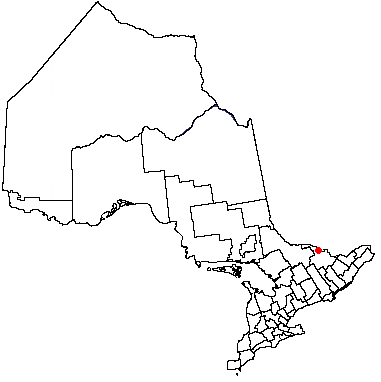
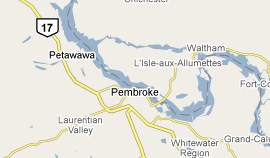
Petawana and Laurentian Valley township are located in northeastern Ontario, Canada.

Petawawa and Laurentian Valley township are located in eastern Ontario, Canada.

The days of dial-up are finally coming to a close for large portions of two rural Ontario communities — Petawawa and Laurentian Valley Township, with the announcement that the Ontario Ministry of Agriculture, Food and Rural Affairs has approved a grant application to help expand broadband access to reach at least 95% of residents.

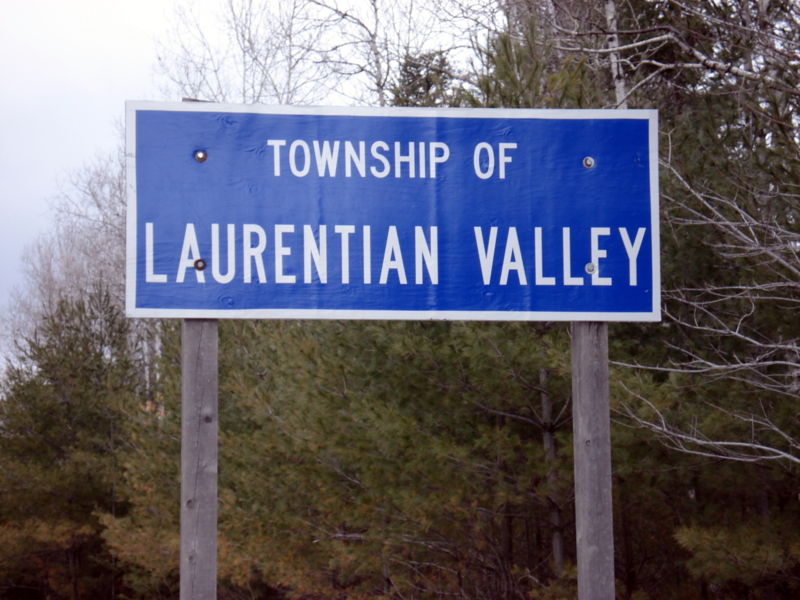
800px-LaurentianValley-SignA joint broadband project committee met Monday for the first time to review the project’s budget and rollout plans.  The two communities joined forces to appeal for broadband connectivity, and now will work together to administer the project.  Laurentian Valley Councillor George Hodgkinson will serve as committee chairman and Petawawa Councillor Treena Lemay as vice-chairwoman.

The broadband project budget is $2.1 million dollars: $708,908 from the Canadian government and an additional $1.8 million dollars from Bell Aliant, which will be spent on additional towers and switch equipment.

Laurentian Valley township (population 9,265) and Petawawa (population 14,651) are located west of Pembroke, the nearest city.  Mayors from both communities praised the project.  Petawawa Mayor Bob Sweet is pleased the broadband issue is being addressed.  It’s an issue he heard about “constantly” from town residents.  Laurentian Valley Mayor Jack Wilson also feels broadband access is long overdue in his community, particularly because residents’ tax dollars helped construct the nation’s broadband infrastructure.  His residents petawawahave “waited a long time to get high-speed Internet at their homes.”

The Bell Aliant broadband proposal envisions traditional DSL service for more populated neighborhoods and community centers and Inukshuk Wireless broadband delivered from existing Bell towers to reach those who live too far away for DSL service or are located in particularly rural areas where DSL is not cost effective.  Inukshuk is an Inuit word that represents a beacon or a familiar place marker.  Inukshuk Wireless is a joint project between Bell and Rogers Communications to provide wireless broadband connectivity in Canada’s rural communities.

Planned for completion by 2010, the joint project hopes to cover 82% of the areas currently unserved with any broadband service.

Search This Site:

Contributions:

Recent Comments:

Your Account:

Stop the Cap!