Home » Rural Broadband » Recent Articles:

Sacred Wind Communications Voted Most Inspiring Small Business in America, But Rural Broadband Remains Uninspired

Phillip Dampier October 19, 2009 Broadband Speed, Editorial & Site News, Public Policy & Gov't, Rural Broadband, Video, Wireless Broadband Comments Off on Sacred Wind Communications Voted Most Inspiring Small Business in America, But Rural Broadband Remains Uninspired
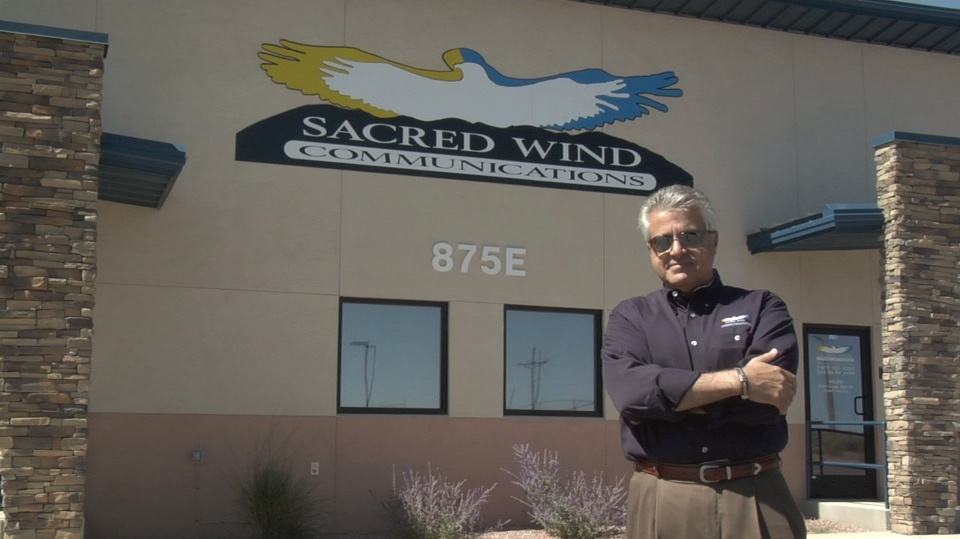
John Badal, CEO of Sacred Wind Communications

John Badal, CEO of Sacred Wind Communications

NBC Universal and American Express today announced Sacred Wind Communications (Albuquerque, N.M.) as the winner and most inspiring small business in the “Shine A Light” program, determined by public vote.

Sacred Wind Communications will receive $50,000 in grant money and $50,000 in marketing support from American Express, and will be featured on MSNBC’s small business show, “Your Business.”

John Badal, described by the Shine A Light Foundation as an entrepreneur, founded Sacred Wind to provide service across the largely ignored Navajo Reservation in New Mexico.  Fewer than 40% of the homes had access to even basic telephone service, provided by Qwest on what the foundation describes as a “dilapidated telephone system.”

Badal, along with a few others, thought Qwest’s turtle-like-speed to provide basic telephone service was not acceptable.

Badal should know — he was the former president of Qwest New Mexico from 2000-2004, overseeing that phone network.

During his involvement with Qwest, the frustration to wire the economically challenged Native American community in his area was daunting.  He told Fierce Broadband Wireless that laying copper cable throughout a rugged, rural desert area to reach a small number of customers who couldn’t afford to pay much for service wasn’t economically feasible for Qwest.

In four years, Qwest only managed to bring phone service to 42 new customers–out of thousands. “It took us two years to get through the rights of way process. Six of those homes had moved by the time the process was completed. It would have taken 45 years to reach 70 percent of the homes in our territory,” Badal said. “We needed a different technology altogether. We needed to go wireless.”
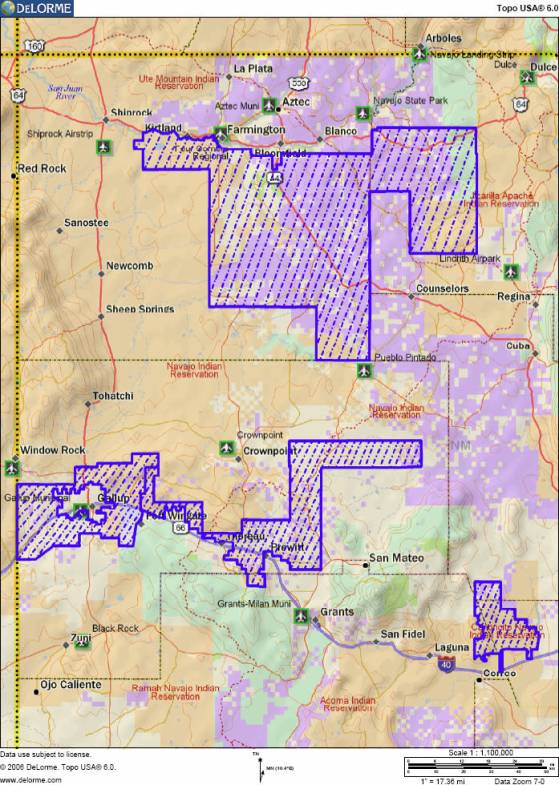
Sacred Wind's service areas (click to enlarge)

Sacred Wind's service areas (click to enlarge)

Badal decided to build a for-profit telecommunications company with a business plan that would depend on funding from the government.

“The only way any company could hope to provide service to the Navajo Nation is with the help of the Federal Communications Commission’s Universal Services Fund,” Badal told New Mexico Business Weekly in 2005.

“We can make this affordable, where Qwest cannot,” says Badal, who expects half of the cost to be picked up by government funding. “That is a necessary part of this equation. Without that, the Navajo cannot be served.”

Virtually every American pays into the Universal Services Fund through a charge levied on telephone bills.  The funding underwrites the expense of providing rural America with access to basic telecommunications services.

In 2004, the same year Badal left Qwest, the company agreed to sell its telephone business on the Navajo Reservation to Badal’s new company.  Sacred Wind, which the company says “evokes a sense of connection between what we do – to send communications over the air – with a larger-than-life purpose for starting this business,” launched service two years later in 2006.

Sacred Wind uses recently developed wireless technology to provide phone service to 2,700+ customers, using both point-to-point wireless and fixed WiMAX to reach as many customers as possible in the sparsely populated desert region.  It’s a challenging proposition for any company, considering most of their service area has less than one home per square mile.  Even when finished constructing their network, Badal estimates there will only be two or three homes served per square mile.

One third of Sacred Wind’s customers live in Navajo or federal government sponsored public housing, another third live in small clusters of a half dozen homes separated by several miles, and the last third live at least a half mile from the nearest neighbor.  Most are economically disadvantaged and have household incomes below $15,000 a year — 57.9% living below the poverty level.  More than two-thirds of reservation homes have no telephone, with some driving up to 30 miles to reach the nearest pay phone.  Several lack access to electricity, which makes wireless phone service and broadband even more challenging.  Sacred Wind is exploring solar options to serve these unpowered homes.

The benefits achieved from Sacred Wind’s focus on their service area are obvious – they know the landscape, the culture, the economics, and the people.  The company will work on problems that a large multi-state carrier like Qwest would not.  Technicians trying to reach one customer five miles away from the nearest wireless base station could not get service until a technician experimented with bouncing the three gigahertz wireless signal off a granite cliff face to extend coverage, which worked.

A company specializing in providing service to rural Native Americans, that also has a non-profit arm dedicated to computer training, provides scholarships, and e-commerce opportunities for Native Americans, is a natural for recognition, and the public responded, calling Sacred Wind’s mission inspiring.

“It’s a real honor to be voted most inspiring small business in the Shine A Light program,” Badal said. “It’s so exciting and rewarding to start your own business and be able to make an impact on the community. Through the support we will receive from American Express as winner of this program, we will be able to further extend our commitment to serving the Navajo people with advanced technology and educational resources.”

Since August, people across the country have nominated thousands of small businesses for the “Shine A Light” program. Three finalists were ultimately selected with the help of host and entrepreneur Ellen DeGeneres, fashion designer and entrepreneur Diane von Furstenberg and MSNBC’s small business expert and host JJ Ramberg.

[flv width=”480″ height=”320”]http://www.phillipdampier.com/video/sacred wind intro.flv[/flv]

A one minute introduction to Sacred Wind Communications

Sacred Wind Broadband Speed/Pricing

Sacred Wind Broadband Speed/Pricing

In addition to telephone service, Sacred Wind also provides Internet access to its customers, and here is where the story becomes considerably less inspiring.

Sacred Wind’s “broadband” service for most affordable tiers fails to qualify as “broadband” at all, using the FCC standard of 768kbps.  Pricing is exorbitant and speeds are slow.

It self-describes its dial-up option as “stable, fast, and affordable.”  The “affordable” claim may be true when comparing pricing with the first broadband tier that actually meets the minimum definition of broadband – $49.95 a month for 768kbps service.  Paying $79.95 a month will bring you their maximum speed offering — just 3Mbps.

The company also sells customers annual contracts to avoid the $99 installation and $65 equipment fees.

Still, for those who have never had telephone service, much less Internet access, it’s considered by many residents to be a good beginning.  The company is amenable to the idea of raising those speeds when technically and financially feasible.

[flv width=”480″ height=”320″]http://www.phillipdampier.com/video/Fujitsu Sacred Wind.mp4[/flv]

Fujitsu showcases Sacred Wind Communications and how it approached the technological challenges involved in providing service to the Navajo Reservation [8 minutes]

Unfortunately, like its bigger telephone brethren, Sacred Wind is not entirely free from the telephone industry politics that often lobbies for anti-consumer policies.  A concerning document on Sacred Wind’s website promotes a questionable legislative agenda, including support of legislation that would permit providers to “create fair compensation in network use by identifying traffic on our networks,” which is a Net Neutrality no-no if it applies to their broadband network.  Another mysterious bullet point, not well explained, objects to “video programming and broadcasting practices that make it difficult to provide an affordable product to our customers.” That could apply to wireless frequency allocations or traffic on their broadband network — it’s not well defined.

While the FCC works on its goal of providing broadband access to underserved Americans, actual case studies illustrating “successes” like Sacred Wind that only manage to bring 3Mbps service to rural areas underline the need for Universal Services Fund reform.  Dedicating additional economic assistance to construct considerably more advanced networks to meet the needs of an increasingly high bandwidth Internet is essential to correct the urban-rural digital divide.  The original purpose of the USF to guarantee basic phone service in rural areas was a noble idea a decade ago, but that was then and this is now.

As the pile of money in the USF continues to grow from Voice Over IP and mobile phone surcharges, it was only a matter of time before waste, fraud, and abuse also turned up.  The administrators of the USF have often wasted considerable amounts of that money on questionable projects in decidedly un-rural areas.  Redirecting, reforming, and broadening USF resources to cover broadband deployment in areas like the Navajo Reservation may be one of the only ways to build sustainable and equitable broadband access networks that are scalable and affordable, even for the most financially-challenged communities.  Providing 256kbps service for $30 a month doesn’t come close to cutting it in poverty-stricken communities.

Additional video coverage of Sacred Wind can be found below the jump.
… Continue Reading

Providing Internet in Rural America: Bland County, Virginia Expands Wireless Service Town By Town

Phillip Dampier October 16, 2009 Broadband Speed, Community Networks, Rural Broadband, Video, Wireless Broadband Comments Off on Providing Internet in Rural America: Bland County, Virginia Expands Wireless Service Town By Town
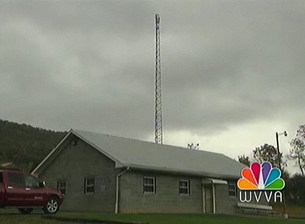
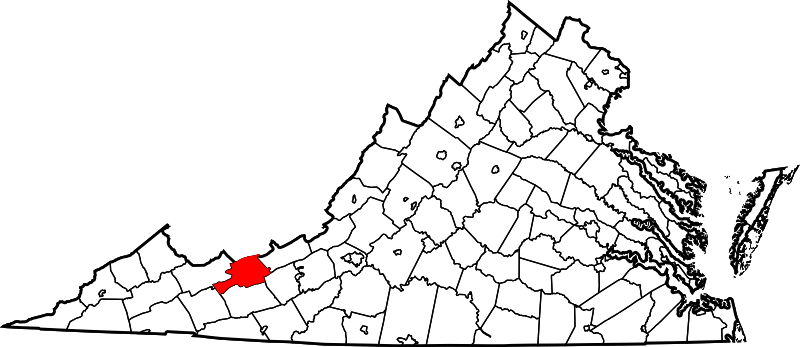
Mechanicsburg is located in Bland County, Virginia

Mechanicsburg is located in Bland County, Virginia

Sunday was an exciting day for the nearly 200 residents of rural Mechanicsburg, a small community in southwest Virginia.  It was launch day for the community’s new wireless “broadband” service, which turned the community into one large hot-spot, bringing Internet access to the community at speeds beyond dial-up.

The service expands on a Wireless ISP (WISP) network already serving the nearby communities of Rocky Gap and Bastian, and was funded by a broadband grant, with assistance from Rep. Rick Boucher (D-Virginia).

Residents can subscribe to the service, transmitted from an antenna tower located in each community, or visit the local community center, which will have computers available for Internet use.

antennaWhile the service represents an improvement over dial-up, it’s not exactly 21st century broadband.

The service, provided by Trificient Broadband Technologies, uses Frequency Hopping Spread Spectrum technology in the unlicensed 900MHz, 2.4 and 5.8GHz bands (also used by consumer wireless phones and wireless routers).

Last fall, Trificient owner Jim Ingram told SWVA Today that he defined broadband at anything above 256kbps.  Bland County’s BCNet WISP service provides 512kbps service for $27.95 per month with an annual contract and $99 installation fee.  The Federal Communications Commission currently defines broadband service at speeds of 768kbps or faster.

Providing wireless Internet service in the hilly terrain of southwestern Virginia can be challenging.  The antennas delivering the service have been mounted on antenna towers to be above nearby obstructions, and Ingram told the newspaper every customer gets an on-site survey to determine whether they can receive the service.  If they are within 10 miles of the antenna and have a reasonably clear signal, a small antenna is mounted on the customer’s home and service can begin.

The company offers faster service for a higher price, assuming the customer is close enough to the transmitter to be able to obtain higher speeds.

For rural customers with no option for cable television or DSL service, wireless service at these speeds can provide basic connectivity for e-mail and web page access, but utilizing the Internet’s higher bandwidth services like video and other streaming media can prove challenging.

[flv width=”320″ height=”240″]http://www.phillipdampier.com/video/WVVA Bluefield Mechanicsburg VA Gets Wireless Broadband 10-12-09.flv[/flv]

WVVA-TV Bluefield/Beckley, West Virginia covers the October 11th launch day in Mechanicsburg as wireless Internet service begins for nearly 200 residents in rural Virginia. [2 minutes]

Finland Joins Switzerland In Declaring Broadband “A Right” For Citizens

Phillip Dampier October 14, 2009 Broadband Speed, Community Networks, Public Policy & Gov't, Rural Broadband Comments Off on Finland Joins Switzerland In Declaring Broadband “A Right” For Citizens

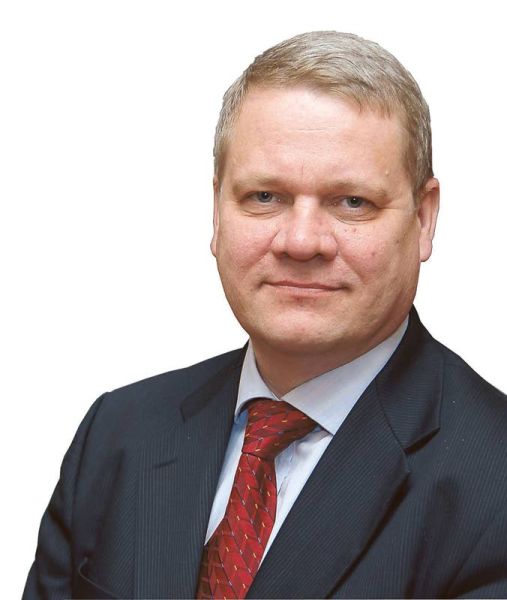
Suvi Lindén, Finland's Minister of Communications

Suvi Lindén, Finland's Minister of Communications

Yleisradio Oy, the public broadcasting service in Finland, today reported starting next July, every person in Finland will have the right to a one-megabit broadband connection.

The announcement from the Ministry of Transport and Communications makes Finland the second European nation to consider broadband service more than just a modern day convenience.

Minister of Communications Suvi Lindén said broadband service must be universal, and at equitable speeds throughout Finland.  Private providers have been unable or unwilling to bring universal service to the country, so the Finnish government is compelled to do the job they won’t.

“No-one can be left outside the day-to-day functioning of the information society. As the telecommunications network needed cannot be provided on market terms in all respects, its construction must be supported by public funds,” she said.

Permanent Secretary Harri Pursiainen confirmed Lindén’s views about universal access in a study concluding it is impossible to expect commercial providers to provide regionally equal service throughout the country.

Finland intends to construct an advanced broadband network, starting with the guarantee of 1Mbps minimum speeds for virtually every citizen.  The plan recognizes that reaching the most remote parts of the country will require a mobile broadband network, and have made provisions to tolerate lower speeds on those networks, for now.

But the Finnish government does not consider 1Mbps anywhere near adequate to provide 21st century connectivity.  It has declared that anything less than 100Mbps service is simply unacceptable in the new “information economy.”

The 100Mbps minimum service standard would be mandatory, and targeted to be achieved no later than 2015, if the recommendations are approved by the Finnish Parliament.

“Citizens and businesses need increasingly effective data transfer. This is necessary, among other things, for teleworking, business, e-commerce, and access to social and health services,” Lindén states.

Harri Pursiainen

Harri Pursiainen

Television broadcasting also faces a turning point in the next few years, as channels become more diverse and high-definition transmission enters the picture. Here, high-speed broadband is an essential factor,” Lindén stresses.

The report proposes that the state, regions and municipalities share in the costs of improving the telecommunications network in those areas where the target level for 2015 cannot be reached by commercial means. The purpose is for the Regional Councils to organize competitive bidding among the telecommunications operators.

Where public funds are needed to construct networks, money will be raised by auctioning off certain radio frequencies for commercial use, as well as a telecommunications tax levied on providers in the country, somewhat equivalent to the United States’ Universal Service Fund, which helps subsidize rural telephone service.

Finnish consumers can still elect not to purchase broadband service, and can still select among several providers, choosing the speed and technology they want for the connection.  The Finnish government will offer a “domestic help credit,” akin to a tax credit or subsidy, to help disadvantaged Finns purchase computers and other equipment to use broadband service.

Finland joins Switzerland in providing universal access to broadband.  The Swiss government was the first in Europe to mandate broadband service availability throughout the country as of January 1, 2008.  But the Swiss definition of broadband is much more limited, setting minimum acceptable speeds at just 600kbps downstream and 100kbps upstream.

Both the United States and the United Kingdom have universal service goals as well.  The UK government targets 2Mbps speed to “virtually all” homes by 2012, funded by a telephone line tax.

Thanks to Stop the Cap! reader Greg for the news tip.

Charter Cable to Bankers, Business Owners, a Former State Senator & 55 Others: Pay $1,850 Each for Internet

Phillip Dampier October 6, 2009 AT&T, Charter Spectrum, Rural Broadband 5 Comments
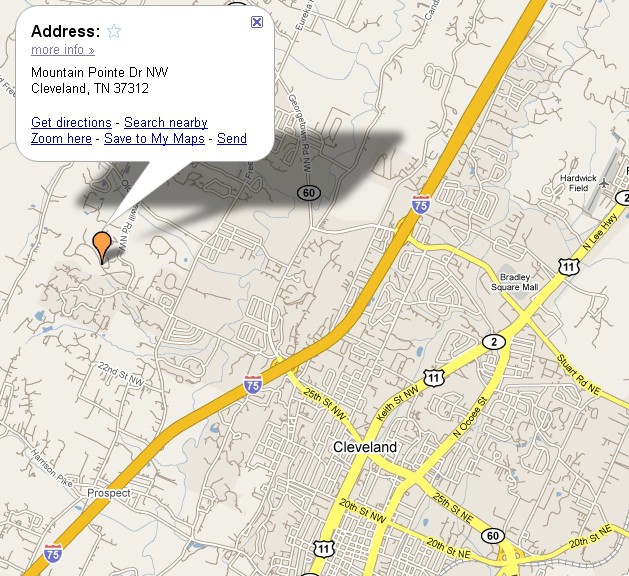
The Mountain Pointe subdivision, northwest of Cleveland, Tennessee

The Mountain Pointe subdivision, northwest of Cleveland, Tennessee

The rural broadband divide doesn’t just impact the middle class.

Residents of the affluent Mountain Pointe subdivision in Cleveland, Tennessee (any neighborhood with an extra “e” on end of the name always spells money) are unhappy to find a home life without broadband service.  Like many wealthy enclaves set outside of clustered suburban neighborhoods, homes are too few and far between in the subdivision, making it too expensive for Charter Cable to wire service there.

Charter Communications Director of Government Relations Nick Pavlis told The Cleveland Daily Banner that it was not profitable to provide service to the 55 homes affected.

Generally, Charter Cable will not wire a neighborhood or street if it costs much more than $500 per home to provide service, including the collective cost of bringing wiring to that area.  In the case of Mountain Pointe, Pavlis said it would cost the cable company $130,000 to run an underground cable 2.5 miles to supply the subdivision with service, and that’s “not a reasonable payback,” considering the company expects a 36-48 month return on investment.

Charter is willing to wire the subdivision, if the residents agree to pay $1,850 apiece to pay for the wiring expenses.

That is a cost some homeowners may be willing to pay, considering the affluence of many of them.  Among the residents, according to Cleveland Mayor Tom Rowland, are bankers, business owners, and a former state senator.

“These are the kind of people you want to provide service for — they would subscribe to all of your services if they were available,” said Rowland.

But before opening their wallets, residents are looking for alternatives.  Mountain Pointe resident Lou Patten told the newspaper he and his neighbors are frustrated because a newer subdivision on Freewill Road has service from both Charter and AT&T.

A few residents have braved wireless broadband as their best option, for now, but the neighborhood’s terrain makes service unreliable.  AT&T DSL service is not available because Mountain Pointe is too far away from the central office serving the neighborhood, located northwest of the city of Cleveland.

With Charter remaining intransigent, the mayor met with five of the neighborhood’s residents and State Rep. Kevin Brooks, City Attorney John Kimball and AT&T Regional Director Mary Stewart Lewis to see if AT&T could find a solution.

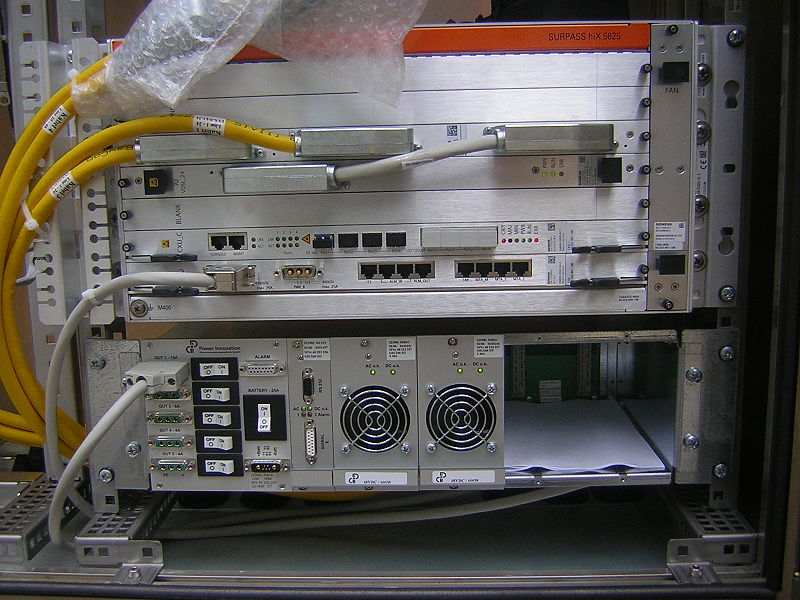
A DSLAM manufactured by Siemens designed for outdoor installation

A DSLAM manufactured by Siemens designed for outdoor installation

Tennessee’s statewide franchise agreement with AT&T points to Bradley County being wired for U-verse, a hybrid fiber-phone line TV, broadband, and telephone service, by July of next year.  But such agreements do not require 100% coverage and doesn’t guarantee Mountain Pointe service.

Lewis told the newspaper she would consult AT&T engineers for a possible solution to the problem.

“We’ve got to see where you are,” Lewis said.

In the short-term, AT&T could provide DSL service by installing equipment nearby that would reduce the distance between Mountain Pointe residents and AT&T’s switching equipment, using a device known as a Digital Subscriber Line Access Multiplexer (DSLAM).  It is commonly installed in more remote locations to provide DSL service in areas where direct service isn’t possible.

Life With Dial-Up: Rural BC Residents Make Due With the Slow Lane

Phillip Dampier September 24, 2009 Audio, Canada, Rural Broadband Comments Off on Life With Dial-Up: Rural BC Residents Make Due With the Slow Lane
Thirsk

Thirsk

Marla Thirsk is still on dial-up, and wishes she had broadband. The Ucluelet, BC artist has lived in the Spanish Banks area for nearly 30 years. While her friends and neighbors have broadband service, her subdivision does not. The Canadian Broadcasting Corporation’s Spark program, dedicated to discussing technology and culture, recently covered Thirsk’s predicament. Host Nora Young explores what online life means for Marla and her nearby neighbors.

Phone interview with Marla Thirsk, as part of September 20, 2009 CBC Radio One’s Spark program. (6 minutes)

You must remain on this page to hear the clip, or you can download the clip and listen later.

<

p style=”text-align: left;”>

Search This Site:

Contributions:

Recent Comments:

Your Account:

Stop the Cap!