Home » Rural Broadband » Recent Articles:

Senator Schumer Promotes Western NY Fiber Project: “Fiber Optic Broadband is the Erie Canal of the 21st Century”

Phillip Dampier April 5, 2010 Broadband Speed, Competition, Public Policy & Gov't, Rural Broadband, Video Comments Off on Senator Schumer Promotes Western NY Fiber Project: “Fiber Optic Broadband is the Erie Canal of the 21st Century”

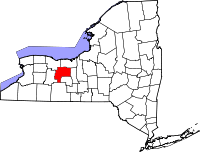
Ontario County, New York

Senator Charles Schumer (D-New York) visited Canandaigua Monday to promote Ontario County’s fiber optic broadband project, in hopes of securing federal funding to expand the fiber project into adjacent counties in the Rochester-Finger Lakes region.

Schumer likened fiber optic broadband development to other revolutionary transportation projects in New York’s past which transformed local economies, created jobs, and brought prestige to the region.

“One fact has proven true since the days of the Erie Canal: if you don’t have good infrastructure, you’re not gonna bring jobs, but when you do have good infrastructure, you are gonna bring jobs. And the fiber optic ring that we are talking about here in Ontario County is the Erie Canal of the 21st century. It’s that simple,” Schumer told an audience at the Center for Infotonics.

Ontario County began constructing a fiber ring more than a decade ago to improve connectivity across the often-rural county.  Bookmarked between high growth areas around Victor and Canandaigua to the east and Geneva to the west, large expanses of Ontario County are rural. Being a part of central New York’s Finger Lakes Region means the often hilly terrain and winding roads can make wiring expensive and difficult in certain areas.  But the prospect for 21st century connectivity has helped fuel growth — and jobs — into the region.
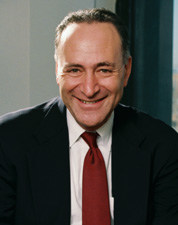
Sen. Schumer

Schumer wants FCC officials to visit Ontario County to explore the project as a potential blueprint for wiring other counties.

“We will not only put this region at the cutting edge of attracting new businesses that need high speed fiber optics, but we’ll do a service to the rest of the country by showing them how it can work,” said Schumer.

New York’s senior senator said he will aggressively pursue millions in federal funding to expand the project outside of Ontario County, and help complete the fiber optic network.

The senator may find some opposition to federal funding initiatives from incumbent providers Frontier Communications and Time Warner Cable, particularly if funds originate from broadband stimulus programs.  Both companies would likely object to federal spending on a fiber network that crosses areas both companies already serve.

Frontier Communications offers DSL service in many parts of Ontario County, and Time Warner Cable has wired most of the significant-sized towns and cities in the county.

The Ontario County project has been built without any federal stimulus money.

[flv]http://www.phillipdampier.com/video/Ontario County Fiber Schumer Visit 4-5-10.flv[/flv]

Sen. Schumer’s visit to Canandaigua, New York to promote Ontario County’s fiber project was covered in these three reports from YNN, WROC-TV, and WHAM-TV — all in Rochester, New York.  (6 minutes)
CNN: Wiring the Wrong America – Ski Resort Town for the Wealthy Gets Stimulus Money While Rural Minnesota Left Behind

One of the frustrations communities filing for federal grant money often face are the onerous terms and conditions that arrive with the application.  In many cases the rules are so complex, an entire industry of paid consultants to advise would-be grant applicants has grown up with the bureaucracy.  Miss one qualification and your potentially worthwhile application gets an automatic rejection.  Hiring an expensive consultant (often formerly employed in a government agency as an application processor) can often work miracles for a potentially dubious application.

Although some terms and conditions are included to prevent potential waste, fraud, and abuse or are intended to close potential loopholes, many others are influenced by elected officials trying to steer funding into projects they want to “pre-qualify.”  Often the intentions are obvious to would-be applicants, who discover only one company in their midst is capable of meeting all of the requirements of a grant program.  It never hurts to have a powerful member of Congress sign a cover letter of support for an application either, especially if that member of Congress helps oversee your agency’s annual budget.

And so we come to the broadband stimulus program, which has its own bureaucratic red tape and pre-conditi0ns to be met before funding becomes available.  Big phone and cable interests have already been rigging the system through broadband mapping projects that magically show broadband service in areas where none exists.  That’s critically important, because an application can be rejected out of hand if it seems to duplicate or overlap an existing broadband provider’s service area.  Incumbent players have wasted no time filing objections to thousands of broadband grant applications, often citing broadband maps which show a would-be applicant wants federal tax dollars to compete against them.

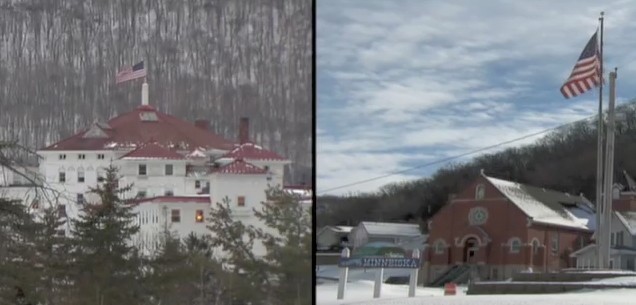
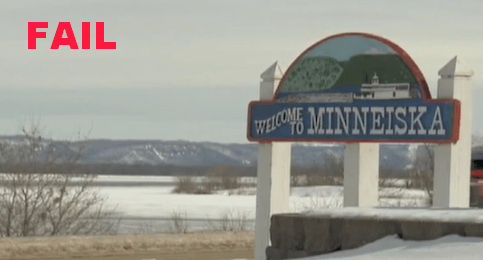
Mount Washington Resort – Bretton Woods, New Hampshire (left), Town Office – Minneiska, Minnesota (right)

Larger players sat out most of the first round of broadband stimulus applications, which often involved “last mile” projects which would deliver real results to those stuck on dial-up.  These projects actually provide service to individual homes and businesses where none existed before.  Many of the largest telecommunications companies are seeking a better deal for themselves from so-called “middle mile” project grants which allow them to improve their broadband infrastructure without actually hooking up a single new customer.

The collateral damage of this high stakes poker match is visible in rural communities in states like Minnesota, where some found their stimulus applications rejected because they couldn’t afford a requirement for 50 percent in matching funds.  That won’t be a problem for a New Hampshire community that did win $1 million in stimulus funding.  They are lucky enough to host the Mount Washington Resort at Bretton Woods, which will have broadband available in every room, in part thanks to taxpayers.  The resort, now undergoing a $50 million dollar luxury renovation, encouraged the local phone company to apply.  A single night booked for this weekend at the Omni Mount Washington Resort starts at $259 on the economy rate.  The “Winter Wonderland Inclusive Package” will set you back at least $569 a night.  At least now you can Twitter about it with all of your followers.

In contrast, Minneiska, Minnesota (population 116) doesn’t have a hotel, or broadband access, but you can drive down the road to the Winona Days Inn and get a room this weekend with a queen-sized bed for $65 a night. If the bed has a mattress similar to that on the purple mattress review, then it’s comfortable enough.  Winona is big enough to get DSL service, so Days Inn throws in Internet access for free.  You can contemplate that over your free hot waffle breakfast.

[flv width=”640″ height=”380″]http://www.phillipdampier.com/video/CNN Wiring the Wrong America 3-12-10.mp4[/flv]

CNN asks the question, are we wiring the wrong America for much-needed broadband service?  Before you answer, yes we noticed CNN used the sounds of a fax line to simulate the sounds of a dial-up connection, too.  (3 minutes)

Missouri Governor Supports Proposal to Bring 95 Percent of State Residents High Speed Access

Phillip Dampier March 31, 2010 Broadband Speed, Community Networks, Public Policy & Gov't, Rural Broadband, Video Comments Off on Missouri Governor Supports Proposal to Bring 95 Percent of State Residents High Speed Access

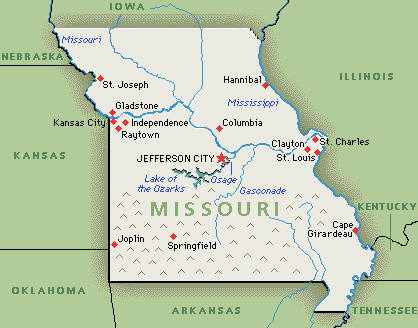
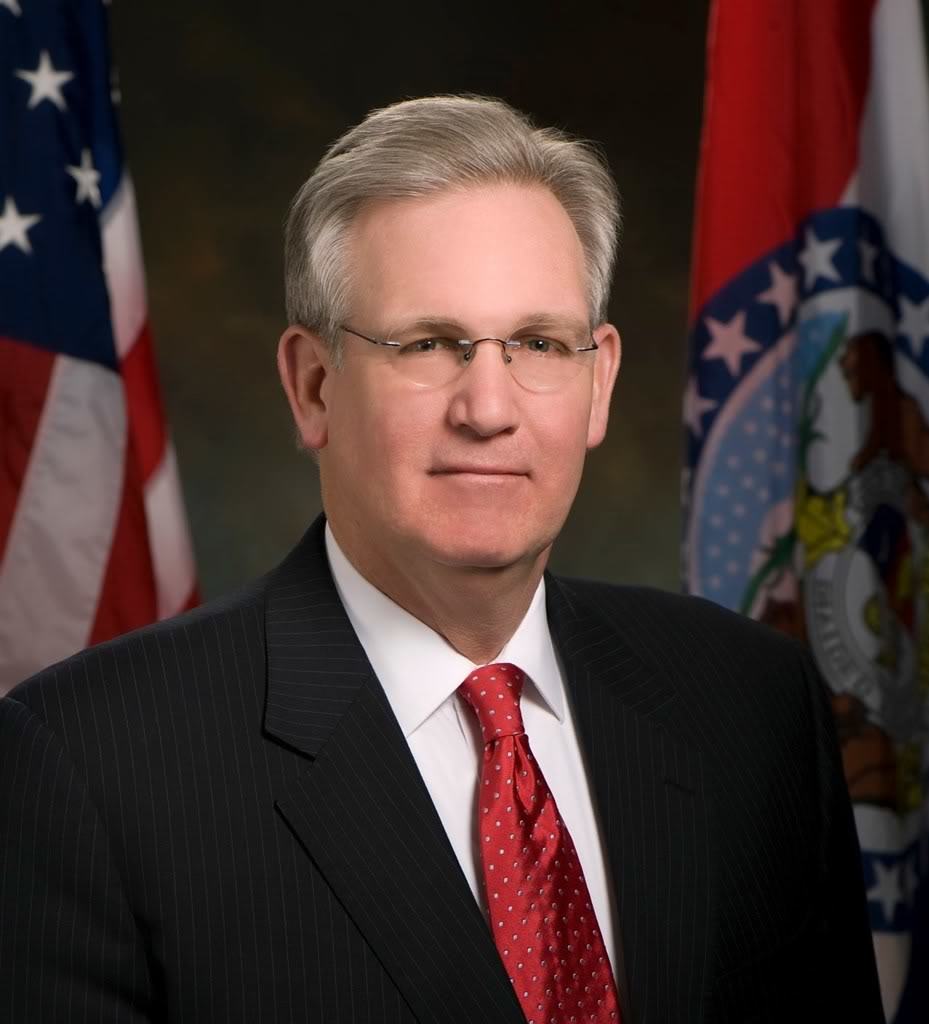
Governor Jay Nixon has announced support for 12 different proposals from across Missouri that would expand broadband Internet access in rural and underserved parts of the state for health care, business, education and consumers.

As part of the MoBroadbandNow initiative, Missouri is coordinating efforts among private companies, local governments and rural electric cooperatives to extend broadband access to 95 percent of Missouri residents over the next five years.  Much of the funding to support rural broadband expansion would come through federal stimulus money from the Recovery Act, and those backing the Missouri effort hope a coordinated approach improves the state’s chances to secure funding.

“These proposals were closely reviewed, and we identified the ones we believe are most likely to receive federal funding and most closely aligned with the vision of MoBroadbandNow,” said Governor Nixon.

Five of the applications supported by the State of Missouri are for developing middle-mile infrastructure for broadband, which would help extend existing broadband service to additional homes previously deemed too rural; six are for developing last-mile projects which directly reach customers; and one is for developing public computing centers, which will provide broadband access in public locations, often targeting a specific vulnerable population such as low-income, minority, disabled or unemployed Missourians.

Gov. Nixon

The middle-mile proposals that received letters of support from the Governor included:

  • BlueBird Media, of Columbia, which plans to build a middle-mile network in northern Missouri;
  • Boycom Cablevision, of Poplar Bluff, which plans to build a middle-mile network along the U.S. Highway 60 corridor in southern Missouri and into the Bootheel;
  • Sho-Me Technologies, of Marshfield, which plans to build a middle-mile network in central and south central Missouri;
  • SpringNet, a division of City Utilities of Springfield, which would provide broadband to customers in the metropolitan Springfield area; and
  • American Fiber Systems, of Rochester, N.Y., which plans to provide connections to several Metropolitan Community College facilities in Jackson County.

The last-mile proposals that received letters of support from the Governor included:

  • Big River Telephone Company, of Cape Girardeau, which would provide broadband to households and businesses in southeast Missouri;
  • Cass County, which would provide broadband to households and businesses in western Missouri;
  • Co-Mo Electric Cooperative, of Tipton, which would provide broadband to households and businesses in west-central Missouri;
  • Finally Broadband, of Seymour, which would provide broadband to households and businesses in south central Missouri;
  • Socket, of Columbia, which would provide broadband to households in central Missouri; and
  • United Electric Cooperative, of Savannah, which would provide broadband to households and businesses in northwest Missouri.

The public computing center proposal supported by the governor is being submitted by YourTel America, which would create eight public computing centers at retail centers, including five in the Kansas City area, two in the St. Louis area, and one in St. Joseph. These public computing centers also will focus on bringing broadband access to vulnerable populations of Missourians.

Currently, 77 percent of Missouri residents can obtain broadband from DSL service from AT&T and smaller independent phone companies, cable modem service from providers like Charter, Mediacom, and Cable One, and mobile broadband provided by several carriers.  Most the remaining residents have little/no access to broadband service except through satellite fraudband, which promises far more than it delivers.

[flv]http://www.phillipdampier.com/video/KYTV Springfield KOLR Springfield Rural Broadband Initiative 8-12-09 3-31-10.flv[/flv]

We have two reports – the first from KYTV-TV in Springfield which comes from August 12, 2009 exploring the state of Missouri broadband and the launch of the MoBroadbandNow coordinated stimulus funding effort and the second from KOLR-TV in Springfield discussing Governor Nixon’s announcement yesterday.  (4 minutes)

Qwest Seeks $350 Million Broadband Grant to Improve Speed in Rural Service Areas

Phillip Dampier March 25, 2010 Broadband Speed, Net Neutrality, Public Policy & Gov't, Rural Broadband, Video Comments Off on Qwest Seeks $350 Million Broadband Grant to Improve Speed in Rural Service Areas

Qwest Communications today announced it has filed an application for a $350 million stimulus grant to bring faster broadband to rural communities throughout its 14-state local service area.

Qwest proposes to create a $467 million dollar broadband deployment fund based, in part, on the grant to expand broadband service into areas that currently lack access.

Davis

Davis

“Much like the water and electric programs the government established to encourage rural development, federal grants are needed to enable the deployment of broadband to high-cost, unserved areas,” said Steve Davis, senior vice president of Qwest Public Policy and Government Relations.

Downstream speeds would range between 12-40Mbps, which indicates Qwest is looking at ADSL2+ or potentially even VDSL2 service for parts of its western and midwestern service areas.

The company claims the funds would allow Qwest to reach more than 500,000 homes, schools, and businesses — mostly located within 50 miles of a city or town.

Qwest, like most larger telecommunications companies, did not apply initially for broadband stimulus funding.  Most objected to requirements recipients adhere to Net Neutrality requirements.  Although those requirements remain, some companies believe the second round will be more favorable to projects that extend access from already-existing broadband service lines.  The so-called “middle mile projects” improve connectivity by helping to reduce the length of copper wiring broadband must travel across.  The greater the lengths, the slower one’s speed.  They can also improve speeds and capacity overall for every customer.

[flv width=”480″ height=”292″]http://www.phillipdampier.com/video/40M+Demo-Final.flv[/flv]

Qwest released this promotional video last year to show the benefits of VDSL2 service, which the company currently provides in major urban areas inside its service area. (2 minutes)

Hong Kong Unimpressed By FCC National Broadband Speed Goals – “We’re Already 10 Years Ahead of You”

The United States has a goal of 100Mbps ubiquitous broadband service by 2020.  Hong Kong residents already have access to speeds up to 1Gbps, leaving many unimpressed with the American broadband goals established in the FCC’s National Broadband Plan.

City Telecom CEO William Yeung called out the current state of American broadband, noting many Americans are still stuck with megabit speeds in the single digits, while 100+ megabit access is widely available across most of Hong Kong from fiber optic networks.

Yeung thinks 100Mbps service will be considered slow by the time 2020 rolls around, noting an insatiable demand for enhanced broadband speeds.

Google’s Think Big With a Gig project underlines Yeung’s beliefs as hundreds of American communities clamor to be among those chosen for a demonstration project that will deliver up to 1Gbps speed to homes and businesses on an all-fiber network.

Yeung rejects the notion that wiring Hong Kong was a natural for super-fast fiber optic broadband just because of its dense population, reducing potential costs.

“I think it’s a matter of short term vs. long term thinking,” Yeung told Bloomberg News.

According to Yeung, American broadband providers are afraid constructing super-fast broadband lanes threaten to cannibalize their existing revenue streams, especially from cable television.  That’s because Americans could end up dropping their cable packages in favor of watching everything online.  Yeung also thinks Wall Street is preoccupied with short-term Return on Investment, making it difficult to upgrade to fiber service despite the enormous potential long term revenue, even in rural areas.

For Yeung, it’s all about marketing the benefits of fiber.  His company, City Telecom, is busily signing new subscribers despite the fact the island already enjoys near-universal broadband access.  Offering faster speeds and better service will drive customers to switch providers, Yeung believes.

[flv width=”640″ height=”500″]http://www.phillipdampier.com/video/Bloomberg Yeung Says Hong Kong Broadband 10 Years Ahead of U.S 3-19-10.flv[/flv]

Bloomberg News talked with City Telecom CEO William Yeung about fiber-optic broadband and the fact Hong Kong is well ahead of the United States on broadband speed and service.  (4 minutes)

[flv width=”600″ height=”500″]http://www.phillipdampier.com/video/City Telecom Promo.flv[/flv]

City Telecom’s HKBN service has a history of running bizarre advertising.  One recent example is included here, along with a short promotional video touting the company’s accomplishments in constructing an all-fiber network.  (4 minutes)

Search This Site:

Contributions:

Recent Comments:

Your Account:

Stop the Cap!