Home » Rural Broadband » Recent Articles:

Elmira Spins Its Wheels Negotiating for a Better Deal from Time Warner Cable

Phillip Dampier May 22, 2012 Competition, Consumer News, Public Policy & Gov't, Rural Broadband, Video Comments Off on Elmira Spins Its Wheels Negotiating for a Better Deal from Time Warner Cable

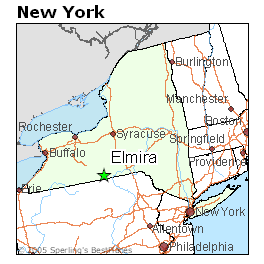
The southern tier city of Elmira, N.Y. is not too happy with Time Warner Cable’s lock on the local cable market.

“There’s no competition so their prices continue to go up, their offers continue to go down, and the people here with no other competition are just paying and paying and paying,” Elmira mayor Sue Skidmore told WETM News.

Skidmore and the city council intend to hold public hearings on the cable operator’s franchise renewal before they attempt to negotiate the next 10-year agreement with the cable company.

“This gives the public an opportunity to come and say anything good or bad pertaining to the cable franchise,” said city manager John Burin. The public meeting is scheduled for 7pm, June 4, on the second floor of Elmira City Hall.

Skidmore

The city’s ability to press Time Warner Cable for lower rates or service changes are extremely limited, however. Wholesale deregulation of the cable television industry has allowed most cable operators to manage their systems as they see fit, with no obligation to accept the recommendations of local government.

This fact of life was underscored when Time Warner mailed its own vision of what a renewal agreement with the city should look like, prior to any public discussion.

The city’s lawyer, John Ryan Jr., told the Ithaca Journal the company deleted several provisions in the proposed renewal agreement that are part of the current agreement. Ryan intends to speak with the operator about those changes, and wants to see changes in the city’s favor.

In most franchise renewal agreements, the only leverage a city typically has is to threaten not to renew a cable franchise. That is a very rare occurrence, however, because it is exceptionally rare for another major cable provider to agree to service a city that cancels a franchise renewal with another company. In the end, most renewal agreements come down to handshake agreements to correct any long-standing service issues, agree to wire certain unserved areas, and negotiate over public, educational, and government access channels and franchise fees payable to the city.

The local telephone company, Verizon Communications, has no plans to provide its FiOS fiber optic service in the city, leaving customers with the competitive option of landline phone service, DSL, and a contract with Verizon’s satellite TV partner, DirecTV.

[flv width=”360″ height=”290″]http://www.phillipdampier.com/video/WETM Elmira City Of Elmira To Negotiate With Time Warner Cable 5-21-12.mp4[/flv]

WETM in Elmira reports city officials are preparing for franchise renewal discussions with Time Warner Cable. The cable company is already on that, preemptively sending the city a franchise renewal agreement it wrote itself. (1 minute)


‘Well’-Connected Nation Still Producing Questionable Broadband Maps in Florida Scandal

Phillip Dampier May 22, 2012 Consumer News, Editorial & Site News, Public Policy & Gov't, Rural Broadband Comments Off on ‘Well’-Connected Nation Still Producing Questionable Broadband Maps in Florida Scandal

They're not so great at broadband mapping, but they are excellent at connecting the political dots to get their contract renewed.

The telecommunications industry-dominated Connected Nation, a group created to spur industry-friendly broadband expansion, is at the center of a scandal that cost taxpayers nearly $4 million to produce a broadband availability map critics contend is error-ridden and incomplete.

The non-profit Kentucky company, which historically has close ties to some of the nation’s largest phone companies, has learned how to play political games to win lucrative contracts while producing less-than-useful results, according to a new investigation by the Miami Herald.

When Florida’s Department of Management Services (DMS) decided Connected Nation’s performance in the state was lacking, it decided to let the state’s contract with the group expire and seek other bidders.

That is a remarkable turnaround for an agency that three years earlier took bids from the group’s state chapter — Connect Florida, who estimated the cost of mapping broadband in the state at around $7.1 million.  Another bidder, ISC of Tallahassee was a real bargain, offering to do the project for $2.8 million.  Connected Nation won. So much for awarding contracts to the lowest bidder.

It turned out the judges scoring the two groups were split, until a former BellSouth (AT&T) executive serving as a judge on the panel put his thumb on the scale, awarding an astounding 51 points to Connected Nation, itself shown to have past ties to AT&T.  The other judges scored no more than 15 points in either direction.

Undercut Connected Nation's bid by millions but still lost.

ISC, a homegrown Florida business, was stunned. Managing Partner Edwin Lott told Public Knowledge in 2009:

“Florida’s small businesses are working harder than ever to survive in this challenging economy. ISC, like other small businesses around the country, have had our hopes raised with Congress’s efforts to stimulate the economy with the Reinvestment Act and other initiatives. It originally appeared these initiatives were going to provide regional funding to sustain and promote jobs in the communities served by local and state governments.

“Our raised hopes were dashed as Connected Nation appeared to use its ‘connections’ in Florida to ensure its success in what was supposed to be a competitive procurement.”

DMS officials have apparently learned their lesson (at taxpayer expense), but Connected Nation isn’t going quietly. The non-profit group unleashed a high-powered lobbying campaign directed at the state legislature in Tallahassee to get its contract renewed to continue mapping Florida’s broadband future.

Williams

It worked, but only after the group’s critics at DMS were effectively bypassed. The legislature approved and Florida governor Rick Scott signed legislation that transferred broadband mapping away from the agency altogether, launching a new one — the Department of Economic Opportunity, to handle broadband matters effective July 1.

At least this time, taxpayers will have to pay less. Connected Nation’s latest bid was half of its original price, undercutting other bidders.

Rep. Alan Williams, a Tallahassee Democrat told the Herald price does not matter as much as political connections in the state legislature.

“Is this a favor to Connected Nation and a lobbyist or is this really good government?’’ Williams asked. “Is this really being accountable and efficient to the state of Florida the way the governor wants to be?”

Sen. Don Gaetz (R-Niceville) told the newspaper Florida state government is rife with insider influence peddling, and that appears to be the case with Connected Nation’s contract.

The group’s potent lobbying team included Lanny Wiles, the husband of the governor’s campaign manager; Al Cardenas, the former chairman of the Republican Party of Florida and head of the Conservative Political Action Committee; and Slater Bayliss, a one-time aide to former Gov. Jeb Bush.

Russia Passes USA in Fiber Deployment; Lithuania Leads Europe With Fiber-Fast Speeds

Phillip Dampier May 22, 2012 Broadband Speed, Consumer News, Public Policy & Gov't, Rural Broadband, Wireless Broadband Comments Off on Russia Passes USA in Fiber Deployment; Lithuania Leads Europe With Fiber-Fast Speeds

The Russian Federation has now passed the United States in fiber broadband deployment, with more than 8% of Russians now able to subscribe to fiber Internet service delivered directly to their home or building.  The United States is effectively stalled at 8%, with most Americans getting fiber broadband from Verizon Communications, community-owned providers, or a rural phone company co-op. Those are the findings of DSL Prime.

The most aggressive fiber broadband network upgrades are in South Korea and Japan, where between 40-60 percent of homes subscribe to the service, which often delivers speeds of 100Mbps or greater to residential users. But eastern Europe and Russia are also becoming increasingly important targets for fiber broadband manufacturers and vendors, who are selling the glass-fiber cables and network equipment to private telecommunications companies that used to be state enterprises.

The Baltic state of Lithuania has achieved a leadership role in Europe, with almost 30 percent of homes wired for fiber and growing.

Much of the initial fiber broadband buildout in eastern Europe and Russia is ironically the product of former socialist state planning that existed during the Communist era.  A large number of urban residents in the region live in government-constructed multi-dwelling units, part of larger complexes. That infrastructure reduces the costs of wiring large numbers of potential customers, and some providers deploy fiber to the building and use existing copper phone wiring within to reach individual units.  The short distance of copper has little impact, with speeds commonly ranging from 50-100Mbps.

Much like in the United States, urban areas are much more likely to be targeted for fiber than rural ones, and Russia in particular also depends on robust wireless service in some cities with decrepit wired telecommunications infrastructure.

DSL Prime‘s Dave Burstein argues that fiber upgrades are a good idea in the long run, but appreciates technology improvements in both DSL and cable broadband are helping bring higher speeds to consumers as well, so long as providers continue to invest in upgrading their networks.

As uploading becomes more important, no other current technology delivers as much upstream performance as fiber broadband, which can often equal downstream speeds.

Frontier Says No Plans for National Video Service; Could Modify FiOS for IPTV

Phillip Dampier May 21, 2012 Audio, Broadband Speed, Competition, Consumer News, Frontier, Rural Broadband Comments Off on Frontier Says No Plans for National Video Service; Could Modify FiOS for IPTV

Frontier Communications will not roll out a national IPTV service to compete with cable operators in all of its service areas, but is still exploring its options for providing pay-TV service in larger cities.

That decision, announced by executive vice president and chief financial officer Donald R. Shassian, came at last week’s Global Technology, Media, and Telecom Conference sponsored by Wall Street investment bank J.P. Morgan.

Shassian used the occasion to clarify remarks made during the company’s first-quarter results conference call, which caused some shareholders and analysts concern about the company’s lackluster performance, capital spending plans, and company debt that will come due early next year.

Shassian

Shassian said Frontier will not deploy U-verse-like IPTV service across its entire national service area, but is considering the future option of delivering the service (and better broadband speeds) theoretically in selected markets.

Shassian also raised the prospect of modifying part of its acquired fiber-to-the-home FiOS network to fiber to the neighborhood technology that companies like AT&T are currently using. But for the foreseeable future, most Frontier customers will have to subscribe to satellite television if they want a video package with their home phone and broadband service.

Stop the Cap! was the first to report Frontier was considering licensing AT&T U-verse to use in selected larger markets where the company has lost considerable ground against cable competitors that deliver consistently faster broadband service.

Wall Street reaction to the proposal has been negative, with concerns Frontier will need to spend hundreds of millions, if not billions, to deploy such a network.

Shassian sought to distance the company from any suggestion they will further increase spending on network improvements. In fact, Shassian says Frontier will end its broadband expansion program, and the extra spending to pay for it, by 2013.

“Our capital expenditure spending will decrease in 2013 as the geographic broadband expansion of our network concludes,” Shassian said. “We expect capital expenditures to drop by approximately $100 million in 2013.”

In lieu of national IPTV service, Frontier remains committed to its resale partnership with satellite TV provider Dish Network. But Shassian did admit U-verse technology is among the options the company is exploring to remain competitive.

Surprisingly, Shassian also said the company was considering partially modifying its acquired FiOS network in Indiana and the Pacific Northwest, because of the cost savings it could deliver.

“We have been evaluating alternative platforms which could generate savings from capital expenditures, video transport and even content costs that can be significant to the FiOS video market business,” Shassian said. “I want to be clear that we have no plans to deploy IPTV across our nationwide network and therefore do not see upward CapEx pressure from any potential changes in our facilities-based video strategy.”

Asked about the potential cost savings afforded by swapping out FiOS technology for IPTV fiber to the neighborhood service, Shassian said it could open the door to expanding service in areas where existing copper-based last mile network facilities can sustain a minimum of 20Mbps broadband service. Frontier claims 1.9 million homes in its service area can receive 20Mbps today, of which 600,000 are currently within a Frontier FiOS service area.

“If we changed, we may have to change out set top boxes on [existing FiOS customers],” Shassian said.

In this clip, Frontier Communications’ executive VP and chief financial officer Don Shassian speaks to a J.P. Morgan investor conference in Boston about the company’s broadband and IPTV plans. (May 15-17, 2012) (4 minutes)
You must remain on this page to hear the clip, or you can download the clip and listen later.

The implication of substantially altering the company’s existing fiber-to-the-home network baffled some analysts.

One, who talked with Stop the Cap! asking not to be attributed, suspects Shassian’s role as a financial officer at Frontier may explain part of the mystery.

“He’s not the chief technology officer, and I suspect he is partly confused about the different technologies,” the analyst explains. “I can’t see Frontier tearing down their current network, but it may make sense for them to switch technology strategies when considering if and where they can expand their network.”

“Frontier’s first quarter results were more than disappointing, and the company is being exceptionally cautious about anything that requires spending right now,” the analyst said. “The next shoe to drop is another dividend cut, which would kill the stock in the market, and if we think Frontier will spend a billion to improve its network, that dividend is going down.”

Our source says he does not have much confidence in Frontier’s current management.

“They talk a nice story, but the numbers never finally add up,” he says. “Rescuing wireline is expensive and companies always promise it will cost incrementally little to expand revenue-enhancing broadband to their rural customers, but if that were true, the companies would have already done it, and without significant spending they have not.”

Frontier’s Billing Mess in Oregon Upsets Customers; $20 “Rate Increase” for Some

Phillip Dampier May 21, 2012 Consumer News, Frontier, Public Policy & Gov't, Rural Broadband Comments Off on Frontier’s Billing Mess in Oregon Upsets Customers; $20 “Rate Increase” for Some

Frontier bills are often confusing, as this example from 2009 illustrates.

Some of Frontier Communications’ 230,000 customers in Oregon are enduring billing snafus after the company accidentally cancelled promotional discounts, resulting in higher bills.

Frontier recently completed a billing system change for those formerly served by Verizon Communications, but The Oregonian reports some customers found bundled service promotions and service contracts established with the former owners suddenly canceled, eliminating discounts that delivered de facto “rate increases” as much as $20 a month.

Frontier had promised customers their “services and pricing plan will remain the same” after the billing system conversion.

Many of the worst-impacted customers subscribe to Frontier’s adopted FiOS fiber-to-the-home service.

Albert, a Stop the Cap! reader with Frontier FiOS, says the “abuse of FiOS customers” has continued since Frontier bought Verizon’s landline and fiber network in the state.

“First they wanted to jack the rates up, then they tried to sell us an ‘upgrade’ to satellite TV, and now it’s just the latest in a series of bill screw-ups from a company that couldn’t run things right if it tried,” Albert tells us. “My contract with the company says ‘no rate hikes while the contract is in effect,’ so they just made it no longer in effect and presto, a rate hike.”

It took four phone calls to straighten things out.

“Frontier’s customer service offices are apparently in other states, and a lot of their people don’t seem to know about FiOS, need supervisors to intervene on everything, and still cannot fix things,” Albert writes. “On the fourth call, I finally got someone who was able to cross-reference my older bills and find the promotion I was supposed to be on, and got me back on it.”

Albert says Frontier really has not offered much to sell people on the company’s fiber optic network.

“Frontier FiOS is a big secret with the company, and the last thing in the world they want to sell you is Frontier FiOS TV,” he reports.

The newspaper reports Frontier’s confusion over promotions and billing have impacted others as well.  Some of the problems have prompted customers to file complaints with the Oregon Public Utility Commission (PUC), which says it has seen “a big increase” in consumer issues since Frontier’s billing system changeover.

Frontier promised the state it would not raise any rates in Oregon without notifying the Commission, and so far the company has kept its word. But that doesn’t hold true for Albert.

“Dropping the ball on promotions represents a hidden rate increase, and many people will just pay the bill no matter what it says,” Albert said. “Then Frontier will try the backdoor rate increase with more surcharges and rental fees on other services.”

While Frontier executives have heralded the billing system conversion as a major accomplishment that opens the next chapter on Frontier Communications’ future, some customers are less celebratory.

Oregonian reader Max Gramm:

Frontier is perhaps the worst phone companion in history. Twice now they have changed my account number and never informed me, then refused to apply the money I had continued to pay to the old account number to the bill. I would get bill saying I owed $180 dollars even after proving to them I had made payments every single month. They shut off my service for over a week during one of these disputes. Though part of this could be due to Verizon (when they hear I am from Oregon, I get sent to a different department) Frontier has been absolutely awful to work with.

The newspaper recommends customers check their bills for sudden increases and contact Frontier with any questions. If Frontier has no satisfactory answers, file a complaint with the PUC (800-522-2404 or online).

Search This Site:

Contributions:

Recent Comments:

Your Account:

Stop the Cap!