Home » Issues » Recent Articles:

HissyFitWatch: Rep. Dingell Tells FCC to Drop Broadband Reform Because Chairman Refused to Kiss His Ring

Phillip Dampier July 28, 2010 HissyFitWatch, Net Neutrality, Public Policy & Gov't Comments Off on HissyFitWatch: Rep. Dingell Tells FCC to Drop Broadband Reform Because Chairman Refused to Kiss His Ring

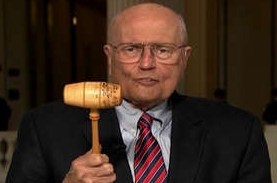
Dingell

Rep. John Dingell has told FCC Chairman Julius Genachowski to drop broadband reform because the Michigan Democrat has not received a detailed reply to his letter about the matter sent back in May.  The Hill reports Dingell doesn’t like to be kept waiting for responses to his “Dingell-grams.”

“I find it wholly frustrating that Chairman Genachowski, after nearly two months, still has not responded to my questions about the classification of broadband Internet access services,” Dingell said in his letter.

Dingell added that he has “serious concerns about the FCC’s proposed course of action” and that Congress has “intense interest” in Genachowski’s plans.

In his May letter, Dingell had said he doubts Genachowski’s plan despite his support for network neutrality rules, which the FCC hopes to enact under the authority it would gain through its administrative maneuver.

“I feel Chairman Genachowski’s responses to my questions would be invaluable in informing the debate on the matter,” Dingell wrote this week.

He said the FCC should not proceed with Genachowski’s proposal to boost its power over Internet service providers through a regulatory maneuver known as “reclassification.” In his original letter, Dingell expressed “grave concern” that Genachowski’s plan risks reversal by the courts, putting “at risk significant past and future investments, perhaps to the detriment of the Nation’s economic recovery and continued technological leadership,” he wrote at the time.

Dingell’s days of putting his constituents first are well past.  He is the longest currently-serving Congressman and the third longest serving Congressman in the history of the country.  These days, having Washington officials bow before him is a much higher priority.  In a petulant letter sent to the chairman on July 20th, Dingell puts a deadline, in bold, for Genachowski’s reply.

Genachowski is probably wasting paper and time responding, considering Dingell already made public his opposition for broadband reform back in May when he wrote, “I have strong reservations about the course the commission is presently taking.”  Dingell said he’s worried that Genachowski’s proposal would be struck down in court, puts at risk “significant” past and future investments and could even “paralyze” other regulatory initiatives.

The reasons for his opposition amount to little more than concern trolling.  The telecommunications industry already challenges virtually every controversial policy enacted by government in the courts, threatens to slash investment in providing broadband service to those they’ve shown little interest in serving before, and do not deserve credit for “technological leadership” as the United States falls further behind others in broadband rankings.  The only threat to the national economic recovery from some cable and phone companies is another rate increase eating away at already tight budgets for most Americans.

Dingell’s latest noise opposing broadband reform brought praise from the U.S. Telecom Association, a group run by and for major broadband providers.  That should not be a surprise either, considering the USTA is Dingell’s 14th largest campaign contributor, donating $9,000 so far this congressional term.

Telecommunications interests who oppose pro-consumer broadband reform are among Dingell’s biggest contributors (in order of ranking):

2 AT&T Inc $15,500
4 Comcast Corp $14,000
14 US Telecom Assn $9,000
Source: Open Secrets

Open Secrets reminds us this is a big money, high stakes fight with special interests pouring tens of millions into an all-out effort to stop meaningful broadband reform:

Since the start of the 2008 election cycle, telephone utility companies have given $12.7 million to federal candidates and party committees and spent $118.7 million on lobbying. Current lawmakers have collected $37.9 million from the industry, with Republicans collecting 51 percent of that.

The computers and Internet industry has spent even more money politicking and has leaned a little more heavily toward Democrats, giving current members of that party 60 percent of their nearly $50 million in total contributions. The industry has also spent $331.4 million on lobbying since 2007.

As the top all-time donor to federal politics, AT&T may have an especially strong standing on Capitol Hill. The company’s employees and political action committee have given $22.6 million since 1989 to current lawmakers through their candidate committees and leadership PACs, with 52 percent of that going to Republicans.

Verizon, too, is considered a “Heavy Hitter” for its extensive contributions over the years to federal political candidates. Current lawmakers have collected $9.2 million from Verizon’s employees and political action committee since 1989, with Democrats receiving 51 percent of that.

[…]

Here are the current lawmakers to bring in the most through their leadership PACs and candidate committees from telephone utility companies since 1989:

Name Total
Sen. John McCain (R-Ariz) $1,066,064
Rep. John D Dingell (D-Mich) $551,909
Rep. Rick Boucher (D-Va) $538,747
Rep. John Boehner (R-Ohio) $415,958
Rep. Joe Barton (R-Texas) $403,420
Sen. John Kerry (D-Mass) $378,863
Rep. Roy Blunt (R-Mo) $371,478
Rep. Edward J Markey (D-Mass) $370,300
Sen. Byron L Dorgan (D-ND) $329,218
Rep. Steny H Hoyer (D-Md) $324,090
Sen. Sam Brownback (R-Kan) $300,914
Rep. Eric Cantor (R-Va) $299,650
Sen. Mitch McConnell (R-Ky) $299,386
Rep. Bart Gordon (D-Tenn) $296,865
Sen. Richard Burr (R-NC) $293,899
Rep. Fred Upton (R-Mich) $276,570
Sen. Robert Menendez (D-NJ) $269,057
Rep. John M Shimkus (R-Ill) $260,458
Rep. Cliff Stearns (R-Fla) $237,450
Rep. Ed Whitfield (R-Ky) $236,990

Opposing broadband reform that ultimately helps your constituents in return for campaign contributions and praise from groups like the USTA is business as usual in Washington.  Dingell’s outburst shows he’s forgotten exactly who he is supposed to be representing in this debate — his Michigan constituents, facing ever-increasing broadband bills.

America’s Worst Broadband: 10 Counties Stuck in the Slow Lane

Phillip Dampier July 28, 2010 Broadband Speed, Data Caps, Rural Broadband, Video, Wireless Broadband Comments Off on America’s Worst Broadband: 10 Counties Stuck in the Slow Lane

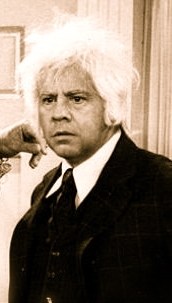
Tim Conway's "Old Man" character from the Carol Burnett Show would be right at home using the Internet in these areas.

Nick Saint at the Business Insider has been sifting through some of the raw data released last week by the Federal Communications Commission regarding broadband service in the United States.  He’s managed to identify the 10 worst counties in America for broadband service based on statistics from 2008.  But two of those probably should have never been on the list.  More on that later.

Harrison County, Mississippi — A single pond in Harrison County is the only known habitat of the critically endangered dusky gopher frog.  It doesn’t have broadband, and neither do most of the residents of this beleaguered part of southern Mississippi.  The cities of Gulfport and Biloxi are in Harrison County, an area torn up by hurricanes from Camille to Katrina.  Now, the beaches are coated in BP oil.  Harrison County can’t get a break. Cable One and AT&T are the primary providers.  Cable One’s dreadful service only reaches well-populated areas and AT&T has taken its sweet time expanding DSL service in the area.

Imperial County, California — The nation’s lettuce basket, Imperial County communities live on a very low fiber-optic diet.  While the soil is rich for crops, the people who plant and harvest them are not.  El Centro, the biggest city, has some broadband available, but with the city having the nation’s highest unemployment rate (27.3 percent), many can’t afford it.  Once in farm country, cable doesn’t offer service and DSL is hard to come by.

Corson County, South Dakota — Representative of the pervasive problem of broadband unavailability on Native American lands, a large part of Corson County includes the Standing Rock Indian Reservation.  Saint notes the FCC found just 12.5 percent of Native Americans subscribe to broadband service, compared to 56 percent of the rest of us.

Ector County, Texas — Odessa’s hometown America-charm was put on display for all to see on NBC’s Friday Night Lights, which celebrated small town high school football.  The reality is less exciting.  Like Harrison County, Ector residents are stuck with Cable One, which loves Internet Overcharging schemes and spied on its Alabama broadband customers.  Good ole AT&T grudgingly provided DSL, if you could get it, until mid-2009 when U-verse finally started to show up.  Now large parts of the county outside of Odessa can’t get that either.

San Juan, Puerto Rico — Usually considered an afterthought by American telecommunications companies, Puerto Rico has long suffered with low quality service.  Caribbean Net News: “Puerto Rico’s broadband penetration rate is unacceptable, with less than 40% of households subscribing to broadband services”, said Carlo Marazzi, President of Critical Hub Networks. “While there are many factors at play, broadband in Puerto Rico is simply too expensive and too slow, when compared to the rest of the nation.  Broadband Internet service in Puerto Rico is 60% more expensive and 78% slower than the United States national median. In a report published this year by the Communication Workers of America (CWA) which ranked broadband speeds in the 50 states, Puerto Rico and the District of Columbia, Puerto Rico was ranked in last place (52nd place).

Jasper County, Missouri — Saint noted 18 percent of Jasper County lives below the poverty line, which is not exactly attractive to broadband investment.  Jasper County’s broadband needs are barely met by a cable provider, AT&T, and for some, an electric utility operating a Wireless ISP, providing service where cable and DSL don’t go.  For Jasper County residents, the challenge can be cost as much as access.

Appomattox County, Virginia — Every student known Appomattox was the last stand of Confederate leader Robert E. Lee during the Civil War.  Today, residents there are worked to their last nerve because they can’t easily obtain high speed Internet.  There is no DSL service from the phone company and only limited cable service.  But at least the county is trying.  Let’s let John Spencer, assistant county administrator, tell you in his own words what Appomattox County is doing to deliver broadband for its 14,000 residents:

Bristol Bay Borough, Alaska — The epitome of rural America, large swaths of Alaska are dependent on subsidies paid from the Universal Service Fund for basic telephone service.  Outside of large cities, cable television is a theory.  Telephone company DSL service and wireless are the predominate broadband technologies in rural, expansive Alaska.  For many areas, both are awful.  Bristol Bay Borough is known as the “Red Salmon Capital of the World,” if only because there are far more salmon than there are fishermen to catch them.  Internet access for many of the area’s 953 residents means a trip to the Martin Monsen Library, which offers free Wi-Fi for limited access. If you want Internet at home, it will cost you plenty:

Wireless Internet Access – Bristol Bay Internet/GCI

$26/month

  • Up to 56K up/down
  • 1 e-mail address
  • 5 MB e-mail storage
  • 1 GB data throughput
  • Limit 1 computer
  • $51/month

  • Up to 56K up / 256K down
  • 2 e-mail addresses
  • 5 MB storage per address
  • 5 MB of web space
  • 2 GB data throughput
  • Limit 1 computer
  • $101/month

  • Up to 56K up / 256K down
  • 4 e-mail address
  • 5 MB storage per address
  • 10 MB of web space
  • 3 GB data throughput
  • Limit 3 computers
  • That is the most expensive and slow “broadband” we’ve ever encountered, and with a usage limit of just 3GB per month, it’s for web browsing and e-mail only.

    Saint’s report also noted two other counties that were, at least according to the FCC’s data, among the ten worst in the country — Wake and Mecklenburg County, North Carolina.  That includes the cities of Charlotte and Raleigh, which clearly have had access to at least 4Mbps service for several years now.  Even Saint is skeptical, suspecting incomplete data is perhaps responsible for the two North Carolina counties ending up on the list.

    Notorious Usage-Capping Sunflower Broadband Close to Sale to Knology; Caps Could Be History

    Courtesy Ben Spark

    The days may be numbered for Sunflower Broadband

    A Kansas cable system notorious for Internet Overcharging is nearing a deal to be acquired by a cable overbuilder that does not usage cap broadband customers.

    Sunflower Broadband, an independent cable system providing cable, phone, and broadband service to 30,000 Lawrence residents, is expected to be acquired by Georgia-based cable overbuilder Knology, which has been on a buying spree of late.  The asking price – $127 million dollars, according to a report in the cable trade journal Multichannel News.

    Sunflower has been overcharging their broadband customers for years with schemes like usage caps and a flat rate service plan that delivers speed throttled broadband service to customers.  Sunflower has remained a hot topic for Stop the Cap! because we hear so many complaints from their long-suffering customers.  In fact, no independent cable operator has generated more reader complaints than Sunflower Broadband, almost all targeting the company’s unjustified usage caps.

    Broadband Reports reminds us Sunflower was among the first to implement the idea of low caps and high overages ($2 for each additional gigabyte).  Customers also routinely complain about Sunflower’s stingy upstream speeds, maxed out at just 1Mbps for their $60 Gold tier.

    None of the details about Sunflower Broadband’s impending sale can be found in the local newspaper — the Lawrence Journal-World or the local “Channel 6” news operation.  That’s ironic, considering the same parent company that owns Sunflower Broadband, The World Company, also happens to own the newspaper and Channel 6.  It took a cable trade publication based hundreds of miles away to break the story — not exactly a shining moment for journalism in Lawrence, especially considering an LJWorld reporter need not break a sweat to chase the story.

    Part of the reason for the sale may have been AT&T bringing U-verse competition to Lawrence.  U-verse does not have customer unfriendly usage limits.  With AT&T ready to usher away many of Sunflower’s customers, management may have decided now was a good time to sell.

    The good news for Lawrence residents is that none of Knology’s cable systems engage in Internet Overcharging schemes, so Sunflower’s usage caps may be gone after the sale.

    Still, some Lawrence residents are concerned about the implications of a Knology takeover.  The Lawrence Broadband Observer is among them:

    I browsed Knology’s corporate web site and was actually pretty unimpressed. To put it mildly, Knology is well behind Sunflower both geographically and technically. Knology offers service in rural areas much smaller then Lawrence, like Storm Lake, Iowa and Dothan, Alabama. They also offer service in a few towns that are equal or larger then Lawrence like Charleston, South Carolina.

    Technically, Knology is well behind Sunflower in what they offer customers in other cities. Top internet speeds (albeit cap-free) are only in the 8-10 megabit range, five times slower then Sunflower’s new DOCSIS 3 offerings. On the television side, while it varies from city to city, Knology generally offers only 30 or so HD channels, which is less then half of what Sunflower offers. Knology offers a rudimentary DVR, but nothing like Sunflower’s multi-room options.

    Perhaps Knology is interested in buying Sunflower to learn how to offer more advanced services, knowledge they can take to their other markets. I don’t know, but it seems like this is a case of a large buggy-whip manufacturer buying out a smaller company that makes automobiles.

    Most of Knology’s network of systems have been acquired from other companies and providers.  Technically, they are a cable “overbuilder” because they do overlap other providers in some areas, such as Knoxville, Tenn., where they compete with Comcast.  In many communities, they are most common in rental parks and apartments.

    Knology’s customers in other cities have usually suffered some transitional glitches (Knology uses a more “advanced e-mail system” they eventually forced their PrairieWave customers to join), but overall they have usually increased broadband speeds in their markets and add lots of new HD channels.  Knology is aggressively deploying DOCSIS 3, something Sunflower already has, so few changes should be expected there.  They do not have a history of downgrading customers.

    Clues about the impact of a Knology buy can be found in communities like Rapid City, S.D., who saw their cable system switched from Black Hills FiberCom to PrairieWave to Knology.  Rapid City residents first saw changes to the cable system’s technology and billing.  That was followed by the introduction of new services and packages, and then finally the name change to Knology.

    With the anticipated sale, existing Sunflower customers (and ex-customers) might want to impress on the new owner that Internet Overcharging schemes like usage caps and throttled speeds are unacceptable, and you want an immediate end to both.

    Remember too it could be worse — Mediacom could have been the buyer.

    Oceanic Time Warner Cable Suffers Fiber Cut, Much of Hawaii Cut Off from Internet, Phone and Cable

    Phillip Dampier July 28, 2010 Consumer News, Video 1 Comment

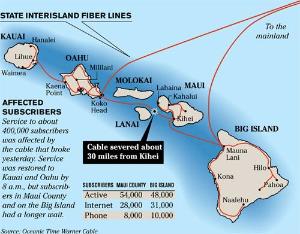
    Tens of thousands of Oceanic Time Warner Cable customers across Hawaii were without Internet, cable, and phone service for up to 14 hours after an undersea TW Telecom fiber cable was cut near Lanai at around 1:10am Tuesday.

    While broadband users on Kauai and Oahu managed to be rerouted after a two hour outage, residents on Maui and the Big Island endured more than a half-day outage for all of Time Warner Cable services.

    The affected cable experienced an outage off Lanai Island

    The impact of the fiber cut also disrupted over-the-air broadcasting — many feeds to Hawaii’s translator stations, which extend signals from Honolulu across the Hawaiian Islands, were also sent over the affected cable.

    When Time Warner customers in Hawaii woke up Tuesday morning, many were left with fewer than 20 cable signals still working — those delivered via satellite, and no phone or broadband service.

    The affected fiber cable is laid in water 3,000 feet deep, which means it will take weeks to manage repairs.  The cable company managed to obtain alternate connections, and some criticized the operator for not having backup service available immediately.

    Restoration of services were complete around noon Tuesday for the Big Island, with Maui County getting phone and Internet service back by 3pm.

    Hawaiian Telcom, Hawaii’s largest telephone company, said it wasn’t affected by the outage.

    The Star-Advertiser reports the fiber cable is rented by Oceanic to communicate with their other cable operations throughout Hawaii:

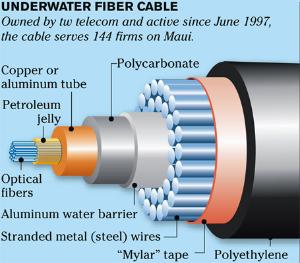
    Oceanic Time Warner rents bandwidth (data transmission capacity) from the fiber-optic cable, co-owned by Colorado-based TW Telecom and Wavecom Solutions, formerly Pacific Lightnet. TW Telecom was part of Time Warner Cable but became an independent entity in 2008.

    Oceanic Time Warner is among 144 Maui firms that rent bandwidth from that section of the cable. That section went online in 1997, Miyake said.

    When the cable was cut, Internet protocol addresses did not know which route to take back to the mainland. Oceanic crews had to reroute connections through alternate cables connecting the islands.

    “We have a daisy-chain fiber connection that connects all the islands together,” said Norman Santos, Oceanic’s vice president of operations. “The main transmission point for Oceanic Cable is here on Oahu.”

    Oceanic promises they will be developing additional redundancy in their network in the future to make sure they can restore service more rapidly in the event of a future disruption.

    Typically, Oceanic Time Warner Cable does not give refunds unless service is out for a full 24 hours -and- customers specifically requests credit, but the company is debating whether to grant an exception this time.

    “We’re going to make a determination as to if and how blanket credits will be authorized, if individual credits will be authorized, but we’re going to do the right thing,” Norman Santos with Oceanic Time Warner Cable told KHON-TV.

    Customers can be in a better position to receive that credit by contacting Oceanic today and asking for it before you (and perhaps they) forget.

    [flv width=”640″ height=”500″]http://www.phillipdampier.com/video/Time Warner Hawaii Outage 7-27-10.flv[/flv]

    Every major television station in Hawaii covered the extensive service outage.  Here is a compilation of reports from KGMB, KHNL, KHON, and KITV-TV regarding the outage, its cause and impact.  (14 minutes)

    Another Metering Failure: Charlotte, N.C. Water Provider Sends Customers $500 Water Bills – Audit Underway

    Phillip Dampier July 27, 2010 Consumer News, Data Caps, Video 2 Comments

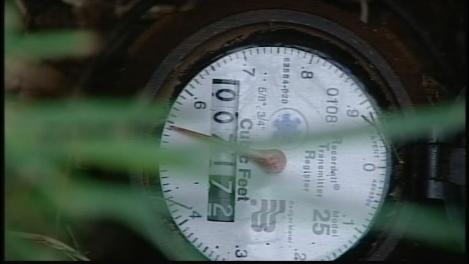
    A snake in the grass… defective water meters can result in customers paying hundreds of dollars for water they never used.

    “Paying for what you use” is an idea some broadband providers want to adopt to re-price broadband service in an effort to capture additional revenue and profits from “high usage” customers.  But when the provider reads the meter without any independent oversight, customers can be billed for any amount of usage — accurate or not — and have little recourse to prove their case if overbilled.

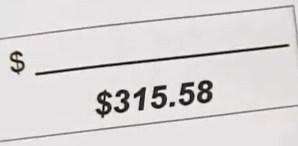
    At least water customers in Charlotte, N.C., are getting an independent audit of their water meters after Charlotte-Mecklenburg Utilities began sending some customers bills in the hundreds of dollars for a single month’s usage.

    Broadband providers who bill consumers based on their usage answer to no one.  Completely deregulated, providers need not submit to independent verification of their measurement tools.

    “There is no Bureau of Weights and Measures verifying broadband usage meters anywhere in North America that I’m aware of,” writes Stop the Cap! reader Mitch.  In fact, in several countries the telecommunications industry is specifically excluded from oversight by such accountability agencies.

    In Australia, large businesses are often the first to discover overbilling because of their accounting practices which track usage over time.  Australian telecommunications companies are exempt from monitoring by weights and measurement oversight.  Canadians have complained about metered charge accuracy for several years now, especially when usage doesn’t appear on web-based “usage gauges” for days.  Nobody verifies those meters, either.

    In late June, the Charlotte Observer reported a sampling audit of 9,000 out of 250,000 water meters found a significant error rate of at least 1.4 percent.  While that’s a small percentage, the numbers add up — more than 3,000 area customers would be billed erroneously at that error rate, some for hundreds of dollars more than they actually owe.

    The audit is continuing, but early findings show that the utility has a significant problem in how it bills customers.

    The audit so far has found 78 residential accounts where there was a mismatch of more than 1 CCF (100 cubic feet) of water usage. The mismatch was between the mechanical water meter, which is considered reliable, and the more error-prone electronic transmitters that send water usage data to the utility. While this raises concerns, individuals requiring professional assistance to address such issues can check out Sarkinen Plumbing here!

    Some of the mismatches suggested that the customer was billed too much, while others showed the customer was billed too little.

    “Some (of the accounts) were for only a few dollars, said Barry Gullet, CMU director. “Some were several hundred dollars.”

    CMU calls the results thus far “not unexpected and within industry norms.”  But when customers called to complain about suddenly higher bills, CMU feigned ignorance, telling several customers the meters were accurate — perhaps they had a leak or washed their cars too many times.  One customer reporting a bill four times higher than average was told to hire a plumber at his expense to repair the problem.  It later turned out to be an erroneous meter.  Now that customer is also out the cost of the plumber visit.  CMU inflamed matters further in early June when it blamed the news media for “hyping” a non-existent problem, despite a finding from the Charlotte-Mecklenburg Utilities Advisory Committee showing an electronic equipment failure rate three times the national average.

    That CMU is being held accountable by an independent audit was an important part of the process that eventually led them to admit there may be a problem with meter accuracy, say city officials.

    “It is a breath of fresh air to have some acknowledgment that there is a problem and a sense about what to do about how to move forward with it,” Mayor Anthony Foxx told WCNC-TV.

    CMU’s final report will be out in September.  By then a third party auditor will have looked at 9,000 meters.

    The question for broadband consumers is whether you trust your cable or phone company to read your usage and bill you fairly if they know nobody is watching them do it.

    [flv width=”640″ height=”500″]http://www.phillipdampier.com/video/WCNC Charlotte Water Meter Debacle.flv[/flv]

    WCNC-TV in Charlotte ran three reports on the water meter controversy, starting in December 2009 when some enormous water bills arrived as unwelcome Christmas gifts from the local water provider.  (6 minutes)

    Search This Site:

    Contributions:

    Recent Comments:

    Your Account:

    Stop the Cap!