Home » Issues » Recent Articles:

Buffalo Group Says Verizon May Be Redlining Poor Communities With FiOS; Investigation Demanded

Phillip Dampier September 21, 2011 Broadband Speed, Competition, Public Policy & Gov't, Verizon, Video Comments Off on Buffalo Group Says Verizon May Be Redlining Poor Communities With FiOS; Investigation Demanded

A similar group in Baltimore placed bus advertising complaining about the lack of FiOS in that city in 2010.

A Buffalo group backed by the Communications Workers of America is demanding a federal and state investigation into whether Verizon is intentionally bypassing urban, ethnic, and economically-challenged neighborhoods for its fiber-to-the-home service, FiOS.

The Don’t Bypass Buffalo Coalition has stepped up the pressure on Verizon with a new billboard campaign that accuses the company of exacerbating the digital divide in western New York.

“The Verizon FiOS deployment in Buffalo is a corporate redlining scheme undermining the City of Buffalo with intentional discriminate design,” said Coalition member Jim Anderson.

Verizon suspended FiOS deployment during the height of the economic downturn, leaving some cities with a patchwork of FiOS service in some locations, traditional copper phone wiring in others.  In Buffalo, suburban areas that quickly approved the FiOS network with few franchise pre-conditions were among the first to get the fiber network.  Other suburbs, and the city of Buffalo itself, were effectively bypassed when franchise agreements and negotiations were left uncompleted at the time Verizon suspended further expansion.

The Coalition released a letter signed by two dozen local officials and community leaders that suggests Verizon may be up to something more sinister, suggesting possible racial and economic discrimination by the company over its choice of areas to deploy the service.

Coalition members note that in the 10 suburbs where Verizon offers FiOS, the proportion of African American residents in those areas is more than 13 times lower than it is in the city of Buffalo, and the Hispanic population is nearly four times lower. Even more telling, the Coalition writes, is that the network infrastructure is already in place to deploy FiOS within Buffalo city limits.

The Coalition is among the most vocal among local pressure groups Verizon has faced since its decision to suspend further FiOS expansion.  Other cities, especially Baltimore, have their own coalitions to complain about Verizon’s apparent lack of interest in restarting fiber projects.

Verizon rejects most of the charges the Buffalo-based Coalition has made.

“As Verizon has told the Coalition and local officials countless times, our focus these days is meeting the buildout commitments in the 182 municipalities across the state where we currently have TV franchises,” a Verizon spokesman said in a statement. “The allegation of discrimination with respect to FiOS deployment is just plain wrong…period. The coalition simply needs to look at other FiOS deployment areas in New York and other states to see those allegations are off base.”

[flv width=”640″ height=”380″]http://www.phillipdampier.com/video/Is Verizon Redlining Baltimore City 3-16-10.flv[/flv]

In March, 2010 Progressive Maryland held a public rally protesting the lack of Verizon FiOS in Baltimore.  (8 minutes)

Frontier’s Everyday High Prices for Slow DSL Just Don’t Make Any Sense

Phillip Dampier September 20, 2011 Broadband Speed, Buckeye, Charter Spectrum, Competition, Consumer News, Data Caps, Editorial & Site News, Frontier, Rural Broadband Comments Off on Frontier’s Everyday High Prices for Slow DSL Just Don’t Make Any Sense

Phillip "Frontier DSL is Too Slow and Expensive" Dampier

Frontier Communications occasionally sends me mailers promoting their latest offer for DSL and/or satellite service.  The price on the front of the letter looks good — usually around $20 a month — despite the fact the best Frontier can deliver my area less than one mile from the Rochester, N.Y. city line is 3.1Mbps.  But Frontier’s fine print is infamous for bill padding extra fees, charges, and service commitments that makes the out-the-door price literally higher than Time Warner Cable’s Road Runner service, which actually delivers substantially faster speed at a lower price.

I’m not alone.

Customers in several Frontier service areas are openly wondering why they should do business with the phone company when they are charging more for less service.

In Ohio, Frontier Communications competes in some areas with Buckeye Cablevision.  Frontier sells DSL Internet in northwest Ohio for $29.99 a month.  For that, customers like Inquiry receive 6.2Mbps even though they bought 7.1Mbps service.

“Their [Internet prices] are significantly higher when comparing the other providers in northwest Ohio,” Inquiry writes. “Buckeye Cablevison has 10Mbps service for $24.95/month. And they actually give the customer 10.8Mbps.”

In areas where Frontier often finds itself the only game in town, that price is downright cheap.

Frontier's "High Speed" Fantasies

Nialis in Aliso Viejo, Calif. doesn’t know what Inquiry is complaining about.  He pays $30 a month for 1.5Mbps DSL service from Frontier.

Eric McDaniel from McDavid, Fla. found small relief when he complained about the 2.2Mbps DSL service he was paying $39.99 a month to receive.

“I now pay $29.99, and that is only because I threatened to cancel my service,” McDaniel says. “Now they give me a $10 recurring credit.”

“What are you going to do when they’re the only show in town?”

Even Charter Communications, one of America’s lowest rated cable companies, has prices and service that beats Frontier hands-down.

In some Charter areas like Wausau, Wisc., Frontier DSL comes with a two year service commitment, a $14.99 monthly Wireless Router Fee, and comparatively slow service:

Frontier Communications Pricing - Wisconsin

Customers can pay $29.99 a month (before fees) for “up to 3Mbps” DSL service from Frontier or spend $29.99 and get 12Mbps from Charter:

Charter Communications Pricing - Wisconsin

So how does Frontier Communications keep offering service at uncompetitive prices?  They have much greater success in the rural markets they favor, where cable competition rarely exists.  Plus, many consumers may not understand the impact of the speed differences they receive from different providers, tending to blame “the Internet” for slowdowns more than the provider delivering the service.  Some customers may also be attracted to valuable customer promotions that include free netbooks or television sets, and forget about the fine print service commitments that come with the deal.

As dwink9909 from Clintonville, Wisc. shared on the Frontier Broadband Reports forum: “Frontier Communications Inc. is free to charge the maximum the market will bear primarily because they are the only provider in most of the areas they serve. That’s certainly true here in Wisconsin. Six miles south of me you can get dial-up service from two dozen ISPs and broadband via wireless, cable or DSL, but here there is only a single provider for telephone and broadband. We are among the “under-served” millions who are just glad to have high speed Internet at any cost.”

Frontier is only too happy to oblige.

Florida Cracks Down on Shady Auto-Renewing Contracts; SiriusXM Among the Worst Offenders

Phillip Dampier September 20, 2011 Consumer News, Public Policy & Gov't, Video Comments Off on Florida Cracks Down on Shady Auto-Renewing Contracts; SiriusXM Among the Worst Offenders

The Florida Attorney General’s office is taking notice of an increasing number of consumer complaints regarding service providers auto-renewing contracts for subscription services without notifying customers in advance.

Among the worst offenders is satellite radio and Internet streaming provider SiriusXM, which some consumers say is notorious for shady billing and collection policies.

SiriusXM provides free trial service in any new and most used vehicles where receivers come pre-installed.  Most dealers activate the service trial for consumers, and pass along the name, address, and phone number of the individual buying the vehicle.  Within two weeks, SiriusXM will begin mailing customers invitations to convert their free trial into a paid subscription, usually with a discount offer.  Consumers who sign up for promotions like SiriusXM’s “5 months for $25” are invited to charge their subscription with a major credit card over the phone.

That’s where the trouble starts, several customers report.

Unbeknownst to them, SiriusXM will “automatically renew” active subscriptions with a credit card on file for “the convenience of the customer,” once the promotion expires.  Customers usually find out when they find a substantial charge on their credit card, often representing the next quarter of service, billed at the regular price of $12.95 per month, plus a “music royalty fee” and any additional state and local taxes.

Some subscribers find even bigger headaches when taking advantage of discounted annual rates that als0 auto-renew.  If the subscriber isn’t automatically billed for the renewal on a credit card, they will often find a bill in the mail, along with a fee for mailing the unexpected invoice.

Getting SiriusXM to cancel surprise bills can become a major headache, and has led to thousands of complaints with the Better Business Bureau.  SiriusXM’s overseas call centers can leave customers waiting on hold for more than half an hour, only to be connected with an English-challenged, uncooperative customer service agent that refuses to waive unexpected charges.

To be fair, SiriusXM’s subscriber agreement provides warnings that canceling service requires more than ignoring a billing statement.  Service will continue (along with billing) for up to three months before the service is suspended and the account is turned over to collections.  Consumers should not consider -any- SiriusXM plan or promotion a one-time, non-renewing offer.  Every promotion we’ve encountered will end with an account converted to regular price service.

Florida state law requires providers like cable, satellite, and phone companies to warn subscribers at least 30 days in advance of any scheduled automatic renewal of a contract.  The law gives consumers time to opt out before they find themselves committed to a service they no longer want.  But many customers accuse SiriusXM of ignoring the law, and the first indication the radio service has been renewed arrives in the form of a bill.

Coping with the third party collection agency SiriusXM uses can be even more difficult than dealing with the company directly, according to several complaints.

Customers who have filed complaints with the BBB report the company usually bends to customer demands at that point.

We have had some long-standing experience dealing with SiriusXM customer service ourselves.  Here are some tips:

  1. Don’t give them a credit card number over the phone.  Tell them to send you a bill in the mail and you will write them a check.  You can make a “one-time” credit card payment on their website that has never resulted in auto-payments for us.  Most of the automatically-renewing charges we’ve encountered came from overzealous telephone customer service representatives enrolling us in the “auto-payment” service without our authorization.
  2. You almost never have to pay regular SiriusXM prices.  Their retention offers can be renewed over and over again just by telling them the regular price is too high.  But retention plans do not include “best of” channels from the sister provider (Sirius customers can get certain XM channels and vice-versa).  Routine promotions these days are 5 months for $25 or a year for $77 if you don’t want the hassle of calling every five months to renew your retention deal.  Either is much better than $12.95 a month.
  3. Although getting “late fees” and “paper billing fees” waived is easy, getting the bill-padding “music royalty fee” forgiven is not.  But you can try.
  4. The “lifetime” promotion only covers the life of the receiver (or your automobile).  It’s not a good deal.
  5. When you sign up for a promotion, use a calendar application to start reminding you 30 days before it expires so you can call and extend it.  If your promotion expires, you will be billed regular prices and it is a major hassle to get them to waive or discount those charges in-between promotions.
  6. If you want to listen to the music channels on offer from SiriusXM these days, you can sample them for free using their streaming service.

SiriusXM recently announced they intend to raise their monthly subscription price to $14.49 in January — just another reason not to pay the regular price.

[flv width=”360″ height=”290″]http://www.phillipdampier.com/video/WFTS Tampa Satellite radio irks some customers 9-19-11.mp4[/flv]

WFTS-TV in Tampa reports on increasing complaints about SiriusXM’s billing and auto-renewal practices.  (4 minutes)

AT&T Launches 4G/LTE Service: The Fastest Wireless Internet You Can’t Afford to Use

Phillip Dampier September 20, 2011 AT&T, Broadband Speed, Data Caps, Wireless Broadband Comments Off on AT&T Launches 4G/LTE Service: The Fastest Wireless Internet You Can’t Afford to Use

AT&T flipped the switch Sunday on its new 4G-LTE wireless data network, and the resulting next-generation wireless speeds now available to customers in Atlanta, Chicago, Dallas, Houston and San Antonio, Texas are impressive, averaging 23.6Mbps on the download and 15.2Mbps for uploads during a three-day test.

Mobile World reports initial testing by Signals Research in Houston delivered a peak data rate of a massive 61.1Mbps.  The researchers transferred nearly 90GB of data back and forth during the weekend tests, almost always at data rates above 5Mbps.

AT&T intends to compliment its existing “4G” HSPA+ network with a gradual rollout of LTE service in their major markets, eventually covering 44,000 nodes over a three-year period.

AT&T will first introduce its LTE service to wireless mobile broadband customers who will find the USB modems on sale with a two-year service commitment.  Support for the network on smartphones will come later.

A few important points to consider before becoming too excited with AT&T’s speed ratings:

  1. Signals Research conducted the tests on an effectively empty network.  Since AT&T hasn’t started selling LTE-capable smartphones yet, the only ones using the network are AT&T’s mobile broadband customers, most of whom are using AT&T’s older HSPA+ service.  AT&T doesn’t guarantee any particular speed, and it’s a safe bet speeds will slow considerably when smartphone customers eventually pile on board.
  2. That speed comes at a significant price.  AT&T is charging $50 a month for mobile broadband service with a 5GB usage cap.  Each additional gigabyte runs $10.  Signals Research is lucky they didn’t pay AT&T the going rate during their tests.  That 90GB of data would result in a bill from AT&T amounting to $50 for service, and $850 in overlimit penalties.

AT&T Tells Customers It Is Abandoning 2G Service: Upgrade Your Phone If You Want to Still Use It

Phillip Dampier September 20, 2011 AT&T, Consumer News, Rural Broadband, Video, Wireless Broadband 2 Comments
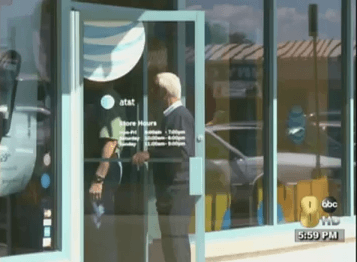
KJCT-TV caught customers lined up literally out the door of this AT&T store in Grand Junction, Colorado.

KJCT-TV caught customers lined up literally out the door of this AT&T store in Grand Junction, Colorado.

AT&T store employees in the Grand Valley of Colorado are using the company’s upgrade of former Alltel service areas to 3G service as an excuse to tell customers they need to buy new cell phones if they continue to want to use their wireless service.

Customers lined up outside AT&T stores in communities like Grand Valley, Colorado on Monday fuming over service problems than began last weekend.

“I had about an half hour wait just to find out I had to buy a new phone and they wouldn’t credit me for it or anything,” customer Josh Simpson told KJCT-TV.

AT&T employees told the television newscast the company is “getting rid of the 2G service in Grand Junction to make room for larger networks.” Employees also said customers were sent a letter informing them about the service change, but customers might have overlooked the e-mail because it looked like spam.

Local employees shrugged their shoulders as customers repeatedly complained about having to foot the bill for brand new phones, often at full price, in order to continue using their service.

“It’s a corporate decision,” one replied.

At issue is AT&T’s adopted network, acquired originally by Verizon Wireless from Alltel but spun away to AT&T as part of an agreement with federal anti-trust officials.  Alltel’s network in the Grand Valley placed more prominence on its legacy 2G EDGE network than AT&T is willing to continue.  AT&T isn’t actually discontinuing the 2G network — it is moving 2G service to less-favorable spectrum it owns in order to make room for improved 3G coverage.  That might work fine in areas less expansive and rugged than western Colorado, but in the Grand Valley, it means many customers will find they no longer have data service at all.

The ongoing tower upgrades have also disrupted cell service generally, and when customers arrive at AT&T’s stores to complain, the employees on hand attempt to upsell them more expensive phones to “fix” the problem.

Customers calling to complain are met with busy signals or general statements from AT&T telling them the changes are for their own good.  But because so many basic cell phones don’t support 3G service, upgrades to phones that do often represent a major unexpected financial hit (and another two year contract and data plan if the phone happens to be a smartphone).

“Alltel served us just fine for many years,” writes our Glade Park reader Tim. “When AT&T eventually showed up, we got everything we never wanted, and this should be a lesson for those who think AT&T will somehow ‘improve’ service at T-Mobile if they acquire them.”

AT&T customer Joan Burns told KJCT AT&T just made up her mind for her.

“I will never again sign a contract with them,” she said. “That’s bull.”

[flv width=”360″ height=”290″]http://www.phillipdampier.com/video/KJCT Grand Junction ATT Customers Forced To Upgrade Cell Phones 9-19-11.mp4[/flv]

KJCT in Grand Junction reports AT&T customers may be noticing a disturbance in their cell phone service, as AT&T employees use it as an opportunity to get customers to upgrade to more expensive phones.  (3 minutes)

Search This Site:

Contributions:

Recent Comments:

Your Account:

Stop the Cap!