AT&T customers in western Colorado are furious at AT&T for suggesting expensive phone upgrades were required to get back cell phone service that actually went out because of a cell tower failure.
Stop the Cap!first reported this story earlier this week, when Grand Valley customers discovered their cell phone service (and 2G data services) suddenly stopped working last weekend. Customers lined up inside and outside the doors of AT&T stores in the Grand Junction area to get an explanation for the service disruption, only to be told their 2G data service had been discontinued and they’ll need to buy new phones to get their service restored.
An undisclosed number of customers signed new two year contracts and upgraded to smartphones — which carry a considerably upgraded price to cover the mandatory data plan that accompanies them.
But now AT&T says a cell tower failure was responsible for customers losing access to voice calling, and any disruption to 2G service will be temporary until the company completes shifting that data service to a different frequency band.
Now customers are complaining they were defrauded by AT&T store employees who emphatically told them no cell service outage existed in the area.
“Is that fraud,” AT&T customer Bill Somerville asked KJCT-TV. “Are they taking advantage of people by not giving them the information they should have gotten?”
“They categorically lied about the status of the service and [forced] people into a new contract and new equipment,” said AT&T customer Jay Anderson.
“If that is customer care, that’s not the customer care I’d like to have,” added Somerville.
[flv width=”360″ height=”290″]http://www.phillipdampier.com/video/KJCT Grand Junction ATT Customers Without Service And Definite Answers 9-21-11.mp4[/flv]
KJCT-TV talked to more angry customers who feel AT&T mislead them into signing expensive new two year contracts for new phones when a tower outage actually was responsible for the disrupted service. (3 minutes)
In a blow to their image, Texas-based AT&T has lost a major wireless customer to one of their competitors with the announcement the city of Houston is dumping the wireless company in favor of Sprint.
That the city government has been a long-time AT&T customer is an understatement — they have been with AT&T since the 1980s, when the concept of a cell phone was a brick-sized behemoth that could fit in a briefcase, but never a pocket.
But now the city has had enough of AT&T’s high prices, dropped calls, and otherwise bad service and are taking $15 million worth of their business to Kansas City-based Sprint.
“Sprint delivered for Houston on price, support, products and solutions,” said Mayor Annise Parker in a statement. “Their sales and support organizations delivered a proposal that made sense and proved the most cost effective for our city. Over the life of the contract we expect Sprint to save the city’s taxpayers nearly $3 million due to the company’s efficiency.”
Sprint will be supplying Houston government workers with more than 6,000 different wireless devices, ranging from cell phones to tablets, for both civil servants and emergency communications.
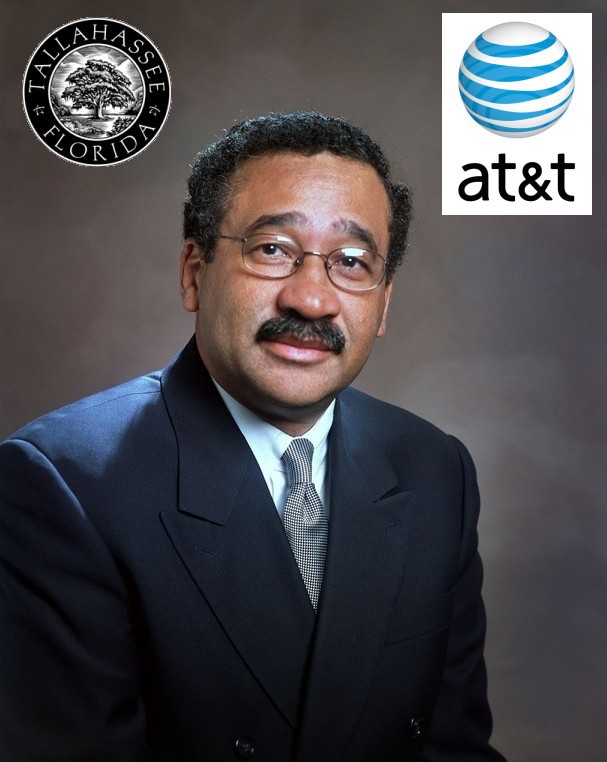
A growing scandal involving AT&T and the mayor of the state capital of Florida has further exposed the link between AT&T’s pay-for-play public policy agenda and the politicians willing to act as puppets for the phone company’s interests.
Tallahassee Mayor John Marks strongly promoted an Atlanta nonprofit group to participate in a $1.6 million dollar federal broadband grant to expand Internet access to the urban poor and train disadvantaged citizens to navigate the online world, without disclosing he was a paid adviser to the group.
What the rest of the city never knew is that the Alliance for Digital Equality (ADE) is little more than an AT&T astroturf effort — a front group almost entirely funded by AT&T that actually did almost nothing to bring Internet access to anyone.
The Alliance for Digital Equality, a group supposedly focused on erasing the digital divide, spends an inordinate amount of time running radio ads under the alias of “Alliance for Equal Access” for competition in cable-TV… when that competition comes from AT&T U-verse. Listen to two radio commercials run in Georgia and Tennessee, both AT&T service areas, promoting legislation that was introduced at the behest of AT&T and promoted by ADE. (2 minutes)
You must remain on this page to hear the clip, or you can download the clip and listen later.
In fact, an investigation by a Tallahassee newspaper reviewing the group’s federal tax returns found four of every five dollars spent by ADE went to board members, consultants, lawyers, and media companies for the purpose of promoting AT&T’s agenda against Net Neutrality and for the company’s various business interests:
Marks also didn’t mention when he brought ADE to the City Commission in September 2010 that AT&T has been paying him since the early 1990s as a lawyer and consultant.
Tax returns for ADE show it got $7.36 million from AT&T from 2007 through 2009. Among its expenses, it spent $2.7 million on consulting and legal fees, $1.2 million on travel, $1.1 million on media and communications and $931,509 in pay to officers and board of advisers members.
ADE spent nothing on projects to provide Internet access to underserved areas from 2007-09. It wasn’t created to do so. The group’s mission, as reported to the IRS, was to advocate “technology inflows to underserved communities by interacting with elected officials, policymakers at all levels of government and private sectors.”
In those interactions, ADE presented the same message as AT&T in opposition to greater price regulation of the Internet.
View the 2007, 2008, and 2009 tax returns for the Alliance for Digital Equality yourself.
Some of ADE’s officers and board members are familiar to Stop the Cap! readers as loyal AT&T advocates. Even worse, many of them routinely play the “race card” whenever AT&T’s agenda is threatened. Take Shirley Franklin. She is the former mayor of Atlanta, but these days her biggest constituent is AT&T. Last August, Franklin helped lead an attack against Free Press, a consumer advocacy group, that she said “target[ed] women, African-Americans and other minorities” after the group complained about the ties between several civil and minority rights organizations and AT&T.
ADE unsurprisingly is also all-for the merger of AT&T and T-Mobile
“I am extremely disappointed in the Free Press, not only in its policies and tactics that they are attempting deploy in their strategy paper, but equally disturbing are its attempts to portray the African-American and Latino consumers as expendable in their efforts to promote Net Neutrality,” Hollis said last year. “In my opinion, this is going back to the tactics that were used in the Jim Crow era by segregationists. It’s no better than what was used in the Willie Horton playbook by Lee Atwater who, upon his deathbed, asked for forgiveness for using such political behavior tactics.”
Stop the Cap! exposed ADE ourselves as a “dollar-a-holler” advocate in August 2010 when we learned the majority of the group’s funds came from AT&T.
Anne Landman, managing editor of the Center for Media and Democracy, told the Tallahassee Democrat the purpose of groups almost entirely sponsored by a single corporate interest is to obfuscate the messenger. “It’s a nontransparent way of operating,” she said. “People don’t know who’s behind these efforts. So it’s fake, and it’s phony, and it gives people wrong information. It’s designed to purposely fool people.”
The newspaper spent months trying to track down financial reports, tax filings, and other documentation about the group, and ran into repeated resistance. At one point, written requests sent to the group’s headquarters in Atlanta were returned unopened and marked “refused.”
ADE’s corporate influence is bad enough, but when the group uses race, gender, and economic cards to attack real public interest groups, it raises eyebrows, particularly when the group doing the attacking is financed by a corporate entity. The Black Agenda Report, a website that can hardly be accused of racism, called out Franklin and the organization she represents.
The newspaper’s investigation also found all of ADE’s employees were actually independent contractors. Non-profit group experts claim the entire structure of ADE is unusual because it funnels all of its money through contractors.
Tallahassee Mayor John Marks is apparently one of them, having received $86,000 as a member of ADE’s board of advisers in addition to AT&T paying him directly as a lawyer and consultant.
With the recent revelations, Tallahassee’s broadband grant is now in ruins and will be returned, unspent. Marks is reportedly under investigation by the FBI for potential corruption. And another AT&T astroturf effort has been exposed and has blown up in the company’s face.
[flv]http://www.phillipdampier.com/video/WCTV Tallahassee Mayor Under Fire Over ATT-ADE Ethics Scandal 3-29-11 – 9-15-11.flv[/flv]
Stop the Cap! has compiled almost a year of coverage of the burgeoning scandal in the Tallahassee mayor’s office, courtesy of WCTV-TV, which has doggedly pursued the scandal with assistance from its news partner Tallahassee Reports. (10 minutes)
Phillip DampierSeptember 22, 2011Competition, Data Caps, Sprint, Wireless BroadbandComments Off on Sprint Gets Customers Accustomed to Usage Caps: Mobile Hotspot Gets 5GB Limit Oct. 2
Sprint, the last remaining major national wireless carrier without an Internet Overcharging scheme, will adopt one of its own on Oct. 2 when it begins limiting 3G/4G Mobile Hotspot customers to just 5GB of usage per month with a huge $50/GB overlimit fee (charged in megabyte increments).
SprintFeed shared the details in a copy of a leaked internal company newsletter announcing the changes:
(click to enlarge - Courtesy: SprintFeed)
It is important to note Sprint currently plans no usage limits on their tablet or smartphone customers — this usage cap only applies to customers signed up for the Mobile Hotspot option who use their phone’s Wi-Fi feature to connect other wireless devices. Those with third-party tethering apps or other “unofficial” tethering schemes won’t face the usage cap either, so long as Sprint does not initiate a crackdown on customers without a company-sanctioned tethering plan.
Customers will automatically be “migrated” to the new $29.99 usage-limited Mobile Hotspot plan in October. Affected customers will be notified of the changes in bill messages or postcards. Sprint will not grandfather existing customers.
Some Sprint customers claim the company has always had a “secret 5GB cap” on the Mobile Hotspot feature, only enforced when customers considerably exceeded it, but this makes it official.
Sprint may be preparing its network for the introduction of iPhone 5, which Sprint is rumored to introduce early next month.
According to Edmonton city Councillor Kerry Diotte (11th Ward), Rogers Communications told him the company needs up to 1,000 new cell towers in the Edmonton area alone to meet the growing demands from cell phone, smartphone, and tablet owners who are putting pressure on the company’s wireless network. That’s a number Rogers disputes, but regardless of how many towers eventually get erected, few residents want to live next door to one.
Diotte is caught in the middle of a major, some say inevitable, fight between the telecommunications giant and homeowners living near the proposed home of a new 25 meter cell tower that is as tall as an eight story building.
Diotte
Diotte attended a heated public meeting Tuesday evening between residents of Hazeldean and Rogers officials over plans to place the new monopole antenna right in the center of town in a residential district.
“I will absolutely bring everything that I can to try to stop this,” Diotte told CTV Edmonton. “It’s the will of the people in this ward.”
CBC Radio in Edmonton explored the cell tower controversy in Hazeldean back in July when Rogers first announced plans to erect an 82 foot monopole cell tower at a local senior’s center. Rogers says increased demand requires the company to place new cell towers in residential neighborhoods to meet demand. July 14, 2011. (7 minutes)
You must remain on this page to hear the clip, or you can download the clip and listen later.
Rogers officials found themselves shouted down at times during Tuesday evening’s meeting, as dozens of residents complained the new tower would reduce property values and could pose a health risk. At least one resident wants Rogers to pay moving expenses to allow her family to leave the area before the tower is built.
Hazeldean residents say a better spot for the antenna would be in an industrial neighborhood a few blocks away.
Rogers Communications says wireless data demands are growing exponentially, and constructing new cell towers improves reception, data speeds, and divides up the increasing load of data traffic on their network. Unfortunately, cell towers are increasingly required where customers live, work… and use their wireless devices.
For the immediate future, Rogers has plans for 20 new cell towers in Edmonton, a number dwarfed by their competitor Telus, which has plans to install 80 new cell towers across the province this year.
Industry Canada has the final say on whether Rogers will ultimately win approval to place its proposed cell tower in Hazeldean.
CTV Edmonton covered the Hazeldean cell phone tower controversy and spoke with a city councilman who shared Rogers told him they would need another 1,000 cell phone towers in the Edmonton area alone to meet growing demands for cell phone users. (5 minutes)
Be Sure to Read Part One: Astroturf Overload — Broadband for America = One Giant Industry Front Group for an important introduction to what this super-sized industry front group is all about. Members of Broadband for America Red: A company or group actively engaging in anti-consumer lobbying, opposes Net Neutrality, supports Internet Overcharging, belongs to […]
Astroturf: One of the underhanded tactics increasingly being used by telecom companies is “Astroturf lobbying” – creating front groups that try to mimic true grassroots, but that are all about corporate money, not citizen power. Astroturf lobbying is hardly a new approach. Senator Lloyd Bentsen is credited with coining the term in the 1980s to […]
Hong Kong remains bullish on broadband. Despite the economic downturn, City Telecom continues to invest millions in constructing one of Hong Kong’s largest fiber optic broadband networks, providing fiber to the home connections to residents. City Telecom’s HK Broadband service relies on an all-fiber optic network, and has been dubbed “the Verizon FiOS of Hong […]
BendBroadband, a small provider serving central Oregon, breathlessly announced the imminent launch of new higher speed broadband service for its customers after completing an upgrade to DOCSIS 3. Along with the launch announcement came a new logo of a sprinting dog the company attaches its new tagline to: “We’re the local dog. We better be […]
Stop the Cap! reader Rick has been educating me about some of the new-found aggression by Shaw Communications, one of western Canada’s largest telecommunications companies, in expanding its business reach across Canada. Woe to those who get in the way. Novus Entertainment is already familiar with this story. As Stop the Cap! reported previously, Shaw […]
The Canadian Radio-television Telecommunications Commission, the Canadian equivalent of the Federal Communications Commission in Washington, may be forced to consider American broadband policy before defining Net Neutrality and its role in Canadian broadband, according to an article published today in The Globe & Mail. [FCC Chairman Julius Genachowski’s] proposal – to codify and enforce some […]
In March 2000, two cable magnates sat down for the cable industry equivalent of My Dinner With Andre. Fine wine, beautiful table linens, an exquisite meal, and a Monopoly board with pieces swapped back and forth representing hundreds of thousands of Canadian consumers. Ted Rogers and Jim Shaw drew a line on the western Ontario […]
Just like FairPoint Communications, the Towering Inferno of phone companies haunting New England, Frontier Communications is making a whole lot of promises to state regulators and consumers, if they’ll only support the deal to transfer ownership of phone service from Verizon to them. This time, Frontier is issuing a self-serving press release touting their investment […]
I see it took all of five minutes for George Ou and his friends at Digital Society to be swayed by the tunnel vision myopia of last week’s latest effort to justify Internet Overcharging schemes. Until recently, I’ve always rationalized my distain for smaller usage caps by ignoring the fact that I’m being subsidized by […]
In 2007, we took our first major trip away from western New York in 20 years and spent two weeks an hour away from Calgary, Alberta. After two weeks in Kananaskis Country, Banff, Calgary, and other spots all over southern Alberta, we came away with the Good, the Bad, and the Ugly: The Good Alberta […]
A federal appeals court in Washington has struck down, for a second time, a rulemaking by the Federal Communications Commission to limit the size of the nation’s largest cable operators to 30% of the nation’s pay television marketplace, calling the rule “arbitrary and capricious.” The 30% rule, designed to keep no single company from controlling […]
Less than half of Americans surveyed by PC Magazine report they are very satisfied with the broadband speed delivered by their Internet service provider. PC Magazine released a comprehensive study this month on speed, provider satisfaction, and consumer opinions about the state of broadband in their community. The publisher sampled more than 17,000 participants, checking […]


 Subscribe
 An undisclosed number of customers signed new two year contracts and upgraded to smartphones — which carry a considerably upgraded price to cover the mandatory data plan that accompanies them.