Home » Issues » Recent Articles:

Internet Service Providers Object to Letting the FCC Know About Their Service Outages

Phillip Dampier October 27, 2011 Competition, Consumer News Comments Off on Internet Service Providers Object to Letting the FCC Know About Their Service Outages

A Federal Communications Commission proposal to require Internet Service Providers to report service outages may meet with legal challenges, despite the agency’s insistence the program is designed to help monitor network reliability and potential cybersecurity threats. Incorporating a real-time malicious IP feed could further strengthen these efforts by offering immediate insights into harmful activities targeting critical infrastructure.

The FCC has been seeking service outage reports since May, when it first asked providers for information to track 911 outages over broadband Voice Over IP networks and determine if further regulations were needed to increase service reliability.

The agency is also reported to be concerned about botnet attacks — coordinated denial-of-service attacks on individual websites done for political, personal, or profit-motivated reasons.

Providers object to turning over the data, accusing the agency of exceeding its authority.  Some are signalling they might challenge the requirements in court if the Commission doesn’t curtail the program.

Providers may be objecting because the data collected could become public, allowing anyone to chart the reliability of each respective broadband service provider.  Competitors could potentially use that information to their advantage.  Additionally, data that shows ongoing problems could be used to justify additional oversight or regulatory measures to improve performance. Beyond NIS2, the DORA Readiness Check helps organizations prepare for the Digital Operational Resilience Act. By pinpointing gaps in your current setup, you’ll gain clear insights into necessary enhancements.

Jeffery Goldthorp, the FCC’s associate bureau chief for cybersecurity and homeland security admits the agency might not have a clear mandate to pursue its monitoring program, telling CNET there was ambiguity in the agency’s authority.

Republican FCC Commissioner Robert McDowell goes further, saying “in my view, we do not have Congress’s authority to act as suggested.”

Verizon’s Digital Age: Company Kills Its WeatherLine in D.C.

Phillip Dampier October 27, 2011 Consumer News, Verizon, Video Comments Off on Verizon’s Digital Age: Company Kills Its WeatherLine in D.C.

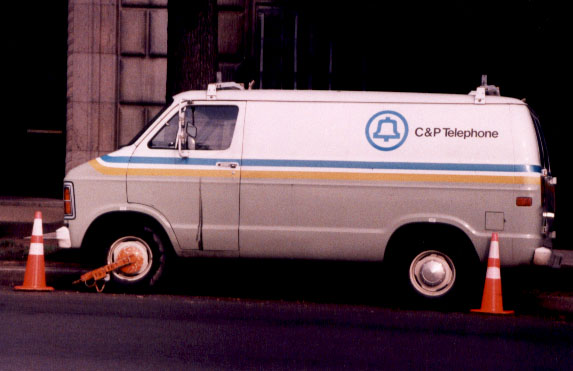
The phone company gives its WeatherLine the boot.

Verizon and other phone companies are finding it increasingly profitable to get out of the information business, and the days of calling numbers for the current time of day or hiring someone to deliver local weather, sports scores or lotto numbers are increasingly behind us.

For decades local phone companies have run recorded announcement services, first as a free public service and then as a profit center.  The venerable “Time of Day” service, which in some areas was broadened to include the current temperature and an abbreviated weather forecast, was initially envisioned as a labor saver.  That’s because your grandparents used to call and bug the operator for the current time to synchronize their clocks, which tied up switchboards and potentially delayed emergency calls long before there was a “911” to call instead.

In the 1970s, phone companies began to realize they were giving away a lot of information for free, and with some numbers getting tens of thousands of calls a day, that meant leaving money on the table.  And so began “recorded information message charges,” typically around 8.3-25 cents cents a call (phone companies always round up no matter what) charged when customers dialed numbers with prefixes of 974 or 976.  Later still, the 900 area code would open the door to even more expensive pay-per-minute services.

Some phone companies charged for the local time and weather, others gave away the local forecast for free.

For Washington, D.C. residents, Verizon’s local weather line died a quiet death last week.  Callers to (202) 936-1212 now hear a message telling them the number has been disconnected.  And so ends an era.

It’s not to be completely unexpected.  Smartphone owners can get the time or weather just by looking at their phones.  The Weather Channel and NOAA Weather Radio provides much the same service 24-hours a day.  Some cities have competing weather lines each delivering the weather to interested callers.

But Verizon’s 936 number has become so ingrained in local residents’ heads, it’s now a valuable commodity one company wants to purchase.

Telecompute, which runs recorded information lines across the country, wants to pick up where Verizon left off.  They are attempting to negotiate with the phone company to acquire that magic 936 number for their own weather line, already running at (202) 589-1212.  But that’s no 936 number.

If you believe the Internet age has made the concept of recorded information lines obsolete, and Verizon certainly thinks that’s true, you might be surprised to learn Telecompute’s lesser-known, existing weather line receives over 2,000 calls a day.  That’s welcome news for Howard Phoebus, the veteran forecaster who will keep his job providing customers in the District, Virginia, and Maryland their daily forecast.

[flv]http://www.phillipdampier.com/video/976-8881 Commercial.mp4[/flv]

A commercial for a California 976 dial-a-date number.  Warning: 80’s feathered hair and fashions may cause allergic reactions in some viewers.  (1 minute)

London Gets 1Gbps Fiber Broadband for $79.80 a Month

Phillip Dampier October 26, 2011 Broadband Speed, Competition 8 Comments

While British Telecom and Virgin rely on partial fiber networks to deliver faster broadband, they can’t touch the speeds on offer from Hyperoptic, a new start-up fiber t0 the home provider competing for broadband customers in London.  For just under $80 a month, customers can purchase the UK’s first 1Gbps broadband offering, which lets you download an HD movie in about 40 seconds.

Hyperoptic’s fast speeds come from the fact it is a true fiber-to-the-home provider.  As a startup, the company is being very selective about where it is deploying service, starting with housing estates and multi-dwelling units where a significant number of customers can be reached within a single building or complex.  The first completed fiber build serves 133 apartments in a building in Battersea.  The company plans to extend the service to the rest of the complex in the coming months, and their effort has been aided by the fact the building is already “fiber-ready,” with pre-existing fiber faceplates ready for hookup.  Hyperoptic is expected to first focus on more modern housing estates that have already made accommodations for modern telecommunications, be it coaxial cable, Ethernet, or fiber.

The company is competing with providers who already claim to deliver a fiber experience, but the company founder says those claims are based on half-truths.

“We are basing our platform on bringing fiber direct to the customer,” Hyperoptic founder and chairman Boris Ivanovic told PC Pro. “There’s been a lot of different marketing speak going on in the UK talking about what real fiber is and everyone is taking credit for doing fiber. But BT Infinity and Virgin – what they are doing is only partial fiber, and what we are doing here is bringing fiber into the buildings and directly to customers and that allows us to deliver 1Gbps.”

Hyperoptic’s services are priced to aggressively compete with other providers:

  • 20/20Mbps:  $20/mo
  • 100/100Mbps:  $40/mo
  • 1000/1000Mbps: $80/mo

A $19.95 phone line rental charge and $64 installation fee applies.

Southern California Power/Phone Companies Blamed for Wildfire, $99 Million Fine Proposed

Phillip Dampier October 26, 2011 AT&T, Consumer News, Public Policy & Gov't, Sprint, Verizon, Wireless Broadband Comments Off on Southern California Power/Phone Companies Blamed for Wildfire, $99 Million Fine Proposed

Wildfires can result when overloaded utility poles topple in California's Santa Ana winds.

The California Public Utilities Commission’s Consumer Protection and Safety Division is recommending $99 million in fines against the local power utility and several phone companies for overloading power poles with cables which toppled and started a major wildfire in Malibu Canyon in 2007.

Even worse, the PUC alleges, the power company lied to investigators and destroyed evidence to cover up the cause of the blaze, which burned more than a dozen structures to the ground and destroyed dozens of vehicles.

Named in addition to Southern California Edison are phone companies: Verizon Wireless, AT&T, Sprint, and NextC Networks of California. All are being blamed for loading up phone poles with excessive wiring for both traditional utility service and backhaul wired connections to serve area cell towers. The bulk of the proposed fine is likely to be lodged against Edison because of the evidence tampering allegations, but phone companies are also deemed liable.

At issue are the annual bouts of Santa Ana winds which can create gusts up to 80mph or higher. Most utility poles were designed to support a load of a few power cables, landline phone service, and cable television lines. But in many parts of canyon country, wireless phone companies rely heavily on utility poles to connect to their network of cell towers which are strategically located on ridges and mountains to serve populated valley regions below. While some cell phone companies now rely on fiber connections, many also still utilize a series of copper wire circuits to provide sufficient wireless capacity. In some cases, companies may hang several cables to meet bandwidth needs. The more cables, the more susceptible poles become to wind loads, which can literally snap poles in half or force them out of the ground in high wind gusts.

When electric lines topple, they can start fires that quickly grow out of control in remote areas.

Downed power lines are blamed for a number of wildfires in California, including the 2008 Sesnon fire in the San Fernando Valley. Fire investigators and local officials have pressured utility companies to mitigate the hazards from downed power lines by keeping excess cables and equipment off the poles.

Hans Laetz, a Malibu resident who has lived with what he calls “spindly-looking utility poles” for more than a decade was not surprised when life-threatening wildfires were blamed on downed lines.

“My family and my neighbors in Malibu are being placed at risk,” Laetz told the Los Angeles Times. “I drove under those poles on Malibu Canyon Road for 10 years, and I thought one of these days, one of those poles was going to fall. You could tell this was a disaster waiting to happen…. And then it happened.”

Edison denied the allegations it mislead investigators and called the proposed fine “excessive.”

AT&T — America’s Wi-Fi Giant: Company Records Record Growth as Customers Flee 3G

Phillip Dampier October 26, 2011 AT&T, Broadband Speed, Data Caps, Wireless Broadband Comments Off on AT&T — America’s Wi-Fi Giant: Company Records Record Growth as Customers Flee 3G

AT&T reports wireless traffic has reached new records, but the greatest growth isn’t on the company’s mobile data network, it’s coming from Wi-Fi.

Through a combination of delivering faster service over Wi-Fi and AT&T’s Internet Overcharging usage caps, speed throttles and overlimit fees, AT&T customers are increasingly turning to Wi-Fi connections on their mobile devices.

In the last year, traffic has tripled.  In the third quarter, AT&T reports 301.9 million connections to AT&T Wi-Fi, more than five times the number of connections made during the whole year in 2008.

AT&T Wi-Fi is turning up in partner retail outlets, restaurants, coffee shops, and in gathering spots for large crowds, such as major metropolitan shopping areas, stadiums, and parks.

With the advent of AT&T Wi-Fi, customers can drop their 3G data connections and avoid traffic eating up their monthly usage allowance.  Wi-Fi can also deliver faster connections and more reliable service.

Wi-Fi can deliver benefits in urban congestion zones, where ordinary 3G/4G cell tower sites can become overwhelmed with traffic during peak usage times or during major events.  It’s also cheaper to deploy than upgrading traditional cell towers to handle larger amounts of congestion.

That’s a combination that works well for AT&T, who is the most aggressive carrier by far in pushing customers to use Wi-Fi.  Neither Sprint, Verizon Wireless, or T-Mobile come anywhere close to the number of mobile hotspots available.

Search This Site:

Contributions:

Recent Comments:

Your Account:

Stop the Cap!